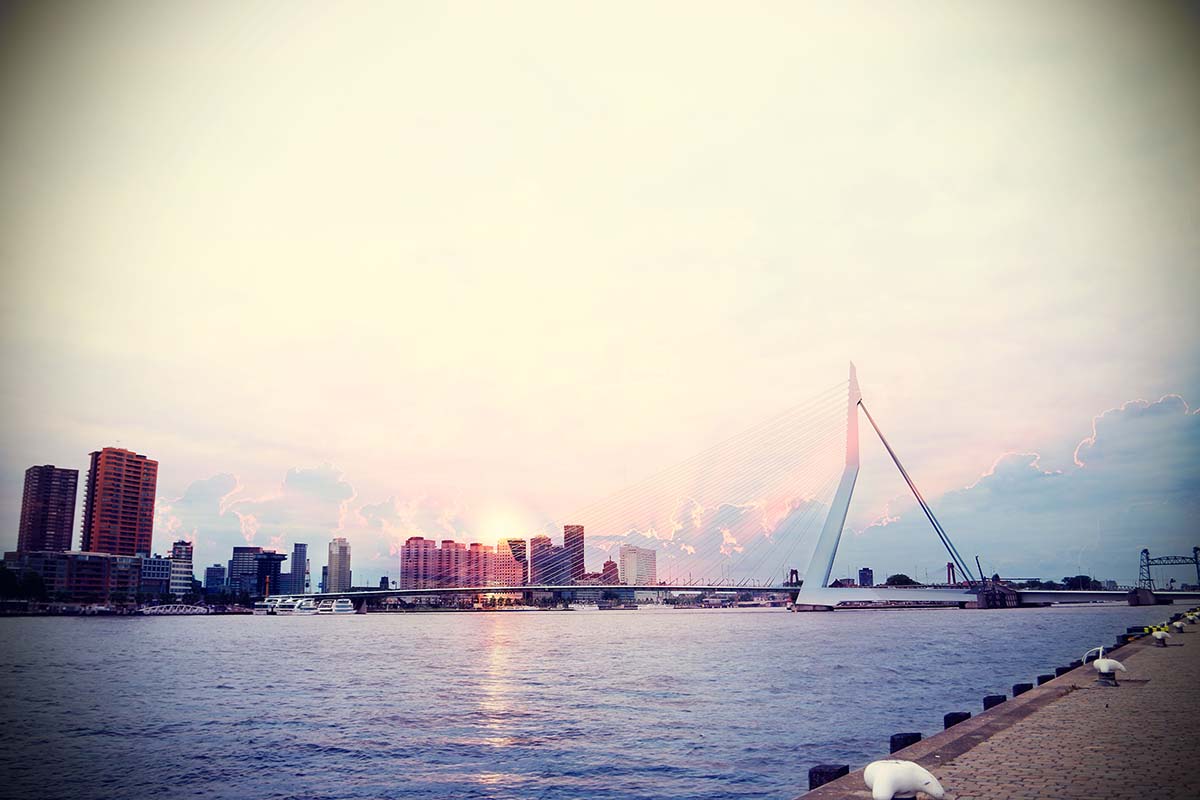
If you wander through the streets of the Maasstad, you quickly realize this metropolis plays by its own rules. Unlike historic European capitals preserved like museum pieces, this Dutch harbor city is a perpetual work in progress—an urban canvas where raw industrial grit collides with boundary-pushing modern architecture. Glass skyscrapers pierce the clouds while weathered brick warehouses hint at a maritime past that refuses to fade into the background. Yet, for all its dynamic street life, the true soul of the city has never lived strictly on dry land. It flows right through its heart, carried by the unrelenting currents of the river.
Standing on the quayside and gazing across the water gives you a postcard view, but it only tells half the tale. To truly grasp the magnitude of this place, you have to leave the pavement behind and venture out where the shipping lanes stretch toward the horizon. That is when the scale shifts entirely, revealing a sprawling ecosystem of steel, motion, and global trade that dictates the rhythm of daily life.
A Living Masterpiece of Iron and Tides
The sheer industrial footprint along the banks is enough to humble anyone. Massive container vessels—floating monoliths carrying goods from every corner of the planet—glide silently past, escorted by agile tugboats that maneuver tons of dead weight with uncanny precision. It is a mesmerizing choreography of heavy machinery and human ingenuity that never stops, operating 24 hours a day, seven days a week.
For travelers and locals alike wanting to witness this colossal maritime theater firsthand, stepping aboard a Rotterdam cruise offers an unmatched vantage point to experience the industrial heartbeat of Europe up close. Organizations rooted deeply in the region’s heritage provide this vital window into the local culture, ensuring that the rich history of the waterfront remains alive and accessible to curious minds from all over the globe. Watching the towering cranes and dry docks from the water reveals just how seamlessly historical legacy and cutting-edge logistics merge here.
The Invisible Architecture Behind the Horizon
Beneath the seemingly chaotic surface of churning propellers and towering gantry cranes lies a meticulously orchestrated machine. The local port operates as a masterclass in modern infrastructure, where automated systems, data-driven navigation, and decades of navigational expertise converge. Millions of tons of cargo find their precise destinations through pathways managed with surgical exactness.
Yet, gliding across the river offers more than just an economics lesson. It serves as a moving timeline. Within minutes, your vessel floats past remnants of nineteenth-century maritime trade before drifting alongside avant-garde residential complexes that represent the cutting edge of urban living. This juxtaposition defines the local character: honoring the sweat and toil of previous generations while aggressively carving out a sustainable, visionary future. You sense it in the salty air and the low, resonant hum of engines echoing off the harbor walls.
Why the Current Always Pulls Us Back
There is an undeniable magnetism to watching ships point their bows toward the North Sea. It stirs an ancient, universal longing for exploration, open horizons, and the unknown. Perhaps that is why residents remain so fiercely devoted to their waterfront. Amid the fast-paced, sometimes overwhelming energy of the urban core, the wide expanse of the river offers a rare, grounding sense of freedom.
Ultimately, trying to understand this metropolis entirely from a landlocked perspective misses the point entirely. The true character of the city reveals itself only when you let the current carry you past the piers and out into the open air. It is bold, unpretentious, resilient, and constantly evolving—qualities mirrored perfectly in the rolling waves of the Maas.



Leave a Reply
You must be logged in to post a comment.