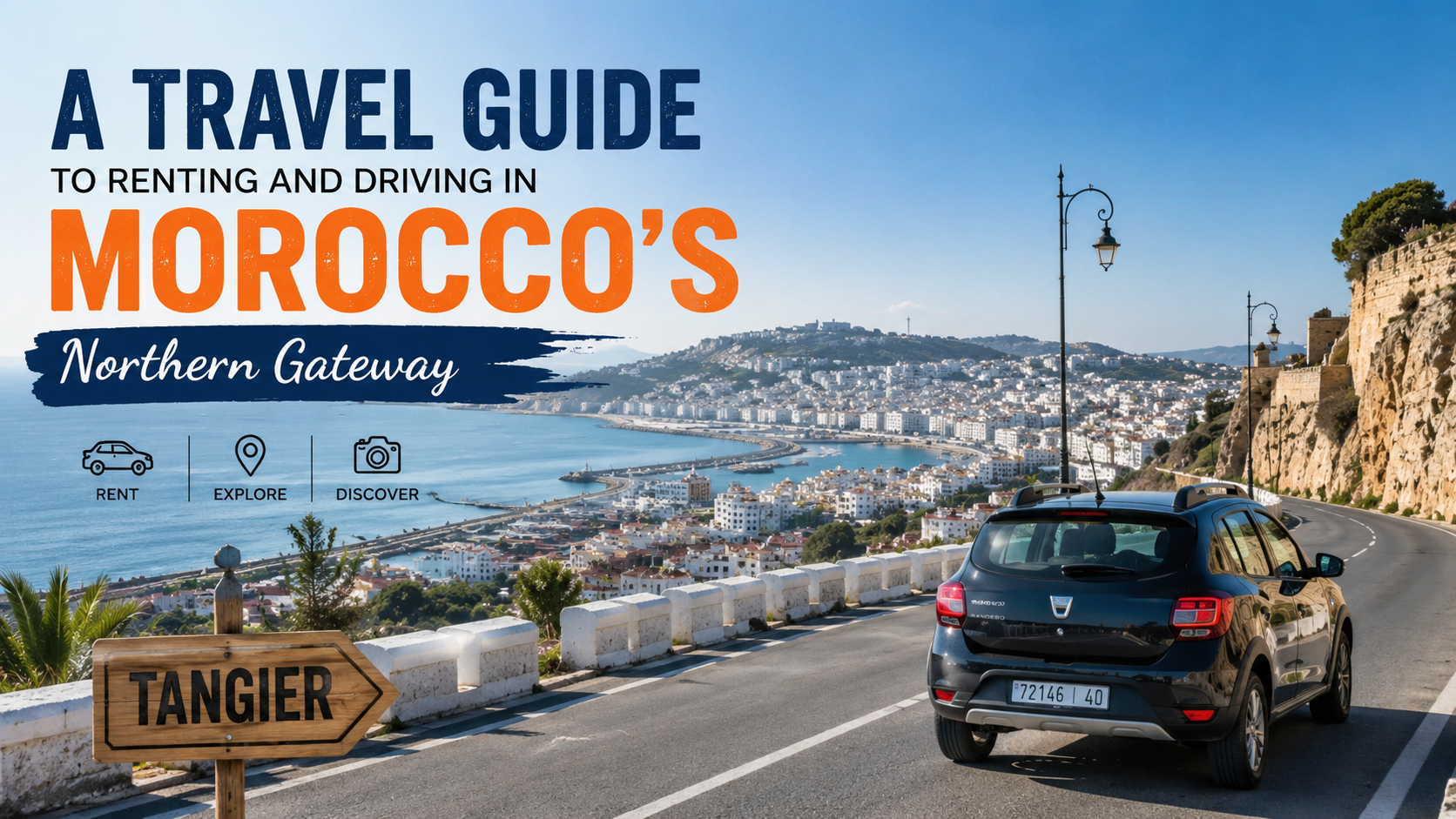
Tangier has always been a city of arrivals. The ferries from Spain cross the Strait in under an hour, the flights land at Ibn Battuta airport from half of Europe, and the trains glide in from Casablanca, all delivering travellers to the white city on the hill where Africa and the Mediterranean meet. What most of those travellers work out within a day is that Tangier is also a city of departures, because the best of northern Morocco radiates outward from it, the blue lanes of Chefchaouen, the beaches and caves of the Atlantic cape, the artists’ town of Asilah, and none of it is properly reachable without a car.
The rental market answers generously and cheaply. A car rental Tangier Morocco booking starts from around 150 to 250 dirhams per day for city cars and economy models, roughly the price of a good dinner, with compact SUVs from about 400 dirhams and the fleet running up through family cars and 4x4s for mountain ambitions. Pickup points cover all three arrival gates, the airport, the city centre, and the train station forecourt, and the modern booking route runs through comparison rather than counters: shortlist verified suppliers online, confirm the car and terms directly, and have the keys waiting wherever Morocco happens to receive you.
This guide covers the local craft, the cars and terms, the driving customs that surprise first-timers, and the roads that turn a Tangier stay into a northern Morocco tour.
Choosing the Car and Reading the Terms
The Tangier fleet has a distinct personality, and knowing it shapes the booking. Small cars dominate, Dacias, Clios, Picantos, and their cousins, and they are the correct choice for most trips, since the medina-adjacent streets are narrow, parking rewards the compact, and the highways ask little of an engine. The single most important specification to confirm is the gearbox: manual transmission is the Moroccan default, automatics exist but in smaller numbers at a premium, and drivers who cannot manage a manual should state it in the first message rather than discover the shortage at pickup. Families and mountain-bound travellers step up to the SUV tier, and one-way rentals to Casablanca, Fes, or Marrakech are widely available for a fee, opening the classic drive-south itinerary.
The terms follow patterns worth knowing. Collision damage and theft cover is commonly included with an excess that remains your responsibility, and the excess figure, along with any reduction option, is the number to ask for by name. Mileage terms vary between capped and unlimited, so match them to your route ambitions, and confirm the fuel policy, the deposit arrangement, and any young-driver or second-driver fees in writing before committing. At handover, walk the car slowly and photograph or film every existing mark, because Moroccan rentals often carry the honest scars of city life and the documentation protects both sides; check the spare wheel, the warning triangle, and the reflective vest while you are at it, since carrying them is expected.
Paperwork is light. Most visitors rent on their home-country licence held for at least a year, with an International Driving Permit recommended and occasionally requested, a passport, and a card for the deposit. Minimum ages typically start at 21, sometimes with surcharges under 25, and the seasonal note matters here as everywhere: July and August are the high season when Moroccan diaspora summer traffic peaks and prices firm, while spring and late autumn offer the same roads at the year’s softest rates.
Driving Tangier Like You Have Done It Before
Moroccan driving has a rhythm, and Tangier is a friendly place to learn it. In the city, expect assertive but readable traffic, roundabouts where confidence and eye contact do the negotiating, and scooters threading everywhere; drive calmly, signal clearly, and the flow accommodates you. Parking runs on two systems, the marked blue zones with small hourly fees, and the informal lots and streetsides watched by guardians in high-visibility vests, who for a few dirhams will guide you in, watch the car, and wave you out, a custom worth embracing with a pocket of small change rather than resisting.
On the open road, the autoroute network is the pleasant surprise of the country: smooth, quiet, and tolled at modest cash rates, with the A-road south putting Rabat about two and a half hours away and Casablanca around three and a half. Keep coins for the toll plazas, fuel up at the frequent and full-service stations, and treat the speed limits with respect, since checkpoints and radar are a normal part of Moroccan motoring and politeness at a gendarmerie stop, documents ready, is the entire transaction. Two honest rules complete the local knowledge: avoid unfamiliar rural roads after dark, when unlit vehicles and pedestrians appear, and let the medina defeat you on purpose, parking outside its walls and walking in, which is what everyone who lives here does.
The Roads That Justify the Keys
Day one barely needs the car: the medina, the Kasbah, the American Legation, and the café terraces above the port are Tangier on foot. Day two starts the engine gently with the Atlantic circuit, twenty minutes west to Cap Spartel where the Mediterranean meets the ocean, the Caves of Hercules below, and the long beach road south past camel-dotted sands to lunch in Asilah, the whitewashed artists’ town forty minutes down the coast whose murals and ramparts fill an afternoon.
The signature drive is day three: Chefchaouen, the blue city, two hours southeast through green Rif mountain scenery that surprises every visitor expecting desert, with the road itself, curving through valleys and villages, half the pleasure. Tetouan, an hour away and home to one of Morocco’s most authentic medinas, pairs with it or stands alone, and the ambitious close the week by pointing the car south on the autoroute toward Rabat’s calm capital charms or the Casablanca coast, returning by the same smooth road or dropping the car one-way and training back. Every route in this paragraph runs on paved roads well within a standard agreement, and together they explain why the rental, at 200 dirhams a day, is the cheapest upgrade a Tangier trip can buy.
Booking It the Smart Way
The comparison habit translates perfectly to Morocco, with one local upgrade worth knowing. Browsing the listings for car rental in Morocco on OneClickDrive puts verified suppliers across Tangier and the other major cities, Casablanca, Marrakech, Rabat, Agadir, Fes, and beyond, on one screen with real cars and transparent pricing, and the booking runs on an assisted model built for exactly the traveller who wants certainty: the team confirms the right supplier and car for your dates, a small advance of around ten percent secures the reservation, and the balance settles directly with the supplier at pickup, keys handed over at the airport, the station, or your hotel. For first-time Morocco drivers especially, having a coordinator confirm the automatic gearbox, the excess terms, and the pickup timing before arrival removes precisely the frictions that counter-queue renting is famous for.
Whichever route you book through, the closing habits never change: terms in writing, the walkaround filmed, the excess known, small change in the pocket for guardians and tolls, and the tank returned as received.
What the car ultimately unlocks is the real shape of northern Morocco, which no single city contains. Tangier is the perfect base, the coffee and the Kasbah and the ferry-watching, but the blue streets two hours south, the ocean cape twenty minutes west, and the mountain road between them are where the trip becomes the story, and they all start with the same 200-dirham decision at the arrivals gate. The straight breeze is free; the keys nearly are.