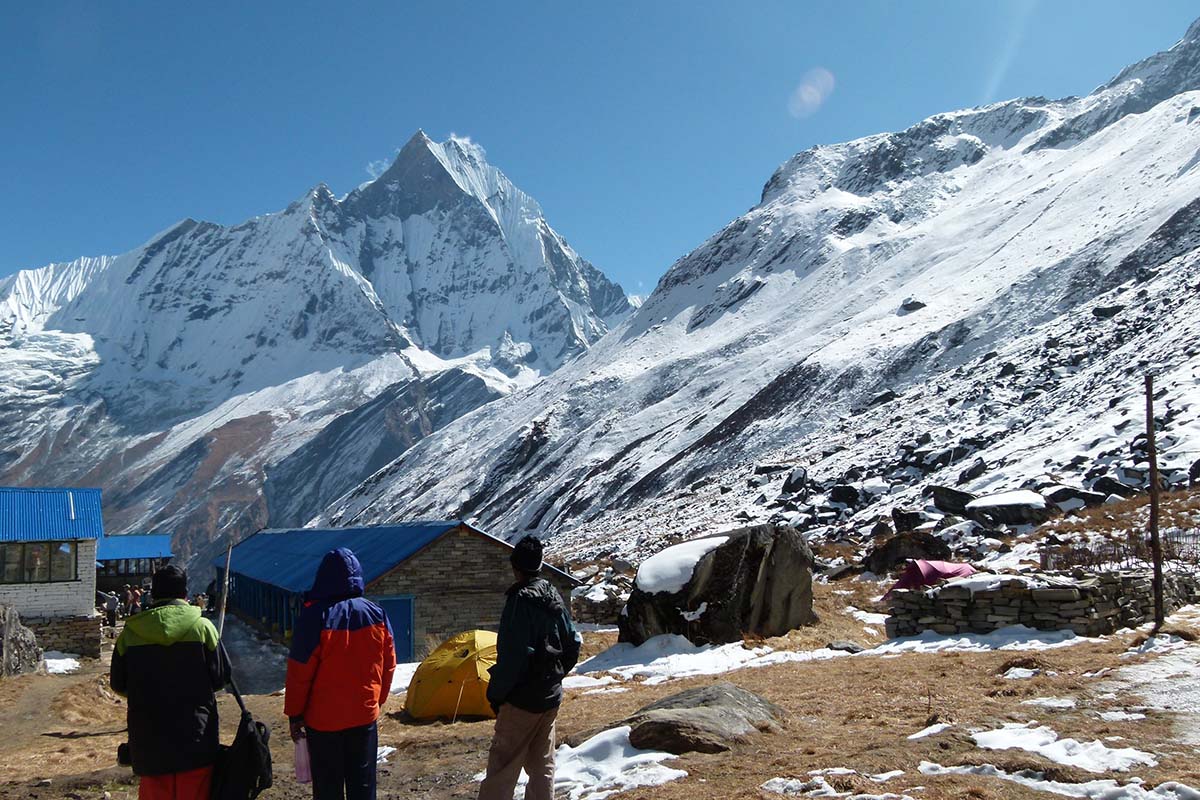
If you’ve spent any time researching treks in Nepal, you’ve probably noticed that most routes stick to one valley and one general direction. The Annapurna Circuit Trek doesn’t work that way. It loops around an entire mountain massif, which means you walk through farmland and forest one week and dry, wind-scoured highland the next. That variety is exactly why so many trekkers put it near the top of their list, but it also means there’s a lot to plan for — route length, the altitude at Thorong La Pass, when to go, what permits you need, and how to prepare your body for days at elevation. This guide walks through all of that in a practical way, without dressing it up as something it isn’t. The Annapurna massif itself, one of the highest and most visually dramatic mountain groups in the Nepal Himalayas, is really the reason this circuit has stayed relevant for decades even as road construction has changed parts of the trail.
Annapurna Circuit Trek Overview
Unlike an out-and-back trek where you retrace your steps, the Annapurna Circuit Trek takes you in a long arc around the mountain, so nearly every day brings a different landscape. You start low, among rice terraces and subtropical villages, then climb steadily through pine and rhododendron forest into the drier, more open country near Manang. From there the trail pushes up toward Thorong La Pass, the trek’s high point, before dropping into Muktinath and the strikingly different, almost desert-like terrain of the Kali Gandaki Valley on the Mustang side.
How long the whole thing takes really depends on where you start and end it — road access into places like Besisahar or out from Jomsom has shortened the trek considerably for people who don’t want to walk every original section. Most itineraries run somewhere between two and three weeks, and a good one won’t rush the days leading up to the pass, since altitude gain matters far more than distance covered. Along the way you’ll pass through the Annapurna Conservation Area, and you’ll notice the shift from Hindu-influenced lower villages to Buddhist communities higher up, with prayer flags and mani walls becoming a regular part of the scenery rather than a novelty.
What Makes the Annapurna Circuit Special?
Ask ten trekkers why they chose this route over, say, Everest Base Camp, and most will mention the same thing: it doesn’t feel like one hike, it feels like several strung together. You’re not just walking toward a single viewpoint and turning around — you’re crossing an entire mountain range from one climate zone into a completely different one. The switch from lush, wet valleys to the rain-shadow landscape past Manang is genuinely startling the first time you experience it; the vegetation thins out, the air dries up, and the mountains start looking more like something out of Ladakh than the jungly lower hills you left behind.
There’s also the cultural layer. Villages along the way have been shaped by trade routes between Tibet and the lowlands for centuries, and that history shows up in the architecture, the monasteries, and the way locals still run their lives around yak herding and barley farming at altitude. And then there’s Thorong La itself — crossing it on foot, at over 5,000 meters, hits differently than simply arriving at a lookout point by vehicle. It’s earned, and that matters to a lot of people doing this trek.
Annapurna Circuit Trek Route and Main Stops
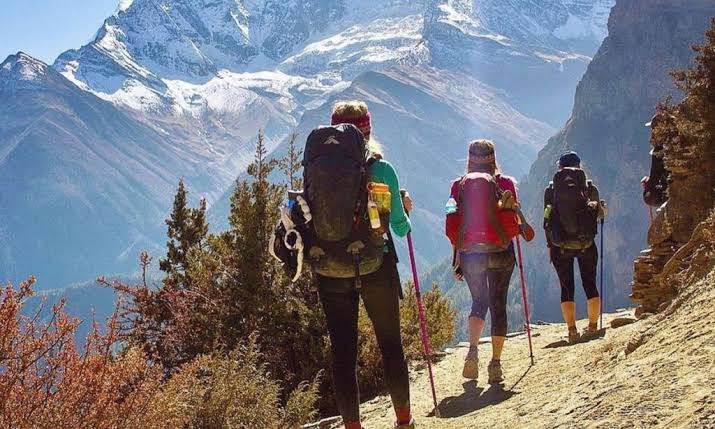
Most versions of the route follow a similar skeleton, even though exact starting points shift depending on current road conditions.
Trekkers typically begin somewhere past Kathmandu, in the lower Annapurna region, then move through Jagat and Dharapani before reaching Chame, the administrative center of the Manang district. From there the trail climbs to Pisang and on to Manang, a village where most itineraries build in an extra acclimatization day — and honestly, it’s worth it even if you’re feeling fine. After Manang comes Yak Kharka and Thorong Phedi, the staging points before the push over Thorong La Pass. On the far side, you descend into Muktinath, an important pilgrimage site for both Hindus and Buddhists, then continue down through Jomsom and the Kali Gandaki Valley before eventually reaching Pokhara.
It’s worth saying clearly: road construction has changed the traditional circuit quite a bit over the years, with jeep tracks now running parallel to — or sometimes replacing — sections of trail that used to be walked. Because of this, it’s genuinely important to check the exact itinerary a guide or agency is proposing before booking, since two trips both labeled “Annapurna Circuit” can look fairly different in practice.
Difficulty, Altitude and Acclimatization
People often ask how hard the Annapurna Circuit actually is, and the honest answer is: it depends more on altitude than on raw fitness. Yes, there are long walking days, steep ascents and descents, and trail conditions that shift with the weather — but plenty of reasonably fit people still struggle here because of how their body responds to elevation, which has very little to do with how many miles they can run at sea level.
Thorong La Pass is where this really comes into focus. Sitting above 5,400 meters, it’s the point in the trek where altitude sickness risk is highest, and it’s not something fitness alone protects you from. The standard advice holds up: ascend gradually, drink more water than feels necessary, rest on schedule rather than pushing through fatigue, and pay attention to symptoms like persistent headache, nausea, or dizziness that get worse rather than better. If that happens, descending is the right call, not toughing it out. A well-built itinerary with proper acclimatization days does more for your chances of finishing comfortably than any amount of gym training beforehand.
Best Time for Annapurna Circuit Trek
There isn’t really one “correct” season for this trek — it comes down to what you’re prioritizing. Spring, roughly March through May, tends to bring milder temperatures at lower elevations and the added bonus of rhododendron forests in bloom, which is genuinely a nice thing to walk through. Autumn, from September through November, is usually considered the most reliable window for clear mountain views and stable weather, which is also why trails and teahouses get busiest during these months.
Winter trekking is possible but comes with real cold and a chance of snow or ice around the higher sections, including near the pass, so it demands more careful planning and gear. Monsoon season, meanwhile, brings wetter trails on the lower and middle parts of the route, though the Mustang side beyond Manang sits in a rain shadow and can still offer decent trekking conditions even when the rest of Nepal is soaked. If you want flowers and warmth, go spring. If you want the clearest skies, autumn tends to deliver. If you’re chasing solitude and don’t mind the cold, winter has its own appeal.
Accommodation and Food on the Trek
This is a teahouse trek, meaning you’re not carrying a tent or cooking your own meals most nights. Lodges line the established route, and in the lower and mid-altitude villages you’ll usually get a basic private room, often just two beds and a shared bathroom down the hall. Higher up, past Manang especially, things get simpler — thinner walls, shared facilities, and less variety on the menu.
Food-wise, dal bhat is the trekker’s staple for good reason: it’s filling, it’s usually an all-you-can-eat refill situation, and it gives you the carbohydrates your body needs at altitude. You’ll also find noodle soups, fried rice, potato dishes, and Tibetan-influenced items like momos or thukpa, particularly the higher you climb. Prices for both food and rooms tend to rise as elevation increases, since everything has to be carried in, and availability of specific dishes can shrink the higher you go — don’t expect a big menu at Thorong Phedi.
Permits and Trek Preparation
Before you set foot on the trail, you’ll need the right paperwork, which generally includes a conservation area entry permit and a trekking-specific permit — rules around these have shifted in recent years, so it’s worth double-checking current requirements close to your departure date rather than relying on older information. Travel insurance is another non-negotiable; make sure yours specifically covers high-altitude trekking and, ideally, helicopter evacuation, since standard travel policies often exclude activities above a certain elevation.
On the physical side, you don’t need to be an athlete, but building up some cardio fitness, practicing on stairs or hills, and doing a few long walks with a loaded daypack beforehand will make the actual trek noticeably more manageable. Beyond that, the basics matter: broken-in trekking boots, layered clothing for temperature swings, rain protection, a decent sleeping bag if you’re heading into the colder sections, sunscreen, a reusable water bottle, and whatever personal medication you rely on.
Annapurna Circuit Trek Cost
There’s no single fixed price for this trek, because the total cost swings a lot based on choices you make along the way. Trek duration, whether you hire a guide or porter, transportation to and from the trailhead, the standard of teahouses you choose, meals, permits, insurance, and personal spending on things like hot showers or Wi-Fi all add up differently for different people.
Broadly, there’s a real gap between doing this independently on a tight budget and booking an organized package through an agency — companies like Action Nepal Treks, for example, bundle guides, permits, and logistics into one price, which some trekkers find worth the convenience. Whichever route you go, the smarter move is comparing what’s actually included in a quoted price rather than just comparing the headline numbers, since one “cheap” package might exclude things another already covers.
What to Pack for the Annapurna Circuit
Packing for this trek is really about handling a wide temperature range rather than just piling on warm gear. You’ll want clothing you can layer and remove as needed, a waterproof shell for sudden weather changes, and trekking boots that are already broken in before day one. A warm hat and gloves matter more than people expect, even outside of winter, since temperatures at higher camps drop fast after sunset.
Beyond clothing: a sleeping bag rated for the cold nights you’ll actually encounter, a headlamp for early starts and basic camp movement, some form of water purification or filtering rather than relying only on bottled water, sun protection for high-altitude UV exposure, a small first-aid kit with your regular medication, a power bank since charging isn’t always reliable or free, and a daypack sized for daily essentials rather than your full kit.
Who Is the Annapurna Circuit Trek Suitable For?
This trek suits a wider range of people than its reputation might suggest. First-time Himalayan trekkers can absolutely handle it, provided they choose a sensible itinerary with proper acclimatization and don’t underestimate the altitude. Experienced trekkers, meanwhile, are often drawn to it precisely because it’s longer and more varied than shorter routes, offering more terrain and cultural contrast per day than most alternatives in the region.
It also appeals strongly to people who want both scenery and culture rather than mountains alone — the villages, monasteries, and daily rhythms of highland life are as much a part of this trek as the peaks themselves. That said, anyone considering it should think honestly about their tolerance for multi-hour daily walking, changing weather, and the physical demands of altitude before committing.
Final Takeaway
At its core, the Annapurna Circuit Trek is less about reaching one dramatic viewpoint and more about experiencing how much a single mountain massif can change across a few hundred kilometers. Getting the most out of it comes down to realistic pacing, taking acclimatization seriously, packing for genuinely variable weather, and picking a season that matches what you actually want from the trip. Rush it, and you’ll still see the mountains — but give it the time it deserves, and the whole route around the Annapurna massif ends up being the real reward, not just the pass.
Frequently Asked Questions
How long does the Annapurna Circuit Trek take?
Most itineraries run two to three weeks, though the exact length depends heavily on your starting and ending points and how much road transport you use to shorten the walk.
What is the highest point of the Annapurna Circuit?
Thorong La Pass, sitting above 5,400 meters, is the highest point and the trek’s main physical and altitude challenge.
Is the Annapurna Circuit difficult?
It’s moderate to challenging — the walking itself is manageable for reasonably fit people, but altitude, weather, and pacing matter more than raw physical strength.
What is the best month for the Annapurna Circuit Trek?
Autumn generally offers the clearest views and most stable weather, though spring’s milder temperatures and blooming rhododendrons appeal to many trekkers too.
Do I need a guide for the Annapurna Circuit?
Requirements have changed in recent years, so check current regulations before departure; even where not strictly required, a guide adds real practical and safety value.
Where does the Annapurna Circuit Trek start and end?
Start and end points vary depending on road access and itinerary design, so it’s worth confirming the exact route before booking rather than assuming a fixed version.
Can beginners do the Annapurna Circuit?
Yes, with the right itinerary and preparation — prior trekking experience helps but isn’t strictly necessary if you build in enough acclimatization time.
Is the Annapurna Circuit worth doing?
For most trekkers, yes — the combination of shifting landscapes, cultural depth, and the achievement of crossing Thorong La makes it one of the more complete long-distance treks in Nepal.