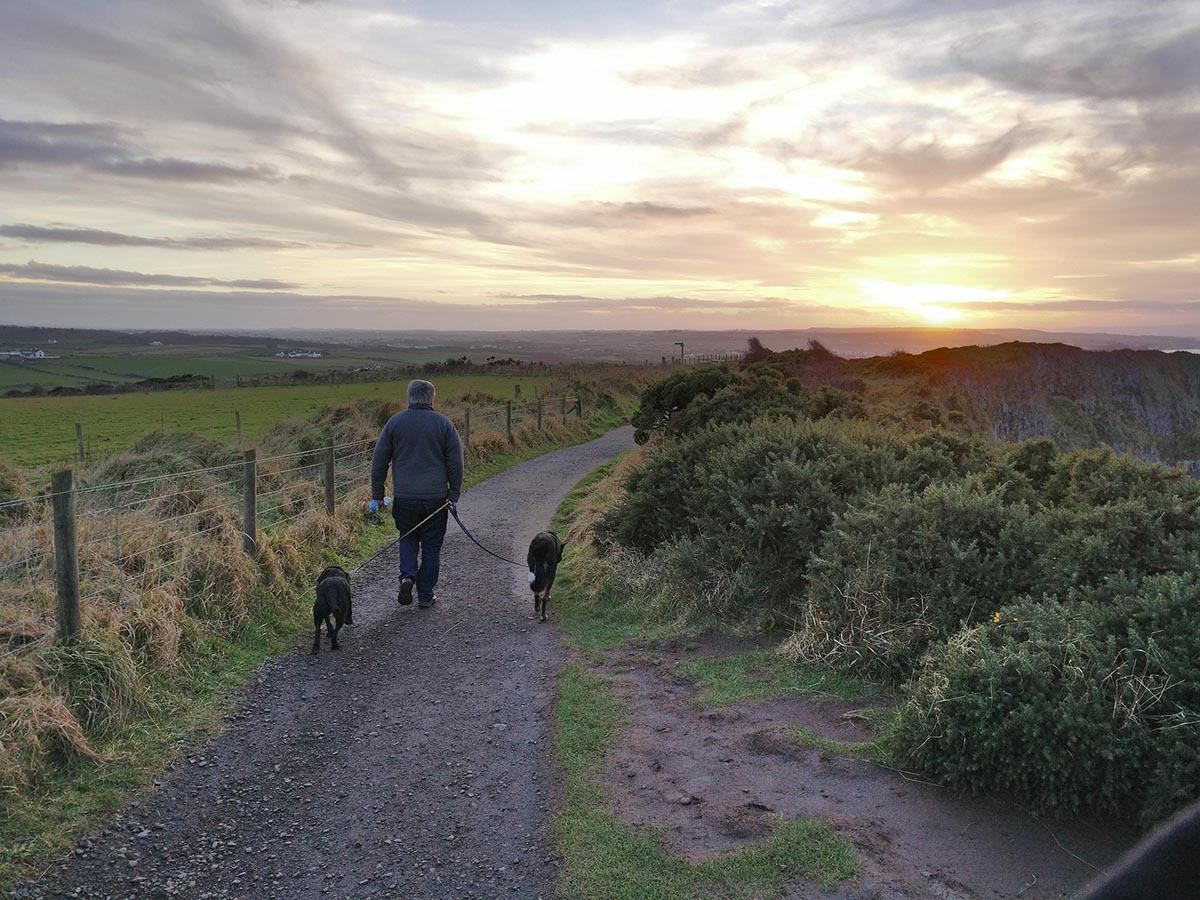
Ireland’s coast has a way of changing the pace of a trip. One stretch feels wide and easy, with sea views and green fields opening out on either side. The next turns rockier, windier, and more dramatic, with cliffs, headlands, and old paths pulling you into the landscape. That variety is one reason coastal walking here stays with people long after the holiday ends.
It also explains why guided walking appeals to so many travellers. A good coastal route is never only about mileage. You are dealing with weather shifts, transfer timings, local history, daily pacing, and the practical question of how much energy you want left at the end of the day. Most Irish coastal walking trips sit in the Comfortable to Moderate range, which means success depends as much on planning and support as it does on fitness.
Why Ireland’s coastline rewards walkers
Walking the Irish coast gives you access that a car rarely can. A narrow clifftop trail, an old boreen leading to a cove, or a grassy headland above the Atlantic all reveal more on foot than they do from a viewpoint stop. You notice the sheep moving across a hillside, the pattern of stone walls, the smell of salt in the air, and the change in light over the water.
That sense of closeness matters in regions such as Kerry, the Dingle Peninsula, West Cork, Connemara, and the west coast islands. Trails often combine scenery with layers of story. One day might bring an early Christian site, another a fishing village, another a section of quiet upland path where the ocean keeps appearing in the distance. The route feels richer because the landscape and the culture are tied together.
Fáilte Ireland advises visitors to prepare for changing Irish conditions, and that is especially sensible on exposed coastal walks. Wind, soft ground, and the rhythm of point-to-point walking all shape how a day feels on the trail.
What a guide changes on a coastal walking trip
A guide does far more than keep the group on the correct track. On Ireland’s coast, the real value often comes from rhythm. A guide knows when a route deserves a slower pace, when weather calls for a small adjustment, and when a scenic stop is worth more than pushing on for another kilometre. That judgement turns a busy itinerary into a holiday that still feels spacious.
Guides also deepen the place itself. Coastal routes in Ireland are full of stories, from local folklore and music traditions to emigration history, old pilgrim paths, famine roads, monastic ruins, and maritime heritage. Without context, a visitor sees a beautiful cliff or ruined wall. With context, that same place becomes part of a living landscape.
Francis Hartnett puts it well: “A guided walking trip should give people time to enjoy the path, hear the local story, and finish the day feeling looked after rather than worn out.” That is a useful way to judge value. Good guidance is not only about navigation. It is about giving shape to the whole experience.
Why support matters as much as scenery
Many travellers are drawn to the coast for its beauty, but the practical side often decides whether the holiday feels relaxed or tiring. Guided walking removes much of that pressure. Transport between walks, luggage handling, accommodation planning, and group logistics are arranged in advance, so each day begins with less friction.
That support matters most when the trip includes several moving parts. A coastal holiday may start with a trail section, continue with a transfer to a more remote peninsula, and end in a village where dinner options, local music, or the next morning’s start point all benefit from insider knowledge. Without support, the traveller spends time managing details. With support, that time goes back into the holiday itself.
- Daily logistics are organised before you arrive.
- Group pacing is easier to manage on mixed terrain.
- Luggage and transfers reduce physical and mental load.
- Local recommendations improve evenings as much as the walks.
That is especially helpful for comfort-oriented couples and mature active travellers who want a walking holiday with quality accommodation and dependable structure. It is also valuable for anyone new to Irish trail conditions, where a route that looks modest on a map can feel quite different when weather and underfoot conditions change.
Comfort is part of the value, not an extra
One of the most common mistakes people make when comparing walking holidays is treating support and comfort as secondary details. On a coastal trip, they are central to the experience. A well-chosen room, a good dinner, reliable transport, and the confidence that someone is handling the moving parts all affect how much you enjoy the trail the next day.
That does not mean guided walking lacks adventure. It means the challenge is framed properly. You still walk real distances, deal with the natural contours of the land, and spend long hours outdoors. The difference is that the hard edges around the day are softened. You finish a walk and return to an en-suite room instead of wondering where to eat, how to move bags, or whether tomorrow’s route notes will match the conditions.
For many travellers, especially those visiting Ireland for the first time, that balance is exactly what makes the holiday feel worthwhile. The coast still feels wild in places. The days still feel active. Yet the overall trip remains calm, personal, and manageable.
When guided walking is the better choice
Independent walking suits some travellers well, particularly those who enjoy route-finding and want full control over each day. Guided walking tends to be the better fit when the goal is not only to complete a route but to settle into it. Travellers who value local insight, easier planning, and a more sociable atmosphere often find that a small guided group gives them far more from the same landscape.
It can also be the stronger option when the route includes multiple highlights across one region. Coastal Ireland is rarely one-note. A single guided trip may combine cliff paths, inland passes, island visits, village stops, and viewpoints that are hard to string together smoothly without local coordination. The result is a trip that feels coherent rather than pieced together.
- You want local stories and context, not only route notes.
- You prefer small-group support over daily self-management.
- You value comfort after active days on the trail.
- You want the coast to feel immersive, not rushed.
Choosing the right way to experience the coast
The strongest argument for guided walking in Ireland is simple. It lets the coast remain the main event. You notice the shifting light over the Atlantic, hear the story behind the ruin on the hill, and arrive each evening with enough energy left to enjoy the village, the food, and the sense of place around you.
Travellers weighing their options often start with guided walking holidays in Ireland because that format combines scenery, local expertise, and day-to-day support in a way that suits the country’s coastal regions particularly well. It is not only a convenient way to walk. It is a better way to recognise what makes these trails special in the first place.
For the right traveller, that is what makes the holiday worth it. The route feels easier to enjoy, the details feel lighter, and the coastline has the space it needs to leave an impression.



Leave a Reply
You must be logged in to post a comment.