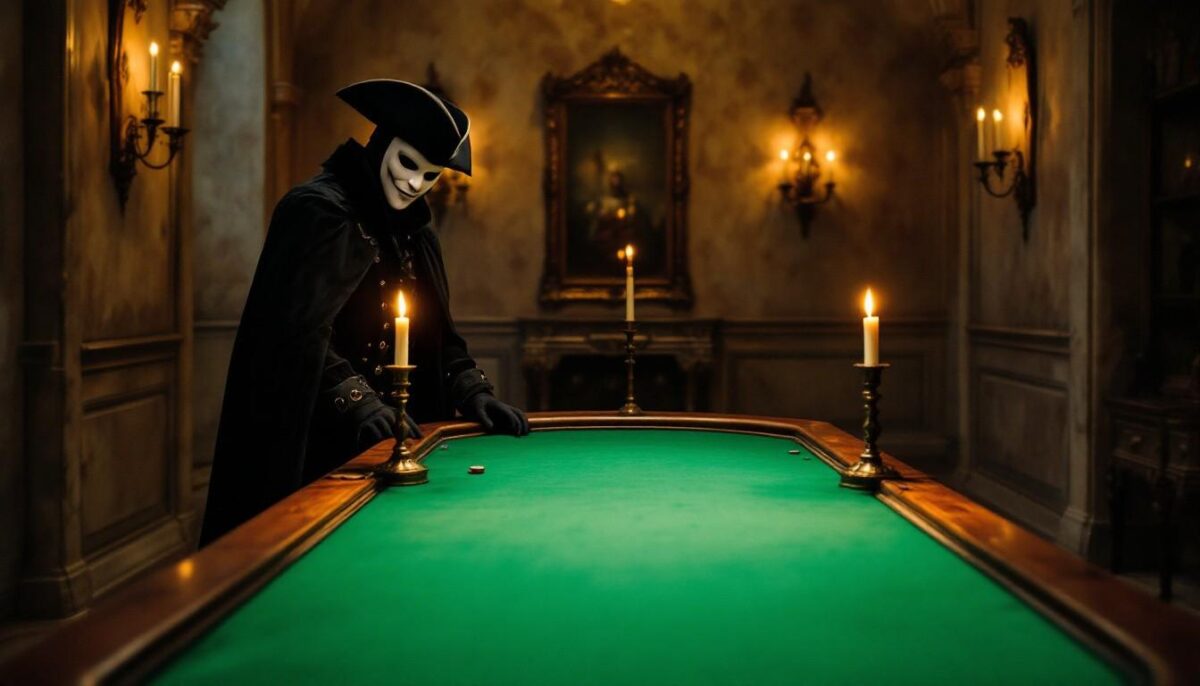
Image by Ottoline Graves
The Republic of Venice opened a gambling house of its own in 1638. The Ridotto took rooms in Palazzo Dandolo at San Moisè, close to St. Mark’s Square. It opened for the carnival season, which in Venice ran from 26 December to Ash Wednesday, with plenty of exceptions allowed. Ca’ Rezzonico, the Venetian museum devoted to the 1700s, describes it as the earliest gaming house the state of Venice managed directly.
Each casino in this story needed a yes from someone with the power to give one. Who that was, and what they wanted back, is the thread that runs from that room to a cashier that takes Bitcoin. In Venice the answer was a republic governed by its nobles. In Monaco it was a prince who had lost most of his land. The latest answer came from Curaçao, where a new gaming law took effect on 24 December 2024 and changed who on the island may grant a license at all.
Venice opened one lawful room to drain the private ones
Venetians gambled long before their government joined in. The Republic issued ban after ban, and people kept playing behind closed doors all over the city. The museum’s catalog note on its painting of the Ridotto, published through Google Arts & Culture, gives the state’s reasons for changing course. It wanted the city’s gambling gathered at one address, and it wanted a large share of the money that gambling moved every day to end up in the public treasury.
That made the permission an odd one. The state granted it to itself and claimed a share of the money in return. Later regulators would split those two jobs apart, but in 1638 the authority and the house were the same body.
The museum says the hall soon drew local nobles and foreigners in town for carnival, and that enormous sums crossed its tables. The state didn’t deal the games itself. The banks went to poorer patrician noblemen, the Barnabotti, and a banking card game is built to favor the bank across a long run of hands, whatever happens on any single night.
Francesco Guardi’s view of the main hall, dated 1746, hangs today in that museum’s palace on the Grand Canal. It’s the version a visitor to Venice can see. A smaller one is in New York.
Venice withdrew its permission after 136 years
The Republic shut the Ridotto in 1774. VeneziaNews, the city’s culture magazine, says the government closed it for moral reasons. A collection record from Art Fund, the British charity that helped the Fitzwilliam Museum in Cambridge buy a 1750 painting of the hall in 1980, is blunter. It says the house closed to stop Venetian noblemen from losing all their money to foreigners.
Both reasons point at a weakness built into the 1638 arrangement. A state that takes a share of every table has little reason to limit what’s lost at them, since more play means more income. Once the damage to patrician fortunes grew large enough, withdrawing the permission was the remedy the Republic chose, and its share went with it.
Closing the room didn’t stop the play. Dana Facaros and Michael Pauls, in their Venice art and culture guide, write that more than 100 illegal casini, small private clubs, soon filled the gap, and that the word came to carry the meaning it has today. They add that the Ridotto had promised fair play in exchange for a percentage of the takings, which was a bargain no illegal club could offer the state.
The government that opened and closed the Ridotto didn’t last much longer. A 2012 exhibition catalog from the State Archives of Venice dates the fall of the Serenissima to 12 May 1797, and with it went the councils that had decided where Venetians could gamble and who would profit.
Monaco’s prince sold the right with public works attached
Monaco’s version began with a loss of land. In 1861 Prince Charles III signed a treaty with France that settled the fate of Menton and Roquebrune for good, and the Monaco government’s history of the period says he meant to cover the deficit left by the loss of 90% of Monegasque territory.
His plan was sea bathing and gambling for aristocratic visitors. The same history says he granted a monopoly on that business in 1856, and that in 1863 the concession passed to François Blanc, who had already made a success of a casino in Germany. The Société des Bains de Mer’s own history dates the company’s founding to a decree from the prince that same year.
The concession came with obligations. The company had to provide public services, among them water and gas supply, road building, land and sea transport to Nice and Menton, and the publication of an official journal. Venice had kept the house for itself; Monaco handed it to a businessman and billed him for the infrastructure.
The money for all that came from games built with an edge. On a single-zero roulette wheel a winning number pays 35 to 1, but there are 37 pockets, so over a very large number of spins the house keeps about 2.7% of every amount staked. One evening’s result can go either way, and often does.
In 1866 the prince gave his own name, as Monte-Carlo, to the town growing up around the casino on the Spélugues plateau. In 1869 he issued an ordinance, and Monaco’s public-service website still dates the principality’s lack of income tax back to it. Saint Charles’ Church opened in the new district in 1883, and it’s still there for anyone walking through Monte-Carlo.
Monaco also chose who could play. Law No. 1.103 of 1987 says in Article 11 that Monegasques, along with officials of the State, the Commune and public bodies, may not take part in the games in its gaming houses. Article 2 still requires a sovereign ordinance for any license to run a gaming house.
Curaçao moved its permissions from a few firms to one authority
Curaçao’s permissions were written for websites. The chapter on Curaçao in the Legal 500 country guides names the old framework as the National Ordinance on Offshore Hazard Games, with the Minister of Finance in charge of it from 2019. From March 2020 the Gaming Control Board, now the Curaçao Gaming Authority, handled online licenses on the minister’s behalf, and in late 2023 it began phased reforms ahead of the National Ordinance on Games of Chance, or the LOK after its Dutch title.
Hundreds of brands once ran on sublicenses from a handful of master-license holders, a chain that Best Bitcoin Casino says the LOK broke by putting direct licenses from the authority in its place. Monaco bars Monegasques from its gaming tables; the casinos on that page keep out countries, and where the page checked their terms, none takes players from the United Kingdom or the United States.
No regulator in any US state has licensed one of them. The page also says almost no crypto casino holds a license from a strict regulator such as the UK Gambling Commission or the Malta Gaming Authority. So the permission behind nearly every crypto casino comes from somewhere else, and Curaçao is one of those places.
Under the old chain, a brand’s permission came second-hand, from whichever master-license holder had sublicensed it. Under the LOK it has to come from the authority itself, one license at a time, issued to the site’s own operating company.
Curaçao’s authority put crypto under its money-laundering rules in June 2026
The Curaçao Gaming Authority began as a foundation, incorporated in 1999. In its own account of its history, it calls itself the direct result of a 1998 evaluation by the Caribbean Financial Action Task Force, the regional body that checks its members’ anti-money-laundering rules. Venice had asked its gaming house for a share of the takings, and Monaco asked for roads and gas lines. Much of what Curaçao’s authority demands in return is a paper trail for the money.
Since February 2019 it has supervised anti-money-laundering compliance across the island’s whole gaming industry, where before it had only the land-based casinos. Since the LOK took effect, it has licensed online gaming as an independent administrative authority.
Its rules for Bitcoin and other coins arrived in June 2026. The crypto policy guideline it addressed to license holders says the use of cryptocurrencies is no carve-out from anti-money-laundering or responsible gambling obligations. Licensees may take crypto payments for gambling only, and they must not act as exchanges, payment providers or wallet services for their players. They can’t swap one coin for another, or for cash, on a player’s behalf, and they have to tell players plainly that they aren’t responsible for whatever exchange the player used to buy the coins.
Some parts applied at once. Coins that pass through sanctioned mixers or come from sanctioned wallets were barred with immediate effect, and the guideline names Monero and Zcash among the privacy coins each licensee’s policy has to deal with.
The rest runs on a timetable. Licensees had to upload a crypto policy to the authority’s portal by September 2026. By December 2026 they’ll need documented risk assessments, due diligence on the exchanges they deal with, wallet ownership checks and staff training. By June 2027 the guideline requires wallet segregation and blockchain analytics to be fully in place.
The Met hangs Guardi’s Ridotto in the same gallery as the council’s antechamber
In Venice the address is easy to find. VeneziaNews places the Hotel Monaco and Grand Canal on the ground the Ridotto once occupied, by the church of San Moisè.
Early is the time to go. Travel Thru History’s founder, W. Ruth Kozak, found St. Mark’s Square deserted one early morning except for a few artists at their easels in front of the Doge’s Palace, and San Moisè is a short walk from the square.
The hall Guardi painted doesn’t look the way he left it. The Metropolitan Museum of Art calls its canvas of the main room one of Guardi’s rare interior views. It measures about 13 by 20 inches, was painted around 1765 to 1768, and catches the tattered wall hangings and crooked pictures just before a remodeling in 1768.
Guardi made that canvas as one of a pair. Its partner shows the antechamber of the Sala del Maggior Consiglio, the hall in the Doge’s Palace where Venice’s Great Council met. Both came to the Met as a 1996 bequest from Lore Heinemann in memory of her husband, Rudolf. The museum’s collection records place the two paintings together in Gallery 644 on Fifth Avenue.



Leave a Reply
You must be logged in to post a comment.