Fruits of Labor
by Sarah Humphreys
Traveling through Tuscany in autumn, you are bound to spot olive groves alive with activity as nets are spread out under the trees and olive pickers gather in La Raccolta (Harvest). This yearly event is an ancient tradition and methods have changed little over the centuries.
Preparation for the harvest takes place in spring when the trees are carefully pruned to maximize the number of olives a tree will produce. The pruned branches are then burnt in the fields.
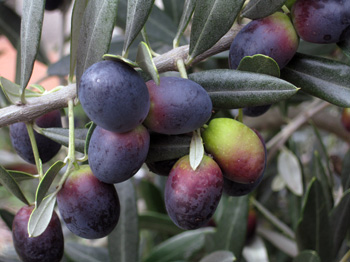
 To create the highest quality olive oil, it is vital to time the harvest perfectly. Unlike in other regions, olives in Tuscany are picked before they are ready to fall from the tree. This produces a fruity and lean extra virgin olive oil, even if the yield is lower. The ideal time to harvest is when the unripe green olives begin to mature and turn black, which is when they contain the highest quality oil. However, this is easier said than done since even olives on the same tree may mature at different rates. The flavours of green and black olives vary but both are needed to make good quality oil. The initial oil is generally more bitter but olives that fall when too ripe make poorer quality oil. Plucked directly from the tree, the fruit is extremely bitter and almost inedible.
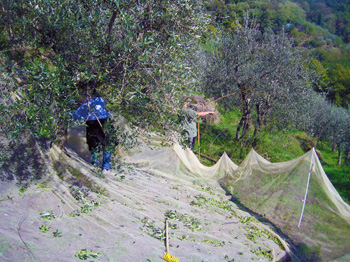
 The ideal olive picking team consists of as many family members and friends as possible to share the labour. Firstly, huge nets are spread out around the trunk of a tree. Naturally, most olive groves are far from flat so the nets often have to be propped up by sticks or branches pruned from the trees to prevent the precious harvest from rolling away.
When the nets are in place, olives are removed by hand, with metal pincers or with plastic combs. Long rakes are used to reach the fruit on the higher branches. Ladders can be used to reach the tops of the trees but it is best to leave tree climbing to experienced olive-pickers since the trees can be brittle and slippery. When picking olives from lower trees, baskets or buckets are used to collect the fruit directly and nets are not always necessary.


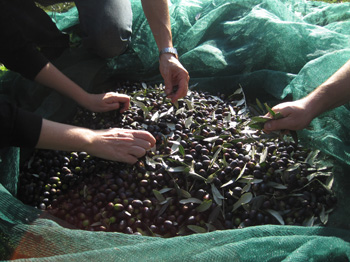
 Although very light, the nets are rather cumbersome to move around and harvesters often have to stand in uncomfortable positions on steep slopes. It is essential to gather the harvest before the weather becomes too cold, so work needs to take place, rain or shine. It is also essential not to crush the olives that have fallen onto the nets so you need to be careful where you put your feet.
A mechanical “tree-shaking” device called an “oliviero” is sometimes used to remove olives from the trees but most of the hard work is still done by hand. It takes around 4 or 5 kilos of olives to make a litre of oil and an average harvester can pick around seven kilos of olives per hour by hand.


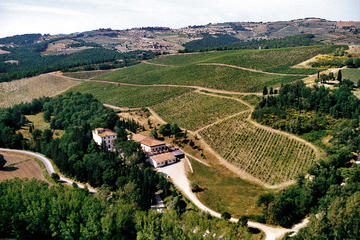
Guided Hiking Tour in Tuscany with Lunch Wine and Olive Oil Tasting
If You Go:
The main airports in Tuscany are Pisa Galileo Galilei and Florence Peretola. The main train station in Pisa is Pisa Centrale, which can be reached by bus or taxi from the airport. Florence airport has a regular bus service to Santa Maria Novella, the main train station in Florence. You may well need to hire a car if you wish to participate in olive picking.
Links to olive picking holidays:
Olive harvest experience at a Tuscan grove
Chianti olive picking
Farm Holidays La Baghera
Green Holiday Italy

Sarah Humphreys is originally from near Liverpool, UK and has lived in Canada, The USA, The Czech Republic, Greece and Italy. She currently lives in Pistoia, near Florence, where she teaches English, writes freelance and is a part-time poet. She has been writing since she could hold a pencil and her passions include Literature, poetry, music and travel. Follow her on twitter: Sarah Humphreys @frizeytriton.

All photos by Sarah Humphreys except #4 which is by Isacco Marini:
Multi-coloured olives
Setting up the nets
Cleaning the olives
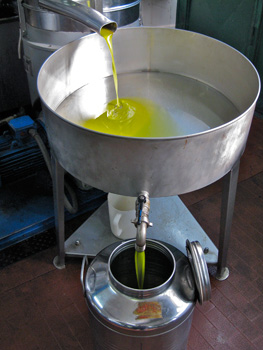
Il Frantoio – The finished product



Leave a Reply
You must be logged in to post a comment.