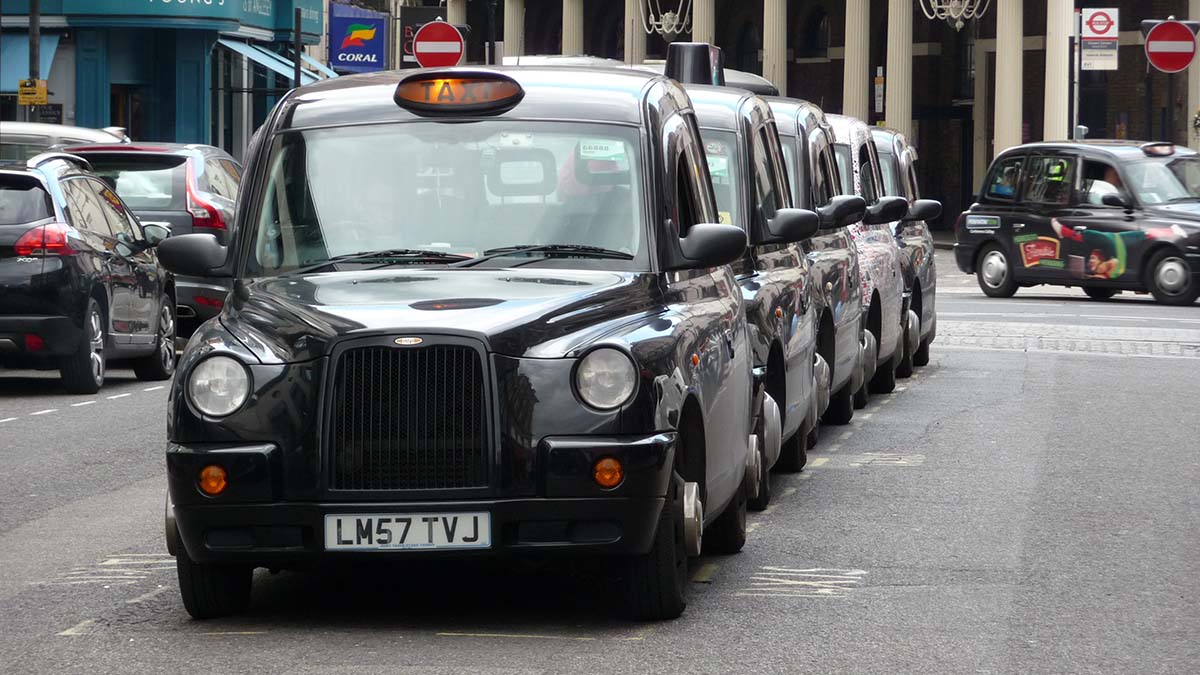
The question on all commuters and travellers’ minds in 2026 is simple: with petrol prices hitting record highs across the UK can London taxi companies still afford to keep fares? It is a concern. Whether you are a commuter, a business traveller rushing to Heathrow or a tourist navigating the city for the first time, the cost of getting from one place to another matters enormously.
The honest answer is, yes. Only the smartest London taxi companies are managing it. The London taxi companies that are holding the line on pricing are not doing so through luck. They are doing it through technology cleaner London taxi fleets and a fundamentally different approach to how they run their London taxi operations.
The Scale of the Problem: Why Petrol Costs Are Hitting London Taxi Firms So Hard
Fuel has always been one of the operational expenses for any London taxi or private hire company. The 2026 fuel crisis has taken this challenge to a new level. Global supply chain disruptions, geopolitical tensions affecting oil-producing regions and sustained pressure have combined to push petrol and diesel prices well beyond what most London taxi operators budgeted for.
For a London taxi driver completing ten to twelve hours of shifts daily in a city as traffic-heavy as London fuel costs can represent 30% to 40% of running costs. When those costs spike by 20% or more. The London taxi driver absorbs the loss, raises prices or finds a smarter way to operate. Two of those three options are long-term.
This is why the difference between London taxi companies that are thriving and those that are struggling comes down entirely to strategy.
Technology Is the Line of Defense Against Rising Costs
One of the most effective ways London taxi firms are protecting both their margins and their customers wallets is through intelligent route optimization. AI-powered dispatch and navigation systems now allow London taxi drivers to avoid congestion in time, calculate the most fuel-efficient routes and reduce unnecessary idle time. All of which directly reduces fuel consumption per London taxi journey.
Companies like Sky Bridge Cars have invested heavily in this kind of digital infrastructure. Their online booking system allows customers to lock in fixed prices in advance; while giving the London taxi company the operational data it needs to run its London taxi fleet efficiently. The result is a system where smarter logistics directly translate into savings that can be passed on to London taxi passengers.
The Electric and Hybrid Vehicle Revolution
Perhaps the significant structural shift in London’s taxi industry right now is the accelerating transition to electric and hybrid vehicles. The economics have never been more compelling. While a petrol-powered London taxi might spend £80 to £120 per day on fuel during conditions an equivalent electric vehicle can complete the same mileage for a fraction of that cost.
The upfront investment in EV fleet transition is considerable. Forward-thinking London taxi operators recognize it as a hedge against ongoing fuel price volatility. Once you’ve transitioned to electric the unpredictable item in your cost base petrol prices essentially disappear from the equation.
Hybrid executive vehicles are proving particularly popular in the premium airport transfer segment. They offer the range and flexibility required for routes to airports like Heathrow, Gatwick, Stansted and Luton while delivering dramatically improved fuel economy compared to traditional diesel alternatives. London taxi passengers benefit from quieter, rides. London taxi operators benefit from reduced running costs.
London’s Ultra Low Emission Zone regulations have accelerated this transition by making older high-emission vehicles increasingly expensive to operate in the city. Far from being a compliance burden, ULEZ has effectively pushed London taxi operators towards cleaner vehicles that also happen to be cheaper to run.
Fixed Pricing: The Solution Passengers Did Not Know They Needed
One of the impactful ways London taxi companies can protect customers from the effects of rising petrol costs is through fixed-price models. And it is an approach that is rapidly becoming the standard for quality airport transfer services.
Fixed pricing completely changes this dynamic. Customers book in advance, see the fare upfront and pay exactly that amount regardless of traffic conditions or fuel price movements on any given day. For travellers on business expense accounts, those managing travel budgets or simply anyone who values financial predictability this is enormously reassuring.
Sky Bridge Cars operates a fully fixed-price model across all their airport transfer services covering London airports including Heathrow, Gatwick, Stansted, Luton and London City Airport. In an environment where unpredictability feels like the norm, this kind of transparent pricing represents a genuine competitive advantage and a real service to customers navigating an already stressful travel experience.
Smart Airport Operations: Reducing Waste, Reducing Costs
Airport transfers present operational challenges that if handled poorly destroy margins. Flights are delayed. Passengers take longer than expected to clear customs. London taxi drivers waiting on the forecourt burn fuel. Clock up time with nothing to show for it.
The smarter London taxi companies have solved this through real-time flight tracking integration. Then sending a London taxi driver to the airport at the scheduled arrival time and hoping for the best, these systems monitor actual flight progress and adjust driver dispatch accordingly. The London taxi driver arrives when the passenger is genuinely ready. Not thirty minutes before burning fuel in the car park.
Meet-and-greet services, where a uniformed representative waits in the arrivals hall with a name board add another layer of efficiency. Passengers’ clear customs knowing where to go and who to look for. Confusion, delays and unnecessary waiting are minimized. It is a service model that costs little to operate but delivers enormous value to customers, particularly international travellers unfamiliar with the airport layout.
Preventive Maintenance: The Unglamorous Cost-Saver
One of the glamorous but most effective ways London taxi companies control costs during fuel crises is rigorous preventive maintenance. A maintained London taxi vehicle consumes fuel more efficiently than a neglected one. Tyre pressure alone can affect fuel consumption by percentage points. Engine health, air filter condition and transmission performance all play a role.
What This Means for Passengers Now
The net effect of all these strategies is that quality London taxi operators. The ones who have invested in modern fleets, smart technology and efficient operations. Are genuinely managing to hold prices at competitive levels despite the pressures of the 2026 fuel crisis.
Efficiency Is the Answer
Can London taxi companies keep prices low during rising petrol costs? The evidence from 2026 says they have built their London taxi operations around efficiency, technology and smart fleet management.
The London taxi companies that are succeeding are those that treated the transition to vehicles not as a regulatory burden but as a commercial opportunity. They are the ones that invested in booking platforms, real-time route optimization and flight tracking systems before the crisis hit. They are the ones offering passengers the fixed transparent pricing that makes budget planning possible in an uncertain economy.
Providers like Sky Bridge Cars represent this kind of forward-thinking approach. Combining technology, competitive pricing and customer-focused service to deliver reliable airport transfers, across London regardless of what the fuel markets are doing.