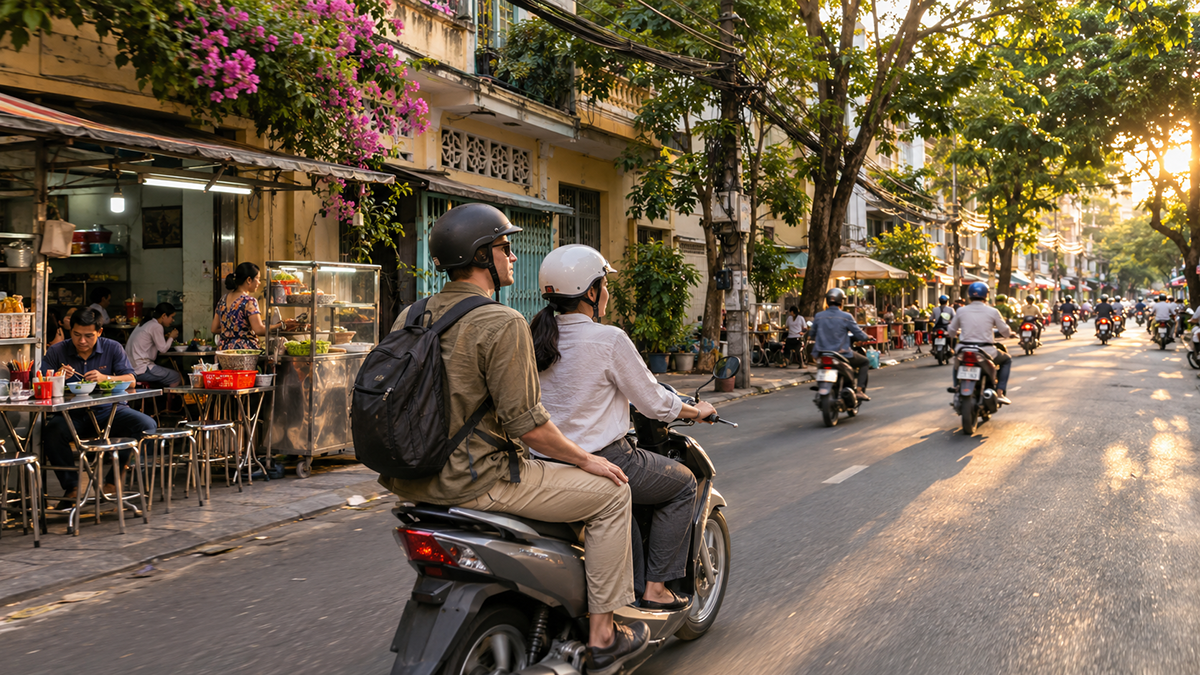
Ho Chi Minh City is easy to recognize from its famous landmarks, yet harder to understand from a single neighborhood. Its grand boulevards, market streets and residential lanes tell different parts of the story. A carefully planned ride between them helps visitors see how the city actually works, from the morning rush to the small food businesses that come alive after dark.
For travelers comparing saigon motorbike tours, the useful question is not simply how many attractions fit into the schedule. It is whether the route combines local context, time to explore on foot, worthwhile food stops and clear safety arrangements. Miss Saigon Tours offers guided city, food and evening rides led by local women, an approach that places the guide and the neighborhoods at the center of the experience.
See the City at Street Level
A motorbike provides a particular perspective on Saigon. From the passenger seat, the scale of the streets becomes apparent: families arranging produce outside shops, customers stopping for coffee, and vendors preparing for the next meal service. These details are easily missed when a visitor moves only between major sights by car.
The advantage is flexibility rather than speed. An experienced local driver can connect areas with different characters while respecting traffic conditions and permitted routes. A good tour also includes chances to stop, walk and ask questions. The most revealing moments may happen in a market aisle or over a small plate of food, not while the motorbike is moving.
Begin with the Landmarks Then Follow the Story
Central Saigon is a useful starting point because its architecture introduces important chapters of the city. Around the Central Post Office, the Notre Dame Cathedral area and the Opera House, visitors can see buildings associated with the French colonial period alongside the commercial center that developed around them. The value of a guide is in explaining how these places are used and understood today, not merely naming them.
Landmarks should provide context for the wider route. After visiting the center, a journey through everyday streets reveals another side of the city: small temples, neighborhood shops and busy food corridors that rarely appear in first-time sightseeing checklists. Opening hours, restoration work and local events can change access to individual sites, so a flexible itinerary is more useful than a rigid promise of entry everywhere.
Make Time for Cho Lon and Its Market Culture
Cho Lon, Saigon’s historic Chinese quarter, offers a particularly instructive contrast with the central business district. Commercial streets, traditional medicine shops, places of worship and long-established food businesses show how trade and migration have shaped the city. The area around Binh Tay Market is often a strong starting point for understanding wholesale activity and the role markets play in daily supply networks.
A visit to Thien Hau Pagoda can add another layer, provided visitors remember that it is an active religious space. Observe posted rules, speak quietly and ask before taking close photographs of worshippers. The best guided visits allow enough time to notice details and understand their meaning. Racing through a neighborhood only to collect photographs would miss much of what makes Cho Lon worth exploring.
Use Food Stops to Understand Local Life
Street food is an especially effective way to learn about Saigon because meals reflect routines as well as taste. Com tam, or broken rice, is a familiar everyday dish in the south. Banh xeo, a crisp savory pancake, introduces the pleasure of sharing herbs, greens and dipping sauce. Banh mi is convenient and widely available, but its fillings and preparation can vary significantly from one stall to another.
An informed guide can explain what is being prepared, how a dish is normally eaten and why a particular vendor attracts local customers. The conversation matters as much as the tasting. Travelers should mention allergies, vegetarian requirements and food restrictions before booking, then confirm ingredients again at the stall when needed. Choose freshly prepared dishes, use hand hygiene and drink safe water, especially when heat and humidity are high.
Build in time between tastings. A motorbike food experience works best when the stops represent different specialties or neighborhoods, rather than repeating similar dishes simply to increase the count. A short walk through the surrounding streets often makes the meal more memorable.
Choose the Best Time for Your Interests
Morning Routes for Architecture and Markets
Morning can suit visitors who want a clear view of building details, market activity and the rhythm of local errands. Starting earlier may also make outdoor walking more comfortable before the strongest heat. Check whether specific markets or landmarks on the proposed route are active at the planned hour, since a place can feel very different from morning to late afternoon.
Evening Routes for Food and Street Life
Evening rides emphasize a different city. Food stalls become gathering places, illuminated streets create a new atmosphere and neighborhoods shift from work to leisure. Visitors who care most about cuisine and social life may prefer this timing. In the rainy season, generally from May to November, showers can affect timing, visibility and comfort. Ask the operator how weather changes are handled rather than assuming every departure will follow the same plan.
Ask the Right Safety Questions Before You Book
Motorbike travel carries real road risks, particularly in dense urban traffic. A guided tour can remove the need for a visitor to navigate or drive, but it cannot eliminate those risks. The responsible choice is to check the operator’s procedures and decide whether riding as a passenger is appropriate for your own comfort and circumstances.
Before confirming a booking, ask about the following practical points:
- Who will drive, what training and valid licensing do they have, and is the bike maintained for passenger travel?
- Will you receive a well-fitting helmet and a clear briefing on where to hold on, how to mount and dismount, and what to do at stops?
- What is included in the price, how are weather disruptions handled, and can the itinerary accommodate dietary or mobility needs?
- Does your own travel insurance cover riding as a motorbike passenger in Vietnam, including any relevant policy exclusions?
Wear secure footwear, avoid loose items that can catch on the bike and keep valuables stowed rather than using a phone in moving traffic. If you feel uncomfortable with a route, speed or weather condition, tell the guide immediately. Travelers who prefer not to ride can still explore many of the same districts through walking tours and car-based transport.
Travel with Curiosity and Respect
Local neighborhoods are working places, not open-air displays. Before photographing a vendor, ask permission when practical and avoid blocking entrances or customer queues. At markets, respect the pace of trade; at religious sites, dress appropriately and follow local guidance. A few simple Vietnamese courtesies, including a sincere “cam on” for thank you, can make interactions more comfortable.
Responsible operators should also be able to explain where your money goes. Small food purchases can support the businesses you visit, but genuine engagement matters more than a forced shopping stop. If a guide recommends a stall, ask why it was chosen. A thoughtful answer about the food, community or owner is more informative than a generic claim that it is the best in town.
Remember the City Between the Stops
A meaningful Saigon motorbike experience is measured less by the number of sights covered than by the understanding gained along the way. The Central Post Office may introduce the city’s architectural history, Cho Lon may reveal its commercial traditions, and a neighborhood meal may explain how people gather at the end of the day. Together, these encounters create a fuller picture than a checklist of landmarks.
Choose a tour with a knowledgeable guide, a realistic pace and transparent safety practices. Leave room for questions and small discoveries. Those are often the details that stay with travelers long after the ride ends.