Travel Thru History

Historical and cultural travel experiences

  • Home
  • Airfare Deals
  • Get Travel Insurance
  • Writers Guidelines

A Photographic Stroll Through History: Siena’s Cathedral of Santa Maria Assunta

Siena Cathedral

by Ron Ellege

What do some of Italy’s finest artists of the day, Nicola and Giovanni Pisano, Donatello, Pinturicchio, Lorenzo Ghiberti, and Bernini, have in common? They all contributed to one of the finest displays of Gothic architecture in Italy. Siena’s Cathedral of Santa Maria Assunta is filled with treasures by Pisano, Donatello and Michelangelo, as well as frescoes by Pinturicchio.

The Beginning

Begun in 1229, and the dome completed in 1264, Siena’s Cathedral is a spectacular edifice inside and out. With a vision of hosting the largest cathedral in Europe, the existing structure was to become the transept of a new cathedral more than 100 meters long. Tragically, their dream of an imposing cathedral died in 1348 when, within a few months, 60 percent of Siena’s inhabitants were struck down by the Black Plague.

The remnants of the outer walls remain today and bring perspective to the vision they had undertaken.

The East wall of Duomo NuovoThe west facade was begun in 1285 under the watchful eye of Giovanni Pisano. In 1296 Pisano hastily left the city over a creative dispute with the governing council and his work was completed 100 years later by Giovanni di Cecco.

In the 19th century, the Cathedral was extensively restored and the golden mosaics in the upper gables were made by Venetian artists in the late 1870’s. The large central mosaic, the Coronation of the Virgin, is the work of Luigi Mussini. The Nativity of Jesus and Presentation of Mary in the Temple, were made by Alessandro Franchi. The large rose window is surrounded by busts of 36 patriarchs and a statue of the Madonna and Child.

Inside The Cathedral

Columns with black and white stripesPrepare to be amazed as the Wow Factor will captivate your senses the moment you enter the doors of this historic Gothic Cathedral. The black and white marble stripes on the walls and columns immediately captivate the eye. Black and white is seen throughout Siena and are the city’s symbolic colors.

Stop at the visitor’s desk directly across from the entrance where you can pick up an audio tour which will take you on an informational journey through the highlights of the Cathedral.

While standing in the short line for your tour radio, glance up at the cornice that runs the length of the nave. It is decorated with busts of popes fashioned in the workshop of Giovanni di Stefano who began his work in 1495. Below are 36 busts of Roman and Byzantine emperors from Constantine to Theodosiu.

Located over the main doors in the west façade is one of two rose windows not to be missed. This beautiful oculus depicts the Last Supper and was created by Pastorino de’ Pastorini in 1549.

The Central Nave

Venturing into the Cathedral we observe the central nave.

Here we view the high altar flanked by columns topped by our first glimpse of the hexagonal dome which is topped with Bernini’s gilded lantern.

Under the dome are gold-plated stucco statues of Patron Saints of Siena sculpted by Ventura di Giuliano and Bastiano di Francesco in 1490.

Duccio oculusThe Duccio Oculus, the round stained-glass window over the apse is one of the earliest existing examples of Italian stained glass.

It depicts the assumption, burial and coronation of the Virgin Mary and was crafted by Duccio di Buoninsegna in 1288.

The Floors

As you stroll through this art filled Cathedral with astonishing sculptures, frescos, and relics on display in every quadrant, pay close attention to the floors. This composite of marble inlays which were crafted over six centuries (from the fourteenth to the nineteenth century), are covered for protection during much of the year. Plan on arriving between mid-August and late October if you wish to view them.

Of all the mosaic marble panels, I have two favorites. The large panel in the transept “The Slaughter of the Innocents”.

This is thought to be the work of Matteo di Giovanni in 1481. It is the only story coming from a Gospel, Matthew 2:13-23, all the other illustrations are based on the Old Testament and classical sources.

The earliest floor panel in the Cathedral is the Wheel of Fortune and the Sienese Wolf.

This panel, located close to the entrance, dates to sometime between 1369 and 1373.

Self-Portraits

fresco of the papal coronation of Pius IIIAbove the entrance to the Piccolomini Library is this fresco of the papal coronation of Pius III by Bernardino di Betto (Pinturicchio).

I love this fresco as it captures the nature of many of the artists of the time. Pinturicchio, as he often did during this period in his career, included a portrait of himself. Pinturicchio is standing facing us, he is the one in front of the crowd on your right while viewing this fresco.

Another self-portrait is an addition by Michelangelo to the Piccolomini Altarpiece.

This complex altarpiece was commissioned by cardinal Francesco Todeschini Piccolomini and built between 1481 and 1485 by Andrea Bregno. However, its prominence is more for the four sculptures in the lower niches. Saint Peter, Saint Paul, Saint Gregory, and Saint Pius were sculpted by Michelangelo between 1501 and 1504. The statue of St. Paul is a self-portrait of the young Michelangelo.

The Last Glimpse

As you proceed from the cathedral, south toward Piazza del Campo, be sure to look back for a view of the dome and bell tower through the arch in the south wall of Duomo Nuovo.

The dome rises from a hexagonal base with supporting columns. The lantern atop the dome was later added by Gian Lorenzo Bernini.


If You Go:

You can drive, but it may not be the best choice.

By Car:

Siena is one of Italy’s prominent hilltop-towns and is located a mere 76 kilometers south of the beautiful city of Florence. The drive takes only 45 minutes via the Autostrada, however, once you arrive in Siena you will find that you cannot enter the old town unless you are booked in a local hotel. Parking is difficult to find and will often be located beyond any reasonable walking distance.

Our favorite car rental in much of Europe and the world. www.rentalcars.com.

Train or bus may be your best option if you are not taking one of the many tours offered in Florence.

Our favorite tour company is Walks of Italy.

By Train:

Siena is about 90 minutes by train, and they are scheduled frequently throughout the day. The train station is located close to Siena’s many tourist attractions and is about one-and-a-half kilometers from the Cathedral.

When traveling by rail I have two sites I check with: Trainline and Vacations By Rail.

The SITA Bus provides numerous links from the city of Florence to Chianti, and is the best way to get easily to Siena. Using the Rapide (express) Bus it will take about an hour from Florence, and you gain the added advantage of being taken to the historic center of town, close to the Cathedral.

Be Aware:

As is the case in all of Italy, to enter a place of worship you must dress accordingly (women’s shoulders should be covered, shorts are not appropriate, and men must wear shirts). Food and drink is not allowed in the Cathedral so take advantage of one of the many cafes and restaurants located a few steps away.

The public is welcome and encouraged to attend weekday and Sunday masses, but no sightseeing is permitted during these events.

Cost and Hours:

Tickets are €6 per person while the marble pavement is uncovered, usually from mid-August to late October. The rest of the year, entrance is €3 per person.

Siena Cathedral (Santa Maria Assunta, or Most Holy Mary of the Assumption) is open from 10:30 a.m. to 7 p.m. on weekdays, and from 9:30 p.m. to 6 p.m. on Sundays and holidays.


About the author:
Ron Elledge is a Freelance Photographer/Writer who splits his time between Phoenix, Arizona and Albuquerque, New Mexico when not on a photo shoot or world adventure. Ron’s photography can be viewed at www.RonElledgePhotography.com. His love of travel is shared by his wife, Shelli, with whom he travels the globe and together they document their journeys.

All photos by Ron Elledge


Tagged With: Italy travel, Siena attractions Filed Under: Europe Travel

St. Petersburg, Russia: In the Footsteps of Dostoyevsky

Engineer's Castle, St. Petersburg, Russia

by Tatiana Claudy 

“The most theoretical and intentional town on the whole terrestrial globe,” wrote Fyodor Mikhailovich Dostoyevsky about St. Petersburg, Russia, where he lived for about 30 years and had written his most famous novel, Crime and Punishment. [1] Despite his dislike of the city, he became the symbol of literary St. Petersburg and created his own city, “Dostoyevsky’s Petersburg,” occupied by characters of his novels and novellas.

Born in Moscow in a nobleman’s family, Dostoyevsky came to St. Petersburg in 1839 to study as a cadet of the Main Engineering School opened in a former royal residence, the Mikhailovsky Castle (or the Engineers’ Castle). Dostoyevsky was not excited about his future career in engineering, which his father chose for him. According to a supervisor from the Engineering School, young Fyodor was more passionate about literature than about science or entertainment: “In the dead of night we could see F. M. at the table, sitting and working.” [2] Dostoyevsky was definitely not in his elements either in the Engineering School or in the city’s center where the school was located. No wonder that some of his characters shared the writer’s detest for the imperial capital! For instance, the protagonist of Crime and Punishment, Rodion Raskolnikov, observing a magnificent view of palaces and cathedrals, “always marveled at a vague and mysterious emotion it roused in him. It left him strangely cold.” [3]

I visited the Engineers’ Castle, which has been restored as a royal residence and turned into a museum, but nothing there reminded of a cadet Dostoyevsky. Although he graduated from the school as a military engineer, he soon resigned to dedicate himself to writing. Nevertheless, the training received by Dostoyevsky in the Engineering School influenced significantly his literary work: he was obsessed with precise details and populated buildings in his neighborhoods with his fictional characters. The writer’s emphasis on particulars helped me to discover a part of “Dostoyevsky’s Petersburg” – places described in Crime and Punishment.

Crime and Punishment Locations

The novel’s opening gave me the address of Raskolnikov’s house: “On an exceptionally hot evening early in July a young man came out of the garret in which he lodged in S. Place…” [4] Although Dostoyevsky often used only first letters of names of streets and bridges, after his death his widow Anna deciphered these letters, providing references to real places. Thanks to her, I know that I need to go to Stolyarny Lane in the neighborhood of the Sennaya Square.

Raskolnikov’s houseI found Raskolnikov’s house, a big yellow apartment building, on the corner of Stolyarny Lane, 5, and Grazhdanskaya Street, 19. This rectangular structure with an inner yard has been built according to a typical architectural design of the 19th century: since the land was expensive, architects had to create the biggest possible house to occupy the lot. In 1970s, after remodeling, this “high, five-storied house” described by Dostoyevsky was turned into a four-storied one. [5] However, there is still the loft where Raskolnikov rented a room: “It was a tiny cupboard of a room about six paces in length … and it was so low-pitched that a man of more than average height … felt every moment that he would knock his head against the ceiling.” [6] The entrance to the house is locked to prevent tourists and literary journeys’ lovers, like myself, from disturbing the tenants.

Dostoyevsky plaqueAs I walked around the house, I saw the commemorative high relief of Dostoyevsky and the plaque with the inscription: “Raskolnikov’s House. The tragic lives of people of this neighborhood of Petersburg served for Dostoyevsky as a foundation of his passionate sermon of goodness for the entire humanity.” [7] There is an interesting tradition in St. Petersburg: on the first Saturday of July (events described in Crime and Punishment happened in the beginning of July), Dostoyevsky’s enthusiasts gather in this neighborhood to celebrate Dostoyevsky Day. Many bring flowers to place at the bottom of this relief, but some put here … axes, because Raskolnikov used an axe as his murder weapon. (Another reason for tenants of this house to keep the entrance door locked!)

House of old woman pawnbrokerAfter having found the house of the murderer, I need to find the house of his victim, an old woman, a notorious pawnbroker Alyona Ivanovna. The book presented her dwelling place as “a huge house which on one side looked on to the canal, and on the other into the street.” [8] The building fitting this description is located on the Griboedov Canal Quay, 104: one long side stretches along the Griboedov Canal, another – along Srednyaya Podyacheskaya Street, and the short side looks into Rimsky-Korsakov Street. Dostoyevsky gave another key for locating the old woman’s house – the number of steps that Raskolnikov made while walking there: “He had not far to go; he knew indeed how many steps it was from the gate of his lodging house: exactly seven hundred and thirty.” [9] Dostoyevsky, as a military engineer, was used to measuring distances in steps, and, knowing his obsession with precise details, we can presume that the writer gave us the correct number of steps.

The old woman’s house is a yellow apartment building which resembles Raskolnikov’s house. The old pawnbroker lived on the 4th story, and her windows looked into the inner yard. Today the entrance to the house and the yard are off limits for tourists, so I only could walk around the building. The house is protected by the government because a playwright Griboedov (whose name is given to the canal) lived here, and there is a memorial plaque dedicated to him. Yet for the majority of Russian literature’s admirers, this building is, first of all, the crime scene of a well-known fictional murder. Raskolnikov explain the reason for his crime: “I wanted to become a Napoleon, that is why I killed her.” [10]. After murdering the old woman, his intended victim, he killed her sister Lizaveta, his incidental victim, and this double murder tormented profoundly Raskolnikov’s mind and soul: “Did I murder the old woman? I murdered myself, not her!” [11]

I continued my literary journey to the Sennaya Square, another important place described by Dostoyevsky: in the novel’s beginning, here Raskolnikov learned when the old woman would be home alone and decided to use this opportunity to carry out his murder plan; at the novel’s end, here Raskolnikov tried to confess his crime publicly: “He knelt down in the middle of the square, bowed down to the earth and kissed that filthy earth.” [12].

Dostoyevsky MuseumNow I had to take the subway to reach the Dostoyevsky Museum located on Kuznechny Lane, 5. Dostoyevsky rented twice apartments in this building: in 1846, at the beginning of his literary career, and in 1878, three years before his death. The main attraction of the museum is Dostoyevsky’s cabinet where he had written his novel Karamazov Brothers. On the massive desk there is an issue of the magazine, Russky Vestnik, with an extract from Karamazov Brothers, Dostoyevsky’s letters, and one of his favorite novels, Eugene Onegin by Alexander Pushkin. Everything on the table is at the particular place because the writer “paid a great attention to this pedantic order” [13]. There are two candlesticks with candles because Dostoyevsky disliked table lamps and preferred to write by candlelight. Since the writer worked a lot, being constantly in dire need for money because of his gambling problem, he often slept in his cabinet on the sofa. Above the sofa there is a reproduction of Dostoyevsky’s favorite picture, “The Sistine Madonna” by Raphael, presented by Sofia Tolstoy (Leo Tolstoy’s wife). Anna, Dostoyevsky’s widow, wrote: “How many times, during the last year of Fyodor Mikhailovich’s life, I found him standing in front of this great picture in such a deep adoration that he did not hear how I had entered.” [14] On February 9, 1881, Dostoyevsky died on the sofa in his cabinet.

Dostoyevsky's graveDostoyevsky was buried at one of the most famous cemeteries of St. Petersburg – the Tikhvin Cemetery at the Alexander Nevsky Monastery. The tombstone consists of the Orthodox cross and Dostoyevsky’s bust placed on two books. The cross is adorned by a garland of thorns symbolizing the writer’s sacrifices and hardships. The bust bears a resemblance to the writer because Dostoyevsky’s death mask was used for its creation. Two books, representing two parts of the Bible, symbolize his devotion to the Russian Orthodox Church; additionally, books symbolize his literary career. The tombstone’s inscription in Old Church Slavonic language is a quote from John 12:24: “…unless a grain of wheat falls into the ground and dies, it remains alone; but if it dies, it produces much grain.” This tomb is one of the most visited, and it is often adorned with fresh flowers.

My one day literary journey in Dostoyevsky’s footsteps was completed. I learned more about another, no so glamorous, side of my home city – and I wish that more visitors would deepen their experience here by discovering “Dostoyevsky’s Petersburg!”

Footnotes:

[1] Dostoyevsky, F.M. Notes from the Underground. part I, chapter II. Project Gutenberg.
[2] Lurie, L. Petersburg of Dostoyevsky (Russian Edition). p.105. Sent-Petersburg: BXV-Petersburg, 2017. (translation by Tatiana Claudy)
[3] Dostoyevsky, F.M. Crime and Punishment. part II, chapter II. Project Gutenberg.
[4] Ibid., part I, chapter I.
[5] Ibid.
[6] Ibid., part I, chapter III.
[7] Translation of the inscription by Tatiana Claudy
[8] Dostoyevsky, F.M. Crime and Punishment. part I, chapter I. Project Gutenberg.
[9] Ibid.
[10] Ibid., part V, chapter IV
[11] Ibid.
[12] Ibid., part VI, chapter VIII
[13] Lurie, L. Petersburg of Dostoyevsky (Russian Edition). p. 335. Sent-Petersburg: BXV-Petersburg, 2017. (translation by Tatiana Claudy)
[14] Ibid.

If You Go:

Visas for Russia (Most foreigners need visas to visit Russia.)

The Mikhailovsky Castle (the Engineers’ Castle) is located on Sadovaya Street, 2. Adult tickets cost $5.50 per person.

The House of Old Lady Pawnbroker – The house is located on the Griboedov Canal Quay, 104. The easiest way to find it: get out at the subway station Nevsky Prospect, cross the Nevsky Prospect, and walk along the right side of the canal.

The F. M. Dostoyevsky Museum – The museum is located on Kuznechny Lane, 5, near subway stations Vladimirskaya and Dostoyevskaya. Adult tickets cost $5.50 per person. You can make photos but without using a flash.

The Tikhvin Cemetery at the Alexander Nevsky Monastery – The cemetery is located across the subway station Alexander Nevsky Square. Adult tickets cost $7 per person. Visitors receive tickets to visit two cemeteries – the 18th century Necropolis and the 19th century Necropolis. Dostoyevsky’s tombstone is in the 19th century Necropolis, to the right from the entrance.

About the author:
Tatiana Claudy is originally from St. Petersburg, Russia, but she lives with her family in the USA. Her passions include literature, art, music, languages, and photography. During her travels she loves to explore historical sites and take literary journeys. She is a freelance writer and an aspiring mystery writer.

All photos by Tatiana Claudy:
The Engineers’ Castle
The House of Raskolnikov
The Commemorative Plaque at the Corner of Raskolnikov’s House
The House of the Old Woman
Dostoyevsky’s Cabinet in His Last Apartment
Dostoyevsky’s Tombstone at the Tikhvin Cemetery at the Alexander Nevsky Monastery


Tagged With: Crime and Punishment locations, Russia travel, Saint Petersburg attractions Filed Under: Europe Travel

Greece: Marathon and the Ghosts of Ancient Warriors

Re-creation of Battle of Marathon

by W. Ruth Kozak

I stand on the deserted beach of Marathon, Greece, a long crescent of stones and sand. Surf spills over the pebbles, spray bursts like a shower of gold-dust reflecting the dazzling Greek sun. On this beach, with the surf hissing over pebbles red as blood and white as bone, I hear the wind moaning like the voices of the ancient dead, as though the spirits still linger in the shade of the pine groves. Here, in the stillness of the autumn afternoon, I remember the story of the young men of ancient Attica.

It is 490 BC. The Persian fleet is anchored offshore. Hopelessly outnumbered, the 9,000 Athenian and 1,000 Plataeans face the formidable army of 25,000 Persians. According to the legend, as the invasion begins, the shepherd god, Pan, miraculously intervenes. Black clouds obscure the sun as the Athenians launch their attack causing the Persians to “panic”, from which the term is derived. Confused by the commotion and the swift retaliation of the Attic warriors, the Persians hastily retreat and are defeated. This is Greece’s first battle for democracy. The second was to follow in 480 BC when the Persian fleet was defeated at Salamis, one of the most significant battles in history.

monument at Marathon, GreeceA short walk from the beach, in a pastoral setting surrounded by a grove of trees, 190 young men of Attica are buried where they fell, heaped in a common grave mound, guarded by a marble relief of the Warrior of Marathon. The tumulus is located five kms from Marathon village. The high mound is blanketed with a carpet of grass, surrounded by what was once the battlefield that covered the swampy ground between the beach and Mt. Pentilikon. Several miles inland there is an archaeological museum devoted to artifacts found in the area. Nearby is the grave mound of the eleven Plataeans who died in the battle, including that of a ten year old boy, the youngest fatality of that fateful day

I first visited Marathon, Greece back in 1984. The tomb was covered with a blanket of red poppies. I climbed to the top of it. Now there is a winding path surrounding it where visitors can stroll under the shade of the trees. A sign says: ‘No climbing allowed!’

The name “Marathon” comes from the herb fennel. It is believed that the town was named this because of the abundance of fennel plants in the area. The name of the long-distance endurance race comes from the legend of Pheidippides, a young Greek soldier and runner who was sent from the battle-field to Athens to announce the Greek’s victory.

burial tombShortly before the battle took place, the Athenians knowing they were vastly outnumbered, had sent Pheidippides, a soldier and experienced runner, to Sparta to ask for help. The 140 mile course from Athens to Sparta was rugged and mountainous. Pheidippides ran the course in only 36 hours, but the Spartans agreed to help only once the moon was full, due to religious laws. So Pheidippides ran back to Athens to deliver the disappointing news and immediately afterwards join the small Athenian army to march to the plains of Marathon.

By the end of that day the Persians were defeated. Pheidippides was again summoned to run the 26 miles back to Athens to deliver news of the victory. In spite of fatigue after his recent run to Sparta and having fought all morning in heavy armour, the brave young soldier took the challenge. Pushing himself beyond the limits of human endurance, he ran back to Athens to deliver the message. After shouting “Nike!” (“Victory!”) he collapsed and died of exhaustion. In his honour, to this day the Athenian “marathon” begins from the ancient battle site.

The starting point of the Athens marathon is up a long, tree-lined road, clearly marked. The new “Preservation of the Marathon” museum is located here and across the road is the Olympic stadium entrance with the starting gate for all marathons run in Greece. The new museum is mainly a record in photos and writing of all the marathons since the first modern Olympics in 1896 when a Greek shepherd, Louis Spiridon, who was known for his powers of endurance, won his first marathon. In a show of indescribable enthusiasm, 60,000 spectators and the King of Greece welcomed him in the Panathenaic Stadium as if he was the new Pheidippides.

Marathon winner's cupThere is a gallery of women runners too. The first woman to run a marathon was from Syros. She was known as “Melpomene” and she ran 40 kilometres of the 1896 marathon the day after it was officially run. She had been denied permission to run in the official race so she decided to run alone. She asked a priest to pray for her protection but he refused, saying he would only bless official athletes. Her finishing time was 5.30 hrs. Today hundreds of women participate in marathons which are held not only in Greece but world-wide.

The first modern Olympic Games in 1896 introduced the marathon race of 40,000 meters (24.85 miles) Later the distance was changed to 26.2 miles. To this day the Athens marathon follows the approximate route that Pheidippides ran from Marathon to Athens finishing at the Panathanaic Olympic Stadium. The first twelve kilometres are flat. The next nineteen kilometres are more demanding, some of it uphill. Then there is a final eleven kilometres downhill towards the finish line. The Athens Marathon is held every year in November.

Back at the grove, as I stand below the grave mound, I think of the young warriors of Attica and admire their bravery. I hear the voices of the dead, as though their spirits still linger in the shadows. The ghosts of Marathon are here, their victory paean rising from the sea and carried by the wind through the pine trees just as it did centuries ago.

If You Go:

Marathon is 42 kilometers north of Athens, an hour’s bus trip. Buses leave hourly from Station 29, Mavromateon St near the National Archaeological Museum in Athens. Check bus info for the locations such as Tymvos (the tomb) which is 5 kms from Marathon village and other sites in the Marathon area.

About the author:
Ruth is a travel journalist and historical fiction writer who spends much of her time in Greece where she has lived full and part-time. Ruth’s two volume historical novel SHADOW OF THE LION is available on Amazon.com and the Book Depository. Volume One: BLOOD ON THE MOON and Volume Two SHADOW OF THE LION: THE FIELDS OF HADES tell the story of the fall of Alexander the Great’s dynasty. In Alexander’s Footsteps.

Photo Credits:
Re-creation of Battle of Marathon by Phokion / CC BY-SA
All other photos by W. Ruth Kozak

Tagged With: Greece travel, Trips from Athens Filed Under: Europe Travel

Caucasian Mountains: Top 6 Beautiful Lakes of Armenia and Georgia

Lake Sevan

by Anush Bichakchyan 

The Caucasian mountains amaze with their greatness. The beauty of nature has inspired many poets and artists, but the mountains are not only about snow-capped peaks, but also dense forests, crystal clear lakes and rivers. Today we would like to represent you the top 6 beautiful lakes of Armenia and Georgia, which are considered popular attractions in this region.

Lake Sevan, Armenia

Lake Sevan [TOP PHOTO] is considered the largest freshwater lake in the CIS. On one side the lake is surrounded by the Geghama Range. The mountain lake covers an area of ??1416 square kilometers and is located at an altitude of 1916 meters above sea level.

The lake is located in the “Sevan” national park and reserve, which has an important ecological value for the country. Sevan and surrounding mountains annually attract a huge number of tourists. For fans of active sports, trekking and hiking tours are organized around Armenia including Sevan and the surrounding mountains.

Sevan has so many attractions like the Ajakaak volcano, the monastery of Sevanavank on the peninsula, the khachkar cemetery and much more. Be sure to try the local delicacy, trout and whitefish BBQ. The tasting of the local fish of Sevan is one of the most important moments of the gastronomic tours in Armenia.

The beauty of Lake Sevan has been described many times, and standing on the shore of a mountain lake it’s hard not to think about romance. The blue waters of Sevan touch the horizon creating a whole palette of blue.

Lake Parz, Armenia

Lake Parz

In the paradise of Armenia, in the resort town of Dilijan there is another pearl of Armenia. Lake Parz is located in the north-east of Dilijan. It is surrounded by trees, which, reflected in clear mirror waters, create 3D reality.

Lake Parz and the area are ideal for horse riding and hiking. In a secluded place you can completely relax and enjoy the beauty of nature.

Not far from Lake Parz there are the main attractions of the area, the monastic complexes of Haghartsin and Goshavank. Be sure to spend time in Dilijan and feel the vitalizing effect of the local climate of pine forests.

Lake Arpi, Armenia

Lake Arpi

Mountainous Lake Arpi is located in the north-east of the country, on the Ashok Plateau, in the Shirak region, at an altitude of 2015 m above sea level. From the lake the river Arpi begins. The climate of the area is quite severe, and the lake freezes during the winter months.

To preserve the natural beauty of the lake and the territory, the “Lake Arpi” National Park was opened. More than 255 animals, 10 of which are listed in the Red Book live in the park.

The lake and the whole area are ideal for ecotourism and trekking. The best time of the year to visit the lake is the summer months.

Lake Paravani, Georgia

Lake Paravani

The largest lake in Georgia Paravani is located in the south of the country, in Samtskhe-Javakheti, at an altitude of 2,073 meters above sea level. The lake covers an area of ??37.5 square meters. The maximum depth is 3.3 meters. The unique nature of the area has turned the lake into a popular attraction, but it must be taken into account that the climate of the area is rather severe and starting from the second half of the autumn to spring the mountain lake freezes.

Turtle Lake, Georgia

Turtle Lake

The most popular lake among the locals and tourists is the Turtle Lake, which can be considered a place of entertainment rather than a natural attraction. The lake is located in Vake-Saburtalo district, Tbilisi, at an altitude of 700 m above sea level. A huge number of turtles lived in the waters of the lake this is why the reservoir got its name. It is surrounded by dense forests, and the beaches are comfortably arranged for a family holiday.

In the summer months, Turtle Lake is a favorite place for Tbilisi residents and guests. To attract more tourists, routes for trekking along the ridge were opened.

Lake Kvareli, Georgia

Lake Kvareli

Lake Kvareli is located in the wine region of Georgia – Kakheti, which is popular for its fertile vineyards and beautiful nature. It seems that the lake Kvareli is “created” to enjoy the sunset and silence sitting on the beach with a glass of wine.

From all sides the lake is surrounded by dense forests and mountains, and the air is crystal clear, one of the most luxurious hotels in Georgia, Kvareli Lake Resort is located on the shore of lake. The windows face the lake, and mornings – even Monday mornings – are always pleasant here.

If You Go:

If you are planning to visit Armenia, you can get some useful information on the Travel Armenia website where you can organize tours about the most popular sights of Armenia.

For an unforgettable rest in lake Sevan make sure to book a room in best hotels of Sevan: Hotel Complex “Harsnaqar”  and Bohemian Resort.

Plan your trip to Georgia beforehand with useful advice and ready-to-go tours to popular attractions with the help of My Geo.

To book a room in Kvareli Lake Resort on the banks of the lake you can visit their official website.


Kakheti One Day Tour: Telavi-Kvareli-Signagi and Wine Tasting

About the author:
Anush Bichakchyan is a freelance writer from Armenia with the passion to travel the world and see all the wonders. She enjoys traveling but never forgets to go back to her motherland. She loves to write about Armenia and Georgia and talk about the treasures of ancient countries.

All Photos by Anush Bichakchyan


Tagged With: Lakes Armenia, Lakes Georgia Filed Under: Europe Travel

Italy: The Venice-Munich Road

castle on route to Venice
A Journey From Bavaria To Venice

by Kanykei Tursunbaeva

Venice has been a tremendous attraction and mystery for innumerable adventurers and scientists fascinated by elegance and nonconformity of Venetian way of life. The architecture and even geographic location (just imagine living your life on a ship, which constantly sways on water, that’s the way it is in Venice!) make it a compelling destination.

An expeditionary group, under the guidance of Malzev Oleg, held its first journey to Venice in 2015. There was filming all around, looking into every scrap of architecture along the way. We drove from Munich to Venice. On the road, all the way to Venice there are castles which are built from as fortifications.

The castles are fascinating. It is not possible to build fortifications as such with our modern technologies. The first conclusion made by Malzev Oleg is that technologies of 18th century were much more advanced than what we have now. Besides, it is a known fact that Bavaria has very fertile ground, all the way from Venice to Munich through Italy. Austria was a perfect place to build one- it was fully protected, and approximately every 1.5 kilometers there is a castle with few number of people. It should be pointed out, that we are not talking about one or two castles. The six hour long road has many fortification systems.

castleIt was hard to rob or occupy them, as from both sides there are massive mountain chains and a fortification system. Supposedly, if one decided to attack those villages he would be trapped in the middle of several fortification castles. One who has resided on Bavarian land knows that crime is quite low there. One of the main reasons is that there is nowhere to run – it is a closed place, so running away to mountains is not an option. Besides, people in Bavaria have distinctive characteristics from other parts of Germany; Bavarians love hunting and almost all men carry guns with the. They do care about safety on their territory. Correspondingly, there are very few cases when someone tries trespass.

castleFinally we arrive at Venice. The First thing that catches our attention is that you do not use car there. We parked car and took a private boat which brought us to San Marco Central square. Speaking of architecture, interestingly, the paramount symbol of Venice which you see everywhere is a lion with angel wings. Taken into account that the symbol of Bavaria is also a lion but without wings, means that there is a somewhat historic connection between these two places.

The second thing which catches the eye, is that there are very few crosses over cathedrals in Venice. Instead, there are figures of people, animals – the same distinctive feature of cathedrals we observed in Bavaria. We may assume that the architects of Bavaria and Venice were the same persons.

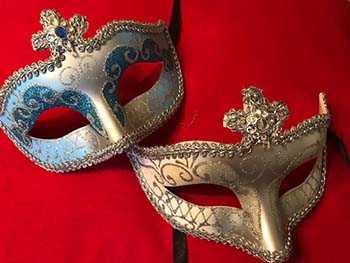
As a result of this expedition to Venice, a Venetian mask system was deciphered by Malzev Oleg. Sixteen Venetian masks are used at the Venetian carnivals, a practical system which could be used in everyday life (eight horizontal masks and eight vertical ones).

If You Go:

The Jewish ghetto is a must place to visit. Some sources say that it was a “hot spot” of prominent doctors, philosophers, lawyers of this times. Hundreds of books were burned as Jews were persecuted. Now there are five synagogues that can be visited with a guide. And for sure, don’t forget to get some shots of the lion with a book, symbol of Venice.


Jewish Ghetto And Cannareggio: Private Tour Of Venice – $56.83

from: Viator

About the author:
Traveling compels Kanykei a lot, moreover it means so much for her to see ancient architecture, to look into the culture of different regions of countries. As an assistant of scientist Maltsev Oleg she grasps that there is so much more behind architecture than what we see.

All photos by Oleg Maltsev

Tagged With: Germany travel, Italy travel, Venice attractions, Venice Jewish ghetto Filed Under: Europe Travel

  • « Previous Page
  • 1
  • …
  • 22
  • 23
  • 24
  • 25
  • 26
  • …
  • 74
  • Next Page »

MORE TRAVEL STORIES:

Scotland: A Tip-Top Scottish Highlands Coach Holiday

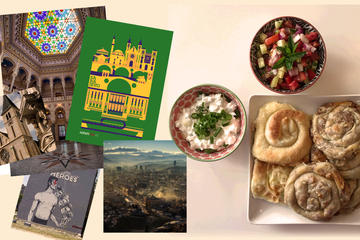
How to Immerse Yourself in the History of the Balkans

The Papantla Pole Dancers of Veracruz

The Most Haunted Places in Annapolis

Aljoun Castle, Jordan

Cruising the Historic Baltics

The History of Breckenridge

Blue Eyed Mummies of Amasya, Turkey


SEARCH

DESTINATIONS

  • Africa Travel
  • Antarctica travel
  • Asia Travel
  • Australia travel
  • Caribbean Travel
  • Central America Travel
  • Europe Travel
  • Middle East Travel
  • North America Travel
  • Oceania Travel
  • South America Travel
  • Travel History
  • Travel News
  • UK Travel
  • Uncategorized
  • World Travel
facebook
Best Travel Blogs - OnToplist.com

Copyright © 2026 Cedar Cottage Marketing | About Us | Contact | Privacy Policy | Terms & Conditions | Copyright Notice | Log in