Travel Thru History

Historical and cultural travel experiences

  • Home
  • Airfare Deals
  • Get Travel Insurance
  • Writers Guidelines

How Customized Apparel Enhances Your Journey to Argentina

tailor measuring custom suit

Argentina has many different types of scenery, lively cultures, and exciting experiences. From the busy streets of Buenos Aires to the calm beauty of Patagonia, this South American treasure combines city life with great nature. For travelers who want to enjoy their time in Argentina, personalized clothing can help them feel comfortable, look good, and be practical during their trip. Whether you’re visiting the tango-filled neighborhoods of Buenos Aires or hiking in the rough mountains of the Andes, having the right equipment can make your experience much better than you expected.

The Importance of Appropriate Apparel in Argentina

Argentina has many different types of land and weather, so visitors will experience a variety of climates and places. The country has many different types of land, including deserts, green rainforests, high mountains, and wide beaches. This variety needs a flexible closet, and personalized clothing is a great way to handle these different situations.

Custom clothes let travelers make their outfits fit the activities they do and the places they visit. For example, a specially-made windbreaker that protects against the cold winds of Patagonia can help during a hike. In the same way, quick-drying fabrics and breathable materials are important for exploring the wet jungles of Misiones. By picking clothes made for the weather you’ll face, you can stay comfortable and do well during your trip.

Embracing Local Culture Through Customized Apparel

One of the best parts of traveling is getting to experience the local culture. In Argentina, this means celebrating the country’s many traditions and customs, many of which are shown through clothing. Choosing custom clothing lets you honor local traditions and showcase your style.

In Buenos Aires, tango is not just a dance; it’s a big part of how people live. The people in the city care about how they look, and visitors are often impressed by the stylish and classy way they dress. Wearing special tango outfits lets you join in this fun cultural activity and helps you connect more with the local people. Custom headbands, fitted suits, and stylish dresses with an Argentine touch can make you feel like a real porteño as you dance all night in one of the city’s well-known dance halls.

In the countryside of Argentina, many people still wear the traditional clothes of gauchos. These talented riders are recognized for their unique outfits, which have wide hats, baggy pants, and bright ponchos. Personalized versions of these clothes can be useful and fashionable, helping you fit in with local people while also being comfortable and long-lasting.

The Practical Benefits of Customized Apparel

Custom clothing not only helps you blend in with local culture but also has many useful benefits for travelers in Argentina. One of the biggest benefits is that you can pick materials and features that are perfect for what you need.

For instance, when visiting the different areas in Argentina, it’s important to wear clothes that can handle the weather. Whether you’re hiking in the snowy mountains of the Andes or facing the hot sun in the Pampas, you can get special clothing made with helpful features like sun protection, water resistance, and warmth to keep you comfortable no matter where you are.

Custom clothing fits just right, making it comfortable for long days of traveling. Wearing clothes that don’t fit well can be uncomfortable and can cause rubbing or even injury, especially when doing heavy activities like hiking or riding horses. Choosing custom-made clothes means you can get outfits that fit you just right, so you can move around easily and comfortably wherever you go.

Also, custom clothes often have useful features that you might not find in regular store-bought clothes. For example, a personalized jacket could have secret pockets to keep important items safe, or a pair of pants could be made with stronger knees to last longer. These tiny things can really improve how easy and useful your travel clothes are.

Sustainable Travel and Customized Apparel

As more people who travel care about their impact on the environment, using eco-friendly travel methods is becoming more important. Custom clothing supports sustainability in many ways, making it a great option for travelers who care about the environment while visiting Argentina.

One of the main advantages of custom clothing is that it lasts a long time. Custom-made clothes are usually made with better materials and quality than clothes produced in large quantities. This means they are less likely to break or wear out, so you won’t have to replace them often. In the long run, buying strong and good-quality clothes can help cut down on the amount of fabric waste that goes into landfills.

Besides being strong, custom clothing can also be made from eco-friendly materials. Many clothing companies now provide environmentally friendly choices, like organic cotton, recycled plastic, and bamboo materials. These materials are made using eco-friendly methods, which helps lower the carbon footprint of your clothes. By picking clothes made from eco-friendly materials, you can feel good about your trip in Argentina, knowing that you’re helping the environment.

Also, custom clothes help use resources more effectively. Unlike clothes made in bulk without considering personal likes, custom clothes are made specifically for each person. This means that less waste is created during making things because only the materials that are needed are used. Also, custom clothes are made to fit well, so people are less likely to throw them away because they don’t fit right or are uncomfortable. This helps reduce waste even more.

Enhancing Your Travel Experience with Customized Accessories

Besides clothing, personalized accessories can really improve your travel experience in Argentina. You can get personalized items like headbands, hats, scarves, and bags that are stylish and useful for your trip.

Custom headbands are flexible accessories that can be used in many different ways. In the hot and sticky weather of northern Argentina, a headband that pulls moisture away can help keep sweat from getting in your eyes and on your face, making you feel cool and comfortable. In colder places like Patagonia, a headband with a soft lining can keep you warmer and shield you from the wind. By picking a design that shows your style, you can make your travel clothes special and enjoy the useful features of a good accessory.

In the same way, sustainable backpacks are important for anyone traveling in Argentina. Whether you’re hiking in the Andes, visiting the vineyards in Mendoza, or walking through the busy streets of Buenos Aires, a personalized backpack can be made with the features you need to make your trip easier and more comfortable. For example, a backpack with soft straps and a cool back can make long hikes easier and more comfortable. Also, having different pockets can help keep your things tidy and easy to reach.

Personalized accessories help you show your unique style and stand out while you travel. Whether you choose a colorful scarf, a trendy hat, or a special piece of jewelry, personalized accessories can make your outfit more unique and help you be noticed. These items can be special keepsakes that help you remember your trips to Argentina even after you get home.

The Role of Customized Apparel in Adventure Travel

Argentina is a country with many chances for fun activities, like hiking, riding horses, kayaking, and climbing rocks. For travelers who want to enjoy these experiences fully, personalized clothing is very helpful.

When doing outdoor activities, it’s important to wear clothes that can handle tough conditions. Custom clothes can be made with strong stitches, tough materials that resist wear, and special fabrics that keep you dry. This helps your clothing work well in tough situations. Also, custom clothes can be made to fit your body shape and size perfectly, so they are comfortable and won’t limit your movement or make you feel uncomfortable when you’re active.

Besides being useful, personalized clothing can also boost your confidence and make you feel more adventurous. When you wear clothes that fit you well and look good, you feel more confident and ready to face new challenges. Feeling more confident can really change how you enjoy your trip. It helps you enjoy the adventure and make the best of your time in Argentina.

Wrap Up

In summary, personalized clothing has many helpful advantages for people traveling in Argentina. Custom-made clothes and accessories can make your trip more enjoyable and improve how you feel. They also let you show your style and connect with different cultures. Whether you’re dancing the tango in Buenos Aires, hiking in the Andes, or just checking out the local markets, personalized clothing can make your adventures in this amazing and varied country even better.


Tagged With: Argentina travel Filed Under: South America Travel

Argentina: A Day in the Life of Cordoba

cordoba argentina

by Rick Neal

Fantastico. That’s my first impression of Cordoba, Argentina. Muy fantastico, in more ways than one.

I’m heading in the general direction of el centro, but in such a charismatic cuidad I’m not in a big hurry to go anywhere. The roadways are lined with lovingly maintained colonial buildings painted in hues of chestnut, ginger, and soft blue. The newer structures are of brick neo-colonial design, so they look right at home next to their older relatives.

It’s October, springtime in Argentina. The sky is a solid sheet of sapphire, the temperature a balmy 25 degrees Celsius, but a robust wind from the nearby Central Sierras keeps it all fresh. Many of the locals I pass wear jackets. Weather conditions aside, fashion-conscious Argentineans dress for the calendar, not the climate. Summer is a month away, and wearing shorts and flip-flops in any other season just wouldn’t be apropiado.

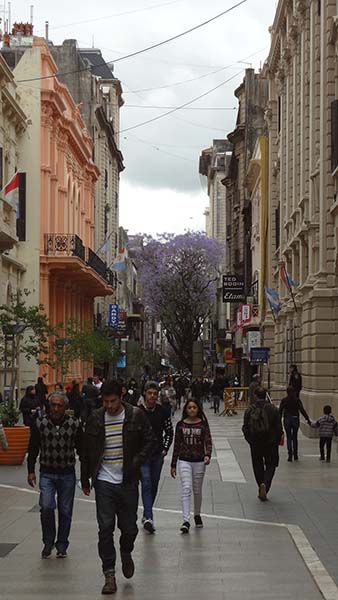
Cordoba street sceneFifteen percent of the city’s 1.3 million inhabitants are students at one of the city’s seven universities, and their youthful spirit seems to have infected the entire populace. A handsome older couple strolling arm-in-arm offer a sincere buenas dias. Several Cordobans flash welcoming smiles, something that I seldom received from the somewhat reserved residents of Buenos Aires. I can’t wait to delve further into this vibrant pueblo, but first I need to find a place to drop my bags.
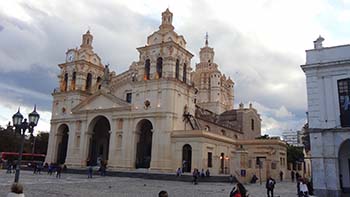
My guidebook gives the nearby Hotel Quetzal thumbs up. The two-star lodge is basic, but its central location is unbeatable. The clincher is the nightly rate of 500 pesos, about $50 Canadian, great value in a country that has suffered 40% inflation in the last year alone.

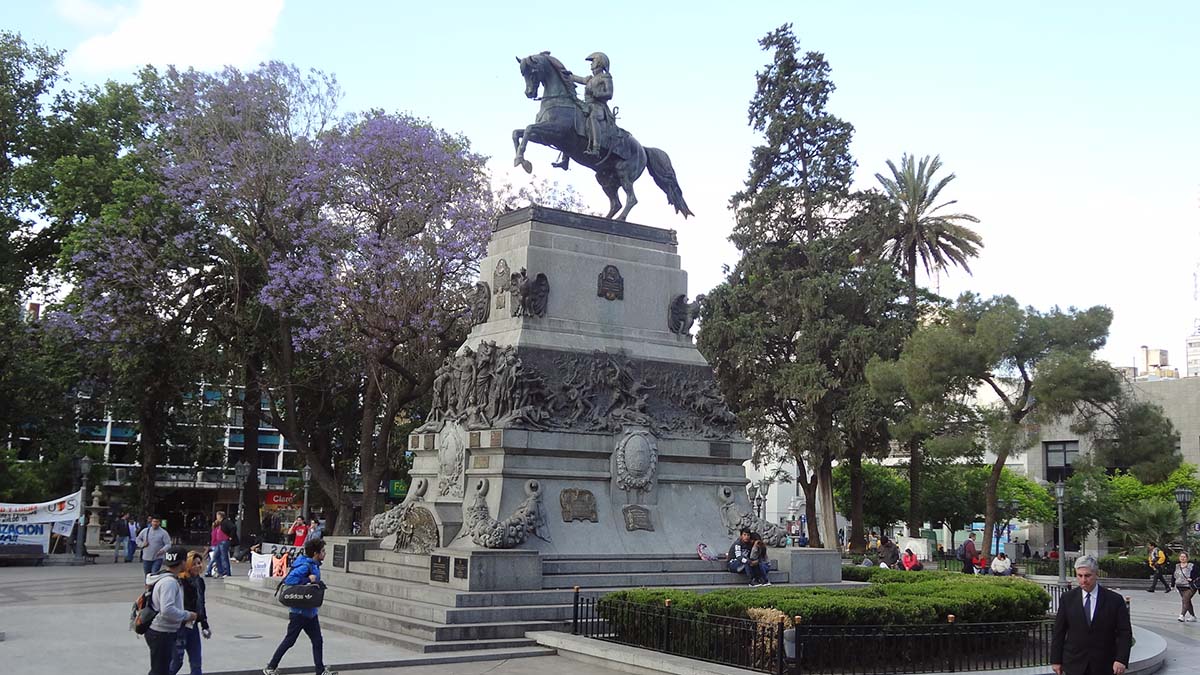
I check in and then continue west along San Jeronimo Calle. Within minutes I’m in verdant Plaza San Martin. The leafy piazza has been Cordoba’s focal hub for over four hundred years, and it bustles with activity today. Giggling school girls exchange gossip as they stretch out on the lawn while elderly caballeros play chess on park benches beneath swaying palm trees. A giant statue of Argentine general Jose de San Martin on horseback dominates the plaza’s center. Revered as one of the country’s founding fathers, he was a key figure in South America’s triumphant struggle for independence from Spain in the 1800s. Young lovers now kiss beneath El General’s unyielding eye.

Iglesia CatedralAn outstanding destination on its own, the plaza is also a springboard to some of Cordoba’s top attractions. Standing adjacent is the pink-stoned Iglesia Catedral, the oldest continually operating church in Argentina. Construction started in 1577 but a series of structural collapses delayed its completion for two hundred years. Because several architects shared in its design, among them Franciscans and Jesuits, the structure is a mishmash of styles. Nevertheless, its Classic Renaissance portico, Baroque dome, and Spanish Romantic tower combine to serve up a dazzling colonial monument.

As impressed as I am by the cathedral’s outward appearance, its opulent interior leaves me awestruck. Ornate wood carvings gilded in gold-leaf adorn the large central nave, which almost seems to emit an amber glow. The only sound is the hum of locals who kneel in prayer before it. The overwhelming gold elements are balanced by a striking embossed silver altar crafted in Peru. In the early 20th century the interior was embellished with the addition of magnificent biblical frescoes and murals painted by prominent Argentine artists. Guidebooks tout this as Argentina’s most beautiful cathedral, but for my money its one of the most exquisite I’ve encountered anywhere.

When I exit the cathedral, I only have to venture two blocks before I find more stunning colonial architecture. For 150 years that spanned the 17th and 18th centuries Cordoba was the capital of the former Jesuit Province of Paraguay. The Manzana Jesuitica (the Jesuit Block) comprised the core buildings of the capital: the Iglesia de la Compañia de Jesús church, the Jesuit priests’ residence, the Universidad de Cordoba, and the Montserrat Secondary School.

These immaculate cream and tanned sandstone structures look as if they might have been built yesterday. As I stand outside them on the squeaky clean cobbled road, I can hardly believe they were built over 300 years ago. What’s not surprising is that the entire Jesuit Block was declared a UNESCO World Heritage Site in 2000.

The library of the Universidad de Cordoba is a nirvana for bibliophiles. Its collection includes 2500 ancient manuscripts brought over by the original Jesuit missionaries, many of which are embossed with copper engravings and intricate woodcuts. There is also a rare 1645 bible written in seven different languages. Guided tours are the only way to see these priceless literary treasures.

The interior of the Iglesia de la Compañia de Jesus church contains decorative elements that combine both Baroque and native styles. Architect Philippe Lemaire was once a boatbuilder, which explains why the arched cedar roof resembles the hull of a ship. Gilded wooden statues of the saints adorn the sumptuous altar. The Capilla Domestica, the chapel, sits directly behind the church. Its elaborate ceiling is made from cowhide stretched over a frame of taguaro cane and painted with pigments partially extracted from boiled animal bones.

From the Jesuit Block, I wander head down La Cañada Calle, which runs along a stone canal lined with rustling acacia trees. Within minutes I’m in the bohemian district of Güemes, which fans out for several blocks on either side of the canal. Once a working class stronghold, Güemes has evolved, one trendy bar and eclectic antique store at a time, into Cordoba’s funkiest barrio.

artisan marketIts weekend feria artisanal (artisan market) is said to be one of Argentina’s finest, but since this is a weekday I settle for a stroll down the main drag of Belgrano. I’m not disappointed, as I’m repeatedly pulled into atmospheric boutiques that offer everything from ancient light fixtures to antique toys to worn statues of religious icons. The Paseo Colonial, an arcade of small shops that sell clothes and jewelry created by the city’s trendiest young designers, proves a perfect spot to pick up one-of-a-kind gifts.

Fatigued from all this sightseeing, I park myself at a busy sidewalk café. Many of the artsy types around me are drinking Fernet, a popular bitter-tasting herbed liquor usually mixed with Coke. I play it safe with a café cortado (espresso with milk).

Bolstered from my caffeine fix, I mosey a few blocks east until I hit another neighbourhood that has undergone a recent facelift. Nueva Cordoba was once home to the local aristocracy, but today it’s a popular hangout for Cordoba’s teeming student community. Many of them reside in the high-rise brick apartments that have mushroomed here in recent years. However, a leisurely stroll past regal old mansions that line the main thoroughfare of Avenida Hipólito Yrigoyen reminds me of the area’s imperial roots.

The bone-jarring thud of electronic music from nearby Calle Rondeau jolts me abruptly back into the present. The narrow road is chock-a-block with raucous bars and nightclubs. It may be a weeknight, but the clubs are packed with students and hipsters who dance and quaff cheap jugs of Quilmes, Argentina’s national brew. I wonder if these kids worry about the rampant inflation and high unemployment they’ll likely face when they graduate. Or if maybe, like a lot of other Argentineans I’ve met the last couple of weeks, they’re too busy enjoying the present to worry about the future.

street vendorsBy now I’m exhausted so I start the long hike back to my hotel. Near the Jesuit Block I pass a miniature plaza where vendors hawk traditional leatherwear, pottery, and textiles from blankets spread along the sidewalk. A couple of boisterous young hombres sell sweet-smelling sausages from a portable barbecue in front of a 17th Century church. Next to them a young woman sings The Beatles’ A Day in the Life in flawless English, accompanied by a bearded fellow with a guitar and amp.

This scene is Cordoba in a nutshell. A city bursting with life that keeps one foot rooted firmly in the past while it looks confidently to the future. It is cool without even trying to be, and maybe that’s the coolest thing about it.


If You Go:

INFLATION

When I visited Argentina several months ago the country had experienced 40% inflation in the past year. All prices quoted here may have gone up (or down) dramatically since then. Do your research.

GETTING THERE:

Aerolinas Argentinas, Sol, and Aero Chaco airlines offer daily flights to Buenos Aires, Salta, Mendoza, and other Argentine cities. Cordoba’s airport is located about 15 km northwest of the city center.

Argentina’s safe and reliable bus network is a popular travel option. The local terminal is an easy 15 minute stroll from the center. There is frequent service to Buenos Aires ($45 10 hours), Rosario ($23 6 hours), Salta ($50 12 hours), and just about every other city in the country. There are also buses into Chile and Uruguay. Most buses make several stops along their route, though direct service is also available to many destinations. It’s a bit more expensive but can shave hours off travel time and directo buses usually have plush armchairs and mucho leg room.

WHEN TO GO:

Spring (September to November) and fall (March to May) are the best seasons to experience Cordoba. Daytimes highs are a balmy 20C to 25C, but expect the odd rain shower.

WHERE TO STAY:

Argentina’s second largest city offers a wide range of accommodation choices, from cozy hostels to eclectic boutique inns to modern hotels. Several worthwhile options are sprinkled around Plaza San Martin, though it’s a bit of a hike to the best dining and nightlife. If you want to be close to the action, consider staying along La Cañada or in Nueva Cordoba. Wiki Travel Cordoba.

About the author:
Rick’s travel career began as a college student when he impulsively signed up for an international student exchange program and spent that summer working in Turkey. “Don’t go there!” the naysayers said, “it’s not safe!” Luckily, Rick ignored their advice and discovered that the outside world is a place of wonder worth exploring. Since then his wanderlust has taken him to Central and South America, England, Vietnam, Morocco, and China, where he spent an unforgettable year teaching English. Rick makes his home in East Vancouver, Canada, where he writes for various travel publications.

All photos by Rick Neal


Tagged With: Argentina travel, Cordoba attractions Filed Under: South America Travel

Horsing Around in Argentina

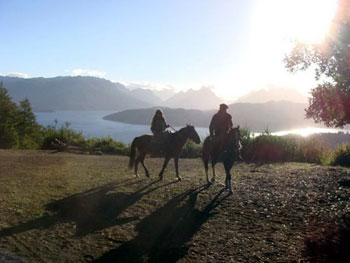
two horses in Argentina

Patagonia

by Paola Fornari

‘Andrés, do horses like being ridden?’ I ask Andrés, our guide.

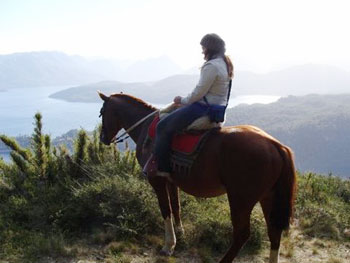
the author, Paola Fornari, on horseback in PatagoniaWe are riding in the Parque National Nahuel Huapi, in Argentine Patagonia, just above Villa la Angostura, and between Bariloche and San Martín de los Andes.

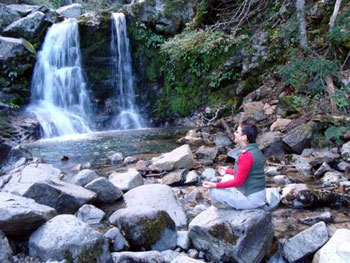
‘I think they’d rather be grazing in a field,’ Andreas replies. ‘But once you decide to ride, you have to play by the rules. Talk to her! Kick her! Use the stick!’

I follow his advice, but my horse, Luna, with much encouragement on my part, and little enthusiasm on hers, still lags behind. The two Argentine lawyers, whose combined ages hardly add up to mine, and who are clearly far more experienced horsewomen than I, trot ahead, barely within my sight, their long dark hair blowing in the breeze. I can just see Gisela’s horse, whose hooves seem to dance as he walks, making her sway to his rhythm. The rough path is steep, taking us through the mountain’s dense cloak of coihue trees, the low flattened branches blocking out the sunshine and cooling the air. The coihue tree thrives in this area, and can grow to almost forty-five metres and its girth can reach almost two metres. The branches here are decked with lichen beards: a sure sign of unpolluted air.

Cascada Inacayal waterfallHalf-way up the Cerro Belvedere, we stop at a waterfall, the Cascada Inacayal, to rest.
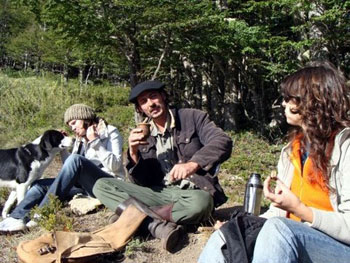
‘So Andrés,’ I asked. ‘Would you call yourself a gaucho?’

‘Being a gaucho isn’t a job.’ he says. ‘It’s a way of life. You’re born a gaucho; you don’t become one. And I was born in the city. So I’m not a gaucho. I do horserides. That’s my job.’

‘So do you write horseride doer on official forms, under profession?’

‘I write tour operator.’ Andrés grins.

A man of confidence, like any good gaucho, I thought.

When we remount, I feel energized, but Luna chomps away at bushes and trees all the way up. We emerge from the forest into Heidi-like pastureland and let the horses loose to pasture. Luna looks decidedly happier. We look over the sheer cliff to Lakes Correntoso and Nahuel Huapi, joined by what the locals say is the shortest river in the world, the 250-metre Rio Correntoso. The sky is clear, the air fresh and dry, and the view unbelievable. Would cobalt describe the colour of the water? Aquamarine? Sapphire? Or perhaps there’s a colour called Argentine Early Autumn Lake Blue.

the group drinkint mateWe sit on our coats on the ground, and Andrés produces a mate gourd filled with yerba leaves, a silver straw, and a flask. He soaks the leaves with hot water, sips, refills, and passes it round. The taste is much milder than what I had become used to living in Uruguay. I have never shared mate with strangers. At the top of that mountain, backed by the sound of a woodpecker, it was a truly bonding experience. After each of us has drained the bitterish, warming liquid, Andrés refills the gourd for the next person.
Once again, I break the silence.‘Andrés, what’s the difference between Uruguayans and Argentines?’

‘Uruguayans drink mate all the time,’ he explains. ‘We only drink it occasionally.’

One of the lawyers elaborates: ‘Uruguayans drink mate wherever they are, whatever they’re doing. They’ll even drink it when they’re walking down the street or standing in a queue. But we Argentines always stop and sit down to drink mate. Other than that, there’s no difference. Except we swear more. And they say Ta when they mean Okay.’

So no mate on the hoof, in Argentina.

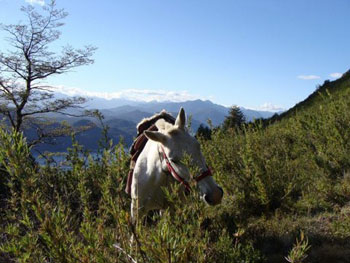
horseWe relax for a while longer, enjoying the sunshine, then Andrés gets the horses ready for our descent. I hadn’t realized that we would have to lead the horses a long way down the mountain on foot, as it was too steep and dangerous to ride them, and their saddles would slip. I feel almost less confident off Luna’s back than on her. I can sense her bulk as she carefully picks her steps, so close behind me that I can almost feel her warm breath on my neck. I dread to think what might happen if she or I should slip.
But no matter what the risks, it is definitely worth it, for the air, the view, the chat, the mate, and the look on Luna’s face when she was is free on the mountaintop.


Patagonia Ranch and El Pedral Penguins Colony Full-Day Tour from Puerto Madryn

If You Go:

Cabalgatas Correntoso: Cacique Antriao, camino al mirador Belvedere , Villa la Angostura
E-mail: info@cabalgatacorrentoso.com.ar


About the author:
Paola Fornari was born on an island in Lake Victoria, and was brought up in Tanzania. She has lived in almost a dozen countries over three continents, speaks five and a half languages, and describes herself as an “expatriate sin patria”. She explains her itinerant life by saying: “Some lead; others follow.” Her articles have been published in “The Buenos Aires Herald”, “The Oldie”, and “Practical Fishkeeping.”

All photographs are by Paola Fornari.

Tagged With: Argentina travel, Patagonia attractions Filed Under: South America Travel

Salta, Argentina

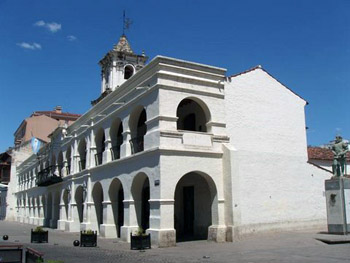
Cabildo in Salta demonstrates colonial architecture

Ascent into the Clouds from the Andes

by Diane Chouinard

It’s siesta time and the stores are closed until 4pm. As I sit across the central plaza of Salta, Argentina, I sip on a cool drink of Pomelo. A jacaranda tree’s purple blooms sway in the breeze, as nonchalantly as the few locals crossing Plaza 9 de Julio in the scorching sun. The sweet aroma of candied almonds, roasting at a corner stand, wafts by.

“Muy barato”, shout vendors and shoe shine boys as they do the rounds of the side cafes. Like most tourists, I’m in Salta because it’s the meeting point for tours of the surrounding areas, but I’m impressed at what a charming town it is and can see why it’s called ‘la linda’.

pink steeples of Salta cathedralAcross the square, the two steeples of a candy pink cathedral stand out. On the opposite side, the eighteenth century Cabildo, built to house the town council, with its two story rows of arches, is characteristic of the hispanic architecture around the Plaza. At more than one thousand kilometers northwest of Buenos Aires, Salta is the best preserved colonial city in Argentina. With a half a million inhabitants, it sits at the foothills of the Andes and is the capital of the Province of Salta. Founded by the Spaniards in 1582, it became a strategic commercial and military outpost between Lima in Perú and Buenos Aires. The debilitating economic decline following the War of Independence in the nineteeth century was eventually overcome. It’s now one of Argentina’s favorite tourist destinations.

I walk one block along calle Caseros, up to Iglesia San Francisco. Rebuilt a few times over the last four centuries following wars and earthquakes, its ornate terracotta and gold colored walls and high bell tower make it a landmark. From there, I go on to Parque San Martin, where the teleférico brings me to the top of Cerro San Bernardo. The paths around the lush gardens and fountains are refreshing and offer spectacular views of Salta.

I spend the rest of the afternoon at the Mercado Artesanal, where artisans sell fine handicraft, ranging from leather and silver goods to ceramics, colorful ponchos and tapestries, carved cactus bowls, sikus, multi-reed pan flutes, charangos, small guitars and other typical Andean musical instruments.

El Solar del Convento is the perfect restaurant to enjoy a relaxing dinner after sightseeing. The smell of barbecued meat, grilling on a large parrilla, fills the air as I walk in. Classical background music suits the atmosphere of the old Spanish convent. I sample some complementary paté and bubbly wine, in anticipation of tasting the legendary Argentinian beef. I’m not disappointed and glad I’m not a vegetarian. It’s so tender, that I can cut it with my fork.

Life starts at eleven in the evening in Argentina. After dinner, I mingle with the crowd at the central plaza. It looks like all the Salteños are out having a good time as they listen to the live band.
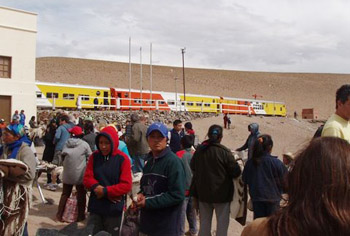
El Tren a las Nube railwayThe next day, I go on the most popular tour, El Tren a las Nubes. Inaugurated in 1948, the railway was built to connect Salta to Antofagasta, Chile, for economic reasons. No longer used commercially, it has been open to tourism since the late seventies. I soon get into the atmosphere, with the pan flute Andean music flowing from the onboard speakers.

For the next fourteen hours, the train’s ascension through multiple bridges, tunnels and spirals brings me higher than the clouds. The yellow and orange wagons contrast with the clear blue sky, as they zigzag through the unspoiled valleys of cardones, cacti taller than men and along multicolored canyons rich in silver, iron, lead and manganese. In the middle of this serene countryside, the sound of a helicopter as the train comes to a stop, creates some havoc. We are told that the altitude caused a passenger to faint and is brought to Buenos Aires. Once the climb resumes and calm is restored, we reach the Puna, high plateaus where herds of llamas roam. At La Polvorilla, close to the Chilean border, is where the train crosses the last viaduct, a sixty-four meter high metal structure. It’s the trip’s highlight and the altitude is 4,220 meters above sea level. Despite being out of breath due to the lack of oxygen, I’m grateful to have made it this high, so that I can enjoy the breathtaking view of the desert canyon below.

railway trestle crosses high over desert canyonOn the way back, we stop at the isolated mining town, San Antonio de los Cobres, named after the surrounding copper-rich sierra. Outside the train station is a colorful market. Weather-beaten by the gusting winds and dust, prevalent in the Puna, the natives’ dark skin looks as thick as leather. Like their ancestors, the Incas, their crafts designs mirror the four star constellation Cruz del Sur, while the colors are inspired by nature. Back on the train, the sight of the Tastil pre-hispanic ruins, a deserted settlement, completes this memorable journey.

My next destination is the one hundred and fifty-five kilometer long Quebrada de Humahuaca. For ten thousand years, this canyon, a Unesco World Heritage site, has been part of a cultural and trade corridor, which stretches from the Atlantic beaches of Brazil, through the high Andes plains, all the way to the Pacific coast of Chile. The Quebrada’s sedimentary origin is about 65 million years old.

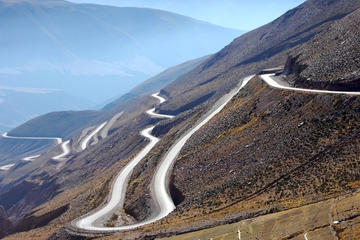
Quebrada de Humahuaca canyonInstead of driving along the highway, Federico, our private guide, takes my friend and I on a narrow road though the selva, a lush sub-tropical green forest. He explains that the region around Salta is fertile because they still use the Incas’ irrigation system. From the summits, the melting snow flows down to the valleys through stone canals.

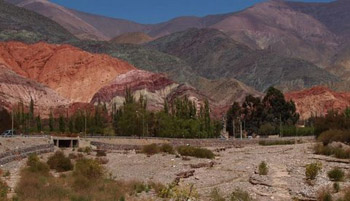
Federico points at some red blooms, “they’re Argentina’s national flowers, from ceibo trees.” As we reach the national road, he informs us that we are in the Province of Jujuy, which borders Bolivia. The Quebrada’s unusual rock formations along the narrow valley come into view and are a prelude to the stunning Cerro de los Siete Colores. Like a gigantic fresco, the hillside’s seven colors, ranging from deep purple to orange, dwarf the picturesque hamlet of Purmamarca. “It means Town of the Virgin Land in Aymara,” Federico says. His four-by-four bounces on narrow, dusty streets, lined by adobe houses with cactus roofs, most from the pre-Hispanic era. Once at the central plaza, I buy a beautiful, modestly priced alpaca sweater and scarf, at the crafts fair.

colorful hillsides of Cerro de los Siete ColoresReluctant at first, Federico convinces me to eat llama meat at the cosy restaurant Rincon de Fuego in Tilcara. “I eat it all the time. It’s cholesterol-free,” he says. It has a delicate taste, although I find it a bit dry.

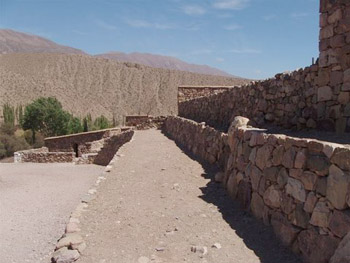
After lunch, we go to the Museo Arqueologico Dr. Eduardo Casanova. “It’s a crash course about the history of the whole Inca Empire,” Federico says. The artifacts and archeological finds are from Peru, Bolivia, northern Chile and Argentina. They vary from a well preserved mummy, to ceramic vases with geometric designs and feline figures, bronze and silver objects and jewels, many in the shape of disks. The price of admission includes a visit at El Pucara, at the top of the mountain just outside Tilcara. The pre-Columbian reconstructed fortress is the most impressive archeological site of the region. Its location must have been strategically excellent to spot enemies. As I hike along the low stone houses and walls, I get an eagle-eyed view of the valleys and mountains.

monument of independence at HuacaleraAt Huacalera, a few kilometers north, we stop to take pictures of the monolith that marks the Tropic of Capricorn. Soon after, we reach the last city on today’s itinary, Humahuaca, which used to be an important trade center of the high plateaus. At an altitude of 3,000 meters, I have to stop often to avoid getting dizzy, as I climb up the broad flight of stone steps that lead to the Monument of Independence. Looking down on the adobes and the twin towers of the seventeenth century church, I try to envision the narrow cobblestone streets, filled with colorful costumes and masks, worn by natives every year, to celebrate Pachamama, an old cult to Mother Earth.

This tour along the Quebrada de Humahuaca, where pagan and Christian beliefs coexist, has transported me into a mysterious ancient world. I can imagine our dark skinned, handsome guide’s ancestors, trekking along this grandiose valley, where the Rio Grande flows.

My excursions through the sierras of northern Argentina have shown me, that by clinging to their traditions, the people of the Andes ensure the conservation of a pristine environment. In our effort to save planet earth, we could all learn something from the Inca way.


Safari to the Clouds Tour of Northwest Argentina from Salta

If You Go:

Summer (December, January & February) can be very hot. It’s better to go in Spring or Fall. There are no direct flights from Salta to other cities of Argentina, except Buenos Aires, so if you intend to visit other regions like Mendosa, I suggest to fly one way from or to Buenos Aires and take a bus from Salta to or from Mendosa, with stop-overs in Cafayate, Cordoba and/or San Juan. You save time, money and tour costs. There are many good bus companies. I used Cata Internacional. It has excellent service. For long-distances, a royal suite is best; seats convert into births, meals & drinks are included. Bus tickets can only be bought in Argentina, so do it as early as possible.

SALTA – Check www.saltainfo.com for information about museums, excursions & hotels. I stayed at the modern 3 star Wilson Hotel, Alvarado 950. It has reasonable prices, includes full breakfast, impeccably clean, excellent service, only 3 blocks from main Plaza 9 de Julio. www.wilsonhotel.com.ar Among the many hotels, some 4-5 star ones caught my attention: Alejandro 1, elegant & modern; Hotel Solar de la Plaza, beautifully decorated colonial mansion, quiet; Portezuelo Hotel, fantastic view of Salta. Most tours last at least 12 hours, so give yourself enough time for some sightseeing in Salta. Plan to stay at least 4 full days. Tours can be booked at your hotel or from a local travel agency. Booking ahead of time is better in high season. I used Nordic Travel, Buenos Aires 45, Salta. Tel/Fax 387/421-1313 or 422-0450, www.nordic-travel.com.ar

QUEBRADA DE HUMAHUACA – You’ll want to take many pictures; hire a private guide or if you rent a car, follow Highway 9 north, from Salta. Many tours are also available.

TREN A LAS NUBES – only runs on Wednesday, Friday & Sunday, therefore you should book ahead of time at your travel agent, or online: www.trenalasnubes.com.ar Includes breakfast, lunch. Has bar & dining room. $120 USD low season, $140 USD high season. El Solar del Convento, Caseros 444, Salta. Tel. 421-5124. Best beef I’ve had, cheap, great atmosphere, excellent service. Mercado Artesanal, Av. San Martin 2555. Tel. 387/434-2808. Open daily, 9 to 21 hrs.

TILCARA – Rincon de Fuego, Pasaje Ambrosetti 445, Tilcara. Tel: 388/495-5130 – Hotel & restaurant. Quiet, charming, excellent food. www.rincondefuego.com Museo Arqueologico Dr. Eduardo Casanova, Belgrano 445. Open daily, 9 to 19 hrs.

About the author:
Born in Montreal, Canada, Diane Chouinard is a composer and world traveller. Her fascinating experiences have led to her becoming a writer. Her music, which is performed in different countries and her interest in history transcend in her travel writing. She has been living in Vancouver since 1998.

All photos are by Diane Chouinard.

Tagged With: Argentina travel, Salta attractions Filed Under: South America Travel

MORE TRAVEL STORIES:

Liverpool Black History Walking Tour (part 3 of 3)

The Heroic Women of Chittorgarh

The Mystery of Fairy Stone State Park in Fayerdale, Virginia

Discovering Dolgellau, Wales

The Roots of Flamenco in Granada

Walking and Paddling Through Goldrush History in Canada’s Yukon

Kerala: Swaying Palms and Floating Boats

Stars and Strawberries in Dayton, Tennessee


SEARCH

DESTINATIONS

  • Africa Travel
  • Antarctica travel
  • Asia Travel
  • Australia travel
  • Caribbean Travel
  • Central America Travel
  • Europe Travel
  • Middle East Travel
  • North America Travel
  • Oceania Travel
  • South America Travel
  • Travel History
  • Travel News
  • UK Travel
  • Uncategorized
  • World Travel
facebook
Best Travel Blogs - OnToplist.com

Copyright © 2025 Cedar Cottage Marketing | About Us | Contact | Privacy Policy | Terms & Conditions | Copyright Notice | Log in