Travel Thru History

Historical and cultural travel experiences

  • Home
  • Airfare Deals
  • Get Travel Insurance
  • Writers Guidelines

Why Arizona Became America’s Wild West Movie Set

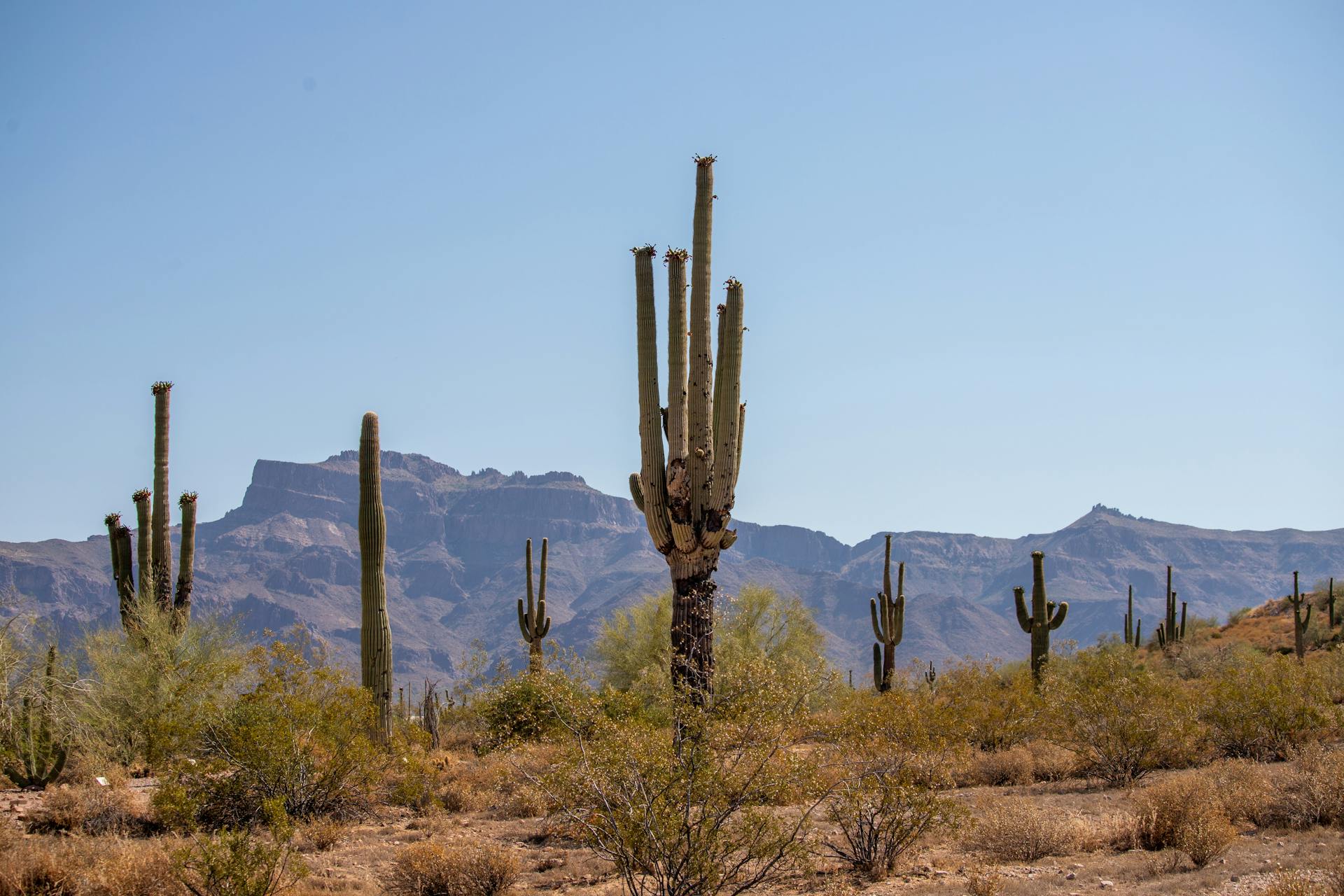
Cacti in desert

Towering red rock formations, dusty frontier towns, and endless desert horizons have made Arizona one of the most recognizable landscapes in American cinema. Long before digital effects could create any backdrop imaginable, filmmakers traveled west in search of authentic scenery. Understanding why Arizona became America’s Wild West movie set reveals how geography, history, climate, and culture combined to create the perfect setting for some of Hollywood’s most memorable Western films.

What Made Arizona Look Like The Wild West People Imagined?

Arizona looked exactly like the frontier audiences expected to see. Vast deserts, rugged mountains, and isolated settlements matched the popular image of the American West that emerged in books, dime novels, and newspaper stories.
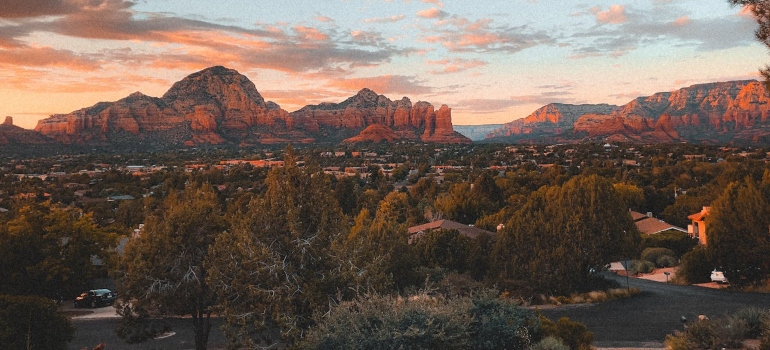
forest and mountains

Many travelers exploring the Southwest were drawn to the same dramatic scenery that filmmakers later embraced. Historic sites connected to frontier life continue to attract visitors today, much like those interested in exploring ancient Phoenix often discover layers of history that stretch far beyond modern city limits.

Unlike many regions that had already become heavily developed, Arizona retained large areas that appeared untouched. Directors could capture expansive landscapes without modern buildings, power lines, or highways interfering with the scene.

How Did Arizona’s Climate Help Film Production?

Travel planning and understanding the relocation costs often played a role in large productions moving equipment across remote regions, as it meant transporting people, animals, props, and equipment between filming locations. Arizona offered one major advantage that filmmakers valued immediately: reliable weather.

Early movie productions depended heavily on natural light. Frequent rain or cloudy conditions could delay filming for days or even weeks. Arizona’s dry climate provided long stretches of sunshine that allowed production schedules to stay on track.

Film crews also appreciated the consistency of the environment. Desert conditions changed little from day to day, making it easier to maintain visual continuity between scenes filmed over extended periods.

Why Did Hollywood Studios Prefer Arizona Over Other States?

Arizona offered authenticity that studio backlots could not replicate.

During the early twentieth century, many Western films relied on artificial sets built near Hollywood. These sets worked for simple scenes but lacked the dramatic scale audiences increasingly wanted.

Arizona provided:

  • Vast open deserts
  • Natural canyons and cliffs
  • Historic mining towns
  • Frontier-era architecture
  • Mountain backdrops
  • Unique rock formations


These natural settings reduced the need for expensive set construction while creating a more believable viewing experience.

As international tourism expanded, filmmakers also drew inspiration from destinations around the world. Industry professionals comparing landscapes occasionally referenced popular film locations in New Zealand when discussing how natural scenery can become an attraction in its own right.

Why Arizona Became America’s Wild West Movie Set For Generations

Arizona became the preferred Wild West backdrop because it delivered realism, convenience, and visual drama in one location.

The state’s landscapes helped define what audiences believed the American frontier looked like. Even viewers who had never visited the Southwest came to associate Arizona-style scenery with cowboys, outlaws, sheriffs, and frontier towns.

The popularity of Western films created a self-reinforcing cycle. As more movies were filmed in Arizona, audiences increasingly expected Westerns to look like Arizona. Future filmmakers then returned to the state to meet those expectations.

This influence extended beyond cinema. Television programs, advertisements, books, and tourism campaigns frequently adopted visual elements first popularized through Arizona-based Western productions.
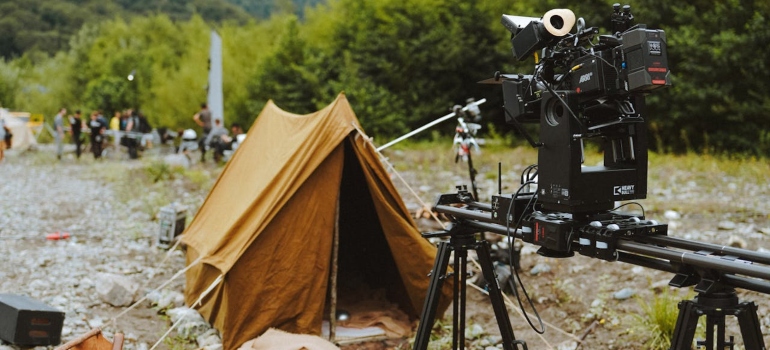
tent in movie set

Which Famous Movies Were Filmed In Arizona?

Numerous classic Westerns and adventure films used Arizona landscapes.

Some of the most recognized productions filmed in Arizona include:

  • Stagecoach (1939)
  • My Darling Clementine (1946)
  • Broken Arrow (1950)
  • The Lone Ranger television productions
  • Tombstone (1993)
  • 3:10 to Yuma (2007)


Monument Valley often receives much of the attention, although many iconic scenes were filmed throughout Arizona’s deserts, forests, and historic communities.

Different regions offered distinct visual styles. Northern Arizona featured dramatic rock formations and elevated terrain, while southern Arizona delivered classic desert scenery associated with frontier storytelling.

How Did Real Frontier History Strengthen Arizona’s Appeal?

Arizona offered more than beautiful scenery. The state possessed a genuine connection to frontier history.

Many locations featured authentic buildings, mining sites, railroad infrastructure, and communities that dated back to the nineteenth century. Filmmakers could incorporate real historical elements into productions rather than constructing every detail from scratch.

Towns associated with figures such as Wyatt Earp and events like the Gunfight at the O.K. Corral added historical credibility to Western narratives. Audiences often appreciated knowing that some filming locations existed during the actual frontier era.

Historical tourism remains popular today because visitors can experience many of the same places that inspired filmmakers decades ago.

What Impact Did Western Films Have On Arizona Tourism?

Western movies transformed Arizona into a destination long before social media and online travel marketing existed.

Film audiences frequently became interested in visiting locations they had seen on screen. Arizona benefited enormously from this exposure. Travelers arrived hoping to experience dramatic desert landscapes and frontier heritage firsthand.

Many visitors continue to seek:

  • Historic Western towns
  • Desert landscapes
  • National parks
  • Scenic drives
  • Movie filming locations
  • Cultural heritage sites


Modern travel trends still reflect the influence of cinema. Many travelers research destinations after seeing them featured in films, television series, or streaming productions.

Anyone planning a trip to remote regions should also consider safety concerns to better prepare for unfamiliar environments and travel conditions.

motion picture equipment

Why Does Arizona Continue To Attract Filmmakers Today?

Arizona remains attractive because its landscapes continue to offer visual qualities that cannot easily be replicated elsewhere.

Modern technology allows filmmakers to create digital environments, but authentic locations still provide realism that audiences recognize. Natural lighting, genuine terrain, and practical filming locations often improve production quality.

The state’s diverse geography also allows filmmakers to represent multiple settings without extensive travel. Deserts, forests, mountains, canyons, and historic towns can all be found within Arizona.

Contemporary productions may not focus exclusively on Western stories, but Arizona’s scenery remains a valuable cinematic resource.

Arizona’s Lasting Place In Film History

The answer to why Arizona became America’s Wild West movie set lies in a combination of natural beauty, historical authenticity, dependable weather, and cinematic tradition. Few places matched the visual image of the frontier as effectively as Arizona’s deserts, canyons, and historic communities. Decades of filmmaking reinforced that connection, turning the state into the definitive backdrop for Western storytelling. Today, the legacy remains visible both on screen and across the landscapes that helped shape America’s most enduring movie genre.

Author’s bio:

Jane Mercer is a freelance writer and film history enthusiast based in Tucson, Arizona. With over a decade of experience covering American culture, travel, and cinema, she has written for regional magazines, travel blogs, and entertainment publications. When she’s not researching her next article, she can be found hiking Arizona’s canyon trails.


Tagged With: Arizona attractions Filed Under: North America Travel

The White Dove of the Desert: Tohono O’odham Reservation, Arizona

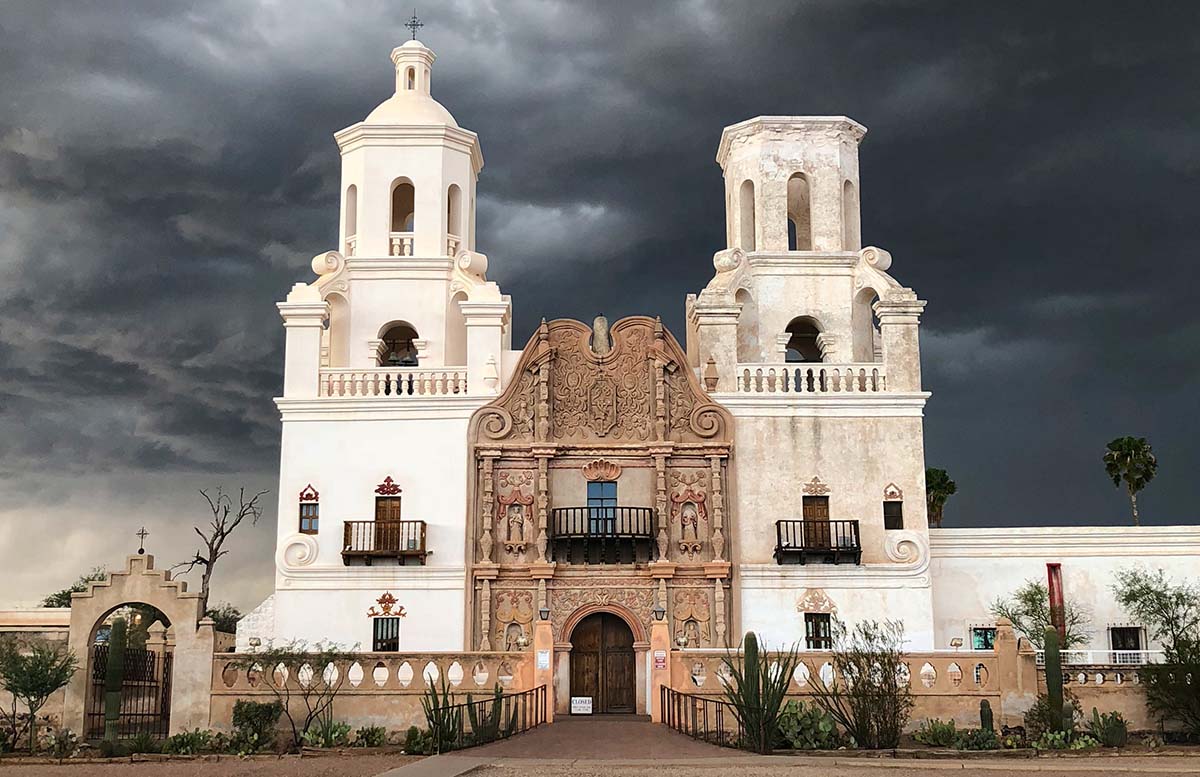
Mission San Xavier del Bac

by Lesley Hebert

saguaro cactusI wrinkle my nose against the dusty smell rising up from the crunchy gravel beneath my feet. A giant saguaro cactus floats before my eyes as the dry air shimmers and waves in the oppressive heat. I shield my face against the blazing sun reflected from the brilliant whitewashed building ahead.

I am on the Tohono O’odham Reservation in southern Arizona, walking to the beautiful Mission San Xavier del Bac, also known as the White Dove of the Desert.

Dedicated to St. Francis Xavier, co-founder of the Jesuit missionary order, the San Xavier mission was founded by Father Eusebio Francisco Kino in 1692. It is one of hundreds of missions established in the seventeenth and eighteenth centuries to convert the native peoples to Christianity. Completed in 1797, this is the oldest working Spanish mission and the best example of Spanish colonial architecture in the United States.

The White Dove has two tall, slender white towers which reach up like wings from opposite ends of the two storey church building. One of her wings, however, appears wounded. Each tower is supported by identical buttresses and both are pierced with tall, arched windows. However, while the left-hand tower is capped with a domed roof and a crucifix-topped lantern, the roof of the right hand tower is flat and unadorned.

There are several theories as to why a dome was never added to the second tower. Some say construction stopped when a worker fell off the roof. Others say the dome was destroyed by a cyclone or left unfinished so that the church would not have to pay building taxes. But the most likely reason is that the builders simply ran out of money.

The light brown central section of the building forms the body of the dove whose breast feather are formed of intricate patterns incised into the facade. Statues of saints in alcoves between high colonnades hold their hands up in prayer. At the top of the façade are two giant swirls, one on each corner. Although I could not see them from the ground, I later learned that a carved cat crouches inside the eastern scroll and a mouse cowers in the western one. These carvings have given rise to a local legend that if it ever catches the mouse the world will come to an end.


Delirious with heat, I steady myself at the entrance by placing my hands on the rough surface of a ponderous wooden door cracked and faded by the desert sun. The coolness of the stone interior is a welcome relief. I feel as if I have been transported away to an ancient church in Europe. A spiritual calm washes over me as I breathe the refreshing air and inhale the waxy smell of burning candles and the lingering scent of incense.

My eyes adjust to the dim interior and I strain my neck to gaze upward at the high soaring arches supporting the roof. Around the walls I see statues of saints and angels and an array of murals. Some are faded and sadly in need of restoration. Others appear unfinished, lending support to the theory that the church builders ran out of money.

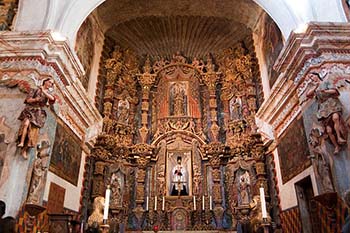
San Xavier mission interiorThe front of the church is dominated by a high golden altar, the design of which parallels the façade outside. It is covered with labyrinthine decorations and saints posing in alcoves. In the center a giant image of a priest in a black robe overlaid with a white surplice, Saint Francis Xavier himself, presides over the milling crowds of sightseers.

I watch visitors admiring the altar, staring at murals depicting the stations of the cross and taking the occasional snapshot. Oblivious of the throngs of tourists, the faithful kneel in prayer or light candles. A long queue snakes along the eastern wall. Curious, I join the end of the line.

As the line moved forward, I see a coffin-like glass case containing what appears to be the relic of a saint, a brown head sleeping on a snow-white, lace-trimmed pillow. The saint is covered in a pure white sheet scattered with humble offerings: photographs of children, small toys, even locks of hair. I had on several occasions seen the skeletal remains of medieval saints similarly displayed in Europe, so I watch with horrified fascination as people reach through an opening in the glass cover to caress the top of the head. Maybe I am hallucinating in the heat but, as people rub its crown, the head seems to nod a gentle blessing in return.

As I approach the saint, I realize that he is not actually a cadaver but a figure carved of wood. I am not sure whether I am relieved or disappointed but, sensing a powerful spiritual energy, I decide against putting my hand near the sleeping head and moved on.

I later discovered that the figure in the glass case started life as a wooden statue of the crucified Christ at Tumacacori, a mission further south on the road to the border town of Nogales. In 1849 the Apaches destroyed Tumacacori and Christ was transported to San Xavier, somehow losing His legs in the process. The statue is now revered as an image of St. Francis Xavier.

When I left the sanctuary of the church I was overcome once more by the powerful desert sun. On the far side of the parking lot a line of canvas awnings provided shade for food stalls run by members of the Tohono O’odham Nation. Craving a cold drink, I headed over to this inviting shady oasis.

The stalls displayed a variety of competing home-made signs offering Indian fry bread. Some menus were written on small blackboards with colored chalk. Others were flimsy cardboard squares leaning up against table legs or hanging from the edge of awnings. Since Indian fry bread was a dish I had never heard of before, I naturally had to try some.

Fry bread, I later learned, is not a part of traditional southwest native cuisine. Before European colonization the locals were farmers with a healthy, vegetable-based diet. In the nineteenth century, however, Arizona natives were forcefully relocated to unproductive land in New Mexico. The U.S. Government provided emergency food supplies to prevent the people from starving. These rations included a great deal of white flour, refined sugar and lard, which became the basic ingredients for the high calorie survival food known as fry bread. According to the U.S. Department of Agriculture, each serving of fry bread contains 700 calories and 25 grams of fat. Consequently, it is considered one of the main culprits in the high obesity levels among southwest native peoples.

The stalls offered sweet fry bread sprinkled with powdered sugar and cinnamon for four dollars and savory Indian tacos, which seemed slightly less unhealthy, for five dollars.

fry bread tacoI ordered a taco from an impassive, generously built member of the Tohona O’odham Nation whose girth suggested an ongoing love affair with fry bread. I watched him carefully drop a dough patty into simmering oil and wait patiently for the precise moment to flip the bubbling pancake with a pair of tongs. When he judged the second side sufficiently cooked, he lifted the fry bread out of the oil, wrapped it in paper towel and filled it with ground beef, cheese and lettuce.

“Careful,” he warned, “It’s real hot”.

The paper wrapper was warm and slick with soaked up oil. The aroma of hot oil wafted up to my nose as I took my first cautious bite. The warm fry bread was reminiscent of carny food. It was crispy and flaky with a croissant-like mouthfeel. It was also extremely filling.

As I walked away from the mission, I thought about the saint in the mission and the food served outside. As different as these two things appear, both are cultural traditions with comparatively recent roots. Both are creative responses to tragic circumstances: one a holy relic created from a broken work of art, the other a beloved comfort food created from unappealing survival rations. Both have served redemptive functions, one spiritual and the other cultural. And they both reveal unique stories about Southern Arizona culture and history.

If You Go:

The Mission is nine miles south of Tucson, Arizona via Interstate 19. Take Exit 92 (San Xavier Road) and follow the signs. Admission is free. Please be respectful as San Xavier is an active place of worship.

The fry bread stalls open on an unpredictable schedule which may depend on the day of the week or the time of day.

References:

Clizbe, George A. This is Green Valley. Tucson, Arizona: Shandling Lithographing Co. Inc, 1971.

Miller, Jen. July, 2008. Frybread.

tucson.com. Mission San Xavier del Bac: 11 things to know. Jan 21, 2017

Wright, Robert E. Spanish Missions. Texas State Historical Association.

 About the author:
Lesley Hebert has travelled extensively throughout Europe and the Americas, as well as to Indonesia and Japan. She holds a B.A. from Simon Fraser University. Now retired from classroom teaching, she teaches English as a second language to Japanese students via Skype and writes web content, travel articles, short stories and poetry. She lives in New Westminster, British Columbia, Canada.

 Photo Credits:

San Xavier del Bac Mission by Packbj under the Creative Commons Attribution-Share Alike 4.0 International license.

Saguero Cactus by Lesley Herbert.

San Xavier mission interior by Geremia under the  Creative Commons Attribution-Share Alike 4.0 International license.

Frybread taco by John Pozniak

Tagged With: Arizona attractions, Mission San Xavier del Bac, Tohono o"odham reservation, US travel Filed Under: North America Travel

MORE TRAVEL STORIES:

Langkawi: Island of Legends

Daman and Diu, the Less-Known Gems of India

Why Surfboard and SUP Rentals Are the Best Choice for Exploring LBI Waters

The Surprising Sete Cidades Caldera

San Galgano and the Italian Sword in the Stone

Exploring the Florida Keys by Kayak

Italy: Aesculapius In Rome

Exploring San Diego’s Pueblo Past


SEARCH

DESTINATIONS

  • Africa Travel
  • Antarctica travel
  • Asia Travel
  • Australia travel
  • Caribbean Travel
  • Central America Travel
  • Europe Travel
  • Middle East Travel
  • North America Travel
  • Oceania Travel
  • South America Travel
  • Travel History
  • Travel News
  • UK Travel
  • Uncategorized
  • World Travel
facebook
Best Travel Blogs - OnToplist.com

Copyright © 2026 Cedar Cottage Marketing | About Us | Contact | Privacy Policy | Terms & Conditions | Copyright Notice | Log in