What if one road trip could take you across a landscape shaped by ancient Viking history, shifting tectonic plates, erupting geysers and enormous waterfalls? In southwestern Iceland, this is exactly what the Golden Circle offers. It is one of the country’s best-known sightseeing routes, but its popularity is about much more than beautiful views. Every major stop reveals a different part of Iceland’s natural and cultural story.
Covering approximately 300 kilometres, the route connects several remarkable attractions within a manageable distance of Reykjavík. Golden Circle tours in Iceland make it possible to explore these highlights in one organised excursion, without spending time navigating unfamiliar roads or planning every stop independently. With BusTravel Iceland, visitors can choose between classic coach tours, smaller-group experiences and combination trips that add geothermal bathing or other activities to the itinerary.
Þingvellir: Where Two Continents Meet
The first major chapter of the Golden Circle story begins at Þingvellir National Park, a UNESCO World Heritage Site with both geological and historical importance.
One of its most fascinating features is the visible rift between the North American and Eurasian tectonic plates. Iceland sits on the Mid-Atlantic Ridge, where these enormous sections of Earth’s crust are gradually moving apart. At Þingvellir, the effects of this geological process can be seen in the landscape, including dramatic rocky fissures and valleys.
But the park is also deeply connected to Icelandic history. It was the meeting place of the Alþingi, Iceland’s historic national assembly, traditionally established in 930 AD. This makes Þingvellir an important place not only for understanding the island’s geology, but also for discovering the foundations of Icelandic political and cultural life.
Walking through the park is an unusual experience: within the same landscape, visitors can explore geological formations and places associated with more than a thousand years of history. It is an excellent starting point for understanding why Iceland is so different from many other destinations.
Geysir: A Landscape That Never Stops Moving
After exploring Þingvellir, the Golden Circle continues towards the Haukadalur geothermal area. Here, the ground appears almost alive. Steam rises from vents, mud pools bubble beneath the surface and hot water occasionally bursts into the air.
The area takes its name from the Great Geysir, which gave the English language the word “geyser”. Although this particular hot spring is not consistently active, its neighbour Strokkur provides an impressive spectacle. It regularly erupts, sending a column of hot water high above the ground.
The waiting is part of the fun. Visitors gather around the marked viewing areas, watching the surface of the water swell before another eruption takes place. It is a reminder that Iceland’s dramatic landscapes are not simply remnants of its geological past. Volcanic and geothermal processes continue to shape the island today.
A visit also offers an opportunity to learn more about how geothermal energy is used in Iceland, where natural heat plays an important role in everyday life, from heating buildings to supporting greenhouse agriculture.
Gullfoss: The Power of Water in Its Most Impressive Form
The next highlight is Gullfoss, often translated as the Golden Waterfall. It is one of the most recognisable natural attractions in Iceland and a spectacular example of the power of glacial meltwater.
The Hvítá river flows through a deep canyon before plunging over two dramatic drops. The resulting mist can create rainbows when sunlight reaches the waterfall, while the surrounding landscape changes considerably depending on the season.
In summer, the area is characterised by green vegetation and open views across the river valley. In winter, ice and snow transform the surroundings into a completely different scene. The waterfall remains impressive throughout the year, although access conditions and the appearance of the landscape naturally vary.
Gullfoss is also a good example of why guided excursions can be useful. The viewpoint offers a remarkable experience, but understanding the river system, the surrounding geology and the history of the waterfall adds another dimension to the visit.
Kerið: A Volcanic Crater with an Unusual Colour Palette
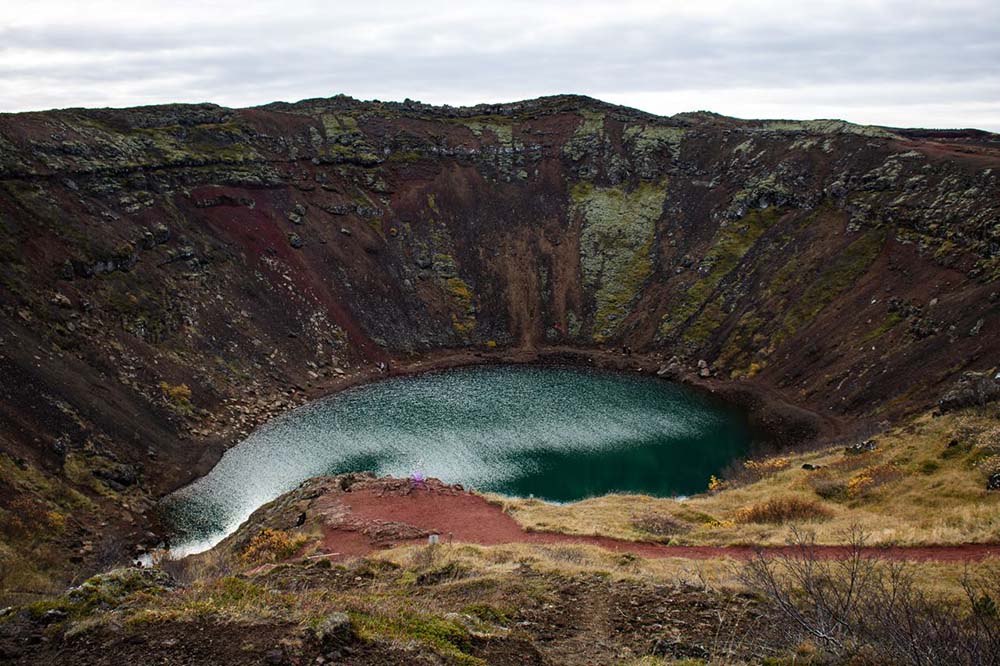
Many Golden Circle itineraries also include Kerið, a volcanic crater lake known for its contrasting colours. Its reddish slopes, dark volcanic rock and blue-green water create a distinctive landscape that looks particularly striking from the upper rim.
The crater was formed by volcanic activity thousands of years ago, and its current appearance makes it an interesting example of Iceland’s geological diversity. Unlike the vast open spaces of Þingvellir or the powerful water at Gullfoss, Kerið offers a more contained landscape that can be appreciated from several viewpoints.
A path follows the crater rim, while another route leads down towards the lake. The scenery is worth taking a moment to explore, especially for photography enthusiasts.
One practical detail is worth remembering when booking: the Kerið stop is not included on every departure. On BusTravel Iceland’s Grand Golden Circle Tour, it is included on morning departures, while departures scheduled for 12:00 or later omit this stop. Always check the specific itinerary before confirming your excursion.
More Than Sightseeing: How to Make the Golden Circle Your Own
The classic Golden Circle route already offers a varied day of sightseeing, but there are several ways to make the experience different.
For travellers who enjoy local food and agriculture, a small-group excursion with a visit to Friðheimar offers an additional perspective on Icelandic life. The farm is known for using geothermal energy in greenhouse cultivation, demonstrating how natural resources can support food production in a country with challenging growing conditions.
Those who would rather combine sightseeing with relaxation can choose a tour that includes the Secret Lagoon, one of Iceland’s historic geothermal bathing destinations. Other itineraries combine the Golden Circle with visits to Sky Lagoon or Blue Lagoon, depending on the selected package.
There are also options for travellers seeking something more active, including horseback riding and snowmobiling experiences. These combinations make it possible to experience Iceland through different activities without having to organise several separate excursions.
The best choice depends on how much time you have and what interests you most. A classic coach tour is a convenient introduction to the region, while a smaller-group or combination experience may suit visitors who want to explore additional attractions.
Exploring the Golden Circle by Bus: What to Expect
The Golden Circle is well suited to organised bus travel because its main attractions can be connected within a single day. Instead of focusing on driving, visitors can enjoy the changing scenery and listen to guides explaining Iceland’s history, landscape and culture.
BusTravel Iceland’s Grand Golden Circle Tour takes approximately 8.5 hours and departs from Reykjavík. It includes a professional guide, onboard Wi-Fi and pickup and drop-off arrangements according to the selected booking option. Food and drinks are not included, although the itinerary allows for a stop at the Geysir Visitor Centre, where refreshments and lunch options are available.
Before setting off, bring warm, windproof and waterproof clothing. Even when the weather in Reykjavík looks pleasant, conditions in the countryside can be very different. Comfortable footwear is also useful, as the sightseeing stops involve walking around natural attractions.
Most importantly, avoid treating the Golden Circle as a checklist to complete as quickly as possible. The route is rewarding precisely because its attractions are so different. Take time to appreciate the details, listen to the stories and enjoy the journey between stops.
FAQ: Golden Circle Tours in Iceland
How long does a Golden Circle tour in Iceland take?
Most full-day Golden Circle excursions from Reykjavík take approximately 8 to 9 hours, depending on the itinerary and weather conditions. Combination tours that include geothermal bathing or additional activities may take longer.
What are the main attractions on the Golden Circle route?
The three best-known highlights are Þingvellir National Park, the Geysir geothermal area and Gullfoss waterfall. Some itineraries also include Kerið volcanic crater lake, as well as additional stops at farms, geothermal lagoons or other regional attractions.
Can you visit the Golden Circle without renting a car?
Yes. Guided coach excursions provide organised transport from Reykjavík and connect the main attractions in one day. This is a practical option for travellers who prefer not to drive in Iceland or plan the route independently.
Is the Golden Circle worth visiting in winter?
Absolutely. The landscape changes significantly during winter, with snow, ice and shorter daylight hours creating a different atmosphere. However, weather and road conditions may affect the itinerary, so warm clothing and some flexibility are important.
Can you combine a Golden Circle tour with a geothermal spa?
Yes. BusTravel Iceland offers combination experiences that pair classic Golden Circle sightseeing with destinations such as the Secret Lagoon, Blue Lagoon and Sky Lagoon. Check the individual tour description to see whether admission and transfers are included.
Is Kerið crater included in every Golden Circle tour?
Not necessarily. For example, the Grand Golden Circle Tour includes Kerið on morning departures, but departures at 12:00 or later do not visit the crater. Always check the departure time and itinerary when booking.


 Alexa Johnson is a seasoned travel writer and cultural enthusiast passionate about unearthing hidden gems. Based in Canada, Alexa regularly contributes to travel magazines and blogs, sharing insights and experiences from around the globe. Among her notable collaborations, she has also worked closely with