by Wynne Crombie
After exploring the delights of the Rynek Glowny (Krakow’s Main Market Square) my husband Kent and I set out to discover Krakow’s old Jewish Quarter…Kazimerz. It’s few minutes by tram (#7, #13, #24) or, a very leisurely twenty- minute walk.
At its inception, Kazimierz, founded in the 14th century by King Casimir the Great, was a separate town from Krakow. It was once Krakow’s “medieval twin”. Until the outbreak of World War II, the Jewish religion and culture thrived here. It was the safe haven for Jews from every corner of Europe until the 20th century. It was also a major center of Diaspora (an area outside Palestine settled by the Jews). Then, with the onset of World War II, it became the scene of Nazi devastation. However, there are still significant reminders, of a substantial Jewish community that once existed from 1500 to 1940’s …the forgotten grandeur and landmarks of Kazimierz,
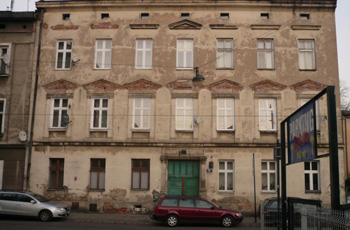 In March 1941, the Germans forced all Krakow Jews to resettle in the newly created ghetto of Kazimierz. The Nazis liquidated it only two years later on March 13, 1943. Most of the 17,000 inhabitants perished in the Nazi concentration camps. Today Krakow has only about 200 Jewish residents.
Kent and I found that Kazimierz is best discovered on foot. There were so many times we wanted to just stop and reflect on the history before us. As we strolled along Ulica (street) Szeroka we noticed that the signs in Polish were slowly morphing into Hebrew.
Ulica Szeroka runs north and south and has parking available all along the middle of the street. It is not what you would call glamorous; in fact it is a little run-down. It was a nice place to go for a walk as we found out, or just sit and take in the atmosphere
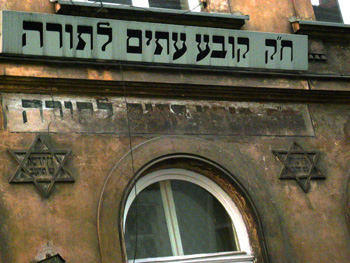 Kazimirez is not beautiful; many of its buildings are run down. A few night clubs have emerged around the Square. We enjoyed just sitting and people watching… modern day residents and a few Jews dressed in shawls and yarmulkes. And, of course, the foreign tourists.
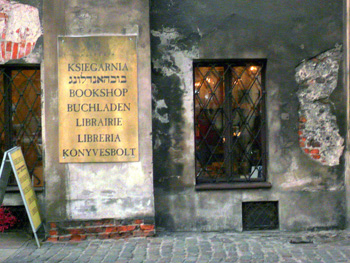
At the top of the Square (Szeroka 2) is the original Jarden Bookshop, going back to pre- World War II. It also doubles as a tourist information source. The Bookshop also runs tours of the area.


The synagogues that still stand are not in the best of condition and the actual Jewish quarter lacks the pre-World War II Jewish atmosphere. Almost all have left the area.
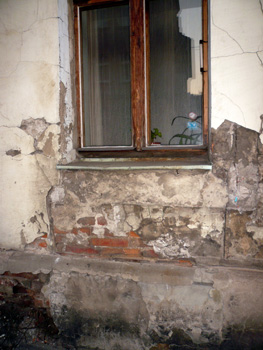 The next thing on our list, however, was to sample some of the local food. There was no shortage of Jewish themed restaurants and shops.
We opted for the Kazimierz Market Square or Plac Nowny. It was appealing because it was made up of mostly local working folks walking over for lunch or on a snack break. Never mind that comprehending both Hebrew or Polish were out of our league! At one of the stalls we nibbled on zapiekanki. This is a fantastic toasted baguette with cheese, ketchup and other toppings.
After a little nibbling, shopping and people watching, it was time to explore more of Kazimiretz’s history.
Many synagogues that did survive the war were badly damaged. We visited the Isaak Synogogue built in the 17th century on Kula Street. This is one that had been badly damaged during the War and is still in a restoration process. The historical documents on display are, tremendously interesting. Not just the writing, but the paper and inks used as well.
 Another interesting feature are the walls in the prayer hall. Prayers have been painted on the walls for worshipers who couldn’t afford prayer books. Most readings have even been translated into English. A plaque outside states the synagogue was constructed in 1638, so there is some serious history attached to this place of worship.
At Ulica Szeroka 24, the Old Synagogue is the oldest surviving Jewish building in Poland. We found incredibly interesting displays on Jewish life in the Main Prayer Hall (with English translations.) They also play a short film taken before World War II showing everyday street scenes in happier times. When we stepped outside, we realized the film was shot right there, but now there are very few Jews, just their names on buildings and streets.
 In addition to the Jewish element, Christianity also had a role in Kazimirez. The Church of Corpus Christi has an awesome historical interior. There are stalls going back to 1629, the altarpiece of 1634, and the ornate mid-18th-century pulpit.
Since the late 1980s the area’s Jewish heritage has come back to life, the progress aided by the success of the Spielberg film, Schindler’s List. The restored synagogues cafes, bars, and restaurants are restoring life back into the Jewish Quarter.


Spielberg needed an authentic Jewish quarter for the scenes depicting the Jewish ghetto of Podgorze in Krakow. He chose Kazimierz because this area had not changed since the 1940s,
The entire Kazimierz district is on the UNESCO World Heritage List as an historical monument.
If You Go:
Schindler’s factory:
Wander through Kazimierz, then across the Vistula River Bridge to Podgórze to see more of the Nazi Kraków Ghetto and, a factory of Oscar Schindler. The latter saved nearly 1,200 Jews from the camps. Many of the surviving remnants of the World War II ghetto still exist here.
Walking Directions to Kazimierz from Wawel Castle (Krakow):
Stradom Street leads straight from the Castle’s base to Krakowska Street, and the central thoroughfare of the Kazimierz district.
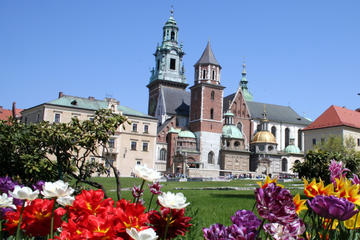
Krakow Old Town, Jewish Quarter Walking Tour and Optional Wawel Castle Visit
About the author:
Wynne Crombie has a master’s degree in adult education. Her work has appeared in: TravelthruHistory, Travel and Leisure, Dallas Morning News, Senior Living, Cat Fancy, Quilt Magazine, Catholic Digest, Boys ‘Life, Italy Magazine, Irish-American Post.
All photos by Wynne Crombie.
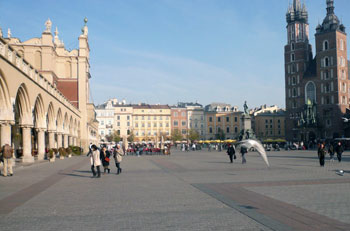
 The main function of the Rynek Glowny through the centuries has always been commerce. During Krakow’s early history, citizens were not allowed to sell goods on the street, only in the Rynek Glowny. It is still surrounded by old brick buildings (kamienica) and palaces, almost all of them several centuries old. The first plans were drawn up in 1257 and have been retained to this day.
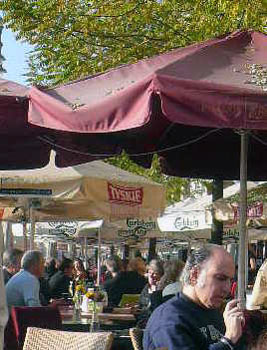
 Even though it was November, the venders on the Square, were holding court amidst the yellow umbrellas and tables. Outdoor eating was in full swing. A young man popped up in front of us and handed us a list of his restaurant specials for the day. There is no problem if it is a chilly day, the heat lamps are simply turned on. Should the temperature really drop, blankets are brought out.
 If visitors tire of walking around the Rynek Gwony they can simply seat themselves at one of the numerous outdoor cafes and view the relics of history around them. One side is taken up by the many arched Cloth Hall (Sukiennice) It is considered the world’s oldest shopping mall, The present Renaissance structure dates from 1555 and features in its interior many food stalls, small shops, terrace cafes and flower stands The two-storied structure is a bonanza for souvenirs, handmade Polish crafts and stalls of flowers. The Gallery of 19th Century Polish Paintings is an interesting find on the upper floor. If you get tired, another café is just around the corner. Items tend to be more expensive here than in the Rynek Glowny itself.
 After ordering bowls of cabbage soup (with sausage) my husband Kent and I settled ourselves under one of the heat lamps to take it all in.. Sipping and people watching is the norm. Nuns in habits rounded the corner, while across the Square stood a line of buggies and horses patiently waiting for fares. Their drivers were perusing the daily newspaper. School children, wearing neon vests, filed by led by their teacher. The pretzel and cotton candy sellers were doing a brisk business with pigeons busy picking up crumbs on the cobblestones, Outdoor art exhibits added to the flavor along with impromptu musicians.
 Today Kazimierz is mainly a blue-collar neighborhood. With communism’s fall, Kazimierz has changed beyond all recognition. Buildings such as art galleries and cafes have been renovated and museums opened. There has also been a reawakening in the importance of the Jewish settlement in Krakow. The film, Schindler’s List, was largely shot in Kazimierz in spite of the fact that very little of the action historically took place there.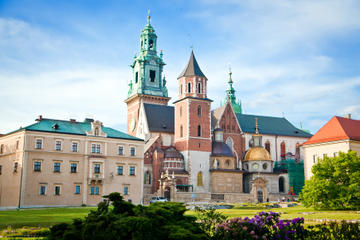
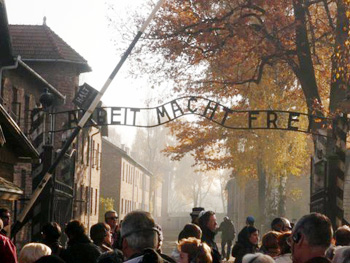
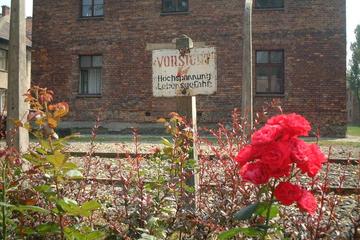
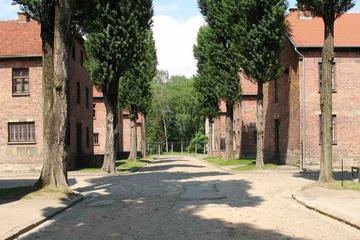
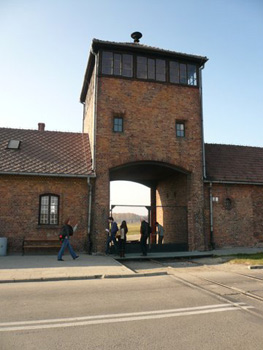 We were part of a continuous line of visitors from around the world who did not need a Silence sign. The only noise came from the shuffling of feet. We were on a tour of Poland and had been visiting Krakow. After making the one hour drive from Krakow, we arrived at Auschwitz I. (Auschwitz II or Birkenau, is a mile away). Admission is free.
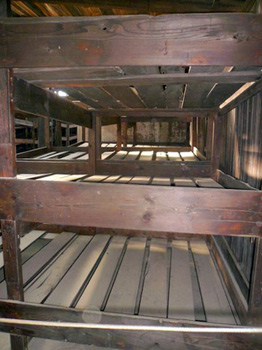 During the early days, the Nazis would take pictures of each inmate. These seemingly endless 8 x 10 glass-covered photographs surrounded a long narrow hall. The inmates looked healthy, for they had just arrived. The name was printed below each photo and included the date of arrival and the date of death—sometimes just days apart. When photography became too expensive, the Nazis started tattooing numbers on the inmates’ arms.
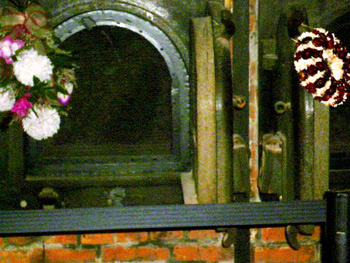
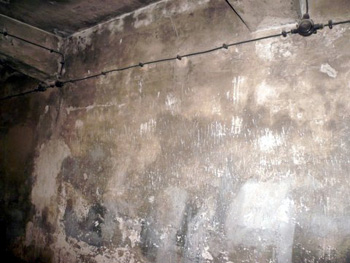 Those who were not selected for the barracks were told they were to take showers. Only Zyklon-B gas was used instead. (The shower heads are still embedded in the cement wall). From there, their bodies were taken to the crematorium The Nazis destroyed evidence of the gas mass killings by blowing up the buildings. Anya told us they liked to use gas because they didn’t have to look at the person while he was being killed.
 This was confirmed by Jerzy Kowalewski, an eighty-eight-year-old Auschwitz survivor. We attended a seminar he had given in Warsaw.
 At the daily roll call, the entire camp stood in their meager rags as the SS guards called out their names. The roll call was given as a collective punishment for the wrongdoing of just one prisoner. The inmates stood for up to four hours in the rain and snow. Some of the extremely weak and sick prisoners would die in the lines during the roll call. After roll call, the prisoners received their ration for breakfast. They were given 10 ounces of bread with a small piece of salami or one ounce of margarine and brown, weak coffee, with no sugar.

 In the Block (or Building 5), on either side of the middle aisle, behind glass, were piles fifteen feet high of human hair on both sides. Rows of long braids popped out at me first.