Travel Thru History

Historical and cultural travel experiences

  • Home
  • Airfare Deals
  • Get Travel Insurance
  • Writers Guidelines

How to Plan Your Machu Picchu Trip Without Overpaying for Mediocrity

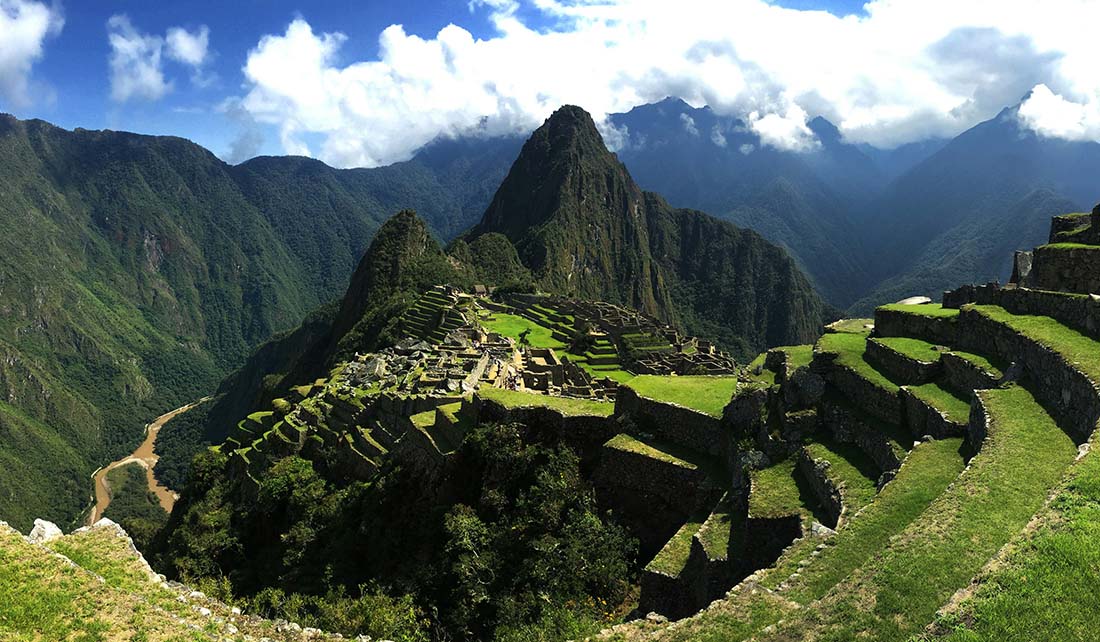
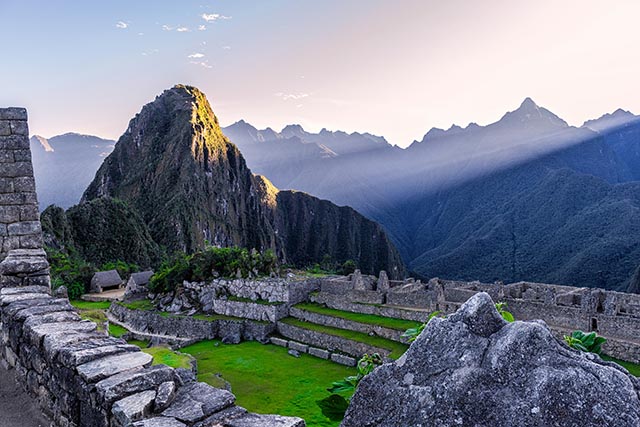
Machu Picchu mountain top in sunshine

Machu Picchu became an insanely popular destination over the course of years, and I for one am not surprised.

But with so many people going there, you gotta watch out. The tour companies will try to charge you like crazy just to show you some old rocks. I’m not saying it’s not worth it – it totally is. But do you really want to waste money on a “tour” where all you do is take a bus ride?

That’s why I decided to put this guide together. I’m gonna give you the real deal – how to see Machu Picchu and actually experience it without burning a whole through your pocket. Let’s get right into it.

When to Go?

The perfect timing for the Machu Picchu Peru tour would be between April and October – according to the agencies. Why? Because the demand is huge, and they can inflate the prices. That way, you’re getting a harsh sun and peak crowds. On the other hand, if you visit this site in March or November, you can get better deals and more comfortable weather conditions.

Accommodation Costs

Rentals and hotels close to Machu Picchu are not cheap. But if you plan the trip in advance and book early, you may spot some attractive prices. Dorm beds are also an option if you feel comfortable sharing a room with the whole group.

Boleto Turistico Instead of Machu Picchu

The Boleto Turistico is a local pass to access various historical and archeological sites around Peru. If you plan on visiting more than one historical site around, it’s better to invest in this pass instead of individual tickets.

Tips on Saving Money While Exploring Machu Picchu

We suggest you  avoid the on-site souvenir sellers because the prices are higher than they should be. Skip on tourist traps like food stands and overpriced on-site restaurants, because the prices can be really huge. Instead, explore the local markets, so you can find both delicious food and nice souvenirs.

We also suggest discovering the Inca Trail with no guide, especially if you’re an experienced hiker. Always have a map with you, so you can discover the breathtaking views. The Boleto Turistico permit allows you to extend the Machu Picchu experience to new heights, with no need to pay additional fees.

Learn Some Spanish

Spanish is easy to learn, especially the basic phrases. It may help you get some discounts on tickets and souvenir prices. Also, you’ll navigate the markets and transportation better, while connecting with the locals easily.

Summary

I know Machu Picchu looks awesome in the brochures, but you gotta watch out for those tourist traps ruining the fun! I gave you a few tips that should save you some cash and let you see more than just overpriced gift shops.

Instead of just following the crowds, think about planning your own trip. Go when it’s not packed full of people elbowing you out of the way for selfies. And forget about rushing through to check it off your list – slow down and really appreciate what the Incas built there!

Spanish phrases and history facts are cool, but the best way to experience Peru is with an open mind. Use what I told you about timing it right and making your own adventure. That way you’ll really understand what makes Machu Picchu and the other sites so special, instead of just taking a quick picture and moving on to the next thing.


Tagged With: Machu Picchu Filed Under: South America Travel

The Ultimate Guide to Hiking the Inca Trail to Machu Picchu

Panoramic view of Machu Picchu

Life had turned into a monotonous cycle when a sudden call to adventure led me to Peru. While there, I chose to answer this call by undertaking an unforgettable journey along the fabled pathway to a world-renowned archaeological wonder. I hope my story of hiking the Inca Trail to Machu Picchu will inspire and equip you to make this remarkable journey yourself.

Preparing for the Expedition

As with any challenging journey, successful navigation of this trail demands physical fitness and mental preparation. In the months leading up to my departure, I incorporated daily cardio and strength training into my routine, with special emphasis on leg workouts. The grueling inclines and declines of the ancient path were much less daunting as a result.

Along with physical prep, I gathered essential gear: a lightweight backpack, comfortable hiking boots, water purification tablets, high-energy snacks, and of course, a quality camera to capture the astounding vistas.

Acclimatizing in Cusco: The Ancient Inca Capital

Before setting foot on the trail, we spent a couple of days in Cusco, acclimatizing to the high altitude. This city, once the capital of the Inca Empire, is a UNESCO World Heritage Site and a treasure trove of history. We wandered through the cobblestone streets, visiting museums and historic sites to immerse ourselves in the rich cultural history of the region. A standout was Qorikancha, once the richest temple of the Inca empire, its walls reportedly once covered in gold.

a person walking the cobblestone streets of Cusco
Acclimatizing in Cusco for a few days is a good idea

Navigating the Historic Path

The first day of the trek was relatively easy. The trail began in a small village named Ollantaytambo, leading through a patchwork of farm fields before starting a gentle climb to our first campsite. Our group was composed of fellow travelers from around the globe, each drawn to this remote corner of the world by the promise of the ruins nestled in the Andean peaks.

The terrain became more demanding as we moved along the ancient path. Stone steps carved centuries ago led us ever higher into the Andean mountains, each turn revealing panoramas that defied belief. On the second day, we reached Dead Woman’s Pass, the highest point on the trail at a lung-busting 4,215 meters.

Meeting History Face to Face

On the third day, I came face-to-face with remnants of the historic civilization. We wandered through fascinating ruins, such as Runkuraqay and Sayacmarca, each giving glimpses into the past lives of the civilization that once dominated these heights. As we moved from site to site, I was awed by the intelligence, ingenuity, and tenacity of the people who had called these mountains home.

Sunrise at the Sun Gate: The Reward at the End

The last day of hiking the Inca Trail to Machu Picchu started before dawn, the anticipation palpable among us. As we neared Inti Punku, or the Sun Gate, the early morning mist began to lift, revealing the sun-drenched city ahead. It’s difficult to capture the feeling of seeing the site for the first time, with golden rays of dawn illuminating the terraced slopes and intricate stone structures. It was a truly magical sight, a reward that exceeded all the physical exertion of the preceding days.

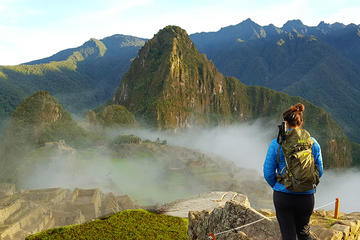
A woman taking in the views of Machu Picchu
The rewards of hiking the Inca Trail to Machu Picchu are beyond worth it

Guides and Porters: The Unsung Heroes

Another integral aspect of the journey is the hardworking and knowledgeable guides and porters. They are often locals who carry supplies, set up camps, and prepare meals. Their knowledge of the trail, flora, fauna, and history is unmatched. They breathe life into the journey by sharing stories and facts about the trail and ruins. Our guide’s explanation about the intelligent architectural design of the sites to withstand earthquakes left us awe-struck.

Cuisine on the Trail

Surprisingly, food was one of the highlights of the journey. Porters and chefs work wonders to prepare fresh, hearty meals, even in these remote locations. Each meal was not only delicious but also carefully designed to provide the necessary nutrients for the strenuous trek. They catered to different dietary needs and always had a hot cup of coca tea ready to help with the altitude.

Overcoming Physical Challenges

Despite the months of training, there were moments on the trail when the physical challenges felt daunting. The high altitude, mixed with steep climbs, required breaks and moments of introspection. During these pauses, I marveled at the raw, untouched beauty of the Andes, the play of clouds and sunlight on the peaks, the hum of the wind, and the whispering trees. This symphony of nature invigorated me and provided the strength to push through.

Flora and Fauna

While the trail is best known for its historic sites, it’s also a rich showcase of biodiversity. The trail offers fascinating glimpses of the local ecosystem, from orchids clinging to cloud forest trees to sightings of Andean bears, hummingbirds, and an array of colorful butterflies. There is something special about seeing a rare orchid bloom or a bird of vibrant plumage flit past, creating an intimate connection with nature.

The Intangible Rewards

Perhaps one of the most valuable aspects of this journey is the inner transformation it prompts. Each day was a cycle of effort, triumph, fatigue, and elation. Away from the usual routine, the trek allowed me to introspect, push my limits, and discover a new appreciation for nature and history. The bond created with fellow travelers and the shared experience of facing and overcoming challenges created memories to last a lifetime.

Post-Trek Reflections

Post-trek, we spent a few more days in Cusco, exploring its vibrant markets and savoring its unique cuisine. This gave us time to process our adventure and reflect on the impact the hike to Machu Picchu had on us. The journey’s end wasn’t just about reaching the city of terraced slopes but also about personal growth, resilience, and a deeper understanding of history.

a person walking across a bridge hiking the Inca Trail to Machu Picchu
Use the end of your trip to relax and enjoy the surroundings

Concluding Thoughts: Embrace the Challenge

The trek offered much more than just a visit to an archaeological marvel. It was a deep dive into history, a test of personal resilience, and a powerful bond formed with nature.

As I stood among the stone structures of the lost city, it felt like time had paused. The city’s resilience, standing strong against centuries of natural elements, mirrored my own journey along the trail, a testament to the strength of human will and persistence.

So if you’ve got an adventurous spirit, a thirst for historical understanding, and a penchant for breathtaking landscapes, this journey might just be for you. Lace up your hiking boots, pack your determination and curiosity, and embark on this magnificent adventure. The journey along the ancient path to the sun-kissed city awaits you. Start your journey of hiking the Inca Trail to Machu Picchu.

If You Go: Essential Tips for Future Trailblazers

Looking back, my journey was an amalgamation of preparation, anticipation, camaraderie, and raw natural beauty. Here are a few tips from my experience:

  • Acclimatize: Spend a couple of days in Cusco before the journey to acclimatize to the high altitude.
  • Stay Hydrated: Always keep your water bottle handy. The trail can be strenuous, and dehydration makes it more difficult.
  • Respect the Trail: Remember, it’s not only a trekking path but also a precious heritage site. Do not litter or cause any damage.


About the author:
Alexandra Stone is a world traveler, adventure enthusiast, and history buff who has left her footprints in over 60 countries. With a flair for storytelling, she specializes in illuminating lesser-known aspects of global destinations and sharing insider tips from her experiences. When not exploring a new trail or diving into historical narratives, Alexandra can be found collaborating with Allstate Moving and Storage Baltimore and documenting her journeys on her widely-read blog, “Roaming with Stone.”


Tagged With: Inca trail, Machu Picchu Filed Under: South America Travel

Peru: Machu Picchu

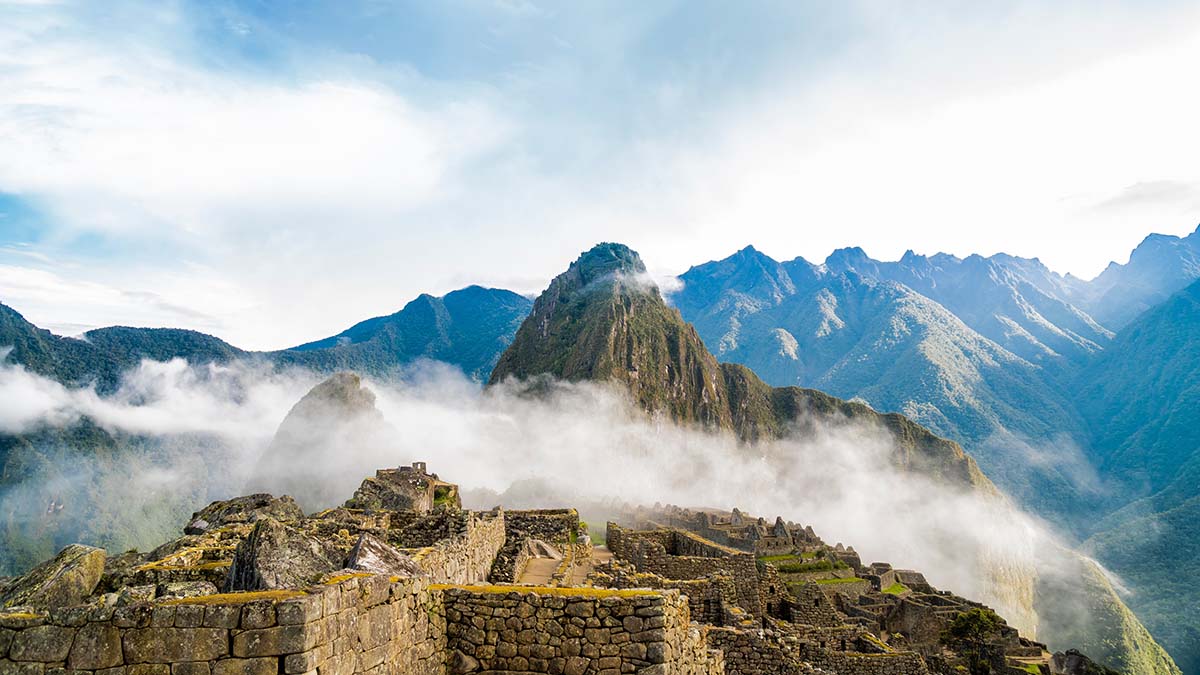
clouds over Machu Picchu

“Lost City of the Incas”

by Theodore Scott

As I climb the twisted stone staircase up the mountain, it gives me the view of Machu Picchu that I had seen in countless postcards. This spot is the best-known archaeological site on the entire South American continent. The viewpoint gives me a clear picture of the ruins – allowing me to understand their layout. But soon, the maze of staircases and structures would confuse me.

Referred to as “The Lost City of the Incas,” Machu Picchu is a ruined stone city perched in the mountains of Peru. Despite its beauty, it was abandoned for centuries. While known earlier by a few wanderers and locals, it was not revealed to the rest of the world until Hiram Bingham, while looking for a different lost city, came upon it in 1911. National Geographic brought it further into the spotlight in 1913 by dedicating an entire issue to the site.

terraced hillside at Machu PicchuComing down into the bulk of the ruins, I walk along the extensive agriculture terraces that flow down the mountainside. They don’t seem to end – eventually the vegetation just thickens and pulls the terraces from my sight. The terrace system has interesting benefits that I, being more familiar with farming on plains, would not have predicted. The terraces vary in temperature as they climb the mountainside. This allowed the farmers to plant various types of crops in their ideal conditions. Also, rain directed nutrients from the higher crops to improve the soil below.
The central plaza of Machu Picchu is an open grass area that separates the residential and the ceremonial parts of the city. Llamas stroll the plaza, graze on the grass, and lie in the sun. Occasionally, one of them navigates a staircase and wanders out onto the terraces.

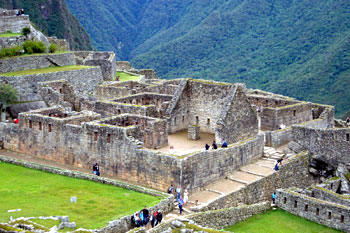
maze of Inca stone buildings at Machu PicchuI enter the ceremonial area, and come upon the Temple of the Sun, a semi-circular temple made with well-worked stones. The stones interlock and hold together without using mortar. This is a common trait of Inca architecture that makes it earthquake-resistant. Inside the structure is a large altar and a trapezoidal window that is thought to have been used for astronomical observation. Below the temple is a cave called the Royal Tomb, even though no human remains have ever been found there.

llamas on the central plaza at Machu PicchuI continue up a staircase past a series of ceremonial baths to a quarry. The scattered boulders seem to emphasize the incomplete nature of Machu Picchu. Despite the extensive work the Incas put into this series of mountaintop structures, they never completed the city.

There are many conflicting theories about different aspects of Machu Picchu. Archaeologists cannot agree on whether the city was abandoned before or during the Spanish conquest. Its main purpose isn’t even definite. I have been told that Machu Picchu is a former Inca vacation resort, a prison, a defensive retreat, a temple, or an Inca government city.

As I explored the ruins, I notice that many facts the tour guide suggests disagree with other explanations I have read. Most modern texts say much of the information surrounding this site is guesswork, but the tour guides tend to treat some theories as fact and ignore all the other explanations. If you want deeper knowledge, you must find some good books and do your homework.

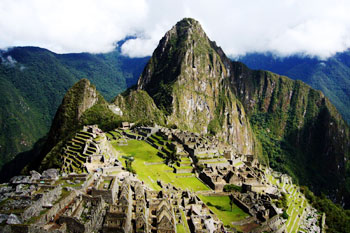
Huayna Picchu mountain behind the Machu Picchu citadelCrossing the central plaza leads me into the residential area of the ruins. It is easy to tell that the stonework is of lower quality than what I saw in the ceremonial area. The structures are simple and domestic, making it easy to imagine people using these stone buildings as houses.
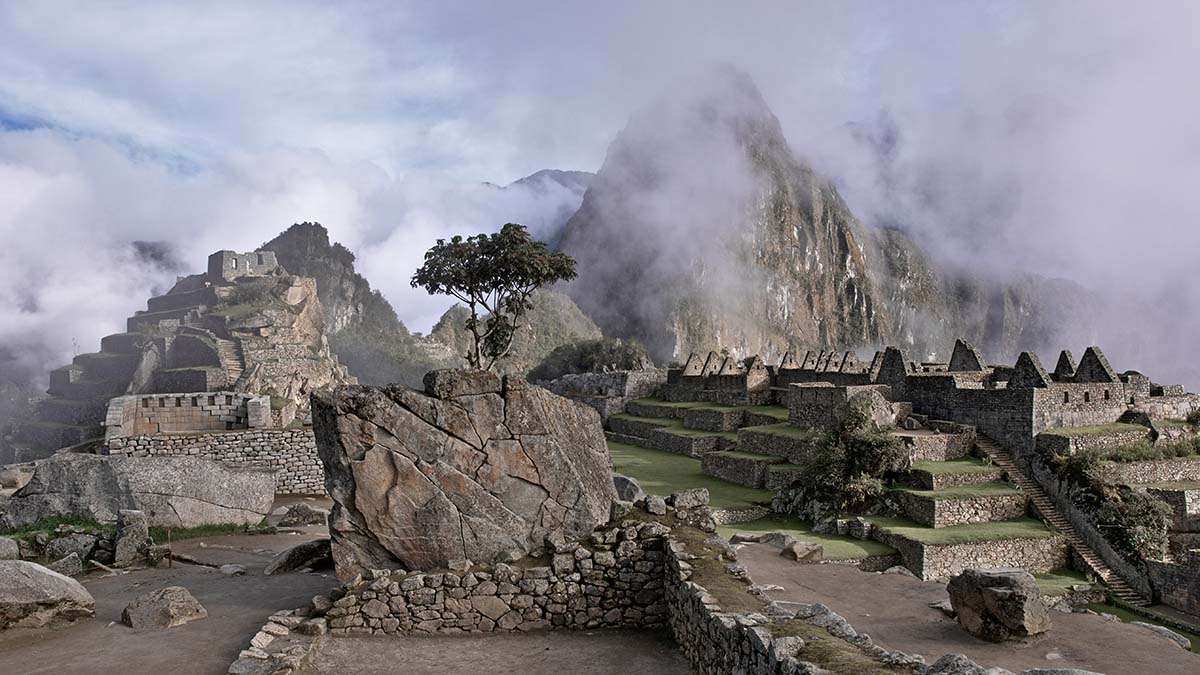
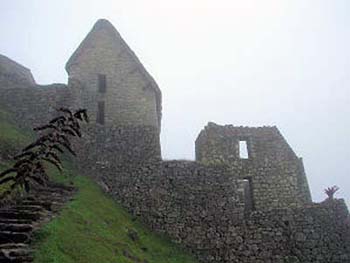
Next, I head in the direction the Temple of the Condor. In the Inca religion, the condor is the animal representative of the higher world – with the snake and puma representing the lower world and this world. After a few moments of finding the right viewing angle, I can see in the rocks a carving of a condor’s head. Behind it, large stones spread into the sky representing wings.

Machu Pichu is a large site with over one hundred staircases that can be tiring to climb. One day spent among the stones hardly seems enough – which is why I am coming back tomorrow.


Private Full-Day Classic Tour to Machu Picchu from Cusco

If You Go:

The ruins are open all day long, but are the most crowded from 10:00 AM to 2:00 PM. Most people visit on day trips from Cuzco. If you want to see the ruins with less of a crowd, arrange to arrive early in the morning or in the late afternoon. The early buses up the mountainside can be caught by staying overnight in Aguas Calientes. Peak season is from June to August.

The historic sanctuary of Machu Picchu was recognized as a UNESCO World Heritage Site in 1983.

You can take a virtual tour of Machu Picchu online. An informative brochure is also available on the Peruvian government’s Machu Picchu website.


About the author:
Theodore Scott quit his job to travel around South America. Theodore’s website is www.theodorescott.com

Photo credits:
First Macchu Picchu photograph by Photo by Willian Justen de Vasconcellos on Unsplash
All other photos are by Theodore Scott.

Tagged With: Machu Picchu, Peru travel Filed Under: South America Travel

Inca Citadel in the Clouds

Machu Picchu in clouds

Machu Picchu, Peru

by Thomas Lera and Sandy Fitzgerald

At the end of the 15th century, the secluded Inca citadel Machu Picchu was a vibrant city still being carved into the Andean peaks flanking the Urubamba River canyon. Over 200 buildings already provided housing, temples and storage facilities for the city’s 1,200 residents. Vast tracts of land had been terraced for farming. Over the next 27 years, more than half of the entire Inca population became infected with smallpox and died. Machu Picchu fell into disuse, and, quickly enveloped by the robust undergrowth of the jungle, became motionless, frozen in time.

Inka buildings in Machu PicchuLuckily, this religious center was not discovered, sacked and pillaged by the Spaniards like so many other of their conquests. Its remote location at the end of an insignificant road cut through treacherous mountainous terrain, high above the Urubamba River canyon, helped guarantee the fact it would have no significant commercial, military, or administrative use. The site remained largely untouched for more than four centuries until Hiram Bingham, on an archaeological expedition funded by Yale, discovered it in 1911.

Machu Picchu drapes across the top, and spills down the sides of a vast mountain area strung between two distinct Andean peaks: the now famous Inca Trail begins high on the mountain’s south side at Intipunku, the Sun Gate; Huayna Picchu soars above the site on the farthest northern extremity like a silent guardian. If you can muster the strength, a hike to the top of either should not be missed as it provides an outstanding view of the ruins and surrounding valley.

Inca buildings at Machu PicchuMachu Picchu can be geographically broken down into agricultural and residential areas. From both the trail entrance and the main ticket gate you enter through the agricultural zone. The contours of these slopes are hugged tightly by many layers of stone walls several feet high, built to reduce erosion and increase the square footage available for agriculture. The Inca employed advanced terracing and irrigation methods to assure a high yield of the maize and potatoes they grew.

We were fortunate enough to visit with an excellent guide two hours before the general public was admitted, and strolled quietly along its main avenues and smaller streets. As we walked toward the center of the complex, the most important temples and structures revealed the incredible craftsmanship the Inca used in building them. Enormous granite blocks had been cut by hand with bronze or stone tools, then smoothed with sand. The mortarless blocks still rest so solidly together it is impossible to insert a knife blade or even a credit card between them – we tried.

Many of the structures also utilized existing stone formations in their construction. A few temples clutch the edge of steep precipices, displaying a oneness with nature. What has become known as the amazing astrological center was built upon the outcropping of an existing megalith, with windows through which the sun’s first rays shine as they peek slowly over the adjacent mountain on both the summer and winter solstice.
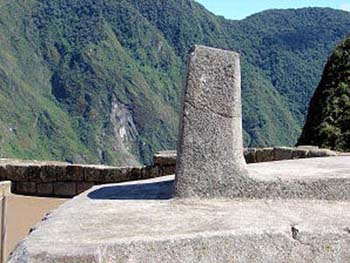
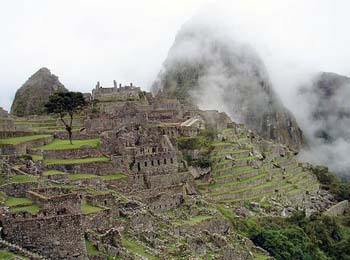
Intihuatana stone at Machu PicchuAnother of the many important structures at Machu Picchu is the Intihuatana. This stone column rises defiantly from a box-shaped slate platform. Intihuatana literally translates to “for tying the sun” but normally is translated as “hitching post of the sun.” History tells us as the winter solstice approached and the sun began to shine fewer hours each day, a priest would hold a ceremony to tether the sun to the stone to prevent it from vanishing entirely. Technically known as a gnomon, this genre of stone existed at many other Inca sites but was always destroyed by the Spanish. Thankfully this one remains, offering the meaning and significance surrounding it from its conception.

Surprises abound around every corner. Three dimensional sculptures carved into the rock in odd places appear as if by magic, and water still flows through ancient cisterns and stone channels. After hours of exploring we sat on a wall high along the edge of the city. Gazing down at this astounding group of residences and astrological temples, we were awestruck by Machu Picchu’s magic. Speech was superfluous. We could almost feel the deep pride, reverence and spiritual devotion of the ancient Inca, and this had nothing to do with altitude!

Machu Picchu with Huayna Picchu in fogEven the many tour groups which had trooped in and out during the day had done nothing to spoil the place for us. For a few precious moments, meandering down ancient trails, forgetting about the existence of buses, trains, cars and the world outside, we felt like Inca.

We boarded the bus back to our hotel in silence just before sunset. A young boy raced us to the tourist village of Agua Calientes, swiftly moving down ancient stone steps and unseen trails. He taunted us at various turns and switchbacks by waving, then ducking back into the bush, only to appear again at another turn. He won the “race” as the switchback road was much longer than the steep trail he had navigated.

The next morning rain drenched the village, washing away all evidence of our visit. The mountain top cradling the ruins was shrouded in impenetrable clouds, and Machu Picchu was once again hidden as if it never existed. Its impact on us, however, would never be lost.


Private Full-Day Classic Tour to Machu Picchu from Cusco

If You Go:

HOW TO GET THERE FROM CUSCO:
A 3 ½ hour journey on PeruRail is highlighted by wonderful mountain vistas and the beautiful Urubamba River which runs through the Sacred Valley of the Andes. On arrival in the town of Aguas Calientes, hop on a bus to traverse the last two kilometers up the mountain to the entrance. Trains leave at 6:00 AM and 3:30 PM for a round trip ticket is $73 per person.

Inkaterra Machu Picchu HotelWHERE TO STAY:
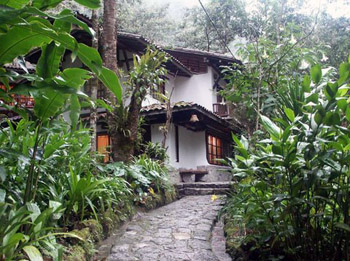
Aguas Calientes has a wide range of hotels from hostels to the exquisite. We stayed at the Machu Picchu Pueblo Hotel, which is now the Inkaterra Machu Picchu Hotel. Located in the cloud forest in the heart of the Machu Picchu Historical Sanctuary its 85-bungalow style cottage rooms are designed to give you the feeling of an Andean village woven throughout miles of trails. The “village” is complete with waterfalls and cloud forest gardens with over 375 different orchids, 175 species of birds and 125 varieties of butterflies. Our stay at this hotel was an eco-traveler’s paradise melding into the Machu Picchu spiritual experience. There are a variety of rooms available from the simple to the luxurious with corresponding costs. Our room was a welcome oasis with its large natural stone shower area and large working fireplace – both of which took the slight chill off the night an relaxed our tired muscle into a blissful nights’ sleep. Visit www.inkaterra.com for information.

About the author:
Thomas Lera is the pretentious literary persona of a real person, occupying the ever brief moments that lie between his many faces as adventurer, traveler, scholar, conservationist, and wage slave, while providing an excuse to refer to himself in the third person. He currently resides in Virginia and is collaborating with Dr, Hannibal Lecter on a cookbook. tikal22042@gmail.com

Photo credits:
First Machu Picchu photo by Tomas Sobek on Unsplash
All other photos are by Thomas Lera.

Tagged With: Machu Picchu, Peru travel Filed Under: South America Travel

MORE TRAVEL STORIES:

Belfast, Northern Ireland: Back to the Future

Liverpool Black History Walking Tour (part 2 of 3)

Czech Republic: The Devil of Prague

Visiting Rimbun Dahan, Malaysia

The Majestic Scenery and Wildlife of Banff, Canada

Greece: The Temple of Aphaia, Aegina

Germany: Cold War Berlin

Music in the Borneo Jungle


SEARCH

DESTINATIONS

  • Africa Travel
  • Antarctica travel
  • Asia Travel
  • Australia travel
  • Caribbean Travel
  • Central America Travel
  • Europe Travel
  • Middle East Travel
  • North America Travel
  • Oceania Travel
  • South America Travel
  • Travel History
  • Travel News
  • UK Travel
  • Uncategorized
  • World Travel
facebook
Best Travel Blogs - OnToplist.com

Copyright © 2026 Cedar Cottage Marketing | About Us | Contact | Privacy Policy | Terms & Conditions | Copyright Notice | Log in