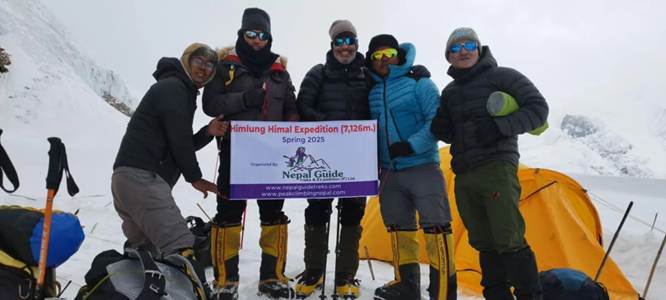
A Himalayan trip can mean a gentle few-day ridge walk, a high-altitude crossing beneath 26,000-foot peaks, or a technical expedition with weeks of preparation. That range is why Nepal is the world’s best destination for Himalayan trekking and expeditions for many international travelers. It combines extraordinary mountain access with established trekking infrastructure, a deep guiding culture, and routes that can match very different experience levels.
The claim does need context. Nepal is not automatically the right choice for every objective. Pakistan may suit trekkers focused on the remote Karakoram scale, while Bhutan offers a more regulated and quieter experience. But for travelers who want a realistic path from research and training to a well-supported Himalayan trek, Nepal offers an unusually strong balance of challenge, variety, and logistics.
Why Nepal Is the Best Destination for Himalayan Trekking
Nepal puts a remarkable concentration of major mountain landscapes within reach of ordinary trekkers. You do not need technical climbing skills to walk beneath Everest, cross high passes in the Annapurna region, or reach viewpoints facing Dhaulagiri, Manaslu, Langtang Lirung, and Kanchenjunga. On many classic routes, the mountain experience is serious even when the trek itself is non-technical.
That distinction matters. A trek such as Gokyo Lakes or Langtang demands endurance, acclimatization, and sound judgment, but it does not require the ropes, fixed-line skills, or glacier travel expected on a climbing expedition. This gives first-time high-altitude hikers a credible entry point while leaving room for experienced trekkers to pursue more remote routes, high passes, and expedition peaks.
Nepal also makes it possible to choose a trek based on your actual constraints. If you have a week and want a manageable introduction, Poon Hill Trek, Pikey Peak Trek or Mardi Himal Trek may fit. If you have more time and have prepared for sustained altitude, longer routes like Everest Base Camp, Manaslu Circuit, or Annapurna Circuit can offer a much bigger objective. The best route is not the one with the highest viewpoint. It is the one whose altitude profile, daily distances, season, and remoteness fit your fitness and experience.
A Well Managed Trekking System Reduces Avoidable Risk
Himalayan trekking will never be risk-free. Weather changes quickly, flights can be disrupted, trails can be steep and uneven, and altitude illness can affect fit people without warning. Nepal’s advantage is not that it removes those realities. Its advantage is that the country has a long-established system for managing them.
Popular trekking regions have tea houses, local guides, porters, trail networks, food supplies, and evacuation pathways that are far more developed than in many remote mountain areas. On well-traveled routes, trekkers can often adjust a rest day, descend if symptoms worsen, or change a plan without the trip collapsing. That flexibility is valuable when acclimatization does not go as expected.
A guide is especially useful when you are new to Nepal, trekking during the shoulder season, taking a remote route, or moving above roughly 10,000 to 12,000 feet. Guides help interpret conditions, manage permits and accommodation, set a sustainable pace, and recognize when continuing upward is not the right decision. They do not make altitude safe by themselves, but good decision-making on the trail is one of the strongest safeguards available.
The Culture Is Part of the Route, Not a Side Attraction
In Nepal, the trail passes through lived-in mountain communities. Trekkers stay in family-run lodges, eat meals prepared along the route, and move through villages shaped by Sherpa, Tamang, Gurung, Magar, and other Himalayan cultures.
Tea houses are working businesses, not just backcountry shelters. Keep expectations practical, carry cash where appropriate, conserve charging power and hot water, and understand that comfort declines as elevation and remoteness increase. In peak season, booking arrangements and daily timing can matter as much as physical fitness.
Nepal Works for Both Treks and Expeditions
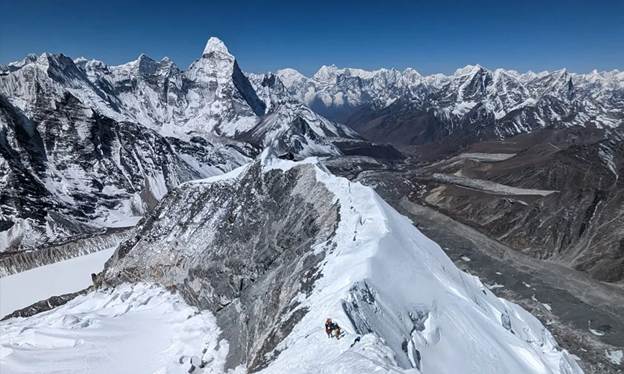
For climbers, Nepal’s appeal extends beyond famous trekking trails. The country supports objectives ranging from trekking peaks like Island Peak, Mera Peak, and Lobuche Peak to major Himalayan expeditions like the Manaslu Expedition, Himlung Expedition, and Ama Dablam Expedition, with access to experienced high-altitude staff, established base-camp logistics, domestic transport connections, and a large pool of local mountain knowledge.
Still, expedition planning is not simply an upgraded trek. It requires technical competence, a carefully selected operator, rescue and evacuation coverage that explicitly includes your planned altitude and activity, contingency days, and a realistic understanding of the mountain’s objective hazards. Permits, liaison requirements, park rules, and route access can change, so confirm current details before committing to dates or flights.
Choose the Season for Your Objective
For most trekkers, spring and fall offer the most reliable balance of weather, trail conditions, and lodge availability. Usually, spring means warm weather and rhododendrons in bloom, while the autumn season means clear views of the mountains after the monsoon season.
The winter season is a good choice for lowland treks like Poon Hill and Pikey Peak, provided you are well prepared for chilly mornings and possible snow. Monsoon trekking is best approached selectively, often in rain-shadow areas, with flexibility for transport delays and wet trail conditions. Match the season to the route rather than assuming one calendar window works everywhere.
The strongest reason to choose Nepal is not simply the size of its mountains. It is the ability to build a Himalayan trip around your real preparation level, then make informed adjustments when altitude, weather, or logistics demand them. Start by choosing a route that allows you to adjust safely to the altitude and prepare your body for both climbs and descents. Also, leave enough time in the itinerary for the mountains to set the pace.



Leave a Reply
You must be logged in to post a comment.