Bergen has no shortage of famous attractions. There are the colorful wooden buildings of Bryggen, the bustling Fish Market, the Fløibanen funicular climbing high above the city, and the magnificent fjords just beyond its doorstep. But one of Bergen’s most interesting experiences lasts only about ten minutes.
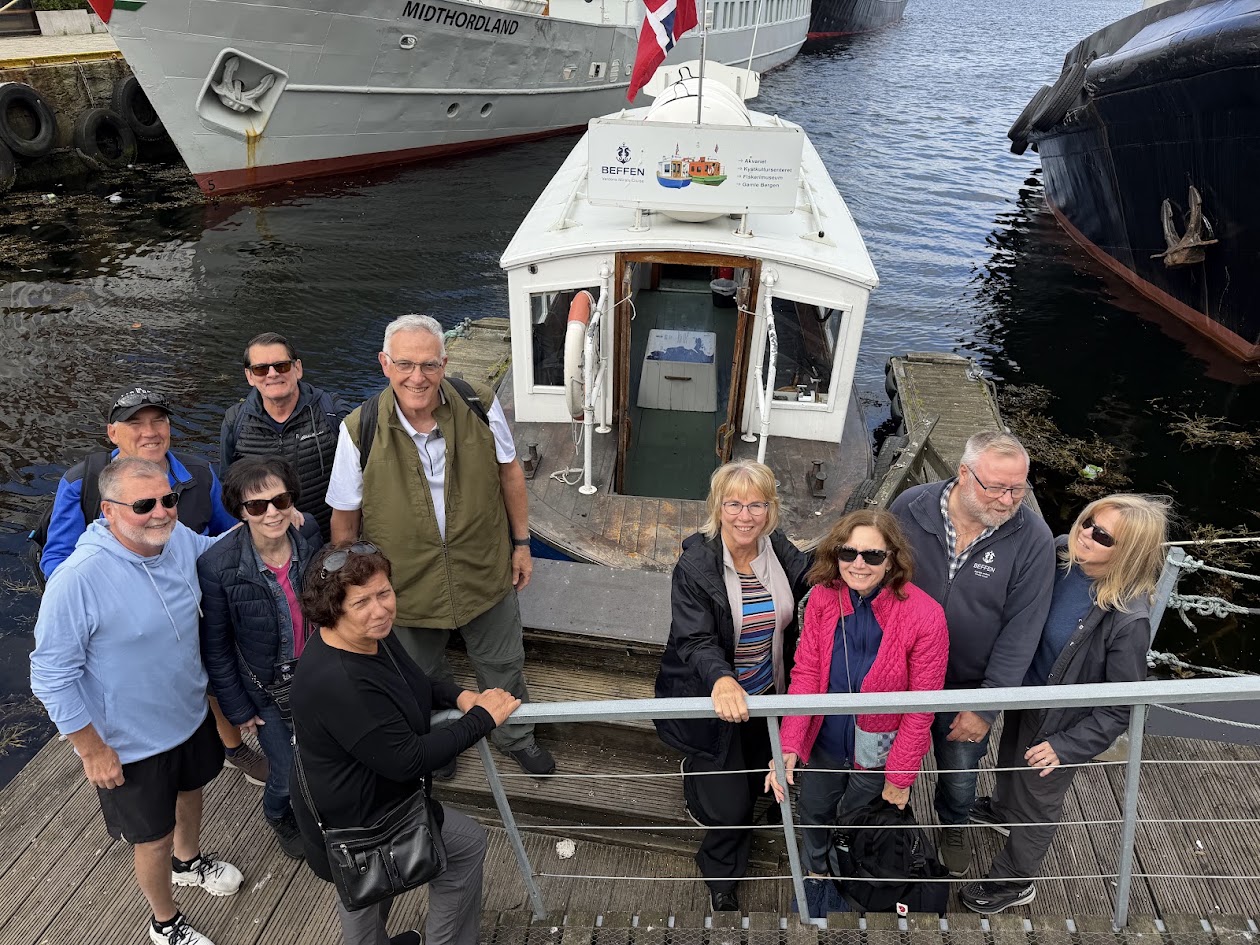
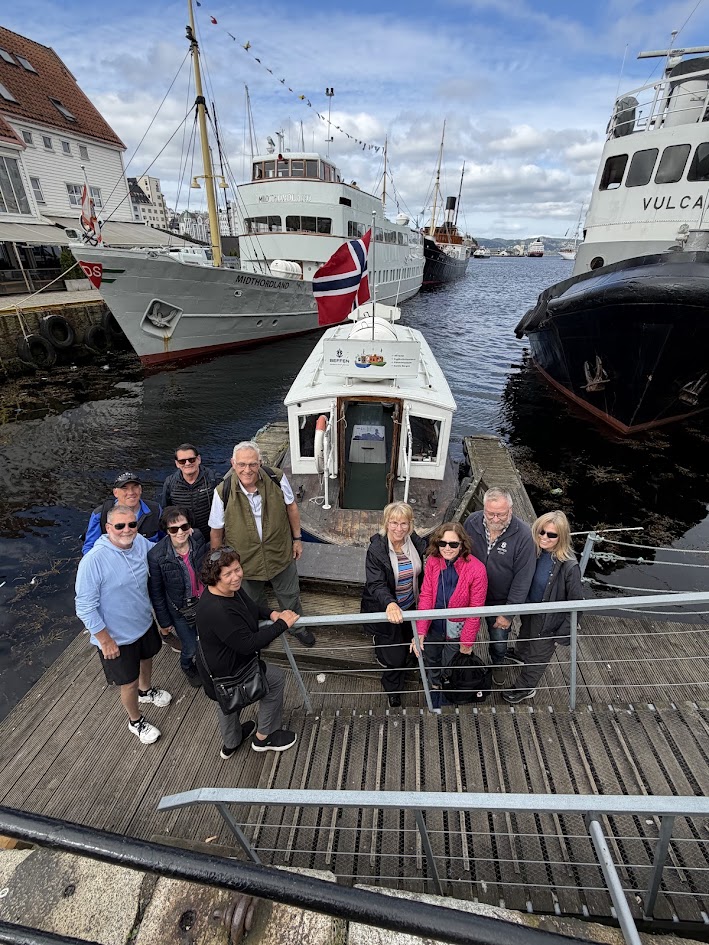
It doesn’t require a tour guide, there is no reserved seating, no gift shop and certainly no luxury lounge. In fact, compared with the enormous cruise ships that regularly sail into Bergen, it looks almost comically small. It is Beffen, the little passenger ferry that crosses Bergen’s historic harbor, Vågen.
At first glance, it might seem like nothing more than a convenient shortcut from one side of the harbor to the other. But Beffen has been part of Bergen life since 1894, and its story reveals something much larger about this city: Bergen has always belonged to the water.
A City Built Around Its Harbor
To understand Beffen, you first need to understand Bergen. The city was founded nearly a thousand years ago and grew into one of northern Europe’s great trading centers. By the Middle Ages, its harbor had become the heart of a commercial network extending far beyond Norway.
Beginning in the 14th century, German merchants associated with the Hanseatic League established a major trading operation at Bryggen. Stockfish from northern Norway moved through Bergen on its way to European markets, while grain and other goods arrived from abroad. The harbor wasn’t simply scenery. It was Bergen’s highway, marketplace and commercial center.
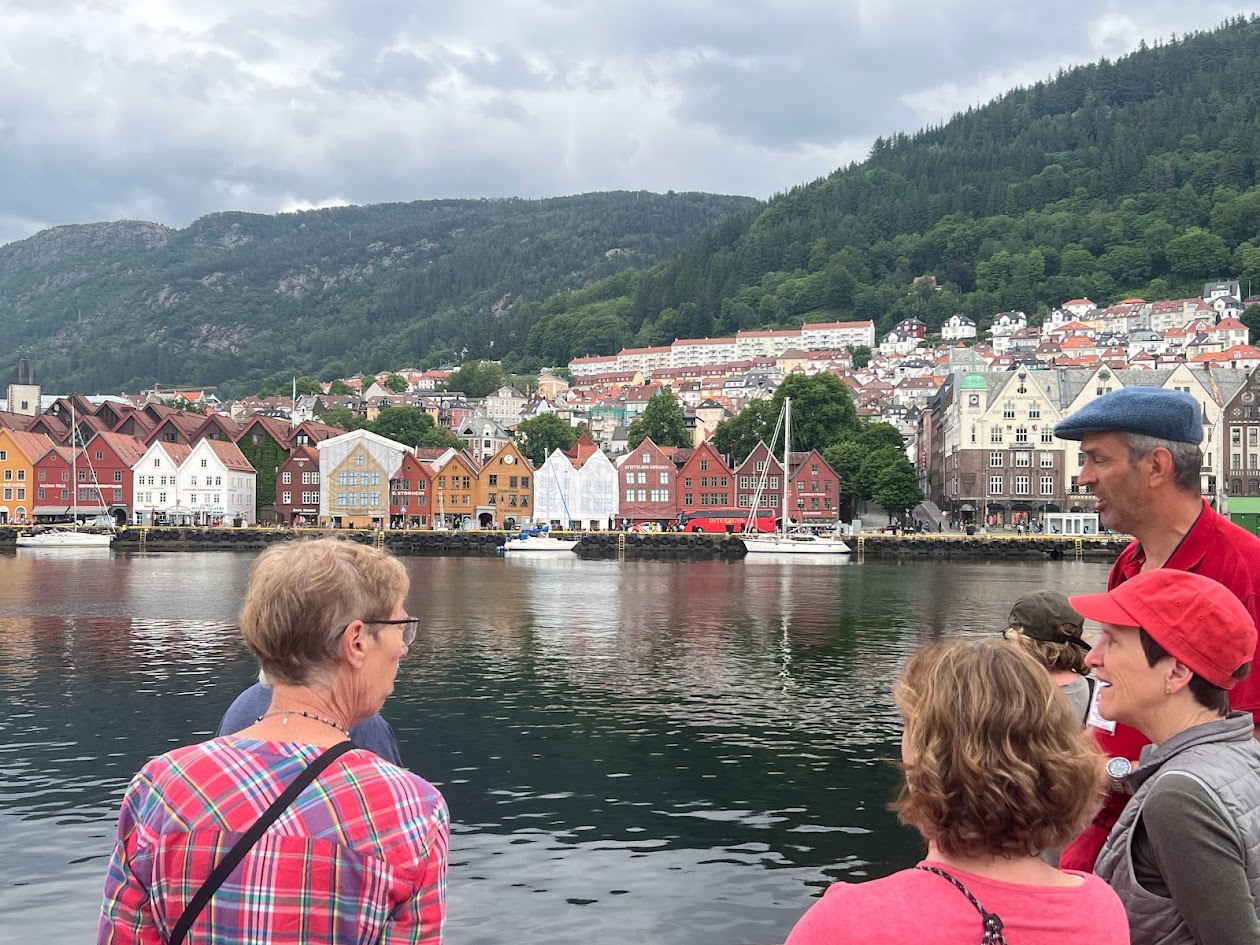
That helps explain the peculiar shape of Bryggen even today. Its long, narrow wooden buildings face the water because the waterfront was where business happened. Ships arrived at the wharves, goods moved into warehouses, and merchants conducted the trade that made Bergen prosperous.
Today Bryggen is a UNESCO World Heritage Site, but it makes far more sense when viewed from the harbor. From the water, you see Bergen much more like generations of sailors and merchants would have seen it, and that is part of what makes riding Beffen so interesting.
Before Beffen, You Hired a Boatman
In the 19th century, crossing Bergen’s harbor wasn’t always as simple as walking around it. Small rowboats operated by local boatmen carried passengers across Vågen, functioning much like Bergen’s original water taxis.
But Bergen was changing. Beginning in the mid-1800s, industry and trade expanded and the city’s population grew rapidly. More people needed to move around the harbor, and the old system of hiring individual boatmen was becoming increasingly inefficient.
Engineer Jacob Trumpy believed there was a better answer. During time spent in Westphalia, Germany, Trumpy had seen an unusual new form of transportation: an electrically powered ferry. He brought the idea back to Bergen.
That might not sound especially remarkable today. Norway is now one of the world’s leaders in electric transportation, electric cars are everywhere, and battery-powered ferries have become increasingly common. But this was 1894. The Wright brothers would not make their first powered airplane flight for another nine years, most of the world was still dependent on horses for everyday transportation, and Bergen was preparing to launch electric passenger ferries.
What Does “Beffen” Mean?
One of the best parts of the story is the origin of the name. The company established to operate the new ferries was called A/S Bergens Elektriske Færgeselskab—in English, the Bergen Electric Ferry Company.
Its abbreviation was B.E.F., and those initials eventually gave the ferries their affectionate Bergen nickname: Beffen.
So while “Beffen” sounds like the name someone might have given a favorite little boat, it actually grew out of the initials of the company that began operating Bergen’s electric ferries more than 130 years ago. The nickname stuck, and generations later Bergen residents still know the little harbor ferry as Beffen.
Bergen Goes Electric—in 1894
On March 5, 1894, an advertisement appeared in the Bergen newspaper Bergens Tidende inviting local residents to invest in the proposed ferry company. The response demonstrated just how much interest there was in the idea, with thousands of shares sold during the first week.
On May 15, Bergens Elektriske Færgeselskab was officially founded, and the first ferries began carrying passengers later that year. These were not large vessels. Each was only about eight meters long and two meters wide and carried approximately sixteen passengers.
Bergen liked them. Additional ferries soon entered service, connecting different parts of Vågen and Puddefjorden, and the little electric boats quickly became part of everyday life around the waterfront.
Instead of romantic names, the boats received wonderfully practical designations such as BEF 1 and BEF 2. Even the fares seem like artifacts from another age, with adults paying only a few øre to cross.
The batteries presented their own challenge. After hours of operation they needed recharging, so charging facilities were eventually installed at Bradbenken, allowing the boats to receive short charges between trips. More than a century before modern debates about charging stations and electric transportation, Bergen was already figuring it out.
From Electricity to Gasoline—and Back Again
Beffen changed along with Bergen. The original ferries offered little protection from Bergen’s famously unpredictable weather, so the boats were eventually rebuilt to provide better shelter. Technology changed too, and beginning in the 20th century gasoline engines started replacing the original electric motors. Later came diesel power.
It would be easy to see that as progress: electricity replaced by the internal-combustion engine. History, however, has a sense of humor, because today Beffen has returned to electric propulsion.
In other words, Bergen’s little ferry has come full circle. A ferry service founded around electric transportation in 1894 moved away from electricity during the 20th century and returned to it in the 21st. Suddenly this quaint old ferry doesn’t seem quite so old-fashioned.
Bergen’s Answer to a Venetian Traghetto
If you have been to Venice, there is a useful comparison. Think of Beffen as Bergen’s version of a Venetian traghetto.
In Venice, a traghetto carries passengers across the Grand Canal in a simple gondola. It exists primarily as practical local transportation—a shortcut from one side of the canal to the other. Yet for visitors, that brief crossing can become one of the most memorable experiences of the city.
Beffen has much the same appeal. It was never created primarily as a tourist attraction. Its purpose was practical: get people across the water. That is precisely what makes it interesting.
Like the traghetto in Venice, Beffen lets you participate, if only briefly, in a transportation tradition that belongs to the city itself. You are not boarding a sightseeing boat designed to show tourists Bergen. You are simply crossing Bergen’s harbor the way people have done for generations, and sometimes that feels more authentic than any organized excursion.
Why Ride a Ten-Minute Ferry?
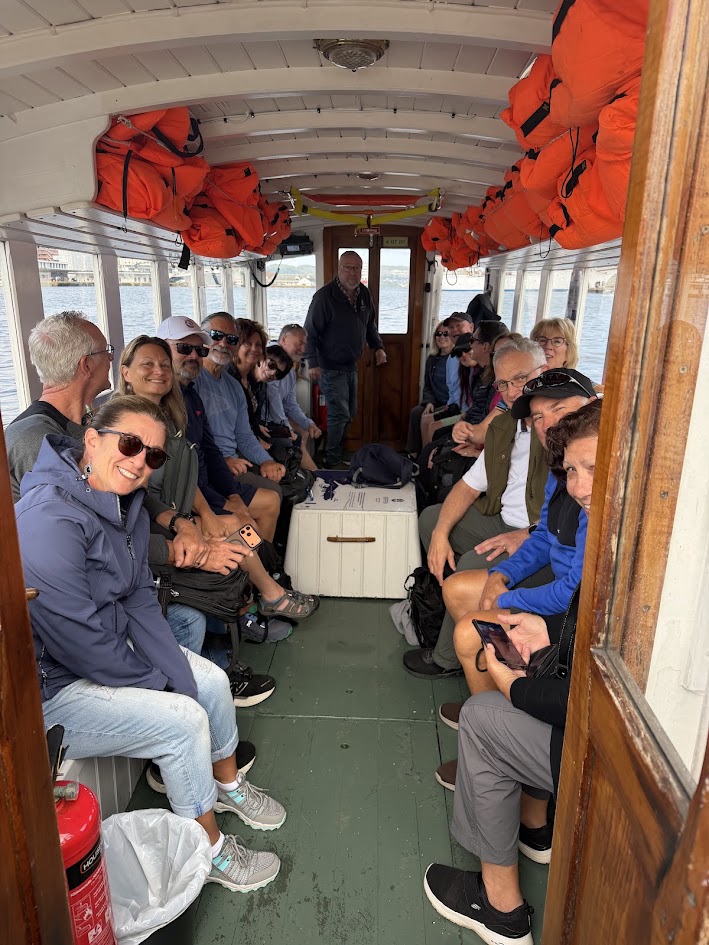
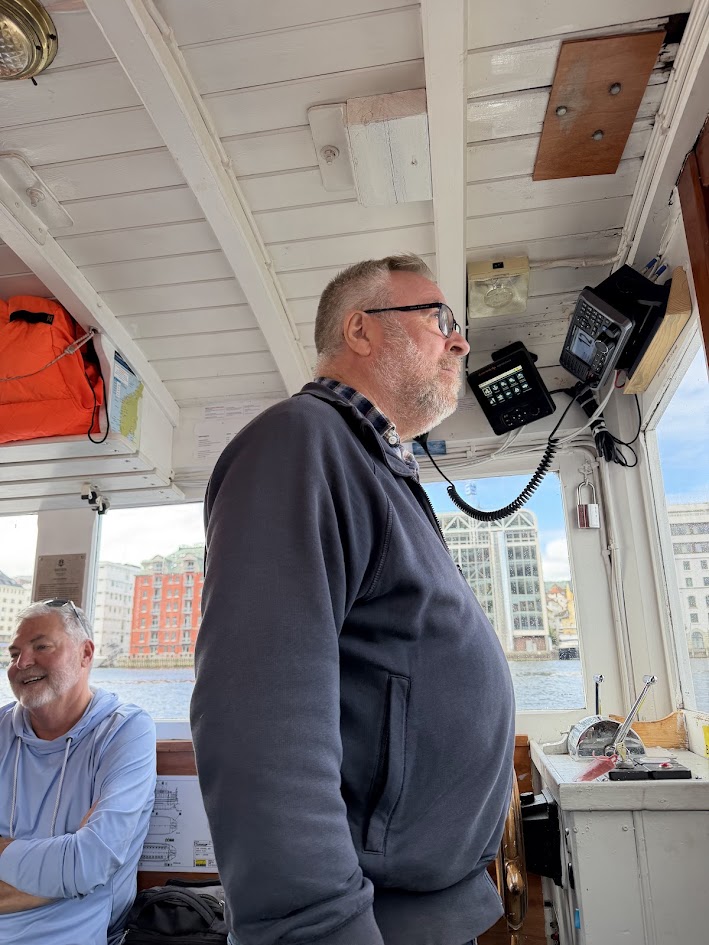
Today Beffen crosses Vågen between the Bryggen side of the harbor and Nordnes. The crossing takes only about ten minutes, and yes, you could walk around the harbor instead. But that would miss the point.
The pleasure of Beffen isn’t simply getting somewhere faster. It’s seeing Bergen from the perspective that has defined the city for centuries. From the water, Bryggen becomes more than a colorful backdrop for photographs. You begin to understand why it was built facing the harbor.
Nearby stands Bergenhus Fortress and Håkon’s Hall, reminders that medieval Bergen was not just a trading city but also an important royal center. Look beyond the waterfront and you see the mountains enclosing Bergen on nearly every side. Geography pushed Bergen toward the sea, and the sea connected Bergen to the rest of the world.
Even today, the harbor remains active with ferries, fishing boats, sightseeing vessels and cruise ships. Amid all of them moves little Beffen, and it is difficult not to smile.
The Bergen Most Visitors Miss
Travel has increasingly become a race to collect major attractions. See Bryggen. Ride the Fløibanen. Visit the Fish Market. Take a fjord cruise. Move on.
There is nothing wrong with seeing famous sights. They are famous for a reason. But some of the best travel experiences occur when we stop treating destinations like checklists.
A tiny local ferry can sometimes tell you more about a city than an attraction designed specifically for tourists. This is one of the reasons I favor exploring Norway by scenic rail, local ferries and other forms of transportation that are part of the destination itself. The journey becomes part of the experience rather than dead time between attractions.
Beffen is a perfect example. You aren’t merely looking at Bergen’s maritime history. You are riding through it.
There Is More Than One Beffen Experience
During the summer, visitors can experience even more of Bergen from the water. Historic Beffen ferries operate seasonal routes extending beyond the short harbor crossing and can connect central Bergen with waterfront attractions such as the Norwegian Fisheries Museum and Old Bergen Museum.
This is an especially appealing way to explore Bergen’s maritime heritage. Rather than taking a bus or taxi, you travel along Bergen’s waterfront, passing some of the very buildings, wharves and maritime neighborhoods that help explain why a fisheries museum belongs in Bergen in the first place.
From the ferry, passengers get a different view of Bryggen, Bergenhus, the Nordnes peninsula and the historic waterfront neighborhoods stretching beyond the city center. Transportation and sightseeing become the same thing, and that is the kind of travel experience I love.
Sometimes History Is Still Working
We often think history means castles, museums, monuments and ruins. Bergen certainly has all of those. But history is especially interesting when people haven’t stopped using it.
Beffen wasn’t created as a tourist attraction. Bergen residents rode these ferries because they needed to get from one side of the harbor to the other. They went to work, conducted business, visited friends and simply lived their everyday lives.
More than 130 years later, the little ferry is still doing essentially the same job. The harbor has changed dramatically around it. Wooden sailing ships gave way to steamships and motor vessels. Modern cruise ships now tower over the waterfront, while automobiles, buses and light rail transformed transportation throughout the city.
Beffen survived.
Perhaps that is why this modest ferry is worth seeking out. You don’t need hours to experience it, you don’t need to make reservations months in advance, and you don’t need to understand Norwegian history before getting aboard.
Just find the landing, buy a ticket and take the little ferry across the harbor. Then look back toward Bryggen. For ten minutes, Bergen looks a little different, and suddenly a tiny ferry with a funny name tells you an unexpectedly big story about the city.
IF YOU GO: Riding Beffen in Bergen
Where: The regular Beffen harbor ferry crosses Vågen between the Bryggen/Bergenhus side of the harbor and the Nordnes side.
How long: Allow approximately ten minutes for the crossing.
When: Service schedules vary by season and day of the week. Check the current Beffen schedule before traveling.
Tickets: Tickets can be purchased for the crossing. Current fares and payment arrangements should be confirmed before your visit.
Summer historic ferries: Seasonal Beffen routes can extend beyond the short harbor crossing and serve waterfront attractions such as the Norwegian Fisheries Museum and Old Bergen Museum.
Best way to use it: Take Beffen across the harbor and spend some time wandering through Nordnes before walking back toward the city center.
Don’t rush: The reason to ride isn’t simply to save walking time. Look back toward Bryggen and imagine Bergen when the harbor was the city’s primary transportation route. If you have ridden a traghetto across Venice’s Grand Canal, you may recognize the feeling: sometimes one of the shortest rides in a city provides one of the best ways to understand it.
About the Author
Stephen C. Solosky is known as The Traveling Professor. A former college professor, travel author and founder of Small Group Tours by The Traveling Professor, he has been designing and leading small-group journeys since 2009. His approach emphasizes smaller groups, local experiences, scenic rail and ferry travel, and spending enough time in a destination to experience more than its major tourist attractions.



Leave a Reply
You must be logged in to post a comment.