History feels different when you encounter it where it happened.
A textbook can tell you about revolution, independence and the creation of a new nation. But walking along Philadelphia’s old streets, standing near Baltimore’s harbor and looking across Washington’s National Mall turns names and dates into places you can actually experience.
That is what makes a history-focused East Coast road trip so rewarding.
Rather than treating Philadelphia, Baltimore and Washington, D.C., as separate vacations, travelers can connect them into one journey through different chapters of the American story.
Pack comfortable shoes. Much of the best exploring happens after you get out of the car.
Philadelphia: Walking Through the Revolutionary Era
Philadelphia is a natural place to begin.
The city’s historic core brings visitors remarkably close to the political world of America’s founding era. Modern Philadelphia surrounds it, but around Old City, brick buildings and narrow streets still provide glimpses of an earlier city.
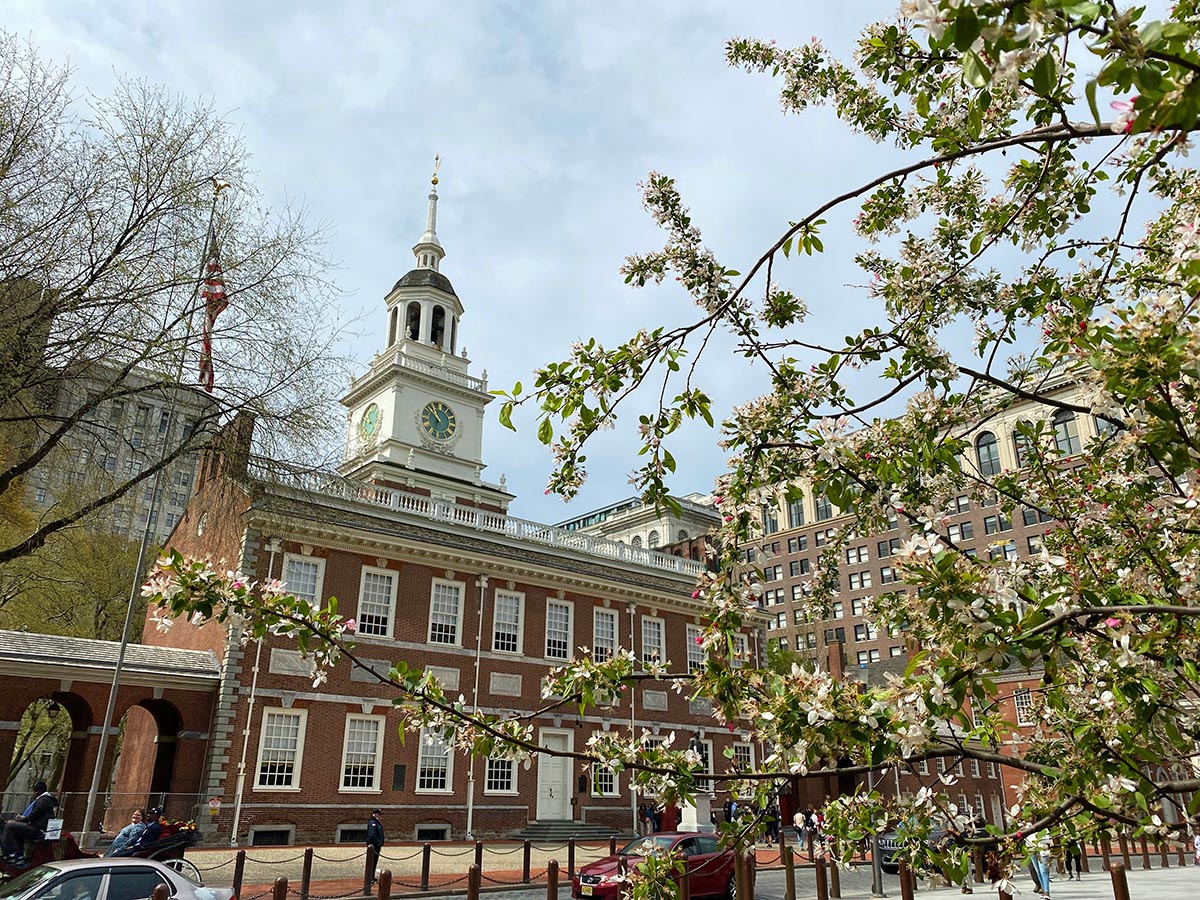
Start at Independence Hall
Few places are more closely connected with the creation of the United States than Independence Hall.
The building served as the meeting place for the Second Continental Congress, and both the Declaration of Independence and U.S. Constitution are associated with the site.
But don’t rush from one famous landmark to another.
Part of Philadelphia’s appeal is that its history extends into the surrounding streets. Walking through the area helps put individual landmarks into a larger setting rather than experiencing them as isolated museum stops.
Nearby, the Liberty Bell has become one of the country’s most recognizable symbols. Its story stretches beyond the Revolutionary era, as later generations – including abolitionists – helped shape the meaning Americans attached to it.
Give Yourself Time for Old City
Continue through Old City and the surrounding historic district on foot.
Elfreth’s Alley offers a very different experience from Philadelphia’s monumental sites. The narrow residential street, lined with historic houses, provides a more intimate glimpse of the city’s past.
That contrast is important.
History isn’t found only in the rooms where famous political decisions were made. It also survives in homes, churches, streets and neighborhoods where generations of ordinary people lived.
Depending on your interests and available time, Philadelphia can easily justify a full day or longer.
Then it is time to head south.
The Journey Matters Too
A road trip between historic cities creates something that flying directly into each destination cannot: continuity.
Instead of experiencing American history as a collection of disconnected attractions, you begin to understand geography.
Philadelphia, Baltimore and Washington are relatively close on a modern map, but each developed its own identity and played a different role in the country’s story.
How you travel between them depends on your itinerary.
Amtrak can be practical for travelers staying near the urban centers. Driving gives you more freedom to add stops. Families may prefer having their own vehicle, while travelers who don’t want to navigate traffic and parking can arrange transportation instead.
For visitors prioritizing a comfortable point-to-point journey between hotels, historic districts and other scheduled stops, arranging a luxury car service can be one option, particularly when the trip involves several travelers, luggage or a tightly planned itinerary.
Whatever transportation you choose, don’t let the vehicle become the trip.
The real reward begins when you step back onto the street.
Baltimore: A Harbor and a National Anthem
Baltimore makes a natural stop between Philadelphia and Washington.
Its waterfront history alone gives travelers plenty to explore, but one site is particularly important for anyone following the American story south.
Fort McHenry
Fort McHenry National Monument and Historic Shrine is closely associated with the War of 1812.
During the Battle of Baltimore in September 1814, American forces at the fort endured a British bombardment. The sight of the American flag still flying afterward inspired Francis Scott Key to write the words that eventually became the national anthem.
Knowing that story is one thing.
Standing near the water and seeing the fort’s position adds geography to it.
You can better understand why the harbor mattered, why the fort was strategically important and why the sight of a flag after the bombardment became such a powerful image.
Take time to explore the grounds rather than treating Fort McHenry as a quick photo stop.
Explore the Waterfront
Baltimore’s relationship with the Chesapeake Bay helped shape the city for generations.
Today, the Inner Harbor is one of its best-known visitor areas. Although thoroughly modern in many respects, it provides an opportunity to consider how waterways influenced commerce, immigration and urban development along the East Coast.
If your schedule allows, stay long enough to explore beyond a single landmark.
Then continue south toward a city designed to represent the nation itself.
Washington, D.C.: History on a Monumental Scale
Arriving in Washington changes the scale of the journey.
Philadelphia often brings history close through individual buildings and compact streets. Washington expresses it through avenues, museums, government buildings and enormous monuments.
The National Mall is the obvious starting point.
And despite its size, this is another place where walking is essential.
Begin Around the National Mall
The Mall connects some of Washington’s most recognizable institutions and memorials.
At one end stands the U.S. Capitol. Moving west brings travelers through a landscape of museums and monuments before eventually reaching the Lincoln Memorial.
It looks manageable on a map.
It feels considerably larger when you’re walking it.
Give yourself time.
Trying to race through Washington’s major landmarks in a few hours turns an extraordinary historical landscape into a checklist.
The Lincoln Memorial
The Lincoln Memorial rewards more than a quick photograph from the steps.
Completed in the early 20th century, it commemorates Abraham Lincoln, but its historical importance extends beyond the Civil War president himself.
The memorial became a powerful setting in the continuing American civil rights story. Most famously, Martin Luther King Jr. delivered his “I Have a Dream” speech from its steps during the 1963 March on Washington.
That layering of history is one of Washington’s most interesting qualities.
Places built to remember one period often become important to another.
Washington Monument and the Capitol
The Washington Monument dominates much of the Mall’s skyline, commemorating George Washington while acting as a visual reference point as you explore.
Farther east, the Capitol represents another connection to the country’s founding political ideals.
You do not need to enter every building to appreciate the historical landscape.
Sometimes simply walking the Mall and understanding what surrounds you provides the broader perspective that a road trip like this is meant to create.
Don’t Turn History Into a Checklist
A history road trip can easily become too ambitious.
Philadelphia has another museum. Baltimore has another neighborhood. Washington has another memorial.
There is always something else you could add.
Resist the temptation to see everything.
Choose a handful of places that genuinely interest you and give yourself enough time to experience them.
Sit for a while.
Read the historical markers.
Walk a side street.
Look at the architecture.
Notice how an old building relates to the modern city around it.
Traveling through history isn’t about collecting the greatest number of landmarks. It is about understanding a place a little better than you did before arriving.
Making the Road Trip Work
Philadelphia to Washington is not an enormous journey geographically, which makes this route suitable for travelers who want a history-rich trip without spending entire days on the road.
A comfortable itinerary could look something like this:
Days 1-2: Philadelphia
Explore Independence Hall, the Liberty Bell, Old City and surrounding historic streets.
Day 3: Baltimore
Travel south and dedicate time to Fort McHenry and Baltimore’s waterfront.
Days 4-5: Washington, D.C.
Explore the National Mall, major monuments and whichever museums or historic sites best match your interests.
Add more days whenever possible.
History is considerably more enjoyable when you aren’t constantly checking the time.
If You Go
When to Visit
Spring and fall can be particularly appealing for walking-heavy city trips because temperatures are often more comfortable than during the hottest parts of summer.
Always check current weather and operating information before traveling.
Getting Around
Once you reach the historic cores, expect to walk.
Philadelphia’s historic district rewards exploration on foot, as does Washington’s National Mall. Baltimore may require a combination of walking and transportation depending on the places you choose to visit.
For travel between cities, compare rail, driving and pre-arranged transportation according to your budget, group size, luggage and itinerary.
Plan Major Attractions Ahead
Some historical attractions offer timed entry or have security procedures that can affect your schedule.
Check the official website for each attraction before visiting rather than relying on old travel information.
Wear Comfortable Shoes
This sounds obvious until you’ve spent an entire day walking over historic streets, museum floors and the National Mall.
Comfort wins.
Leave Space in the Schedule
Don’t plan every hour.
Some of the most memorable travel moments happen when an interesting building, museum, neighborhood or historical marker encourages you to change the plan.
Three Cities, Many Chapters of History
What makes this East Coast journey memorable isn’t simply the number of famous places along the route.
It’s how those places connect.
Philadelphia introduces travelers to streets and buildings associated with revolution and the country’s founding. Baltimore brings the journey into another conflict and the story behind the national anthem. Washington transforms history into a monumental landscape filled with reminders of presidents, wars, political ideals and struggles for civil rights.
Together, the three cities reveal that history is rarely confined to one era.
It accumulates.
New generations reinterpret old symbols. Monuments gain new meaning. Cities change while pieces of their past survive between modern buildings and busy streets.
A road trip gives you the chance to see those connections for yourself.
And when you finally stand on the National Mall after beginning among Philadelphia’s colonial streets, the miles between them feel like more than distance traveled.
They feel like chapters of the same story.



Leave a Reply
You must be logged in to post a comment.