Travel Thru History

Historical and cultural travel experiences

  • Home
  • Airfare Deals
  • Get Travel Insurance
  • Writers Guidelines

Jutland Jaunt: Journey to the North of Denmark

Old Skagen, Denmark

by Nell Raun-Linde

Two seas meet with a vengeance at the northern tip of Denmark’s Jutland Peninsula. As the Skagerrak Sea roars in from the west and the Kattegat from the east, they crash and spout and foam. As soon as they start to recede, sightseers rush onto the wet sand bar to stand with a foot in each sea.

“The Top of Denmark, that’s where we’ll go,” my long-time Danish friend, Else, said. “You’ll see huge sand dunes, two seas that come together, and incredible art.” What a sales pitch. My daughter Paula and I couldn’t resist.

We landed in Copenhagen, stopped for a visit in south Jutland, and then headed north. We were ready to explore the seaside towns and beaches in the “Land of Light” where 19th century artists found inspiration in the fresh, bright, clear air.

SKAGEN AND GRENEN

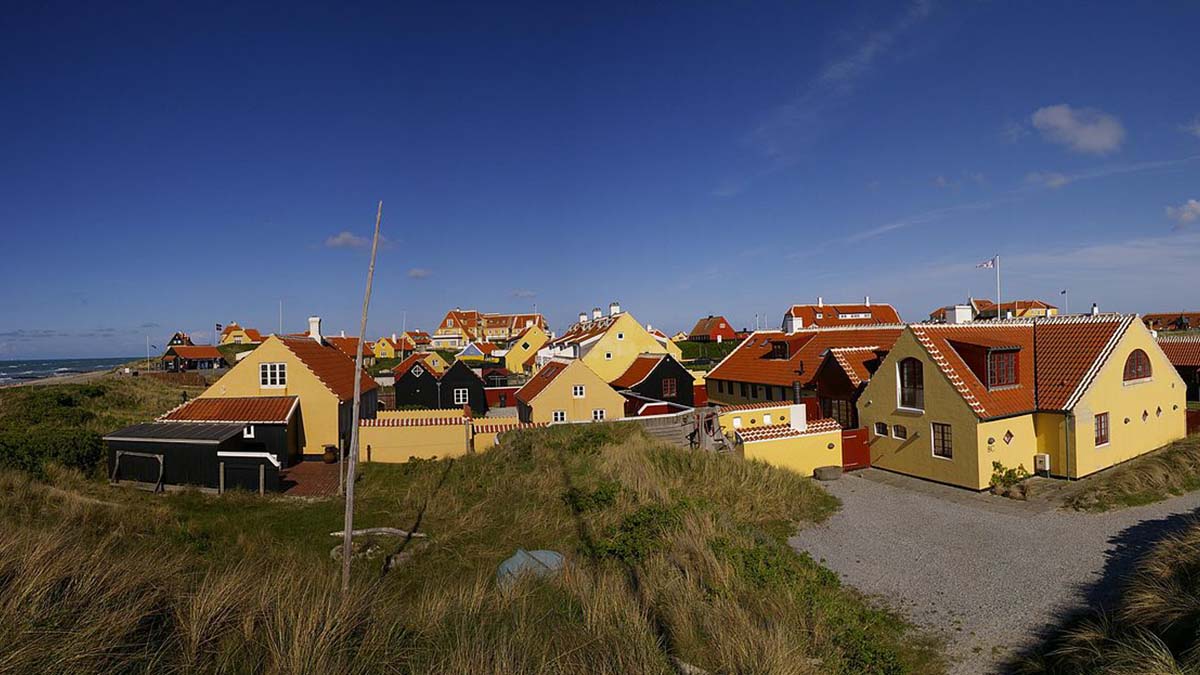
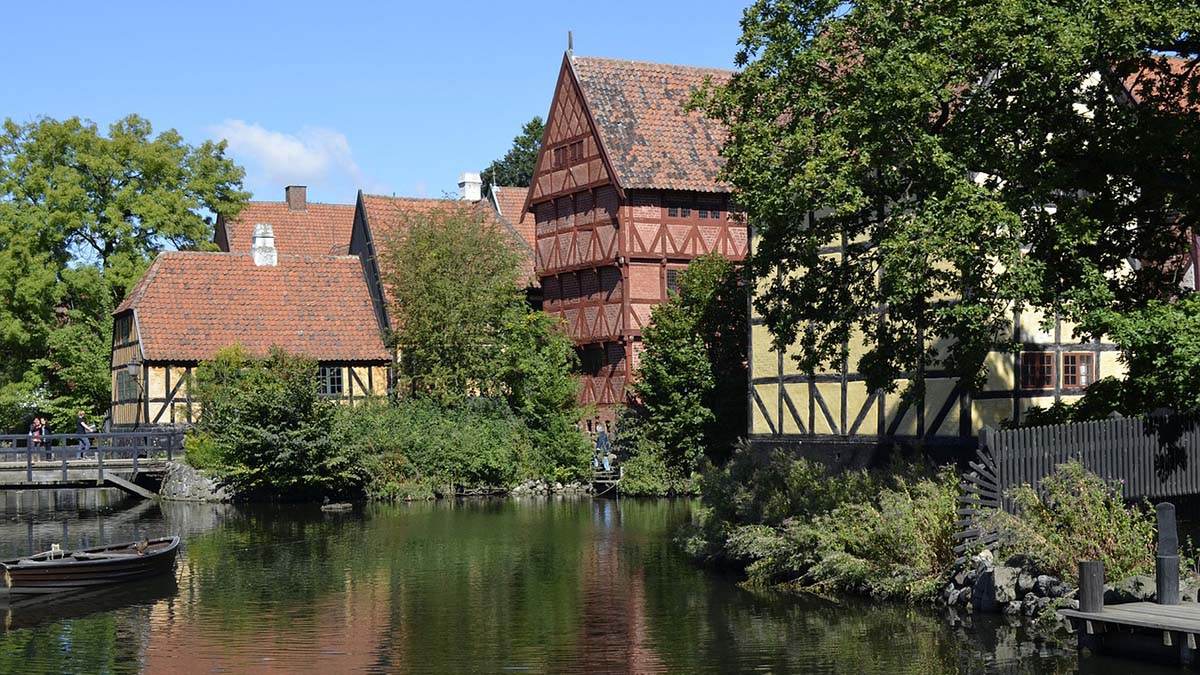
We drove north on a small highway through forests, past a free-range pig farm and sand dunes anchored with heather. First stop: the must-see town of Skagen (‘Skane’), where maritime history mixes with art. As we drove through this town that dates back to the 12th century, the Skane-yellow houses captivated us. They all have red tile roofs with strips of white painted on the edges. I thought it might be to keep out the ‘varmints,’ but we were told it covers the mortar and a stiff wire that holds roofs when fierce winds pass through.

Our first stop in Skagen was the Skagens Art Museum which houses the paintings of famous Danish artists who painted from the l870’s in this Land of Light on into the 20th century. Northern Light – the Skagen Painters is a reference book I read before leaving home. I began to get acquainted with Danish painters Michael Ancher, P.S. Kroyer, Laurits Tuxen and Viggo Johansen.

We entered the museum, paid our 70 kroner ($13) fee, and started the self-guided tour in a two-story atrium, where the light streamed in from skylights. I stood before a painting by P.S. Kroyer that I had seen in the book, not prepared for its massive size. The six-foot by eight–foot canvas, A Midsummer’s Eve Bonfire on South Beach, shows life-sized people standing around a glowing bonfire celebrating Midsummer’s Eve. I felt the heat of the fire. I was there.

A large painting done in 1896 by Michael Ancher shows family and friends gathered around a drowned lifeboat-man. Strong shafts of light in a dark, somber room emphasize the poignant face of his widow, the sorrow of fellow fishermen.

Many more paintings, large and small, fill the rooms, upstairs and down – portraits, children playing in the sand, the bright light of Skagen streaming into Danish country-homes. Some of these are painted by Anna Ancher, also an artist. Her art schooling in Copenhagen was apart from Michael Ancher, Karl Madsen and others who later formed the Skagen colony. They were students at the Royal Danish Academy of Fine Arts in Copenhagen but not Anna. The Academy did not admit women because men and women were not allowed to be taught together.
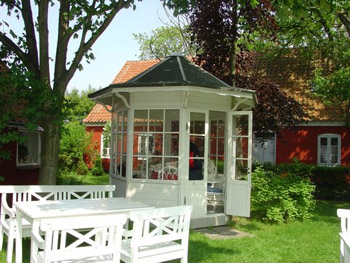
gazebo at Broundum’s HotelFrom the museum we moseyed past artists’ houses to Broundum’s Hotel for a dessert “lunch.” The pre-1870’s hotel has a famous dining room but we ate in the garden on that warm May afternoon.

Tables filled the garden surrounding the white, lathe gazebo at the far edge of the lawn. A young waiter in a starched white coat and white gloves came to take our order. We both ordered the same: Lagkage, the layer cake with a bit of almond paste on the bottom layer, a bit of jam and custard on other layers, then all stuffed and frosted with rich, butter-yellow whipped cream. Big, red, fresh strawberries topped it all. Else said I must try the hot chocolade. It came with a bowl of the same buttery whipped cream. Oh my! I finished it all.
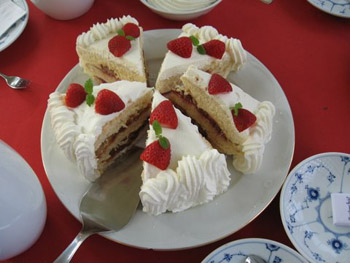
dessert at Broundum’s HotelTo walk off some calories, we strolled through Skagen’s historic district, stopping at shops and the Ancher House Museum. (Anna Ancher was a Broundum before marriage.) Then we climbed in our rented Volvo to drive a few kilometers to Grenen, the small town perched on the northernmost tip of Denmark, a small finger of land where the two seas meet. Visitors have two ways to reach the edge of the seas: walk over the sand dunes for thirty minutes or ride in the Sandormen, a sand tractor, for ten minutes and 20 kroner ($4).

We caught its last trip at 5 p.m. and bumped through the dunes and shore to the edge of the Skagerrak, maybe it was the Kattegat Sea. Everyone hopped out, headed for the shore where the waves of the meeting seas foamed. Barefoot, grown people stood ready to put a foot in each sea. The outgoing tide parted the seas and the crowd rushed through, laughing and squishing across the wet sand. Then, in only minutes, the seas joined together again. Signs warn: ‘Often angry seas; bathing prohibited; ferocious tidal currents.’ What a wild, edge-of-the-world is this Grenen.

Back in the car near low dunes, we saw a reconstruction of Denmark’s first wooden “light” from 1627. A bucket of flaming coal raised high would guide the ships safely past the rocks and dangerous reefs.

RUBJERG KNUDE
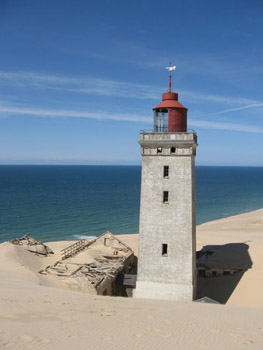
partly buried Rubjerg Knude Fyr lighthouseAnother day we headed west from Hjorring to the shore of the North Sea to hike the 150-foot high Rubjerg Knude sand dune. Near the top, a partly-buried lighthouse (the Rubjerg Knude Fyr) tries to keep its tip above the swirling sand.

From the parking lot, we followed the path up the dune until there was no path, just sand piled up, up, up. We didn’t make it to the top of the highest dune, but climbed just high enough to see the deep blue North Sea. The wind howled as I took pictures and it blew gritty sand into my teeth.

FREDERICKSHAVN

The next morning we packed a picnic lunch and headed for Frederickshavn. We also planned side trips to nearby Bangsbo Museum and botanical garden with its gorgeous ponds and flowering rhododendrons. Trains come to this resort-type city, some direct from Copenhagen. It’s a busy port for goods and passengers. Ferries take passengers and cars across the Kattegat Sea to Goteborg, Sweden, about a three-hour ride. They also go to Oslo, Norway and Laeso Island.

Wide sand beaches attract Danes, Swedes, Germans and tourists from the U.S. We climbed grass-covered dunes to stroll sandy Palm Beach with real palm trees. Surprise: the palm trees spend the winter in greenhouses. Tropical weather does not grace this land above 57 degrees north latitude.

Another day we toured the Nordjyllands Kunstmuseum in Aalborg, south of Skagen. We wanted to see the art museum with its spectacular architecture and grounds, its collections of post-1900 Danish and foreign art. The architect, Alvar Aalto, designed stunning and wide open rooms full of light and varying textures. Art as sculpture, art as paintings – some surreal – overwhelms the visitor. It’s a must-see stop on your way north to Skagen and Grenen.

During our four days, we barely had time to wander our base city of Hjorring and its modern “mall” with stores, outdoor sculpture and fountains. A stroll through the outdoor arcade is a walk through another art gallery.

Rush as we did, we managed to find and eat yummy desserts in the Kuntsmuseum cafeteria. In seaside villages and gardens, we found fresh-baked waffle cones filled with big scoops of ice cream. Art, food and the sea – what a winning combination.
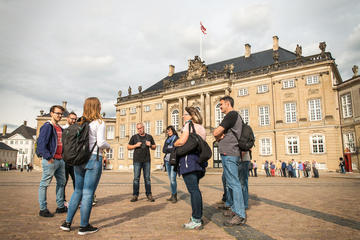

Copenhagen Must Sees

If You Go:

Visit North Jutland website – Check map for Aalborg and north.

Kunsten Museum of Modern Art (formerly North Jutland Art Museum) – See art in Aalborg and views of the magnificent architecture of the museum.

Art Museum of Skagens – Click English or British flag; then see “Information,” “Collections” and more. You’ll find photos of art, photos of scenery.

BRØNDUMS HOTEL  – No English, but you can see hotel scenes. Wander this 19th century hotel and its grounds, have a snack or lunch in the gorgeous gardens. Write to them at info@broendums-hotel.dk

Visit the Top of Denmark  – Check the “holiday cottages” listed, fun to see.

There is transport from the Copenhagen airport (you can also fly to Billund or Arhus on the peninsula): A car makes touring easy and extensive; trains leave Copenhagen frequently for Jutland.

About the author:
Nell Raun-Linde, a freelance writer with a travel specialty. Published in AAA, Senior, regional, inflight, wine and web magazines; published in San Francisco Bay Area newspapers; resides in historic Benicia, a small Northern California town, incorporated before the gold rush. An almost-around-the-world traveler from the Bering Sea to Cape Horn; from Beijing to Tasmania; from crisscrossing Europe via train and ferry boats to plane and car travel across the US. Travel, reading and family – and wine – are her passions.

Photo credits:
First Old Skagen, Denmark by: John Nuttall from Hampshire, United Kingdom / CC BY
All other photos are by Paula Raun-Linde.
Tagged With: Denmark travel, Jutland attractions Filed Under: Europe Travel

Aarhus (Aros) Denmark

Aarhus Denmark Old City

History, Culture, and Even Danish Pastries!

by Diane Chouinard

Out of a whirl of autumn leaves, in one of the most ancient forests of Denmark, south of the City of Aarhus, appears a tall lean figure, dressed in a long black leather coat. Is he a Viking from the past or just a tourist like me, awed by the haunting big trees, some, thousands of years old?

As I walk along the prehistoric trail, Stone and Bronze Age graves, cult sites and reconstructions of Iron Age houses take me on a journey through centuries. Hollowed out lime trees and mossy alder trunks are as old as the legendary naval battles that took place off the coast a millennium ago. When I step into the Moesgard Museum, the tall figure disappears into the mist. Was he just a mirage?

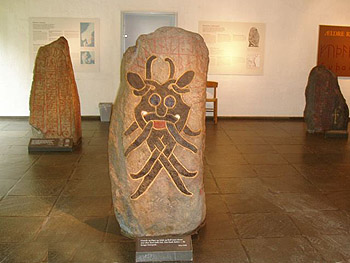
Moesgard’s logo Stone MaskInside, the permanent exhibition depicts the prosperous life the Vikings enjoyed, due to old Aros’ location at the mouth of Aarhus River, until it was devastated by the bubonic plague in the Middle Ages. The Moesgard’s logo, a remarkable Stone Mask believed to protect against evil spirits, is displayed with more than 250 rune stones (Photo at left). Combs made out of bones, bronze bracelets and glass beads, woodcrafts and metal tools, furniture, ships and many more artifacts are a tribute to their crafts and trades. The highlight is the Grauballe Man, a completely preserved charcoal grey bog body dating back to the Iron Age. Every summer, on the last weekend of July, a Viking Moot is organized on the Moesgard beach. Warriors recreate their ancestors’ fierce battles, artisans and archers demonstrate their skills while their spouses offer a taste of the traditional food.

After my journey through the past, the thirty-minute oceanside ride back to the city offers breathtaking views, as the road meanders through the beautiful suburb of Marselisborg, where the summer Palace of Denmark’s Royal Family is located. When they are in residence, there is a changing of the guards at noon.

Back in the center of town, it is easy to find my way around. Despite being the second largest city in Denmark, Aarhus has a relaxed small town feeling. Most important sites are within walking distance. The Cathedral, built in 1201, is at the center of everything. Inside, a magnificent Gothic altarpiece as well as frescoes contrast with its stark white walls.

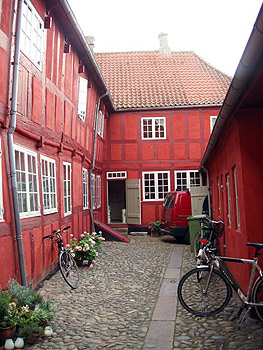
Aarhus Latin QuarterFrom the square in front, where a modern dragon fountain lies, cobblestone lanes radiate, some for pedestrians only, along which more than 800 shops and boutiques carry unique local fashion designs. North of the Cathedral is the Latin Quarter, the oldest part of town where street names are historical. (Photo at right) Galleries and antique shops abound, but some sidewalks are so narrow, that I have to walk with one foot in the street. Oddly angled, deep pink and saffron yellow stucco houses, right out of a Hans Christian Andersen’s fairy tale, are typical of the Scandinavian medieval architecture. They contrast sharply with the newer square and tall red brick houses. Among the many cozy restaurants, I opt for the trendy Olive for supper. I enjoy delicious venison smothered in a rich French sauce with an exotic Moroccan twist, while viewing an exhibition of local artists, displayed on the walls. Because I could bring my own wine, this three-course gourmet meal is quite affordable. The Cab Inn Hotel’s location, where I stay, is excellent. Between the canal and central square, its reasonable price makes up for the ship cabin sized room.

On my second day, after a copious complimentary breakfast, I rent a bicycle, the locals’ favorite means of transportation. Within minutes, I am down at Denmark’s second biggest harbor. From there, I cycle north along the water, through parks and forests. Twenty minutes later, I arrive at the popular walled in beach Den Permanente. The trail continues through a very pleasant and quiet area of beach houses. After a leisurely morning at the beach, I am ready to tour Den Gamle By. A twenty minute stroll from my hotel, by the Botanical Garden, it is Denmark’s largest national museum of cultural history. Seventy-five historic houses from all over Denmark, dating from the Middle Ages through to the last century, have been rebuilt. Open all year round, the village’s unique exhibitions of old clocks, silverware, furniture, clothes and more than 5,000 antique toys are a voyage in history.

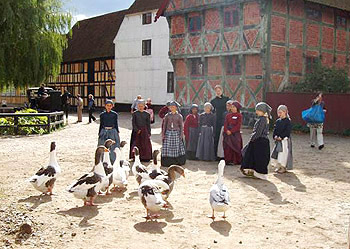
teacher and students at Aarhus old schoolI start with lunch at the Tea Garden. By now, I have learned that before tasting one of the delicious open-faced sandwiches with piled-up shrimps, lox or various cold cuts, I have to swallow all the vowels when ordering a Smorrebrod in Danish. After lunch, I feel as though I am stepping into an old master’s painting, as I follow a group of children coming out of the old school, accompanied by their spinster teacher. (Photo at left) A flock of geese joins the parade all the way to the playground, where children ride the old-fashioned merry-go-round and swing boats.

An aroma of freshly baked buns lures me to the shoemaker’s house. Dressed in a long apron and bonnet, his charming wife invites me inside her century old kitchen. It is fascinating to watch and sometimes participate in the making of various arts and crafts; beautiful textiles produced by the steam weaving mill, old-fashioned toys, multicolored candy canes and much more, all sold in the shops along the narrow cobblestone streets where I smell, taste and experience the past.

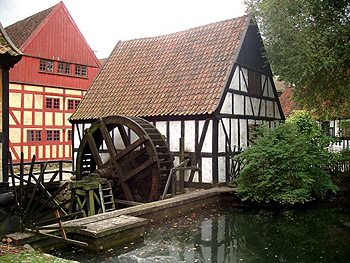
old mill in Aarhus, DenmarkA visit at the Kunst Art Gallery the next morning, brings me back to the twentyfirst century. In the foyer, I come face to face with the sculpture “Boy”, by Ron Mueck. Close to five meters high, it is a mere prelude to the superb modern art collection within the four galleries of the museum. Taking a break at the top floor restaurant is a must. While sampling a scrumptious marzipan pastry, I can enjoy a panoramic view of the city’s red tiles rooftops.

On Friday, the choice of music venues, bars or discotheques is staggering, especially along the canal, where crowds gather at dusk. The Latin Quarter is also filled with atmosphere, as the Danes welcome endelig fredag, their version of TGIF. At one of the outside cafes, I notice a tall lean man, dressed in a long black leather coat, holding a large mug of beer as he sings Danish drinking songs with a group of friends. He wasn’t a mirage after all, but he brought the Viking spirit alive, in an everlasting memory I will always cherish of my stay in Aarhus.

If You Go:

Currency: DKK Kroner ($100.00 CAD = 496 DKK) Credit cards: most places ask for PIN No.

Best time to go: mid-June to mid-September.

How to get there: Copenhagen to Aarhus: 35 minutes by plane; 3:30 by train; many bus lines, some express. If you drive: 3 options: 35 min. ferry from Odden; 2:30 ferry from Kalundborg; Great Belt Bridge, 18 km long (one-way toll $42.00 CAD)

Tourist info: www.visitaarhus.com Tel: (45) 87 31 50 10

Aarhus Tours Now Available:

City Sightseeing Aarhus Hop On Hop Off Tour
Historical Walking Tour in Aarhus
Aarhus Private Walking Tour
Aarhus Private Bike Tour

Recommended Accommodations:

Cab Inn Aarhus Hotel, Kannikegade 14, 8000 Aarhus C www.cabinn.dk – aarhus@cabinn.dk. Tel: 45 86 75 70 00 Small but very clean, comfortable rooms. Private bath. Excellent location. Breakfasts included. From $116.00 CAD

Youth Hostel – Risskov open all year round. North of Aarhus, close to the beach. Bus 1, 6, 8, 9, 16, 56, 58

Museums: www.lescale.dk Tel: (45) 86 12 53 15 Most museums are open every day during high season. Special rates for seniors. Most free for children.

Den Gamle By, Viborgvej 2, 8000 Aarhus C www.dengamleby.dk http://www.dengamleby.dk Tel: 86 12 31 88 Old village of 75 reconstructed houses.

Denmark’s largest National Museum of Cultural History. Adults: $20.00 CAD. 9am – 18pm in high season Bus 3, 14, 25, 55

Kunst Art Gallery, Aros Alle 2, 8000 Aarhus C www.aarhuskunstmuseum.dk Tel: 87 30 66 00 9000 works dating from 1770 to present day, Spectacular view from ART Restaurant, top floor. $18.00 CAD. Closed Mon., 10am – 17pm (to 22pm Wed.)

Moesgard Prehistoric Museum, Moesgard Alle 20, 8170 Hojbjerg. www.moesmus.dk Tel: 89 42 11 00 Archaeological collection from Stone age to Viking era. Prehistoric trails outside, Denmark’s oldest forest. Adults $10.00 CAD. Tues. to Sun., 10am – 16pm; everyday, April 1st to Sept. 30, to 17pm. Bus 6

Beaches:

Den Permanente – Risskov, Sandy, changing-rooms, picnic tables, BBQ 3 km. n., bus 1, 6, 8, 9, 16, 56, 58, 100

Moesgaard Beach – Marselisborg Forest, 8 km. s., bus 19, largest beach in Aarhus.


About the author:
Born in Montreal, Canada, Diane Chouinard is a composer and world traveller. Her fascinating experiences have led to her become a writer. Her music, which is performed in different countries and her interest in history transcend in her travel writing. She has been living in Vancouver BC since 1998.
Contact: dnchouin@shaw.ca

Photo credits:
Aarhus Old City by Nils Nyvang from Pixabay
All other photos are by by Diane Chouinard.

Tagged With: Aarhus attractions, Denmark travel Filed Under: Europe Travel

MORE TRAVEL STORIES:

Unexpected Reasons Why Mykonos Is A Great Destination For History Lovers

Greece: Pilgrimage to Delphi

Poperinge, Belgium: The Oasis

Escape to Nature’s Luxury: The Unforgettable All-Fun Inclusive Experience at Hotel Xcaret México

Travel Essentials for Visiting Egypt’s Historical Landmarks

What is the Best Time to plan Leh Ladakh tour?

Australia: Imprisoned on Norfolk Island

Gold Rush Legacy: Exploring America’s First Gold Rush in North Georgia’s Mountains


SEARCH

DESTINATIONS

  • Africa Travel
  • Antarctica travel
  • Asia Travel
  • Australia travel
  • Caribbean Travel
  • Central America Travel
  • Europe Travel
  • Middle East Travel
  • North America Travel
  • Oceania Travel
  • South America Travel
  • Travel History
  • Travel News
  • UK Travel
  • Uncategorized
  • World Travel
facebook
Best Travel Blogs - OnToplist.com

Copyright © 2026 Cedar Cottage Marketing | About Us | Contact | Privacy Policy | Terms & Conditions | Copyright Notice | Log in