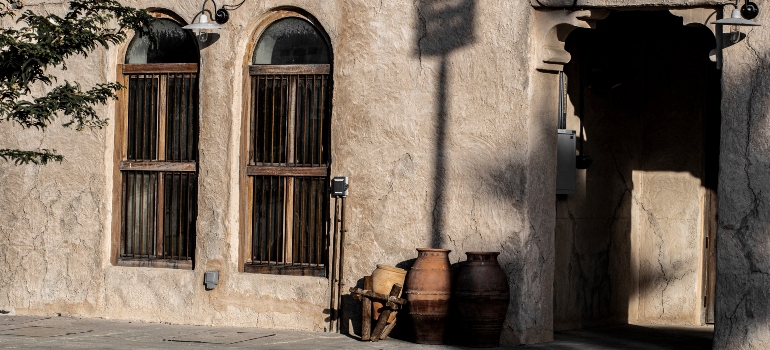
Long before the glass towers of Sheikh Zayed Road, Dubai was a creekside town of pearl divers, fishermen and traders. They lived in houses cooled by the wind. For anyone relocating to the city today, the old Dubai neighborhoods along Khor Dubai show how residents once organized their days around water, shade and trade. Bur Dubai, Deira and Al Shindagha still hold the lanes, souks and wind-tower homes that shaped the emirate. Their streets also give newcomers something the newer districts rarely do: a sense of how people lived here first.
What Was Dubai Like Before the Oil Boom?
Before the boom, Dubai was a small trading port built around a 14-kilometer saltwater inlet. In 1833, the Al Maktoum family led members of the Al Bu Falasah to the creek, where they built a life around pearling and fishing. Each summer, crews sailed out on wooden dhows for months, while families stayed behind to run homes and shops. Around 1902, the ruler cut taxes for merchants, and traders from Lingeh and Bastak in southern Persia moved in. Oil came much later, with the first discovery in 1966. The early port followed a familiar Gulf pattern. Anyone who has traced Oman’s colorful history in Muscat will recognize the same mix of forts, harbor life and busy markets.
Why Do Newcomers Often Start in the Older Districts?
Many new residents start in the older districts because rent, transport and daily errands all feel more manageable there. Bur Dubai, Karama and Deira sit close to metro stations, schools, clinics and some of the city’s oldest supermarkets. These areas also have long-established South Asian, Iranian and Emirati communities, so newcomers find familiar food and services quickly.
How Did Families Live in Old Dubai Neighborhoods?
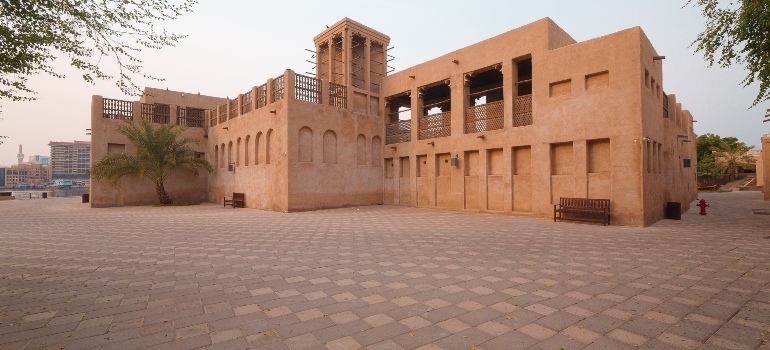
Families in old Dubai lived in a fareej, a residential quarter where related households shared lanes, a mosque and a water well. Homes faced inward toward private courtyards, and thick walls of coral stone and gypsum kept the rooms cooler. Narrow alleys called sikkas twisted between houses to trap shade and push breezes along.
The most famous feature is the barjeel, a wind tower that catches passing air and channels it down into the rooms below. Wealthy merchants built these towers in Al Fahidi, once known as Al Bastakiya after the Persian traders who settled there. Poorer families lived in barasti huts made from palm fronds, which let air move freely in the summer heat. Neighbors gathered in the majlis, a sitting room where men discussed business, news and local disputes.
What Do the Creek’s Souks Reveal About Daily Trade?
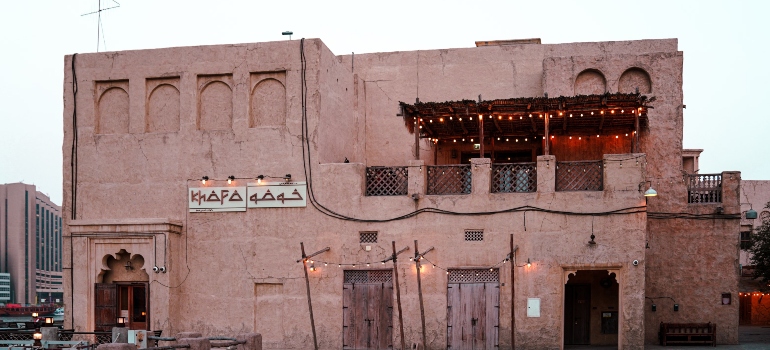
The souks of Deira and Bur Dubai reveal a town that depended on trade for almost everything. Spices, textiles, gold and dried fish moved through these covered markets, arriving on dhows from India, Persia and East Africa. Merchants lived above or behind their shops, so work and family life overlapped every day.
In the Spice Souk today, you can still smell cardamom, saffron and dried lime in the air. Shopkeepers bargain the way their grandfathers did, and wooden dhows still load cargo along the Deira wharf. Travelers who know Qatar’s skyscrapers, souqs and sandscapes will notice how both cities keep their old markets beside the modern skyline.
How Did Oil Money Reshape the Creekside?
Oil money transformed the creek within a single generation. The government dredged the waterway, built bridges and replaced many palm-frond homes with concrete blocks. Families moved to new villas in Jumeirah and Satwa, and the old courtyard houses slowly emptied.
By the 1980s, planners were already debating which historic buildings to save. Dubai Municipality restored the Al Fahidi houses in the 1990s and 2000s and turned them into galleries, cafés and cultural centers. Other fast-growing cities faced the same choice, and San Francisco’s rebuilding era offers a useful comparison of how speed reshapes a neighborhood.
Why Did Dubai Creek Land on UNESCO’s Tentative List?
The creek drew international attention because it holds the region’s maritime trading heritage in one living landscape. In 2012, the UAE submitted Khor Dubai to the UNESCO tentative list, citing pearling, free-port trade and the wind-tower houses of Bastakia. The submission even notes that a Venetian merchant, Gaspero Balbi, wrote about Dubai’s pearl trade in 1587.
Dubai later withdrew its bid, but the nomination file still records the creek’s place in daily life. For new residents, that record gives the old waterfront a depth that is easy to miss on a quick visit.
What Should You Know Before Exploring the Creek?
The easiest way to experience the old city is on foot, starting early in the morning before the heat builds. The Dubai Culture and Arts Authority runs Al Shindagha Museum, the UAE’s largest open-air heritage museum, inside restored creekside houses. A few practical tips:
- Visit between November and March, when daytime temperatures stay comfortable for walking.
- Take the Green Line to Al Fahidi or Al Ghubaiba metro station.
- Cross the creek by abra, a wooden water taxi that costs about one dirham.
- Dress modestly, especially near mosques and in traditional areas.
- Book a cultural meal at the Sheikh Mohammed Centre for Cultural Understanding.
According to the Dubai Statistics Center, the city passed four million residents in 2025. Even so, the creek still sets the rhythm for thousands of commuters, shopkeepers and boatmen every day.
Finding Home Between the Creek and the Skyline
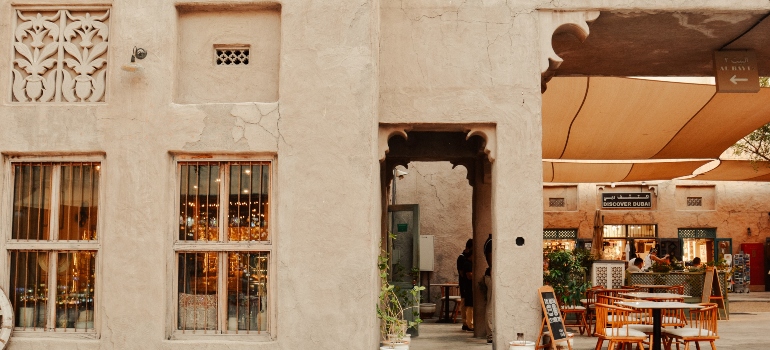
The old Dubai neighborhoods prove that the city grew from patience, trade and close-knit family life long before the towers rose. Wind towers, shaded lanes and crowded souks still teach newcomers how to live well in a hot, busy place. If you are settling into Dubai, spend your first free weekend crossing the creek by abra and wandering through Al Fahidi. It is the quickest way to feel at home in the city’s oldest story.
About the Author
Karim Haddad is a relocation specialist at GI Movers UAE, where he helps families and professionals settle into Dubai, Abu Dhabi and Sharjah. Every move takes him through a different corner of the city, and over the years he has come to know the old lanes of Bur Dubai and Deira as well as the newer towers. When he isn’t planning moves, he takes newcomers across the creek by abra and points out the wind-tower houses, spice stalls and traditional teahouses that first made Dubai feel like home to him.