Travel Thru History

Historical and cultural travel experiences

  • Home
  • Airfare Deals
  • Get Travel Insurance
  • Writers Guidelines

An “Iceberg” in the Pacific

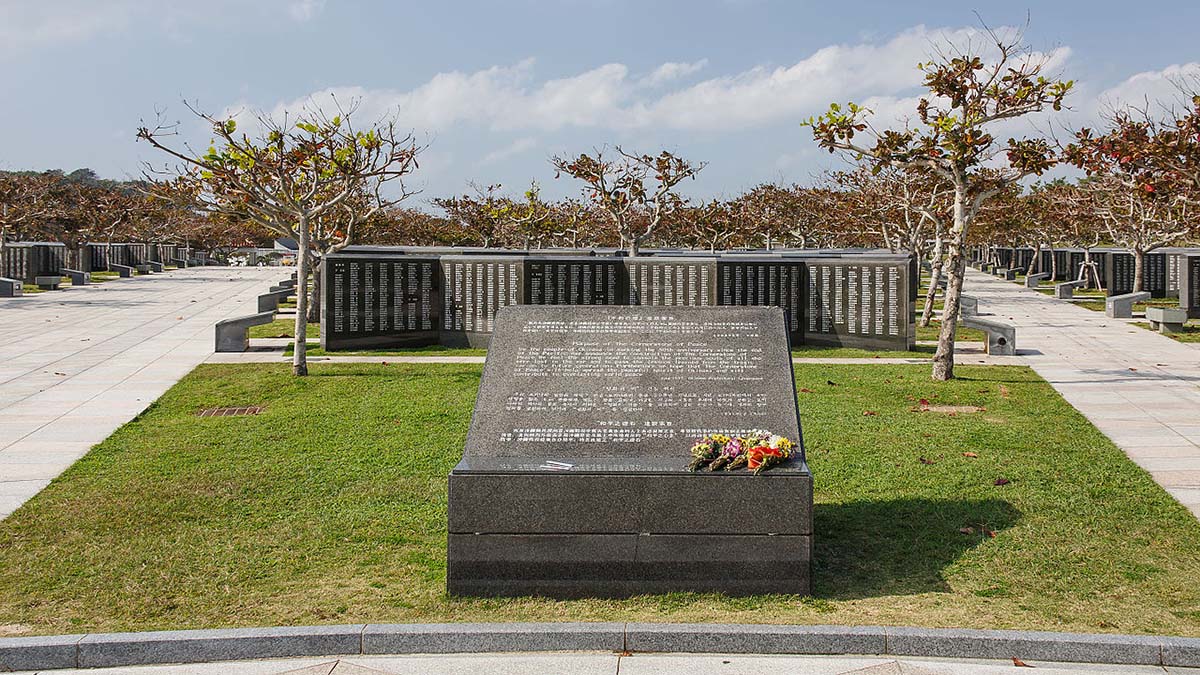
Okinawa Peace Memorial

Japan: The Battle for Okinawa

by Robert Hale

April 1, 1945… Easter Morning.

There would be no eggs to hunt today; no greetings of, He is Risen!”

Resurrection was not the order of the day. Not on this Easter Day, 1945

References to “Heaven” and “Resurrection” would give way to “give ‘em hell,” and “kill the bastards!” It was obvious that religious services would be held for only the dying and the dead – and then, only for those on our side!

A quarter of a million men were about to die.

No one scheduled a noon family Easter feast. And, for the next 82 days there would be nothing but war! A terrible war!

…The Battle of Okinawa begins!

It was called “Operation Iceberg.” The island would eventually resemble, not an iceberg, but a blazing hell-on-earth! No hymns of joyous praise were to be heard.

Instead, screams of the injured and dying, explosions of rockets and bombs; while of bullets, blasts of grenades, cries of the dying – those were the sounds of that Easter Morning.

In those 82 days of living hell 38,000 American soldiers and marines would be killed or counted as missing in action. The Japanese would lose 107,000 killed, plus more than 23,000 who sealed themselves in caves and took their own lives; 10,800 Japanese soldiers were captured. Civilian deaths are estimated at 142,000.

For the first time in World War II the Japanese were defending Japanese territory!

The Japanese hardly regarded Okinawans as “Japanese,” and certainly not as equals. For sure, the island belonged to the Japanese. It was a vital part of their empire. It was a crucial gate protecting the homeland and that empire. This day the protection was being threatened by gigantic numbers of allied forces.

The Battle of Okinawa would become the defining moment for the Empire of Japan. From here the full force of American air and sea power would be hurled against the nation that began it all on December 7, 1941. More than a half million people would die before American forces wrenched Okinawa from the grip of Japan.

It was a “grip from Hell!” It was grip that lasted nearly three months.

From April 1 until June 21, 1945 the fighting for the island went on, day and night. There was no let up; there was no “time out” for rest, or food, or medical care. There was no pause to collect the dead and re-assemble. For nearly three months it was one continuous deadly explosive battle. It was shell against shell; gun against gun; man against man! In many cases it was simply fist against fist; strangle-hold against stranglehold!

On the morning of June 21, 1945 members of the Sixth Marine Division – George Company, 22nd Regiment – raised the Stars and Stripes. It was over.

Today the Pacific Ocean lives up to its name.

Japan and the United States are at peace; they are close allies; they are good friends. They no longer hunt the hills and trails for each other. They no longer have fingers on triggers, or strongholds in gun sights. Today Japanese and American tourists walk the land marks together, frequently engaged in friendly helpful conversations.

I walked a few of those once bloody paths. I saw a collection of unused, and now ineffective, bombs, shells, and torpedoes. I walked among the graves of Americans, Canadians, British and Japanese. I wasn’t alone.

Bob Crismond was a teenager – 18, if that! – when American forces stormed the shores of Okinawa in 1945.

Now on a warm autumn day Crismond returns to Okinawa for the first time since that historic battle. It has been six and a half decades since Crismond last saw this island. Today it is peaceful here, with rain clouds forming at sea. In 1945 there was hell on this island.

The air was filled with exploding shells, grenades and bullets. There were earth-shattering explosions of artillery shells from US warships firing over the heads of our invading troops. Flamethrowers began their relentless destruction of cave emplacements, wiping out guns, munitions and men. There were hand-to-hand encounters, close-quarter grenade tossing, and even pistol shootouts!

At sea there were Japanese kamikaze planes diving and exploding into American ships. There were screams of the wounded and the dying.

Amidst all of that horror young Bob Crismond was driving a landing vehicle. From his ship off shore he brought in troops and supplies; he returned to his ship with the wounded and the dead. Bob saw those flamethrowers; he watched as Japanese pilots slammed their planes and their lives into the decks of American ships. All around that young man was death.

Was Bob Crismond scared?

“I was just doing what I had to do.”

“I wasn’t close enough to be scared. I had a job to do, and I was busy with that. But, I could see it, and I could hear it. Sometimes I just stopped my boat and watched.”

Bob Crismond never came under attack by the Japanese. He was able to get close to the action.

“When we got here, the battle was raging, and for a while I just watched. It was like watching a movie.”

Bob pointed out where his ship was located in the bay, and where his service boat came and went. He talked of kamikaze attacks, of flamethrowers, of grenades and shell explosions, and of the constant rattle of the machine guns.

Bob knew the Allied forces would prevail. We had just too many men, too much fire power, too many battle and supply ships to not win the battle for Okinawa. Yet, the battle took a lot longer and certainly far more lives than American commanders had anticipated.

This battle was ultimate moment for Japanese military leaders. This was the first invasion of their land and they knew if they did not repulse the enemy victory was not going to the rising Sun! If Okinawa could not be safely defended the Japanese homeland could well be next. Defend they did.

Invading Japan for the first time cost the Americans incredibly high causalities. Okinawa turned out to be the costliest battle in the history of the United States. It ranks as one of the deadliest battles in all recorded history. In addition, the Okinawans and the Japanese who lived on the island joined thousand of soldiers in committing suicide rather than submitting to “American barbarism,” an idea fostered by Japanese leadership as a morale boaster.

I asked Bob Crismond if, at any time, he felt the Allied troops would withdraw in the face of fanatical Japanese forces.

“Didn’t give that one thought. None of us even considered that a possibility.”

And today? Did Crismond have any special emotions about visiting his “hell on earth” war experience?

“No. Nothing special. I just want to see it like any other curious tourist would.”

Bob Crismond was not “just any other tourist.” He was there; he helped get the war closer to victory.

Was he scared? “No. Maybe I was too young to be scared. And, I had that job to do; I was busy with that. I could see it and I could hear it. That was it.”

While some American visitors talked in hushed tones, Japanese tourists were virtually silent. Someone in out groups suggested we understand the mass suicide of Japanese defenders more clearly than does the present generation of Japanese visitors.

Perhaps.

Can anyone truly understand? I asked Bob Crismond if it made sense to him.

“I think we were too busy to try to understand it all. We just wanted it to end.”

It ended, finally. The victors of Okinawa, who assumed they’d become the invaders of mainland Japan, didn’t have to go there after all.

“Two Big Bombs” fell on Japan, and it was over.

Today, the grass is green; the sea is rolling and white capped. The fragrance of salt sea fills the air; so do hushed voices. Many sentences go unfinished; many questions are not answered. Some moments become simply moments of reflection.

Those moments are called “pilgrimages.”
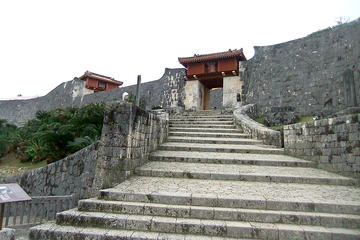

Okinawa Private Walking Tour

If You Go:

♦ en.wikipedia.org/wiki/Battle_of_Okinawa


Photo credit:
Okinawa Peace Memorial by CEphoto, Uwe Aranas


About the author:
Freelance writer, Bob Hale is a former Chicago radio and TV broadcaster.
Tagged With: Japan travel, Okinawa attractions Filed Under: Asia Travel

Okinawa: 5 World Heritage Castles and the Legend of Gosamaru

Okinawa Japan

Japan

by Keith T. Graff

Okinawa is the smallest and southernmost of Japan’s 47 prefectures. It’s part of an island archipelago that stretches from southern Kyushu in Japan to within view of Taiwan. The Prefecture makes up roughly one percent of the Japan’s total land mass and similarly, constitutes one percent of the nation’s total population. It was also the scene of the last and greatest land battle in the Pacific theater of WWII. Today it claims nine UNESCO World Heritage sites, five of which are ancient castles.

It was once known as the Kingdom of the Ryukyu’s but, when the first Sho Dynasty faded from prominence, it fragmented into three separate kingdoms. Nanzan was the southernmost and tiniest of the three. Chuzan was the central kingdom, most populated and the richest. These two smaller kingdoms occupied the southern third of the island. Hokuzan was the northernmost, largest in land mass and least populated. It also controlled the Amami island group which is now part of present day Kagoshima Prefecture to the north.

Okinawa castleAll three kingdoms vied for preeminence. The prize was trade with China. Chuzan was first to gain diplomatic recognition with China and the others soon followed suit. While China did officially recognize the three entities, they made it known that they preferred dealing with just one. It took one man’s vision and another’s allegiance to make that a reality!

Sho Hashi was the King of Chuzan and heir of the previous Sho Dynasty. He dreamed of reuniting the kingdom once again under his family’s rule. Though Chuzan was the richest of the three kingdoms, he still needed some extra muscle in order to achieve his dream. Enter Gosamaru, the powerful Lord of Yamada, Hokuzan’s southernmost fiefdom. In Sho Hashi’s mind, he literally held the keys to the kingdom.

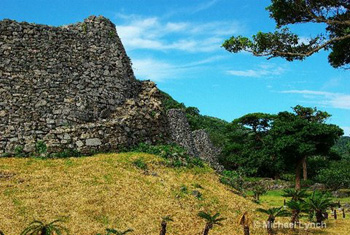
Sho Hashi persuaded Gosamaru to ally with him and together they marched on Nakijin Castle in the distant Motobu Peninsula. Nakijin castle is the first of our UNESCO World Heritage castles and a formidable obstacle. Through a little bit of trickery, they convinced the King of Hokuzan that his army had their armies on the run and the only thing needed for total victory was a final cavalry charge. Once the king of Hokuzan committed his cavalry, the undefended castle walls were breached and Nakijin fell.

Nakjin castleToday, Nakijin Castle is the main tourist attraction in Nakijin Village. It’s a rural district of farms and quaint fishing enclaves. Life here moves at its own relaxed pace. The castle ruins sit high on a ridge that provided the occupants a commanding view of the East China Sea. From its craggy ramparts, one could monitor the whole northwestern third of the island.

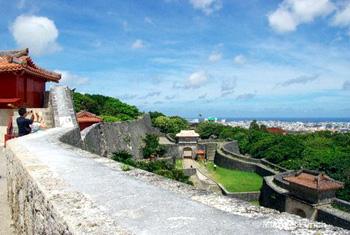
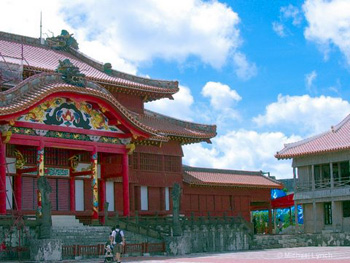
Once Hokuzan was back in the fold, King Sho Hashi set his eyes southward. To show the Lords of Nanzan that they were next on the menu, he began constructing a new castle at Shuri on the very border of the Nanzan Kingdom. Built high upon the ridge it is within view of Ozato castle, then the seat of the southern kingdom. Though devastated during WWII, today Shuri castle has been restored to the height of its glory. As the seat of the reunited Ryukyu Kingdom it became the grandest of all the castles in Okinawa. It is the second of our UNESCO World Heritage sites and the pride of Okinawa.

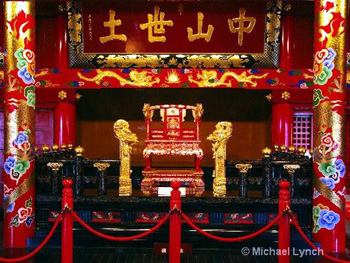
shrine in shuri castle Today Shuri Castle is the most visited tourist attraction in all of Okinawa. Here visitor’s marvel at architecture, evidence of Ryukyu’s strong ties to medieval China. In many ways, it resembles Peking’s Forbidden City in miniature. Of all our castle sites, this one has been improved to the point of being almost totally barrier free. Employees dressed in period costumes act as guides and many are more than happy to pose for pictures for or with anyone who asks. The castle also served as an important venue for the 2000 G8 summit hosted by Japan.

After the Ryukyu Kingdom was reunited by the Sho family, Gosamaru was appointed to the post of Loyal Retainer and his power within the kingdom was second only to the king. The friendship between the two was further cemented by the marriage of the king’s son and heir, Sho Taikyu, to Gosamaru’s daughter. Gosamaru was also appointed the Governor of Hokuzan and it is said that he served the King loyally.

In his twilight years, Gosamaru retired back to his family estates and the place of his birth. King Sho Hashi rewarded his many acts of loyalty by giving him additional lands and Gosamaru built a new castle not far from his old one at Yamada. In fact, to build the new castle at Zakimi hill, it is said that they disassembled his old castle at Yamada and moved it stone by stone to the new site.

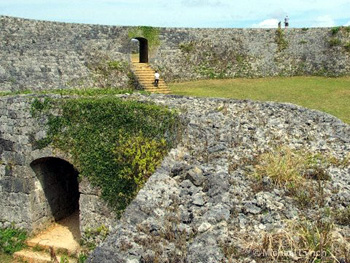
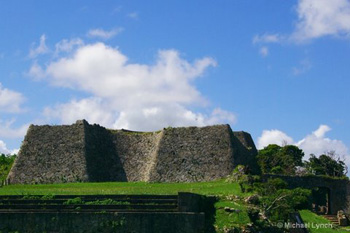
ZXakimi castleZakimi Castle, our third UNESCO World Heritage Castle, differs from the other castles in this tale in three ways. Previously, castles on Okinawa were made from rough stone that was carefully stacked one atop another. At Zakimi, for the first time on Okinawa they used stones cut to precision and fit to each other. This technique was used in later castle renovations throughout the island to include Shuri. Secondly, where other castles were built high atop easily defended mountain ridges, Zakimi is built upon a lower lying earthen hilltop that was more suitable for agriculture than defense. Lastly, Zakimi castle was first and foremost a private estate rather than a military outpost.

Gosamaru was only able to enjoy retirement in his new home for a few years. When Sho Hashi passed away, his son Sho Taikyu ascended the throne and Gosamaru’s daughter was now the queen. Unfortunately, Amawari, the lord of Katsuren Castle, our fourth UNESCO site, was making mischief by forging his own foreign trade agreements and alliances.

The ruins at Katsuren that stand today are but a third of the whole as it was during the height of its glory. All that remains are the higher portions of the castle’s keep and the area immediately below where the Lord of the manner’s house once stood. The keep at Katsuren differs from other castles on the island in that it offers a full unobstructed 360 degree view of the peninsula on which it sits. From this vantage point, on a clear day, one could literally observe most of the East coast of the island as well as an advancing army from far off in the distance.

In an attempt to assuage Lord Amawari’s lust for power, the new king offered his daughter, Gosamaru’s granddaughter, to him in a marriage alliance. Then for added insurance, he ordered Gosamaru to move to his residence from his retirement estate at Zakimi to the ancient fortress castle at Nakagusuku, our fifth UNESCO World Heritage site, which stands between Katsuren and Shuri.

Nakagusuku castleNakagusuku castle is one of the oldest on the island. Originally, it was built in the same manner as Nakijin Castle with rough stones stacked one atop another. It was improved dramatically during Gosamaru’s short stay with fine cut stones reinforcing the outer and inner walls. Situated on a ridge high above the Pacific Ocean, it is within view of the castle at Katsuren. To the north end of the castle is a large open area that resembles a modern parade field where it’s quite likely that Gosamaru trained troops to defend against Amawari.

But history tells us that Amawari was known for being a sly one and used his new position as son-in-law to gain an audience with the king. He persuaded the King that it was Gosamaru rather than he who was the real threat. He knew very well that Gosamaru was raising and training an army but he convinced the king to send scouts to confirm his half truths. When the scouts returned and reported that Gosamaru was indeed training troops for war, the inexperienced king hastily ordered Amawari to take the king’s army, and bring Gosamaru to Shuri.

Katsuren CastleBut, instead of simply arresting Gosamaru as the King had ordered, Amawari used the king’s army to lay all-out siege to Nakagusuku castle. Gosamaru seeing that it was the King’s army that had come to make war against him chose suicide rather than fight against his King. By committing suicide rather than fight, he demonstrated his loyalty to the bitter end!

As clever as he was, Amawari had not anticipated this turn of events. He knew very well that now the king would see through his lies. So instead of facing the music, he fled back to the safety of Katsuren. The king sent his armies to march on Amawari’s fortress. The walls at Katsuren Castle, believed to be impregnable, were breached in just two days.

One might call it a form of poetic justice that the story goes that Amawari was thrown to his death off the very castle keep where it is said that he had murdered his former Lord and master years before. Peace and stability returned once again to the tiny Ryukyu Kingdom but at a terrible cost.


Private Okinawa Custom One-Day Tour by Chartered Vehicle

If You Go:

Today all of the castles featured in this story are a tangible link to the glory days of the Ryukyu Kingdom and a source of great pride. They are popular tourist attractions and the host to various festivals throughout the calendar year. Tourists can access the Castle at Shuri, situated on the outskirts of Naha by bus or monorail but to see the rest, a rental car is the preferred mode of travel. More information on each of the sites is available on the Official Okinawa Travel Guide website.


About the author:
Keith T. Graff is a U.S. Navy retiree living and loving life as an expatriate in the “Goya Republic” aka Okinawa Japan. In addition to teaching business and management courses at a local college, he does freelance writing and photography for regional English language publications. Self described as a writer first, photographer second and a hack wannabe at both, his genre is travel writing and the photo essay.You can find more of his work online at his website: www.goyarepublic.com and his blog: goyrepublicezine.blogspot.com

Photo credits:
All photos are by Michael Lynch, a Photographer/Writer in Okinawa, Japan. His web site: www.mikesryukyugallery.com.

Tagged With: Japan travel, Okinawa attractions Filed Under: Asia Travel

Tradition: Okinawa Lunar New Year Celebration

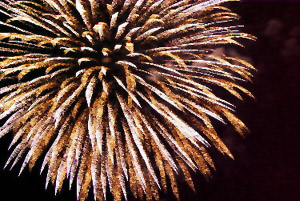
firework exploding in night sky

Okinawa, Japan

by Rose Witmer

“Three. Two. One. Happy New Year!”

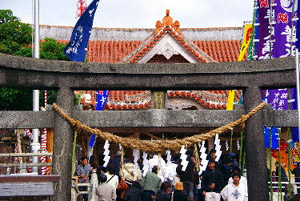
Fireworks illuminate the faces of Americans and locals as glasses are raised and toasts are made to another peaceful year on Okinawa, Japan. While the Americans’ New Years celebration is coming to an end, the Okinawans will continue on through the night until the first sunrise of the new year. Many eat the customary first bowl of soba and some walk to nearby shrines to read fortunes and pray for a prosperous year. No matter what traditions are being held, many Okinawans use this holiday as another opportunity to spend time with friends and celebrate life. However, the 1st of January is not the traditional Ryukyuan New Year. Instead, they use the Lunar Calendar, which is a system introduced from China that follows the cycles of the moon. The Lunar New Year, as followed by the Chinese, begins with the first day of the new moon, varying from year to year and generally tending to fall somewhere between January 21st and February 20th according to Western calendars.

building in OkinawaLong before Okinawa became the southernmost prefecture of Japan, it was the ancient kingdom of the Ryukyus with a strong cultural identity that still stands proud today. In the 1300s, relations between the Ryukyu Kingdom and China were very strong. In fact, in an attempt to learn from the great nation to the West, Ryukyuan students were sent to study in China while the Chinese Emperor sent technical and cultural advisors to help develop the Ryukyu Kingdom. Traits of Chinese culture were molded into the developing Ryukyuan culture. One of these many traits, was the Lunar Calendar. Not long after its introduction, traditional Ryukyuan festivals were based according to the phases of the moon.

Hundreds of years later, the Japanese descendants of the Satsuma clan, Shimazu Tadatsune, with the support of the Tokugawa Shogunate, assumed power over the Ryukyu Kingdom. As the Ryukyu Kingdom became part of Japan, certain cultural practices and traditions were restricted. One of many things to be banned was the Lunar Calendar and especially the Lunar New Year, as this was seen as a Chinese celebration and therefore anti-national. Despite the attempt to expel the Lunar Calendar from Okinawan culture, after hundreds of years’ practice, it has become an inseparable part of their culture. Even though recent years have seen less and less people celebrate the Lunar New Year in favor of the more modern Western New Year on January 1st, certain traditions are still followed.

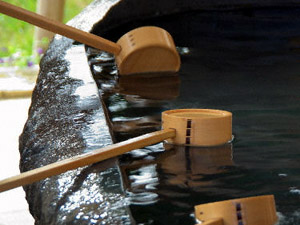
dipping water from wellOkinawa is a place where past and present blend through the practice of ancient traditions, especially during the cycle of the lunar new year. It all begins on New Year’s Eve, or Toushinuyuru. One traditional tool of Toushinuyuru is garlic, which is believed to banish evil spirits. The use of garlic varies based on the village. For example, in Nakagusuku, families take the garlic roots to family shrines and offer it to their ancestors, while in Tamagusuku villagers can be seen hanging the garlic on their ears when leaving the house. In Itoman, many families will chop the garlic up and place small piles in the dining room to prevent epidemics. Wakamiji, the name given to the first water drawn from the well in the new year, is often made into tea and offered to the ancestors. This water can also be used to cleans the body and on some islands, is believed to help rejuvenate the spirit and restore youth. On the morning of the New Year, known as Shogatsu, or Sougwachi, Priestesses of the district will hold the first rite of the year.

During the days of the old kingdom, the people would practice ancestor veneration, and held the elderly in high esteem and respect. Despite the integration of new religions to the culture, this trait is still practiced today. For example, the tradition of the sons of the family paying respects to the elders and offering holiday greetings. When visiting, incense is burned at the family alters and a cup of awamori, a type of Okinawan sake, is accepted in celebration of the new year as they pray for good luck. In some areas, such as the southern city of Naha, these same elders will sometimes offer slices of salted dried squid passed to the younger generations using chopsticks.

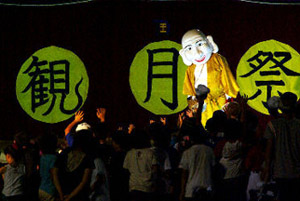
Okinawa New Year paradeOther places have much more lively celebrations. One area that continues to attract visitors with its New Year’s celebration is Ryukyu Mura, located just north of Yomitan. The name Ryukyu Mura, is a simple translation of its purpose as a replica of a traditional Ryukyuan village. Here they have the rustic homes with red-tiled roofs and villagers dressed in traditional wear of the time. Throughout the year there are reenactments of the Ryukyu King and the celebrations that come with his arrival, including traditional dances and music sung in the Okinawan dialect. However, with the Lunar New Year comes an especially exciting event. According to Ryukyu legend, every New Year (according to the lunar calendar) the god Miruku will travel across the sea to Okinawa to bring happiness to the people for the coming year. Miruku will lead a New Year’s parade, smiling warmly and waving a large paper fan to cool off the villagers. Following Miruku will be a parade of royalty surrounded by colorful flags as dancers happily cry out in celebration. The twang of the Sanshin, a traditional three-stringed instrument of the Ryukyus, will vibrate through the air as Eisa dancers kick their legs up high while beating large drums called taiko.

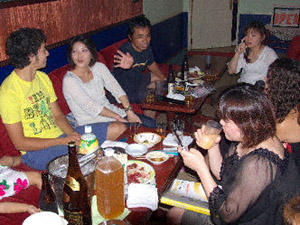
Okinawa New Year celebrants at tablesIn southern Okinawa, the port town of Itoman was a major trading base for the Chinese and relations between the two countries was very strong and the imprint of Chinese culture left a much deeper mark on this region of Okinawa. Here, the traditions of the Ryukyu Kingdom are still practiced in every day life. The Lunar New Year, in particular, is a highly anticipated event that brings friends and families together for a long night of drinking and celebrating. Rows of tents are set up with lanterns illuminating sizzling food upon grills. Here, too, the booming of the taiko and the cries from Eisa dancers blends with the accompanying sanshin as the villagers dance and laugh, drink sake with friends and bring in the new year as has been tradition for hundreds of years. At the end of the night there is a grand display of fireworks.

The proud Ryukyu culture, despite modernization and outside influence, continues to survive with very few signs of dying out and being forgotten. The strong spirit of the Ryukyu people perseveres through ancient traditions such as the Lunar New Year. As the lunar festivities come to a close, the last echo of the thundering fireworks rolls through the Ryukyu air. The smoke fades as the sound of a gong reverberates over the mountains from a distant temple, greeting the new year. An Okinawa tradition hundreds of years old lives on.
 

If You Go:

Visit Okinawa Japan – Official Okinawa travel guide online

Ryukyu Mura Celebration on Oninawa Index

About the author:
Rose Witmer is a young traveler at the beginning of a long journey around the world. She currently lives in Okinawa, Japan, exploring the jungles and mountains when not enjoying the Japanese city life. She loves to write and never leaves home without a camera and a notebook.

All photos are by Michael Lynch, freelance photographer.

Tagged With: Japan travel, Lunar new year, Okinawa attractions Filed Under: Asia Travel

An Okinawa Bullfight

bullfight in Okinawa

Uruma Okinawa, Japan

by Michael Lynch

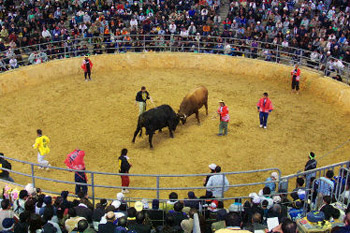
Bullfighting in Uruma Okinawa, Japan is part of the festivities associated with the Lunar New Year on the 1st of February. According to the Asian calendars this year, 2009, is the Year of the Ox. Bullfighting is a traditional Sunday pastime in Okinawa and earliest records show it has been a spectator sport since at least the 17th century. Unlike bullfighting in Spanish speaking cultures, there is no Matador to face the bull; it is one bull challenging another and neither will be seriously injured or die in the event.

The arena, a dome-shaped structure with open sides, provides air circulation. A circular area covered with a mixture of sand and clay, about 18 meters in diameter is where the bulls face each other. It is surrounded by an earthen mound and topped with an iron fence railing. Completely around and above the bullfighting ring are concrete bleachers with enough seating for a few thousand spectators. A tunnel, under the bleachers, is the only way for bulls and their handlers to enter and exit the ring.

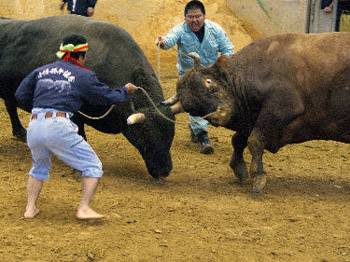
bulls fighting in OkinawaThere may be a team of handlers in the ring for each bull but, only one member at a time is permitted to physically handle their bull. The rest of the team stays back at a distance, ready to relieve a handler as required. The less experienced bulls are led on a line tethered through their nose. Bulls with the most experience are un-tethered, and do not need to be led. They actually look forward to the fight.

Judges, seated above the arena, determine the winner and loser of each bout when a decision needs to be made, but usually, the bulls decide for themselves. Normally whichever bull runs away from the fight is the loser. However, sometimes a bull will break free and run, only to gain enough momentum to turn around and charge his opponent and win the match.

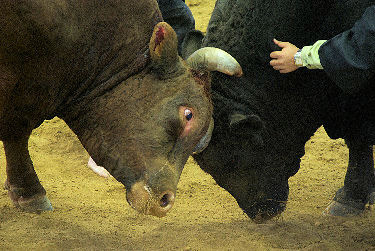
closeup of two bullsThe normal bout lasts around ten minutes with the bulls locking horns and trying to muscle their opponent into quitting. They get tired much as a couple of arm-wrestlers would and usually one bull will just give up, turn and run; ending the match. Sometimes a bull will be intimidated when he first sees his opponent and just run for the exit without ever starting to fight. This makes the hecklers in the crowd go wild! Some bouts last twenty to thirty minutes. The unpredictability of each match is what the crowds come to see.

With their heads and horns as their only weapons one would think this might be a bloody sport, but it isn’t. The judges and handlers would quickly end any match where serious injury might occur. The handlers actually treat their bulls as family pets. Some of them go through the bout barefooted while standing right next to their bull, patting a shoulder and speaking encouraging words while its locking horns with another ton of snorting, earth-pawing bull.

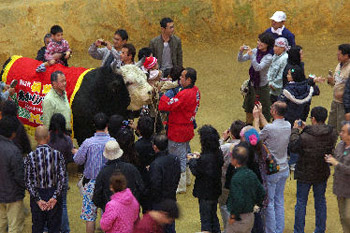
Okinawa bullfight participantsAt the end of each bout the loosing bull is quickly escorted to the exit by its team of handlers. The winner has a colorful cape placed on its back and bright colored ribbons and towels tied to its horns and tail by celebrating fans and team members. Then he is paraded around the ring stopping only for children, family members and handlers to jump on his back for a victory photo. Loud, Okinawan traditional music is played until the victor leaves the ring. The crowd cheers and applauds until the bull is out of sight

Then, the music stops, the announcer calls for the next teams and the crowd becomes silent waiting for the next match…

Getting There:

The Ishikawa Dome, where these events take place, sheltered from the weather is about a 45 minute drive from Naha International Airport. The quickest route is north on HWY 58, or north on the Okinawa Expressway, following road signs for Exit #6 of the expressway. The arena is a large concrete, dome-shaped building visible from the entrance/exit of the Toll Road.

More Info:

Bullfights are events held on Sunday and the tickets are sold at the entrance for 2,500-3,000 Yen. Most Google searches for Okinawa Bullfight will lead to travel agencies (some in English; most in Japanese).
A good Link to try is: www.japanupdate.com
An excellent link to the culture and history behind Okinawan bullfighting: en.wikipedia.org


Private Okinawa Custom One-Day Tour by Chartered Vehicle

About the author:
Michael Lynch is a wildlife photographer living in Okinawa, Japan. His photography has been published in a quarterly Okinawan magazine and his travel articles are published in various online magazines.

All photos are by Michael Lynch.

Tagged With: Japan travel, Okinawa attractions Filed Under: Asia Travel

MORE TRAVEL STORIES:

A Museum for Bedouin Culture

George Berkeley in Middletown, Rhode Island

Old Mission Santa Barbara: Queen of Missions

Daniel Boone’s Fort Boonesborough

The Walled Medina Of Fes: A Stroll Through The Middle Ages

Cathedrals, Churches, Chapels and Convents

England: The Gloucester and Sharpness Canal

The Majestic Scenery and Wildlife of Banff, Canada


SEARCH

DESTINATIONS

  • Africa Travel
  • Antarctica travel
  • Asia Travel
  • Australia travel
  • Caribbean Travel
  • Central America Travel
  • Europe Travel
  • Middle East Travel
  • North America Travel
  • Oceania Travel
  • South America Travel
  • Travel History
  • Travel News
  • UK Travel
  • Uncategorized
  • World Travel
facebook
Best Travel Blogs - OnToplist.com

Copyright © 2026 Cedar Cottage Marketing | About Us | Contact | Privacy Policy | Terms & Conditions | Copyright Notice | Log in