Travel Thru History

Historical and cultural travel experiences

  • Home
  • Airfare Deals
  • Get Travel Insurance
  • Writers Guidelines

How to Use Dating Apps Smoothly as a Tourist in Madrid or Barcelona

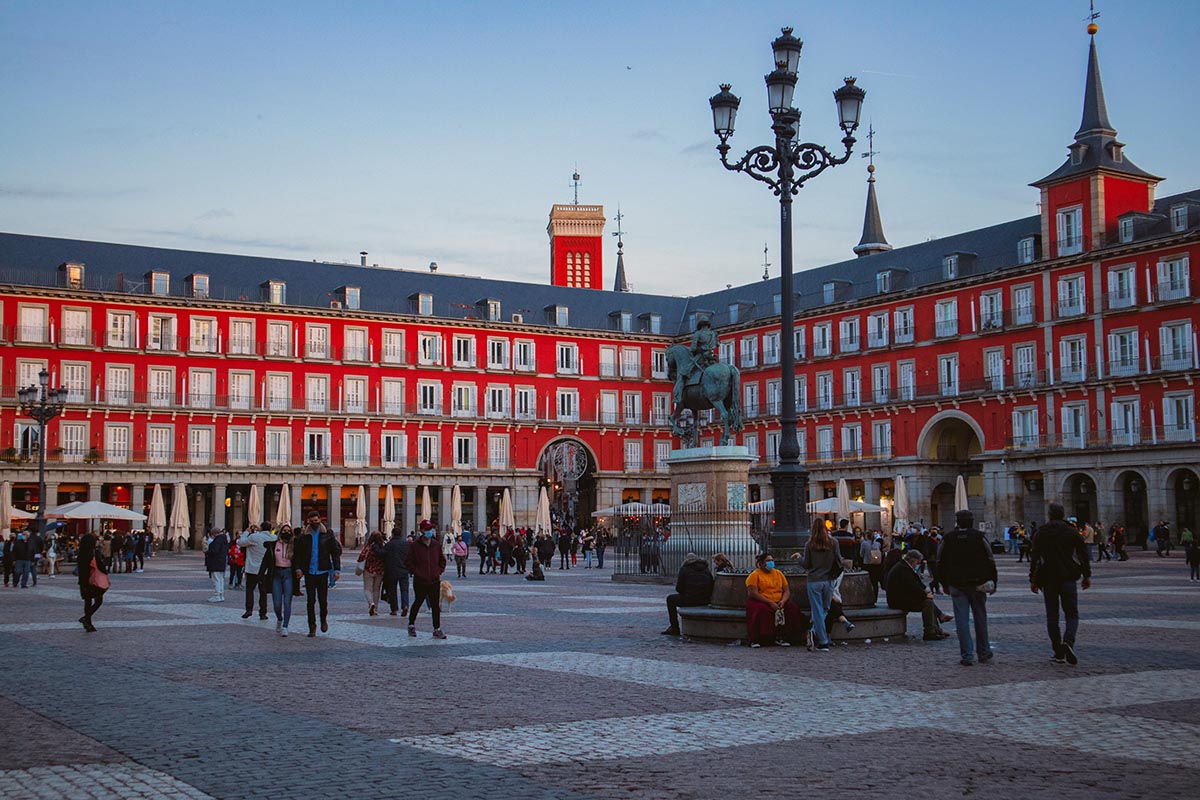
Madrid plaza

Swiping through profiles in a foreign city carries a particular kind of tension. You have limited time, no local knowledge, and a phone full of faces you cannot read. Madrid and Barcelona attract millions of visitors each year, and a portion of those travelers open dating apps hoping to meet someone before their flight home. The logistics are straightforward enough. The social codes are less obvious.

Spain runs on rhythms that take adjustment. Meals happen late. Plans form loosely. A match might message you at midnight and suggest meeting in an hour. If you treat your phone the way you would at home, you will miss the local tempo entirely. This guide covers the apps that work, the features worth paying for, and the cultural cues that will save you from awkward silences or worse.

Which Apps Actually Work in Spain

Tinder leads the market by a wide margin. By Q2 2025, the app had roughly 755,000 weekly active users across Spain. Bumble holds second position, with Hinge coming in third. Other apps exist, but your odds improve when you fish where the fish are.

Tinder’s user base skews younger in both Madrid and Barcelona. Bumble tends to attract slightly older users and those who prefer women to initiate conversation. Hinge positions itself for people seeking relationships over casual encounters, though in practice the lines blur. If you download all three, you cover your bases without cluttering your phone.

What to Expect When Dating Spanish Men

Spaniards tend to communicate with warmth and directness. If you match with someone local, expect conversation to feel open and expressive from the start. Late-night dates are common because social life in Spain runs on a different clock. Dinner at 10pm is normal, and being 15 to 30 minutes late carries no offense.

When dating Spanish men, prepare for bill-splitting to be the default. This surprises some travelers who assume traditional customs apply. Spanish dating culture leans toward equality in small gestures, even when passion and directness define the broader tone of romantic interaction.
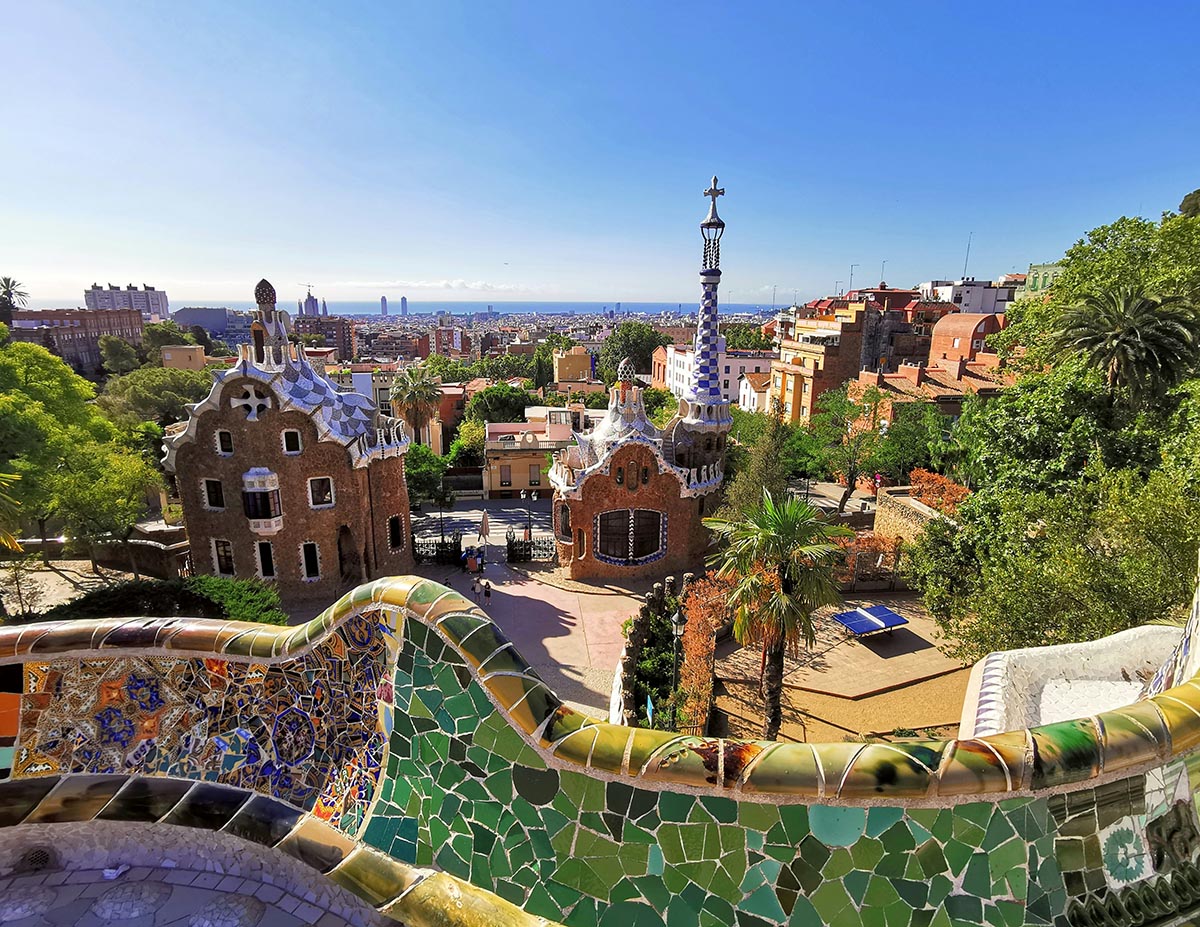
Barcelona buildings

Travel Features Worth the Money

Both Tinder and Bumble offer location-changing features designed for travelers. Tinder Passport Mode allows you to search by city or drop a pin anywhere on the map. You can start conversations with people in Madrid or Barcelona before you board your flight. The feature comes bundled with Tinder Plus, Gold, and Platinum subscriptions, or you can purchase it separately.

Bumble Travel Mode serves the same function. It lasts seven days and requires a Premium or Premium+ subscription. Activating it before arrival gives you time to build rapport and schedule dates for your first nights in town. Waiting until you land cuts into your window.

The subscription costs feel worthwhile if you travel frequently or plan an extended stay. For a weekend trip, the math changes. You might get enough matches on free tiers to fill your evenings without paying anything.

Setting Up Your Profile for a Foreign Audience

Your bio should mention that you are visiting. Locals appreciate knowing upfront. It filters out people looking for long-term partners and attracts those open to short-term connections or showing a traveler around their city.

Include photos that suggest something about your personality beyond your face. A picture at a recognizable location in your home country gives conversation material. Avoid group shots where nobody can tell which person you are. Skip the sunglasses-only lineup.

Write a few words in Spanish if you can manage it. Even a simple greeting signals effort. Google Translate handles basic phrases well enough. “Estoy visitando Barcelona por una semana” tells them what they need to know.

Timing Your Swipes

Spanish social schedules peak late. Swiping at 7pm catches people still at work or commuting. Activity rises after 9pm and stays high past midnight. If you want responses while your energy remains intact, adjust your sleep schedule or accept that you will message half-asleep.

Weekends bring heavier traffic. Thursday through Sunday nights produce the most active users. Monday through Wednesday slow down unless a local holiday falls midweek.

Safety Measures That Make Sense

Bumble recommends using video chat or voice call features before meeting in person. This verifies that your match resembles their photos and speaks the way their messages suggest. It takes 5 minutes and removes a category of risk.

First dates belong in public locations. Bars, cafes, and restaurants give you exit options and witnesses. Tell someone where you are going. Your hotel concierge works if you travel alone. A friend back home works too, as long as they know to check in.

Keep your phone charged and your location services on. Share your live location with someone you trust for the duration of the date.

Reading the Room Once You Meet

Spanish conversation tends toward warmth and physical closeness. A hand on the arm, a kiss on each cheek, and steady eye contact all fall within normal behavior. This does not automatically signal romantic interest. It signals Spanish communication style.

Directness applies to rejection as well. If someone loses interest, they often say so plainly rather than ghosting or inventing excuses. This can feel abrupt if you come from a culture that cushions bad news. Take it as efficiency rather than rudeness.

When Things Go Well

A good first date in Spain often extends into a second location the same night. Dinner becomes drinks becomes a walk becomes another bar. If your match suggests moving somewhere else, they are enjoying themselves.

Late nights do not necessarily imply certain outcomes. Spanish social culture runs long without pressure to escalate. Enjoy the hours. Let things unfold at whatever pace feels right to both of you.

Tagged With: spain travel Filed Under: Europe Travel

Spain: Montserrat, Monastery in the Mountains

Black madonna in Sanctuary of Our Lady, Montserrat, Spain

by Darlene Foster

During a stay in Tarragona, we take a bus trip to the mountain monastery of Montserrat, a place I had been wanting to visit for a long time. The bus winds its way up into the Montserrat Mountains for what seems like hours but is only forty minutes. Why would anyone build a monastery way up here? Our guide, a pleasant and well informed young man named Victor, explains it to us in three languages, English, French and Spanish. Legend has it that around 880 AD, shepherds heard music and saw a light coming from a cave high in the mountains. Inside they discovered a Black Madonna. The statue, the oldest Black Madonna in Europe, is only 60 cm tall but when the bishop from the nearest town in the valley came to have it removed and taken to his cathedral, it proved impossible to move. So pilgrims began coming up to the mountain to see it. Eventually, an abbey was built to commemorate the Virgin.

Once we reach our destination, the view from the top is incredible and well worth the trip.

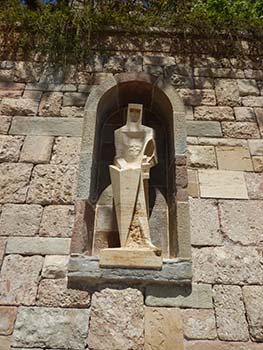
Saint GeorgeThe Gothic-style Basilica and surrounding grounds are amazing. Alcoves in the walls hold statues, including one of San Jorge (St. George), the patron saint of Catalonia. The figure looks very much like a Gaudi creation. Not surprising, as Catalonia´s most famous designer worked on the Basilica as a young man. Montserrat is home to the Sanctuary of Our Lady and a Benedictine monastery and has served pilgrims and visitors to the mountain for approximately one thousand years. It sits majestically against the backdrop of the rugged mountains. The building has been destroyed and rebuilt a few times over the years, including during the Napoleonic wars, when many of the monks onsite were sadly killed. It was also damaged in the Spanish civil war (1936 – 1939). The current building was completed in 1949. Montserrat Basilica has been modernised to attend to the needs of pilgrims over the course of one thousand years.

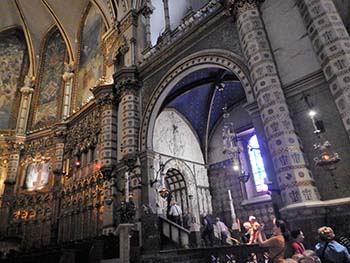
Directly in front of the Basilica is an open-roofed courtyard area or atrium. The ornate façade displays carvings representing the martyrs who were killed during the civil war, with five arches leading to the main area. The marbled black and white floor of the atrium was inspired by the floor of the Capitolium in Rome. Once inside, the church glitters with silver, gold and mosaics. Hanging candles line the walls creating an atmosphere of warmth and welcome. On the central pillars of the nave, sculptures of prophets such as Ezekial, Jeremiah, Isiah and Daniel are carved in wood. A stunning stained glass window catches my eye.

pilgrims climb stairs to see iconPilgrims line-up to climb a set of elaborate stairs to view the Virgin of Montserrat, or the Black Madonna, the reason many come to Montserrat. Visitors are not allowed to take pictures while paying homage to the Black Madonna. But Victor explains that from inside the Basilica, from the floor of the chapel, I am allowed to take pictures. The famous sculpture sits at the back of the church, above the altar area, framed in an ornate window. Even at a distance, it is fantastic and leaves me awestruck.

A highlight of a visit to Montserrat monastery is to listen to the famous Basilica Youth Choir perform Gregorian chants and other religious choral music. The performances can be heard free of charge at one o’clock inside the Basilica most days. I would advise getting there early as the doors close once the chapel is full.

funicularMontserrat means Saw Mountain, as the range looks like the serrated edge of a saw, and is the name of the Mountains and the sanctuary. It is perfect for walkers with many hiking trails available. A place to enjoy nature and contemplate life as you experience magnificent views of the unusual rock formations. A funicular takes visitors to the top of the mountain, where there are several different walks to choose from, all with amazing views of the Catalonian countryside.

There is also a fabulous art museum onsite. It is not very big but holds some impressive pieces of art and artifacts donated by private citizens, including a painting done by Picasso done at 14-years-old. The Monks consider it their duty to promote culture. It is definitely worth an hour of my time.

There is a small market outside where I stop at a stall and purchase a jar of honey, made by the monks. I leave feeling refreshed and at peace, satisfied I can tick off another place on that long list.

If You Go:

Montserrat is 53.4 km from Barcelona and can be reached by car via the A-2 or C-58 motorway. Be prepared to navigate a very twisty mountain road once in the mountains.

Montserrat is about one hour North West from Barcelona by train. Tickets should be bought ahead of time.

There are many organized bus tours from Barcelona and Tarragona.

There are plenty of cafes and restaurants, and one hotel if you plan to stay overnight.

Unless you plan to do many hikes, a one day trip is sufficient to see everything.

About the author:
Darlene Foster is a dedicated writer and traveler. Besides being a travel writer, she is the author of the Amanda Travels series of books featuring a spunky young girl who travels to interesting places such as the United Arab Emirates, Spain, England, Holland and Eastern Europe, where she always has an adventure. Readers of all ages enjoy following Amanda as she unravels one mystery after another in unique destinations. When not traveling herself, Darlene divides her time between the west coast of Canada and the Costa Blanca of Spain with her husband and entertaining rescue dog, Dot. www.darlenefoster.ca

All Photos are by Darlene Foster.


Tagged With: Black madonna, Montserrat, spain travel Filed Under: Europe Travel

The Santiago de Compostela Pilgrimage in Spain – The Way of Saint James

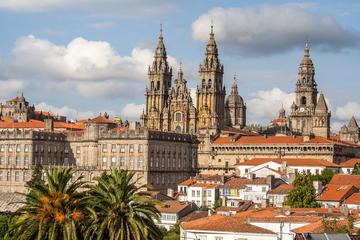
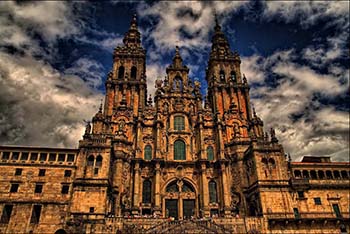
Santiago de Compostela

by Catherine Newstead

The soles of my feet were so sensitive, cold air was painful to the touch. All I wanted to do was fall into the comfy bed of our room at the Hotel Pombal. The boutique hotel was inexpensive yet elegant with kind staff on board.

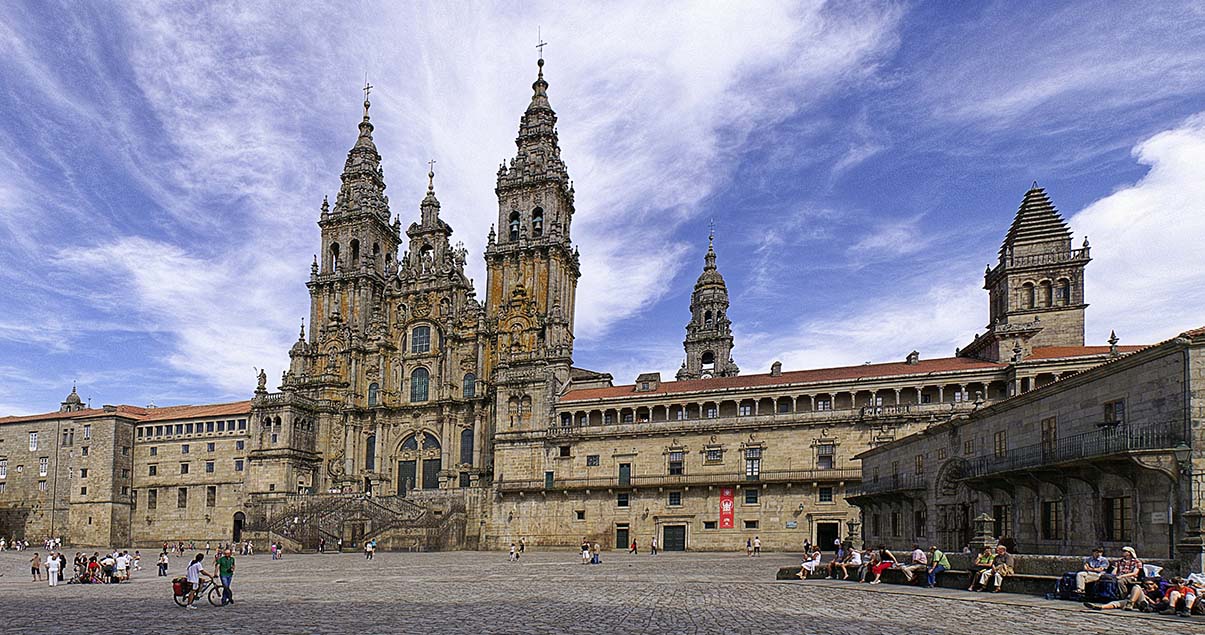
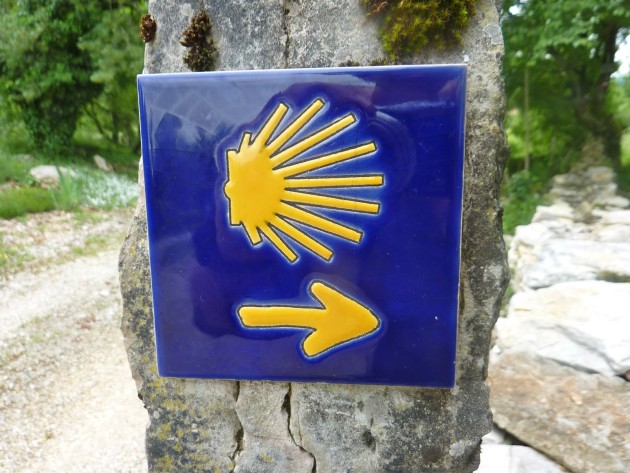
el camino signBut the pilgrim’s cathedral in Santiago de Compostela was drawing me. Twilight had come quickly while my eyes scanned an ancient, narrow walkway. I looked up and the spirals of the cathedral were lit by soft light in the far ground, about a kilometre away.

“Robin, let’s go, we can’t wait for tomorrow morning.”

After trekking the last 20 kilometres of our pilgrimage that day, we were exhausted and giddy. Probably dehydrated too. We gained some energy from somewhere and followed the walkway. The cobblestone path and walls were still warm from the day’s sun.

Pilgrims and tourists walked in and about the cathedral. A young Galician bag piper was busking in the square and the music echoed along side footsteps and chatter. It was breathtaking. I felt all the excitement yet I carried serenity without effort.

We found a restaurant patio near by and ate a Galician seafood paella with an ice cold Estrella beer. Perfection.

People from all over the world are drawn to walk the El Camino in Galicia, the north western part of Spain. The French Way is by far the most well known and well travelled. However there are 8 official ways according to the World Heritage Foundation. The walk is a highly personal experience. Some trek for a religious purpose but many trek for cultural, physical, or soulful reasons.
Perhaps the walk is in honour of a friend who has died or a bonding experience between Father and son. Others decide that a solo journey is best.

Based on our shared heritage, my friend Robin and I chose the British route, beginning in Finesterre. This was a 120 kilometer trek that we completed in 6 days.

El Camino pilgrimsThe path was often mountainous and strenuous. But it took us along side beautiful farm lands, corn crops, small hamlets and a eucalyptus forest. Each morning we we filled up at least 2 liters of water each and a lunch made by staff at the inn where we stayed over night. Drinkable water and food were not always available during our 15 to 20 kilometre daily hike.

Some people choose to fly directly into Santiago de Compostela and then bus afar to their starting point. For some, the trek is 100 kilometres, others 500 or 800. In order to gain formal status as a pilgrim, one is required to walk a minimum of 100 kilometres or cycle at least 200 kilometres and have a pilgrim passport that is stamped along the way at various churches, inns and cafes. Once reaching Santiago de Compostela, you can take your pilgrim passport to the official pilgrim office for a certificate of completion. A special certificate is issued to those pilgrims who trek from St. Jean Pied de Port, an 800 kilometre trek over the Pyrenees mountains.

We planned out trip well ahead, using the Dublin based company, “One Foot Abroad.” Our suitcases were picked up each morning at 8 am and transported to the next hotel while we each carried a daypack. One Foot Abroad assisted in planning the route, maps, our pilgrim passports, some meals and the over night stays. We paid one price for all so that we could concentrate on just putting one foot in front of the other. Many pilgrims prefer to plan “on the fly” and rest for a day or more. But for those with fixed holiday times, One Foot Abroad is a good choice for cost and organization. Another option is to walk the El Camino with a group and guide.

Guides are knowledgeable and if one is travelling alone, this is another choice.

Santiago de CompostelaIn subsequent years I walked 120 kilometres of the Portuguese Way (beginning in Vigo) and the French Way (beginning in Sarria). The French Way is the most well travelled route. It is better marked, has more frequent cafes and pubs along the path. During the last 100 kilometres the terrain can be hilly but over all less strenuous than the British route or the Portuguese Way. You will meet many more fellow pilgrims on the French Way, people from all parts of the globe. But if you are not a socializer, people are respectful of the need for privacy. The uniqueness of such an adventure is that the playing field is even. Everyone is a pilgrim regardless of race, beliefs or age. There are families with young children who trek the El Camino as well as elderly folks. However, planning for frequent rest stops with food and water is critical. I did not see anyone using a wheelchair along the routes, although perhaps this has been done. Routes include sections that are inaccessible.

Mental stamina often depends of caring for the physical self. Lightweight hiking shoes or boots and absorbent wool socks are important for the various terrains.

Depending on the time of year and route taken, a wool hat, wide brim hat and sunscreen will be important for comfort. If painful blisters appear, blister treatment packs purchased at the local pharmacia will make a huge difference in your walking experience.

There is no shame is halting the pilgrimage due to injury or issues with stamina. The Way will always be there.

Once reaching Santiago de Compostela, the journey really isn’t over. The inner journey is just beginning. Exploring the city is the sweet spot between those 2 passages.

 If You Go:

Take advantage of the free, guided tours starting in the cathedral square. Walking tours of the city are conducted in Spanish, English, German and French. You will visit the 2 Marias folk sculpture and learn about their astonishing story of survival during the Facists rule of the 1940’s . You will discover the charm of the ‘hippy’ street market called Mercado de Abastos and much more. While there is no fee, guides will accept tips.

Take a day trip to Finisterre by bus or coach. You will be guided through fishing villages and the ‘end of the earth” where the Celtic people once believed that people fell off the flat earth.
Learn some basic Spanish words to support your experience. Download a Spanish to English/English to Spanish app to your smart phone. Less citizens speak English in Galicia compared to other parts of Spain such as Barcelona or Madrid.

If you are contemplating a pilgrimage, do your homework. Social media sites will help plan the journey.

Be prepared to occasionally get lost. Back track, ask for help, look carefully for the famous clam shell signs and arrows. Feeling cranky is usually temporary.
Stay hydrated, eat well, treat your body, feet and fellow pilgrims with respect.

!Buen Camino!


Santiago de Compostela Private Tour


About the author:

Catherine Newstead writes travel and personal memoir and occasional fiction. She is always curious about the way in which people uniquely interact with one another and the world about them. Catherine is well travelled and a grandmother of two. She is planning to walk the Kumano Kodo (el camino) in Japan in 2020!

First photo by Pedro J Pacheco / CC BY-SA 3.0 ES

All other photos by Catherine Newstead and Besttourism.com


Tagged With: el camino pilgrimage, spain travel Filed Under: Europe Travel

Medina Azahara: The Lost City of Córdoba, Spain

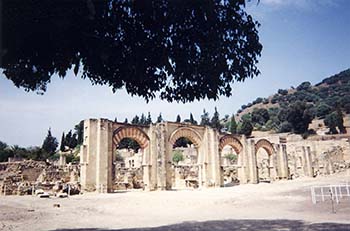
House of the Viziers

by Ana Ruiz

The year was 936 when Abd ar-Rahman III, the first Umayyad Caliph of Córdoba, began the construction of his magnificent Islamic city 5 miles west of Córdoba, the prosperous capital of al-Andalus (Islamic Spain). Legend has it that the Caliph named it Madinat az-Zahra (City of Zahra) after his favourite concubine from Granada.

According to legend, Zahra eventually soon grew most despondent despite all the wealth that surrounded her and luxuries offered. When the Caliph asked her what could be done to restore her happiness, Zahra replied that she longed to see the snow of the Sierra Nevada Mountains (Snow-Capped Mountain Range) of her home in Granada.

Not one to back down from a challenge no matter how daunting, Abd ar-Rahman III ordered rows and rows of almond trees to be planted close to each other at the gardens of the medina. When the white flowers of the almond trees blossomed in the springtime, it created the impression or illusion of falling snow and Zahra cried no more.

However, ‘Zahra’ is also the Arabic term for ‘brilliance’ or ‘shine’ and it is generally accepted that Madinat az-Zahra was named for its ‘brilliance.’ Chronicles tell of visitors traveling from afar to marvel at the richness and opulence of the palatial city. Abd ar-Rahman III spared no expense in its glorious construction hiring the best architects and artisans from all over the world incorporating materials such as gold, ivory, precious stones, and marble imported from North Africa. Twenty-five years it took over 10,000 men to build the shining city of Medina Azahara, as it is known in Spanish.

Constructed in a location of great natural beauty at the lowest foothills of the Sierra Morena Mountains, the new urban center functioned not only as the Caliph’s new residence but was to serve as the administrative center as well, while affirming, strengthening, and consolidating his power over his empire.

Northern wall ruinsThe fortified palace-city formed a rectangular shape measuring nearly 5000 feet long by 2500 feet wide that was enclosed and securely protected by double walls. Roadways and bridges were built and a reconstructed 1st century Roman aqueduct supplied water from the sierra.

In Medina Azahara you would find schools, libraries, workshops, stables, weapons factories, pavilions, and royal barracks. Cypress and palm trees bloomed amidst a fruitful landscape and wild animals lived in a zoo while exotic birds were kept in an aviary. Splendid features such as lavish gardens, orchards, marble fountains, large fish ponds, pools, courtyards, and terraces adorned the city. It is recorded that over 4000 columns were built from white, pink, and green marble and jasper shipped from the Phoenician city of Carthage.

The Great Oriental PorticoMedina Azahara was comprised of three descending terraces or levels over the Guadalquivir Valley. The common folk lived at the bottom terrace or lower level where you would find the markets (suq), inns (funduq), public baths (hammam), as well as bakery houses, cavalry housing, and the Royal Mint. The Aljama or mosque, also situated on this level but outside the walled precinct, was one of the first buildings completed in 941. The middle level was reserved for court officials where they resided and performed daily administrative duties in their governmental offices. Lastly, on the uppermost level or top terrace overlooking the city lived the Caliph and his family in their private royal residence (dar al-mulk) at the Moorish palace (al-Qasr). Excavations of this terrace have uncovered traces of stables and servant’s quarters. The ceremonial entrance to the al-Qasr (Alcázar), known as the Great Oriental Portico, forms part of what can be appreciated today.

The Great Oriental PorticoHowever, the heart of Medina Azahara was the particularly magnificent reception hall known as the Throne Room or Salón Rico (Rich Hall). It is said that visitors were mesmerized by its splendour and astonishing beauty. Here the Caliph received such guests as civil servants, politicians, and ambassadors. The hall opened to the south directing one’s gaze into the aromatic gardens. Thin sheets of colored marble lined the roof and walls giving it an elegant, translucent appearance while the interior was adorned with ebony, ivory, gold and silver tiles, marble columns, and arcades of horse-shoe arches reminiscent of the Great Mosque of Córdoba.

According to Arab historians, there stood in the center of the hall a fountain filled with quicksilver that when illuminated by the sun’s rays was shaken by a servant on cue as commanded by Abd ar-Rahman III. This motion caused the mercury to reflect from the sun’s rays flashing through the walls and ceiling with an overwhelming brilliance similar to that of lightning. Nothing like this had ever been constructed anywhere before, and although guests were generally frightened, the Caliph took great delight in this entertaining display.

However, the power of the Caliphate began to decline towards the late 10th century due to internal struggles within and in the year 1010, Berber troops sacked and burned Medina Azahara to the ground. During the centuries that followed, ruins of this once glorious city were constantly pillaged and plundered for the construction of buildings as far away as Marrakech. By the 15th century the vestiges of this forgotten city became known to locals as Córdoba La Vieja (Córdoba the Old or Old Córdoba.) Archaeological excavations began as late as 1911 and what remains today is only about 10% of what existed within the walled city; mainly about a third of the uppermost level comprised of the central area of the Alcázar.

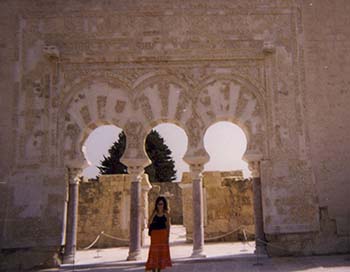
Inside the House of the Viziers Although the brilliance of Medina Azahara was short-lived, it stands as the most important in Andalusia (Southern Spain.) The once palatial city is the largest archaeological site of Muslim Spain today and is candidate for becoming a World Heritage Site by UNESCO in 2018. This honour would lead to increased visitors resulting in greater funding for the much needed exploration, preservation, and further restoration of the site.

I had the pleasure of walking though these ruins imagining what the Shining City must have been like in all its glory during the 10th century when it was known as La Perla de al-Andalus (The Pearl of Al-Andalus.) For those with a special interest in archaeology and architecture, Medina Azahara is not to be missed when visiting Andalusia.

If You Go:

As of spring 2017, nightly visits will be available when more than 800 LED lights will illuminate the entire complex. Two daily buses from Córdoba center take you to and from the site in about half an hour, however tickets must be purchased a day in advance. Tickets and guided tours are available at tourist information points. The site is closed on Mondays and their telephone number is (34) 957 329 130. For more information visit: www.medinaazahara.org

About the author:
Ana Ruiz was born in Spain and currently resides in Canada. Ruiz has worked as a journalist and columnist and is also the author of seven books including two on the history and culture of Spain; “Vibrant Andalusia” and “Medina Mayrit; the Origins of Madrid”. Visit: ana-ruiz.weebly.com

All photos by Ana Ruiz:
Dar al-Wuzara (House of the Viziers)
Northern wall ruins (where the tour commences)
The Great Oriental Portico (archway leading to the Alcázar)
Interior of the great Mosque of Córdoba
Inside the House of the Viziers

Eligibility and requirements for Spain citizenship by descent

Tagged With: Cordoba attractions, spain travel Filed Under: Europe Travel

Welcome to Sitges, Spain

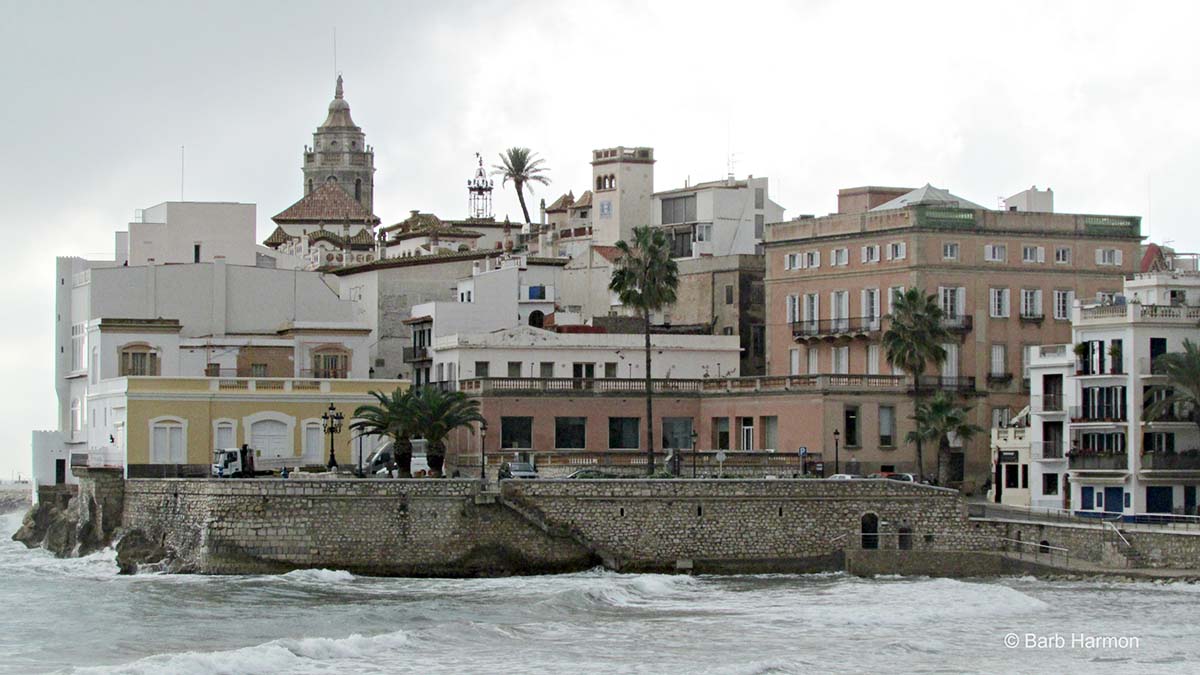
seawall Sitges Spain

Wild Parrots, 17 Beaches, and Rum!

by Barb Harmon

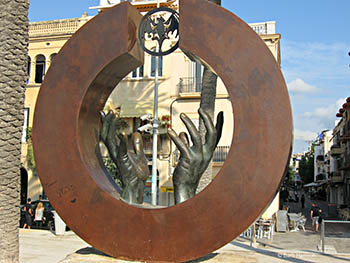
In the still of the early morning we strolled along the palm tree dotted seafront. To our right the Mediterranean Sea is calm – smooth as glass. To our left, the shop and restaurant owners hose off the sidewalks in front of their establishments preparing for a busy day.

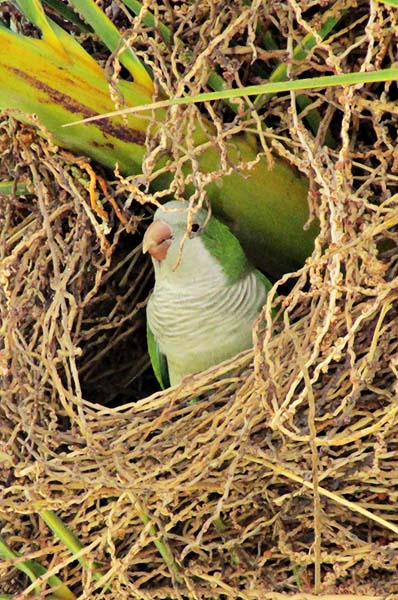
green monk parakeetAs we chat, my husband and I stop midstep startled by a deafening roar above our heads. We look up but can’t see anything. Suddenly, a large group of screaming squawking parrots swoop out of the palm fronds. Bright green, vibrant yellow, I’ve never seen birds like this in the wild. A morning jogger approaches and points up to a tree top saying “those are Monk Parakeets. They are loud but harmless. Just watch your heads.”  At that point we knew our time in Sitges Spain would be anything but dull.

Located in the Catalan region, Sitges is 32 kilometers southwest of Barcelona by train. Only a half hour away but a world apart. Facing the Mediterranean, this former fishing village  was nicknamed the “Golden Shore” as it was a holiday spot for the wealthy. Now, it is a welcoming spot for everyone – singles, couples or families will feel welcome here. If you arrive by train you’ll notice the streets slope downward. Just head down and you will end up on the promenade by the coast.

There are 17 beaches spread over a four kilometer coastline. With a yearly average of 300 sunny days there are always sunbathers on the fine white sand beaches – summer or winter.

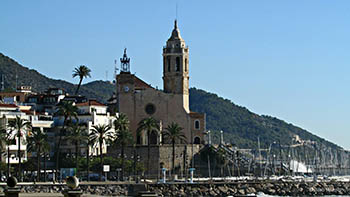
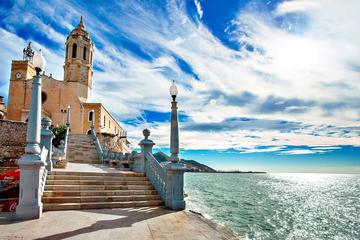
sitges parish churchPerched on a rocky promontory high above the coastline is the Parish Church. The Church of Sant Bartomeu and Santa Tecla appears to sit guard above the Sea. Construction of the baroque church began in the 17th century and is built on the remains of a church from 1322. La Punta as it is called has the best view in town. When the sea is quiet vendors set up their wares on the steps that lead up to the church. If the sea is active, waves crash along the seawall and steps soaking you if you are standing too close to the edge. We escaped in the nick of time while others weren’t so fortunate.

There are cafes with patios close by where you can have a drink or snack while drying off. While sitting at one of these cafes, several couples that had been drenched while climbing the steps to La Punta sat down at the table next to ours and started removing wet garments. The waiter said “this is normal.”

Bacardi rum signWe can thank Sitges for Bacardi Rum. The founder, Don Facundo Bacardi Masso was born here in 1814. He emigrated to Cuba in 1830 looking for a better life as many young men did at that time. In 1862 through trial and error, he developed a unique way to distill rum. His wife Amalia suggested the bat as the symbol for the product. She noticed bats in the distillery – easy to see as the rum is aged in white oak barrels. The symbol can be seen throughout the town. Bacardi is still a family owned business – the largest privately owned spirits company in the world. Take time to visit the Casa Bacardi Sitges Museum. You will experience the history of the brand, see how the product is made and of course sample the beverage.

While Sitges can be visited on a day trip from Barcelona, it is worth setting aside at least two days – three would be perfect. The narrow, twisting turning cobblestone streets from the middle ages are filled with inviting shops and restaurants. History and beauty can be viewed around every corner. When walking through town, take time to get off the beaten path and continue to the residential streets. The tree lined streets are quiet, the homes worthy of Architectural Digest. On a windy day when the ocean is churning you will hear the sound of waves crashing against the shore.

The perfect way to end a day is a walk along the promenade watching the sun sink into the horizon. This is a tradition. You’ll find families on their evening stroll, joggers getting in the last run of the day and couples walking hand in hand.

If You Go:

Museums

Casa Bacardi Sitges Museum
Placa de l’ Ajuntament 1
Tel: + 34 938 94 81 51
€9 adults
Students and seniors €6 with ID
Minors (under 18) free with a parent

Can Llopis Romanticism Museum
Built in 1793 as a private mansion, this museum shows what life was like as a wealthy citizen. It also houses a collection featuring hundreds of antique dolls and toys.
Carrer de Sant Gaudenci 1
+ 34 938 94 29 69
Admission: Varies according to the package purchased

Dining

Restaurant Pic Nic
Passeig de la Ribera
Tel: +34 938 11 00 40
Located on the Mediterranean, the view is majestic.

Accomodations

Sitges Tourism Information


Sitges Private Tour from Barcelona

About the author:
Barb Harmon’s love affair with travel began in high school as an exchange student in the Netherlands and continues to this day decades later. As empty nesters, she and her husband travel as often as possible looking for the next adventure. She is a member of ITWPA and ITWA. Visit her blog at www.chasingthenextchapter.com.

Photos by Barb Harmon:
Strolling along the promenade
Green Monk parakeet
Church of Sant Bartomeu and Santa Tecla
Bacardi symbol

Tagged With: Sitges attractions, spain travel Filed Under: Europe Travel

  • 1
  • 2
  • 3
  • …
  • 7
  • Next Page »
lazy person's secret

MORE TRAVEL STORIES:

China: Beijing is Buzzing

Hidden Gems of Bali: Kuber ATV & Tunnel Waterfall Ride

6 Top Rated Real Estate Agents in Boynton Beach — Beyond the Zillow Ads

Three Generations Enjoy Sedona, Arizona

The Best Places To Find Peace And Quiet In London

Cliff Side Temple Tombs of Fethiye, Turkey

Egypt: Nubian Boatmen of the Nile

Legend of the “Hunderprest” Vampire of Melrose Abbey


SEARCH

DESTINATIONS

  • Africa Travel
  • Antarctica travel
  • Asia Travel
  • Australia travel
  • Caribbean Travel
  • Central America Travel
  • Europe Travel
  • Middle East Travel
  • North America Travel
  • Oceania Travel
  • South America Travel
  • Travel History
  • Travel News
  • UK Travel
  • Uncategorized
  • World Travel
facebook
Best Travel Blogs - OnToplist.com

Copyright © 2026 Cedar Cottage Marketing | About Us | Contact | Privacy Policy | Terms & Conditions | Copyright Notice | Log in