Travel Thru History

Historical and cultural travel experiences

  • Home
  • Airfare Deals
  • Get Travel Insurance
  • Writers Guidelines

The Conquest of Peru

by Georges Fery

The conquest of Perú was not, as the word “conquest” implies, a grandiose affair with drums beating and banners flying. Quite the opposite; it was the unexpected outcome for the search for a way across the isthmus of Panama to the Pacific Ocean from the North Sea, today’s Caribbean Sea. At the time, no one could conceive that a South American continent existed.

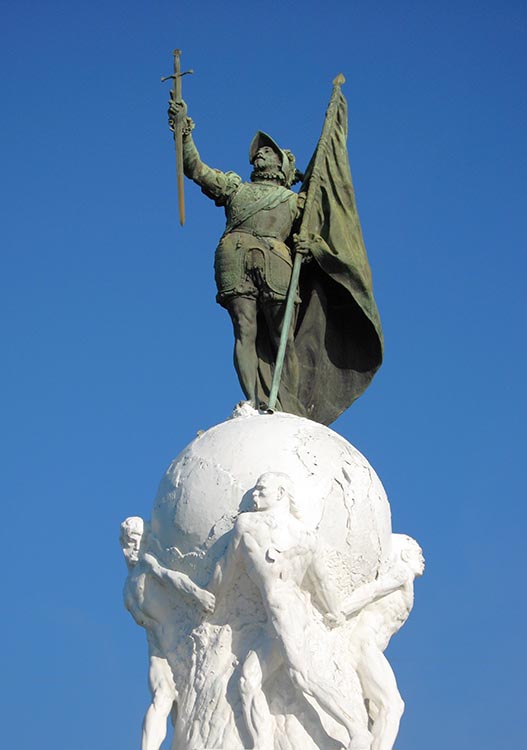
The ”conquest” began with Vasco Núñez de Balboa (1475-1519), mayor of Santa Maria de la Antigua del Darién, the first European permanent settlement in the country, a deputy to Pedro Arias de Avila, governor of Golden Castille (Castilla de Oro renamed Tierra Firme by Panama’s Royal Academy in 1538), a territory stretching from Nicaragua to the Bay of Panama. With sixty-seven Spaniards, Balboa left the settlement in Antigua, battling against nature and natives over the jungle-clad Darien mountains, looking for gold, fame, and a way to the South Seas (now known as the Pacific Ocean).

With him was Panquiaco the son of the Caquetá chief, who told him about a rich land that lay further south on the coast, with great kings. He told Balboa of seagoing boats, gold, and pearls; a land the natives called Birú, the name of its king. On September 25, 1513, Balboa stood on a thousand-foot-high peak in the Darien looking spellbound at the immensity of the South Sea, while his second in command, Francisco Pizarro gazed intently for in his mind echoed Panquiaco’s words…great lands…and…gold!..gold! This sketchy rumor laid the seeds of the Spanish conquest of Perú.

Conquistadors were granted a license to explore and conquer by the Spanish Crown in Madrid, stipulating that the venture would not carry any expense to the Crown. All costs were borne by the conquistadors, who had to borrow money and/or put up in-kind guarantees from families in Spain, for the cost of such ventures was high. Conquistadors had to pay for ships, crews, soldiers, weapons, and food; they had to build settlements to explore unknown and dangerous lands and fight endless battles in their ceaseless quest for gold. They had to pay for enlisted soldiers, ship crews, and debts. Many enlistees were paid soldiers released by the Spanish army from the Christian-Muslim War (1481-1492), or the Italian Wars (1494-1559).

An overseer from the Crown, appointed by the House of Trade of the Indies in Seville, was attached to each expedition, keeping detailed logs of goods and transactions. The conquistador paid him, and so he was a chaplain. The “Right of Conquest” was granted as a binding contract, which was predicated on the Crown’s receiving the royal fifth (quinto real) on all imported precious metals. Other taxes, which could run up to 40%, included providing naval protection for returning ships laden with treasure. Once the new territory was settled and pacified, the Crown appointed a vice-roy, governors, officials,  and an army chief, while bishops of the Catholic orders assigned priests.

Born out of wedlock in Trujillo, Spain, in 1478, Francisco Pizarro joined the military in his late teens, rising to lieutenant fighting in the Italian Wars, where he was wounded. Upon his return to Spain in 1502, Pizarro traveled to the Indies, as the recently discovered territories were known. When in Santo Domingo, on the island of Hispaniola, he was hired as a messenger in the local government. Frustrated in this position, he joined Captain General Alonso de Ojeda as a sub-officer.

With de Ojeda, he fought in the wars against the indigenous Taíno people on the island of Borinquen (today Puerto Rico), rising to second in command when de Ojeda, wounded by a poison-tipped arrow, had to return to Santo Domingo. Pizarro was instructed to wait forty days and, should de Ojeda not return, sail back to Santo Domingo with the soldiers. Pizarro followed de Ojeda’s instructions with a twist. He took two brigantines and sailed west with de Ojeda’s partner, Fernández de Enciso. They landed at the port of Santa Maria la Antigua del Darién (1510), in the estuary of the Tarena River on Panama’s Caribbean coast. There, he met Balboa, also called the “fellow of the drum” for his daring escape from creditors in Santo Domingo, hiding in a wine cask with his dog Leoncito. In Pizarro, Balboa recognized a kindred spirit and made him lieutenant governor.

In 1515, Balboa was named second to the governor of Castilla de Oro, Pedro Arias de Ávila (aka Pedrarias Dávila, 1440-1531), his father-in-law. For reasons that would deviate from our narrative, Balboa rebelled against Pedrarias who, after a speedy trial, had him beheaded in the town’s plaza, watching the proceedings hidden behind a curtain. In 1523, Pizarro took over Balboa’s position.

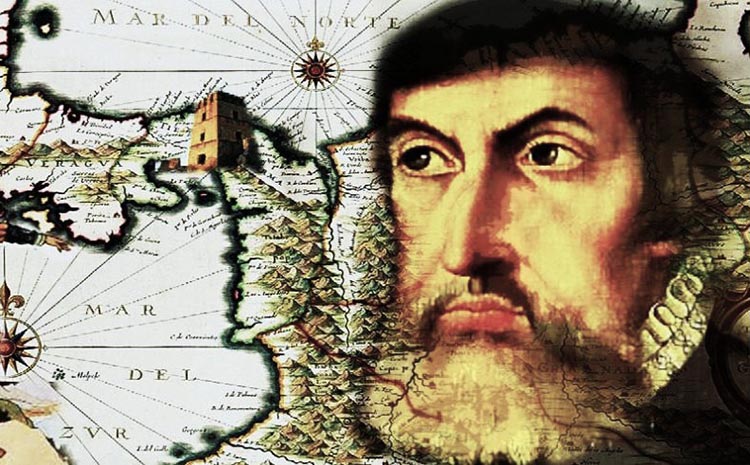
We have little knowledge of Pizarro, but his achievements point to his strong personality, ethical strength, and great determination to overcome hardship and fear. At that time, he was respected as one of the founders and Mayor of Panama with a large cattle farm in the city’s outskirts. All these years, however, Pianquiaco’s words about gold kept nibbling in his mind, so he set to work on a plan for the discovery down the coast of the South Seas. Once the plan was set, he brought in two partners, the military officer Diego de Almagro and the school master Hernando de Luque. The three swore secrecy and sealed the promise with a mass and sacraments in the main church of Panama. The partners agreed that their share of the riches would be split equally. Pizarro would captain the venture, Almagro would be his second in command, while Luque was tasked with defending the trio’s interests with the governor in Panama. The ink was not yet dry when the plan reached Pedrarias Dávila, who demanded to join the group as a silent partner, not to risk his position as governor of Tierra Firme. For his partnership, Pedrarias Dávila invested some money in the venture and provided the mandatory official license for the expedition, which is now called the “Eastern Enterprise” (Empresa del Levante).

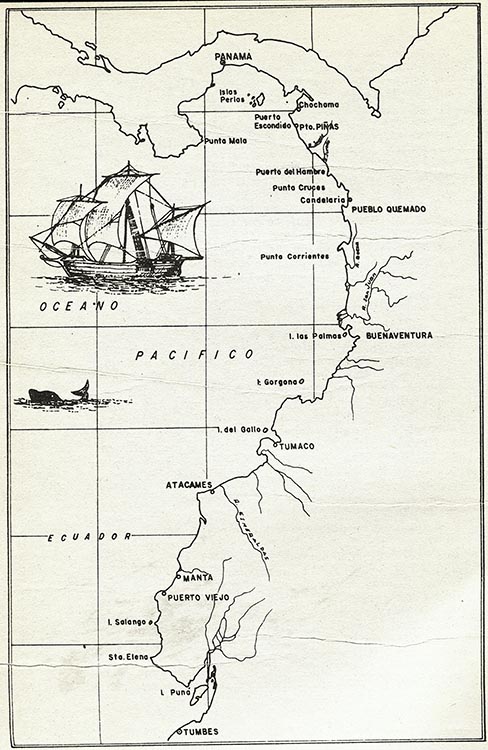
On September 13, 1524, the two-masted ship Santiago departed with Francisco Pizarro in command and sailed west to Taboga in the Pearl Islands. His crew of adventurers comprised 112 ex-soldiers, misfits, and a few Nicarao Indians as support hands. Also aboard were a handful of horses and two war dogs. This first attempt did not go well. Beyond the Pearl Islands, the ship sailed south along the South American continent’s coast, fighting headwinds and gales. They stopped at fishing villages that showed no sign of wealth; the crew only found a few gold trinkets and semi-precious stones. They kept sailing south despite hardships and, at times, gnawing hunger. In February or April of 1525, before heading back to Panama, they stopped at what appeared to be the palisade of a fortified village up on a hill near the coast. The Spaniards called it Fortín del Cacique de Las Piedras. That afternoon, they went up through a thick jungle and found the place deserted, so they settled there for the night.

At dawn, war cries awoke the Spaniards who scrambled to face a large group of well-armed half-naked men. The battle was brutal, and the Spaniards fought their way back to the coast while the fearless war dogs saved the day by gutting natives. Fifty Spaniards were seriously wounded, and five were missing and presumed dead. Pizarro headed back to Chochama, his rear base in the Bay of Panama.

Almagro and the San Cristóbal, another carrack mid-size ship, sailed a week after Pizarro with sixty-four soldiers, support personnel, horses, and war dogs. Like his partner, Almagro followed Pizarro’s southern route along the coast and tried with fifty men to capture Las Piedras, but he had to fall back fighting. Wounded in the face and losing an eye, he was about to be seized by the natives when Juan Roldán, a black free slave, saved him. The soldiers counterattacked and set fire to the stronghold, later called Battle of Punta Quemada. Fighting all the while, Spaniards moved back to the San Cristóbal with their wounded captain. They sailed to the Pearl Islands in the Gulf of Panama, and then to Chochama where Almagro joined Pizarro.

Both agreed that this first foray into the unknown did not produce much but sent the few pieces of gold they had found to Pedrarias Dávila in Panama City, who became furious upon learning of the poor returns on his investment. He called Pizarro an inept fool and other disrespectful names. He declared Birú a land of misery and threatened to fold the Eastern Enterprise and leave for Nicaragua to attend to Spanish settlers. Over the following days, Hernando de Luque informed Pedrarias Dávila about staying in the partnership, which he did with the condition that Pizarro be assigned second-in-command. Almagro welcomed this task to avoid the possibility of a fifth partner joining the venture.

The argument was settled and Pedrarias Dávila agreed to try another six-month voyage. Should that foray fail to produce results, however, the “Eastern Enterprise” would be terminated. On this second sailing, Luque grasped the opportunity to join Pizarro and Almagro. With good winds, in early February 1526, Pizarro and Almagro sailed again, each in command of one of the two manned and provisioned ships of the first voyage, together with three lighter support crafts. They were guided by the master pilot Bartolomé Ruiz de Estrada, who ran on the last route. Cruising south they stopped at Las Piedras and in anger killed every soul and burned the place again. On their way they anchored for water at Isla de las Palmas where in a brief skirmish with locals, two Spaniards were wounded. The men kept sailing south in heavy sea, and at the end of August 1526, along a river they would name San Juan, they assaulted villages to retrieve gold and silver artifacts. The country inland, however, was poor and hilly. Pizarro sent Almagro back to Panama with instructions to enlist more men, while the pilot Ruiz de Estrada was instructed to head south and explore the coast. At the same time, Pizarro and soldiers on horseback followed the ship’s track on land while exploring villages and coves. On his map, Estrada noted the mouths of several rivers with waters from the Andes Mountains seen far inland. For the first time, off the cape they called Cabo Pasado, they crossed the austral equinox line and, a couple of days later, off the island of Salango, they met five large outrigger boats with a sail and large paddle-rudders. Frightened by the foreigners, the crews jumped into the sea and swam to the coast. However, the local trader and his crew of one man and three boys remained on one of the boats. They showed their loads of fine black and cream-colored ceramic bowls, plates, and woven blankets of fine alpaca wool. These goods alluded to a cultured society.

The boats’ crew spoke a dialect used in a town the Spaniards would later learn was Tumbes, located further south on the coast. Pizarro took the boys and named them Felipillo, Yacané and Martinillo, for their actual names could not be translated, and ordered the ship chaplain to teach them Spanish. Pizarro wanted to continue further down the coast, but his crew rebelled because, after months at sea, they wanted to return home; anger almost led to blows.

When Almagro returned from Panama with more men, horses, and food, he brought news that Pedrarias Dávila had been replaced as governor of Tierra Firme by Pedro de los Ríos. Pizarro kept sailing south, and toward the end of July 1527, came to a river named Santiago. The most lucrative encounter occurred close to Isla de Salango’s Punta Illote, a spot they will later call Cabo de la Vuelta, marking the point where they headed back north to answer the crew’s pressing demands to return home. Tired of their complaints, Pizarro ordered the captain to head north to a forested hilly island they called Isla de Gallo. He claimed that the ship’s hull needed cleaning, so the ship had to be beached. Once the work was done, the crew believed they would be returning home. Then in mid-September two white sails appeared on the horizon.

Pizarro thought that more people and support were coming. Instead, captains Juan Tafur and Pedro de los Ríos landed on the beach with the service boat with orders from Panama’s governor for everyone to return. Tafur sternly demanded that Pizarro and Almagro promptly sail back with all their men. After a tense and bitter exchange, the men came close to settling the argument with their swords. As recorded by eyewitnesses, Pizarro then traced a line in the sand, saying: “On this side are those who want to return to Panama and be poor; on my side, those who will remain with me and be rich; your call!” Thirteen crossed over the line, as did the pilot Ruíz de Estrada, even though he had pleaded earlier with Pizarro to return for family reasons. After six months having been left stranded by Tafur, who had returned to Panama with the remaining crew, fighting hunger, torrential rains, mosquitoes, and fever, in March 1528, another sail on the horizon signaled the arrival of a ship from the north, with instructions from the Panama governor to return to Panama. Pizarro again refused, and the partners convinced Ruìz to keep sailing south against the winds and storms of the season. After two weeks, they landed on an island they called Isla de Santa Clara, where they found offerings of finely painted ceramics, fine embroidered textiles, and many large gold and silver disks at the feet of a large stone idol.

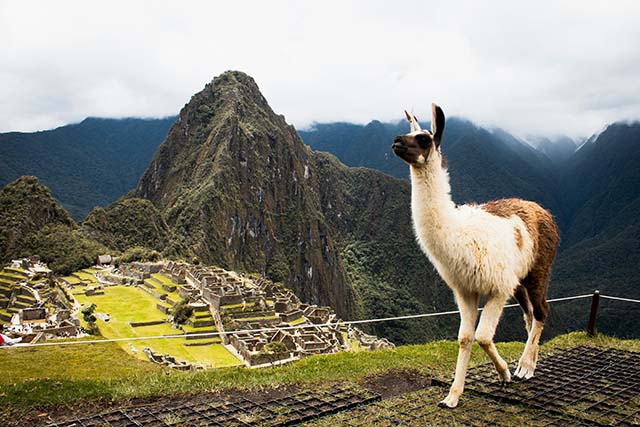
The following day, five ocean-going native outrigger boats appeared. They were from the same community as those they had met the year before. They were tumbesinos warriors who led them a few miles south, to a large town called Tumbes, which was protected by a stone wall and a fortress built of massive quadrangular stones. The town’s chief Chilimaza sent men to greet the foreigners. The envoys were kurakas, Quechua-speaking magistrates assigned to large towns by the Great Inca in Cusco. As a welcome, the tumbesinos offered them food, water, and three llamas, which the Spaniards thought were camels without humps. Pizarro was invited to visit the city, but wary of treachery, sent the Greek Pedro de Candia, two musketeers, a mounted horseman, a war dog, and gifts of animals then unknown in Perú: two live pigs, five chickens, and a rooster. Reports from the visit were that the city was well built of stone and its streets clean and paved. Buildings and temples, such as a monastery for the virgins dedicated to the Sun, were likewise well built with carefully shaped stones. People were finely dressed in leather sandals, while markets were well provided with all types of fruits and vegetables.

Pizarro left Tumbes without getting into town, with thanks and the promise of return (which he did in 1532 on his third expedition, when he battled and defeated chief Chilimaza). The Spaniards kept sailing south and found an island they called Isla de los Lobos on the Paita coast, eventually landing in a cove they named Malabrigo. There, they learned that one of the crew, Bocanegra, had deserted and remained with the Indians. On May 3, 1528, the ship headed back to Panama.


This is the first of a two-part article – Read part two here


Contributor’s Bio:
Freelance writer, researcher and photographer georgefery.com addresses topics, from history, culture, and beliefs to daily living of ancient and today’s communities of Mesoamerica and South America. His articles are published online at travelthruhistory.com, ancient-origins.net and popular-archaeology.com, in the quarterly magazine Ancient American (ancientamerican.com), as well as in the U.K. at mexicolore.co.uk.

The author is a fellow of the Institute of Maya Studies in Miami, FL instituteofmayastudies.org  and The Royal Geographical Society, London, U.K. rgs.org. Also a member in good standing of the Maya Exploration Center, Austin, TX mayaexploration.org, the Archaeological Institute of America, Boston, MA archaeological.org, the National Museum of the American Indian, Washington, DC. americanindian.si.edu, and the NFAA – Non-Fiction Authors Association nonfictionauthrosassociation.com.

Contact:
Georges Fery – 5200 Keller Springs Road, # 1511, Dallas, Texas 75248 – T. (786) 501 9692 – gfery.43@gmail.com  and www.georgefery.com
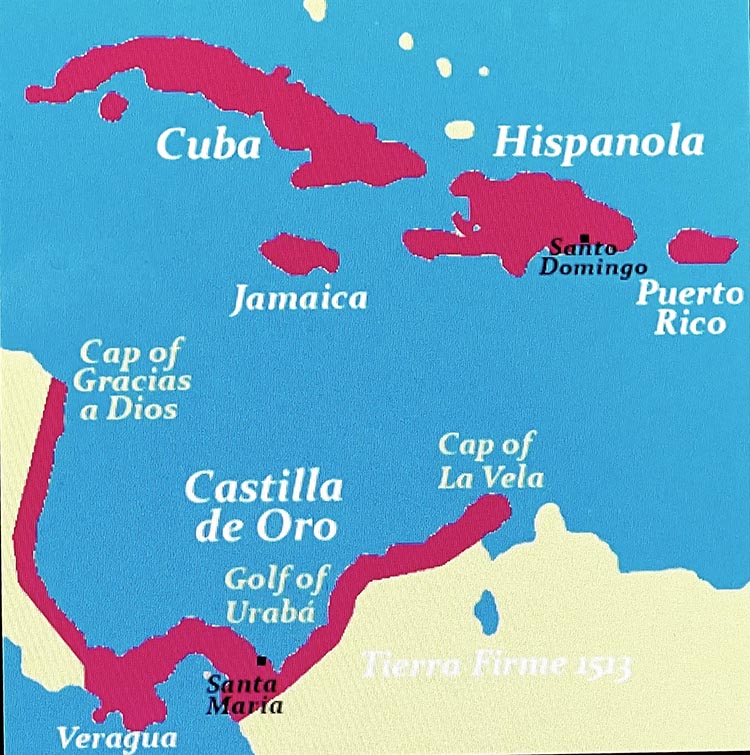
 

Photo Credits:

Ph.1 – Castilla de Oro, Tierra Firme 1513 – @Santos30-wikipedia.com

Ph.2 – Vasco Núñez de Balboa – @georgefery.com

Ph.3 – First Forays – @J.A. de Busto, 1973

Ph.4 – Pedro Arias de Ávila – @silverreaderclub.com


Filed Under: South America Travel

Unearthing Lost Empires: A Journey Through Time at Machu Picchu

Machu Picchu

Before setting your compass toward ancient ruins and misty mountaintops, explore the thrill of virtual adventure with cricket x game download. This fast-paced game offers a taste of unpredictability and excitement, just like uncovering a forgotten world. While the stakes are different, both experiences challenge your instincts and reward your curiosity.

Overview

High in the cloud forests of the Andes lies a city frozen in time. Machu Picchu is more than just a travel destination—it’s an immersive portal into the mysteries of the Inca civilization. With each moss-covered stone and panoramic vista, visitors step into a forgotten narrative carved into the mountains of Peru. For history enthusiasts and adventurers alike, exploring this UNESCO World Heritage Site is both a physical and cultural pilgrimage.

What makes Machu Picchu remarkable isn’t just its breathtaking location or architectural brilliance—it’s the fact that it was hidden from the world for centuries. Only in the 20th century did this marvel become accessible to outsiders, adding to its allure as a “lost city.” Today, it beckons explorers looking to walk in the footsteps of ancient emperors and stargazers.

Tracing Inca Footprints: A Historical Perspective

Built around 1450, Machu Picchu is believed to have served as a royal estate or ceremonial site for the Inca emperor Pachacuti. It remained unknown to Spanish conquerors, sparing it from destruction during colonization. Its preservation offers rare insight into Inca ingenuity, cosmology, and culture.

Unlike many ancient cities, this site wasn’t discovered due to legends or maps. American explorer Hiram Bingham stumbled upon it in 1911, guided by local farmers. His findings introduced the world to a civilization whose influence stretched from Colombia to Chile.

Inca Engineering Genius

Machu Picchu showcases exceptional design principles. The Incas used ashlar masonry, fitting stones so precisely that mortar wasn’t necessary. This technique helped structures survive earthquakes. Moreover, its terraces managed agriculture on steep slopes, while a sophisticated aqueduct system ensured fresh water flowed throughout the site.

Such planning highlights their deep understanding of both the Earth and the stars. Astronomical alignments appear in sacred locations like the Intihuatana stone, believed to function as a solar calendar.

The Magic of the Sacred Valley

Your journey doesn’t begin at Machu Picchu’s gate. It starts in the Sacred Valley—an area teeming with vibrant culture, living history, and captivating landscapes. Towns like Ollantaytambo and Pisac offer glimpses into traditional Andean life and pre-Columbian architecture.

  • Ollantaytambo: A well-preserved Inca town with terraces and a fortress that once defied Spanish invaders.
  • Pisac: Known for its colorful artisan market and hillside ruins, it connects spirituality with everyday life.
  • Urubamba: A hub of eco-lodges and organic farms, offering a comfortable retreat amidst nature.

These locations serve as stepping stones into Machu Picchu, each narrating a chapter of Inca legacy.

Traveling the Inca Trail: A Walk Through Time

For those willing to trade modern comfort for authenticity, the Inca Trail delivers a once-in-a-lifetime experience. The multi-day trek winds through lush forests, high-altitude passes, and hidden ruins, culminating at the Sun Gate with a first glimpse of Machu Picchu.

Key Highlights of the Trail

  • Dead Woman’s Pass: The highest point of the trek, offering stunning panoramic views.
  • Runkurakay Ruins: A mysterious oval structure likely used by messengers or priests.
  • Wiñay Wayna: A beautiful terrace site near the end of the trail, often overlooked by those who rush the journey.

This trek is not just a hike; it’s a time machine with stone steps.

Cultural Connections: More Than a Tourist Site

Visiting Machu Picchu isn’t only about admiring ruins. It’s about engaging with local culture, traditions, and stories passed down through generations. Travelers who take time to interact with Quechua communities gain a deeper appreciation for the land’s sacred significance.

From sipping chicha (fermented corn drink) with a host family to witnessing traditional weaving techniques, these experiences bridge past and present. Supporting local artisans and guides ensures that the cultural legacy continues to thrive beyond the ruins.

Travel Tips for a Timeless Experience

Planning your visit to Machu Picchu requires foresight and respect for the site’s ecological and spiritual importance. Consider these tips:

  • Book in advance: Tickets for both the site and Inca Trail sell out months ahead.
  • Acclimate gradually: Spend time in Cusco or the Sacred Valley before ascending to reduce altitude sickness.
  • Pack smart: Layered clothing, reusable water bottles, and biodegradable toiletries are essential.
  • Respect the site: Follow designated paths, avoid littering, and don’t touch delicate structures.

By traveling responsibly, you help preserve this wonder for future generations.

A Legacy That Echoes Across Centuries

Machu Picchu isn’t just a relic of the past—it’s a reminder of human resilience, creativity, and harmony with nature. Every carved stairway, granite temple, and sweeping terrace tells a story not just of the Incas, but of humanity’s endless quest to understand its place in the cosmos.

Stepping into this ancient sanctuary invites a reflection on our own histories. And whether you come seeking adventure, insight, or inspiration, the journey through Machu Picchu offers more than you imagined—and stays with you long after the last mountain fades from view.


Filed Under: South America Travel

How a Galapagos Cruise Offers a Once-in-a-Lifetime Experience

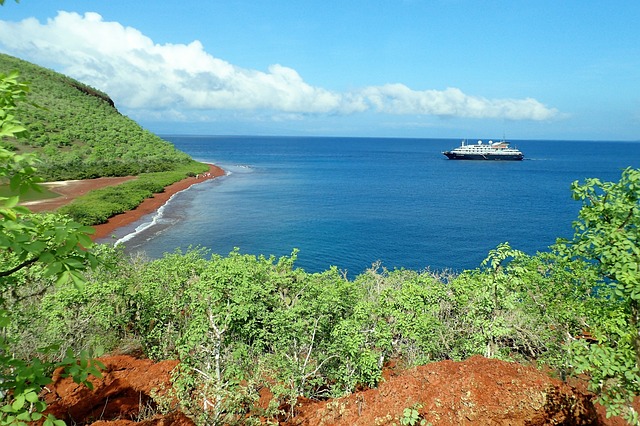
Galapagos Islands cruise ship in harbour

The Galapagos Islands are renowned for their untouched beauty and diverse wildlife. From the crystal-clear waters to the rare species that call the islands home, visiting this island is truly a once-in-a-lifetime adventure. This article will talk about the unforgettable experiences you can expect from exploring this extraordinary destination.

Unmatched Wildlife Encounters

One of the most remarkable aspects of a Galapagos cruise is seeing wildlife up close. The islands are famous for their diverse and unique species, many of which cannot be found anywhere else on Earth. Visitors can expect to see everything from giant tortoises and marine iguanas to playful sea lions and exotic birds. Observing these creatures in their natural habitat offers an unparalleled connection to nature, far removed from the barriers of zoos or parks.

Exploration of Unspoiled Natural Beauty

The Galapagos Islands are a haven of natural beauty. Exploring the islands offers the perfect way to experience volcanic landscapes, pristine beaches, and lush forests. Every day brings new opportunities for adventure, whether it’s hiking to the top of a dormant volcano, snorkeling with colorful fish, or relaxing on a secluded beach.

Traveling by boat allows visitors to explore multiple islands, each with its own unique environment and charm, offering a variety of experiences in one journey. The variety of landscapes, from barren lava fields to dense forests, creates a stunning contrast, making every island feel like a unique destination.

Immersive Cultural and Historical Insights

Beyond the natural wonders, the Galapagos Islands also offer a rich cultural and historical experience. Visits to local communities allow travelers to learn about the islands’ history and the conservation efforts that help protect this UNESCO World Heritage site. Guided tours led by naturalists provide insightful commentary about the archipelago’s history, the scientific discoveries made here, and the ongoing efforts to preserve its ecosystems. This natural and cultural exploration blend provides a deeper understanding of the islands’ global significance. The islands’ conservation efforts are critical to maintaining the balance between tourism and environmental protection, making it a sustainable destination for generations to come.

Luxurious Comfort While Exploring

While the main draw of the Galapagos is its natural wonders, the journey is often defined by comfort and luxury. Many travelers experience the islands aboard spacious, well-appointed vessels with top-notch amenities. Gourmet meals, comfortable accommodations, and optional spa services elevate the journey, making it as enjoyable as the destination itself.

Whether through intimate yachts or larger vessels, the journey balances relaxation and discovery. With personalized service and exclusive itineraries, each moment spent aboard is a chance to unwind and enjoy the luxurious surroundings while still being immersed in the beauty of nature.

Ideal for Sailing and Island Hopping Enthusiasts

A cruise in Galapagos is a dream come true for those who enjoy exploring destinations by sea. Traveling between islands by boat provides a unique perspective. It allows travelers to experience the beauty of the archipelago from the water. This mode of travel enables seamless access to remote locations.

Also, it ensures an immersive experience in some of the world’s most pristine environments. Whether you’re an experienced sailor or simply someone who loves the rhythm of the waves, this journey combines exploration and relaxation in perfect harmony.

A Galapagos cruise offers more than just a vacation. It’s a chance to immerse yourself in one of the most unique ecosystems on Earth. Whether you’re an avid adventurer or a nature lover, this once-in-a-lifetime opportunity provides a level of immersion and discovery that is hard to match. An expedition here is an adventure that will stay with you long after the journey ends.


Tagged With: galapagos tours Filed Under: South America Travel

How Customized Apparel Enhances Your Journey to Argentina

tailor measuring custom suit

Argentina has many different types of scenery, lively cultures, and exciting experiences. From the busy streets of Buenos Aires to the calm beauty of Patagonia, this South American treasure combines city life with great nature. For travelers who want to enjoy their time in Argentina, personalized clothing can help them feel comfortable, look good, and be practical during their trip. Whether you’re visiting the tango-filled neighborhoods of Buenos Aires or hiking in the rough mountains of the Andes, having the right equipment can make your experience much better than you expected.

The Importance of Appropriate Apparel in Argentina

Argentina has many different types of land and weather, so visitors will experience a variety of climates and places. The country has many different types of land, including deserts, green rainforests, high mountains, and wide beaches. This variety needs a flexible closet, and personalized clothing is a great way to handle these different situations.

Custom clothes let travelers make their outfits fit the activities they do and the places they visit. For example, a specially-made windbreaker that protects against the cold winds of Patagonia can help during a hike. In the same way, quick-drying fabrics and breathable materials are important for exploring the wet jungles of Misiones. By picking clothes made for the weather you’ll face, you can stay comfortable and do well during your trip.

Embracing Local Culture Through Customized Apparel

One of the best parts of traveling is getting to experience the local culture. In Argentina, this means celebrating the country’s many traditions and customs, many of which are shown through clothing. Choosing custom clothing lets you honor local traditions and showcase your style.

In Buenos Aires, tango is not just a dance; it’s a big part of how people live. The people in the city care about how they look, and visitors are often impressed by the stylish and classy way they dress. Wearing special tango outfits lets you join in this fun cultural activity and helps you connect more with the local people. Custom headbands, fitted suits, and stylish dresses with an Argentine touch can make you feel like a real porteño as you dance all night in one of the city’s well-known dance halls.

In the countryside of Argentina, many people still wear the traditional clothes of gauchos. These talented riders are recognized for their unique outfits, which have wide hats, baggy pants, and bright ponchos. Personalized versions of these clothes can be useful and fashionable, helping you fit in with local people while also being comfortable and long-lasting.

The Practical Benefits of Customized Apparel

Custom clothing not only helps you blend in with local culture but also has many useful benefits for travelers in Argentina. One of the biggest benefits is that you can pick materials and features that are perfect for what you need.

For instance, when visiting the different areas in Argentina, it’s important to wear clothes that can handle the weather. Whether you’re hiking in the snowy mountains of the Andes or facing the hot sun in the Pampas, you can get special clothing made with helpful features like sun protection, water resistance, and warmth to keep you comfortable no matter where you are.

Custom clothing fits just right, making it comfortable for long days of traveling. Wearing clothes that don’t fit well can be uncomfortable and can cause rubbing or even injury, especially when doing heavy activities like hiking or riding horses. Choosing custom-made clothes means you can get outfits that fit you just right, so you can move around easily and comfortably wherever you go.

Also, custom clothes often have useful features that you might not find in regular store-bought clothes. For example, a personalized jacket could have secret pockets to keep important items safe, or a pair of pants could be made with stronger knees to last longer. These tiny things can really improve how easy and useful your travel clothes are.

Sustainable Travel and Customized Apparel

As more people who travel care about their impact on the environment, using eco-friendly travel methods is becoming more important. Custom clothing supports sustainability in many ways, making it a great option for travelers who care about the environment while visiting Argentina.

One of the main advantages of custom clothing is that it lasts a long time. Custom-made clothes are usually made with better materials and quality than clothes produced in large quantities. This means they are less likely to break or wear out, so you won’t have to replace them often. In the long run, buying strong and good-quality clothes can help cut down on the amount of fabric waste that goes into landfills. Travelers can also extend the life of their outfits by using iron on patches for clothes to repair small tears or add personal details instead of replacing garments too soon.

Besides being strong, custom clothing can also be made from eco-friendly materials. Many clothing companies now provide environmentally friendly choices, like organic cotton, recycled plastic, and bamboo materials. These materials are made using eco-friendly methods, which helps lower the carbon footprint of your clothes. By picking clothes made from eco-friendly materials, you can feel good about your trip in Argentina, knowing that you’re helping the environment.

Also, custom clothes help use resources more effectively. Unlike clothes made in bulk without considering personal likes, custom clothes are made specifically for each person. This means that less waste is created during making things because only the materials that are needed are used. Also, custom clothes are made to fit well, so people are less likely to throw them away because they don’t fit right or are uncomfortable. This helps reduce waste even more.

Enhancing Your Travel Experience with Customized Accessories

Besides clothing, personalized accessories can really improve your travel experience in Argentina. You can get personalized items like headbands, hats, scarves, and bags that are stylish and useful for your trip.

Custom headbands are flexible accessories that can be used in many different ways. In the hot and sticky weather of northern Argentina, a headband that pulls moisture away can help keep sweat from getting in your eyes and on your face, making you feel cool and comfortable. In colder places like Patagonia, a headband with a soft lining can keep you warmer and shield you from the wind. By picking a design that shows your style, you can make your travel clothes special and enjoy the useful features of a good accessory.

In the same way, sustainable backpacks are important for anyone traveling in Argentina. Whether you’re hiking in the Andes, visiting the vineyards in Mendoza, or walking through the busy streets of Buenos Aires, a personalized backpack can be made with the features you need to make your trip easier and more comfortable. For example, a backpack with soft straps and a cool back can make long hikes easier and more comfortable. Also, having different pockets can help keep your things tidy and easy to reach.

Personalized accessories help you show your unique style and stand out while you travel. Whether you choose a colorful scarf, a trendy hat, or a special piece of jewelry, personalized accessories can make your outfit more unique and help you be noticed. These items can be special keepsakes that help you remember your trips to Argentina even after you get home.

The Role of Customized Apparel in Adventure Travel

Argentina is a country with many chances for fun activities, like hiking, riding horses, kayaking, and climbing rocks. For travelers who want to enjoy these experiences fully, personalized clothing is very helpful.

When doing outdoor activities, it’s important to wear clothes that can handle tough conditions. Custom clothes can be made with strong stitches, tough materials that resist wear, and special fabrics that keep you dry. This helps your clothing work well in tough situations. Also, custom clothes can be made to fit your body shape and size perfectly, so they are comfortable and won’t limit your movement or make you feel uncomfortable when you’re active.

Besides being useful, personalized clothing can also boost your confidence and make you feel more adventurous. When you wear clothes that fit you well and look good, you feel more confident and ready to face new challenges. Feeling more confident can really change how you enjoy your trip. It helps you enjoy the adventure and make the best of your time in Argentina.

Wrap Up

In summary, personalized clothing has many helpful advantages for people traveling in Argentina. Custom-made clothes and accessories can make your trip more enjoyable and improve how you feel. They also let you show your style and connect with different cultures. Whether you’re dancing the tango in Buenos Aires, hiking in the Andes, or just checking out the local markets, personalized clothing can make your adventures in this amazing and varied country even better.


Tagged With: Argentina travel Filed Under: South America Travel

Discover the Majesty of the Inca Trail: An Epic Journey Through Peru’s Sacred Mountains

Cuzco Peru cityscape

If you are one of those history buffs who also loves the great outdoors, then trekking in the mountains of Cusco, Peru, high above in the Andes Mountains, to come upon the 2 day Inca Trail should be a goal, nay, a mission for you!

There is a rich tapestry of history, mystery, and forestry all around the trail. The Inca Trail adventure is perfect for first-time trekkers and seasoned mountaineers and is sure to inspire all who dare to embark upon this unbelievable journey through the heart of the Cusco region.

  • Legendary Inca Ruins and Archeological Wonders

Prepare to be mesmerized by the stunning Inca ruins that will line the Inca Trail trek all throughout your sacred journey. You will walk on original Inca pathways made of stone that have survived for hundreds of years against time and elements. Hiking on, you will discover the ruins of Wiñay Wayna, an impressive masonry feat Inca settlement built into the side of the mountain.

Yet the crown jewel of the Inca Trail hike is of course the fabled Machu Picchu. Referred to as the “Lost City of the Incas,” this legendary Inca fortress has captivated people from all over the world with its gargantuan stone temples and massive granite terraces.

Inca trail hikers

  • Breathtaking Andean Landscapes

Don’t dismiss the Inca Trail hike as merely a walk to Machu Picchu. It is home to some of the most beautiful landscapes in the world and you will journey through them to see for yourself. You’ll be far removed from the hustle and bustle of urban jungles and instead travel by foot through the world’s awe-inspiring Andes Mountains. You will pass sprawling glaciers, crystal blue lakes, and, of course, the signature Andean sky.

The Inca Trail to Machu Picchu is a tour of diverse ecological life zones that can only be truly discovered while on foot. You will trek from the lower Andean Mountain ranges, full of lush green flora and fauna, to the stone scree alpine passes at the top, inhabited by crickets and grasshoppers. These diverse and multiple lands are home to many species of flora and fauna, such as the elusive Andean Spectacled bear and the Giant Hummingbird.

  • Cultural Immersion and Authentic Experiences

Walking on this hallowed ground feels like walking into rich history. The guides that go with you on this trip make sure this experience is as immersive as possible. On the way, you can take in the native Quechua culture. Meet some of the natives, admire their skill as they perform their traditional weaving, and try some coca leaves.

If you visit in June or August, you might get the chance to witness preparations for or the celebration of the Pachamama Raymi or Init Raymi festivals.

  • Challenging Yet Rewarding Trekking

The Inca trail is no easy walk in the park, but the crisp, cool sense of accomplishment and growth you will experience at the end is second to none. The Inca trail is well known for its unforgiving ascents, descents, passes, and for simply testing the mettle and courage of Inca trail backpacking pros and novices alike. Yet the life you will feel and the jolt of adrenaline you experience once you get from Dead Woman’s Pass to the final descent above Machu Picchu is out of this world.

  • Exceptional Guides and Support

One of the biggest reasons that the Inca Trail is such a priceless experience? The unbeatable level of service and support that guide waiters and porters provide each and every step of the way.  Not only are the guides experts boasting best-in-class knowledge and expertise in the region’s history, culture, wildlife, plant life and fauna, but they care deeply for the safety, health, and welfare of each and every passenger.

The guides and porters will get you checked in for your epic sight in the new world and culture as they share one of a kind stories as well as tricks and secrets that will help make the Inca trail adventure come alive as the porters get you set up by carrying all the gear.

  • Unforgettable Memories and Personal Transformation

​​​When you combine the physical, emotional, and intrinsic experience of those few days of trekking with the incredible natural and cultural beauty of the Cusco region, you will have gone through a process of transformation yourself. Regardless of the motivation that started you on the Inca Trail, many trekkers come home with a newfound (or rather heightened) sense of appreciation for Mother Earth, humankind, and themselves!

​Capping of An Adventure

If you are looking for a physical challenge, a cultural awakening, or even just an intense experience of mother nature, then the Inca Trail has something perfect to offer and memories you will be carrying for the rest of your life. Lace-up your boots, and bring some curiosity and a sense of adventure. The Inca trail awaits!


Tagged With: Cuzco attractions Filed Under: South America Travel

  • « Previous Page
  • 1
  • 2
  • 3
  • 4
  • …
  • 10
  • Next Page »

MORE TRAVEL STORIES:

Spain: Chasing The Holy Grail In Valencia

The Great Lakes: Discovering North America’s Inland Seas

Historic Mansfield: The Forgotten Casino That Dazzled Before Shawshank

Marrakech: Awakening the Senses in Morocco

Jaipur, India

Victoria, BC: A Walkable History of British Columbia’s Capital

Light Up Hope: Tadingyut Festival in Myanmar

Belgium: A Visit to a Medieval Hospital in Bruges


SEARCH

DESTINATIONS

  • Africa Travel
  • Antarctica travel
  • Asia Travel
  • Australia travel
  • Caribbean Travel
  • Central America Travel
  • Europe Travel
  • Middle East Travel
  • North America Travel
  • Oceania Travel
  • South America Travel
  • Travel History
  • Travel News
  • UK Travel
  • Uncategorized
  • World Travel
facebook
Best Travel Blogs - OnToplist.com

Copyright © 2026 Cedar Cottage Marketing | About Us | Contact | Privacy Policy | Terms & Conditions | Copyright Notice | Log in