Travel Thru History

Historical and cultural travel experiences

  • Home
  • Airfare Deals
  • Get Travel Insurance
  • Writers Guidelines

How to Plan Your Machu Picchu Trip Without Overpaying for Mediocrity

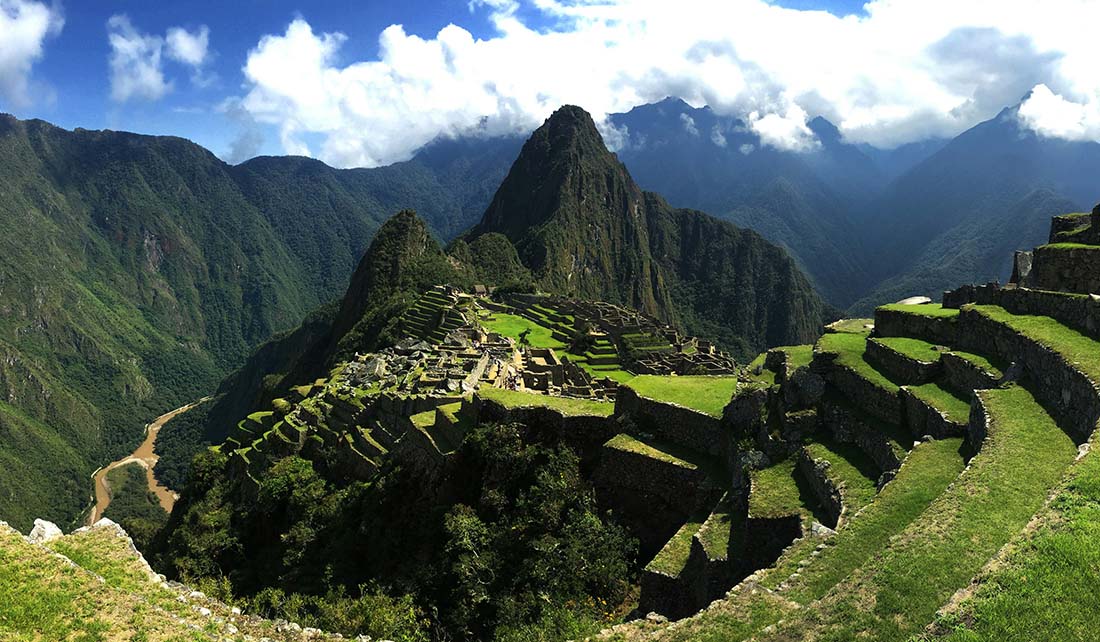
Machu Picchu mountain top in sunshine

Machu Picchu became an insanely popular destination over the course of years, and I for one am not surprised.

But with so many people going there, you gotta watch out. The tour companies will try to charge you like crazy just to show you some old rocks. I’m not saying it’s not worth it – it totally is. But do you really want to waste money on a “tour” where all you do is take a bus ride?

That’s why I decided to put this guide together. I’m gonna give you the real deal – how to see Machu Picchu and actually experience it without burning a whole through your pocket. Let’s get right into it.

When to Go?

The perfect timing for the Machu Picchu Peru tour would be between April and October – according to the agencies. Why? Because the demand is huge, and they can inflate the prices. That way, you’re getting a harsh sun and peak crowds. On the other hand, if you visit this site in March or November, you can get better deals and more comfortable weather conditions.

Accommodation Costs

Rentals and hotels close to Machu Picchu are not cheap. But if you plan the trip in advance and book early, you may spot some attractive prices. Dorm beds are also an option if you feel comfortable sharing a room with the whole group.

Boleto Turistico Instead of Machu Picchu

The Boleto Turistico is a local pass to access various historical and archeological sites around Peru. If you plan on visiting more than one historical site around, it’s better to invest in this pass instead of individual tickets.

Tips on Saving Money While Exploring Machu Picchu

We suggest you  avoid the on-site souvenir sellers because the prices are higher than they should be. Skip on tourist traps like food stands and overpriced on-site restaurants, because the prices can be really huge. Instead, explore the local markets, so you can find both delicious food and nice souvenirs.

We also suggest discovering the Inca Trail with no guide, especially if you’re an experienced hiker. Always have a map with you, so you can discover the breathtaking views. The Boleto Turistico permit allows you to extend the Machu Picchu experience to new heights, with no need to pay additional fees.

Learn Some Spanish

Spanish is easy to learn, especially the basic phrases. It may help you get some discounts on tickets and souvenir prices. Also, you’ll navigate the markets and transportation better, while connecting with the locals easily.

Summary

I know Machu Picchu looks awesome in the brochures, but you gotta watch out for those tourist traps ruining the fun! I gave you a few tips that should save you some cash and let you see more than just overpriced gift shops.

Instead of just following the crowds, think about planning your own trip. Go when it’s not packed full of people elbowing you out of the way for selfies. And forget about rushing through to check it off your list – slow down and really appreciate what the Incas built there!

Spanish phrases and history facts are cool, but the best way to experience Peru is with an open mind. Use what I told you about timing it right and making your own adventure. That way you’ll really understand what makes Machu Picchu and the other sites so special, instead of just taking a quick picture and moving on to the next thing.


Tagged With: Machu Picchu Filed Under: South America Travel

Kuélap, a Chachapoya Citadel in Northern Peru (Part 2 of 2)

Gran Pajatèn

by Georges Fery

In mid-fifteenth century, the Chachapoyas were incorporated into the Inca “Realm of the Four Parts” (the Tahuantinsuyu in Quechua), under the “son of the Sun” the great Sapa-Inca in Cuzco, Pachacuti Inca Yupanqui (1418-1471). Pachacuti organized the kingdom into four regions or suyu: northwest, northeast, southwest and southeast, with Cuzco at the center. His son Topa Inca Yupanqui (1441-1493) would eventually extend the Tahuantinsuyu along the Pacific Coast to today’s western Ecuador, south central Bolivia, northwest Argentina, and most of Chile to the south. But before that, in the mid-fifteenth century the Sapa Inca conquered the powerful Chimú Empire on Peru’s north coast; his army then turned inland toward the Andes. The northeast (antisuyu) territory extended deep into the eastern slopes of the mountain range which was covered by a dense tropical forest. Garcilaso de la Vega (1539-1616) wrote that the Inca invasion of the Chachapoya territory started in the mid-1450s. The invaders went through repeated hard-fought battles in the challenging topography, but the Chachapoyas fought hard and were never defeated. The account does not include Kuélap which may have been bypassed by the Inca armies. Historical sources relate that by the 1460s, after months of relentless battles and deadlocks, the Chachapoyas had no option but to concede to a bitter peace agreement. In accordance with the empire’s rules of occupation, Cuzco sent civil servants and army officers to oversee the territory’s towns and villages.

Furthermore, under the Inca’s rules of occupation, up to fifty per cent of the younger population was moved as mitmaq’ colonists to distant parts of the empire (Espinoza, 1967), while high ranking Chachapoya women were married to Inca administrators. The mummies of those Inca officials are found in mausoleums with their bundles placed side-by-side with those of Chachapoyas. As Crandal (2012) writes, Chachapoya ontology, akin to other Andean people, was predicated on a collective relationship to ancestors who played an active role in reproducing social life.

A smaller yet prominent Chachapoya site with unique particulars is the ancient city of Gran Pajatén, in the Andean cloud forest. Most sites are found between the Marañón and Huallaga rivers in the Rio Abiseo National Park. Gran Pajatén was discovered by Eduardo Peña Meza (1886-1968), but it was known before to people in surrounding villages and stands 9,350 feet on a five-acre hilltop above the Montecristo River, an affluent of the Abiseo River. Based primarily on architectural evidence, the settlement is unequivocally Chachapoya. The remains of over twenty-six circular stone structures, some with two levels, are built atop terraces with stairways. Initially several of them may have stood some fifty feet high with their high cone shaped roof supported by wood beams and covered with natural fibers (Bonavia, 1969, Davis, 1996).

Gran Pajatén (photo at top) is unique not only for its exceptional architecture, but for the number of symbolic and decorative motifs seen on its structures built in Inca times. Like Kuélap, besides being a religious locus, it was a granary depot and distribution center to answer recurring food scarcities. Unlike Kuélap, however, the site was most significant for its religious influence, attested by structures decorated with stone slates mosaic motifs, among which are human shapes and birds held in place with mortar. By and large, the recurrent patterns of most motifs are salient thematic elements that also bear similarities with Inca and Wari cultures. The walls of the second level of Circular Structure-1 are the most elaborate and best-preserved. The building technique shows finely cut limestone slates jutting out of the walls to create geometric motifs. The exceptions to the use of slates in human motifs are the heads, which were sculpted in the round from sandstone, and embedded in the slate design at the appropriate place through a spike jutting out from the head’s back. Kaufmann Doig notes that the schematic and geometric human figures are essentially those of a female that, as a mythical being, held various symbolic attributes.

Gran-Pajaten Pachamam

The figures are repeatedly shown in a circular frieze that encircles Structure.1 and Structure.2, and singly on other buildings (1986). The main recuring stylized human motif is that of the powerful Pachamama. The earth-mother figure, which is shown in a seating position with legs bent at the knees and thighs spread out, indicates that she is giving birth to both humans and nature’s worlds. The Pachamamas are found on both structures and are similar but for their stylized headgear. The first headgear (left) is shown as a starlike crown, and may refer to bird feathers, probably those of the macaw from the Amazon. The second headgear (right) is understood to be the wings of a bird of prey, probably that of the hawk, not the condor. The hawk, a foremost actor in the magico-religious beliefs and ceremonies of the cultures of the Andes tropical forest, is also found in other ancient societies. As Kauffmann Doig points out, the Pachamama “is the foremost fertility goddess who presided over planting and harvesting and is found in other cultures of ancient Peru” (2017). The Pachamama is the patron deity of most ayllus or localized social groups, self-defined as ancestor-focused kindred.

3 Peruvians praying to the Pachamama

For it was then believed that, among Pachamama’s abilities, was her ever-present creative powers that sustained life on this earth” (1992). Ceramics analysis shows that Gran Pajatén was occupied as early as 200BC, while stone and ceramics link the structures to early Inca occupation. So far there is no record of human remains, mummified or otherwise. The ancient city, like Kuélap, was a granary depot guarded by a strong force and backed up, it was believed, by powerful ancestors and the deities of another world. As Anselmo Lozano Calderón writes “The ancestral past of Andean and Amazonian cultures was replete with the esthetic and symbolic depiction of their existence, akin to the rhythms of nature, and grounded historically in their faith, their land and magic of the divine” (in Kauffmann Doig, 2017).

A day’s walk from Gran Pajatén, at 8,900 feet in the cloud forest, is the site of Los Pinchudos. It is another Chachapoya burial complex located in the  Rio Abiseo National Park, in one of Peru’s northern Andean cloud forests. The site was named for seven mausoleums, two of them badly damaged. Los Pinchudos is notable for the carved wood figures displaying a prominent anatomy. They hang from the outside of the mausoleum’s walls below the stone awnings that protected them from the rain. The name “Los Pinchudos” is from local slang that stands for “the ones with penis.” Sculpted from hard wood, the twenty-inch tall Pinchudos dangle from a wood shaft, integral to the statue, that anchored it into the wall of the burial chamber. No mummies were found, but a few bones and pieces of wool from bundles indicated that the ancestors’ bundles were removed by the Europeans during the 16th or 17th century. The geometric symbolism used in the parietal ornaments is like the ones seen at Gran Pajatén and Gantumarca on the left bank of the Marañón river which, for their architecture, bear a close filiation with those of Los Pinchudos. Over five hundred years ago the five mausoleums were covered with painted clay whose residues were found on the back of one of the figures. We do not know if the Pinchudos mausoleums were each painted red, yellow-ochre, or white (Kauffmann 1980; Morales et al. 2002). The symbolic significance of colors was important associated with corresponding rituals, but those are unknown. Unlike purunmatshus made for one person, mausoleums harbored several mummified individuals each tightly wrapped in a bundle.

Pinchudos

Mummies and burials are rooted in people’s cultural and spiritual faith in a finite geographical environment. As for most cultures, those roots are primarily defined by language, traditions, and a common belief, which secure their “right of blood” to the soil where they were born and where their ancestors are buried, as opposed to the “right of land” claimed by invaders. In ancient Peru, mummification, or preservation of family members, rested on the belief that their death would be like their past life. They had no expectations about a paradise or a hell, a concept associated with Christianity that arrived with the Spaniards in 1532. Mummification was an ancient practice in Peru, witness the 420 mummy bundles from the Paracas Necropolis, 300-200BC (Tello, 1949). The process of mummification varied through time and place and followed strict imperatives beyond rituals, which were dependent on those of the local environment. In the case of Paracas, the area was, and still is, a dry desert with little humidity coming from the Pacific Ocean.

For the Chachapoyas and other cultures of northwestern Peru, however, the humidity factor was important in the process applied to preserving human remains. Trained people were probably members of shamanic fraternities of either gender, that may have been attached to the priesthood, and were dedicated to the task. The process required dehydration of the body in a cold, dry and well-ventilated location where the removal of the viscera and cleaning of the abdominal cavity took place. Organs in the thorax were not removed, nor were the eyes and brain. Organic substances such as ginger, other roots, and coca leaves were mixed in a light corn paste, which was then used to thoroughly clean and embalm the body. Cotton plugs, and a variety of plant leaves were introduced into the nose cavities as well as in the mouth, to preserve the appearance of the departed. The process was so skillful that the eyes’ sclera was preserved. The body was then placed in a tightly flexed seating position with legs and arms tied up against the body the hands placed over the face. Each finger was wrapped before the body was tightly bundled up in fine llama wool fabrics. Between the wrappings were placed votive figurines or small items cherished by the departed. The bundle was then placed in a cold, dry and well-ventilated location for several weeks or months before being transferred permanently to its last resting place.

Mummies in the Leynemamba Museum

Mausoleums such as those seen at Revash, are called “house of the departed” in Quechua (Runasimi), and do not show Inca influence in their architecture. These funerary structures referred to as pukulio or tshullpas are known throughout Peru spanning from the Wari (500-1000) to the Chimú (900-1450). The Chachapoya mausoleums were built in an existing open corridor in the rock face that was enlarged and extended. The walls of the small structures are made of shaped stones set with mortar with a symbolic “roof.”

The roofs over the structures were of the gable or lean-to type but were not necessary since the tshullpas were already protected by the rocky overhang. According to local folklore, the roofs were made for ancestors to “feel at home.” Built close together, the mausoleums look like a little village, their walls covered with mud of a tan color.

Not so inaccessible as the purunmatshus, over time the tshullpas were visited by people that damaged the mummies’ bundles in search of valuables. Unlike at Karajia, however, the mausoleums are collective with remains of select individuals of the same or extended family, for as in other parts of the Americas, not all progenitors qualified as ancestors. Revash’s distinctive features are symbolic figures painted red on the structures and on the rock face above the mausoleums, such as human shapes, local camelids (llama), and geometric motifs.

In most cultures of the Americas, red pigment is associated with blood, the stream of life. Cinnabar, a red pigment oxide powder, was used in burials, for it was believed to protect the departed soul’s “divine substance” and ward off malevolent forces while it traveled through the underworld. Other architectural particulars are cruciform shapes. Today, in ancient and traditional cultures in the Americas, the equilateral cross openings in structures or painted on ceramics, depict the four changing cardinal directions of the spiritual universe associated with their respective twenty deities and colors, such as red, yellow, black, and white for the Mayas. The equilateral Inca chakama cross holds the same symbolic significance. Each of the twenty right angles of the cross carries its own deity, while the steps between each arm of the cross are representative of andenes or terraces built in steep mountain slopes. Of note is that only funerary bundles of ascendant lineage members worthy of being venerated, were placed in mausoleums or in a purunmatshu. Many mausoleums dot the Chachapoya landscape such as Tingorbamba-Pueblo de los Muertos, La Petaca-Diablo Huasi, Laguna de los Condores and Huabayacu among many.

Revash Mausoleums

One wonders why human remains have been so important to all cultures. Veneration of ancestors is found in the Pre-Pottery Neolithic (PPN-A,12,800-8,500BP), and much farther back in time. We have seen this concern at Kuélap, Los Pinchudos, and Revash among other sites in the Chachapoya landscape. As Paul Cornerton points out, repetitive rituals act as a mechanism to create communal memory (1989), and one should add identity. Constant to most ancient and traditional cultures today, is the belief in the permanence of life beyond life, hence the prominence given to forefathers believed to help in relieving the pains of life’s here and now.

The shape of funerary bundles recalls plant seeds about to sprout from their shells and was commonly associated with the rhythm of the seasons and the belief in an eternal return. As McAnany reminds us “the cult to ancestors was integral to the cosmologies and traditions of most cultures in the Andean region and is well documented in those of Mesoamerica” (1995).

The phases of places and divinities follow the same fate as that of people, appearing and disappearing on the scene of life. The sixth Sapa-Inca of the Hanan dynasty, Huayna Capac (1464-1524), had two sons, Atahualpa (1502-1533) born in Ecuador and Huascar born in Cuzco (1503-1532). Huayna Capac unwisely divided the empire between his two heirs. The northwest and the northeast were assigned to Atahualpa, while the southwest and the southeast, with Cuzco at the center of the realm, were allocated to Huascar. The decision proved deadly to the Inca empire. As expected, the brothers were soon at war with each other. The Chachapoyas in the northeast were drawn into the crossfire, and factions arose with some leaning toward Huascar while others sided with Atahualpa. A major battle took place in the upper Andes that took the lives of over six thousand Chachapoya warriors. This tragedy so angered the population against Atahualpa, that it rose from rage to a full-fledged revolt. This massacre turned the Chachapoya population against the victorious Atahualpa who exacted vengeance by killing their leaders and ordered all adolescents of both sexes deported to other parts of the empire (Keith Muscutt, 1998). Kuélap may have been bypassed by the Inca army because it might not have been militarily relevant at the time. Of note, however, is that more than 2,500 stones for slings were stashed in the Atalaya square tower, indicating that the citadel’s defenders were ready to fight off invaders. Large clumps of burnt roofing thatch, however, indicate that residents either burned the structures when the site was abandoned for unknown reasons, or that Kuélap came to a violent end. Whatever the outcome, for the next five centuries, remains of the ancestors buried in its walls were the citadel’s sole occupants.

This is Part 2 of a 2 Part series. Read Part 1 here.

References – Further Reading:
Federico Kauffmann Doig, 2017 – La Cultura Chachapoyas
Keith Muscutt, 1998 – Warriors of the Clouds
Federico Kauffmann Doig, 2009 – Construcciones de Kuélap y Pajatén
James M. Crandall, 2012 – Chachapoya Eschatology: Spaces of Death in the Northern Andes
Warren B. Church, Adriana Von Hagen, 2007 – Chachapoyas: Cultural Development at an Andean Cloud Forest Crossroads
Federico Kauffmann Doig, 1988 – Ultratumba entre los Antiguos Peruanos
Robert Bradley, 2005 – The Architecture of Kuelap
Garcilaso de la Vega, 1986 – La Florida del Inca (1605)

About the author:
Creative non-fiction writer, researcher and photographer, Georges Fery addresses topics, from history, culture, and beliefs to daily living of ancient and today’s communities of the Americas. His articles are published online at travelthruhistory.com, ancient-origins.net and popular-archaeology.com, in the quarterly magazine Ancient American (ancientamerican.com), as well as in the U.K. at mexicolore.co.uk.  The author is a fellow of the Institute of Maya Studies instituteofmayastudies.org Miami, FL and The Royal Geographical Society, London, U.K. rgs.org. As well as member in good standing of the Maya Exploration Center, Austin, TX mayaexploration.org, the Archaeological Institute of America, Boston, MA archaeological.org, the National Museum of the American Indian, Washington, DC. americanindian.si.edu, and the NFAA – Non-Fiction Authors Association nonfictionauthrosassociation.com.
Contact: Georges Fery – 5200 Keller Springs Road, Apt. 1511, Dallas, Texas 75248. T. (786) 501 9692 – gfery.43@gmail.com  and www.georgefery.com

Photo credits:

  1. Gran Pajatén: @monperou.com
  2. Gran Pajatén, Pachamama: @Pedro Rojas Ponce in K.Doig, 2017
  3. Praying to the Pachamama: @travelandhealing.com
  4. Los Pinchudos: @pueblosoriginarios.com
  5. Mummies, Leymebamba Museum: @HenzPlenge-IIRSA.Norte
  6. Revash Mausoleums: @perutravel.com
  7. Purunmatchus, Looking Back: @andina.com.pe


Browse Tours from Cajamarca, Peru

Filed Under: South America Travel

Kuélap, a Chachapoya Citadel in Northern Peru (Part 1 of 2)

 map of Northern Peru

 by Georges Fery

The Lambayeque region in northern Peru is home to cultures as great as any other that emerged in the country’s Pacific Coast and in the Andes Mountains. One of them is the Chachapoya, whose history arose east of Chiclayo in the rugged and remote northwestern province of Amazonas, bounded by the Marañón River valley to the north and west, and the Huallaga River to the south and east. Between these large rivers, affluents of the powerful Amazon, lies the Utcubamba valley, where the citadel of Kuélap was built ten thousand feet up in the northern Andes mountains.

The Chachapoyas’ origins are uncertain, but they are believed to have migrated centuries ago, probably from Ecuador’s Amazon rain forest. Moving west, they crossed the mighty and dangerous Marañón (or Atunmayo River), a tributary of the Amazon, whose challenging power made their return hazardous. For this reason and because of their relative isolation, the Chachapoyas are a little-known ethnic group among the ancient societies of the Andes.

Ruiz comments that the culture appears to have developed sometimes between the seventh and ninth centuries (1972). Sometime after that, at a cultural crossroads that once connected villages on the northeastern slopes of the Andes, the Chachapoyas developed trade with the cultures of the Amazon and with those on the lower western slopes of the Andes. Remains of their and ancient villages (ayllus) and structures are found, between the Marañón and the Huallaga rivers.

Kuelap Citadel

The timeline of the Chachapoyas called “Warriors of the Clouds” by scholars for their remote location in the tropical jungle-clad mountains of the norther Andes, points to interactions with the Chimú (900-1470) and other cultures on northern Peru’s Pacific Coast (unless otherwise noted, all dates are AD/CE). They were followed by the Quechua (Runasimi) speakers from the central Andes around the late 900s (Lathrap,1970; Isbell, 1974). The new arrivals cultivated maize on artificial stepped terraces at select elevations, but favored settlement locations on high defensible ridge tops, between seven thousand and eleven thousand feet. The geographic limits for the people we call Chachapoya, however, have never been clearly defined (Bradley, 2005). They were later conquered by the Incas, who appear to have given them the name Chachapoyas, since there is no record of their original name in the local language.

It is during the mid-fifteenth century that the tenth Sapa-Inca, Tupac Inca Yupanqui (1471-1493), the son of the great Pachacuti, conquered the Chachapoyas and forcibly transferred local villagers under the Inca system of forced resettlement of conquered people to other parts of the empire known as mitmaq. Archaeologist Federico Kauffmann Doig (2017) describes the citadel built on two large and levelled platforms on the ten thousand feet high plateau called La Barreta that overlooks much of the Utcubamba river valley. La Barreta is two thousand feet long by five hundred feet wide, narrowing down to less than a hundred feet in parts of its length. A seventy feet high stone wall surrounds most of the plateau.

Kuelap wall

The citadel’s location, in the area’s cold and windy climate, was ideal as a storage facility for grains, other dry foodstuff and possibly, for short-time storage, dehydrated meat. It was also dedicated to the local animist cult, with buildings for permanent residents such as priests, civic leaders, and service staff. The circular structures were built for storage. They have no openings for either doors or windows; however, several were found to have small access ramps. The cone-shaped roofs were made of natural fibers tied onto a wood frame. There were openings for both access to storage from the top and ventilation at ground level to let in the dry mountain air. The reason for such a large food storage complex was primarily to answer periods of bad crops, among which were those generated by El Niño and La Niña climate events, which periodically decimated coastal and highland cultures. Each farmer may have contributed to a set quantity of products from their crops for storage under a levy or tax system.

Kuélap is built in concentric tiers within which are over five hundred densely packed structures enclosed by the site’s outer wall, which is seventy-feet-high in its highest section (Narváez, 1996). Within the complex are several groups of circular buildings, as well as five square ones that may have housed administrators and service staff. Among the structures is the Atalaya, a forty-foot-high rectangular stone tower. Located at the northern low end of the plateau, it was a lookout post as well as a bastion from which to defend the site from attack along this lowest part of the ridge (Muscutt, 1993). At the opposite end of the site is an unusual circular structure called the Tintero (inkwell) for its inverted conical shape with sides flaring outward at its top. The neck of the inkwell forms a chimney that can only be accessed from above.

James McGraw, from the San Diego Museum of Man, noticed that the chimney is not fully vertical but deliberately tilted. Its dimensions corelate with the sun at noon on the day of the winter solstice, a key day in Andean rituals for agricultural cycles. At that time, the sun rays shine down the Tintero‘s top opening and projects a beam of light onto its floor. At its bottom were carved stones that may have served to track the movement of the sun, making the structure a solar calendrical observatory (Muscutt, 1993). Geometrical pattern motifs are found on select structures, together with representations of the jaguar and the serpent, both symbols found in most ancient cultures of the Americas. The jaguar is the dominant life form in most domains by day or night, while the serpent is associated with nature’s rebirth, witnessed by the periodic shedding of its skin (molting).

western gate

When Bandelier (1907) and Langlois (1934) visited Kuélap, they noted that many of the niches in the buildings were used as open graves, for they found human remains on the outside of their walls, making the site both a living and a mortuary community. Even though the context for many of these burials is unknown, recent excavations have revealed the presence of many entombments within the site’s walls. Archaeologist Narváez, after counting over a hundred such burials, concluded that “in reality the outer wall is a cemetery” (1988). Recent excavations suggest that other burials could still be found within the site’s walls. Two trapezoidal entryways, about two hundred feet long and ten feet wide at the entry point, allowed access to the citadel. However, their width narrows down to allow only one person at a time to enter the guarded gate to the central plaza (Narvaez, 1988). A third narrow corridor opens west; it is difficult to access from the outside and was probably used to discard material in a ravine below.

Who built Kuélap is uncertain, for archaeological evidence is scant (Muscutt, 1998). Earlier dates indicate that it might have been originally conceived for defense against the expansion of the Chimú Empire, which exerted control over much of the central highlands (Kauffmann Doig, 1998). The site was likely visible from agricultural fields that lie west of the Utcubamba river. Church and Von Hagen report that many of the large communities that lie to the west of the citadel are in locations directly visible from the site’s outer walls (2007), such as the town of Chillo, in Kuélap’s shadows. The remains within the citadel’s walls were in all probability those of select ancestors of people living in nearby villages. Crandall points out that the social relationship between ancestor remains and living people, was an ongoing set of practices designed to reaffirm social ties to the ayllu or kin group (2012).

Kuelap living quarters and storage

Based on Ruiz’s association (1972), the monumental construction and tombs probably began around the year 900. Southern sites, however, such as Gran Pajatén, Los Pinchudos and Revash, in today’s Rio Abiseo National Park, were occupied in Inca times (Bonavia, 1968, Church, Von Hagen, 2008). Other larger regional centers, besides Kuélap, appear to have developed between the eighth and tenth centuries. In the late nineteen-nineties, the area south of Leymebamba received much attention when pre-Columbian chullpas, (mausoleums or funeral houses), were found at Revash, fifty-two miles from Kuélap in the surrounding hills around Gran Pajatén, which may have been built at the height of the Chachapoya cultural florescence in the first millennium.

Purunmachus Regio

The citadel is an imposing socio-economic and religious complex, whose purposes were like those of other smaller sites. The common denominator with those sites is the prevalence of ancestor remains, which are found in either a coffin or wrapped up in funerary bundles placed in mausoleums. As Crandal (2012) notes, Chachapoya ontology, akin to other Andean people, was predicated on a collective relationship to ancestors who played an active role in reproducing social life. Coffins are called purunmatshus in the local language and were made to receive a single individual. The erect purunmatshus of Karajia in Luya province, are among the most eminent. They are found in large recesses carved in an abrupt rock face, that creates a rocky overhang, thus shielding them from the rain and helping in their preservation.

Their isolated location and overhang were at times insufficient against birds and rodents. The ones shown were studied by Kauffmann Doig and his teams during their field research which spanned from the late-1970s to the mid-2000s. The Karajia purunmatshus were found 985 feet up the rock wall overlooking the Aispacha River, each holding a family member or close relative. The coffins are made of clay mixed with natural fibers set on a wood frame; they portray a human shape that, at over eight feet in their upright position, is impressive.

Aya-chaqui, Types D and E

Their appearance is chiefly due to the modeling of their heads and faces, the only anatomical reference to a human body. Their faces and bodies are painted with yellow, tan, and dark ochre designs that make them appear surrealistic and underline that they are men. Even though a few stands alone, they are commonly found in groups of four to ten standing on a thick mud base.

A space between the line of coffins at Karajia, shows that there were originally eight purunmatshus in the original group, but one of them (No.3), is recorded to have fallen in the river below during the violent 1928 earthquake (Kauffmann Doig, 2002). Above their heads, a mummified human skull was held in place by a spike. Of note, however, is that the skull did not belong to the individual inside the purunmatshu but is from another party. We have no record of, nor do we know the reason why the mummified skull was placed there. Was it to record the hierarchical status of the departed? Neither do we have a history of the ancestors’ identities who, according to the collective memory of local people, point to ancestors of the mythic Ocspalin, a cacique or chief of the Conila’s ayllu or community who built the bridge with the people over the Aispachar River. Why were the standing coffins placed in inaccessible locations? It seems that it was not so much to avoid eventual plunder, for at that time ancestors from all segments of society were fearfully respected and so were their resting places. The reason may be linked to the fact that those select ancestors were believed to hold powerful spiritual powers in the “other world.” At times, ancestors may raise the wrath of malevolent forces for the actions of their descendants.

In ancient Peru, the purunmatshus were only used by the Chachapoyas  in their territory on the left bank of the Utcubamba river. Kauffmann Doig, in 1986, identified six types spanning from the sophisticated Type.A or Purunmatshu Regio at Karajia, to Types.B, C and D which varied through time and locations. The distinctive feature of B, C and D, is the migration through time of the head, made of compact clay on top of a stocky ovoid body without neck, to the chest and later to the belly. The absence of head applies to the more recent cone shaped Type.E, while Type.F is referred to as a pseudo-sarcophagus for it is made of a semi-circular, four-feet-high wall made of clay placed in front of a rock face where, within the enclosure, bundled up mummies were found. In Type.A, the mummified body inside was tightly wrapped in fine llama wool blankets in a seating or squatting position (the similarity with Wari mummies is striking), with small ceramics and stone votive items placed between the wrappings and at the feet of the ancestor.

Tingorbamba Types D and E
In mid-fifteenth century, the Chachapoyas were incorporated into the Inca “Realm of the Four Parts” (the Tahuantinsuyu in Quechua), under the “son of the Sun” the great Sapa-Inca in Cuzco, Pachacuti Inca Yupanqui (1418-1471). Pachacuti organized the kingdom into four regions or suyu: northwest, northeast, southwest and southeast, with Cuzco at the center. His son Topa Inca Yupanqui (1441-1493) would eventually extend the Tahuantinsuyu along the Pacific Coast to today’s western Ecuador, south central Bolivia, northwest Argentina, and most of Chile to the south. But before that, in the mid-fifteenth century the Sapa Inca conquered the powerful Chimú Empire on Peru’s north coast; his army then turned inland toward the Andes. The northeast (antisuyu) territory extended deep into the eastern slopes of the mountain range which was covered by a dense tropical forest. Garcilaso de la Vega (1539-1616) wrote that the Inca invasion of the Chachapoya territory started in the mid-1450s. The invaders went through repeated hard-fought battles in the challenging topography, but the Chachapoyas fought hard and were never defeated. The account does not include Kuélap which may have been bypassed by the Inca armies. Historical sources relate that by the 1460s, after months of relentless battles and deadlocks, the Chachapoyas had no option but to concede to a bitter peace agreement. In accordance with the empire’s rules of occupation, Cuzco sent civil servants and army officers to oversee the territory’s towns and villages.

This is Part 1 of a 2 Part series. Read Part 2 here.

References – Further Reading:
Federico Kauffmann Doig, 2017 – La Cultura Chachapoyas
Keith Muscutt, 1998 – Warriors of the Clouds
Federico Kauffmann Doig, 2009 – Construcciones de Kuélap y Pajatén
James M. Crandall, 2012 – Chachapoya Eschatology: Spaces of Death in the Northern Andes
Warren B. Church, Adriana Von Hagen, 2007 – Chachapoyas: Cultural Development at an Andean Cloud Forest Crossroads
Federico Kauffmann Doig, 1988 – Ultratumba entre los Antiguos Peruanos
Robert Bradley, 2005 – The Architecture of Kuelap
Garcilaso de la Vega, 1986 – La Florida del Inca (1605)

About the author:
Creative non-fiction writer, researcher and photographer, Georges Fery addresses topics, from history, culture, and beliefs to daily living of ancient and today’s communities of the Americas. His articles are published online at travelthruhistory.com, ancient-origins.net and popular-archaeology.com, in the quarterly magazine Ancient American (ancientamerican.com), as well as in the U.K. at mexicolore.co.uk.

Georges Fery author is a fellow of the Institute of Maya Studies instituteofmayastudies.org Miami, FL and The Royal Geographical Society, London, U.K. rgs.org. As well as member in good standing of the Maya Exploration Center, Austin, TX mayaexploration.org, the Archaeological Institute of America, Boston, MA archaeological.org, the National Museum of the American Indian, Washington, DC. americanindian.si.edu, and the NFAA – Non-Fiction Authors Association nonfictionauthrosassociation.com.

Contact: Georges Fery – 5200 Keller Springs Road, Apt. 1511, Dallas, Texas 75248. T. (786) 501 9692 – gfery.43@gmail.com  and www.georgefery.com


Image credits:

  1. Northern Peru by @thetrekblog.com
  2. Kuélap, the Citadel by @peru.travel.com
  3. Kuelap by Martin St-Amant (S23678), CC BY 3.0, via Wikimedia Commons
  4. Western Gate by @miguelvaldivia in antiguoperu.com
  5. Kuelap Living Quarters and Storage by José Porras via wikipedia CC BY-SA 2.5
  6. Purunmatshus Regio by @Federico Kaufman Doig
  7. Aya-chaqui, Types D and E by @ancient-origins.net
  8. Purunmatshus Type.B by @antiguoperu.com

Browse Tours from Cajamarca, Peru


Tagged With: Kuélap Filed Under: South America Travel

The Colonial Charm and Modern Vibe of Cartagena, Colombia

A Colombian woman in colorful clothes holding a phone.


Cartagena, Colombia, is a city that truly stole my heart with its mesmerizing blend of history and modernity. Nestled along the picturesque Caribbean coast, it’s a place where the past gracefully dances with the present. Join me as I share my personal experiences of Cartagena’s colonial charm and modern vibe that left an indelible mark on my soul.

Historical Background

My journey began with a deep dive into Cartagena’s rich history. Founded in 1533 by the Spanish explorer Pedro de Heredia, this city became integral to Spain’s colonial empire. As I walked along the centuries-old cobblestone streets, I couldn’t help but marvel at the imposing fortifications and city walls that once defended this coastal gem.

Cartagena’s colonial heritage is still very much alive, preserved in its exquisite architecture, culinary traditions, and vibrant street life. The fusion of Spanish, African, and Indigenous cultures has created a unique Caribbean identity permeating every city corner.

Colonial Charm

One of the highlights of my visit was wandering through Cartagena’s enchanting historic center. It’s like stepping back in time as I strolled along narrow streets lined with colorful colonial buildings. The balconies, adorned with vibrant bougainvillea, cast playful shadows on the cobblestones beneath my feet.

Colorful houses in Cartagena.
Cartagena’s colonial heritage is still very much alive.

A visit to Castillo San Felipe de Barajas was a must. This formidable fortress, once a guardian against pirates, offers panoramic views of the city. Standing atop its walls, I felt like traveling through history and marveling at the resilience of the people who built and defended this incredible structure.

But Cartagena’s charm extends beyond its architecture. The city’s culinary scene is a sensory delight. From savoring traditional dishes like arepas and empanadas from street vendors to dining in charming courtyards adorned with tropical flora, every meal felt like a celebration of culture.

As the sun dipped below the horizon, the rhythm of cumbia and salsa filled the air, inviting me to join in the dance. The streets came alive with music and laughter, and I couldn’t help but move to the infectious beats.

Modern Vibe

Cartagena’s transformation into a modern city is a testament to its adaptability. Tourism has played a pivotal role in this evolution. Pristine beaches, historic charm, and a warm climate have made it a magnet for visitors from around the world.

As I explored the city, I noticed the seamless integration of modern amenities. Luxury resorts offered respite from the tropical heat, and international cuisine tempted my taste buds. The city’s infrastructure had also evolved to meet the needs of both residents and tourists, making my exploration more accessible and enjoyable.

A bird's-eye view of Cartagena
Tourism has played a pivotal role in Cartagena’s evolution.

The arts and culture scene in Cartagena had blossomed. Art galleries showcased the works of local and international artists, and cultural festivals like the Cartagena International Film Festival and the Hay Festival garnered international acclaim. Attending these events allowed me to immerse myself in the city’s creative spirit.

The Intersection of Old and New

What struck me most about this city was the effortless coexistence of colonial charm and modern vibe of Cartagena. The historic city center, steeped in colonial charm, harmonized beautifully with trendy neighborhoods like Bocagrande. Here, high-rises, upscale shopping centers, and bustling nightlife venues created a lively atmosphere.

My days were filled with exploration. In the morning, I’d lose myself in the narrow alleys of the walled city, soaking in the history and culture. In the afternoon, I’d unwind on the sandy beaches of Bocagrande, where the comforts of modernity awaited me. It was like experiencing two worlds in a single day.

Unique Experiences

My journey through Cartagena was dotted with unique experiences that left a lasting impression. Here are some must-see places you should visit:

  • Sunset at Café del Mar: I watched in awe as the sun dipped below the horizon, casting a warm glow over the city. Sipping a cocktail on the city walls at Café del Mar was an unforgettable moment of tranquility.
  • Exploring Getsemaní: This vibrant neighborhood, filled with street art and lively music, captured my heart. It offered a taste of local life with a modern twist, making it a perfect blend of old and new.
  • Chiva Bus Tour: I hopped on a colorful Chiva bus for a lively tour of Cartagena’s historic sites, accompanied by traditional music and dancing. It was a fun and immersive way to embrace the city’s culture.
  • San Pedro Claver Church and Museum: This historic church paid homage to Cartagena’s colonial past and its role in the abolition of slavery. The museum inside provided valuable insights into the city’s history.

Challenges and Preservation Efforts

Preserving Cartagena’s colonial charm amidst rapid urban development is an ongoing challenge. As I learned, conservation initiatives and restoration projects are vital to protect the city’s heritage. Striking a balance between modern residents’ needs and preserving historical sites requires careful planning and community involvement.

Two women walking down the street in Cartagena
Cartagena’s vibrant neighborhoods are filled with street art and lively music.

Sustainable tourism practices are essential to ensure that Cartagena’s charm endures for generations to come. Responsible tourism encourages visitors to respect the city’s cultural and natural resources, minimize their environmental footprint, and support local businesses.

To sum it up

My journey through Cartagena, Colombia, was a tapestry of experiences that deeply moved me. This city, with its colonial charm and modern vibe, is a testament to the enduring spirit of a place that embraces its history while embracing the future. As I explored its cobblestone streets, savored its flavors, and danced to its rhythms, I discovered a world where the past and present coexist perfectly. Experiencing the colonial charm and modern vibe of Cartagena is an unforgettable adventure. It’s a journey into the heart of a city that captures the essence of Colombia’s Caribbean coast. Come and experience the magic of Cartagena for yourself – it’s a voyage you won’t soon forget.

About the author:
Meet Emma Bennett, a passionate young travel enthusiast and blogger. Emma’s interests have led her to explore captivating destinations worldwide, sharing her adventures, tips, and experiences through blogs. She’s known for collaborating with companies like Professional Movers Canada to make travel logistics a breeze. Emma’s mission is to inspire fellow travelers to embark on life-changing journeys and discover the beauty of the world.


Tagged With: colonial charm and modern vibe of Cartagena Filed Under: South America Travel

The Ultimate Guide to Hiking the Inca Trail to Machu Picchu

Panoramic view of Machu Picchu

Life had turned into a monotonous cycle when a sudden call to adventure led me to Peru. While there, I chose to answer this call by undertaking an unforgettable journey along the fabled pathway to a world-renowned archaeological wonder. I hope my story of hiking the Inca Trail to Machu Picchu will inspire and equip you to make this remarkable journey yourself.

Preparing for the Expedition

As with any challenging journey, successful navigation of this trail demands physical fitness and mental preparation. In the months leading up to my departure, I incorporated daily cardio and strength training into my routine, with special emphasis on leg workouts. The grueling inclines and declines of the ancient path were much less daunting as a result.

Along with physical prep, I gathered essential gear: a lightweight backpack, comfortable hiking boots, water purification tablets, high-energy snacks, and of course, a quality camera to capture the astounding vistas.

Acclimatizing in Cusco: The Ancient Inca Capital

Before setting foot on the trail, we spent a couple of days in Cusco, acclimatizing to the high altitude. This city, once the capital of the Inca Empire, is a UNESCO World Heritage Site and a treasure trove of history. We wandered through the cobblestone streets, visiting museums and historic sites to immerse ourselves in the rich cultural history of the region. A standout was Qorikancha, once the richest temple of the Inca empire, its walls reportedly once covered in gold.

a person walking the cobblestone streets of Cusco
Acclimatizing in Cusco for a few days is a good idea

Navigating the Historic Path

The first day of the trek was relatively easy. The trail began in a small village named Ollantaytambo, leading through a patchwork of farm fields before starting a gentle climb to our first campsite. Our group was composed of fellow travelers from around the globe, each drawn to this remote corner of the world by the promise of the ruins nestled in the Andean peaks.

The terrain became more demanding as we moved along the ancient path. Stone steps carved centuries ago led us ever higher into the Andean mountains, each turn revealing panoramas that defied belief. On the second day, we reached Dead Woman’s Pass, the highest point on the trail at a lung-busting 4,215 meters.

Meeting History Face to Face

On the third day, I came face-to-face with remnants of the historic civilization. We wandered through fascinating ruins, such as Runkuraqay and Sayacmarca, each giving glimpses into the past lives of the civilization that once dominated these heights. As we moved from site to site, I was awed by the intelligence, ingenuity, and tenacity of the people who had called these mountains home.

Sunrise at the Sun Gate: The Reward at the End

The last day of hiking the Inca Trail to Machu Picchu started before dawn, the anticipation palpable among us. As we neared Inti Punku, or the Sun Gate, the early morning mist began to lift, revealing the sun-drenched city ahead. It’s difficult to capture the feeling of seeing the site for the first time, with golden rays of dawn illuminating the terraced slopes and intricate stone structures. It was a truly magical sight, a reward that exceeded all the physical exertion of the preceding days.

A woman taking in the views of Machu Picchu
The rewards of hiking the Inca Trail to Machu Picchu are beyond worth it

Guides and Porters: The Unsung Heroes

Another integral aspect of the journey is the hardworking and knowledgeable guides and porters. They are often locals who carry supplies, set up camps, and prepare meals. Their knowledge of the trail, flora, fauna, and history is unmatched. They breathe life into the journey by sharing stories and facts about the trail and ruins. Our guide’s explanation about the intelligent architectural design of the sites to withstand earthquakes left us awe-struck.

Cuisine on the Trail

Surprisingly, food was one of the highlights of the journey. Porters and chefs work wonders to prepare fresh, hearty meals, even in these remote locations. Each meal was not only delicious but also carefully designed to provide the necessary nutrients for the strenuous trek. They catered to different dietary needs and always had a hot cup of coca tea ready to help with the altitude.

Overcoming Physical Challenges

Despite the months of training, there were moments on the trail when the physical challenges felt daunting. The high altitude, mixed with steep climbs, required breaks and moments of introspection. During these pauses, I marveled at the raw, untouched beauty of the Andes, the play of clouds and sunlight on the peaks, the hum of the wind, and the whispering trees. This symphony of nature invigorated me and provided the strength to push through.

Flora and Fauna

While the trail is best known for its historic sites, it’s also a rich showcase of biodiversity. The trail offers fascinating glimpses of the local ecosystem, from orchids clinging to cloud forest trees to sightings of Andean bears, hummingbirds, and an array of colorful butterflies. There is something special about seeing a rare orchid bloom or a bird of vibrant plumage flit past, creating an intimate connection with nature.

The Intangible Rewards

Perhaps one of the most valuable aspects of this journey is the inner transformation it prompts. Each day was a cycle of effort, triumph, fatigue, and elation. Away from the usual routine, the trek allowed me to introspect, push my limits, and discover a new appreciation for nature and history. The bond created with fellow travelers and the shared experience of facing and overcoming challenges created memories to last a lifetime.

Post-Trek Reflections

Post-trek, we spent a few more days in Cusco, exploring its vibrant markets and savoring its unique cuisine. This gave us time to process our adventure and reflect on the impact the hike to Machu Picchu had on us. The journey’s end wasn’t just about reaching the city of terraced slopes but also about personal growth, resilience, and a deeper understanding of history.

a person walking across a bridge hiking the Inca Trail to Machu Picchu
Use the end of your trip to relax and enjoy the surroundings

Concluding Thoughts: Embrace the Challenge

The trek offered much more than just a visit to an archaeological marvel. It was a deep dive into history, a test of personal resilience, and a powerful bond formed with nature.

As I stood among the stone structures of the lost city, it felt like time had paused. The city’s resilience, standing strong against centuries of natural elements, mirrored my own journey along the trail, a testament to the strength of human will and persistence.

So if you’ve got an adventurous spirit, a thirst for historical understanding, and a penchant for breathtaking landscapes, this journey might just be for you. Lace up your hiking boots, pack your determination and curiosity, and embark on this magnificent adventure. The journey along the ancient path to the sun-kissed city awaits you. Start your journey of hiking the Inca Trail to Machu Picchu.

If You Go: Essential Tips for Future Trailblazers

Looking back, my journey was an amalgamation of preparation, anticipation, camaraderie, and raw natural beauty. Here are a few tips from my experience:

  • Acclimatize: Spend a couple of days in Cusco before the journey to acclimatize to the high altitude.
  • Stay Hydrated: Always keep your water bottle handy. The trail can be strenuous, and dehydration makes it more difficult.
  • Respect the Trail: Remember, it’s not only a trekking path but also a precious heritage site. Do not litter or cause any damage.


About the author:
Alexandra Stone is a world traveler, adventure enthusiast, and history buff who has left her footprints in over 60 countries. With a flair for storytelling, she specializes in illuminating lesser-known aspects of global destinations and sharing insider tips from her experiences. When not exploring a new trail or diving into historical narratives, Alexandra can be found collaborating with Allstate Moving and Storage Baltimore and documenting her journeys on her widely-read blog, “Roaming with Stone.”


Tagged With: Inca trail, Machu Picchu Filed Under: South America Travel

  • « Previous Page
  • 1
  • 2
  • 3
  • 4
  • 5
  • …
  • 10
  • Next Page »

MORE TRAVEL STORIES:

Explore Red Deer: Your Adventure Awaits in Alberta

Daniel Boone’s Fort Boonesborough

Bali on a Budget: Affordable Wedding and Travel Options

Tripify -Your best travel company for traveling in Georgia

New York’s Olcott Beach Then And Now

10 Best Temples to Visit on Your Bangkok Holiday

The Historical Treasures of Cochin

La Dolce Morte: An Ex-Pat Pilgrimage In Rome


SEARCH

DESTINATIONS

  • Africa Travel
  • Antarctica travel
  • Asia Travel
  • Australia travel
  • Caribbean Travel
  • Central America Travel
  • Europe Travel
  • Middle East Travel
  • North America Travel
  • Oceania Travel
  • South America Travel
  • Travel History
  • Travel News
  • UK Travel
  • Uncategorized
  • World Travel
facebook
Best Travel Blogs - OnToplist.com

Copyright © 2026 Cedar Cottage Marketing | About Us | Contact | Privacy Policy | Terms & Conditions | Copyright Notice | Log in