by Elizabeth von Pier
I’m a food lover and if you’re one too, you’ll appreciate my journey through the enchanting country of Belgium. I am on a quick three-day tour of Brussels, Dinant, Ghent and Bruges and there are plenty of opportunities to indulge my taste buds with some Belgian specialties that not only are delicious but also have an interesting history dating back hundreds of years.
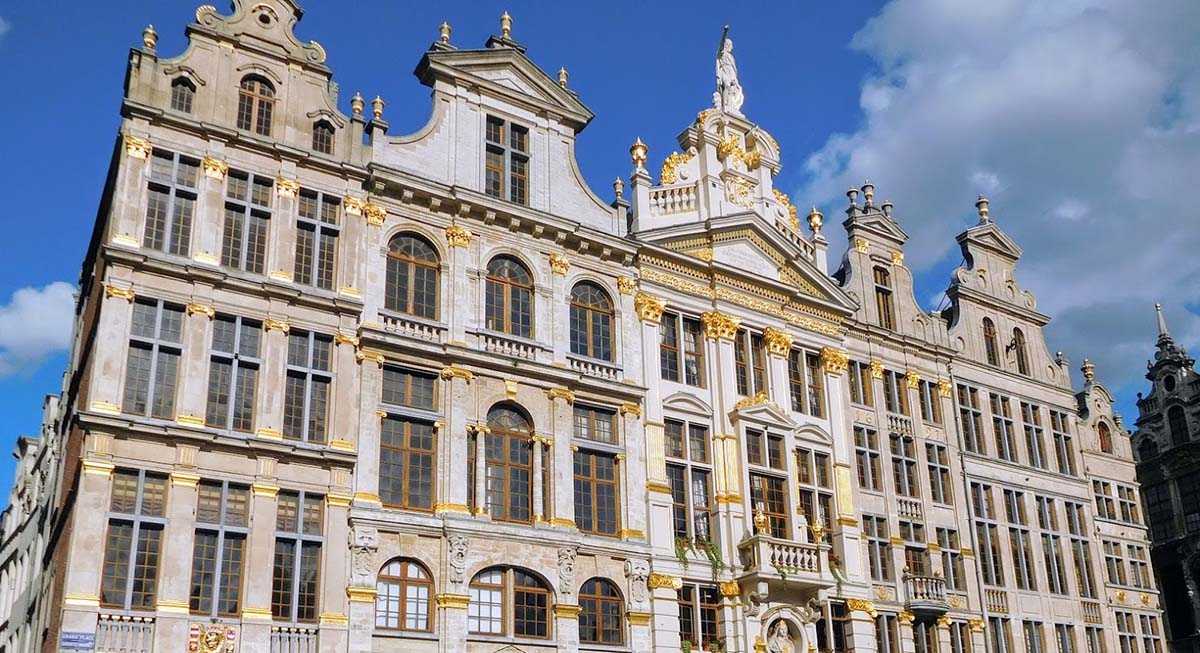
In Brussels, I start by exploring the Grand Place with its old guildhalls, Town Hall and Breadhouse building decorated with gold motifs, and make a stop to see one of the iconic symbols of Brussels, the Manneken Pis. This statue of a little boy urinating into a fountain’s basin is said to embody the Belgian spirit of independence and their sense of humor.


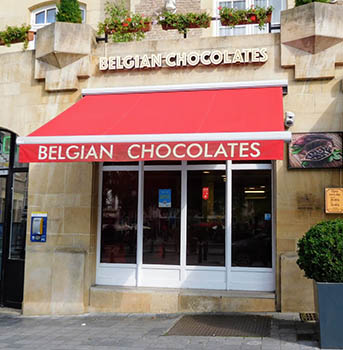 I notice very quickly that there are appealing little chocolate shops on just about every street corner. No wonder. There are over 2,000 chocolatiers in Belgium and I think they all have a shop here in the capital. Famous Belgian brands that can easily be found in America include Godiva and Cote d’Or. Others like Leonidas, Nihoul, Neuhaus and Wittamer are a little harder to find stateside, but are among the best and should be tried while you’re here. Ooh, the taste, texture and smells as I wander from shop to shop testing out white, milk and dark varieties filled with various fresh-cream flavors and fashioned into tiny works of art.
Chocolate goes back centuries, to the Mayan Indians on the Yucatan Peninsula who, in 600 A.D., cured fevers and coughs using a bitter tasting drink made out of the beans that grow in pods on the trunk of the cacao tree. In the 1200’s, the Aztecs began adding flowers, vanilla and honey to enhance the flavor and in 1847, an English apothecary and doctor named Joseph Fry discovered that he could melt down the natural fat found in the cocoa bean and add it to cocoa powder to make a moldable paste which he turned into what we know today as chocolate bars. J. S. Fry & Sons was formed and later merged with and was absorbed by Cadbury’s.
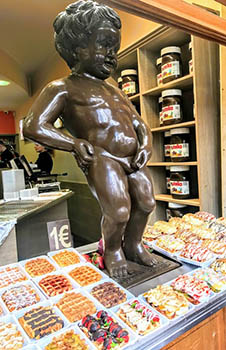 Chocolate reached its apex as an art form when in 1912 Jean Neuhaus in Brussels invented the chocolate bonbon. The chocolatier designed and sculpted beautiful confections out of the rich, smooth paste. Now, as I stand at shop windows mesmerized by the beauty of the creations, I am humored by a window displaying a three-foot tall chocolate Manneken Pis who threatens to destroy a sheet of waffles with his discharge. Inside, you can buy bags of the little guy made out of white, milk and dark chocolate and tied with a blue bow.
Having had my fill of sweets, I am now ready to go on to some “real” food. I start with what the Belgians call frites. They are a very popular snack here and you can find friteries with windows open to the sidewalk throughout the main pedestrianized areas of Brussels and on the squares of most Belgian towns. These are thick-cut rectangles of potato served piping hot from the fryolator in a cone you can carry with you as you walk the streets. Instead of ketchup, I eat them with the most popular accompaniment, mayonnaise, although you can buy any of twenty or so other sauces for dipping, most of them mayonnaise-based.
Be aware that the Belgians are sensitive to calling them “French fries”. They claim that they were the first to invent this dish and therefore they should be called “Belgian fries”. In fact, the name “French fries” originated during WWI when soldiers at the front were served the fried sticks and did not know if they were in France or Belgium. Someone said it was France, and thereafter they were called “French fries.”Today in Belgium, they are simply frites.


The next day I find myself in Bruges in the Flanders region where primarily Dutch is spoken. Also called the “Venice of the North”, I take a walking tour of the UNESCO-listed city with its cobbled streets and winding waterways. By now, I’ve built up an appetite for some vlaamse stoverij, the famous Flemish beef and beer stew. I’m told that a delicious version of this dish can be had at the Vivaldi Brasserie and Restaurant, so I take myself there and devour the tasty dish that is, as always in Flanders, served with a green salad and a bowl of frites. Instead of using wine in its base as the French do, here it is stewed in deep dark beer with a hint of brown sugar and cider vinegar added to give it a slightly sweet-sour taste. Along with the beef, caramelized onions and sometimes bacon are also added to the sauce.
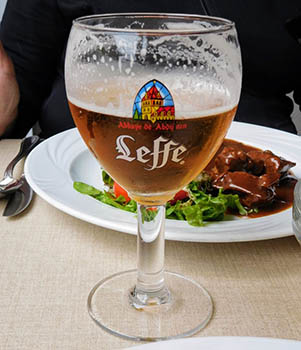 Of course, nothing goes better with vlaamse stoverij than one of the over 800 varieties of famous Belgian beer. Here at the Vivaldi, it is Abbey beer. I order a glass of Leffe Blond. My server Stef talks about the beer with great enthusiasm. This beer, he says, dates back to 1240 A.D. when it was made by the monks of the abbey of Notre-Dame de Leffe in southern Belgium using ingredients found in the wild. It’s a deep yellow color, strong and malty with a subtle orangey taste and a high alcohol content, and he proudly serves it in a special Leffe glass. It pairs very well with the vlaamse stoverij. I’m somewhat disappointed to learn that today it’s produced by an arm of Anheuser-Busch, although royalties are paid to the abbey for their production.
I’m now ready for some dessert and nothing is more enticing than Belgian waffles. This is a very popular indulgence in the evening. Like frites, Belgian waffles are made in little waffle stands throughout the pedestrianized areas of most cities and towns and are served with a fork and a special waffle holder. Emilie makes one for me using a waffle iron and corrects me—here they are called simply “waffles”, not Belgian waffles. She offers a choice from a variety of toppings including whipped cream, icing sauce, butter, pistachios, candy sprinkles, shaved chocolate, coconut, banana, fresh strawberries, Nutella and drizzles of chocolate, caramel, or strawberry sauce.
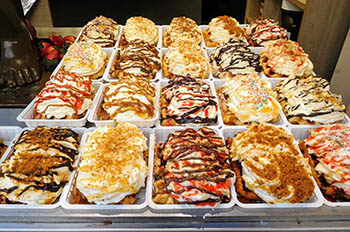 We talk as she pours the batter into the maker, creates a crispy brown beauty, and adorns it with fresh strawberries, whipped cream and chocolate drizzle. Learning that I’m from America, she tells the story of how Belgian waffles were introduced, first as the Brussels Waffle in 1958 at an expo in Bruxelles. A few years later, Maurice Vermersch opened a stand in the Belgian Village at the 1964 World’s Fair in Flushing Meadows, New York where he sold them covered with strawberries and whipped cream. But Maurice found that most people in the U.S. did not know that Brussels was the capital of Belgium, so he named them Bel-Gem Waffles, a play on words, which later morphed into Belgian Waffles. The concoction became very popular and they have since taken off in the U.S. Emilie and I laugh together as she hands me my “Bel-Gem waffle”.
The waffles in Belgium are larger, fluffier and with deeper squares than those in the U.S. This is because the batter is raised with yeast and egg whites are folded in, rather than baking powder as in the U.S.
The next day I find myself in Dinant, Belgium, the birthplace of the inventor of the saxophone, Adolphe Sax. Saxophones decorate the streets of Dinant, painted with modern art designs on the bridge over the River Meuse, on the lampposts, and in the special museum devoted to Mr. Sax.


But I pass up the museum to go to the little family-run shop on rue Grande which makes cocques. Pronounced “kooks”, these are an interesting and unusual confection made only in this shop. The windows draw you in with their beautiful displays of what look like gingerbread cookies formed into an assortment of lovely designs depicting flowers, animals, people and landscapes.
Cocques date from the 15th century when Charles the Bold besieged the town and left no food except for honey and flour. The industrious residents found a way to create a tasty concoction from these two ingredients. Today a little sugar is added to the recipe and the dough is pressed into molds made by local metalcrafters and baked. On cooling, they become rock hard and can be preserved indefinitely as long as they are kept dry. Tourists buy cocques all year long, but Belgians typically indulge in them around St. Nicolas day in the winter.
One of the Jacobs family explains how to eat them and warns against biting off a piece of the cocque because it will break your teeth. She says that the local dentist is a very rich man from repairing teeth for cocque eaters. She recommends using a hammer on a very hard surface—like cement—to break them into bite-sized fragments. Then you suck on the pieces and leave them to melt in your mouth until they are soft and chewy. You might also leave them to soak in coffee, but since they are so hard, it will take quite some time for them to soften, even in the hot liquid.
Stock up on this unique and tasty treat since you won’t find it anywhere else in the world.
If You Go:
Cocques at Patisserie Jacobs, Rue Grande 147, 5500 Dinant (00 32 82 22 21 39)
Leonidas, 17 Rue des Fripiers/Kleerkopersstraat 17, 1000 Brussels, for great chocolates (many other shops throughout the city and major towns)
Vivaldi Brasserie, Wijngaardstraat 24, 8000 Bruges

Elizabeth von Pier is a retired banker and an avid traveler, photographer and writer. She has been published in the Los Angeles Times, In the Know Traveler, Go Nomad, Wave Journey, Hackwriters, Travelmag—The Independent Spirit, and Travel Thru History, and recently published her first book, “Where to Find Peace and Quiet in London.” Ms. Von Pier lives in Hingham, Massachusetts.

Photos by Elizabeth von Pier

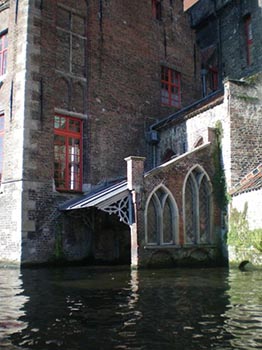




 Photo Credits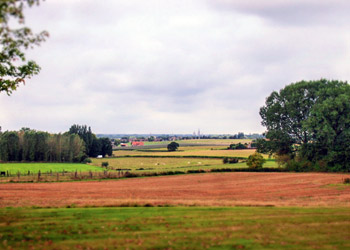
 If you’re ever thinking about visiting Belgium, there are many, many places that are worth visiting. An excellent suggestion would Flanders Fields. The historic area known as Flanders Fields is the part of the province of West Flanders that had the misfortune of being one of the front lines during the First World War.
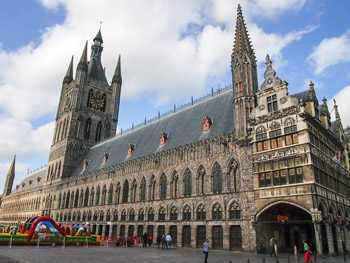
 After the war, Ypres was rebuilt from scratch and nowadays it’s a nearly perfect replica of the pre-war city. Although there is not a single building that is older than a century, the city center looks exactly like the old medieval city that was leveled by mortars. Its beautiful town square, lined with typical narrow Flemish row houses with crow-stepped gables, is dominated by the magnificent Cloth Hall, now the home of the downright fabulous Flanders Fields Museum. This is the place where you should start your visit of Flanders Fields, emerging yourself in the interesting history and unimaginable horrors of the Great War. By being aware of what happened in this region, you’ll look at the following landmarks, which are now set within a peaceful landscape of flat fields and slowly meandering rivers, from a completely different perspective.
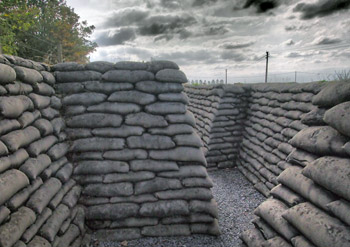
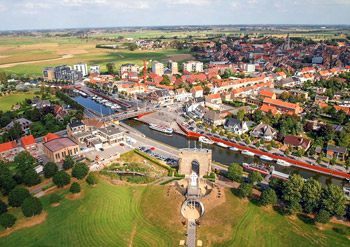 After exploring the Flanders Fields Museum in the morning, head out of the city for a tour of the surrounding area. The Trench of Death is located near the River Yser and the city of Diksmuide. This was by far the most feared part of Belgian front, a part where the Allied and German trenches were only a few dozen steps apart. The trench was feared by all front line soldiers, for being positioned there meant almost certain death. Nowadays, a section of the trench system has been beautifully preserved and is free to visit. The remains can be explored on foot and offer an impression of what life in the trenches must have been like.
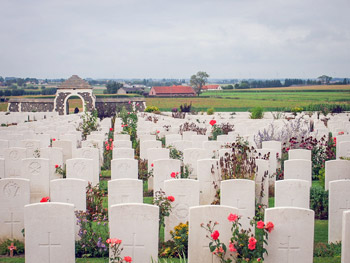 Another nearby highlight is the 84-meter-tall Yser Tower, which is the tallest peace monument in Europe. You can get to the top with an elevator, enjoy great panoramic views of Flanders Fields and head back down the stairway, leading through a museum of war, peace and the emancipation of Flanders.
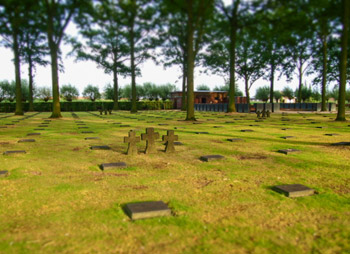 Properly visiting Flanders Fields can’t be done without a visit to a few war cemeteries. The region is home to literally hundreds of those, so you’ll have to make some choices. The most notable cemeteries are the Vladslo Soldatenfriedhof (the resting place of more than 26,000 German soldiers), the Langemark Soldatenfriedhof (the largest German war cemetery, with more than 44,000 soldiers), the iconic British Tyne Cot War Cemetery, and Polygon Wood Cemetery and Buttes New British Cemetery. All of these cemeteries were built near battlefields, making it easy to bury the dead after the battles ceased.
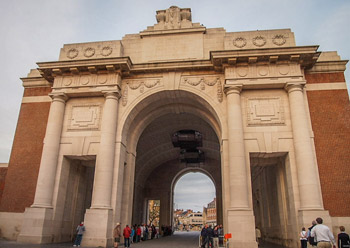 Back in Ypres, you should definitely head to the imposing Menin Gate, where the Last Post ceremony is still held every evening at 8pm sharp. The ceremony has taken place every evening since 1928 in commemoration of the British soldiers who gave their lives for the Belgian people. The huge Menin Gate in itself is a major landmark, a war memorial dedicated to fallen British and Commonwealth soldiers whose bodies were never found. The enormous Hall of Memory contains nearly 55,000 names of missing soldiers, but, as large as it may be, is still too small to contain all names. The rest of the names of missing soldiers are inscribed on the wall that surrounds the British Tyne Cot War Cemetery.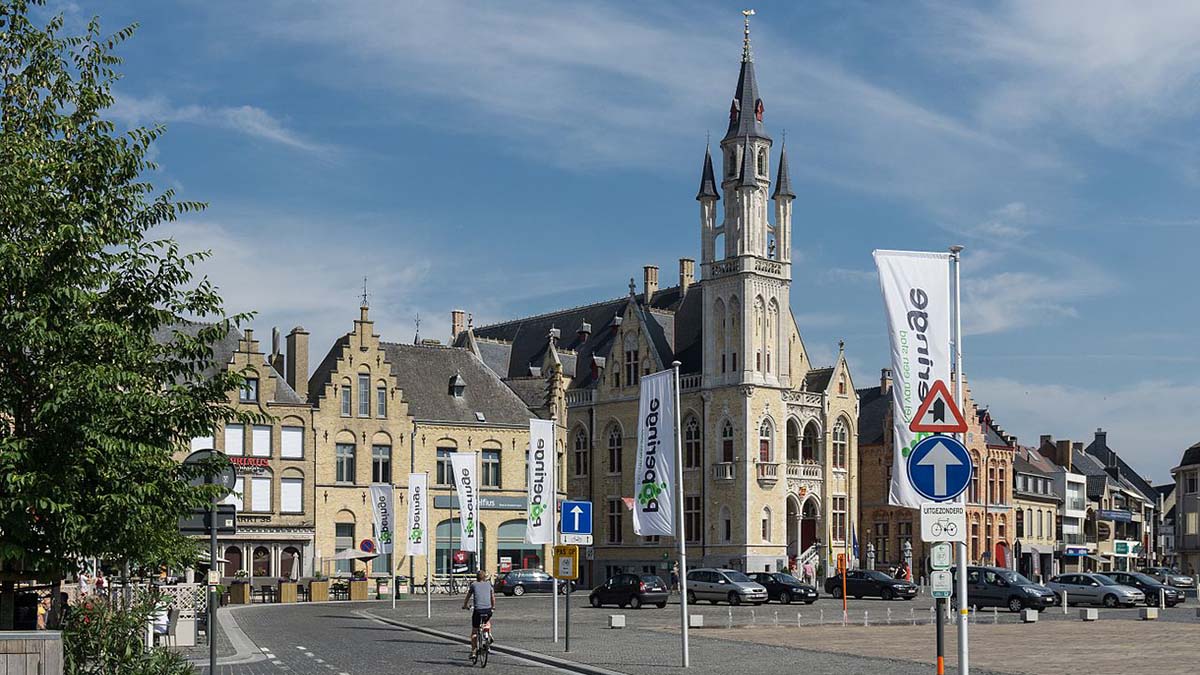
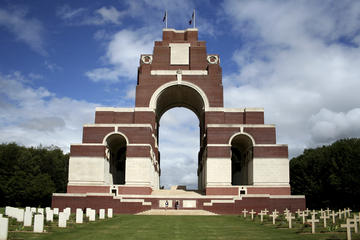
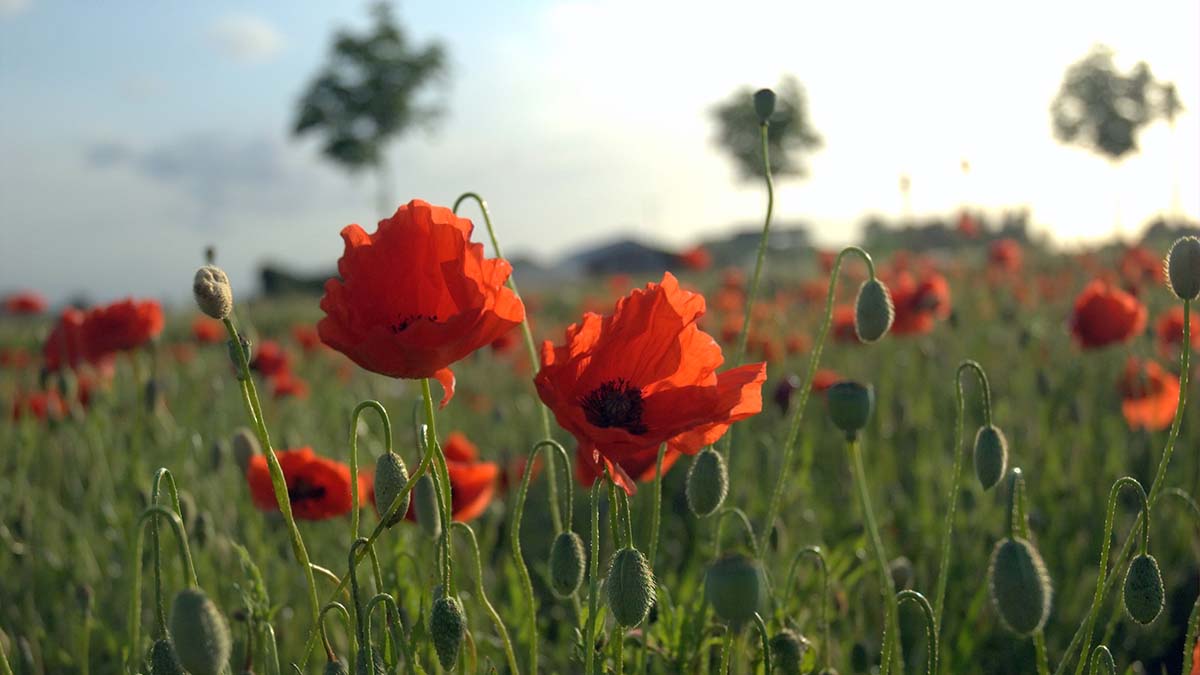
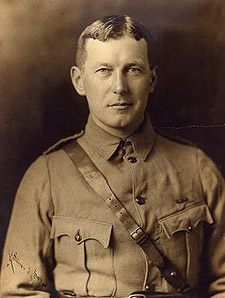 The author of this poignant, well-known poem was Lt. Col. John Alexander McCrae, a soldier from Guelph Ontario who served as a surgeon in the No. 1 field hospital in Ypres during World War I.
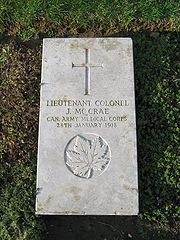 On January 28, 1918, while commanding the No. 3 Canadian General Hospital at Boulogne, McCrae died of pneumonia. He was 46 years old. He was buried with full honors in the Commonwealth War graves section of Wimereux Cemetery near Boulogne.