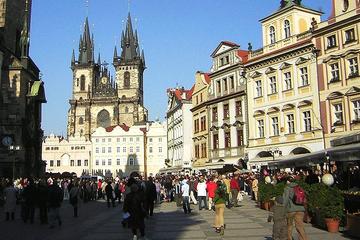
The Gothic cathedrals in Prague are silent witnesses to a revolution in Prague, a transformation not just in architecture but in cultural and historical identity. These majestic structures, with their soaring spires and ornate facades, are more than just buildings; they are storytellers of the past. As they rise above the city’s skyline, they remind us of a time when art and spirituality intertwined to create something truly magnificent.
Top 3 Most Impressive Gothic Cathedrals in Prague, Czech Republic
Walking through the shadow of these cathedrals, I felt a deep connection to their legacy. Each step taken within their hallowed walls was a step back in time, a journey into a world where every stone and stained glass window had a story. The awe-inspiring beauty and quiet strength of these Gothic wonders left an indelible mark on me, connecting me to the historical heartbeat of Prague.
St. Vitus Cathedral: A Majestic Architectural Marvel
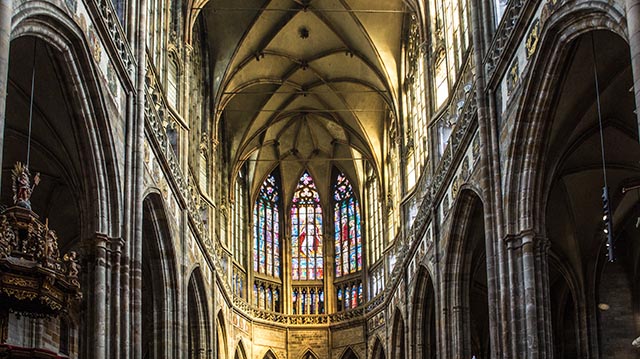
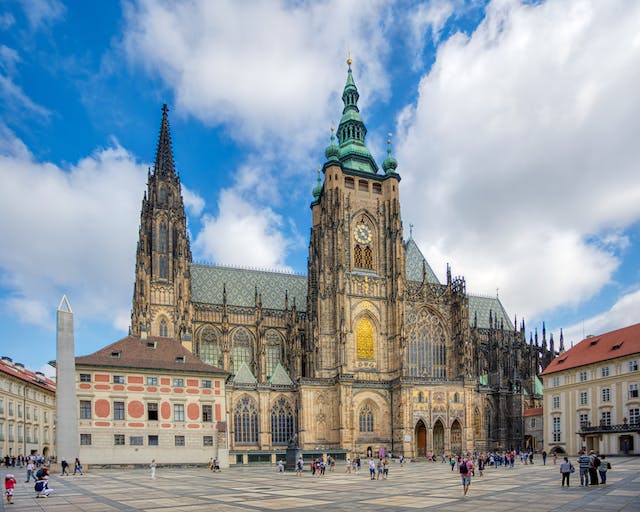
St. Vitus Cathedral, a masterpiece of Gothic architecture, stands as a dominant feature in the Prague skyline. Its construction spanned many centuries, starting in the 14th century, allowing for a mix of Gothic, Renaissance, and Baroque influences. This blend gives the cathedral a unique character. The first time I stepped inside, I was amazed by the sheer size and beauty of the interior. The stained glass windows are not just functional but are works of art, illuminating the interior with a kaleidoscope of colors. The cathedral’s spires, visible from afar, guide visitors towards this historic site.
Every nook and corner is filled with artistic and religious significance, from the intricate sculptures to the ornate altars. The cathedral also houses treasures of Czech history, including tombs of patron saints and royals. This place is a symbol of the Czech nation and a keeper of history.
The Church of Our Lady before Týn: A Mysterious Beauty
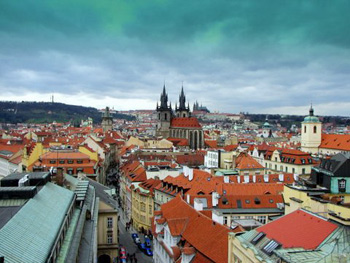
Overlooking the Old Town Square, The Church of Our Lady before Týn is an iconic part of Prague’s cityscape. Its Gothic architecture, characterized by its towering twin spires and impressive façade, tells a story of the city’s past. These spires define Prague’s skyline and symbolize the church’s historical and religious significance. Entering the church, I felt like stepping into a different era.
Though less glorious than St. Vitus Cathedral, the church’s interior is still profound with its Gothic art. The high ceilings, the arches, and the religious artifacts create a solemn yet captivating atmosphere. The church is important in Prague’s history, being a center for religious and social gatherings for centuries. Cathedrals, churches, chapels, and convents find their echoes here, each contributing to the rich city’s ecclesiastical architecture.
Basilica of St. Peter and St. Paul at Vyšehrad: A Hidden Gem
The Basilica of St. Peter and St. Paul at Vyšehrad offers a different perspective on Prague’s religious architecture. Unlike the more renowned cathedrals, this basilica stands quietly in the Vyšehrad fortress, away from the city’s main tourist trail. A sense of discovery and tranquility marked my visit there.
The basilica’s Art Nouveau interior is a departure from the traditional Gothic style prevalent in Prague, showcasing beautiful murals and stained glass that create a serene ambiance. The adjoining Vyšehrad cemetery is the final resting place for many Czech luminaries, adding a layer of national significance to the site. The basilica and its surroundings offer a reflective space, away from the bustle of the city, where visitors can connect with Prague’s history in a more intimate setting.
If You Go
When planning a visit to Prague’s Gothic cathedrals, timing is key. Early morning or late afternoon visits help avoid crowds, offering a more peaceful experience. Some cathedrals might charge a small fee, but many areas are accessible free of charge. Around these architectural marvels, one can find various dining options, from quick bites to sit-down restaurants serving traditional Czech fare.
At the same time, Transparent International NYC highlights the importance of understanding local amenities, transportation, and neighborhood vibes when moving to or visiting a new city like Prague. This knowledge can greatly enhance your experience, making your visit more comfortable and enjoyable.
Capturing the Gothic Splendor: Photography Tips
Photographing Prague’s Gothic cathedrals can be a rewarding experience for both amateur and professional photographers. With their dramatic spires and detailed façades, the exteriors are best captured in the soft light of dawn or dusk. These times offer a magical backdrop, with the play of light and shadow bringing the structures to life.
Inside, the challenge is to capture the scale and detail. A wide-angle lens can help encompass the vast interiors, while a tripod can assist with low-light conditions. The stained glass windows, particularly when backlit by the sun, present a perfect opportunity for vibrant, colorful shots.
Reflections on the Spiritual and Cultural Significance
The Gothic cathedrals in Prague are not only architectural wonders but also repositories of spiritual and cultural heritage. Each visit to these cathedrals gave me a profound sense of connection to the city’s history and people.
The legends and myths surrounding these places, like the tales of the Devil of Prague, add a mystical dimension to the experience. These cathedrals, with their imposing structures and solemn interiors, stand as silent witnesses to the city’s past, hosting countless events and ceremonies that shaped Prague’s cultural and spiritual landscape.
Final Words
Exploring the Gothic cathedrals in Prague has been an unforgettable experience. These architectural marvels are not just buildings; they are stories carved in stone, waiting to be discovered. Each visit reveals new details and hidden corners of history. For anyone planning a trip to Prague, these cathedrals are a must-see. They offer a unique window into the past and an opportunity to connect with the rich cultural heritage of this beautiful city. Don’t miss the chance to witness their grandeur firsthand.
About the author:
Johana Smith, a seasoned blog writer and moving expert, harbors a profound passion for travel and history. Her explorations have taken him to historical cities like Prague, deepening his appreciation for diverse cultures and epochs. Johana’s fascination with places rich in history, from the Gothic cathedrals of Prague to ancient ruins globally, inspires her writing. She is dedicated to sharing these experiences, connecting her readers with the enduring stories of the past, and guiding them through the intricacies of moving to new destinations.
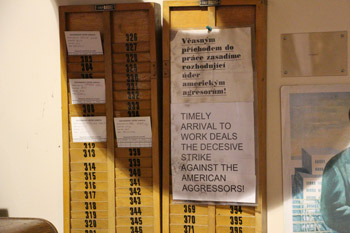
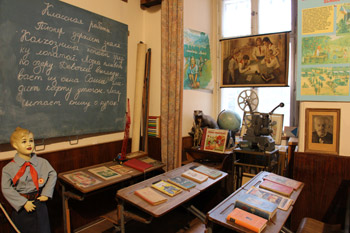 In order to understand Prague’s revolution, one must understand what led to it, and there’s nothing better than the Communism museum for this. The museum is full of exhibits of life under the regime, though one gets the feeling that it’s rather tongue in cheek, given the postcards devoted to life under Communism – “You couldn’t get laundry detergent, but you could get your brainwashed”; “It was a time of happy, shiny people. The shiniest were in the uranium mines.” That was my first clue that music had something to do with all of this dark history.
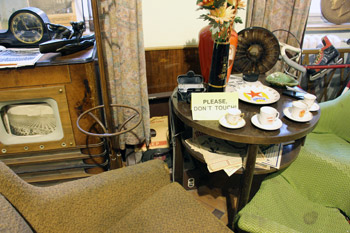 The Prague Spring came about in 1968, when reformist Alexander Dubcek was elected as the First Secretary of the Communist Party of Czechoslovakia. Reforms by Dubcek were intended to grant more rights to citizens, including loosening strict restrictions on media – for the first time, young Czechs could listen to the Beatles on the radio. That was one thing that surprised me as I wandered the Communist museum – how willing locals were to seek out their favorite rock groups from America, buying records on vinyl from Western Europe and listening to them in secret.
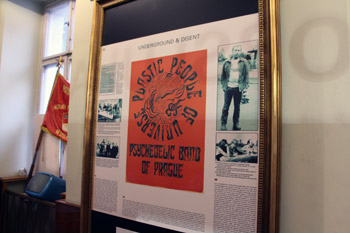 Inspired by the Velvet Underground, a group of Prague natives formed a band called the Plastic People of the Universe, just a month after the Prague Spring was suppressed by Warsaw Pact troops and just after Jan Palach, a philosophy student, set himself on fire on Wenceslas Square, issuing a warning before his death not to follow in his footsteps, a warning displayed on the walls of the Communism museum. The Plastic People played psychedelic garage rock typical of American FM stations of the time – led by front man Milan Hlavsa, a butcher by training, the group sang controversial songs of freedom, first in English, then in Czech. Their first studio album was called “Egon Bondy’s Happy Hearts Club Banned,” an ironic spin on poems by outlawed Czech poet Egon Bondy and the everpresent Liverpudlian Fab Four.
 In 1970, the Communist government revoked the license for the Plastics to perform in public, forcing them to take the second part of the band title that had so inspired them literally – the Plastics were going underground. For years, they remained relatively off the radar, until 1976, when they played a music festival in the town of Bojanvovice, leading to arrests of all of the band members on charges of “subversive activities against the state.”
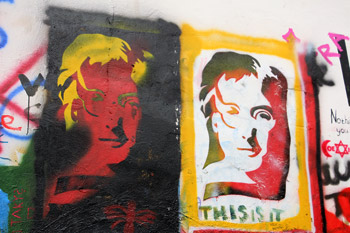 Marta Kubisova is just one of the many Czechs who was inspired by the “Hey Jude” single. The actress and singer first graced the public eye when “Prayer for Marta” became a symbol of national resistance in 1968, during the Prague Spring. And in the same year, when “Hey Jude” was released, Marta adapted it, releasing her own translated version in 1969 – the cover made her a local star.

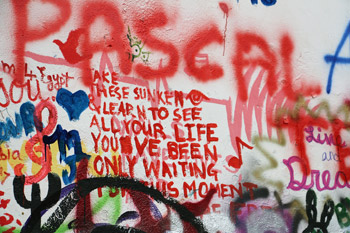
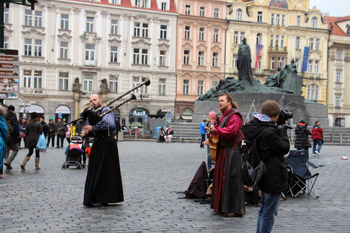 Today, the John Lennon wall still attracts hundreds of tourists, who come to look at the ever-changing paintings. The Knights of Malta have long since ceased trying to stop the graffiti. But while John Lennon is a meaningful symbol for many, it’s hard to understand just how much his music meant to young Czechs in the 80s.
 The wall first popped up in 1980, just after Lennon’s death, just a few years before Prague students took to the streets. The wall was created in memory of the man who, for them, embodied the freedom and liberation they so craved. “Lennonism,” then, a celebration of freedom and independence, became the counterpoint to Communism, and the evidence remains in Prague today, years after the fall of the Iron Curtain.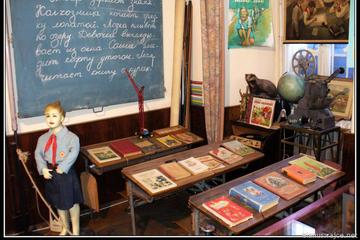
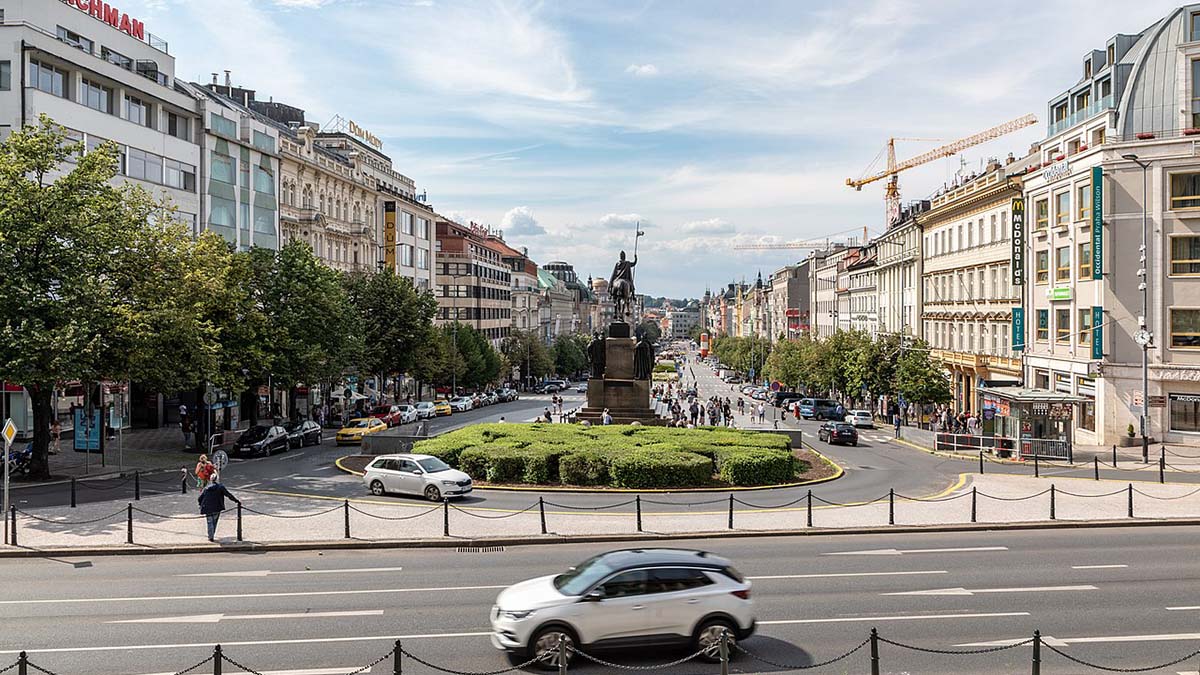
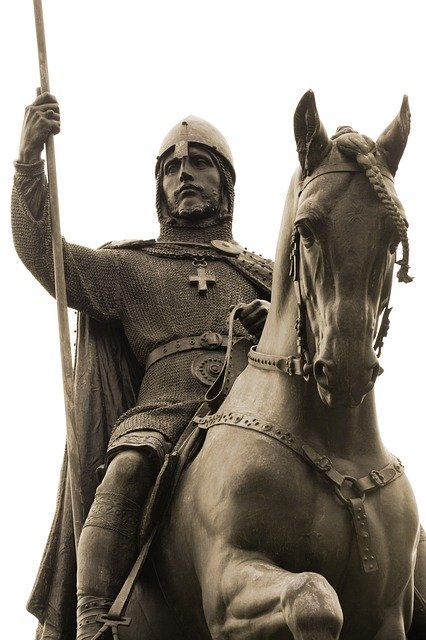 Wenceslas Square, one of the most legendary squares in Central Europe, in Prague, Czech Republic, has played host to a number of fitting names as well as false names. In tandem with the Czech people daily traversing its dark cobblestone, political subjugation in the 20th century led to cultural suppression and the great Wenceslas Square- named after a beloved Czech Saint and hero- was known momentarily by other names. Wenceslas Square (Vaclavske Namesti in Czech) was victimized by names and ideals forced upon it first by Adolf Hitler and then by Josef Stalin.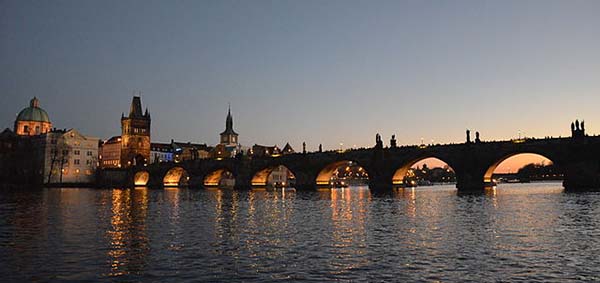

 I imagine Saint Wenceslas Square to be like a Czech person itself. She is (for I see her as a woman-elderly and strong) as much a part of Czech history and cultural identity as any other momentous figure- like say Saint Wenceslas himself, or King Charles for whom the oldest bridge in Europe was constructed, or the famously brilliant and brave Vaclav Havel.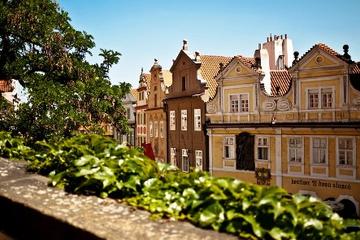

 The bridge has also felt the steps of moved masses coming from Mozart’s premier of “Don Giovanni.” Perhaps the happy tempo of these steps felt similar to those that walked the bridge in 1918 when Czech people crossed it — citizens of a sovereign country for the first time in their long history.
 As hope’s light dimmed across the country, the footsteps of plotters crossed boldly through the darkness, paving the way for The Velvet Revolution in 1989. Without bloodshed on that day, Czechoslovakia became the Czech Republic, as it remains today.
 Then came The Devil. No one knows exactly when he first came, but everyone agrees it was over 10 years ago. On the edge of the bridge he set up shop where he thought he belonged, next to the other artists selling their creations to eager tourists in front of the Mala Strana tower.
 Did he believe he was the devil? Why the Charles Bridge? Was it all a ploy for the money or was their some higher reason for what he did? I don’t know. And I won’t know. When I set out to find him and ask, he was not to be found. The other vendors informed me with long faces that he recently passed away.