Travel Thru History

Historical and cultural travel experiences

  • Home
  • Airfare Deals
  • Get Travel Insurance
  • Writers Guidelines

10 Disney Area Hotels Most Locals Stay At

Disney World is a top destination that draws in visitors from all around the world. Planning a big trip to Disney, however, gets harder the further away you are. If you have never been to the area, for example, you might not know of the other great theme parks in the area, and you might feel like your best option is to book a hotel right in Disney World itself.

There is so much to do in Orlando, and there are so many ways that you can save and stretch your budget out further. One of the best ways to get the most out of your experience is to do what the locals do and stay where the locals stay.

The locals don’t go for the Disney-owned and operated hotels. They go for the affordable resorts just a few minutes away. Many resorts offer great amenities like pools, waterslides, a spa, on-site dining, and more, and even offer free shuttle services to Disney World, Universal Studios, and several other top destinations in the area.

For those exploring Disney Area hotels that most locals stay at, understanding the key nuances, such as the difference between buying DVC direct vs resale can significantly impact your vacation experience. Explore more about this distinction and make an informed decision for your magical stay.

These 10 Disney area hotels are popular with the locals, and they should be at the top of your list when booking for your vacation.
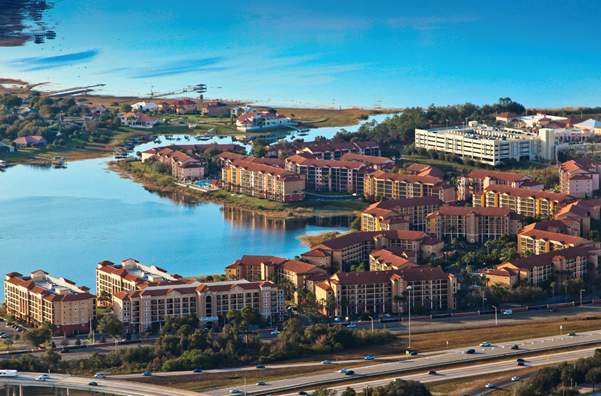
Westgate Lakes Resort and Spa
Source: Facebook, posted on January 27, 2012, Westgate Lakes Resort and Spa’s Official profile

1. Westgate Lakes Resort & Spa

This resort is next to Big Sand Lake and just five miles from Walt Disney World Resort and four miles from Universal Orlando.

There are rooms to suit everyone, from simple studios all the way to large 4-bedroom villas that contain their own kitchens. Eat-in one of the five restaurants, swim in one of the many pools and even book a day pass to go to the on-site waterpark. There are so many great things to see and do at this resort, making it a top favorite amongst locals who are in the area to visit Disney World.
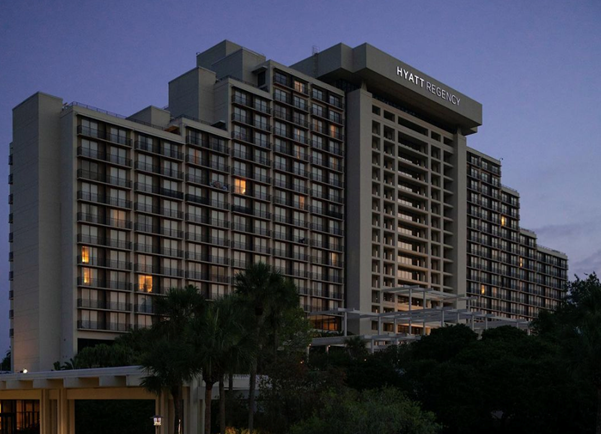
Hyatt Regency Grand Cypress
Source: Instagram, posted on April 7, 2022, Hyatt Regency Grand Cypress’ Official profile

2. Hyatt Regency Grand Cypress

The Hyatt Regency Grand Cypress is an excellent chain that offers clean and comfortable accommodations near all the action of Orlando.

The Hyatt Regency is a popular chain in Orlando as it offers exceptional service and accommodations for a great price. Here you will be able to enjoy chic décor, great services, excellent pools, and more within a reasonable distance of Disney World. It is perfect for travelers of all types, as it offers something for everyone.
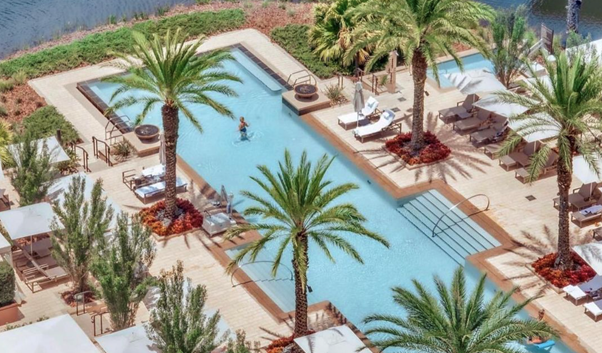
 

Four Seasons Resort Orlando
Source: Instagram, posted on June 7, 2022, Four Seasons Resort Orlando’s Official profile

3. Four Seasons Resort

Four Seasons Resort is just three miles from Walt Disney World Resort and is a short distance away from Disney Springs.

This is a massive resort that comes with everything you need to enjoy a luxurious stay. While it may not be an option that many locals can choose for themselves on a regular basis, it is still a favorite for its stunning grounds and amazing rooms. Rooms come with marble bathrooms and even soaking tubs. Suites come with their own private terraces.

All guests have access to the many pools, restaurants, and bars that operate on the property. There is a 13,000-foot spa and even a golf course. The pools have a lazy river and water slides.

It is everything you need to make your Disney trip absolutely magical.
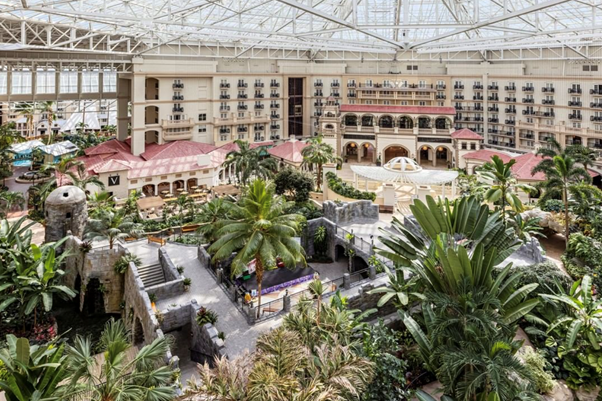
 

Gaylord Palms Resort
Source: Instagram, posted on June 11, 2022, Gaylord Palms Resort’s Official profile

4. Gaylord Palms

This stunning hotel and resort offer beautiful facilities, including a glass atrium garden, beautiful pools, and a golf course just 3.2 miles from Walt Disney World Resort.

This resort comes complete with everything you could hope for in a beautiful resort. The rooms come with marble baths, flat-screen TVs, and minifridges. You will be able to even upgrade and get living rooms and kitchenettes in your space.

There are three restaurants on the property, 2 bars, and a café. If you are a sports fan, then catch your team on a massive 37-foot screen in the sports bar.

There is an adults-only pool, a water park, a spa, a games room, and more. You can even feed baby alligators.

Enjoy all this with shuttle services to the parks included in your resort fee.
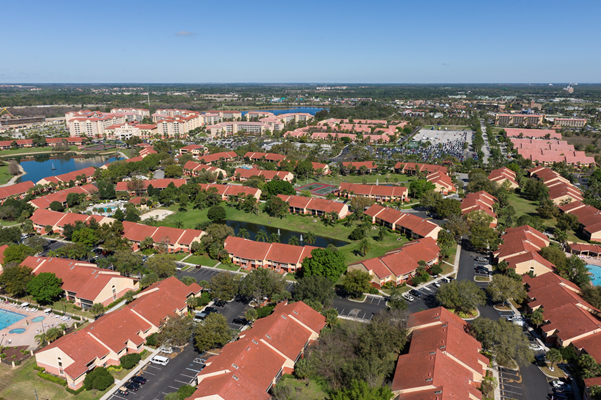
 

Westgate Vacation Villas and Town Center Resort
Source: Facebook, posted on April 11, 2022, Westgate Vacation Villas and Town Center Resort’s Official profile

5. Westgate Vacation Villas and Town Center Resort

Westgate Vacation Villas and Town Center Resort offers a home-away-from-home experience and amazing facilities, including a waterpark.

Westgate has a few Disney resorts in Florida, and between the Westgate Lakes Resort and Spa and these two sister resorts, you are spoiled for choice. This option is particularly of interest for larger families who want to settle in on a long vacation to the area rather than burn through in a few days. Book a villa, and you will get a private villa that comes complete with a kitchen, living room, dining room, and laundry machines so you can settle into your home-away-from-home vacation.

You will have a waterpark, pools, restaurants, spas, and more available to you at these resorts and still be a short distance away from the hottest attractions in Orlando. You will be just 3.5 miles from Walt Disney World Resort. If you want to see, Universal Orlando know that you will be 14.9 miles away.
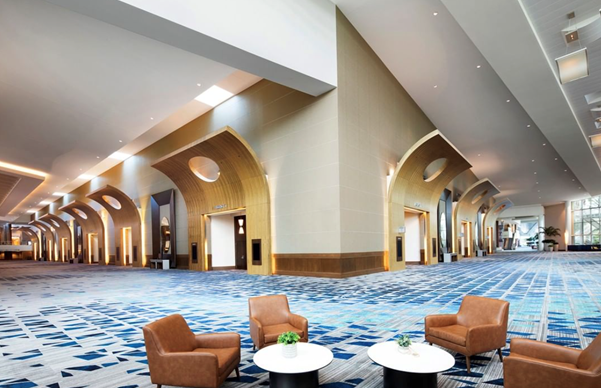
 

Hyatt Regency Orlando
Source: Instagram, posted on April 26, 2022, Hyatt Regency Orlando’s Official profile

6. Hyatt Regency Orlando

The Hyatt Regency Orlando is connected to the Orange County Convention center by three walkways and is just four miles from Universal Orlando Resort, and is 13 minutes from Walt Disney World.

 This hotel will be of particular interest to convention center goers, as not only does it offer easy connections to the Orange County Convention Center, it can get you to Walt Disney World Resort in just 13 minutes for as little as $1. As a convention center goer, you can save by opting for a half-day resort rate so you can kick back and enjoy some thrills at Walt Disney World at a great rate.

The rooms are laid-back and have the modern amenities like Wi-Fi and a flat-screen TV. The hotel comes with a steak restaurant and two different bars. You will have access to the two outdoor pools and can book a spa treatment or two. If you are looking to mix business with pleasure, this is the place.
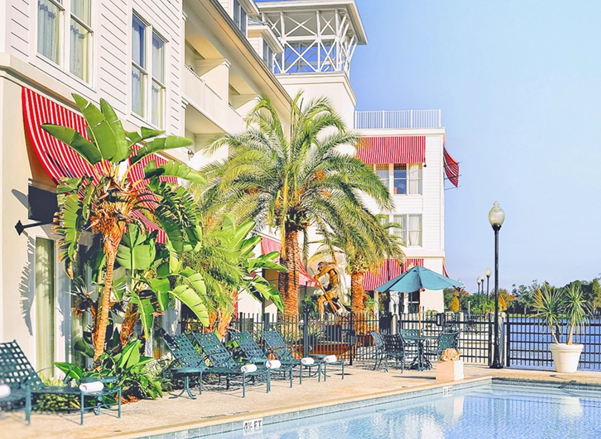
 

Bohemian Hotel Celebration
Source: Instagram, posted on May 23, 2022, Bohemian Hotel Celebration’s Official profile

7. Bohemian Hotel Celebration

This hotel is relatively unknown and a true local favorite as it is a short 0.5 miles from Celebration Golf Club and seven miles away from Walt Disney World Resort.

This hotel overlooks Lake Rianhard and is a short distance away from Celebration Golf Club and Walt Disney World Resort. The rooms are colorful and filled with custom artwork and also feature all the classic and modern amenities you have come to expect from hotels today. This means free Wi-Fi, flat-screen televisions, coffeemakers, and high-quality Bose radios.

There are many great amenities and activities in the hotel space as well, with an art gallery, a bar and grill, and a 5000-square-feet of event place that are occasionally open to the public.
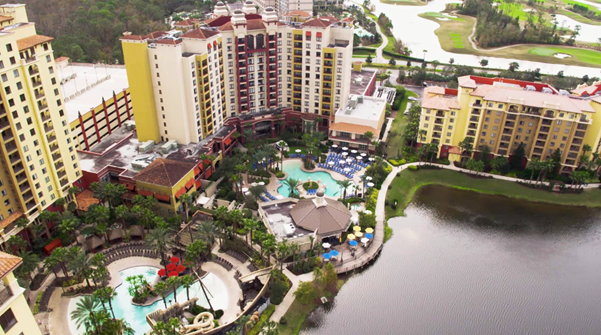
 

Bonnet Creek Resort
Source: Facebook, posted on February 5, 2019, Wyndham Bonnet Creek Resort’s Official profile

8. Wyndham Bonnet Creek Resort

Wyndham Bonnet Creek Resort offers excellent value for money and balances an affordable price with high-quality rooms and amenities.

This resort often takes people by surprise. It is overall not the flashiest or most obvious resort to consider, but due to its affordable rates and what you get included, this is easily one of the local favorites. The location is great, the room rates are decent, and what you get for your money tends to exceed expectations. The upscale accommodations may not be particularly awe-inspiring, but what you lose in stylish décor you make for in savings. If you don’t care what your hotel or resort looks like, and are instead considering what option gives you the most value, then this could be a good choice.
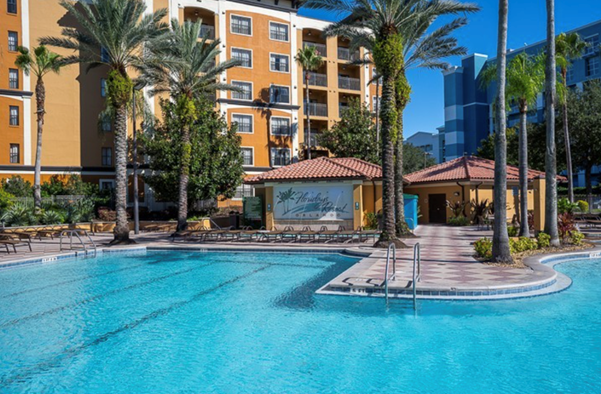
 

Floridays Resort Orlando
Source: Instagram, posted on January 21, 2022, Floridays Resort Orlando’s Official profile

9. Floridays Resort Orlando

Floridays Resort Orlando is a local favorite for its great price and better amenities that make it a top choice for those going to Disney World.

If you want a resort that seems to keep on giving, don’t look further than Floridays. It is one of the cheaper options around, but that does not mean it skimps out on anything. It is one of the best value-for-money resorts in the area and offers amazing things to do right on site. You can enjoy swimming, a full events program, on-site restaurants, and more.

It is here where you can find some of the best rates on villas, so if you are interested in making your own meals to save on your trip, then this could be a great resort to pick.
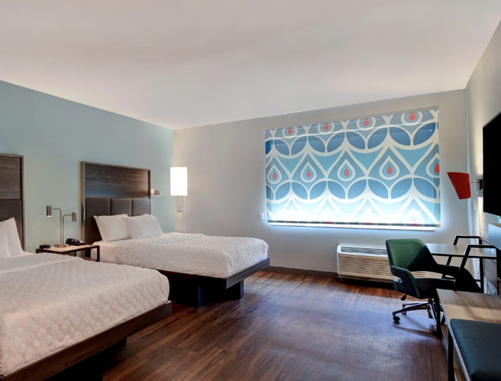
 

Tru by Hilton
Source: Instagram, posted on September 28, 2020, Tru by Hilton’s Official profile

10. Tru by Hilton

This budget version of Hilton is ideal for those that want a great deal without being far from top hot spots like SeaWorld Orlando and Walt Disney World Resort.

You will be able to enjoy clean, affordable accommodation right around the corner from many top destinations in Orlando at Tru by Orlando. You will be a short mile from SeaWorld Orlando, 2 miles from the Orange County Convention Center, and just 5 miles from the infamous Walt Disney World Resort and all the amazing things you can do there.

You will find this hotel off Road 528 and be able to enjoy simple but essential amenities like an outdoor pool, a convenience store, and the option to have breakfast at the hotel.
 

Tagged With: Disney area hotels, Florida travel Filed Under: North America Travel

Cocoa Beach Florida: Sun, Swamp and Space

Kennedy space center

by Susmita Sengupta

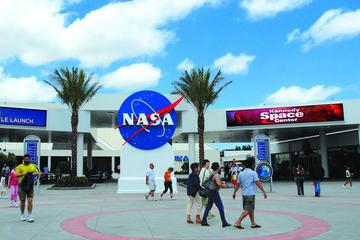
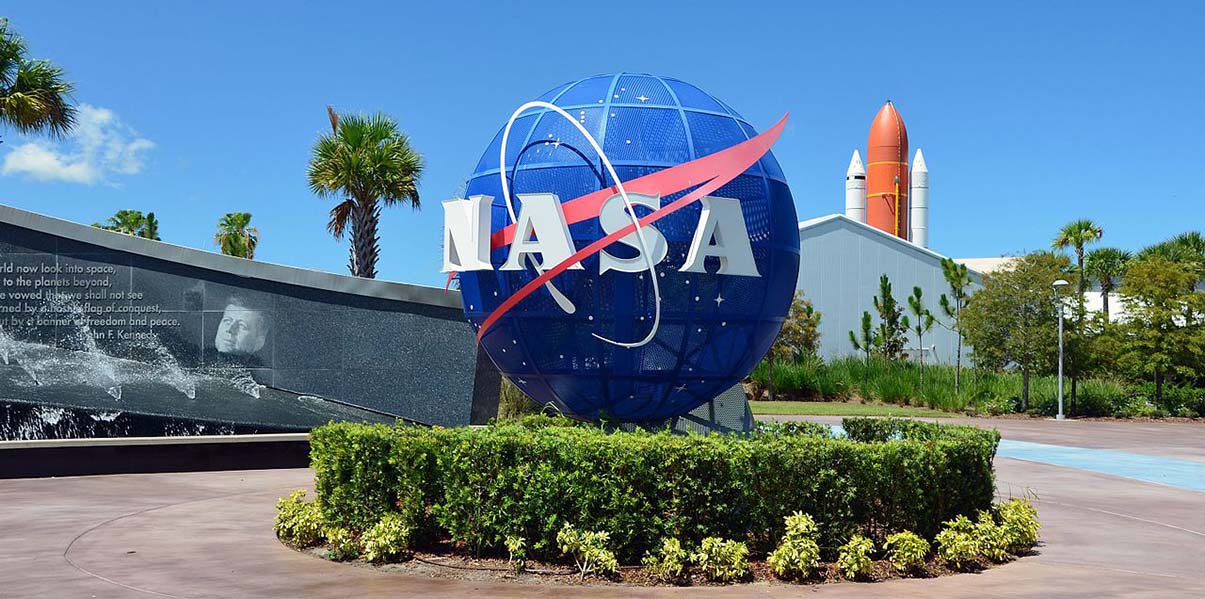
The massive concrete building loomed in front of us and a shiver of excitement ran through me. Soon we would be stepping into one of the most electrifying living museums, a place where scientists have worked consistently to send people and cargo to space. Yes, I am talking about NASA and John F. Kennedy Space Center, an awe-inspiring place to visit irrespective of whether you are a space enthusiast or not. A few years ago, my family and I were vacationing in Florida, the Space Coast to be precise and we were in Cocoa Beach.

We drove into Cocoa Beach from Orlando, home to Disneyworld, the premium tourist destination for people from all over the world. Close to 48 million visitors traipse through this wonderland each year. Not many people venture to Kennedy Space Center located on Merritt Island, near Cocoa Beach, a mere one hour and few minutes away by road from Disneyworld. Only about 2 million people visit the Kennedy Space Center annually.

Kennedy space center vehicle buildingOur visit to the Kennedy Space Center started at the Visitors Complex, which in itself is a space to behold. At the U.S. Astronaut Hall of Fame, it was inspiring to see the life and achievements of all the astronauts who have traveled to the moon and space like such luminaries as Neil Armstrong, Buzz Aldrin, John Glenn and the first woman member Sally Ride. It includes space shuttle astronauts connected with Apollo – Soyuz, Mercury, Skylab, Apollo and other such programs. Being inducted into the Hall of Fame is an ongoing program and every year astronauts are added to the group in a ceremony. I found out that in order to be inducted, the astronauts have to be a NASA trained specialist, commander, or pilot and has to have orbited the earth at least once.

The Rocket Garden has an outdoor display of early rockets from the Mercury, Gemini and Apollo Space programs. The line was long at the Shuttle Launch Experience, where the braver visitors can feel the simulation of a real launch traveling at 17,500 mph on their way to orbit the earth. There is also an Astronaut Encounter event where one can meet pilots, commanders, astronauts and payload specialists in a live meet and greet session.

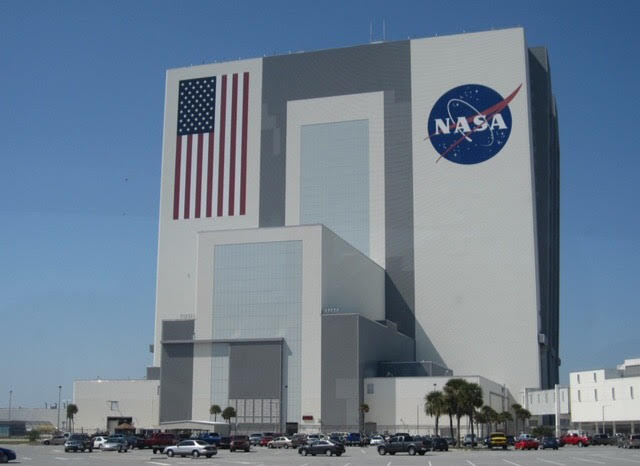
We decided to take the Kennedy Space Center Bus Tour, truly a highlight of visiting this complex. Although there are two bus tours, it is quite impossible to do both. We decided on the one that linked up more closely with our own interests. This behind the scenes tour takes visitors to restricted launch sites and spaceflight facilities, both historic and working. About 40 minutes long, the bus winds its way through the NASA complex, passing by the large, concrete building known as the Vehicle Assembly Building, the site where the rockets are constructed, the launch facilities known as Launch Complex 39, where we were delighted to see a shuttle being readied for a launch.

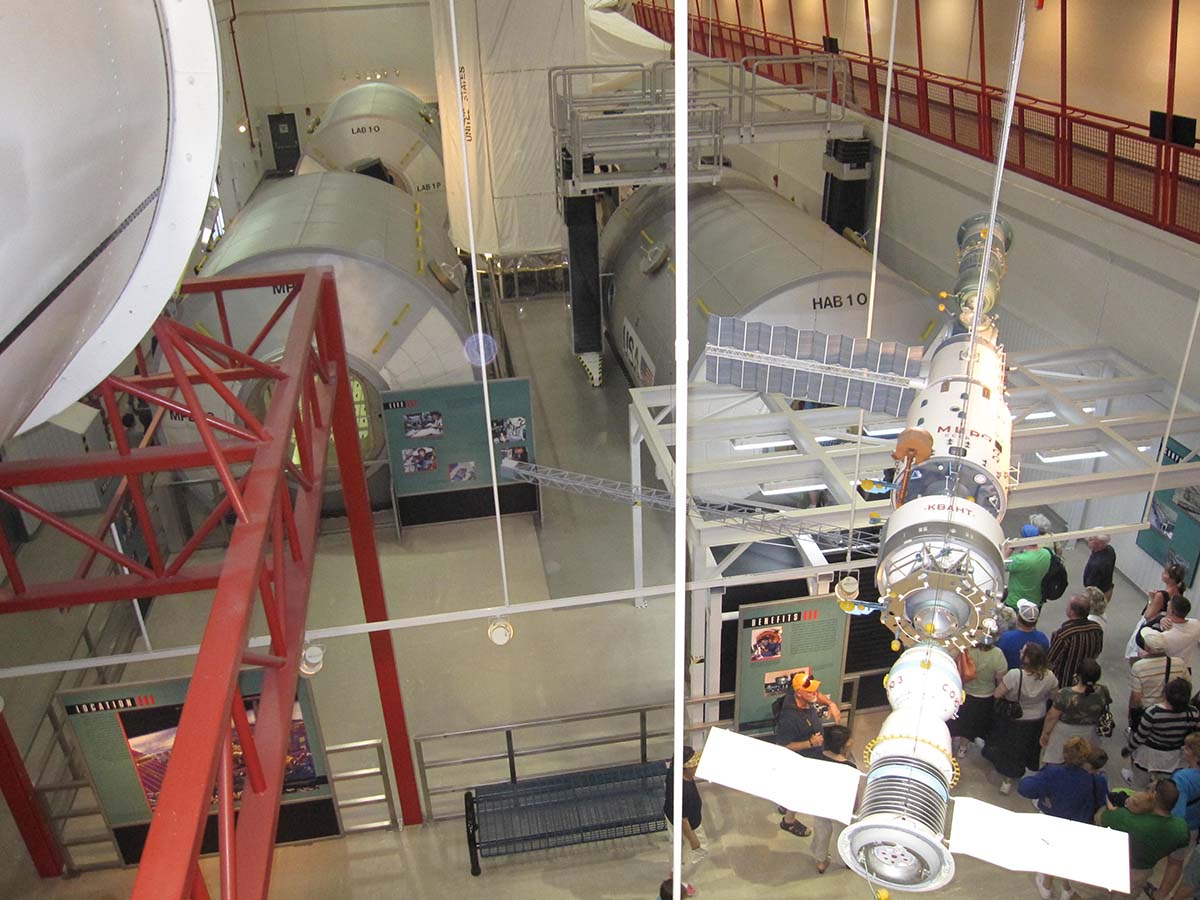
Another highpoint was when we walked through the preparation and construction facilities for the International Space Station. The Space Station, which orbits the earth about every 90 minutes, has been in space since 1998 and has been continuously occupied by astronauts of member countries since 2000. Astronauts stay over for around six months doing research and experiments on impacts on health due to long-term space stays. Because it is gargantuan in size, the station has been assembled over the years in parts and transported to space using shuttles and other rocket flights. We were awed at the feats of human technology and engineering, marveling at the size of the constructions and wondered how such massive objects get transported into space.

The bus tour concludes at the Apollo/Saturn V Center, which is dedicated to a vital point in the American space program, namely the landing of man on the Moon. Here we entered the era of Project Apollo, touring exhibits and viewing major milestones and moments connected to moon landings. I stared in amazement along with other visitors at the colossal 363-foot Saturn V rocket, the largest rocket to fly astronauts to the moon and back. The Firing Room Theater is where I thrillingly experienced the reenactment of the launching in December 1968 of the Saturn V moon rocket and the countdown for the spacecraft Apollo 8 carrying the first crew to orbit the moon, all of it done using the actual consoles used for the mission. While at the Lunar Theater, it was wonderful to see a short movie on the historic July 1969 Apollo 11 Moon landing.
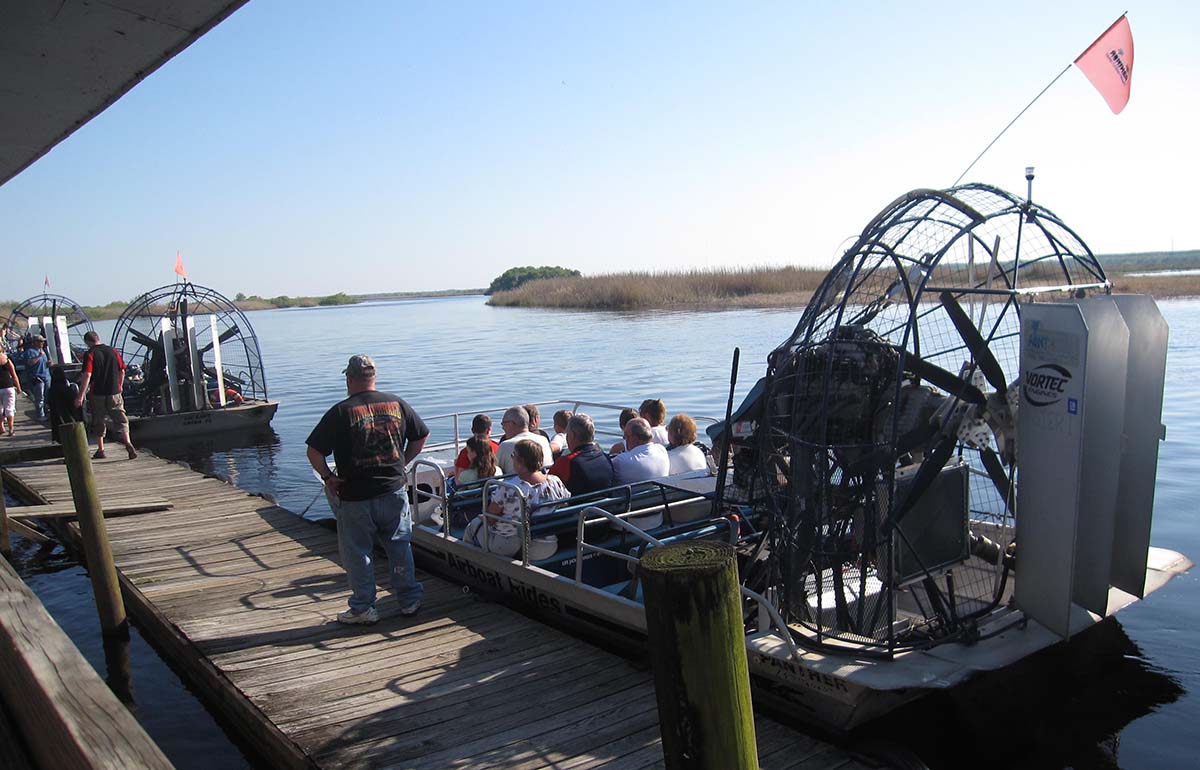

Having spent almost an entire day at the Kennedy Space Center, we decided to make some time for other attractions in the area. First up was a boat tour to see alligators. This meant that we would be experiencing a first time ride on an airboat, the characteristic method for gator viewing in Florida’s swampy marshlands. We reached Lone Cabbage Fish Camp, about a half hour by road from our hotel in Cocoa Beach and a fixture in the area since the 1940s. The place started out as a fishing outpost but is now quite overrun with tourists seeking gator views. Soon after our ticket purchases, we boarded the airboat, a flat-bottomed vessel with a huge caged propeller fan in the back. We sat on seats reminiscent of park benches and then we received hearing protection headphones to wear for the trip, as the propellers get quite noisy. Soon the airboat zipped on its way, skimming across the St. John’s River, the longest river in Florida. Around us were the grassy marsh, swamps and wetlands with breathtaking views. Before we knew it, the captain slowed down the boat to cut the noise and I had my first glimpse of an enormous alligator, resting on the marsh and soaking in the sun. It was not long before we saw more alligators as the boat now slowly glided along the river. There were water birds in the marshes, but although the brochure promised views of cows, bald eagles and wild hogs, we did not see any. It is a short ride of around 30 minutes and soon we were back at the dock, ready for our next activity of the vacation.

airboatsMy daughter decided that we should spend at least a few hours on the beach and so we trooped back to our hotel area to enjoy the sun and sand of Cocoa Beach. This is an Atlantic beach, almost 70 miles of it and the water was surprisingly calm. I knew that many people preferred going to the Gulf Coast beaches due to much calmer waters and an abundance of seashells. The Atlantic beaches were preferred by surfers due to high waves. Cocoa Beach is deemed to be the surfing mecca of Florida, there is a profusion of available surfing lessons, and the world’s largest surf shop is located here. But then, we are not a surfing family and we were glad simply to wade in the waters and enjoy the vista of the ocean.

And in the end how could we be different from other tourists? Giving in to our impulses and making our daughter happy in the process, we decided to visit one kingdom of Disneyworld. Keeping the theme somewhat intact, we went to Epcot, the only theme park we had missed on an earlier trip to Orlando. The “Experimental Prototype Community of Tomorrow” or Epcot was the second of the Disney theme parks and it opened in 1982. It was envisioned as a planned living community highlighting technological innovation but those plans fell to the wayside after the death of Walt Disney. Instead, the focus was kept on modern innovation through its attractions and an addition of world nation showcase.

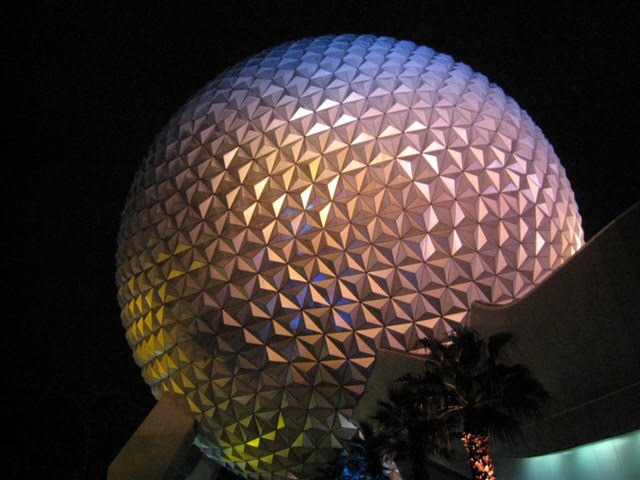
Epcot sphereEntering the park, we immediately viewed the iconic geodesic sphere, almost a symbol for Epcot. The original geodesic dome was the brainchild of Buckminster Fuller and it was first displayed as Biosphere at the Montreal Expo in 1967. Fuller conceived the sphere to house humans in need of survival but the idea never really caught on due to builders not being skilled enough to build such structures.

Then in the 1960s, along came Walt Disney with his vision for a utopian city, perhaps with a geodesic dome. Although his dream was never truly realized as he died before knowing about the Montreal Expo and Epcot became an entertainment ground, the geodesic sphere, now named Spaceship Earth became an immediate attraction at its opening. This theme park is different from the other Disney parks in that the attractions are geared towards science and nature and thus was considered to not be very child friendly. Nevertheless, we as a family enjoyed doing the tour of the greenhouses where a variety of plants and vegetables are grown. Equally inventive and wonderful were the visits to one of the largest salt-water aquarium and the ride along the wonders of the world. Our visit to Epcot was capped off by the signature fireworks display that is held every evening when thunderous but dazzling fireworks and lasers light up the nighttime skies.

Florida’s Space Coast turned out to be an ideal vacation getaway with something to suit everyone’s interest and taste.

If You Go:

For more information:

visitspacecoast.com

kennedyspacecenter.com

twisterairboatrides.com


Kennedy Space Center at Cape Canaveral: Ultimate Space Pass

About the author:

Susmita Sengupta, an architect by background, is a freelance writer who loves to travel. She and her family have traveled to various parts of the USA, Canada, Europe, the Caribbean, Middle East, Southeast Asia and India.

Kennedy Space Center Visitor Visitor Complex photo by Gzzz under the Creative Commons Attribution-Share Alike 4.0 International license.

All other photos by Susmita Sengupta.

  • The Vehicle Assembly Building at Kennedy Space Center
  • Touring a room of rockets
  • The massive Saturn V Center rocket
  • Airboats readying up for alligator viewing trip
  • The iconic Geodesic Sphere or Spaceship Earth at Epcot


Kennedy Space Center Day Tour with Airboat Ride from Orlando


Tagged With: Florida travel, Kennedy Space Center Filed Under: North America Travel

Caribbean: Discovering Strategic Spanish Fortresses in the New World

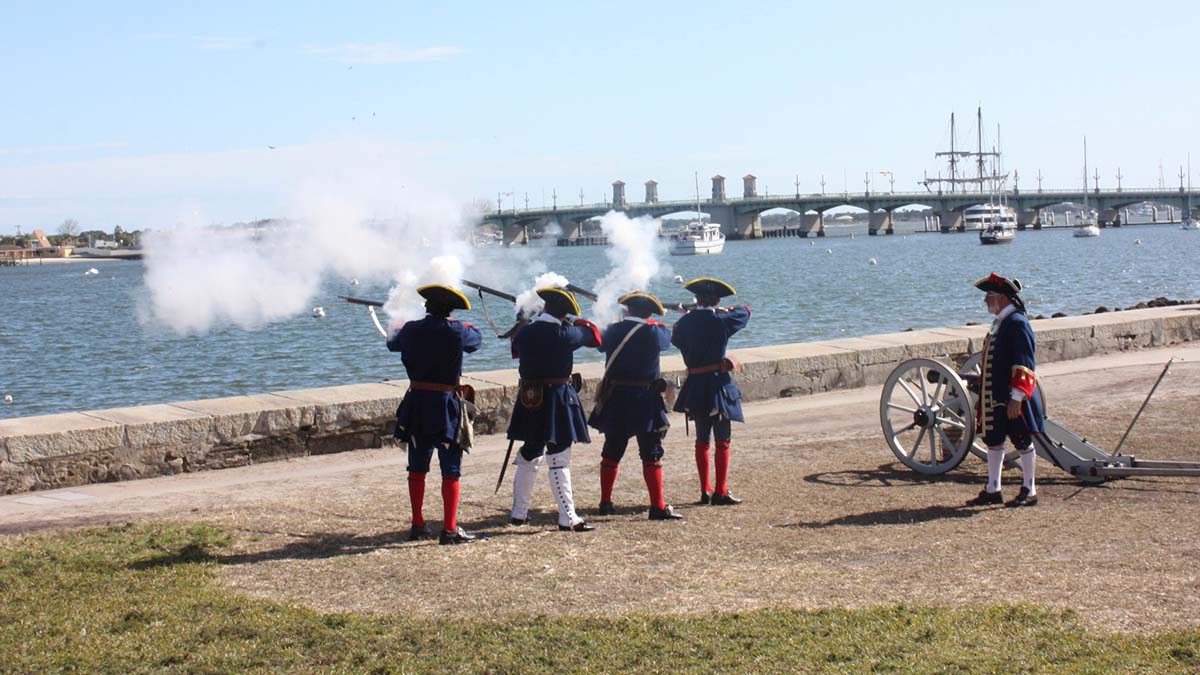
Recreation of soldiers at Castillo San Marcos

by Troy Herrick

In the 17th century, gold, silver and other treasures flowed into Spain like water from its overseas empire. Other European powers like Britain and Holland took careful notice of this wealth and commissioned privateers to “occasionally interrupt” the stream of treasure-laden galleons. The stakes were high and Spain had to protect its interests from the real “Pirates of the Caribbean” like Sir Francis Drake, Sir John Hawkins and Laurenz de Graaf. Dutch pirate Piet Heyn was particularly successful in capturing 90 tons of gold and silver, which was worth far more than a king’s ransom. Spain moved to turn the Caribbean Sea into its own mare nostrum (“our sea”) by constructing fortresses at a number of strategic sites including Puerto Rico, Florida and Mexico. Spanish ships could anchor in safe harbors as they gradually made their way to and from Europe.

Puerto Rico, the first major island with fresh water, was the gateway to the new world. The north equatorial ocean current and the northeast trade winds carried ships from distant Europe, 4000 miles away, right to its doorstep.

St. Augustine, Florida was the last port of call for galleons crossing the Atlantic back to Spain. The Gulf Stream carried the treasure-laden ships up the east coast of Florida right past this site before turning towards Europe.

Veracruz, Mexico was the site of the Spanish “Fort Knox.” Almost all the gold and silver from the new world passed through this city before being loaded onto galleons bound for Spain.

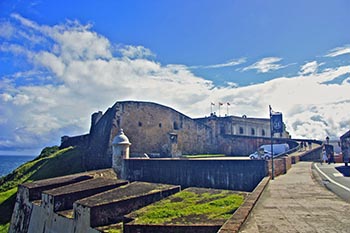
The Castillo San Felipe Del Morro and the Castillo San Cristobal – San Juan, Puerto Rico

In 1493 Christopher Columbus was the first European to land on Puerto Rico and the city of San Juan was established in 1521. The Spanish quickly realized that the nation controlling this settlement could shelter its vessels in the harbor behind strong fortifications and send its warships out to control the new world trade routes. Fortification of the island began in 1539 with the Castillo San Felipe del Morro (El Morro) and the structure you find now was essentially complete by 1790, except for a lighthouse that was added in 1846.

Esplanade in front of El MorroAs we approached El Morro from town, we found ourselves crossing a large open field. This esplanade allowed defenders to shoot at anyone foolish enough to attack the fort by land. At the Sally Port, we purchased our admission tickets from the park ranger “sentry” and found ourselves standing on the parade square known as the Plaza de Armas.

The periphery of the Plaza de Armas is lined with casemates which are vaulted rooms designed to disperse the weight of the structure above. Each casemate was originally designated for a specific use and now they house historical displays. The powder magazine houses a display of 10-12 inch diameter cannon balls and gunpowder casks. A bell over the entrance to one casemate marks the chapel; inside, hanging over the bare altar, you find a picture of the Virgin of the Navigators who watches over a harbor filled with old sailing vessels.

Descending the stairs to the lower level you find the casemates where soldiers lived and worked; these include barracks, kitchen and forge. After seeing these, visitors may be left with the impression that morale was very low in this Castillo. Life was rough and a soldier’s pay was not only small but also not guaranteed to be available either.

El Morro was designed to protect the harbor below from attack by sea. Unfortunately this fortress was not designed to protect the city. This weakness was exploited by the English in 1595 and 1598 and the Dutch in 1625 who all inflicted heavy damage to San Juan. Realizing their strategic error, the Spanish constructed the Castillo San Cristobal to protect San Juan, and El Morro, from a land-based attack.

Castillo San CristobalThe Castillo San Cristobal began as a small triangular structure in 1634 and evolved into the largest fortification in the new world by 1782. The strength of this fortress was put to the test when the British attacked in April 1797. They were repulsed by the defenders and it was easy to see why when you consider that the main battery alone had over 30 heavy guns trained on the attackers. A neatly assembled pile of cannon balls still remains on the battery deck, just in case.

As with El Morro, San Cristobal has a number of casemates around the periphery of the Plaza de Armas. One was the barracks and it contained two long, low-lying beds, each accommodating 9 to 10 soldiers. Every soldier was issued a gray-brown woolen blanket. At the far end of each bed is a drum. You also find an example of an ammo pouch and a blue field pack with shoulder straps. What you do not see are uniforms because in the 17th century Spanish soldiers were not issued with these by the military. Instead they wore red sashes or badges as a means of distinguishing themselves from the enemy.

One unusual feature about the Castillo San Cristobal is that the chapel is not housed inside a casemate. Rather it is outside, exposed to the elements. It is not clear why this was the case.

Both fortresses feature a number of sentry boxes (garitas). Each accommodated a single guard and allowed for a 180-degree view of the area. There is an open entrance on the side and a slit from which the sentry could fire his rifle while at the same time minimizing his own exposure to return fire. The most infamous garita, known as the Devil’s Sentry Box, was situated below the northern wall of San Cristobal, just above the water. Soldiers were afraid to be posted here in the dark of night because it was believed to be haunted. You can visit this garita but only during daylight hours.

With the two fortresses, San Juan had become the most heavily fortified settlement in the Caribbean. While both castillos were besieged, neither ever fell to the enemy. The only time the Spanish were displaced was in 1898 when Puerto Rico became a U.S. Territory after the Spanish-American War.

Visitors should also note that the Castillo San Felipe del Morro and the Castillo San Cristobal are not the only fortresses in the vicinity. El Morro had a smaller twin, the Fortin de San Juan de la Cruz (also known as El Cañuelo), on the opposite shore of the bay; it is still clearly visible in the distance. Combined, they provided crossfire across the bay in case of enemy attack.

San Cristobal’s smaller twin is the Fortin San Jeronimo which still “protects” the San Antonio Bridge linking the islet of Old San Juan to the main island. Curiously while we were on the islet, a fleet of taxis blockaded the bridge to protest the recent licensing of Uber in the city. There was no response from the Fortin San Jeronimo at that time.

Castillo de San Marcos – St. Augustine, Florida

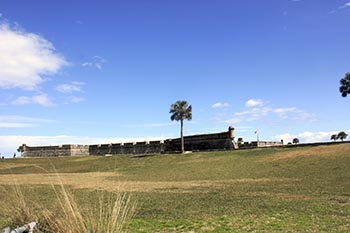
Castillo San MarcosIn 1565 Conquistador Pedro Menendez de Aviles, accompanied by 600 soldiers and colonists arrived in Florida to establish a series of “presidios” (fortified towns) to defend treasure-laden ships en route back to Spain. Construction of the Castillo de San Marcos, the most northerly of these presidios, was essentially complete by 1695. The bastion design allowed defenders to mount cannons in such a way as to get a clear shot at the enemy from every possible angle.

Walking across the field just outside the entrance of the Castillo, we encountered eight “Spanish” soldiers dressed in 18th century uniforms and shouldering muskets. [TOP PHOTO] The commanding officer barked out orders in Spanish to commence a rifle firing drill. Shortly after, the artillery men fired a three pound mortar. Curiously an incoming motor boat suddenly changed direction at the same time. It was well out of range by the time this piece of artillery was reloaded.

Entering the castillo, we crossed a well-worn wooden drawbridge to the Sally Port and passed a sentry holding a rifle with fixed bayonet. We found ourselves standing on the Plaza de Armas, which was again surrounded by casemates. Two casemates featured different types of cannon shot – solid cannon balls, bar shot, chain shot, grape shot and the long-handled tools (approximately 8 feet in length) required to load, fire and clean the big guns.

Barracks were equipped with two 26 foot long raised wooden platforms lining the walls of the casemate. Each had a single light gray mattress on top, capable of accommodating six soldiers. A short run outside brought the soldiers to la necessaria, an 18th century latrine featuring six seats and no privacy. The “modern” flushing system required a bucket of water drawn from a nearby barrel.

One casemate functioned as a treasury room where military pay chests, valuables and important documents were kept; another was a chapel with a stone altar set against the back wall.

The Castillo de San Marcos was never taken by force but in 1763 the St. Augustine colony was ceded to Britain after the Seven Years War. Spain would later reclaim St. Augustine in 1784 under the Treaty of Paris after having assisted the Americans during their Revolutionary War. Eventually in 1821, Florida was traded to the United States to settle a debt.

Fuerte de San Juan de Ulua – Veracruz, Mexico

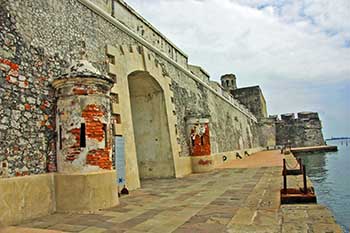
Muro de las Argollas at the Fuerte de San Juan de UluaIn 1518 Spanish conquistador Juan de Grijalva and 30 soldiers landed on a tiny island in the harbor of what is now Veracruz and named it San Juan de Ulua. The first fortifications were constructed in 1535 and then upgraded in 1600 after this site was appointed as an official repository for all treasures collected in the New World and the Philippines. After 172 years and several expansions, the bastion was completed. Its ramparts accommodated 250 cannons to provide a warm welcome for any undesirable visitors.

All incoming treasure was transported to Veracruz by mule train. This included much of the Andean gold and silver produced as well as exotic woods and spices from the Philippines, all of which converged at Acapulco on the Pacific Coast. Added to this was the Mexican gold and silver. Upon arrival at the Fuerte de San Juan de Ulua, this horde was catalogued and stored until the annual gold fleet gradually arrived from Spain. A secure storage facility was urgently required to handle the inconveniently large volumes of treasure that were assembled.

As we approached the site, we first passed a modern sentry box as this fort is situated on a Mexican naval base. After purchasing our admission tickets, we then stepped back in time and passed an old Spanish garita at the Sally Port.

Once inside at the Plaza de Armas, your first surprise is the beige façade with white leafy trim of the Casa del Gobernador (Governor’s House) that almost seems out-of-place with the rough-cut stone features of the other walls surrounding the plaza. A Spanish governor was installed here in 1601 to secure all of the treasure being shipped to Spain. The finely finished rooms of the Governor’s House now contain a museum displaying armour, pikes and flintlock pistols in addition to statues of saints, local indigenous pottery and figurines.

Typical of Spanish fortifications, the Plaza de Armas has casemates around the periphery. Unfortunately, those at San Juan de Ulua have been poorly maintained. Unique about these casemates is that they were used to store gold and silver. Look inside one of them and imagine a room filled with gold bars to a height of 4 feet or silver bars to a height of 6 feet. Each casemate was filled with enough precious metal to fill a single galleon to full capacity. The difference in height between gold and silver was necessitated because the former is much heavier and any greater volume of gold might potentially sink the ship. Once a casemate was filled to capacity, the precious metals were protected by large wooden doors and a padlock.

Climb the narrow staircase in the southeast corner of the Plaza de Armas to the second level. At the top of the stairs you find two observation towers that were constructed in 1584 to provide an early warning system in case of attack. The Baluarte de San Crispin in the southwest corner and the Baluarte de San Pedro in the southeast corner are both approximately 44 feet high. You also find a number of gun platforms strategically located around the ramparts on which to mount cannons.

Return to the Plaza de Armas and exit to the dock area on the south side of the fort. What you find is that there is only enough mooring space to accommodate 3 or 4 ships at a time. The wall along the docks is known as the Muro de las Argollas (wall of rings) and is named for the 35 heavy brass rings used to securely tie off the vessels while they were being loaded. Empty galleons were loaded to full capacity before they set sail to Havana and then eventually on to Puerto Rico and ultimately Cadiz or Seville in Spain.

The total volume of metals passing through the Fuerte de San Juan de Ulua each year would fill 60 to 80 galleons. At the same time it is impossible to believe that this huge stash of treasure was ever accumulated on site at any one time, as there was insufficient storage capacity. Logistically mule train delivery could not be coordinated with the arrival of the galleons. Since it was unlikely that the whole fleet arrived in Veracruz at the same time, there would likely have been sufficient time to replenish the treasure stores after they were depleted. It was only necessary to have enough treasure on hand to guarantee that each ship could be loaded to full capacity after they trickled into port.

Head back inside the fort and then exit by way of the Sally Port. Once outside, cross the drawbridge known as “The Bridge of Sighs” over to the Half-moon Bastion. This bastion housed political prisoners from 1755 to 1914. Up to 30 prisoners at a time were cruelly chained together in each dark, dank casemate. The only light source was two slits in the wall and water droplets continuously fell from the ceiling. Prisoners were arranged in such a way as to receive the Spanish version of the Chinese Water Torture. The prisoners have long since been replaced by short stalactites and stalagmites.

The Fuerte de San Juan de Ulua was designed to protect Spanish treasure and not the town of Veracruz just across the harbor. The Dutch exploited this weakness and sacked Veracruz in 1683 but the fort remained secure.

The fortress was never taken by force while it was under Spanish control. Even after Mexican independence from Spain in 1821, Spanish troops stubbornly occupied this site until November 1825 when they finally walked away into history.

If You Go:

The Castillo San Felipe del Morro and Castillo San Cristobal are both located in Old San Juan. A combination ticket to both is $5. The two sites are within walking distance of each other. They are also linked by the same trolley route. The trolley is free to ride.

You can visit the sites of El Cañuelo and the Fortin San Jeronimo but you cannot enter either of them. El Cañuelo has been filled with concrete by the U.S. National Park Service in order to prevent further deterioration and the Fortin San Jeronimo is closed behind a chain link fence.

The Castillo de San Marcos is located at 1 S. Castillo Drive St. Augustine, Florida. Admission is $10.

To reach the Fuerte de San Juan de Ulua in Veracruz, you must travel there by tour bus from the Malecon near the Mercado de Artesanias San Miguel Aleman Valdes on Avenida Insurgentes. The cost of the bus ride is 35 pesos. This does not include admission to the fort. The price of admission to the fort is 55 pesos. During the summer there is supposedly a boat that will take you directly across the harbor to the fort but our visit was in February so this cannot be confirmed.

About the author:
Troy Herrick, a freelance travel writer, has traveled extensively in North America, the Caribbean, Europe and parts of South America. His articles have appeared in Live Life Travel, International Living, Offbeat Travel and Travels Thru History Magazines.

Photographs:
All Photos by Diane Gagnon. A freelance photographer, she has traveled extensively in North America, the Caribbean, Europe and parts of South America. Her photographs have accompanied Troy Herrick’s articles in Live Life Travel, Offbeat Travel and Travels Thru History Magazines.


Tagged With: Florida travel, mexico travel, Puerto Rico travel Filed Under: Caribbean Travel

Florida: Vizcaya Villa

Villa Vizcaya

Italian Renaissance Gem in Steamy Miami

by Suzanne Ball

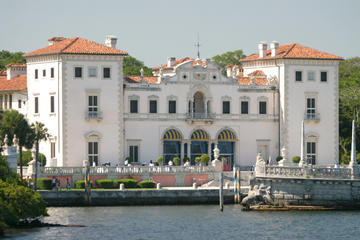
When people think of Miami, they picture sunny beaches, vibrant nightlife, art deco, and authentic Cuban food. But they often miss the chance to visit one of the country’s most historical mansions and example of Italian Renaissance style: Villa Vizcaya, described as “the finest private house ever built in America.”

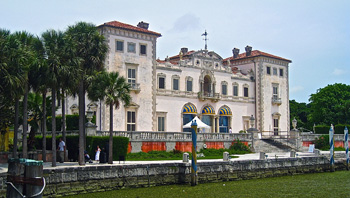
Now called Vizcaya Museum and Gardens, the estate was the dream of millionaire James Deering, heir of the International Harvester fortune. One of America’s original “snowbirds,” Deering began planning his winter residence in 1910. He chose 180 acres of primeval jungle, a few miles south of Miami, directly on Biscayne Bay. He envisioned guests approaching and first seeing the Main House by water, and wanted it to be near the shore so they could disembark as if in Venice. “Place my house on the bay,” he directed the architect.

Venetian style barge and gazeboVizcaya was designed with an open central courtyard, surrounded by four towers. Although the exterior duplicates 18th century Italian architecture, the building was constructed with 20th century techniques to adapt to Miami’s subtropical climate. Deering was a trained engineer and insisted on a concrete structure with steel-enforced floors to combat humidity, decay, and termites. He included modern features such as an elevator, telephones, and an “annunciator” to beckon servants from anywhere in the house.

Construction on the Main House began in 1914 and was ready for Deering on Christmas Day, 1916. During the height of construction, Vizcaya hired ten percent of Miami’s workforce, as well as craftsmen and artists from Europe. Witold Rybczynski, Professor of Urbanism at University of Pennsylvania, explains the level of detail involved: “There are thousands of craftsmen and workers and iron work and the [roof] tiles came from Cuba … there were old homes in Cuba and they bought the whole roof and shipped them over because they liked the sort of old patina on these clay tiles so it was a very, very thought out project.”

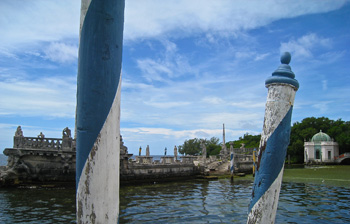
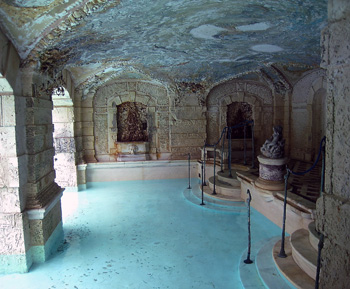
pool grottoDeering was a renowned and extravagant host. His many guests included actress Lilian Gish, Henry Ford, and President Warren G. Harding. He placed a concrete barge in the bay and used gondolas or motor boats to transport guests for tea and cocktails. He also arranged for concerts and fireworks from the barge, and guests would watch from the shore. Originally, in true Venetian manner, the barge and gardens were accessed by canals. Deering would guide visitors through the canals, ending at the barge or the nearby gazebo.

Then there is the Main House. Over 38,000 square feet, with 54 rooms. Today, visitors can view 34 decorated rooms with more than 2,500 original furnishings and art collections. Each formal room has a theme, color palate and lavish furnishings, often based on different Italian cities or historical periods. On the main floor, Milan inspired the Music Room; Palermo provides a Southern Italy influence in the Reception Room. Deering’s bedroom is furnished in the masculine style of the Napoleanic era. Visitors are astounded at the opulence of this winter residence, meant to be inhabited from November till the start of Lent.

Enormous quantities of Italian antiques and artwork were shipped to Vizcaya, overseen by Deering’s artistic director, Paul Chalfin. Chaflin was fluent in Italian and an expert in Italian furniture and decorative arts. Upon meeting, Deering and Chaflin struck an immediate friendship that lasted until Deering’s death. Vizcaya would be Chaflin’s only significant commission, yet an outstanding legacy.

A lifelong bachelor, Deering installed many activities that could especially be enjoyed by male guests; the swimming pool featured a covered grotto that extended into the sunlight. Today’s gift shop and café were once a bowling alley, billiards, smoking, and changing rooms. During a 2011 renovation after Hurricane Wilma caused extensive damage in 2005, care was taken to maintain the original marble and terrazzo floors, copper lighting fixtures, and leaded-glass doors.

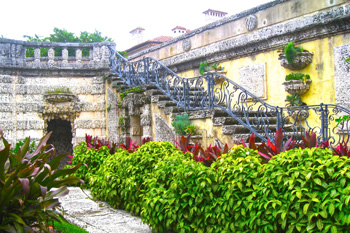
lower gardenDeering also wanted formal European gardens, adapted to the Florida climate and flora. The garden design included Deering’s favorite flower, orchids, with 2,000 specimens placed throughout the estate, and now in the new David A. Klein Orchidarium. The gardens were completed in 1923. Deering would only live for two more years to enjoy his magnificent estate. Suffering from pernicious anemia for years, he died on a steamship returning from Paris in 1925.
The ten acres of formal gardens are spectacular and well-maintained. Local coral stone was used for stairs and planters, with influences from Florence and Rome. Reflecting pools and well-trimmed hedges are abundant. Statues from 18th century villas in Italy decorate the gardens, along with antique busts and vases.

Vizcaya is a popular location for photography, especially for bridal and quinceañera (the celebration of a Latina girl’s 15th birthday) events. It has also been the venue for political meetings, including the 1987 meeting between president Ronald Reagan and Pope John Paul II, and the 1984 Summit of the Americas hosted by President Bill Clinton.

2016 is the Centennial of this National Historic Landmark. In the humid climate, preservation of the Main House and its furnishings is ongoing. Vizcaya Museum and Gardens is now maintained by the Miami-Dade County.


Transportation to Vizcaya Museum and Gardens

If You Go:

♦ Viscaya Museum and Gardens is located at 3251 South Miami Avenue, Miami, FL 33129. Parking is free.
♦ From downtown Miami, Vizcaya is 2.6 miles, about 7 minutes. From Miami Beach, 11 miles, 21 minutes. From South Beach, 8.7 miles, 17 minutes.
♦ Hours: open daily 9:30 am to 4:30 pm, except Tuesdays, Thanksgiving, and Christmas.
♦ General admission is $18, with discounts for children, seniors, students, and military, and veterans.
♦ Accessibility: Vizcaya has limited handicapped access, due to the age of the building. There are many steps and uneven floors. Wheelchairs can use the original elevator; several ramps have been installed. Maps for access points are available.
♦ No photos or videos are permitted within the Main House. Visitors are welcome to take photos in the gardens and on the grounds.

About the author:
Suzanne Ball is a longtime freelance writer, specializing in travel and health topics. After walking the ancient 500-mile Camino de Santiago across northern Spain alone, she published an ebook to encourage other women and solo travelers to plan and pack for their own adventure. Other work has appeared in a Hilton Hotel magazine, Trip101, La Concha, and a variety of online websites and company blogs. Her personal blog was carried by the Seattle Post-Intelligencer. Suzanne loves it all: local, domestic, and international. She is a member of the International Travel Writers and Photographers Alliance.

All photos are by Suzanne Ball:
Main House overlooking Biscayne Bay.
Barge and gazebo, with Venetian posts
Pool grotto
Lower garden with coral stone steps and planters


Tagged With: Florida travel, Miami attractions Filed Under: North America Travel

Florida: Viva Ybor! Place of History, Cuisine and Cigars

Ybor Cuban Club

by Karen Pacheco 

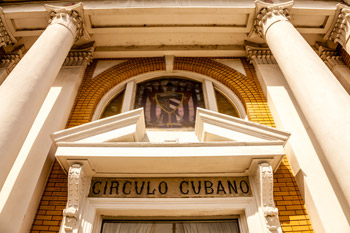
On Avenida Republica de Cuba, we stand before a yellow brick, neo-classical building reading the historical marker about El Circulo Cubano (the Cuban Club). This structure, built in 1917, contained a theater, pharmacy, library, ballroom and cantina, and is listed on the National Register of Historical Places. We enter and ask the receptionist if we can look around. From her baffled reaction, we surmise she doesn’t get this request often. After a briefing on what’s viewable and what’s off limits, our exploration begins.

We’re not in Cuba. We’re in Ybor (pronounced EE-bor) an historic, multi-cultural neighbourhood of Tampa, Florida, former flourishing cigar centre of the world. From boom to bust, Ybor has reinvented itself in response to economic and political waves. While it’s not the rich environment it once was during the late 1890’s to 1929; this community has evolved into a delightful mix of culture, cuisine and history. To sample that, we begin by walking the avenidas to explore some historic structures built during Ybor’s golden era.

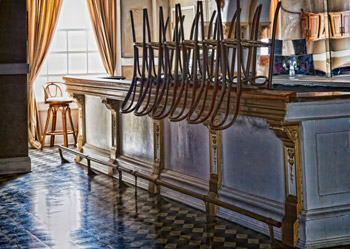
Cuban Club barIn the Cuban Club we climb tiled stairs, woven with ornate wrought-iron railing to the second floor lobby. An expansive area with inviting overstuffed chairs nestle in one corner; plaques honouring past leaders dot the walls. Sunlight splashes through aged curtains lighting the white with gold trim bar. Cane chairs are stacked on the bar’s carved wooden ledge; mirrors behind, fogged and cracked with age.
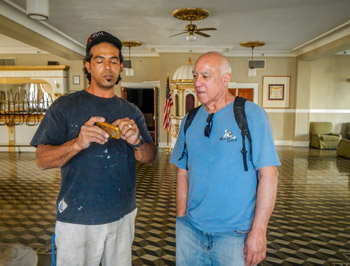
Fortuitously, we run into Jesus (pronounced Hey-SUS) Cuban-American caretaker at the Circula Cubano. He shows us an entanglement of knob-and-tube wiring; its replacement on his to do list. Pleased by our interest in the building, he offers a tour. We learn that Jesus’ family was among approximately 500,000 Cubans who immigrated to Florida between 1959 and 1980, motivated by politics and economics.

The guide, Jesus (left), with the author's husbandOur eager guide escorts us to the two-level 450-seat theater, ballroom, cantina and salon. Glenn Miller and Tommy Dorsey’s big bands once played in the grand ballroom here. Now it’s primarily a wedding reception venue; not what it once was, but still alive and thriving.
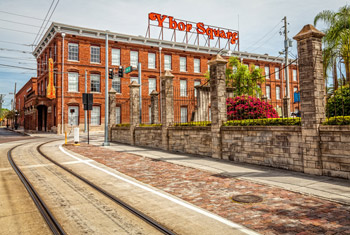
A population that grew from 800 in 1880, to 16,000 in 1900, fueled development of mutual aid societies like El Circulo Cubano. Risk-taking entrepreneurs Ignacio Haya, a Spanish cigar manufacturer from New York, and Don Vincente Martinez-Ybor, a Spanish immigrant to Cuba, brought the cigar industry.

Martinez-Ybor acquired forty acres northeast of downtown Tampa in 1885 for its proximity to a port and railway, and its favourable climate. In 1929, there were two hundred cigar factories (Martinez-Ybor’s and others) producing over 500 million cigars annually. Ybor gained the indisputable title ‘cigar capital of the world’. Martinez-Ybor’s original three-storey factory on 9th Avenue built in 1886, continued to operate as a cigar plant until after World War II. It then transitioned from galleries and studios, to marketplaces and a restaurant. The Church of Scientology acquired it in 2010. Its striking red brick exterior dominates the beginning of Ybor’s street trolley route and the historic district that evolved around it.

entrance to YborBesides a Cuban social club, Ybor has several others: Italian, Spanish and German. These mutual aid societies provided educational, social and medical services for their ethnic group. Two of them had hospitals; some had boxing and dancing lessons. Tabaqueros (tobacco workers) paid weekly dues for each family member for these services. Social clubs enriched Latinas’ lives during those years.
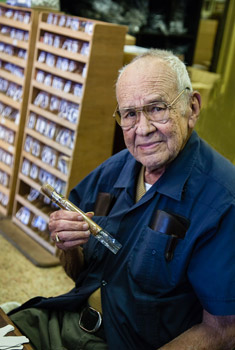
We stroll towards La Septima (7th Avenue) Ybor’s commercial centre. Here we visit the Italian Club whose mission is similar to that of others–honour culture and “… maintain the historical facility as a functioning memorial to the working class immigrants.” We’re welcomed to browse the building. Today, wine vendors host a convention in the ballroom. Renting out rooms and historical preservation grants help to keep these once thriving clubs afloat.

cigar making manContinuing along La Septima we amble past storefronts noting a variety of cigars offered: doble robustos, torpedos, Churchills and even orange, coffee and strawberry flavoured. We stop to watch some cigar makers rolling by hand using a cutting board, Chavata (knife) and shaping tools. About one hundred years ago, factories were filled with more than a thousand cigar workers (tabaqueros). The final steps were completed by the highly skilled and well paid torcedores. Lectors read to them to lighten the tedium of the task. Most made decent wages as they were paid by piecework. And, yes, a few women were among these workers.

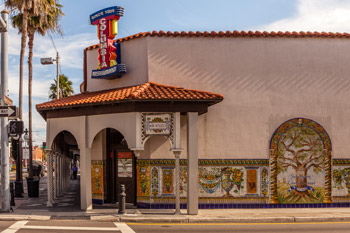
Our walk continues along La Septima. Patrons at outside tables, listen to toe taping Latina music, sip a Café Cubano (espresso, sweetened with demarara sugar) and puff on their cigars. The acrid smoke invades our non-smokers’ nostrils; we won’t be sampling. For those partaking, it’s seems a leisurely, relaxed indulgence.

Colulmbia restaurantAll this walking wakens our appetite. Lunch is at the oldest restaurant in Florida, the Columbia Restaurant, founded in 1905, the cigar industry’s zenith. This one-of-a-kind eatery consumes a whole city block, contains fifteen dining rooms and a lavish bar worth the visit to see. Patrons line up, some coming on bus tours to enjoy this gem of culinary history. The menu offers a variety of Spanish, Cuban, Italian, and fusion selections: Spanish bean soup, Cuban black bean soup and the award-winning ‘1905 salad’ Columbia’s original, along with a mixto (Cuban sandwich) a multi-cultural mix of ham, roast pork, Swiss cheese and mustard on Cuban bread. A pitcher of Sangria or Mojitos goes well with most menu items. Flamenco dancers perform nightly.
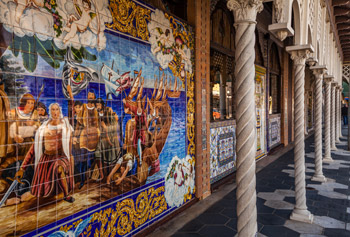
Cuban sandwiches are still made with Cuban bread baked at La Segunda Centrale nearby. This bakery also continues as a family owned and operated business, celebrating its 100-year anniversary this year. The guava turnovers are highly recommended.

Ceramic tile mural outside El CentroAnother historic building where one can feast is Carne, located in the former El Centro Espanol (Spanish Social Club). A red-bricked edifice with white stones accenting arched windows, hosts this restaurant. Cast iron balconies and a simple, but formidable Moorish-style archway, add to its unique French Renaissance Revival architecture. Now it’s home to shops, businesses and Carne, the restaurant where previously we enjoyed the early bird prime rib dinner and Finlandia Martinis. Both meal and beverage were bargains, generously portioned and palette pleasing.
Our Ybor sampling of culture, history, and cuisine comes to an end–minds and stomachs sate. This unique village illustrates survival, tenacity and cultural pride. Viva Ybor!


Historic Ybor City Food Tour

If You Go:

♦ The TECO line streetcar system from downtown Tampa to Ybor takes under fifteen minutes
♦ If you are in Tampa either departing on or returning from a cruise, it’s a rewarding day trip to Ybor
♦ A pleasant diversion from the beach scene, about a forty-minute drive from Gulf beaches to Ybor
♦ Take a break from Disney Orlando and go to Ybor (1 hr. 15 mins. 82 miles along I-4 West)
♦ History and photographs from Ybor’s past
♦ Columbia Restaurant (reservations recommended)
♦ Carne Chop House
♦ La Segunda Centrale Bakery

About the author:
Karen’s interest in the visual arts began with media studies at SFU. Her passion for travel photography was sealed when given a Pentax SP 1000 prior to a year’s trip to Europe, Middle East and Africa (1975-1976). Her career as an educator ended with an assignment in Shenzhen, China, allowing for Asian travel opportunities. Since then, she has devoted her time to photography and freelance writing. Recent travels include the Canadian Maritimes, Hawaii, western USA National Parks and the southeast United States. Karen is a member of the Delta Photo Club, B.C. Association of Travel Writers and CAPA (Canadian Association for Photographic Art). Several of her images have won awards. Her work can be viewed at: northohana.zenfolio.com

All photos by Karen Pacheco:
El Circulo Cubano façade
El Circulo Cubano bar
Jesus with author’s husband (El Circulo Cubano)
Entrance to Ybor, historic red brick cigar factory
Cigar roller
Columbia Restaurant
El Centro Espaniol

Tagged With: Florida travel, Ybor attractions Filed Under: North America Travel

  • 1
  • 2
  • Next Page »

MORE TRAVEL STORIES:

Iconic Sites of Rome: From Colosseum to Capitoline Hill

Nazareth, Israel

Christmas on the Costa Blanca

Famous Food of Meghalaya: A Flavorful Journey Through Traditional Delights

Touring The Romantic Castles of the Costa Del Sol

Tracing Gold Rush Footsteps in Sacramento, California

Egypt: Nubian Boatmen of the Nile

The Other Fiji


SEARCH

DESTINATIONS

  • Africa Travel
  • Antarctica travel
  • Asia Travel
  • Australia travel
  • Caribbean Travel
  • Central America Travel
  • Europe Travel
  • Middle East Travel
  • North America Travel
  • Oceania Travel
  • South America Travel
  • Travel History
  • Travel News
  • UK Travel
  • Uncategorized
  • World Travel
facebook
Best Travel Blogs - OnToplist.com

Copyright © 2025 Cedar Cottage Marketing | About Us | Contact | Privacy Policy | Terms & Conditions | Copyright Notice | Log in