Travel Thru History

Historical and cultural travel experiences

  • Home
  • Airfare Deals
  • Get Travel Insurance
  • Writers Guidelines

Discovering the Beauty of Italy: A Travel Adventure Through History and Culture

Italy travel

Italy is one of those countries that feels familiar even before you visit. Maybe it’s the famous food, the timeless architecture, or the romantic scenery that appears in so many movies. But once you actually step onto Italian streets, you realize there’s something deeper a feeling that history and everyday life exist side by side.

Traveling through Italy is more than sightseeing; it’s about living slowly, enjoying simple moments, and allowing each city to tell its own story.

Starting the Journey in Rome

My journey began in Rome, a city where every corner holds a piece of history. Walking through the streets felt like moving between centuries one moment you’re standing beside ancient ruins, and the next you’re sitting in a modern café watching locals go about their day.

The best way to experience Rome is simply by walking. While famous landmarks like the Colosseum and the Pantheon are breathtaking, the smaller side streets often hold the real charm. I found hidden bakeries, quiet fountains, and small piazzas filled with local life.

Traveling in a busy city like Rome also means constantly checking directions, booking tickets, or finding new places. Before starting the trip, I made sure I could stay connected using a SIMOVO eSIM, which made navigation and travel planning much easier without searching for local SIM shops.

The Slow Beauty of Florence

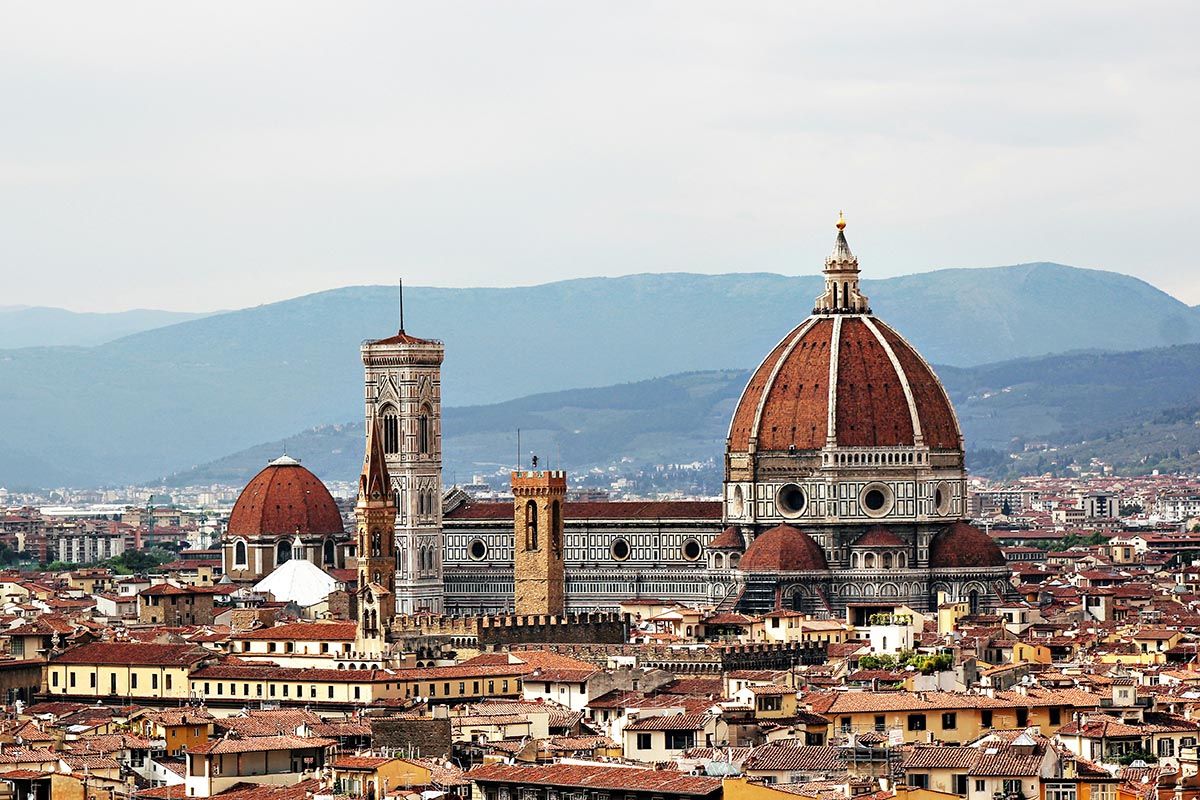
From Rome, I traveled north to Florence. The atmosphere here felt calmer and more artistic. Museums, historic buildings, and riverside walks created a peaceful rhythm that encouraged slower travel.

Florence is a city meant for wandering. Rather than rushing between attractions, I found myself spending time in small cafes, watching street artists, and simply enjoying the views from bridges crossing the Arno River.

One of the best travel lessons I learned here was that not every moment needs a schedule. Sometimes sitting with a coffee and observing daily life becomes the most memorable experience.

Exploring the Italian Countryside

Leaving the city behind, I headed into the countryside. Rolling green hills, vineyards, and small villages offered a completely different side of Italy. Driving through these quiet roads felt like entering another world slower, calmer, and far away from crowds.

Small towns often became unexpected highlights. Local restaurants served homemade dishes, and conversations with residents felt genuine and welcoming. These places reminded me that Italy isn’t only about famous cities; the real magic often lives in smaller, less visited areas.

Venice: A City Like No Other

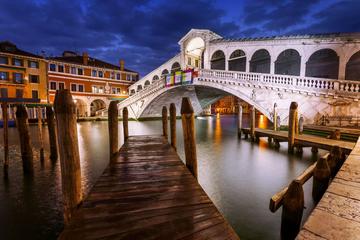
The final stop was Venice, a city unlike anywhere else. Walking through narrow alleyways and crossing endless bridges felt surreal. Without cars, the sound of water and distant voices created a unique peaceful atmosphere.

Getting lost in Venice is part of the experience. Sometimes I would intentionally choose unfamiliar paths just to see where they led. Hidden squares and quiet canals appeared unexpectedly, making each walk feel like a small adventure.

Travel Tips for Visiting Italy

After exploring different regions, a few practical tips stood out:

  • Travel light, as many streets and accommodations involve stairs
  • Comfortable walking shoes are essential
  • Train travel is efficient and scenic between major cities
  • Book popular attractions early to avoid long lines
  • Leave space in your itinerary for spontaneous discoveries

Italy rewards travelers who slow down and stay flexible.

Why Italy Stays in Your Memory

What makes Italy special isn’t only the landmarks or landscapes it’s the atmosphere. Meals last longer, conversations feel warmer, and life seems a little more relaxed.

Each region offers something unique, yet the overall feeling remains the same: a deep appreciation for culture, food, and everyday moments.

Final Thoughts

Traveling through Italy is less about rushing from place to place and more about enjoying the journey itself. From ancient streets to peaceful countryside views, every day brings a new experience that feels both exciting and comforting.

With a little preparation and a mindset open to discovery, Italy becomes more than just a vacation destination it turns into a personal adventure filled with memories that last long after the trip ends.

Tagged With: Italy travel Filed Under: Europe Travel

Italy Visa Checklist for Indians Traveling for Leisure or Business

While you’re thinking about traveling to Italy, you will have to remember that no matter if your travel involves going to incredibly beautiful cities/sites, eating amazing food or even just going for work, a couple things in a suitcase are not an option regardless. So as you start to come up with your travel plans for Italy, the main thing to keep in mind is if you’re traveling with an Indian passport you will need to be mindful of what visa, if any, you need. You want to make a checklist for making sure you are in the best possible circumstances for your application process that can be as smooth, hassle free, and successful as possible for your Italy Visa for Indians.

This Ultimate Guide has a full checklist for leisure and business travel, some tips and hints for you to take advantage of it to make the most out of your travel and successful process.

1. Identify the Right Visa Category

The very first question you are likely to ask yourself when making your travel plans is what is the correct visa type? Since Italy is part of the Schengen Area, Indian nationals need to apply for a Schengen visa to enter Italy.

  • Tourist Visa: This is the visa for leisure purposes, sightseeing, visiting family and friends.
  • Business Visa: A business visa is for attending conferences, business meetings, meetings, trade fairs or possibly other engagements you are participating in professionally.

When you are aware that you are applying for the correct visa, you will be sending the correct documents which helps push against the unwanted delays.

2. The Application Form

  • You need to complete the official Schengen visa application form for Italy. You need to also be aware of a number of things.
  • You have completed all of your details, ensuring that is correct and matches any supporting documents.
  • You have signed the form before submitting it.

If there is any mismatch on the application and documents then you will be at risk of having your visa application rejected.

3. Valid Passport

  • Your passport must be valid for at least three months beyond your anticipated date of departing Italy.
  • Your passport must have at least two blank pages for visa stamp entry purposes.
  • Most importantly, the passport cannot be older than 10 years.

4. Passport size photographs

  • Two current passport size photographs (3.5 cm x 4.5 cm) should be attached to each application form. Photos must be recent for Schengen Visa application/requirements.
  • White background.
  • Neutral expression.
  • Photographs must have been taken within the last 6 months.

5. Cover Letter

A cover letter is a key part of a Italy Visa for Indians application. In the cover letter they have to identify your reasons:

  • Identify the reason for the travel (business or leisure).
  • Identify travel dates and itinerary.
  • If applicable, identify any financial sponsorship.

6. Evidence of Travel Arrangements

You want to provide evidence of your travel arrangements:

  • Round trip flight reservation.
  • Complete hotel reservation or invitation letter from your host.
  • If you are going to more than one city in Italy- internal travel reservations.

7. Evidence of Financial Means

You will want to provide evidence that you are able to fund your travel to Italy:

  • Bank statement for 3-6 prior months.
  • Income tax returns (ITR) or pay slips.
  • If another person is sponsoring the trip- all sponsorship documents.

8. Travel Medical Insurance

You must have a valid travel medical insurance that includes:

  • At least €30,000 in medical costs.
  • Coverage in the Full Schengen Area.
  • The duration of insurance from travel date to travel date.

9. Employment or Business Documentation

To be provided according to your Purpose of Travel.

  • For Employees: The letter you provide should be written from the employer or company, identify the type of job titles you have, state that you (the employee) are leaving and when you are expected to return.
  • For Self Employed: Business registration, GST information, and recent bank statements for the business account.
  • For Business Visitors: letter of invitation from the Italian company, details of meetings you plan to attend, evidence of any prior professional correspondence.

10. Other Additional Documentation for your application

  • Proof of civil status (ex. marriage certificate, children’s birth certificates).
  • Previous passports that include any prior visa stamps, if applicable.
  • Your entitlements to attend the events/conferences if applicable.

Hints for a seamless Process of Italy Visa for Indians

  • Apply Early– Ideally you should apply a minimum of 15-30 days in advance.
  • Check Your Documentation – One of the more common reasons that delays occur is during the results process due to missing documentation.
  • Be honest – Always provide honest and truthful information or you could be banned and/or denied permission later.
  • Be aware of the possibility of an Interview – Consulates do like to ask a few questions related to your travel.

Time and Costs

Across the board, for applying for an Italy visa for Indians, processing time will take on average 15 to 20 working days. The fees will change based on the applicant’s age, visa type, and whether you apply directly for the visa, or through a service with an agency to assist you in your visa application.

Conclusion

No matter how you are experiencing Italy’s vibrant culture for leisure or making a transition to improve your business life, having an organized visa application process is the first thing to help you have a wonderful trip. Make a checklist, follow the requirements correctly or follow-up with the consulate to find out the most current requirements. If you are a traveller and want help with application processes, documents checks, and making appointments, professional visa facilitators like OneVasco will assist you when making the application process.


Tagged With: Italy travel Filed Under: Europe Travel

Best Things to Do in Milan When Visiting for the First Time

Aerial view of Milan

Milan… The original fashion capital of the world. The place where shopping is unprecedented. A city you can’t fully explore in a short holiday. A place any trip to Europe would be incomplete without. There are so many places to visit and things to do in Milan when visiting for the first time. And you will always be wanting more. The second-largest city in beautiful Italy boasts some incredible historical and cultural places. History is everywhere around you in this millennia-old city, and you can feel it in the air. At the same time, Milan is a modern place with edgy and innovative architectural designs. It masterfully combines the old and the new as images seamlessly transition from historically significant structures such as the Milan Cathedral to Bosco Verticale, a pair of residential towers whose magnificence is impossible to capture with words.

If you are planning your first visit to Milan, you should prepare. Begin by placing your valuables in storage. Milan is not a short bus drive away. Also, you will have a lot of exploring to do, and you don’t want to be distracted by worries about your possessions back home. Ensure their safety while away so you can be relaxed while soaking the beauty of one of the greatest European cities. Milan has so much to offer, and this one visit will not be enough. So, you want to make the most of it. I will help you with a list of things to do in this majestic Italian city.

Go and See Duomo

The first of the things to do in Milan when visiting for the first time is to go and see the Duomo.

A picture of Duomo in MilanThe Duomo di Milano, the Cathedral mentioned before, is the symbol of the city and the place you can’t skip. There is something special about Gothic architecture that is just so captivating. The stunning beauty and incredible intricacy of the facade are bound to leave you breathless. Right on top of it, reigning the city is the golden statue of the Virgin Mary.

The Cathedral and Piazza Duomo, the square in front of it, are at the very heart of the city. It is an amazing place to begin your exploration of the city because wherever you head from there, you will arrive at someplace incredible.

Like so many other tourists, I took some impressive pictures there. I try to steer clear of cliches, but sometimes, cliches exist for a reason. And when it comes to Duomo, no amount of photos of the same will ever be enough to capture the true beauty of this structure.

Also, make sure to go inside. No matter how long the line, it will be worth it. Climb to the terrace as well, especially if the day is nice. The ticket may be on the pricy side, but it’s worth every cent.

Check Out Some More Churches

Duomo is not the only church in Milan, although it is the most notable. Since your visit will probably limit you to a few other churches, here are some you absolutely have to see:

  • Basilica di Sant’Ambrogio – one of the oldest churches in Milan.
  • Chiesa di San Maurizio – aka the “Sistine Chapel of Milan” due to its spectacular frescoes covering the entire ceiling.
  • Santa Maria delle Grazie – The Last Supper, Leonardo’s masterpiece, and more incredible art is here, so you absolutely must see it.

No Visit Is Complete Without a Few Museums

There are so many fantastic museums in Milan that it’s hard to pick just a few. Alas, here are my favorite picks:

  • The Pinacoteca di Brera – This museum is home to an impressive collection of paintings by Italian masters, including Raphael, Caravaggio, and Mantegna. What is more, it is located in an artsy part of Milan. You will love a leisurely stroll down cobbled streets, a cup of coffee in one of the charming cafes, and an opportunity to take a romantic photo at every step.
  • The Pinacoteca Ambrosiana – An art gallery any art lover should visit. It is the first art gallery in the world open to the public.
  • The Museo del Novecento – A new museum that opened in 2010 and is dedicated to the twentieth-century art
  • The Museo Poldi Pezzoli – The museum originated in the 19th century as a private collection of Gian Giacomo Poldi Pezzoli. The exhibition includes a wide range of pieces, such as weaponry, glassworks, ceramics, jewelry, and furnishings.
  • Museo delle Culture – This museum is dedicated to foreign cultures and exhibits artifacts from the entire world.
  • Triennale di Milano – The museum of design and art; a place true design connoisseurs must visit. I found it incredibly engaging, and the exhibitions do a fantastic job at making you ponder the meaning of the displays.
  • The Museo Nazionale Scienza e Tecnologia – It is a great place if you are traveling with kids because there are many activities and interactive labs designed specifically with children in mind.

What’s a Visit to Milan Without Some Shopping?

Shopping in Milan… There is nothing better!

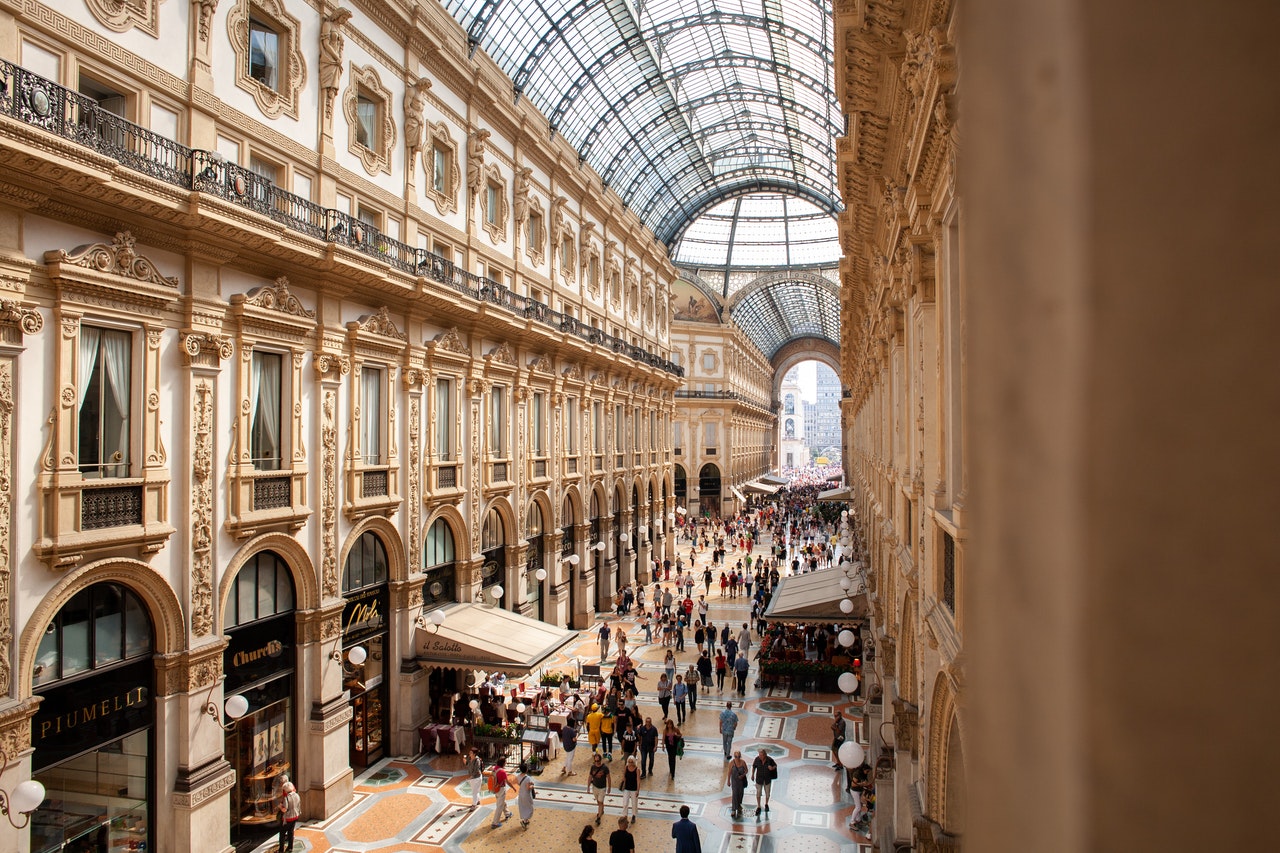
the Galleria Vittorio Emanuele II, one of the things to do in Milan when visiting for the first timeNot everyone can afford a shopping spree in Milan. But if there is a place in the world where you should treat yourself to something special, it’s Milan. It had been my biggest wish to go shopping in Milan, so you can imagine my thrill when I finally got there. Sure, my wallet took some beating, but I will not lie – it was well worth it! So, shopping, or at least window-shopping, is one of the things to do in Milan when visiting for the first time.

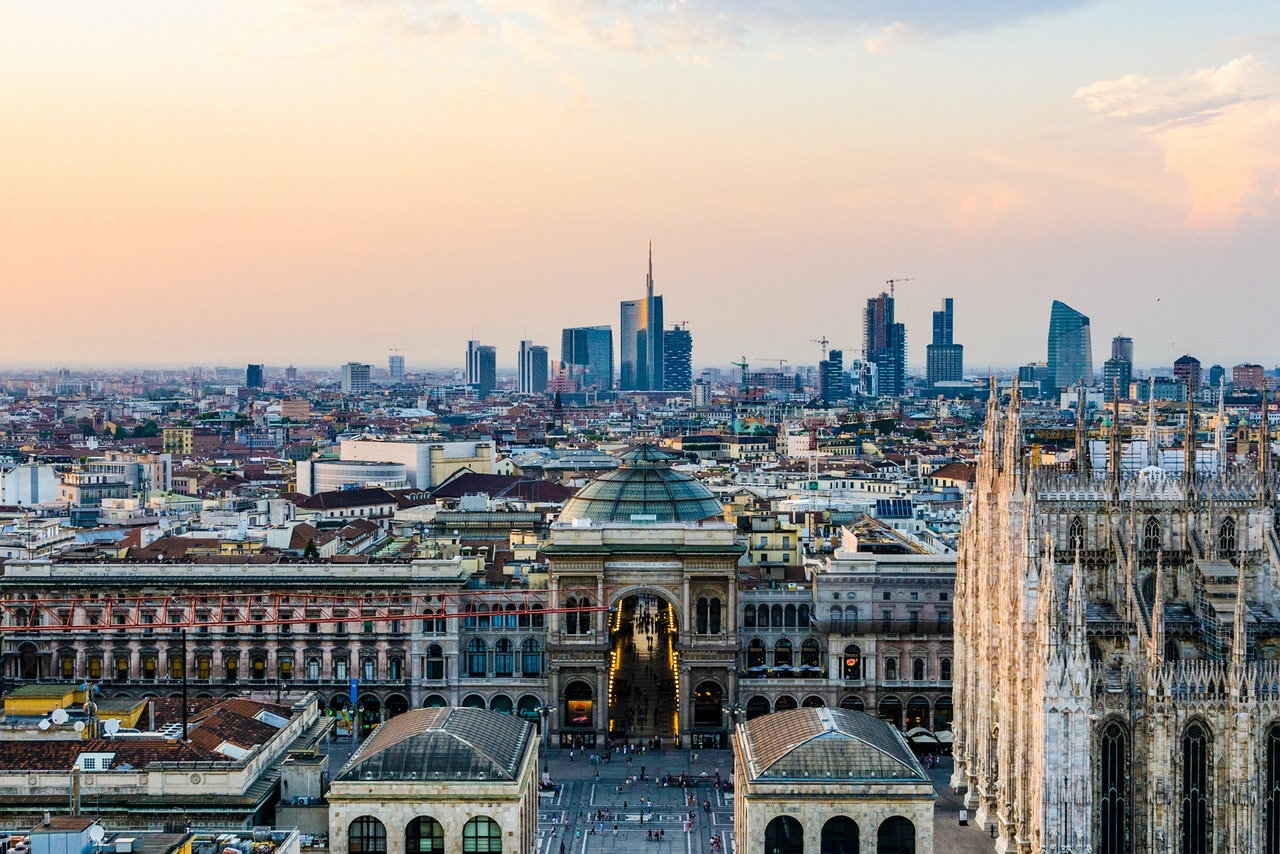
The high-end shops are mesmerizing. The affluence that the Galleria Vittorio Emanuele II exudes is intoxicating. Even if you don’t plan to buy anything, just walking around this place that looks like a veritable piece of art is a tremendous experience. Also, take a walk in Quadrilatero d’Oro, aka Quadrilatero della Moda. It is one of the most exclusive shopping districts in the whole world and where Milan’s fashion week takes place.

This area consists of four famous streets: Via Montenapoleone, Via della Spiga, Via Sant’Andrea, and Via Manzoni.

Of course, shopping on a budget is possible in Milan, too. The Highline Outlet, right there in the heart of Milan, offers a plethora of fantastic brands at discounted prices.

Experience the Local Life

A park in Milan on a rainy dayRoam and experience life in this city.

Something I always love to do when I travel is to take some time to just walk around, without visiting any landmarks, and with no specific plan. I always like to see what it’s like to be there as a local. All the places in the world are a lot more than famous monuments, museums, or restaurants. Thus, one of the things to do in Milan when visiting for the first time is to walk around its many different neighborhoods without a definite purpose. Get on the Metro to one of the areas, and start exploring and looking around. You don’t need a goal or a final destination. Just experience the area.

About the author:

Anita Atkins is a travel blogger and a true lover of art. She has visited all seven continents and made it her mission to travel to as many countries in the world as possible. Anita loves to bring a souvenir from her trips, and she has a massive collection of magnets and cookbooks from all over the world.

About the photos:

  1. Aerial View of City Buildings
  2. People Walking Near White Concrete Building
  3. People Inside Galleria Vittorio Emanuele II Shopping Mall In Italy
  4. People Walking in a Park

Tagged With: Italy travel, milan attractions Filed Under: Europe Travel

Naples, a Gift of Time

Naples Italy

by Alice McGinnis 

How can I unwrap the gift of time in Italy given to me by my sons? I was a newcomer here, in this adventure in wonderland. Bundled in this cradle of history and antiquity I felt younger.

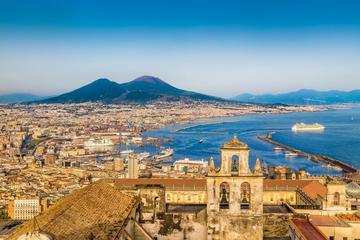
Our first stop was Naples, birthplace of pizza, the song Santa Lucia, the actress Sophia Loren and the oldest opera house in Europe. There we were, standing in the Piazza Dante where the taxi had dropped us off after a wild ride from the airport. Dwarfed by Dante’s raise statue, we wheel our suitcases over the piazza, cross the street in the direction Dante is pointing and walk through an arch to our B&B. A funny little elevator on the outside of an old building carries us two-at-a-time up to the third floor. After settling into our rooms we take time to rest then off we go to Bellini’s Restaurant to taste their famous pizza before setting off on our Naples Walk.

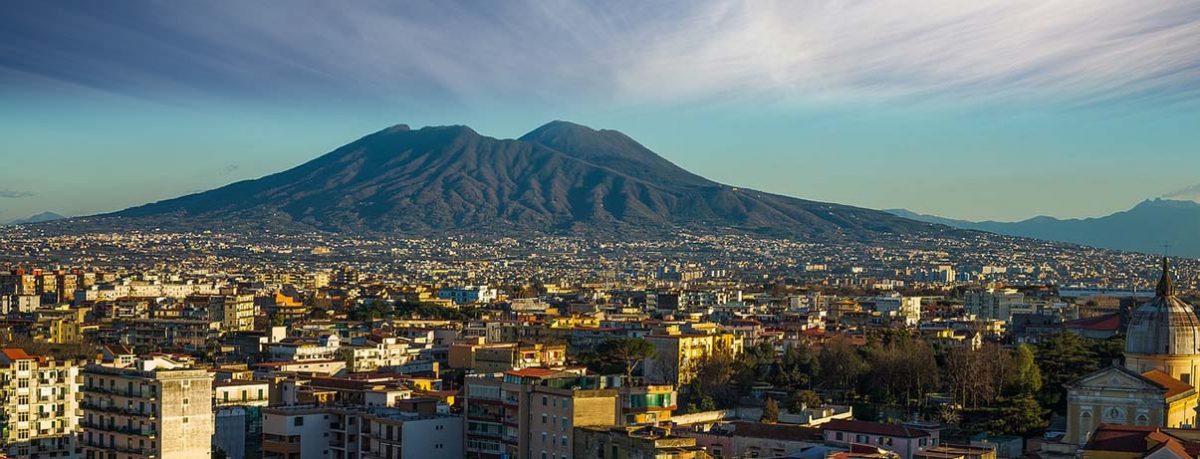
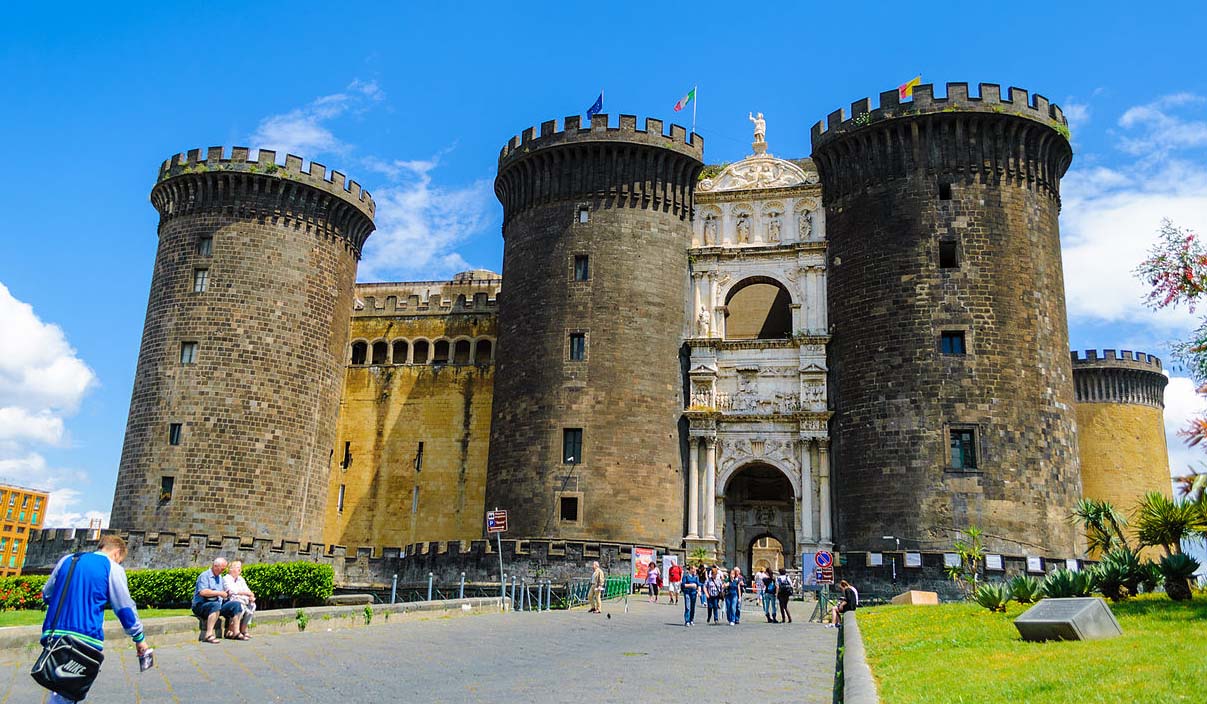
Castle Nuovo NaplesGreeting the locals with “buonjiorno” on our walk to the Palace Museum soon became automatic even though most Italians speak English. The floors of the Museums are paved with magnificent marble. We descend into the catacombs, those underground burial places that were both sanctuary and refuge for Christians during the early centuries of Roman persecutions. After touring the Museum, we ascend the hill to the Castle Nuovo with its impressive views from the terraces. Later we ride up a funicular and watch the sun set over Napoli and the harbour then make the short walk to the Archaeological Museum. Here we see the larger-than-life statues excavated from Rome’s Baths of Caracalla in the 1540s. There are also treasures from Pompeii and Herculaneum that were buried under thirty feet of hot volcanic ash when Mount Vesuvius erupted in AD 79.

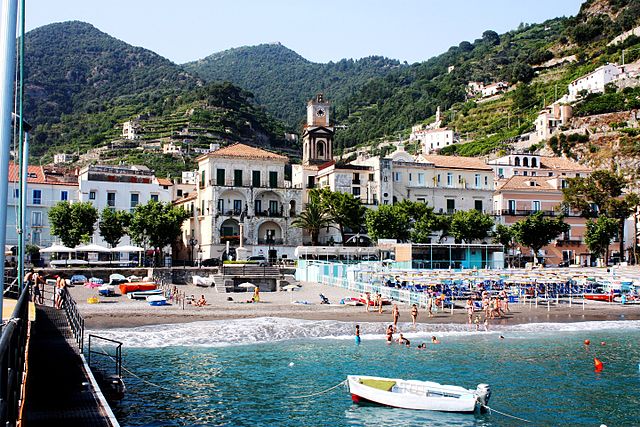
We say goodbye to Napoli and shuttle south to Minori, the smallest of fourteen towns on the Amalfi Coast. The road winds back and forth in switch-back after switch-back from sea eve up the hilltops and villages that cling on the very edge.

There were seventy-seven steps up to our hotel rooms so for us North Americans who depend on elevators this was quite a workout. The generations of Italians who live on the hillside towns climb up and down the stairs daily.

Later we went to explore the town.

“I’d like to get you a chocolate croissant,” my son Ray says as we pass a large bakery. The smell of warm pastries and the sight of counters full of desserts and gelato had earned this place an international reputation. I couldn’t resist.

Minori ItalyIt’s easy to take short ferry trips to these hilltop towns of Minori, Amalfi, Ravello and Positano. Each has their own “oh-my-God!” views and cobblestone streets where pedestrians stroll, window shop and explore.

My son guided us through each day’s itinerary. Sometimes we entered a cathodal or museum, an ancient Greek amphitheatre or a Roman coliseum, often enjoying a pasta lunch along the way

Memories of my mother playing the piano ad singing ’Twas on the Isle of Capri were fresh in my mind when we visited the island. Oscar Wilde, D.H. Lawrence and other writers and artists once gathered here where they could be open about their sexual orientation without being arrested and jailed.

We travelled from the mainland to Messina, Sicily by ferry then boarded a train to Taormina, that wonderful city of 11,000 where we stayed for five days, ending our last evening at a concert of familiar operatic arias. The last number was the rousing Funiculi, Funicula with the pianist, tenor and soprano inviting the audience to clap out the rhythm. This is another one of the wonderful gifts of Italy that will always remain in my memories.

If You Go:


9-Day Tour of Italy: Rome Naples Amalfi Florence Pisa Venice

Grand Tour of Italy

Discover Italy

Naples

Messina

Minori


Naples Shore Excursion: Mt Vesuvius and Pompeii Day Trip from Naples

About the author:

Alice grew up going to a country school where the teacher read to them on Friday afternoons. Her mother read bedtime stories to her and her grandmother loved reciting poetry. Alice composed her own poems too. Not having a TV to distract her, reading and telling stories was a way of life that


NAPLES PRIVATE WALKING TOUR

Photo credits:

Castle Nuovo by Sergio Parrella / CC BY-SA

Minori by Daria / CC BY


Tagged With: Italy travel, Naples attractions, Naples tours Filed Under: Europe Travel

Italy: 14 Secret and Unusual Places in Rome

magic doorway piazza vittorio

by Francesco Pandi

Who doesn’t know Rome? Who doesn’t know its most iconic landmarks? The Colosseum, the Vatican, the Pantheon, Piazza di Spagna and the Trevi Fountain are famous all over the world and are visited by millions of tourists all year long.

Nonetheless the capital of Italy has a few hidden gems to offer: unusual corners, often not widely known to Romans themselves. Quieter, more intimate places which will enrich your idea of the Eternal City.

Here is a careful and fun selection of the 14 most charming yet little known places in Rome:

1. Sciarra Gallery

Sciarra Gallery ceiling

Built in 1880 by prince Matteo Sciarra, it is the finest Art Nouveau building in Rome today. The Gallery is located in a side street of Via del Corso (the main street of the city) and almost manages to hide its beauty.

The leading role in the decorations is played by the Woman, portrayed in various scenes of daily life in her roles of bride, mother and “angel at the hearth”.

The upper layer shows more figures of women, representing the feminine virtues of fidelity, humility and justness. You’ll be left staring up at this jaw-dropping wonder for quite some time.

2. Magic Door

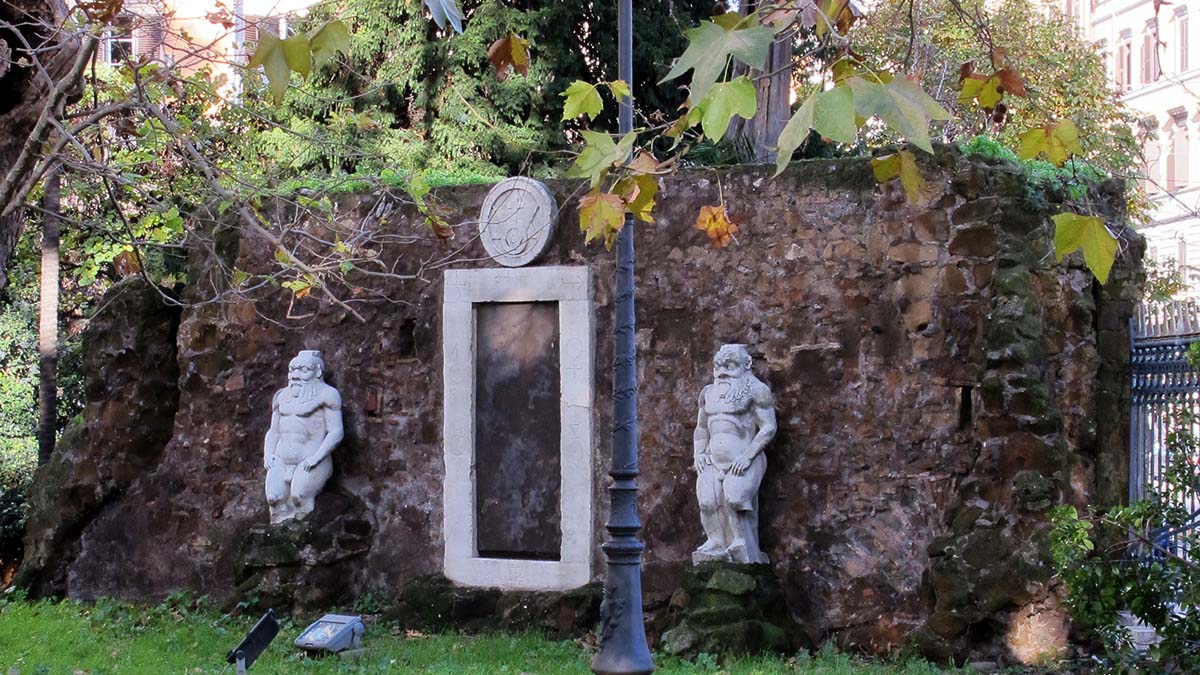
[TOP PHOTO] In Rome (the very capital of Christianity) you can find one of the few monuments in the world dedicated to medieval magic: the “Magic Door” is all that remains of the ancient Villa Palombara. The marquis of Pietraforte, an alchemy and esotericism enthusiast, had the villa built in the second half of the 17th century.

In origin the monument was one among five external entryways to the Villa.

Legend has it that a mysterious pilgrim, hosted in the marquis’ villa, tried to transmute various materials into gold.

One day he was seen disappearing through the door, leaving behind a speck of gold and some magic formulas, which are now engraved on the perimeter of the door.

3. Casina delle Civette

window in Casina delle Civette

Between 1910 and 1925, at the height of the Art Nouveau artistic movement (known in Italy as Stile Liberty), a small group of artists turned an ancient chalet into the current Museo della Vetrata Liberty (Art Nouveau Stained Glass Museum).

Its peculiar shape, peaked roofs and its huge and colorful stained glasses confer to the place an almost magical atmosphere. Like a real life rendition of Hansel and Gretel’s house!

4. Casino Nobile

asino Nobile interior

Only a short walk away from Casina delle Civette you can find the Casino Nobile, Mussolini’s residence between 1925 and 1943; he also had a gas-proof bunker and a bomb shelter be built here. Inside, beside the collection of statues, you can see the majestic ballroom, a beautiful garden and the wonderful terrace.

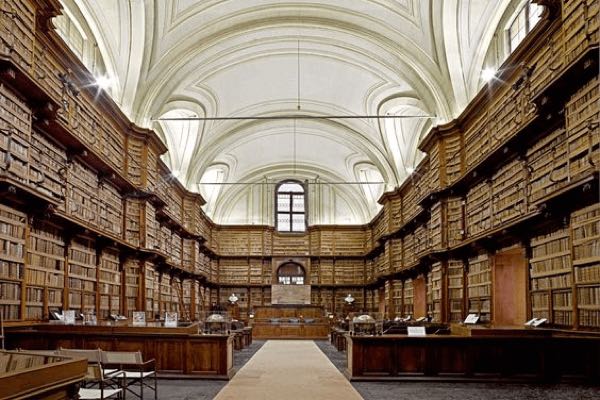
5. Biblioteca Angelica

Angelica library corridor

Inaugurated in 1604, Biblioteca Angelica is the oldest public library in Italy and the second in Europe after Oxford. The library houses more than 200,000 volumes, with 2,700 ancient manuscripts dating from Greek and Latin times among them.

Its position makes it even more fascinating, as it is located in downtown Rome and it represents one of the few corners of calm and quiet in the popular and chaotic Italian capital.

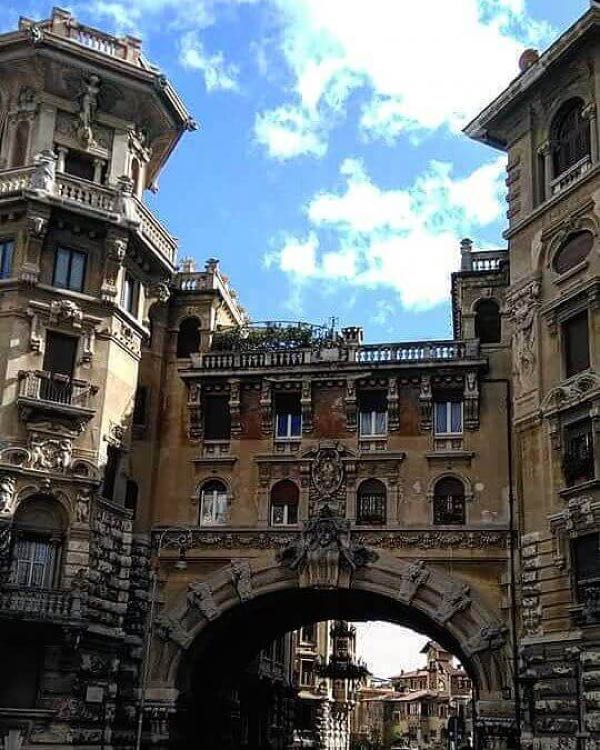
6.  District Coppedè

District Coppedè

District Coppedè is an amazing mixture of Art Nouveau and Art Deco with flashes of other art styles, such as Greek, Gothic, Baroque and even medieval. The district, built between 1913 and 1926, consists of 26 apartment houses and 17 villas and owes its name to its designer, Gino Coppedè.

In the center of the district is a small square in which stands the “Fountain of the Frogs” (“Fontana delle Rane”); the Beatles once dove fully dressed in the fountain after a concert held at the nearby disco Piper, making the monument famous worldwide.

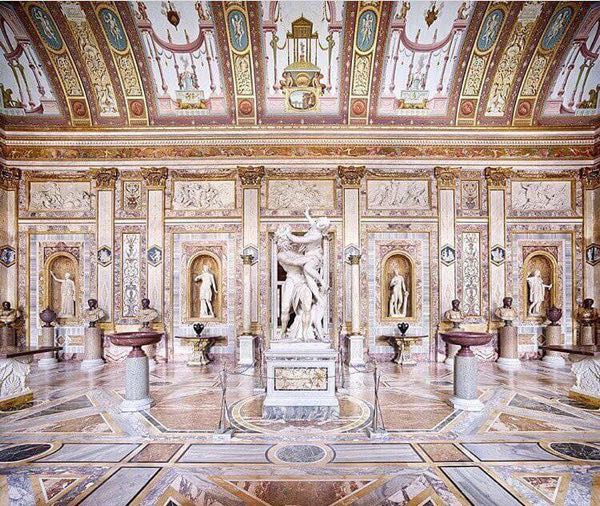
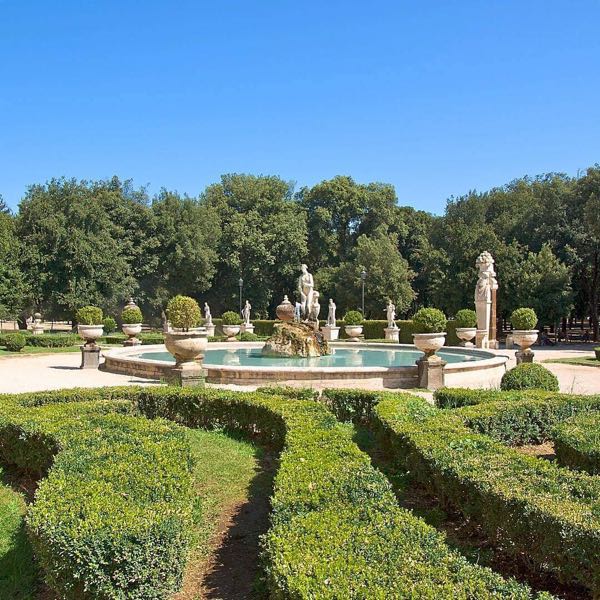
7. Borghese gallery

Borghese gallery garden

Located inside Villa Borghese, the Romans’ favorite public park, it represents a true treasure chest, housing the collection of Cardinal Scipione Borghese. The man had the villa built in 1600 for this specific purpose.

The most famous works kept here are Lorenzo Bernini’s sculptures and Caravaggio’s masterpieces. Thanks to its position and its works of art it can be considered among the world’s finest museums.

NOTE: If you want enter the gallery we recommend you to book your visit about three months in advance.

8. The Catacombs of Rome

Catacombs of Rome

Experts deem the six Catacombs of Rome to be among the finest in the world; the best-known and most visited of them is the Catacomb of St. Callixtus, which stands out as the most beautiful and imposing. It represents the first burial site of early Christians and it houses the graves of the first sixteen popes and various saints.

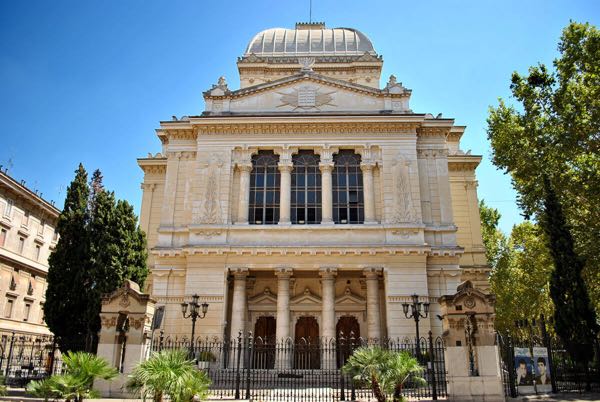
9. The Jewish Ghetto

Jewish Ghetto synagogue

Built in 1555, the Jewish Ghetto of Rome is one of the oldest in the world. Strolling through the small streets of the district it will look like time has frozen in the ’40s: as a matter of fact the Ghetto holds its authenticity intact, despite the influence of mass tourism. The majestic Synagogue and the Portico of Octavia are landmarks of major importance to be found in the district.

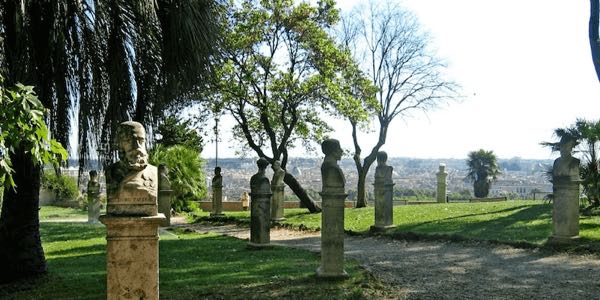
10. The Janiculum

Janiculum walk

The Janiculum (Gianicolo) is one of the best observation points of Rome, with Monte Mario and the Pincian Hill (Pincio), offering a wonderful view over the roofs, ancient ruins and baroque cupolas of the city.

Fun fact: from 1847, as ordered by Pope Pius IX, a cannon fires blanks daily at midday sharp. In doing so the Pope wanted to set a standard for all the churches in Rome to ring their bells in unison.

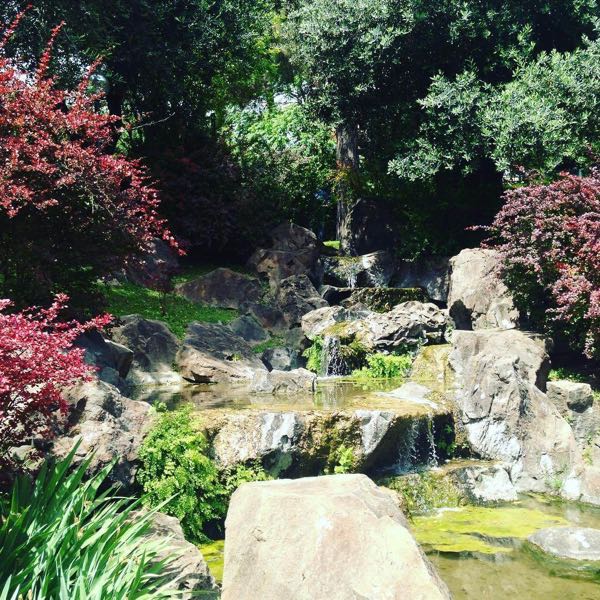
11. The Japanese Garden

Japanese Garden

As odd as it may sound, in the center of Rome, the very cradle of Christianity and the heart of the western world, we can find a small Japanese garden designed by famous architect Ken Nakajima.

Regardless of its small area, the Garden contains all the elements of a traditional Japanese garden: a pond, a waterfall, rocks, small islands, a small bridge and the stone lantern called tōrō.

12. Roseto sull’Aventino

Roseto sull’Aventino view

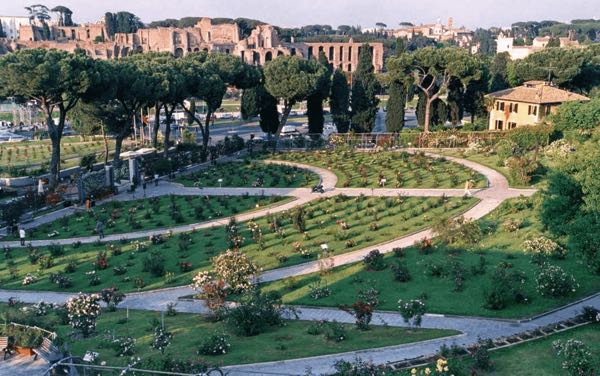
At the foot of the Aventine Hill (Aventino), one of the famous Seven Hills of Rome, lies one of the most romantic locations of the city: the Rose Garden. Already blessed by the beauty of nature and its position, granting a wonderful viewpoint over the Circo Massimo and the Palatine Hill at a safe distance from the city traffic, the Garden gets even more amazing in May, when 1100 species of roses blossom in a triumph of colors and fragrances. Such a wonderful place will leave you with your mouth wide open!

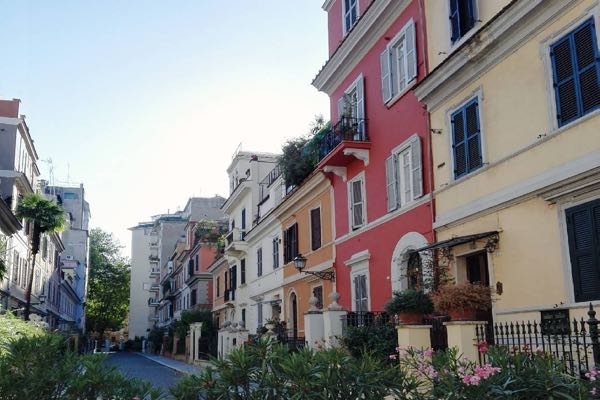
13. Little London

Little London

Inside one of the historic districts of Rome we can find a pleasant architectonic oddity: Little London. It consists of a pedestrian-only private street with the typical London-style small houses in bright colors, the same you’d expect to find in Notting Hill.

Mayor Ernesto Nathan, of English origin, fathered the idea of an “English” district in 1907. His intent was to build less expensive houses away from downtown in behalf of the common people. Nowadays, as one could easily expect, these houses have extremely high costs, exactly as in London.

14. Dolls’ Hospital

Dolls' Hospital

Walking through downtown Rome, near Piazza del Popolo, it is hard to miss the unique window of the ancient workshop Restauri Artistici Squatriti, also known as the Dolls’ Hospital.

The small workshop is crowded with heads, limbs and bodies of ancient dolls, waiting to be accurately “cured” by the expert artisans of the shop.

If You Go:

As you can see Rome is amazing, we tried to make a list of the 14 secret places but, if you go to Rome, I recommend you to wandering around and speak with the locals because every angle and every history is unique.

If you can’t go to Rome (or Sicily, New York, London etc. ) we can do that for you. We have created blinktravel.guide, a site (and an iphone app) through which you can discover the authentic spots of the most beautiful city in the world.

About the author:
Francesco Prandi is an Italian boy who loves traveling around many beautiful places in the word. He’s co-founder of Blink, an amazing app to make your travel an epic experience. He has an Instagram and a Facebook account where he shares the best Rome’s image.

Photo credits:
Piazza vittorio emanuele II, porta magica by Sailko / CC BY-SA
All other photos by Francesco Prandi


Tagged With: Italy travel, Rome attractions, Rome walks Filed Under: Europe Travel

  • 1
  • 2
  • 3
  • …
  • 11
  • Next Page »

MORE TRAVEL STORIES:

Paying Respect to Vladimir Lenin, Father of Russian Communism

In The Footsteps Of Dante

Pennsylvania: Pittsburgh’s Positively Offbeat Gems

Healing and Harmony in Sedona: How a Senior-Focused Yoga Retreat in Arizona Transformed My Perspective

Italy: First Impressions of Rome

Venice, Italy and the World’s First Ghetto

Feeling Overwhelmed After a Car Accident? How Expert Guidance Can Help

The Ultimate Manaslu Circuit Trekking Guide for Adventure Seekers:


SEARCH

DESTINATIONS

  • Africa Travel
  • Antarctica travel
  • Asia Travel
  • Australia travel
  • Caribbean Travel
  • Central America Travel
  • Europe Travel
  • Middle East Travel
  • North America Travel
  • Oceania Travel
  • South America Travel
  • Travel History
  • Travel News
  • UK Travel
  • Uncategorized
  • World Travel
facebook
Best Travel Blogs - OnToplist.com

Copyright © 2026 Cedar Cottage Marketing | About Us | Contact | Privacy Policy | Terms & Conditions | Copyright Notice | Log in