Spain, Italy & Greece
by Matthew Adams
The Mediterranean has a variety of intriguing historic destinations in Spain, Italy and Greece. One way you can visit some of those fascinating historical sites is via a cruise. Cruise ships usually stop at ports in Italy, Spain, France and Greece from which you visit some of the world’s greatest museums and historical architecture. This is a Crown Princess cruise I did to see some of the finest historic destinations.
Barcelona
Barcelona, in Catalonia, was the first stopping port. This is a historically significant city in its own right that includes some astonishing architecture. Its most notable architectural landmark is the Sagrada Familia, designed by Gaudi, that includes eight spires which will increase to 18 when construction of the church is complete.
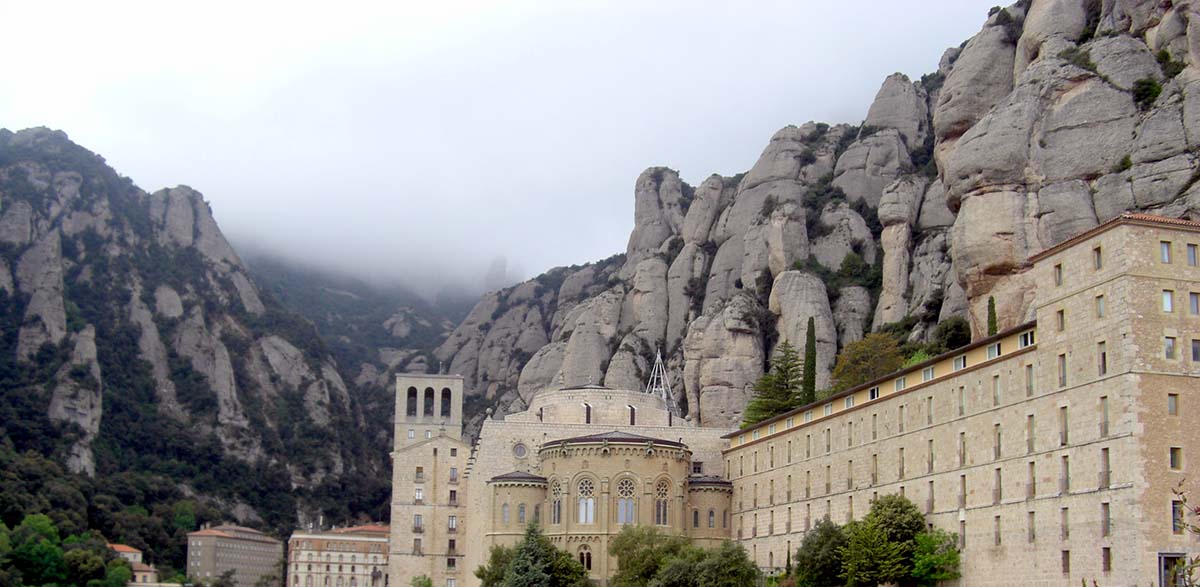
I never went in the Sagrada Familia on my trip, but instead went to the Montserrat Monastery. This is a Benedictine abbey at the summit of the Montserrat mountain. As the mountain rises about 1,200 meters, it’s worth a trip just for the magnificent views alone. There you can also hike the Montserrat nature park that includes numerous hiking trails.


Pisa and Florence
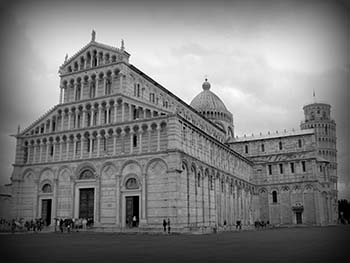 On another stop I visited Pisa with a coach excursion. There I visited the Cathedral Square, a UNESCO heritage site, that is one of the greatest architectural complexes in Europe. That is largely due to the Leaning Tower of Pisa, which is a 183 foot tower with a slight lean of about four degrees. I briefly went in the Duomo cathedral, a masterpiece of Romesque architecture, before returning to the coach. However, the tour gave me little more than 30 minutes in Pisa.
Florence was the next stop on the tour. The historical significance of Florence lies in the Renaissance era, otherwise a cultural rebirth, that inspired a new breed of art and architecture in the city. So it’s not surprising that the Historic Center of Florence is another UNESCO heritage site.
I got a little more time in Florence than Pisa. So I went inside Florence Cathedral that is an effective blend of Italian Gothic, Renaissance and Gothic Revival architecture. The most striking aspect of this cathedral is its huge dome, which is the largest masonry dome ever constructed. I also visited the Ponte Vecchio bridge across the River Arno, which is another of Florence’s landmarks. The bridge retains some of its towers originally built as defensive structures.
Rome
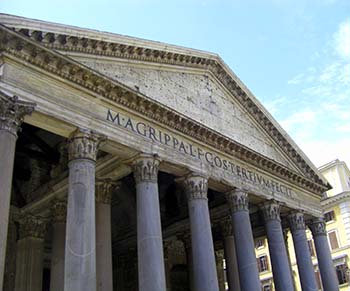 As the capital of an empire that once dominated Europe, Rome has obvious historical significance. The city has preserved some of the finest buildings from the former empire. I took some snapshots of the Colosseum on my trip. I also went to the Pantheon, a remarkably preserved temple that has intriguing architecture. The temple has a coffered concrete dome with an oculus, or central opening, at its summit through which sunlight beams through. With that the Pantheon might have effectively been one giant sundial.
The next stop for the coach was the Vatican. The Vatican has been a separate city-state since fascist Italy established the Lateran Treaty. The Vatican Museums are among the largest in the world, and they include some of the most priceless Renaissance art. The museums showcase a multitude of sculptures, paintings, stone tablets and archeological relics dug up from excavations. Furthermore, visitors can also check out the St. Peter’s Basilica church at St Peter’s Square that also has fabulous Renaissance architecture.
I had a ticket specifically for the Sistine Chapel. That is another masterpiece of Renaissance art with its finely painted ceiling and numerous frescoes that decorate the interior. Finding the Sistine Chapel in the Vatican Museums is not easy, and you can get lost within the maze of corridors. A day at the Vatican would never be enough to effectively explore the immense museum collections. Nevertheless, I eventually found the chapel that was something to behold.


Gibraltar
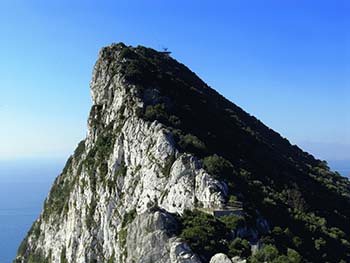 Finally, the Crown Princess stopped at Gibraltar. This U.K. overseas territory is most notable for the Rock of Gibraltar, which is a limestone rock that rises about 1,398 feet. As the gateway to the Mediterranean, Gibraltar was a strategically vital outpost of the British Empire. Consequently, the British army dug a series of tunnels through the rock where it could store armaments and munitions. The tunnels also protected troops from coastal and aerial bombardments. Britain dug the most extensive Gibraltar tunnels during the 1940s that were expansive enough to accommodate a garrison of 16,000 troops.
I made the trip up the rock for the terrific Mediterranean views. I also entered the entrance of the tunnels of Gibraltar, which are otherwise the Great Siege Tunnels. In addition, I stopped at St. Michael’s Cave, which is a network of limestone caves. There I went inside the Cathedral Cave that includes an auditorium for concerts and drama productions.
Thereafter, I returned to Blighty. What better way to ‘travel through history’ than a European cruise? You can visit many of Europe’s finest historic venues in Italy, Spain or Greece with coach excursions from cruise ports. The only disadvantage is that some coach trips might only give you a very limited time period at a destination.
If You Go:
Pantheon
Vatican Museums
Leaning Tower of Pisa
Great Siege Tunnels
St. Michael’s Cave
Montserrat
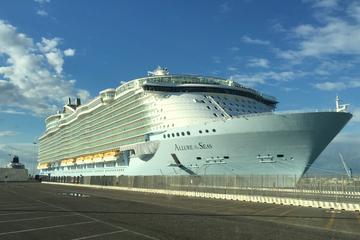
Pisa and Florence Private Day Trip from Livorno
About the author:
Matthew is a freelancer who has produced a variety of articles for various publications and websites such as Swing Golf Magazine, TripAdvisor, Naval History, Artilleryman, dotTech, Bright Hub, Coed Magazine the Washington Post and Vagabundo Travel. Matthew is also the author of Battles of the Pacific War 1941 – 1945. Check out the book’s blog at battlesofthepacificwar.blogspot.co.uk.
All photos are by Matthew Adams:
The Benedictine abbey at Montserrat
The Duomo and Leaning Tower of Pisa at Pisa
The Pantheon in Rome
A snapshot of the Rock of Gibraltar at Gibraltar
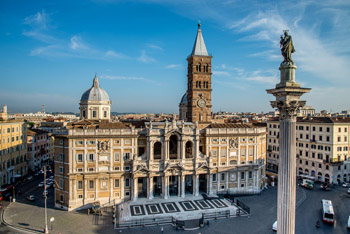
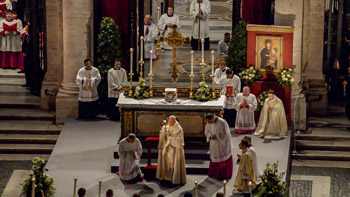 Over the years we have watched groups gather at twilight for the beginning of their pub crawls. Dividing into teams, they guzzle through drinking games in the piazza while preparing for their evening of revelry. We have observed crowds gather for marches, tours, protests and rallies. From blurry eyed, early morning senior groups touring the Basilica, to high-spirited youth groups assembling to sing and dance in the square, this church is a well celebrated gathering point.

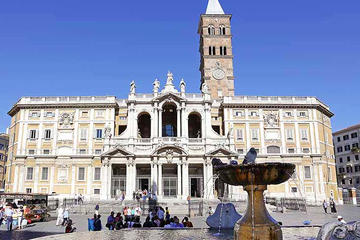
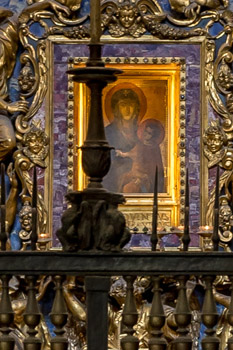 There are over 25 churches in Rome dedicated to Mary, Santa Maria Maggiore is the largest of these Marian churches. This Major Papal Basilica is prominent in the tradition and adulation of the Catholic community worldwide. Many travel blogs rate Santa Maria as one of the ten most beautiful churches in Europe. Walks of Italy tour Major Basilicas of Rome, includes it as one of “the three most important churches in Rome.” Frommer’s rates it #3 in its article; “The Best Churches.” If you are a cathedral buff, Italy is not complete until you have experienced this great lady.
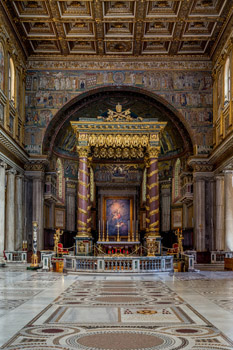 The golden mosaics adorning the triumphal arch date from the 5th century and depict scenes from the early life of Christ and the Virgin Mary. On the left at the top is a panel depicting Christ’s enthronement with a group of angels as his court. Below this is the Epiphany or Adoration of the Magi. The young Christ is seated on a throne with Mary on his right, they are attended by angels.
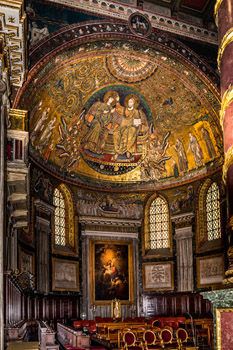 Italian painter and mosaic maker Jacopo Torriti is credited with the adornment of the apse, he crafted it in 1295. The magnificent central work shows the Coronation of the Virgin in which Jesus and Mary are seated on a throne with Jesus placing a jeweled crown on Mary’s head. The sun and moon are under their feet accompanied by a choir of adoring angels. Standing to their left are St. Peter, St. Paul, St. Francis of Assisi and Pope Nicholas IV. Standing on the right is St. John the Baptist, St. John the Evangelist, St. Anthony and Cardinal Colonna. The apse of Santa Maria Maggiore is the most important surviving example of Roman mosaic art from the late middle ages. Descend below the high altar and you enter the burial place of Saint Jerome, this 4th-century saint translated the Bible into the Latin language (the Vulgate). Upstairs, located in the Borghese Chapel, is “Salus Populi Romani,” believed to be the oldest Marian image in Rome. However, on display in this vault is arguably the most important artifact of the Basilica, The Reliquary of the Holy Crib. This crystal shrine, designed by Giuseppe Valadier, is said to contain wood from the Holy Crib of the nativity of Jesus Christ.
 Legend has it that an aristocrat named Giovanni, and his barren wife were without child. Seeking divine intervention they committed to build a church to the Virgin Mary. She appeared to them in a dream on the night of August 4, 352 A.D. and told them that a miracle would show them the location on which they were to build the church. That night, Pope Liberius was troubled by the same dream. On the following morning, he travelled to Esquiline Hill and found it miraculously covered in snow. Liberius then traced an outline for the location of the planned church. Although many feel this legend has little basis in fact, to this day the church on Esquiline Hill is often referred to as Our Lady of the Snow.
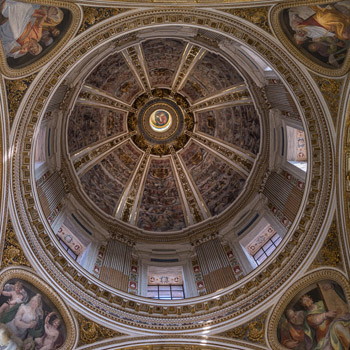 5 Reasons to visit Santa Maria Maggiore

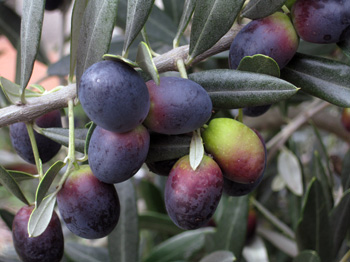
 To create the highest quality olive oil, it is vital to time the harvest perfectly. Unlike in other regions, olives in Tuscany are picked before they are ready to fall from the tree. This produces a fruity and lean extra virgin olive oil, even if the yield is lower. The ideal time to harvest is when the unripe green olives begin to mature and turn black, which is when they contain the highest quality oil. However, this is easier said than done since even olives on the same tree may mature at different rates. The flavours of green and black olives vary but both are needed to make good quality oil. The initial oil is generally more bitter but olives that fall when too ripe make poorer quality oil. Plucked directly from the tree, the fruit is extremely bitter and almost inedible.
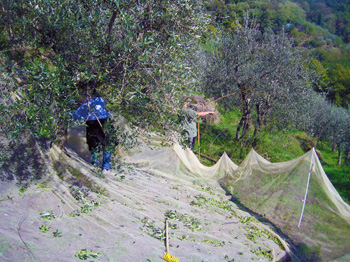
 The ideal olive picking team consists of as many family members and friends as possible to share the labour. Firstly, huge nets are spread out around the trunk of a tree. Naturally, most olive groves are far from flat so the nets often have to be propped up by sticks or branches pruned from the trees to prevent the precious harvest from rolling away.
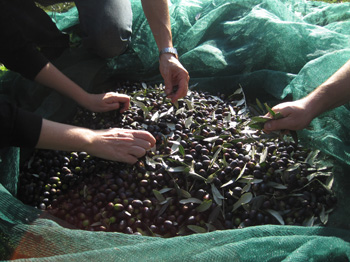
 After as many olives as possible have been plucked, they are rolled to the centre of the nets, and then “cleaned” by removing most of the leaves and any twigs or debris by hand before being transferred into sacks or crates. The equipment is then all moved to the next tree and the process is started all over again.
 Although very light, the nets are rather cumbersome to move around and harvesters often have to stand in uncomfortable positions on steep slopes. It is essential to gather the harvest before the weather becomes too cold, so work needs to take place, rain or shine. It is also essential not to crush the olives that have fallen onto the nets so you need to be careful where you put your feet.
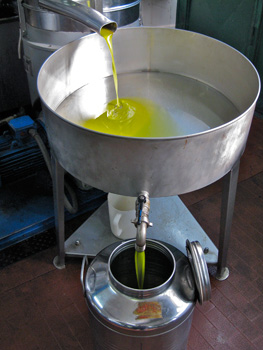
 La Raccolta is a wonderful way of bringing together people of all ages and uniting them under the olive branch. Hard work is usually sustained with a hearty picnic in the fields washed down with a little vino. The delicate process from tree to bottle is painstaking and labour intensive but well worth the effort for the first taste of delicious freshly pressed “liquid gold.”

 About the author: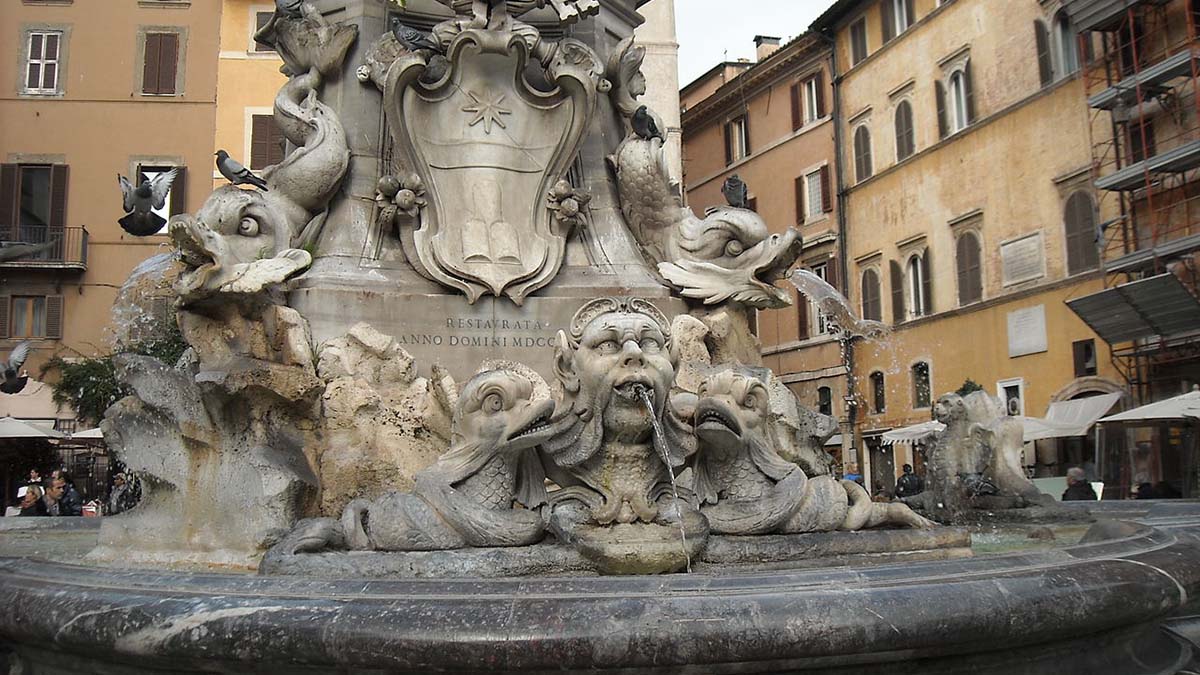
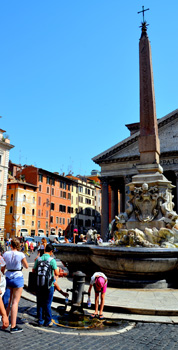 My husband and I arrived in Rome during the heat wave that broke records all across Europe in the summer of 2015. After a week of sweltering in temperatures up to 36.7 (99.68 F) in London and 39.7 C (103 F) in Paris, we were resigned to buying bottled water at every possible opportunity. We were about to learn that Rome is actually better prepared to handle thirsty tourists than most major cities, and that it has been for centuries.
 I was surprised to find the water clear and cold, the perfect temperature for drinking. I filled my bottle, guzzled half while standing there—it had been a long wait in the strong Mediterranean sun to get into the Colosseum — and refilled it again.
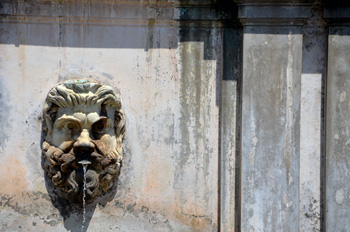 The apparent wastefulness of all that water flowing 24/7 isn’t lost on the city. During the 1980s the city added taps to the fountains, requiring that thirsty Romans operate a nob or button in order to drink. The results were far from satisfying. On hot days, water standing in the pipes heated up, making it less than appealing. Vandals broke the new taps, freeing the flow of the water, and officials gave up on the project. The water doesn’t go entirely to waste. It’s recycled to grow gardens, flush sewers and in industrial cleaning.
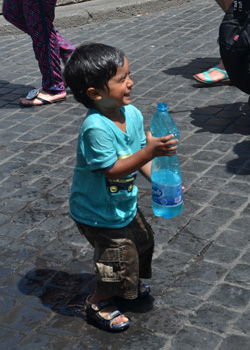 I found one that wasn’t in use on a side street as my husband and I walked back to our hotel from Trevi Fountain on a very hot afternoon. I wondered for a second if it was functional, but as I stepped around it I found a stream of fresh cool water splashing into a grate at my feet. I splashed my face and filled my bottle. By the time I was done, a couple of people had queued up behind me. I felt as much like a native as a brief visitor can feel.
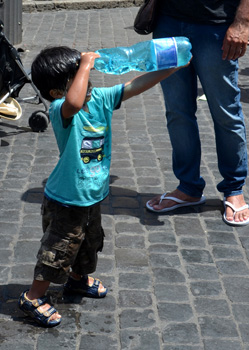 Do give the nasoni of Rome a try while you’re there. Your first time may feel a bit daunting, but once you try it, I’ll bet you’re sold on this delicious free resource.

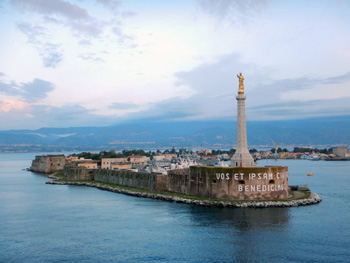
 I visit the gift shop to buy postcards and ask questions. The friendly shop keeper is happy to oblige a curious Canadian. She explains that the words under the Madonna at the entrance of the port translate into – “We bless you and the city.” It is believed that this message had been written in a letter to the people of Messina by the Virgin Mary when they converted to Christianity in 42 AD, after a visit from the apostle Paul. This explains why she is called Madonna della Lettera or Madonna of the Letter. I purchase a ticket for five euros to visit the museum and attached clock tower.

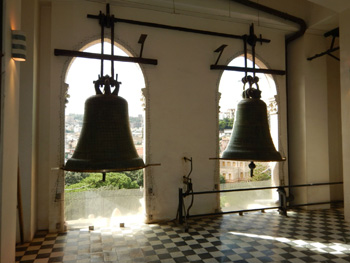
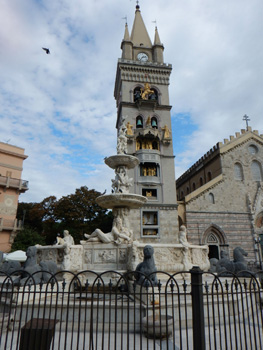
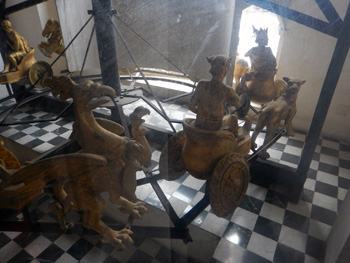 I venture next door to climb the 236 steps to the top of the bell tower. It is worth every step. This belfry houses the largest and most complex mechanical and astronomical clock in the world. On the landings I am able to view, from the inside, the amazing mechanically animated bronze images that rotate on the façade of the tower at the stroke of noon. At the top levels hang the massive bells that ring out the time. I am fortunate I timed my visit between the ringing of the bells. Once at the top, I am rewarded with a splendid view of the city from all four directions. The rain has stopped and the sun is out in full force. I feel I am in heaven, or close to it. I take my time descending, in order to have a better look at the intricate figures, aided by explanations on boards in English as well as Italian. The carousel of life, composed of four golden life size figures representing childhood, youth, maturity and old age, has death in the form of a skeleton following behind. Biblical scenes are depicted on other carousels and changed according to the liturgical calendar. One scene is dedicated to the Madonna of the Letter, where an angel brings the letter to the Virgin Mary followed by St. Paul and the ambassadors who bow when passing in front of the virgin.
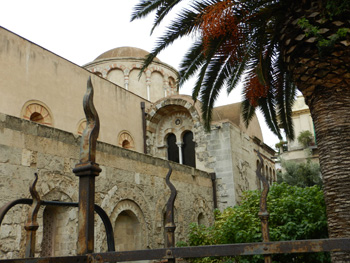 The vibrant plaza in front of the cathedral holds the gorgeous Fountain of Orion. A great place to view the clock tower from the outside and watch it come to life, should you be there at noon. I remove my raincoat and wander the streets. I find an iron worker creating figures in front of his shop called Hollywood. Many sculptures are scattered throughout the town including an imposing conquistador. The picturesque Church of the Catalans, built before Norman times on a pagan site dedicated to the god Neptune, provides different views from each side. A quote from Shakespeare catches my eye, “I learn in this letter that Don Pedro of Arragon comes this night to Messina… He hath an uncle in Messina will be much glad of it.” from Much Ado About Nothing.
 Messina has always been the main portal to Sicily. Founded by the Greeks in the eighth century BC, the influence of Romans, Byzantines, Arabs, Normans and Swabians, who have landed on these shores over the years, contributes to the rich culture.