Travel Thru History

Historical and cultural travel experiences

  • Home
  • Airfare Deals
  • Get Travel Insurance
  • Writers Guidelines

Gibralter: Exploring the Rock

Barbary apes in Gibralter

by Keith Kellett 

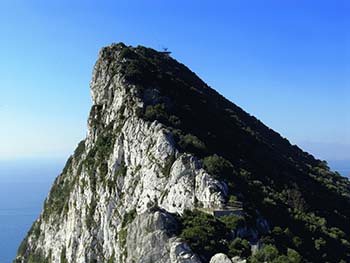
Our cruise ship sailed into the Bay of Gibraltar, and the Rock loomed large above us. I remarked that I hadn’t seen it from this angle before, and a lady nearby said:

‘You’ve been here before? You must know all about it, then?’

Actually, I didn’t. I have visited Gibraltar before, but on duty with the Royal Air Force, and, on the rare occasions we left the airfield, it was just to check out the bars. So, on the old military principle of ‘What happens on deployment stays on deployment’ … I held my peace.

Gibralter mosqueAs it happens, our grandson is a Sapper in the Royal Engineers, and Gibraltar has a proud place in their history. Indeed, when they’re not Royal Engineering around the globe somewhere, their home, in Surrey, is called Gibraltar Barracks.

But, the history of Gibraltar long predated the Royal Engineers. It’s been inhabited since the earliest times. Evidence has been found that suggests Neanderthal Man may have lived there, and, indeed, some archaeologists think it was their last foothold in Europe.

Early Mediterranean people thought that the Rock marked the end of the world, but the Phoenicians found that this was not the case as they sailed past it, and on to the shores of France, Africa and Britain. The Phoenicians founded a colony at Carthage, in modern Tunisia, which grew into an empire in its own right. That empire spread across southern Europe, but shrank after coming into conflict with the Romans, in a series of conflicts called the Punic Wars.

Gibralter lighthouseThe whole Spanish peninsula was ceded to the Romans after the Second Punic War, in 150 BC; the Romans, called the Rock Mons Calpe.

The promontories guarding the Straits of Gibraltar were known to some as the Pillars of Hercules. It’s not clear which one was the southern one; the most likely are Monte Hacho, in Ceuta or Jebel Musa in Morocco. But, the northern one is, indisputably, Gibraltar.

windsor gallery plaqueIt owes its present name to the Moors, who captured it in the 8th Century. They called it Jebel Tariq (Tariq’s Hill), after the Moorish commander Tariq ibn Zeyad. Over time, it became … Gibraltar.

The Moors were to remain in Spain right up until 1472, when the last Moorish outpost at Malaga was taken by the Spanish.

The British arrived on the scene in 1704, during the War of the Spanish Succession, when Gibraltar was captured by Admiral Sir George Rooke. He immediately saw its important strategic position, and Britain has held on to it ever since. This arrangement was formalised by the Treaty of Utrecht in 1713, which ceded the territory to Britain ‘in perpetuity’.

cannonHowever, this arrangement has long been a bone of contention between Britain and Spain … but, in referenda held in 1967, and again in 2002, the Gibraltarians elected to remain a British territory.

Folklore has it that the Rock will remain in British possession as long as the Barbary Apes, which roam freely around the Rock, stay. So, they’re cared for and pampered … there was even a wing of the Military Hospital devoted to their care. Generally, they just sit around being apes, and pose shamelessly for the camera.

Europa Point is the southernmost point. and here is the Trinity lighthouse, the only one outside the British Isles administered by Trinity House. Here, also, is a picturesque mosque endowed by the King of Saudi Arabia.

Of course, the guide took us up the Rock to ‘meet his family’ … the famous apes.

Another attraction is the tunnels. They were first suggested by Sergeant Major Henry Ince of the Soldier Artificer Company (forerunner of the Royal Engineers) in the 18th Century, as a means of expeditiously getting guns from one side of the Rock to the other But, there were tunnels long before the British arrived; most of them led to underground reservoirs and later ones were used as air raid shelters in WWII.

Gibralter bayMost of the resultant rubble was dumped in the bay … to eventually become the site of the airfield runway. And, that’s no ordinary runway. It used to be that the road had to be closed to allow aircraft to take off and land, but now, there’s a tunnel under it.

A cable car took us up to the very top of the Rock, where there wasn’t really much except a souvenir shop and more apes. But, they say on a clear day, there are excellent views of Spain and Morocco. Closer to hand, there’s a superb view of the harbour, and its many ships. Not one single Royal Navy ship, though; a far cry from bygone days. In fact, during the visit, we didn’t see a single soldier although there was plenty of evidence of their former presence.

If You Go:

♦ Gibraltar has an airport, which accommodates flights from the United Kingdom, Morocco and Tangier. From other cities in Europe, you can fly to Malaga, Jerez or Seville, from where it’s a two hour drive to Gibraltar.

♦ You can travel by rail to Algeciras, from where buses leave every 30 minutes to La Linea, which is within easy walking distance of Gibraltar. Algeciras can also be reached by ferry from Morocco.

♦ Most attractions on Gibraltar are within walking distance, but there’s also a fairly efficient bus service and plentiful taxis.


About the author:
Having written as a hobby for many years while serving in the Royal Air Force, Keith Kellett saw no reason to discontinue his hobby when he retired. With time on his hands, he produced more work, and found, to his surprise, it ‘grew and grew’ and was good enough to finance his other hobbies; travelling, photography and computers. He is trying hard to prevent it from becoming a full-time job! He lives near Salisbury, in the south of England, and has published in many UK and overseas print magazines, and on the Web. He is presently trying to get his head around blogging, podcasting and video. keith-kellett@tinyworld.co.uk.

All photos by Keith Kellett:
Barbary Apes
Europa Point
Lighthouse at Europa Point
Inside Windsor Tunnel
Inside a Tunnel
Mural in the Tunnel
The Harbour

Tagged With: Gibralter travel Filed Under: Europe Travel

Smooth Cruising The Great Rivers Of Europe

Aria Grand Circle cruise ship

Netherlands, Germany and Austria

by Mary Ann Olson 

River cruising on the Main, Danube and Rhine, we pass hillside vineyards and medieval architecture on our journey through the Netherlands, Germany and Austria. On either side of the river banks, we pass villages and towns that have existed for ages. River cruising is slow and relaxing as if gliding along on glass. Passengers sit in the front extensive lounge area, surrounded by glass windows on three sides or on top of the deck for the ultimate views.

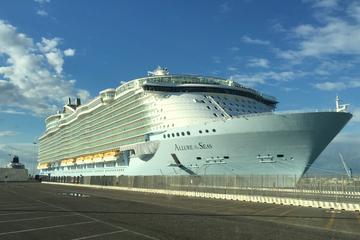
River cruising on the Aria, one of the river ships with Grand Circle River Cruise, we traversed from Amsterdam, Netherlands to Vienna, Austria. Staff greeted us at the Holland International Airport and transported the passengers by bus to the Aria, our home for the next 14 days. Onboard, staff immediately escorted us to our cabins. The size comfortably slept two people with ample storage, desks, in-room bathroom and Wi-Fi connection. Cabins had floor to ceiling glass doors and balcony, a large viewing window or two small side-by-side windows. The river ship’s top Sun Deck by the bridge provided outdoor seating with fantastic views. At times, the captain needed to close it because of the heights of some bridges. A library, lounge with 24-hour coffee, cappuccino and tea service, spa with fitness center, a sauna, jacuzzi and messages invigorated and relaxed all 146 guests. Passengers on this cruise were United States citizens. Friendships developed over the next 14 days.

Meal in dining roomOn the Aria, all meals of 14 breakfasts, 14 lunches and 14 dinners included wine, beer or soda. A cold/hot buffet was available for all meals and the chef prepared a ‘local specialty’ dinner in the evening. Open seating was the standard in the restaurant. The four courses served at lunch and dinner included soup, salad, entree and dessert. The servers were very attentive to the needs of the guests and always wished us a “Bon appetite” before the entre. While on the ship, a tour of the galley offered guests the opportunity to see where the food was prepared. It was amazing to see the small area where all the chefs prepared, plated and served the meals. A tour of the pilot room was very informative.

castle on riverThe Great Rivers Cruise began in Amsterdam and cruised to Cologne, Koblenz, Heidelberg and Wertheim, a fairy-tale town where the Main and Tauber Rivers meet. Onward, we cruised to Wurzburg on the Main in Bavaria, walking the bridge with wine in hand and Bamberg, a city on the Main River in Bavaria where the onions are huge and the cold smoky bacon beer was a welcome delight. Nuremberg explored the past and tragic time in history. Regensburg, Passau, and Vienna completed our cruise. Optional tours to Rothenburg on the Tauber River, the Bavaria: Baroque & Beer, with beer, pretzels and mustard and cruising thru the beautiful Danube Gorge to the Weltenburg Monastery provided more opportunities to explore the region. In Melk, a bus transported us to the magnificent Abbey and Baroque Church. Sailing through the Wachau Valley we reached Vienna, an Imperial City, for a Musical Tour of Vienna.

gorge on DanubeThis is not a trip for individuals who have great difficulty walking. Some individuals used scooters and walkers and were accustomed to the cobblestone streets and stairways. During the evenings, we sailed the rivers to a new destination and the tours would begin. Some tours began at the water edge and was a half-day trek through the medieval cities walking on the old cobblestone streets always watching out for bicyclists. Other tours required a comfortable coach ride to the sights. The Grand Cruises employs four Program Directors, men, and women from the area where they have lived. They are very knowledgeable about the history of the country and city, the architecture, museums, churches, castles, UNESCO sites, city life, and stories told over the ages. Some cities provided additional city guides and we met people who lived in the city and they spoke with us about their lives, the war, and refugee crisis – some rather controversial topics. The educational focus of the Grand Circle Cruise Line makes it a leader in river cruising worldwide and the recipient of numerous awards. Every Program Director had approximately 25 guests and were given headsets to hear the director while walking in the cities.

locks on riverThe Rhine River journey from Koblenz, Germany to Ruedeshiem, Germany revealed many castles, 24 in all. The 760 mile voyage up the Rhine River moved at 9½ mph upstream. Each village had a castle on a high hilltop for protection in ages past and a church or two. Along the river, there appeared fortresses, ruins, castles and the legendary Lorelei statue and rocks.

Locks are constructed throughout the rivers. These locks are tall concrete slabs in which the river cruisers and cargo barges slowly maneuver through. There are exactly 12 inches on each side of the river cruiser to the walls. Large doors to the front and back are raised or lowered allowing water to fill or empty from inside the lock. The highest lock on our journey was 85 ft. The locks prevent flooding of the towns along the rivers.

town on riverThe cruise offered multiple opportunities for enrichment learning. Speakers, singers, dancers and a glass blowing demonstration entertained guests while in port before leaving and in the evening, a crew show on the lounge floor demonstrated additional talents of the crew.

The Grand Circle Cruise Lines has the Grand Circle Foundation founded by Alan & Harriet in 1992 as a means to give back to the world we travel. More than 200 schools in 60 countries have received part of the $100 million dollars donated. Museums have received pledges to purchase artifacts for visitors to view.


Private Alsace Villages and Wine Tour from Breisach on your Rhine River Cruise

If You Go:

♦ Check the seasonal weather for packing appropriate attire. Wear comfortable walking shoes.
♦ Pack one suitcase and one carry-on to avoid additional airfares. Pack ‘outfits’ which interchange.
♦ Carr-yon medications, small umbrella, and pashmina to use for warmth or cover.
♦ Contact your credit/debit card companies and inform them of your travel. Secure some cash of the countries you will be visiting before leaving on vacation.
♦ Contact the Travelers Bureau or Chamber of Commerce for additional city information in you are extending your trip.

About the author:
Mary Ann Olson is a published journalist, photographer, travel writer and musician. She is a member of the Professional Writers’ Alliance and the International Travel Writer and Photographers Association. Mary Ann provides great insight into the culture, music and arts in the countries visited. Wine and Food are a passion and a focus of her travel writing. She shares her travels at I Write About Travel.com.

All photos by Mary Ann Olson:
Aria Grand Circle Cruises
Meals in the Dining Room
Castle along Rivers
Gorge on Danube River
Locks along River
Town along the River

Tagged With: River cruises Filed Under: Europe Travel

Get Thee To A Nunnery – Convent Stays

Osogovo Monastery

Rome and Venice, Italy

by Anne Harrison

A quiet alley near our convent The heavy wooden door closed and I stood surrounded by silence. Flying anywhere from Australia takes a long time, and after a night and a day and a night I was exhausted. Tired and befuddled, I emerged into the chaos of Rome. I finally found a taxi, with a driver who careened down tiny streets where footpaths were more a suggestion than reality.

After he double-parked on the wrong side of the road, I alighted on the Via Sistine. The convent was just a few minutes from the top of the Spanish Steps. Once inside, the world became peaceful. Large wooden doors shut out the chaos of the street, and I stood in the quiet of a marble foyer. Convents and monasteries have offered hospitality for centuries, providing more economical accommodation than most hotels. Italy especially has a plethora of choices. The vast majority accept guests of both sexes, married or single, of any denomination – although some still pose a nightly curfew.

Spanish Steps, RomeRooms may be simple, but this does not imply austerity. Convents and monasteries are often to be found in Renaissance palazzos, Medieval walled towns or set amongst lavender fields and vineyards. Many hide artistic treasures; a painting by Rubens, or walls adorned by Fra Angelico. Each religious house has its own character, such as the monastery Convento Sant’Agostino in San Gimigiano which refused entry to HRH The Prince of Wales when he arrived after closing time. (Although probably apocryphal, the story alone makes the place worth a detour.)

In Rome, I stayed at Le Soure di Lourdes. My room overlooked a cloister, and of a morning the singing of the nuns in their private chapel woke me in time for a simple breakfast of rolls, cold meats, and lots of hot coffee.

Rome boasts a convent or monastery in whatever quarter of the city you choose to stay. The rooms of Domus Carmelitana overlook the Castel Sant’ Angelo, while from those of Casa da Accoglienze Tabor you can see the Vatican. Near the Colsseum, the Cistercian Monastery of Santa Croce is in a 10th C building. Some of the balconies overlook ancient ruins and archaeological digs.

Casa Santo Nome di Jesu, FlorenceIn Florence, the Casa Santo Nome di Jesu is in a 15th C palazzo. I reached my room via a marble staircase, complete with trompe l’oil ceiling of putti and plaster relief. The window overlooked a large garden, complete with kiwi fruit, persimmons, pomegranates, grape vines and wisterias, with trunks as thick as my body. The arbour was a perfect place to sit and pass the afternoon when exhausted by sightseeing.

One evening, as I sipped prosecco and dined off a meal of delicacies from the markets, (plus some grapes purloined from the garden) I sat listening to a baroque choir (who were also guests) practicing for an upcoming performance.

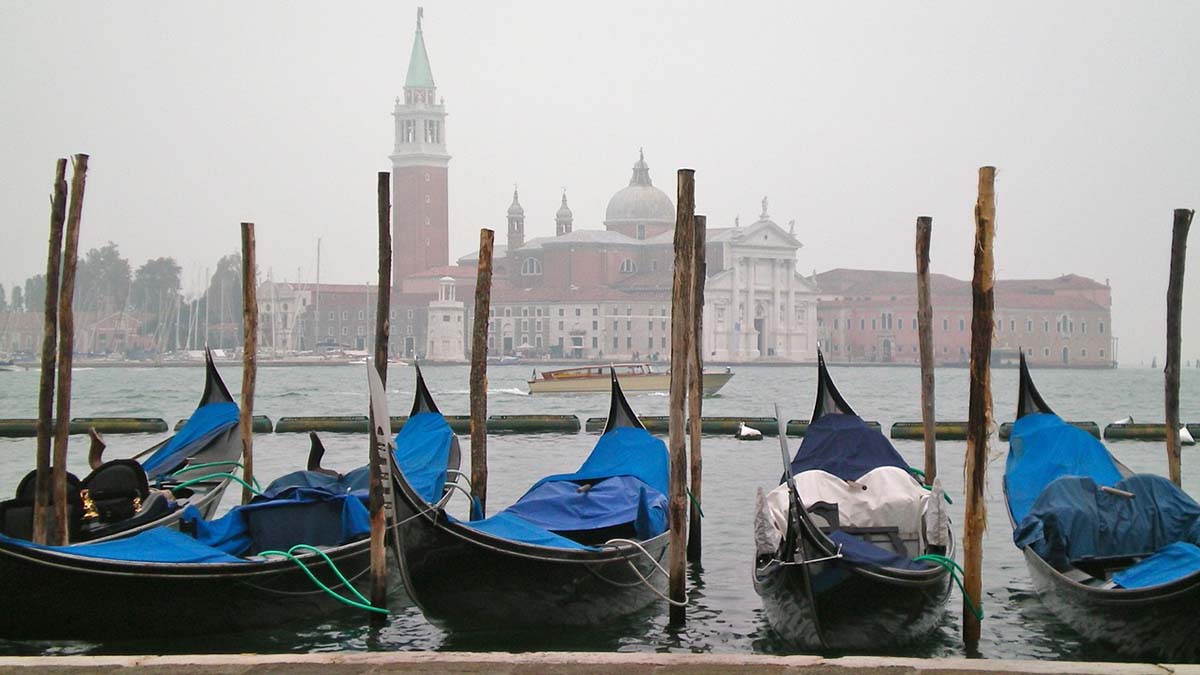
Entrance to Instituto San Giuseppe, Venice Most convents provide breakfast – fresh rolls and strong coffee are a staple – and often dinner as well. In some, monks still make wine to recipes centuries-old. My first time in Venice, my choice lay at the end of a maze of cobble-stoned side streets and piazzas. The Instituto San Giuseppe stands beside a canal, with a door opening directly onto the water. As I crossed a small limestone bridge a gondola came to a boisterous stop to collect passengers.

The way to my room proved another maze of grand staircases and marble halls. Paintings covered the ceilings and walls – in a room large enough to host a masked ball, a fresco peeked out from under the scaffolding of restoration. Occasionally a nun in a black habit would wander by, smile and give a blessing, before continue on her way.

A room with a viewMy room was simple and clean. The windows opened onto a terracotta skyline, with clothes strung on a line between two buildings. Across a flower-strewn courtyard a woman in black was busy in her kitchen, filling the air with delicious aromas. Every evening an extended family materialised for dinner. Geraniums hung everywhere in pots. In the distance a camponile tolled away the hours while towering (at a slight angle) over the other buildings,

Everyone should fly into Venice – with a window seat – at least once in their life. Suddenly the history of Venice makes sense, from whenshelter was sought from the invading Goths amongst the swampy, malarial marshes, to her days of seafaring glory. Even from the heavens Venice is breathtakingly beautiful, especially when bathed by an autumn sun while storm clouds swell on the horizon.

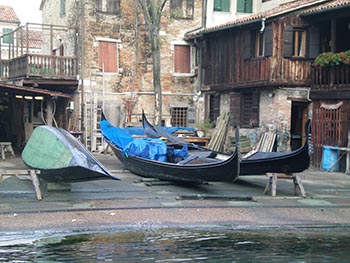
The Squero San Travaso The next essential is catching a boat from the airport to the city, either on the public vaporetto, or by a much faster private boat. Our vessel was all streamlined wood, the skipper as sleek and polished as his vessel. Despite a complete lack of Italian, as soon as my husband began admiring the boat (being a long-time sailor himself) the skipper happily displayed the boat’s paces. As the rain finally poured down and visibility vanished, he raced along the narrow channel to the city, overtaking every other boat in a shower of spray.

Next came a gentle cruise through a network of tiny canals. Some were barely wide enough for the boat, the wash lapping against the buildings and doors in a moss-tipped waterline. Crumbling buildings complete with Juliette-balconies and geraniums stood tranquilly along the canal, as they have for centuries. Seagulls called overhead, bridges arched gracefully over the water, and the chaos of travel and Italian airports floated away. We even passed the gondolier repair shop on the Rio San Trovaso, one of the few remaining squeri in Venice.

The wonder of VeniceThe entrance to the convent Canossian Institute San Trovaso lies on a pretty canal, devoid of tourists. Being in the Dorsoduro area of Venice, the streets are far less crowded than the more popular areas, locals outnumber the tourists, and at night the area is quiet. An elderly nun opened the door, and we walked into tranquility. She led us through an inner courtyard, where some other guests sat sipping wine as their kids feasted on gelato.

Our room was clean, spacious and simple, with a balcony overlooking a courtyard of vines and roses. each morning I woke to the call of seagulls and the sound of church-bells. As is the way all over Italy, each church keeps its own, strict time, with the bells chiming a few minutes apart, never quite in unison.

A gondola in VeniceConvents and monastery are not only in cities, but also in idyllic countryside settings. Stays are not restricted to Italy, and some are to be found in the most unexpected of places. An example is the 12th century monastery Kriva Palanka, hidden in the Osogovo Mountains of Macedonia [TOP PHOTO]. It is worth a visit for the medieval frescoes alone.

One I dream of visiting is L’Hospice du Great St. Bernard in the Swiss Alps. Until recently, the Augustine monks bred and trained St Bernard dogs for mountain retrieval work; now they provide a home for the animals over the summer months.

A convent stay may not initially appeal to everyone, but it is something well worth experiencing, not simply as a cheaper substitute for a hotel, but as a travel adventure in its own right. Seen as such, staying in one can only add to a holiday.


8-Day Best of Italy Tour from Rome Including Tuscany, Venice and Milan

If You Go:

Many convents and monastery now have their own website complete with email and online booking system. The websites below can help you choose:

♦ www.monasterystays.com – An extensive Italian listing

♦ http://www.santasusanna.org/index.php/resources/convent-accomodations – Concentrating mainly on Rome, but with some other Italian cities as well

♦ www.goodnightandgodbless.com – Although the book is more extensive, the website has world-wide listings


About the author:
Anne Harrison lives with her husband, two children and numerous pets on the Central Coast, NSW Australia. Her jobs include wife, mother, doctor, farmer and local witch doctor – covering anything from delivering alpacas to treating kids who have fallen head first into the washing machine. Her fiction has been published in Australian literary magazines, and has been placed in regional literary competitions. Her non-fiction has been published in medical and travel journals. Her ambition is to be 80 and happy. Her writings are at anneharrison.com.au and hubpages.com/@anneharrison

Photo credits:
Osogovo Monastery, Macedonia by MacedonianBoy / CC BY-SA
All other photos are by Anne Harrison:
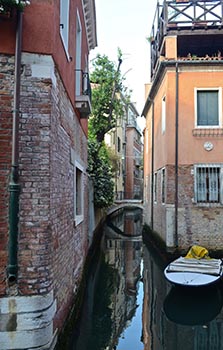
A quiet alley near our convent
Rome’s Spanish Steps
Casa Santo Nome di Jesu, Florence
Entrance to Instituto San Giuseppe, Venice
A room with a view, Venice
The Squero San Travaso
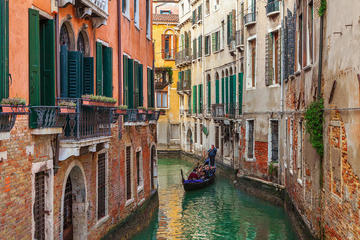
The wonder of Venice
A gondola in Florence, naturally

Tagged With: Italy travel, Rome accommodations, Venice accommodations Filed Under: Europe Travel

Kazimierz, The Old Jewish Quarter Of Krakow, Poland

Kazimierz bookshop

by Wynne Crombie 

After exploring the delights of the Rynek Glowny (Krakow’s Main Market Square) my husband Kent and I set out to discover Krakow’s old Jewish Quarter…Kazimerz. It’s few minutes by tram (#7, #13, #24) or, a very leisurely twenty- minute walk.

At its inception, Kazimierz, founded in the 14th century by King Casimir the Great, was a separate town from Krakow. It was once Krakow’s “medieval twin”. Until the outbreak of World War II, the Jewish religion and culture thrived here. It was the safe haven for Jews from every corner of Europe until the 20th century. It was also a major center of Diaspora (an area outside Palestine settled by the Jews). Then, with the onset of World War II, it became the scene of Nazi devastation. However, there are still significant reminders, of a substantial Jewish community that once existed from 1500 to 1940’s …the forgotten grandeur and landmarks of Kazimierz,

Kazimierz buildingIn March 1941, the Germans forced all Krakow Jews to resettle in the newly created ghetto of Kazimierz. The Nazis liquidated it only two years later on March 13, 1943. Most of the 17,000 inhabitants perished in the Nazi concentration camps. Today Krakow has only about 200 Jewish residents.

Kent and I found that Kazimierz is best discovered on foot. There were so many times we wanted to just stop and reflect on the history before us. As we strolled along Ulica (street) Szeroka we noticed that the signs in Polish were slowly morphing into Hebrew.

Ulica Szeroka runs north and south and has parking available all along the middle of the street. It is not what you would call glamorous; in fact it is a little run-down. It was a nice place to go for a walk as we found out, or just sit and take in the atmosphere

synagogueKazimirez is not beautiful; many of its buildings are run down. A few night clubs have emerged around the Square. We enjoyed just sitting and people watching… modern day residents and a few Jews dressed in shawls and yarmulkes. And, of course, the foreign tourists.

At the top of the Square (Szeroka 2) is the original Jarden Bookshop, going back to pre- World War II. It also doubles as a tourist information source. The Bookshop also runs tours of the area.

At Szeroka Street 40, we entered the Remuh Cemetery. A few worshipers were praying or cleaning grave sites. The cemetery had been widely used from 1551 to 1800. It has hundreds of old tombstones, dating mostly from the Renaissance…still readable.

The synagogues that still stand are not in the best of condition and the actual Jewish quarter lacks the pre-World War II Jewish atmosphere. Almost all have left the area.

old buildingThe next thing on our list, however, was to sample some of the local food. There was no shortage of Jewish themed restaurants and shops.

We opted for the Kazimierz Market Square or Plac Nowny. It was appealing because it was made up of mostly local working folks walking over for lunch or on a snack break. Never mind that comprehending both Hebrew or Polish were out of our league! At one of the stalls we nibbled on zapiekanki. This is a fantastic toasted baguette with cheese, ketchup and other toppings.

After a little nibbling, shopping and people watching, it was time to explore more of Kazimiretz’s history.

Many synagogues that did survive the war were badly damaged. We visited the Isaak Synogogue built in the 17th century on Kula Street. This is one that had been badly damaged during the War and is still in a restoration process. The historical documents on display are, tremendously interesting. Not just the writing, but the paper and inks used as well.

Another interesting feature are the walls in the prayer hall. Prayers have been painted on the walls for worshipers who couldn’t afford prayer books. Most readings have even been translated into English. A plaque outside states the synagogue was constructed in 1638, so there is some serious history attached to this place of worship.

At Ulica Szeroka 24, the Old Synagogue is the oldest surviving Jewish building in Poland. We found incredibly interesting displays on Jewish life in the Main Prayer Hall (with English translations.) They also play a short film taken before World War II showing everyday street scenes in happier times. When we stepped outside, we realized the film was shot right there, but now there are very few Jews, just their names on buildings and streets.

In addition to the Jewish element, Christianity also had a role in Kazimirez. The Church of Corpus Christi has an awesome historical interior. There are stalls going back to 1629, the altarpiece of 1634, and the ornate mid-18th-century pulpit.

Since the late 1980s the area’s Jewish heritage has come back to life, the progress aided by the success of the Spielberg film, Schindler’s List. The restored synagogues cafes, bars, and restaurants are restoring life back into the Jewish Quarter.

Spielberg needed an authentic Jewish quarter for the scenes depicting the Jewish ghetto of Podgorze in Krakow. He chose Kazimierz because this area had not changed since the 1940s,

The entire Kazimierz district is on the UNESCO World Heritage List as an historical monument.

If You Go:

Schindler’s factory:
Wander through Kazimierz, then across the Vistula River Bridge to Podgórze to see more of the Nazi Kraków Ghetto and, a factory of Oscar Schindler. The latter saved nearly 1,200 Jews from the camps. Many of the surviving remnants of the World War II ghetto still exist here.

Walking Directions to Kazimierz from Wawel Castle (Krakow):
Stradom Street leads straight from the Castle’s base to Krakowska Street, and the central thoroughfare of the Kazimierz district.


Krakow Old Town, Jewish Quarter Walking Tour and Optional Wawel Castle Visit


About the author:
Wynne Crombie has a master’s degree in adult education. Her work has appeared in: TravelthruHistory, Travel and Leisure, Dallas Morning News, Senior Living, Cat Fancy, Quilt Magazine, Catholic Digest, Boys ‘Life, Italy Magazine, Irish-American Post.

All photos by Wynne Crombie.

Tagged With: Krakow attractions, Poland travel Filed Under: Europe Travel

Artists of Fallas in Valencia

Valencia Falla festival
by Ann Randall

Squeezed in among the expectant crowd on the Plaza del Ayuntamiento in Valencia, Spain, I knew I was about to watch an explosion. I did not anticipate the teeth tingling, throat vibrating, ground shaking impact of over 200 pounds of gunpowder going off in what the tourist brochures describe as a “perfectly synchronized rhythmic symphony of noise finishing with a 20 second grand finale.” The daily 2 PM explosion called Mascleta is a tradition of the city’s March Fallas Festival; a noisy, colorful nineteen day event that begins on March 1st and ends after midnight on March 19th, St Joseph’s Feast Day, which is where the celebration has its more humble beginnings.

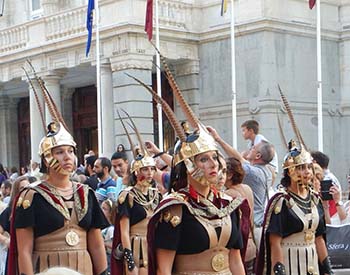
Fallas is an opportunity for local artists and craftspeople of to showcase their talents and that includes the pyro-technicians responsible for Mascleta and the nightly fireworks shows which are part of the festivities. Also the cooks who make bunuelos, the pumpkin fritters that are a Fallas specialty; the brass band musicians and dancers and the seamstresses who create the elaborate traditional costumes seen on the streets.

But the original artistic stars of Fallas are the designers, carpenters, painters, mold-makers and technicians who create and assemble life-size and larger figurines called ninots onto neighborhood platforms in scenes that depict all manner of political and satirical statements. A scene of ninots is called a fallas which is how the festival got its name and the fallas aren’t on full display until the final three days of the festival when their artistic teams have a designated window of time to fully assemble their creations. There are only a few days for the public to wander Valencia to view all 500-700 ninots before the final act of Fallas, the burning of all the ninots in a fire known as Crema which occurs on March 19th.

It was in the 18th century that early versions of ninots became part of the celebration of the Feast Day of St Joseph, the patron saint of carpenters and craftsmen in the Catholic religion. Craftsmen would traditionally sweep out their shops of wood scraps accumulated over the winter on St Joseph’s Day, a symbolic end to the winter and welcoming of spring. Their large T-shaped candleholders called parots would get propped in front of buildings (or suspended as puppets between buildings) dressed as figures that represented some injustice that had occurred during the previous year.

Valencia artist works on sculptureThose simple early ninots have evolved into magnificent wax and polystrene figurines that require such precise skills that the artists who create them now have their own guild, The Guild of Falleros Artists; at least two schools who specialize in training them; two museums dedicated to their work and a part of Valencia known as Cuidad del Artisto Fallera (the City of Falleros Artists) where many of them have full-time workshops.

To find out more about the art of creating a fallas, begin at the Museo del Artista Fallero located in City of Falleros Artists in the quiet Benicalap district northwest of Vallencia’s historic quarter. The museum is open year round from 10AM – 2PM and 4PM – 7PM Monday – Friday and Saturdays from 10AM – 2PM. There’s a small auditorium in the back of the main floor and if you ask the museum staff they’re happy to show you the video (available in multiple languages) that traces the evolution of the process of building ninots from its humble beginnings in the 18th century to the complex craft it is today.

Then wander the two story museum to see the process for yourself. There are examples of early water color and pencil sketches (the first step in the process as the ninots must be approved by the neighborhood committees who ultimately pay for their creation); scale models of the fallas, examples of the wooden skeletons on which the larger ninots are constructed and the final product including the previous year’s favorite ninot voted on by the public. The talents of the Falleros artists are in high demand and many of them have been internationally commissioned to design movie and theatre sets, displays for industry and trade shows and other museums.

Turn left when exiting the front door of the museum and wander among the industrial buildings housing the workshops of many of the artists. I was there the first week in March and many of the workshop doors were open with artists putting the final touches on their Fallas creations. I asked permission from the working artists to go inside their workshops and take photos and though my Spanish didn’t fully appreciate the tours they gave me, their evident pride in their work and my appreciation for it crossed language barriers.

One of the largest workshops belonged to Manolo Garcia whose team had been selected to create the 2016 fallas monument representing the City of Valencia displayed in the Plaza del Ayuntamiento; the one subjected to the blasts of the daily Mascleta of gunpowder explosion and traditionally the last fallas to get burned in the fire on March 19th.

monument under constructionThe scale model and the massive pieces of the scene in the workshop did not do justice to the full scale of the monument as it was being constructed. Because of its sheer size, much of the actual carpentry happened in the plaza where the public could watch its daily progress. The monument, called Fallas of the World, consisted of a tall wooden human figure surrounded by world “monuments” that had been part of previous years’ fallas structures – the EIffel Tower, the Statue of Liberty, the Concorde jet, the statues of David and Moses.

Equally large and impressive fallas monuments could be found throughout the city in the neighborhoods who had commissioned them. The most impressive were lit up at night which is one of the best times to appreciate their artistic creativity. Festum Bacchas, a large scale monument showing the life cycle of the area’s wine industry cost 90,000 Euros to build and display according to a member of the neighborhood committee. The committees work all year raising money in a variety of events to pay for their fallas monuments to show their neighborhood pride in Fallas and in hopes of producing a winning monument from the judges who only have two days to see and judge the completed structures.

Each committee selects one of the ninots from their fallas to display in the Exposition of the Ninots, held this year in the Prince Felipe Museum in the City of Arts and Sciences. For 38 days (in 2016 from February 5 – March 15) members of the public (including tourists) can wander through the display of ninots and cast a vote for the one that should be saved from the fire. Called the Ninot Indultant, the tradition of saving one figure from the fire first became a tradition in the 1930s in response to public sentiment that something should be saved to commemorate the artistic effort of that year’s fallas artists.

In 2016 it was a ninot from the Festum Bacchas fallas that the public voted to save; a farmer playng a guitar while a small girl and her dog listen. In addition to the Museo del Artisto Falleros, the city has a second museum open year round dedicated to Fallas called the Museo Falleros where all of the ninots indultants saved from the fire since 1934 are on display. The progression of technology and art over the years is evident in the chronology of ninots. The early ninots were wooden and paper mache figures dressed in real clothing. As the artists began to use wax, clay and cardboard, polyester and then polystrene, the ninots got more complex and the fallas monuments more extravagant.

The art of the Fallas Artist Guild can be appreciated any time of the year by visiting both museums, but to see it in its full glory, it really must be seen during Fallas and in particular, in the three days leading up to March 19th. If you are not a fan of the high decibel noise of the daily Mascleta and the miniature neighborhood mascletas that seem to occur all day and much of the night in the final week, then finding accommodations outside the historic city center is advised. Bus and metro transportation run frequently and you can just wander the city’s streets where you’ll find a fallas on most street corners. Ask locals for the best fallas to see since you won’t be able to see all of them. And don’t get too attached; they all go up in flames on March 19th save one ninot indultant. By the morning of March 20th, the streets have been cleaned of burnt debris as though nothing was there. But the artists of Fallas Artist Guild are busy planning their creations for the following year.


Valencia Private Food and Wine Tour

If You Go:

♦ Accommodations in Valencia are in demand and expensive during the three week March Las Fallas Festival so be sure to book early. There are several hotels, hostels and Air B&B rentals in the historical district. Next to the historic district is the trendy Russafa district where you will find the ABCYOU Bed and Breakfast at about $70 per night (more during the Fallas Festival) and a variety of restaurants, coffee shops and art galleries.

♦ Getting there: Valencia’s well-served airport is 5 miles from the city with a regular metro that runs between the airport and the historic district. It’s an easy two hour trip on the high speed AVE train from Madrid to Valencia.

♦ Other activities: In addition to the two Fallas museums, Valencia has a wide range of other museums including the beautiful Ceramic Museum in a historic Baroque building, the ultra-modern Museum of Science, an archaeological museum (the city began as a Roman fortress) and a Rice Museum. There are parks, gardens and the open green space of Turis Park for biking and walking. The city is on the Mediterranean with its beaches, hotels and restaurants that are a very different scene then the historic old town. Valencia is the birthplace of paella and you can learn to cook Valencia’s specialty paella at Escuela de Arroces y Paella.

About the author:
Ann Randall is a well-traveled international election observer and independent traveler who now spends at least two months annually venturing to out of the way locales from Azerbaijan to Zimbabwe. She has recently taken up travel sketching as a way to savor the journey in an attempt to see if pictures really do speak a thousand words. A former high school teacher and staff for an educators’ union in Washington State, she now consults and trains for an eco-tour company in Costa Rica; observes international elections and does NGO volunteer work. Her articles have appeared in Travel Post Monthly, EcoTeach Online, Yonderbound and Viking Magazine. She blogs about her travels at www.peregrinewoman.com

Photo credits:
First photo by Enric Cuenca Yxeres / CC BY-SA
All other photos are by Ann Randall


Tagged With: spain travel, Valencia attractions Filed Under: Europe Travel

  • « Previous Page
  • 1
  • …
  • 28
  • 29
  • 30
  • 31
  • 32
  • …
  • 74
  • Next Page »

MORE TRAVEL STORIES:

Fort Bowie Arizona, a Frontier Landmark

Raigad Fort Road Trip

From Bootlegging to Boardwalks: The Secret History of Atlantic City

How to Use Dating Apps Smoothly as a Tourist in Madrid or Barcelona

Florence, Italy Day Trips

India: Along the Mother Ganges

Sailing the Sepik River

Thetis Island Retreat


SEARCH

DESTINATIONS

  • Africa Travel
  • Antarctica travel
  • Asia Travel
  • Australia travel
  • Caribbean Travel
  • Central America Travel
  • Europe Travel
  • Middle East Travel
  • North America Travel
  • Oceania Travel
  • South America Travel
  • Travel History
  • Travel News
  • UK Travel
  • Uncategorized
  • World Travel
facebook
Best Travel Blogs - OnToplist.com

Copyright © 2026 Cedar Cottage Marketing | About Us | Contact | Privacy Policy | Terms & Conditions | Copyright Notice | Log in