by Roy A. Barnes
Rising from the Heap of World War II destruction in Dresden, Germany, are three magnificent churches. The World War II bombing by the Allies on February 13 and 14, 1945 is purported to have smashed the city of Dresden with some 650,000 incendiary bombs. Various estimates of those killed range between 25,000 and over 100,000 people. The subject of the Kurt Vonnegut novel Slaughterhouse-Five describes walking among the ruins as if walking on the moon. Recently, I visited three of these Dresden churches, survivors of the World War II destruction.
The Frauenkirche (Church of Our Lady)
 Augustus the Strong, the Prince Elector of Saxony and King of Poland, was jealous of great Catholic cathedrals, so he had this Lutheran house of worship built between 1726-1743 by George Bähr (mostly completed by 1736). Johann Sebastian Bach gave an organ recital there in 1736.
The incendiary firebombing of the city February 13-14, 1945 had created a temperature around the church of 1000 degrees Centigrade (1832 degrees Fahrenheit), which caused the church’s 6,000 tons of stone and die Steinerne Glocke or “Stone Bell” (the iconic skyline feature of the city) to collapse on February 15 after the sandstone pillars gave way. Ironically, this church had survived 100-plus Prussian cannonballs bouncing off of it during the Seven Years War of the middle 1700s.
 In 1982, the ruins became an area for protest gatherings against the Communist regime. But in January 1993, original plans from the 1720’s were used to reconstruct the church, using thousands of recovered stones which were put back in their original place (including ones darkened from the firebombing. This is why you see the exterior walls in checkered patterns). Photos and computer technology were used to reconstruct the church in as close of detail as possible, which took until 2005, costing 100 million Euros, 90 percent of that coming from global donations. The church is 92 meters high (about 302 feet) and you can take in a view from 85 meters (about 279 feet), according to the guided tour I took. You must climb some 220 steps to get up there. Near one of the Frauenkirche’s entrances are remains of the World War II destruction (that look like a sculpture) for people to ponder.
I took in a noontime devotions service that featured organ playing, but not before hearing Peal of the Peace Bell, which rang for a few minutes. The opulent Baroque style interior features luxury boxes on the second floor like a sports stadium.


The Hofkirche (Cathedral of the Holy Trinity)
 This Catholic church was built between 1739-1754 so August the Strong could become King of Poland, a Catholic country. It has the look of Roman Baroque style and is a stone’s throw from the River Elbe. The crypt contains the heart of August the Strong, too. The only aspect of the church building that was reconstructed from the ruins of World War II is the organ backdrop, containing a restored Sibermann organ that contains 3,000 pipes, in which I heard a beautiful Bach organ concerto playing during the noon hour. There are 78 figurines on the exterior of the church that were created by Lorenzo Mattielli.
The Memorial Chapel at the rear of the church honors those who died in the firebombing and is made of Meissen porcelain. It’s got a look, in my view, of a creepy interpretation of modernist art, but made me ponder the World War II destruction of Dresden, Germany nonetheless. It contains these dates: 30-1-33 (rise of Hitler) and 13-2-45 (the first night of firebombing).
The Kreuzkirche (Church of the Holy Cross)
 The church has been onsite since 1215, making it the city’s oldest church. It held the first Lutheran service in Dresden, Germany in 1539, and has been destroyed several times: by fire in 1491, 1699; by war in 1760 (Prussians); and much of it was destroyed in the February 13, 1945 bombing raid. I toured the venue that was rebuilt and reconsecrated February 13, 1955. Professor Anton Dietrich’s painting, called Golgotha, survived the World War II bombings and subsequent fires but lost its luster until it was restored in 2001. This church has the second largest peal bells in Germany weighing over 28 tons, according to one of the church’s English brochures. They are still in disrepair, according to the church attendant I spoke to there. But the church can hold 4,000-5,000 people currently, making it the largest house of worship in Dresden.
The church features the Charred Cross and the Coventry Cross of Nails, which came from the German destruction of a church in Coventry, England in November of 1940. This shows the gesture of peace between the two countries.
Author’s Note: I attended the German National Tourist Office’s 2009 “The Making of Christmas” press trip, in which I got to experience the things discussed in this article. I freely wrote my impressions without any editorial scrutiny from the press trip sponsor.
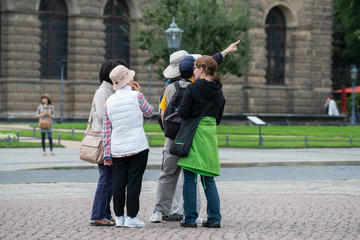
Dresden Walking Tour Of The Historic Old Town
If You Go:
HOW TO LOCATE THE CHURCHES
- The Frauenkirche (Church of our Lady) is located at An der Frauenkirche 12, 01067 Dresden, Germany. Phone: +49 (0) 351- 6560-6100. Open church visits are free, but some special events and tours have admission prices. Website: www.frauenkirche-dresden.de
- The Hofkirche (Church of the Holy Trinity) Located at Theaterplatz 01067 Dresden, Germany +49 (0351) 4844 712. Website: www.bistum-dresden-meissen.de
- The Kreuzkirche (Church of the Holy Cross) Located at An der Kreuzkirche 6, D-01067 Dresden, Germany. Phone: +49 (0351) 439 3912. Website: www.kreuzkirche-dresden.de. There is an admission charge to the tower.
RESTAURANT RECOMMENDATIONS
After taking in these churches that have risen from the heap of World War II destruction, you may want a really hearty Saxony meal with big portions and friendly service. The Pulverturm and der Frauenkirche is the place to go, and is centrally-located in Dresden across the street from the Frauenkirche. The restaurant resides on land where structures have stood off and on since 1565. This restaurant is located in a cellar of low ceilings and gives off a medieval ambience and festive atmosphere. The servers are dressed in period costumes ranging from the 1500s to 1900s, depending on the season or holiday period. You might hear German folk songs being sung at the tables whenever the accordion player stops by.
The Pulverturm stresses Saxon cuisine, and many entrees feature potatoes and pork. Price ranges for main courses are currently around €8 to €32 (a Euro is about US$1.20 as of July 2010). I enjoyed via candlelight their tender and tasty roasted trout fillets as well as their herb spaghetti with large Parmesan cheese shavings, in which the scent and taste of basil and olive oil dominated my taste buds during the latter course. Ask for some of their yummy homemade Schwarzbrot, their whole grain rye bread that’s chased with herbs. This restaurant is open from 11 a.m. until 1 a.m. daily. Prices and menu items quoted subject to change. Contact An der Frauenkirche 12, 01067 Dresden, Germany. Phone: 49 (0) 351-26-26-0-0. Website: www.pulverturm-dresden.de
About the author:
Roy A. Barnes writes from southeastern Wyoming. During his lifetime, he’s worked in the travel agent and airline industries, and has traveled on the North American, Asian, African, and European continents.
Photo credits:
Dresden twilight cityscape by: analogicus from Pixabay
All other photos by Roy Barnes.
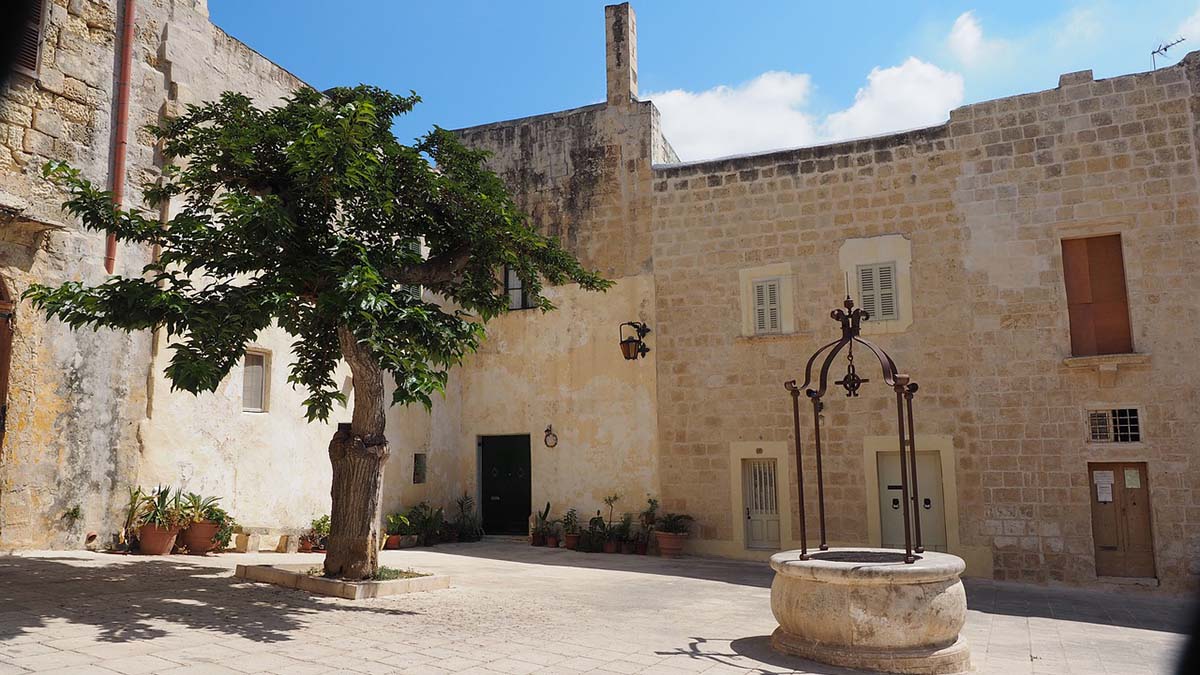
 Listening to this raucous chant that ardent citizens – of whom I am proud to be one – learn practically while still in the womb, it is hard to believe that the official name the Sovereign Military Hospitaller Order of Saint John of Jerusalem, Rhodes and Malta gave to the City was Humilissima Civitas Valletta, indicating it as a ‘city bound to humility’.
 The plans had another purpose besides aesthetics. Fresh air from the Grand Harbour and from Marsamxetto Harbour would provide the natural air-conditioning breeze. Laparelli, with his carte blanche, could also project fresh water supplies being piped in all the way from Citta’ Notabile (Rabat), and sanitation; concepts obtaining in very few cities of the time.

 On a walking tour of Valletta, one is spoilt for choice. Will it be the Auberges and the Cavaliers? Will it be the multitude (about 32) of churches and chapels, including the Anglican Cathedral of Saint Paul and the Greek Orthodox Chapel? Will it be a whistle-stop tour practically at every street-corner, in order to photograph the votive statues or niches, fountains that decorate them?
 This glorious gem, truth to tell, is also a medley of traffic, pedestrians, business concerns as well as the historical monuments we all take for granted, not even affording them a casual look as we go about our business … echoes of the yells, bells and smells label. A time-travelling Knight would however have his sense of déjà-vu tempered with a feeling of uncertainty. The British rule left their mark by widening gates, altering or downright demolishing certain buildings, and commissioning other infrastructural projects. Added to this, there are the changes perforce wrought after the havoc caused by the two world wars.
 That having been said, it is indeed a pity that residents and visitors sometimes have cause to grumble about certain aspects of the City… beginning from the monstrosity known as City Gate, through which one can view the ruins of what used to be one of the grandest edifices of Europe, nay of the world… the Royal Opera House. There are currently plans to rebuild this monument – and they have attracted much controversy.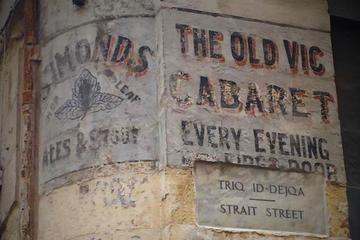
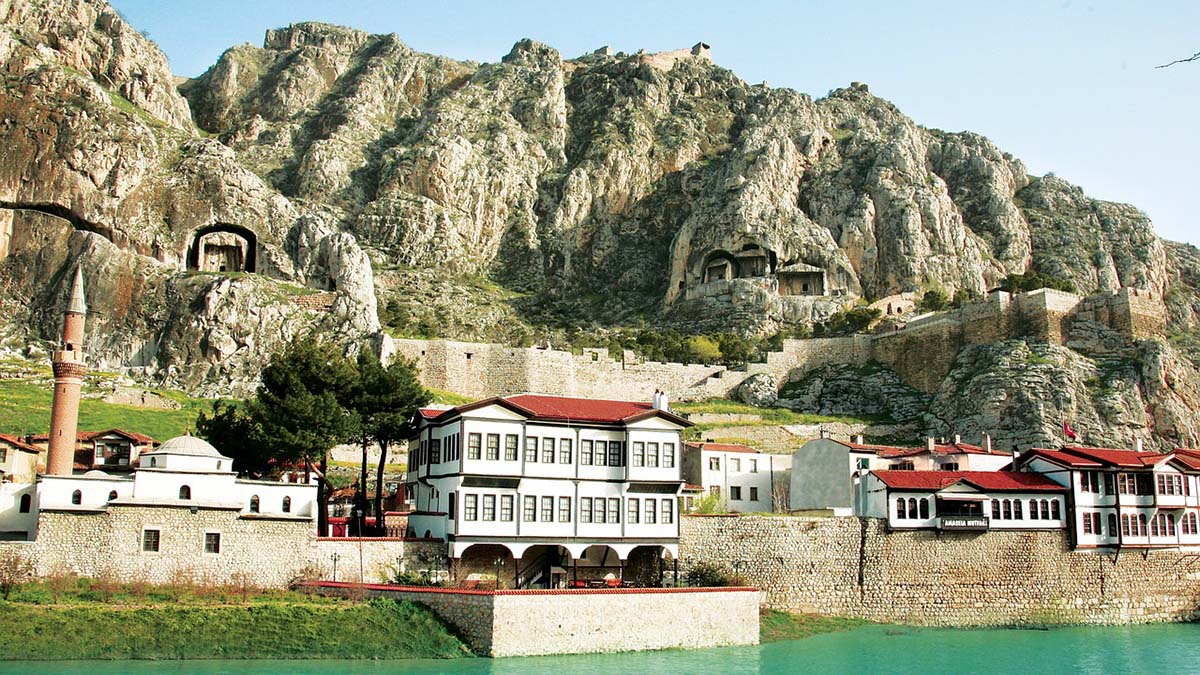
 I saw the picture first and I couldn’t tear my eyes away from the image of a baby boy mummy staring at me with wide open blue eyes. It was part of a brochure about the archaeology museum in the fabulous mountain town of Amasya, located about 100 miles south inland from the Turkish Black Sea coast.
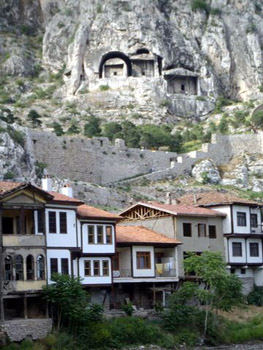 The first day of my stay in Amasya was dedicated to getting the feel for this amazing town nestled in the gorge of steep mountains and dominated by a towering castle on Harshena mountain, 700 m above sea level and first constructed in the Hellenistic period with alterations and additions ever since. Below it, the rock tombs of kings, illuminated at night, add to the magic of the entire place.
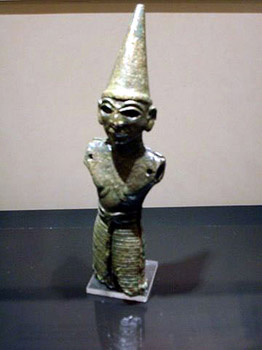 The first floor is dedicated to the Ottoman period and you can indulge in the luxury of embroidered garments worn by the sultans as well as ‘Tableaux’ which recreate life at the times.

 The nazir is surprisingly tall and then there is the baby, blue eyes wide open, little mouth and nose intact but the small body in part destroyed. I wondered what the little prince might have died of but at least it can be concluded from his peaceful expression that we wasn’t suffering any pain.
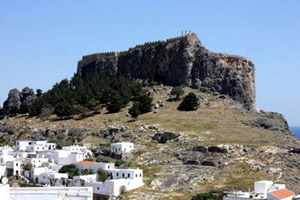
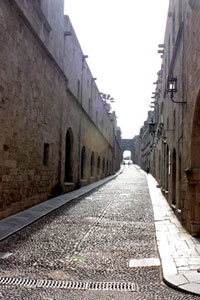 Yet unbeknown to many, Rhodes has its own ancient ruins to rival the mainland capital, as well as its own dusk-till-dawn party town. Indeed, the heritage site of Lindos and (albeit faded) hedonistic resort of Faliraki represent the versatility of this enjoyable chunk of Greek Isle.

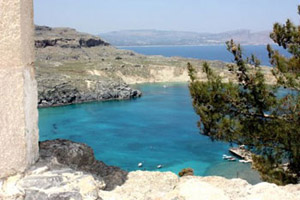 After a tiring up-hill walk into the main showgrounds of the Acropolis – refreshingly free of tat-peddlers and offering superb views of the Aegean Sea – we made our way back down to street level to savour a well-earned fruit juice in one of Lindos’ excellent rooftop watering holes.
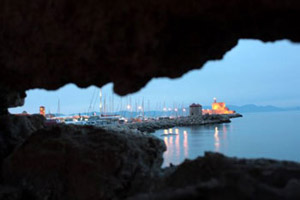 And then it was time for us to don our intrepid travellers’ hats. Map on dashboard, we headed to the very south of the island, stopping along the way at secluded beaches, tiny fishing ports, and anywhere that looked remotely…well, remote. Our stand-out finds were Prasonisi beach, located at the very southern tip of the island, and the town of Plimiri, where we stopped to view the dockers at work and sample some local seafood in a rusty old harbour restaurant.
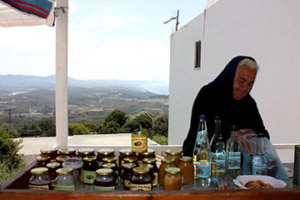 With our appetites whetted, the following day we embarked on an ambitious road trip to the west of the island, requiring a scenic inland drive across Rhodes’ central mountain range. Two hours later we found ourselves in the village of Siana, famous for producing honey. After picking up a couple of jars of the good stuff, we headed north, in principle towards a butterfly sanctuary. However, we were soon distracted by a sign for ‘Paradise Beach’.