Reconnecting With The Past
by John Goodrow
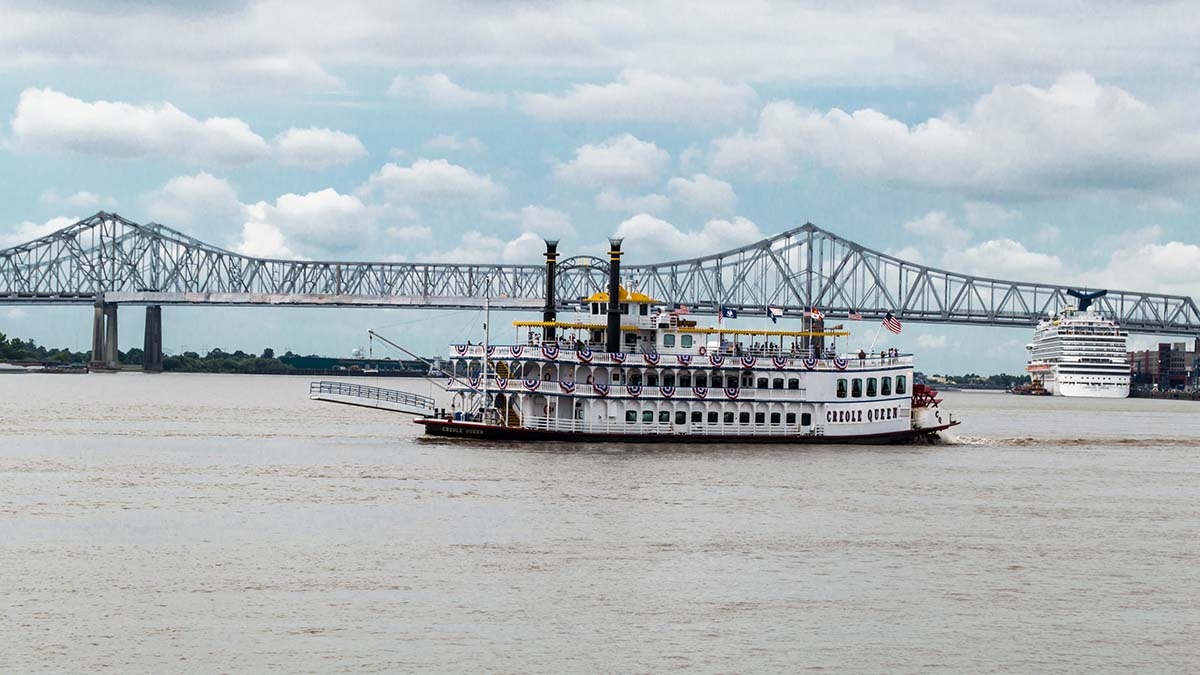
Surrounding the banks of the Mississippi River are aspects of both the past and the present. Looking out into the river, the steamboats Creole Queen and Natchez take visitors from the French Quarter up the river and transport them into the distant past when the river was the highway of exploration. These steamboats use a paddle wheel to propel themselves along the river. Imagine a time in the past when similar ships steamed upstream loaded with bails of cotton and passengers of many types. You might meet a southern belle, or even a riverboat gambler. Jean-Baptiste Le Moyne de Bienville founded New Orleans in 1718. By 1860, the city had over 185 million dollars in commerce using the Mississippi River and a variety of ships from paddlewheel boats to flat-bottomed boats. The French Quarter exudes French and Spanish influences.
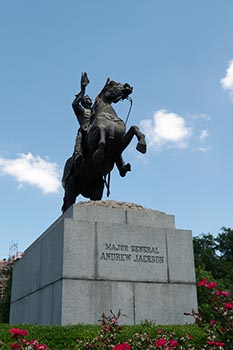 Walking inland from the river port, looking just ahead is an imposing figure of General Andrew Jackson on a reeling horse and surrounded by iron gated fences and palm trees with a backdrop of the three spires of Cathedral of St. Louis, King of France. The square was originally named Place d’Armes during the French period and Plaza de Armas during the Spanish period, or Weapons Square. This grassy plaza commonly known as Jackson Square (700 Decatur Street) is named for Andrew Jackson. He had a critical role in the history of the New Orleans.
France controlled Louisiana from 1718 until 1763. At the end of the French and Indian War, Spain gained control but returned Louisiana to French rule in 1800. The raising of the American flag in 1803, in this square ended colonial rule in Louisiana. In the War of 1812 only nine years later, it fell upon General Andrew Jackson to prevent the British from capturing New Orleans. With only a small group of soldiers, militiamen, Indians, and a few pirates, he was able to defeat the powerful British army.


 Beyond the statue of Andrew Jackson are the trio of the Cabildo, Cathedral of St. Louis King of France, and the Presbytere. The Cabildo (700 Chartres Street) is a museum that commemorates the seat of colonial power under the Spanish. It was the center of municipal government in New Orleans until 1853. The final transfer of Louisiana to the United States occurred here. Do not miss this museum. It has many artifacts throughout the early history of Louisiana and has an exhibit on the third floor with more extensive coverage of New Orleans through the present time.
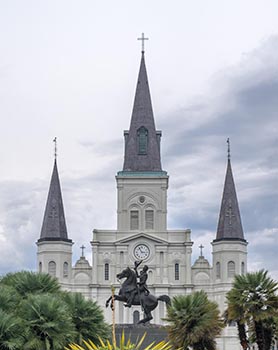 After leaving the Cabildo, enter the St. Louis Cathedral (615 Pere Antoine Alley). Towering above the surrounding buildings with its three steeples, it is the oldest active cathedral in the United States. The cathedral is the seat of the Roman Catholic Archdiocese of New Orleans. There have been three churches built on these grounds. The first church was built here in 1718 and designed by Adrien De Pauger during the initial period of French control.
A significant portion of the French Quarter including the cathedral was destroyed by a massive fire in 1788. The Cathedral of St. Louis completed its reconstruction in 1794, during a period of Spanish colonial possession. During the construction of the new church, Louisiana and Florida were included as a diocese by Pope Pius VI with the new church as a cathedral with Luis Pefialver y Cardenas of Havana as its first bishop.


 After all of your adventures reliving the past, enjoy some refreshments and entertainment. The French Quarter has plenty of places that will satisfy these requirements and is the oldest part of New Orleans. It was founded in 1718 and was known as Vieux Carré. The rest of the city developed around this area and received its current name as English-speaking residents arrived in New Orleans.
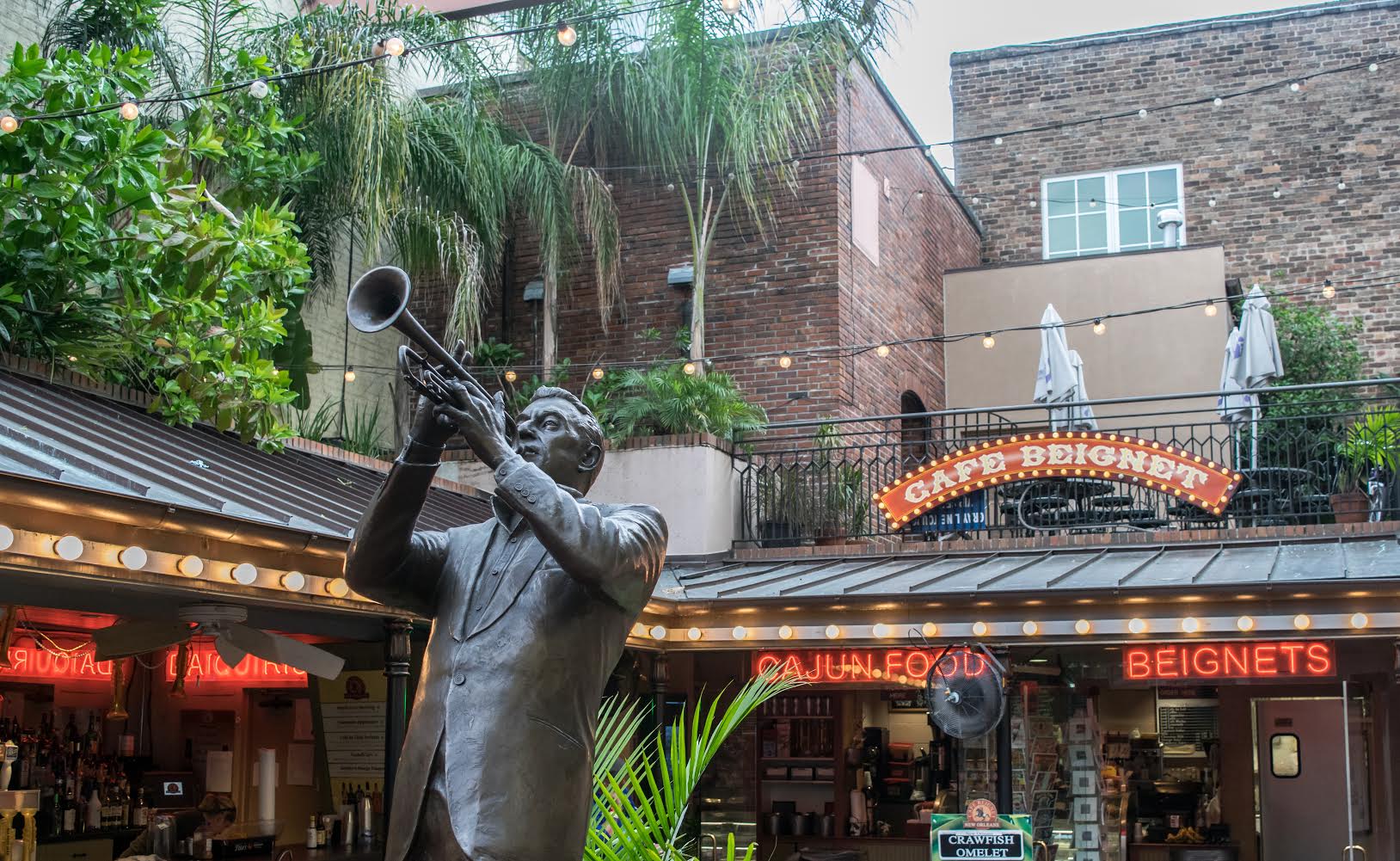
For a quick bite to eat and some light jazz head over to Music Legends Park (311 Bourbon Street). Their menu features everything ranging from beignets to sandwiches while jazz musicians play for your entertainment. You will have statues of music legends such as Irma Thomas, Fats Domino and Allen Toussaint welcoming you to the park.
As the afternoon gives way to early evening, head down to Pat O’Brien’s (718 St. Peter Street). This bar has been in business since before 1933 when it transitioned from being an illegal speakeasy to a legal drinking establishment.


The building that they use began its life as the French Theater Company in 1791. They introduced their signature hurricane drink during World War II. At the time, O’Brien’s had too much rum on hand but not enough whiskey, so they came up with an unusually bright red drink made of rum, fruit juice, and syrup. The drink gets its name from the shape of its glass container. The drink is usually served in a plastic glass, although you can get it in a hurricane glass for a nominal fee. The plastic glass makes it easy to carry your drink during your exploration of the French Quarter. It is legal in New Orleans to drink in public as long as you are not using a glass container. Their menu also offers a variety of other alcoholic and non-alcoholic beverages. The staff will serve you light food items ranging from sandwiches to soups and gumbo.
If You Go:
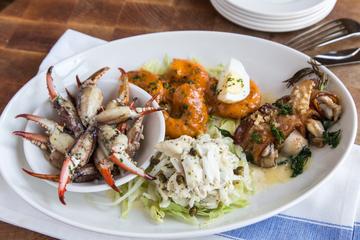
Taste of New Orleans Private Walking and Food Tour
The climate in the summer tends to be very humid, and an umbrella will help for both pop up showers and protection from the sun.
For history and general knowledge:
Visitors Center
Cabildo
Cathedral of St. Louis, King of France
Jackson Square
For dining and entertainment:
New Orleans Musical Legends Park
Pat O’Brien’s Bar
About the author:
John Goodrow is a seasoned traveler, having visited every continent except Antarctica during his career in the United States Navy. Currently living and working in Mississippi, he enjoys traveling to historic and lesser-known areas throughout the world. He shares his knowledge of early American and Military history through travel writing.
All photos by John Goodrow
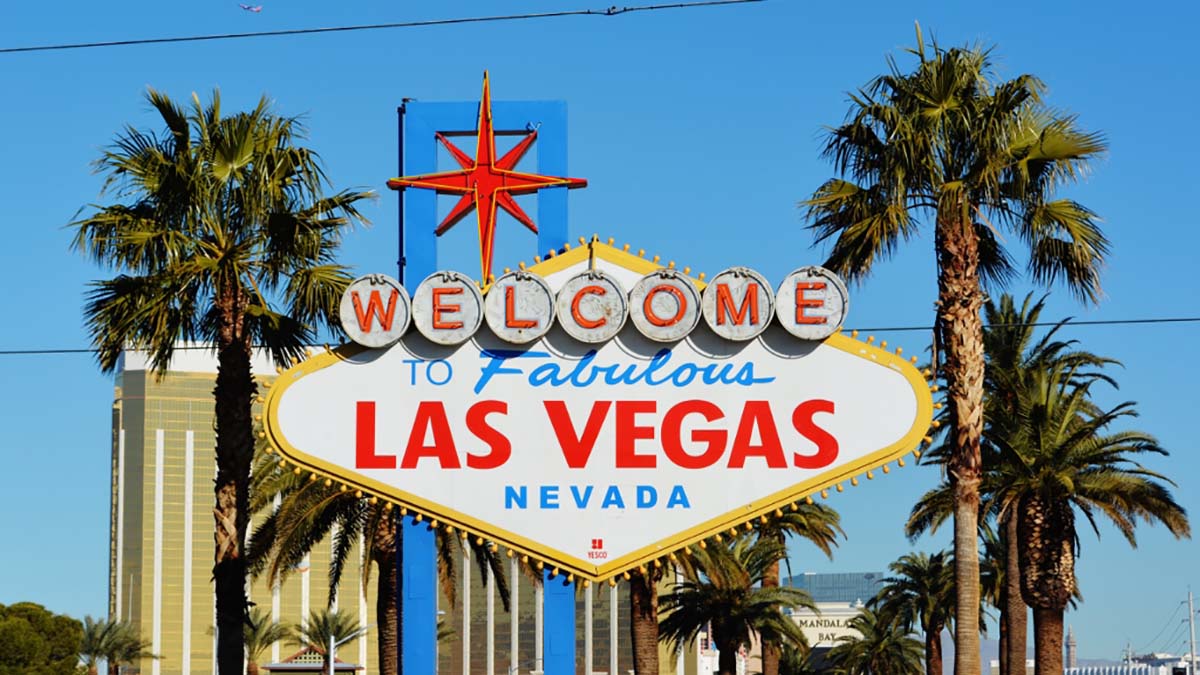

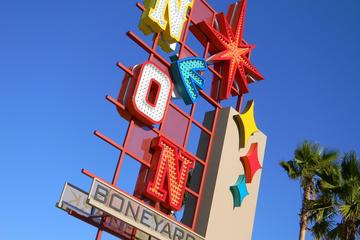
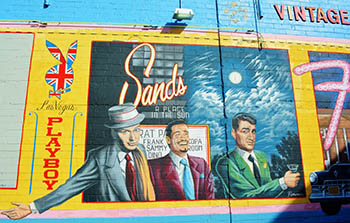 Neon put the “fabulous” in “Welcome to Fabulous Las Vegas.” And Vegas was surely at its fabulous peak in the 1950s, 1960s, and 1970s. The “Rat Pack”- Frank Sinatra, Dean Martin, Joey Bishop and Sammy Davis, Jr. and other big name entertainers along with the casinos lured visitors by the thousands to the desert. Light it up and they will come. And light it they did. Vegas became a super nova of light – a dazzling showcase of the entertainment world with its iconic signs like the Vegas Vic, the waving, smoking cowboy, the exotic camels of the Sahara, and the classy star-studded Riviera.
 Las Vegas Neon Museum

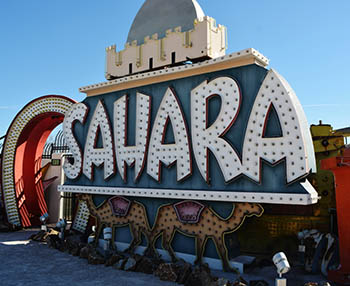 But other historical neon signs have also found their way to the neon boneyard, with their own fascinating stories to tell like El Portal, the first theater and luxury movie palace established in the city of Las Vegas in 1928 on downtown’s Fremont Street. The Green Shack was Vegas’ longest operating restaurant built in the early thirties, catering to Hoover Dam’s construction workers and suppliers. The restaurant was famous for its chicken, steaks and bootleg whisky during Prohibition.





 About the author: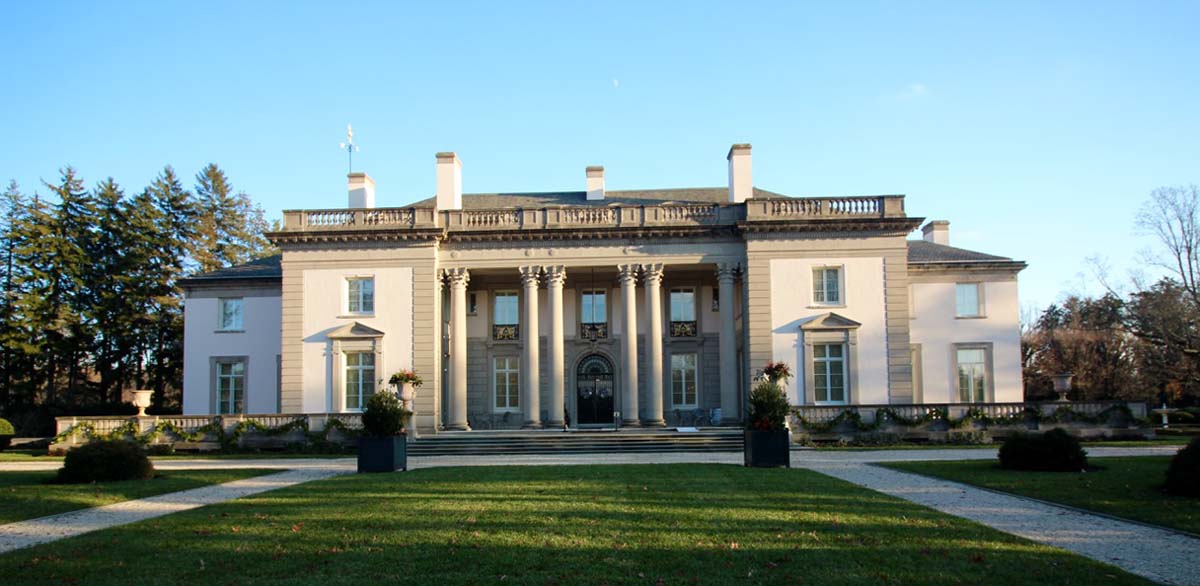

 Pierre S. du Pont, 1870-1954, found out about a place called Peirce Farm and its impending sale of trees for lumber. This was no ordinary forest. This was a collection of stately heritage trees planted and tended with care for decades; Pierre couldn’t stand the thought of these trees being cut down for lumber. Here is an excerpt from the Longwood Gardens website: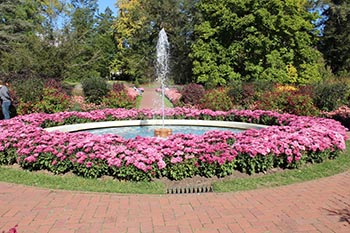
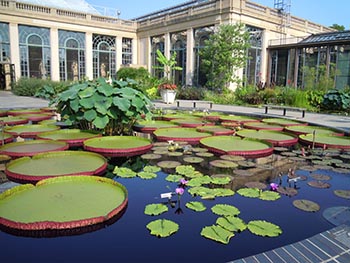

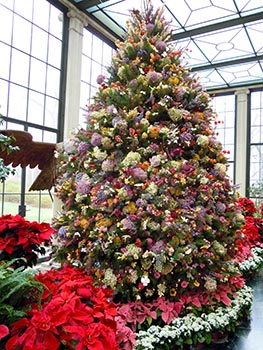
 Pierre and his wife had no children and started a plan by establishing a foundation in 1937 to guide the gardens estate’s future. Two years after his wife died Pierre received approval from the IRS for his Longwood Foundation to operate Longwood Gardens as a public garden with “tax exempt” status: “for the sole use of the public for purposes of exhibition, instruction, education and enjoyment.” Now the public could come and enjoy walking in the forests, meadows, flower gardens and conservatory in peace and beauty where previously only family and invited guests could go. This giant of industry was president of DuPont and Nemours and Company 1915-1919 as-well-as General Motors from 1915-1920. At Longwood, visitors can see glimpses of this great man’s life through a self-guided tour of his home and gardens. An estate you will never forget.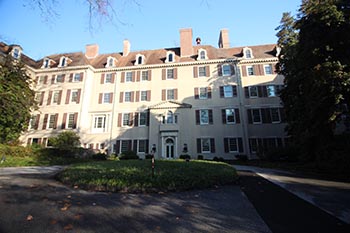


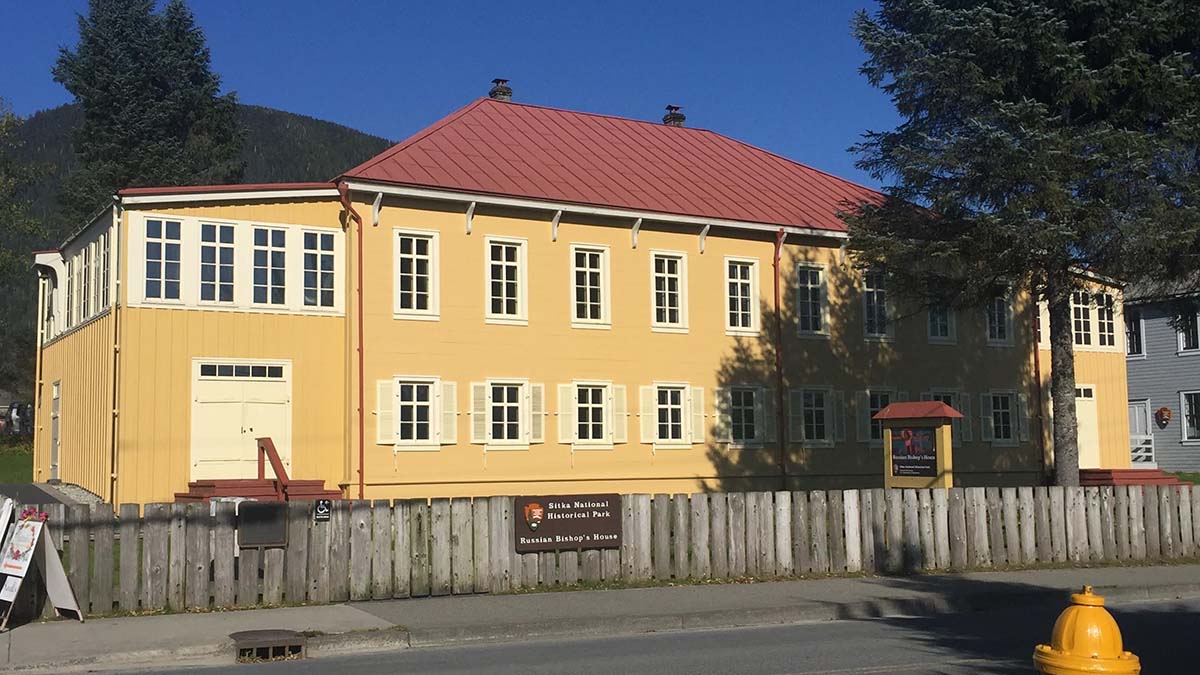
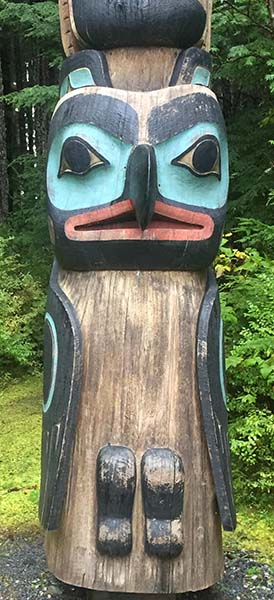 I started my day at Alaska’s oldest and smallest National Park, or as the locals call it, Totem Park, In the center of the park is a commemorative plaque to mark the battle of 1804 between Russia’s Alexander Baranov and the Kiksadi Indians. This decisive battle marked the last major Native resistance in Sitka to European domination of Alaska. A storyboard depicts this historic event. Take special note of the Russian blacksmith hammer shown, the Kiksadi first acquired the hammer as a war prize in their attack on the Russian fort at Old Sitka. The hammer is on display in the Visitor’s Center.
 After that my stomach is demanding lunch. The next building over, at 407 Lincoln Street is Bayview Restaurant. Located on the second floor of the Bayview Trading Co. This local pub serves burgers and beer. Best place to savor local and regional beers of Alaska and the view of the harbor isn’t bad either.
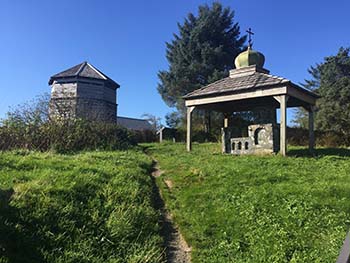


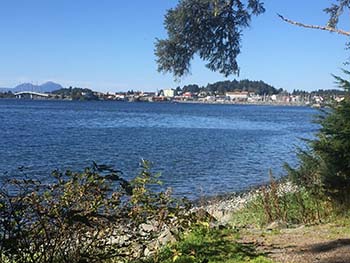
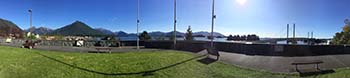 Continue west on Lincoln Street and in a few yards you’ll come to a large sign that marks Castle Hill, also known as Baranof Castle. Tlingits, Russians and Americans have all claimed and occupied this site. First as a lookout point to defend the Tlingit Indian’s home, then Baranof’s Castle was the focal point of the Russian American company and housed the Russian Government and lastly the site where the transfer of Alaska to the United States took place in 1867. This by far is my favorite Russian American site not only because of the historic significance but also of the commanding 360-degree view over the town and water.
 About the author:
