by Norman A. Rubin
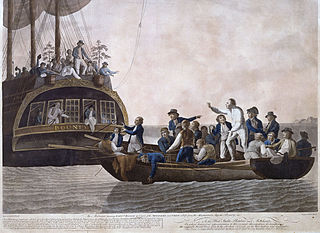 In 1790, near Tahiti Island in the South Pacific, English sailors staged a mutiny on the board the ship ‘HMS Bounty’. Nine English mutineers, their Polynesian ‘wives’ and a few Tahitian men and women took the Bounty on a desperate search for a safe hideout. They found it on Pitcairn Island. After being settled by mutineers, the island’s early history was bloody, with many feuds and violent deaths. Now Pitcairn Island is peaceful and its fifty families, many of them descendants of that infamous Bounty crew, welcome visitors to their idyllic tropical home.
Over the years a trilogy of novels have been written about the fate of HMS Bounty and the mutineers including Mutiny on the “Bounty” (1932), Men Against the Sea, and Pitcairn’s Island) by Charles Nordhoff and James Norman Hall) and it has been dramatized in films. Now you can visit and explore the island and hear of the adventures from the descendants of the mutiny.
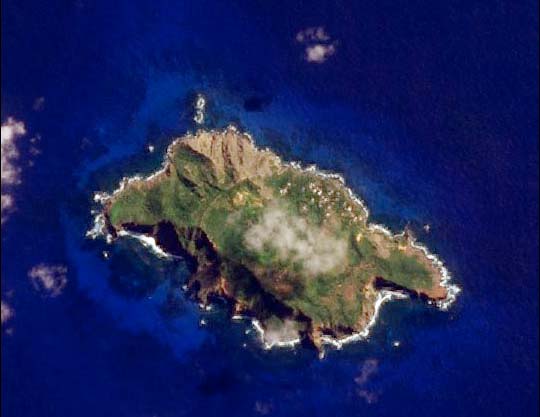 The Pitcairn Islands group is a British Overseas Territory. It comprises the islands of Pitcairn, Henderson, Ducie and Oeno. Pitcairn, the only inhabited island, is a small volcanic outcrop situated in the South Pacific at latitude 25.04 south and longitude 130.06 west. It is roughly 2170km (1350 miles) east south-east of Tahiti. The island is approximately 3.2km (2 miles) long and 1.6km (1 mile) wide with the capital Adamstown located above Bounty Bay and accessed by the aptly named road, “The Hill of Difficulty”. Pitcairn Island was sighted on 3 July 1767 by the crew of the British sloop HMS Swallow, commanded by Captain Philip Carteret. It was named after Midshipman Robert Pitcairn, a fifteen-year-old crew member who was the first to sight the island. www.government.pn
The remoteness and ruggedness of Pitcairn’s geography, the insularity of its bureaucracy, and the scarcity of its resources conspire to make it a very difficult place to reach . Visitors who wish to stay on the island for any length of time require a license from the governor, because the irregularity of transport means they’re effectively residents of the island for the next several weeks or even months. These licenses require proof of good health, the means to leave at the end of the visit (e.g., passage on an upcoming ship), at least NZ$300/week to cover your cost of living on Pitcairn, plus various other conditions, and a $100 fee; these are valid for six months. admin@pitcairn.gov.pn
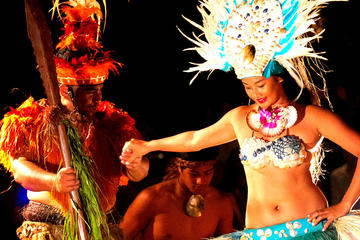
Cook Islands Cultural Village Tour with Night Show and Buffet Dinner in Rarotonga
If You Go:
Accommodation on the Island means “Home-stay” style. This is arranged prior to your arrival. Rates are Standard at US$70 per person per night. This includes all meals and laundry. Check with your host about rates for Telephone and Internet access. When you book your trip to Pitcairn you may contact individuals to book accommodation in advance otherwise the tourism co-ordinator will arrange home stay accommodation upon your arrival and introduce you to your hosts.
Pitcairn Islands Tourist Board
Adamstown, Pitcairn Island PCRN 1ZZ
(Pacific Ocean)
E-Mail: info@visitpitcairn.pn
Internet: www.visitpitcairn.pn
To get to Pitcairn today, you can travel on board Pitcairn’s new Passenger / Cargo supply ship chartered by the Pitcairn Island Government, the MV Claymore II. The Claymore II can accommodate 12 guests in private twin Cabins. Each cabin has two bunk style beds, table and chairs, wash basin, fans, reading lights, wardrobe and electrical outlet socket. The ship has air-conditioned passenger areas and provides guest with lots of room to relax outside on deck, watch a movie in the lounge or read a book on the enclosed, air-conditioned aft deck. All meals are served in the large dining room overlooking the front of the ship. The Claymore II sails direct to Pitcairn from the Island of Mangareva in the Gambier Islands, French Polynesia., a 32 hour journey. One could opt for a three-day sojourn on Pitcairn Island or a ten to a three month stay with a return booking on the Claymore!! cargo boat. To book a passage on board the MV Claymore II Please contact the Pitcairn Island Office (PIO) in Auckland, New Zealand on +64 9 366 0186 or email on admin@pitcairn.gov.pn.

Ocean Voyages, Inc.
1709 Bridgeway, Sausalito, CA 94965
Ph: +001 (415) 332-4681
Fax: +001 (415) 332-7460
Email: sail@oceanvoyages.com

Pacific Expeditions Ltd
PO Box 3063, Rarotonga, Cook Islands
Email: info@pacific-expeditions.com
Website: www.pacific-expeditions.com
There is quite a variety of activities to do on the Pitcairn Islands. You can go swimming at St. Paul’s Pool, a tidal pool in Eastern Pitcairn, Oeno Island has the only sandy beaches suitable for swimming. Henderson Island is good for bird watching. You will get a chance to go roping the cliffs; then there is snorkeling or scuba diving among coral reefs and a few shipwrecks. Add to that there are the Polynesian rock carvings; and at the island’s museum there are the mutiny artifacts and the Bounty Bible,
Henderson Island is a UNESCO World Heritage Site with several endangered bird species. The island of Henderson supports a rich variety of animals in its nearly inaccessible interior, and also of supporting a small human population, but access is difficult, owing to its outer shores being steep limestone cliffs made of sharp coral.
For additional information contact:
Pitcairn Islands Administration
P.O.Box 105696, Auckland, New Zealand
Tel: (+64-9) 3660186 Auckland
Tel: (+872) 762337766 Inmersat Mini-M at Pitcairn
Fax: (+64-9) 3660187 Auckland
Fax: (+872) 762337767 Inmersat Mini-M at Pitcairn
E-Mail: admin@pitcairn.gov.pn
E-Mail: ppa.mailbox@fco.gov.uk (governor)
Internet: www.government.pn


Photo credits:
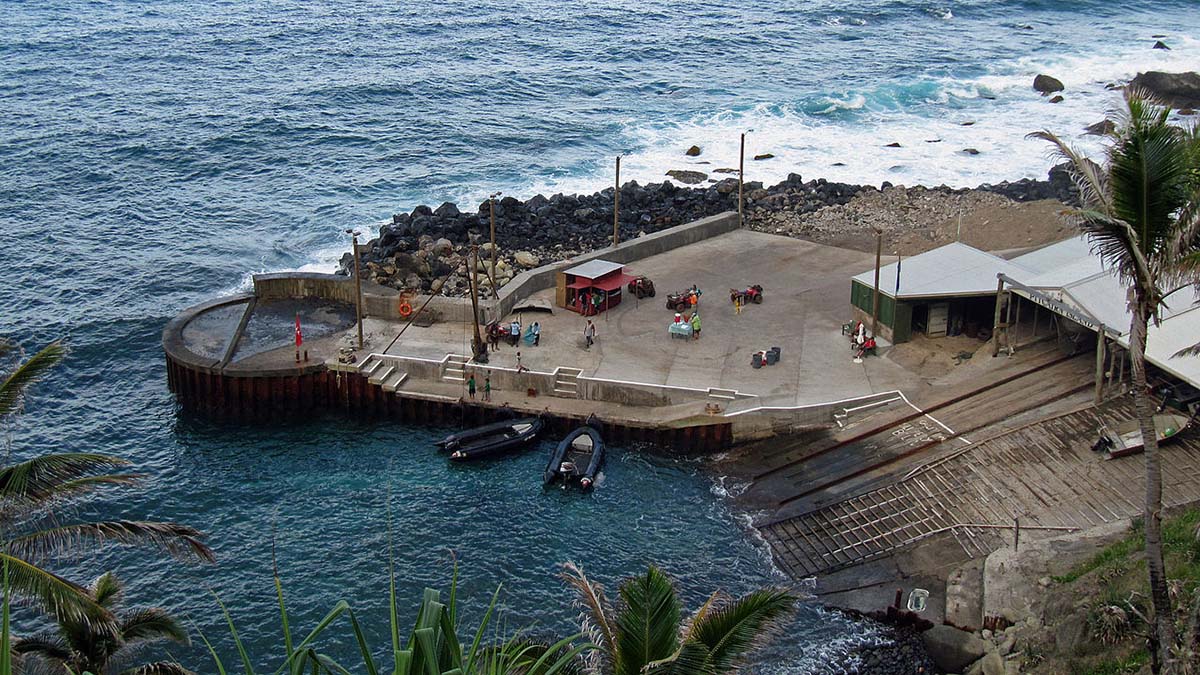
Pitcairn dock by Jens Bludau / CC BY-SA
Bounty mutiny illustration: Robert Dodd / Public domain
Pitcairn satellite image: NASA / Public domain
About the author:
Norman A. Rubin is a former correspondent for the Continental News Service (USA), now retired and busy writing articles and stories for Net sites and magazines worldwide – see www.Google.com under the author’s name for a review of his written work.

 Many Kona coffee brands are sold in Hawaii. Most of these are blends however. Those wishing to enjoy 100% Kona coffee should read the labels carefully to eliminate the blends. Compare the taste of 100% Kona coffee to the blend just once and you’ll understand why there is simply no comparison between the two.
 After the tour, visitors are invited to sample light and dark roasted versions of both premium grades known as Extra Fancy and Peaberry. Peaberry beans are an anomaly in that they are plump, single oval beans. Regular coffee beans have two halves with matching flat sides. While this difference seems insignificant, the impact on taste is profound. Peaberry beans have a milder, fruitier taste combined with lower caffeine and higher oil content than regular coffee. I enjoyed the Peaberry so much that I purchased a one pound bag of the lightly roasted beans. The taste was fruity and full-bodied.
 The Ueshima Coffee Company offers a personalized hands-on roasting tour. Visitors can process their own half-pound bag of coffee beans and then apply a customized label to the product. Those not touring may sample the different Ueshima coffees in the company store.

 The nearby Kona Historical Society’s Kona Coffee Living History Farm provides an unusual tour through an early 20th century coffee farm, owned and operated by a traditional Japanese family. A male guide outlines the early farming methods and equipment employed to cultivate and harvest coffee beans. Later, visitors are taken through the farm house by a kimono-clad female tour guide. Here they gain insight into how this family made use of its limited resources. Coffee farming was not a lucrative endeavor so the family was forced to make clothing from used coffee bean sacks. After touring the farm house, take some time to taste some different coffee types.
 Those wishing to explore the finer points of coffee tasting would benefit by reviewing the steps in detail at
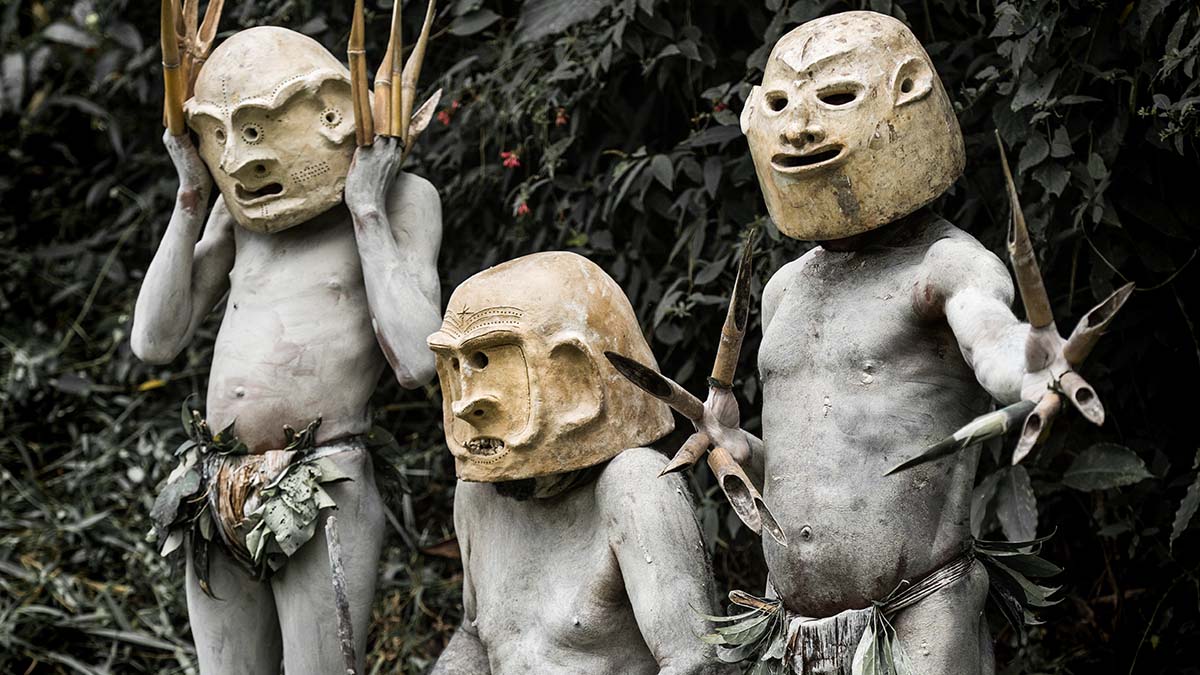
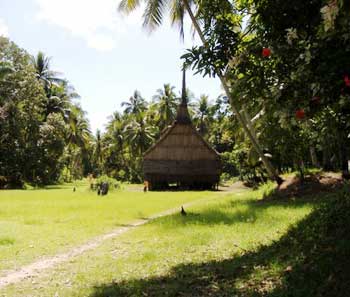 The journey had started four days earlier, in the Middle Sepik village of Pagwi, one of just two points on the river that can be reached by road. The Sepik River snakes its way through the northwest of PNG across 1126 kilometers. Like its formidable brethren the Amazon and the Congo, it is shrouded in myth, and holds incredible spiritual and artistic significance to its inhabitants. One local legend says that the river’s age and strength are so great that no stone can be found within 50 kilometers of its banks.
 The Haus Tambaran we visited was an impressive hut, built on stilts, but enclosed almost to the ground. Taking off our hats and leaving our bags, we entered to find groups of men seated around smoldering fires. Choking in the smoke as we climbed the wooden ladder to the next level, we were greeted by more men and high ceilings decorated with hundreds of carefully carved artifacts.
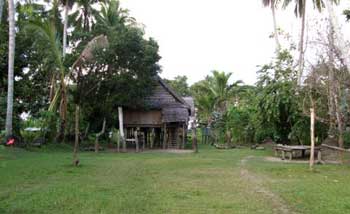 That night we stayed in a neighbouring village, about 30 minutes by canoe from Palembei. Sticky from the day’s heat, we jumped into the cloudy brown water of the Sepik and did our best to avoid thinking about what might be lurking in the water with us. Toes and fingers still intact, we shared a meal of rice and barramundi with the Chief of the village. Once the sun disappeared, so did the villagers, and within hours the songs of the river and rain forest had engulfed us and the flimsy bark floorboards we slept on.
 Of course, PNG is not known as the land of the unexpected for nothing, and it wasn’t long before our careful plans drifted downstream. On our second day, we entered the Wasui Lagoon, a spectacular section of the Upper Sepik. As we traveled across the water, a group of black clouds grew across the sky. We were moving slowly and it was still several hours until dusk, when we would reach our hosts for the night. Nervous about the coming storm, our guides began tightening the ropes on the tarps while we prepared our ponchos. But once the rain started it was clear we didn’t stand a chance – each raindrop was a fistful splash of water. It seemed we had no choice but to stop at the nearest village.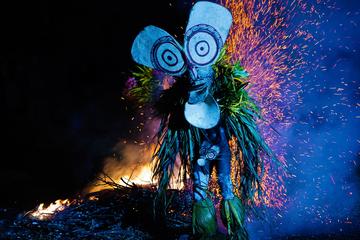


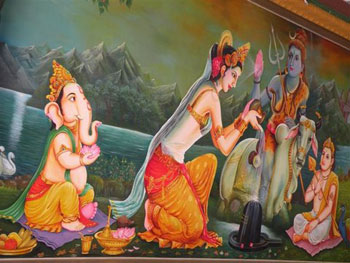
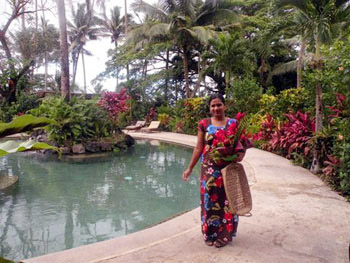 But this is not India. We are visiting Fiji, where we keep meeting people of Indian origin. Descendants of indentured plantation laborers first brought in by the British in the 19th century, they are now a thriving community coexisting alongside that of the native Fijians.

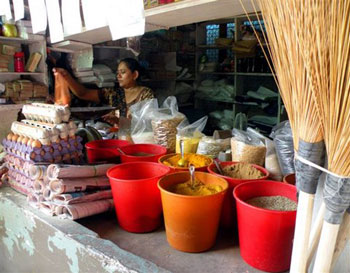 The Indians also contribute a distinctive cultural flavor to a country that is physically lush and beautiful but full of contrasts. The city of Nadi is a gritty, sun-baked place with a Third World feeling. But we duck into a shop on the main street and find ourselves in a dazzling emporium of brilliant saris and South Asian fabrics. At the open-air market, we weave through milling throngs who browse and schmooze as well as buy. Counters are decoratively piled with a cornucopia of enticing tropical produce: papayas and jackfruits, pumpkins and tomatoes, oranges and okra, radishes and watermelons. Around the fringe are stalls where Indian women weigh out lentils, beans, chilis, rice and other grains. The fragrance of ground cumin and turmeric wafts on the breeze. In a cool, air-conditioned room, fisherman Saiman sells his fresh catch. He goes out with two boys as crew and hand-lines for sea bream, red snapper and barracuda. Because Indians have been marginalized politically by the Fijian majority, in recent decades tens of thousands have emigrated. Saiman’s own mother now lives in Canada.
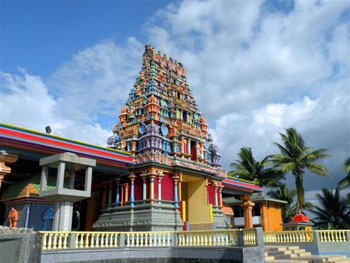 A week later, having flown to the quaint and friendly northern port town of Savusavu, we meet a wiry young contortionist, Rajesh Kanna, who puts on shows in Fiji’s larger cities. He demonstrates some of his seemingly impossible positions and hands us his card. Adjacent to the market is a tiny take-out place with only a few tables and chairs. The owner, Kamla Pati, cooks us a spicy chicken curry lunch, with dal, rice and rotis, for a laughably low price. Her daughter Rita, 20, is engaged to be wed. It is an “arranged” marriage, but only in that the families must approve the match and are negotiating important details. However, the two young people had in fact met where the fiancé works and felt a strong immediate attraction. Then younger daughter, Briya, 16, shows up. Still in high school, she aspires to a career managing a department store and proudly shows us the one-room Hindu temple where her family worships, the men on Friday nights and the women on Mondays.
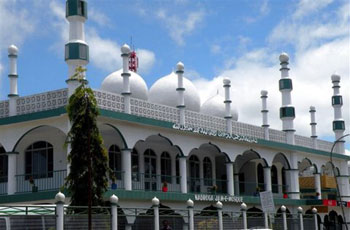 One of our drivers between towns, Kasim, is an Indian Moslem with a Hindu wife. Mosques are scattered across towns and rural areas. But such intermarriage is unusual. And although Indians and native Fijians mix comfortably at work, there is little more intimate contact.