Jim Corbett National Park, Uttarakhand, India
by Shweta Bhardwaj
A trip to Jim Corbett National Park in the Nainital district of Uttarakhand, India, changed me. I learned to identify the sounds of birds around me and every day when I got up in the mornings, I could distinguish the sounds of an Eagle from a Parrot, a Pigeon from a Myna and a Bulbul from a Crow- almost all the birds chirping in the area. To my surprise I also started noticing the presence of fauna and flora around me!
 Initially established as Hailey National Park in 1936 to protect the Bengal Tiger, Corbett forest and jungle are home to many different other species of fauna. A heaven for bird enthusiasts. It is also one of the best bird watching area in India. Surrounded with different habitat types: mountains, saal trees, grassland, it has a splendid landscape and a diverse wildlife. In 1956 this national park was renamed after Colonel Jim Corbett, who is considered the ‘missionary of wildlife conservation in India’. This oldest national park in India has following major zones: Bijrani, Dhikala, Durga Devi, Jhirna and Sitabani. This park was the first to come under the Project Tiger initiative in India.
We reached our resort in the afternoon and planned on having a walk inside the forest in the buffer zone but we weren’t brave enough to venture out alone, and waited for the Naturalist that the resort provided. As I walked on the dead leaf bed of the Teak plants spread all around me, and looked at the foot prints of the elephants and pug marks of the tiger I realized that I was actually walking in the woods. The crisp sound of large dry teak leaves in the otherwise silent forest made me feel edgy for a while. As I walked on the same path where a tiger had passed hours ago I worried that perhaps the beast might be sitting nearby, watching.
 This was the magical influence of my jungle trip where I learned to spot different species of flora and fauna, very rare, yet particular to different zones and seasons. It was one of the highlights of my trip. The experience of observing nature from so close left a mark on me. I became more conscious of natural life around me.
Like any other jungle safaris, this was a unique trip. Sighting a tuskar (a mast elephant) gorgeous peacocks, finding tiger spoor marks, seeing Long Hornbills, all these made me realize how mysterious and beautiful nature is. What I realized at Jim Corbett is that Jungle Safari is not just about spotting a tiger, it is also about experiencing and discovering the jungle itself. Its air, rough scenic beauty, sounds, taste and not to forget the ‘fearful feel’!! Yes! Walking in the woods, not knowing what will come from behind or what will pounce, what you can capture in your camera or spot with your binocular, all this gives you a different kind of thrill.
While on the Safari Walk we spotted an elephant herd across a dry river. To give them their space and quiet we had to softly move back into the forest on our side of the river bed, so that we did not disturb them. Once we walked on the same path where a tiger had walked a few hours or may be a days earlier. We saw fresh tiger pug (spoor) marks early in the morning and our guide told us that the tiger had recently been there and had walked towards a particular direction. Our guide was able to tell us what the tiger ate last when it passed through that particular area by finding a dear nail, small bones or animal hair particle in a dried tiger faecal matter. Identifying the foul smell in that area (called the smell of tiger kill), looking at pug marks, listening to tiger roar or a sambhar or monkey call are all tell-tale signs of a tiger presence nearby.


 Our naturalist, who led our walk, was an expert and made sure that we returned back to the resort on time before dark. We took a two and a half hour walk in the jungle that day. The elephant herd that I mentioned in the above paragraph was spotted during this walk only. They were unaware of us and were busy grazing in the trees. Watching them from so close was worth taking that walk. The resort that we stayed at was inside the buffer zone and daily past midnight we could hear calls and tiger roars, as if the tiger wanted to remind us that it was nearby. Very diligently, all tourist activities are generally stopped after 6:30 pm as the animals, especially the flesh eating animals become active after dark. The retreat’s fences were also solar electric so that tigers or any other wild animal do not venture inside the resort or other human habitation nearby. Spotting huge tiger pug marks (sometimes male and sometime female) early in the morning was our favourite daily activity during our stay there and was proof enough that this beautiful beast did come near during the night.
This was a three day stay in the buffer zone area of the park, and each day it was a different adventure. Day One began at Sitabani.
Sitabani like other four zones (namely Durga Devi, Bijrani, Dhikala, & Jhirna) is a major zone of the Jim Corbett National Park. It was the drive to Sitabani that triggered my interest in birds and for the first time, I took notice of the tiny creatures chirping and hopping all around and on trees.
On our way to and fro from Sitabani I captured many birds in my camera: a purple Sun Bird, ducks, woodpeckers, sandpipers and peacocks and hence started the affair with bird watching at Jim Corbett. The entire 40 kilometer stretch from Ramnagar to Sitabani had lots of trees on both sides and a river stream. It is a ‘tarai area’ (hilly area) as well so it was quite scenic.
The next day we left on a Jeep safari to Durga Devi and a later canter safari to Dhikala. Here we saw barking deer, spotted deer, Golden Mahseer (Indian salmon), various birds like Yellow Red Great Barbet, amazing views and not to forget Tiger pug marks — lots of them! By this time we had learned to identify them whether it was a male or a female. Lots of fresh elephant foot marks as well. Durga Devi safari zone was more moist and has deciduous flora. One time during the day the sun rays came filtered from tall trees as if it is being sieved through the leaves giving different colours to the rays. This was an amazing trick of nature and the most memorable one for me. I can still see sun rays trickling through the huge trees when I close my eyes. During this safari we managed to see a few of very rare species of birds and then in the afternoon we took the canter ride to Dhikala. Here the grassland like habitat was totally different from where we had been in the morning.


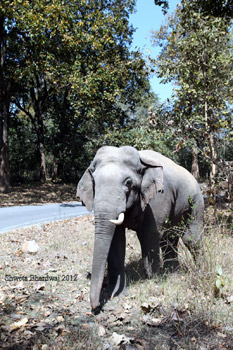 We spotted lots of deer, sambhars, elephants in herds at both Durgadevi and Dhikala but the highlight of this day was something else that we encountered at the highway. A one toothed mast Tuskar on the road very near to Dhikala zone. Taking picture of this huge mast elephant while it charged at the vehicles (including ours) was one wildlife experience that I won’t forget. I actually got terrified as it came very near to our jeep while charging. With a heartbeat pacing at the speed of a bullet train, I started shouting loud, not knowing what would happen next. The driver was prudent enough to move the jeep away on time. Otherwise the person sitting at the back (for that matter our entire jeep) would have surely been subjected to elephant’s anger.
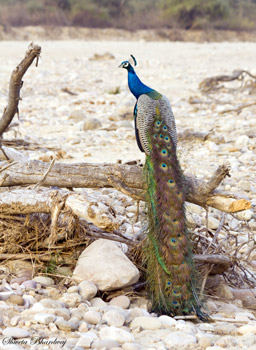
We realized the fatigue only when we reached the resort back in the evening. After a tasty dinner we again fell on our beds, only to be awake at 3: 30 am again the next morning. Today we were going to Jhirna on Jeep safari. The highlight of this day for me was taking pictures of the ever beautiful peacocks from very close, on a dry river bed.
Later we sat inside a cemented ‘machaan’ like small enclosure which was situated right on top of the hill from where you could see the other side of the jungle bordering the river stream. We sat there patiently with our guide with the intention of spotting a Tiger. We spent at least an hour there but all we could hear was the tiger growls. The roar suggested that there were two of them walking towards the thick jungle uphill. The jungle, loud with the sound of the wind, chirping of birds, sound of other animals like monkeys and deer would immediately become silent every time there was a tiger growl. I could sense the tension in the area.
The view from where we sat and waited for the tiger was beautiful, with sun rays falling on the stream. Although during this trip we could not spot any tiger we were lucky enough to enjoy and discover more about the habitat of the jungle. A habitat, which in spite of being sometimes rugged and cruel with its own set of rules, tells that man is still an outsider when it comes to the animal world, “the dense forest.”
If You Go:
♦ India’s oldest tiger reserve, Jim Corbett National Park is situated in the state of Uttarakhand, Northern India.
♦ Ramnagar is the closest town to this park and is well connected via road to New Delhi. One can take a taxi or drive down for approximately six hours from Delhi.
Private Golden Triangle Tour with Ranthambore Tiger Reserve from Delhi
About the author:
Shweta is an HR professional and a blogger, currently working as a freelance travel writer. She loves to write about places that she visits, people that she meets and everyday things that touch her. She has a travel blog at www.travel-lanes.blogspot.in.
Photo credits:
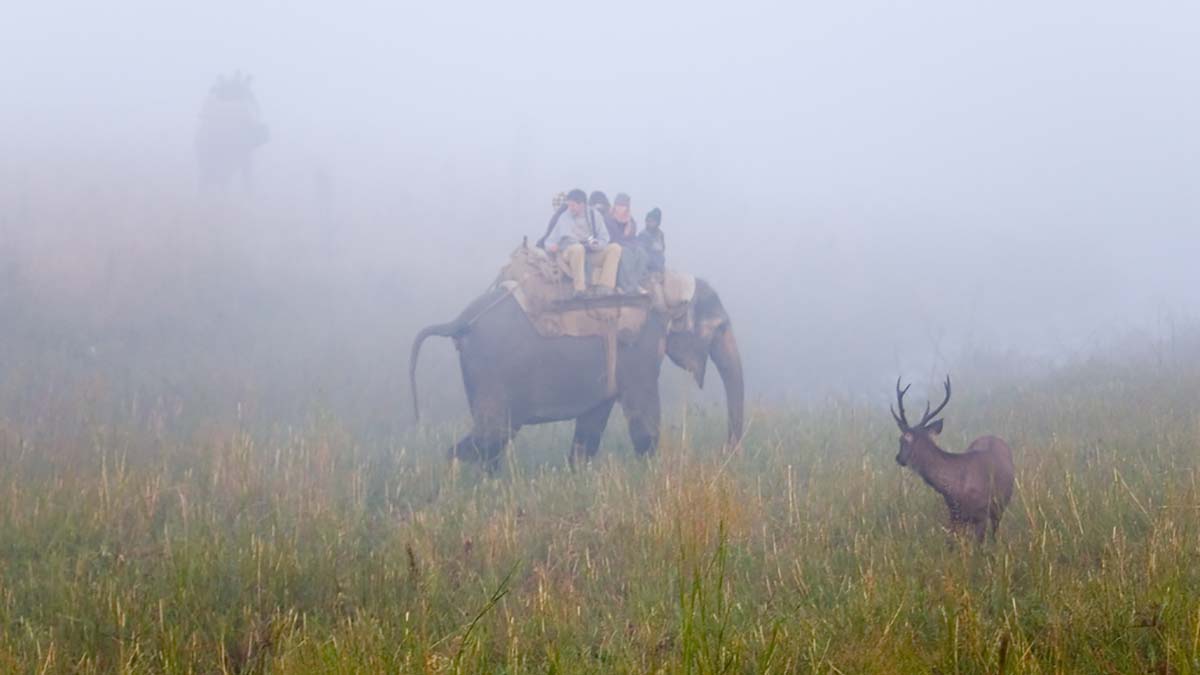
Sambar Deer in Jim Corbet National Park by Pediddle under the Creative Commons Attribution 3.0 License.
All other photos are by Shweta Bhardwaj:
Pack of Deer at Dhikala
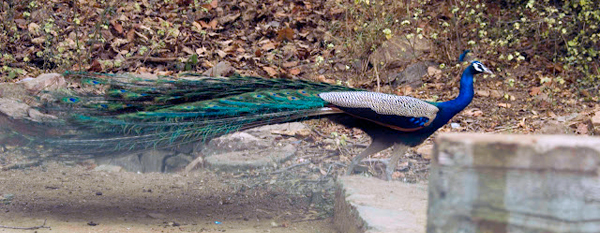
One of the beautiful peacock that were there on the dry river bed at Jhirna
Kingfisher on a dry river bed
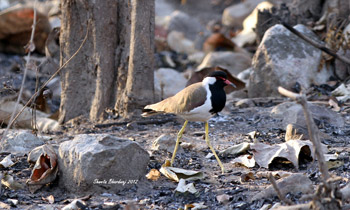
A bird
A one-toothed mast Tuskar spotted on the road very near to Dhikala zone
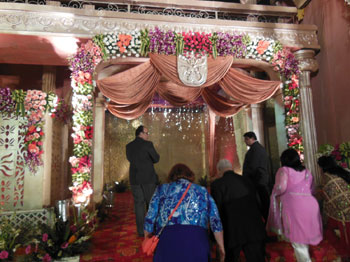
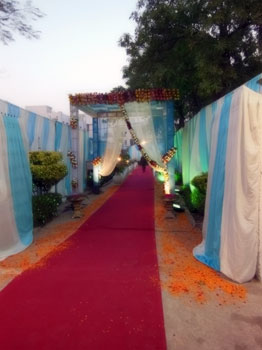 We had accepted the gracious invitation of our dear friend and former professor, Mohan, to attend his niece’s wedding in New Delhi. He assured us that a traditional Indian wedding was an experience not to be missed. Typically lasting the better portion of a week, it is a lavish celebration. Family and friends come from all parts of the globe to commemorate the nuptials, as well as catch up with those living in distant lands. Parents plan and save for weddings from the time of their child’s birth. Marriages are frequently arranged by parents; however the couple are allowed the final choice.

 The official engagement party was to begin at 8 pm; we arrived at 10pm, about the same as the hosting groom’s family. Again it is over-the-top decor, flowers and twinkle lights, food galore, and an open bar. The bride’s family present gifts of jewelry, cash and sweets; a Hindu pundit (priest) blesses gifts and the exchange of rings, which seemed a bit perfunctory given all the glitz. The band cranks up and dancing begins. Jean is a desired dance partner and the only female at the hookah station. We leave exhausted at 3 am, and there are small children still dancing.
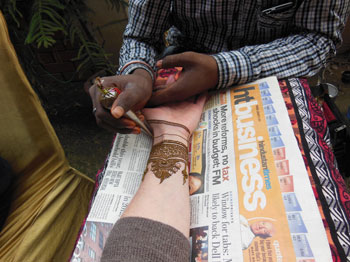
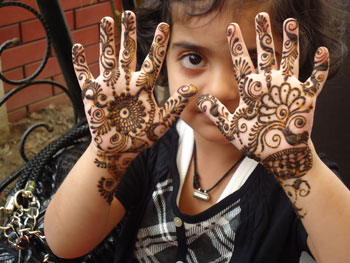 Our hennaed hands are dark, dramatic souvenirs of the mehndi. Held in the front courtyard of the bride’s parents’ home, the henna application is an informal family event. People move in and out of the house, children play, delicious smells come from the kitchen–lamb kabobs and goat curry. We sip chilled mango juice as we wait our turn with the henna artists; one of the aunts plays a drum and soft singing follows. What a privilege it has been, being folded into the family. At last night’s party, we were asked if we were relatives from Kabul! Tonight is another twinkly function of food, drinks, flowers, hookah…is that Mohan in a conga line with a basket on his head? He deems it the “Punjab Soul Train”.
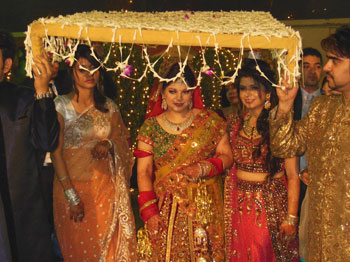 We are introduced to IST: Indian Standard Time. Nothing starts on time, everything takes longer than expected, punctuality is not a prized virtue. The official wedding day has arrived. Traffic is heinous, so we are over two hours late. However, we are among the first of the 800 or so guests to trickle in. The decor of flowers, fabric and lights is amplified for tonight; an army of waiters laden with trays of hot hors d’oeuvres and drinks resembling mojitos descend as we enter. A great ruckus draws us back outside; the groom and his family have arrived.
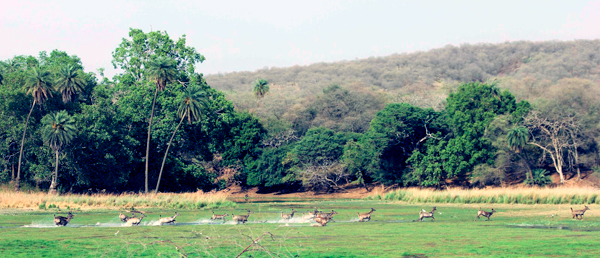
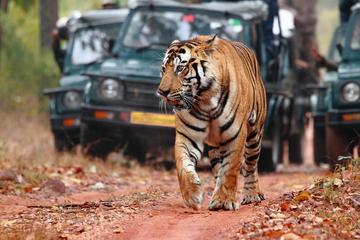
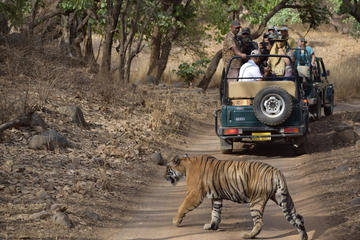
 What a majestic creature! That hunts with Precision, Planning and Speed. We were very fortunate to see this majestic creature hunting in Zone- 3. Being there and observing the hunt from a distance, we could sense the fear that the prey (deer & sambars) felt while running for life in the lake. This bolt happened after one member from the herd made the call and informed others of the danger.

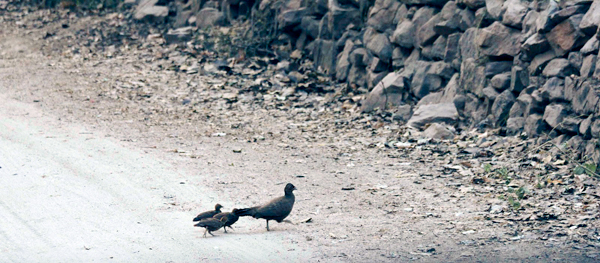
 Some of the animals and birds showed curiosity towards the tourists entering their territory and some behaved as if they have been eagerly waiting for you to click their pictures, especially the Langoors. An interesting thing to note about them was that all of them were so used to humans visiting their habitat that they were least bothered and continued doing what they were busy with.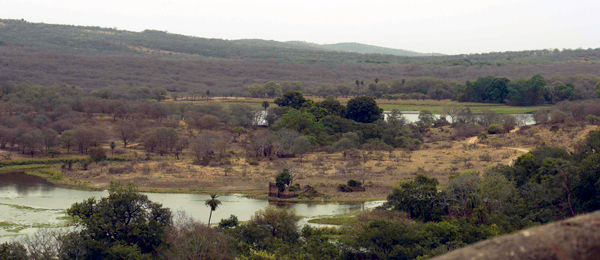
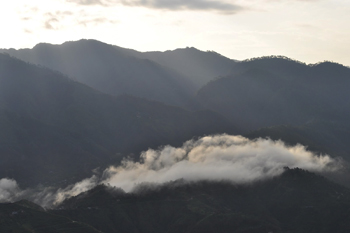
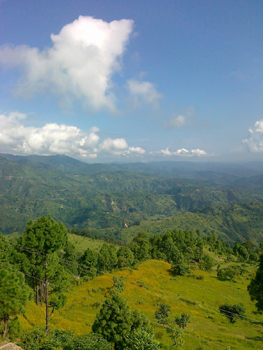 Still untouched by the modern tourism industry, this place was originally a popular hill station for Britishers (during pre-independence). Situated at an altitude of 1,706 metres (5,686 feet) enroute Kotdwar-Pauri road, it was founded and named after then Viceroy of India, Lord Lansdowne in 1887. Only 250 km from Delhi, this place is surrounded by tall, thick oak and blue pine forests. Lansdowne is not yet stained by tourists. Its tranquil and pristine beauty unlike other hill stations (like Shimla, Moussouri etc) is still intact. If you ask me, I would say it is an ideal place to ‘Do nothing’, just relax and spend time with your family or loved one. There are very few resorts n hotels which are situated a few kilometres prior to the hill station, all promising a mystique view of the valley. The one that we stayed at had a 180 degree view of the valley in front.
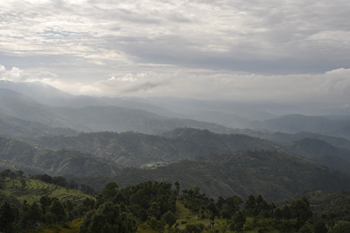 The sunrise and sunset are mesmerising here. Being born and brought up in city life, I never realized how beautiful and impactful these acts of nature could be. For me, it was this sheer magic of Nature that I thoroughly enjoyed watching. I used to get up around four in the morning daily so that I didn’t miss the sunrise. To me this was the time when one could see all the possible shades of LIFE present on earth. Valley view is awe-inspiring, especially this time of the day. The sound of wind blowing swiftly, pine trees moving to the rhythm of wind, the colourful flower beds; all this makes it so peaceful that one feels a sense of calm and tranquillity here. Truly, a get- away from the hustle- bustle of fast moving city life. Just to stress on the peaceful time-mobile phones and internet don’t work here.
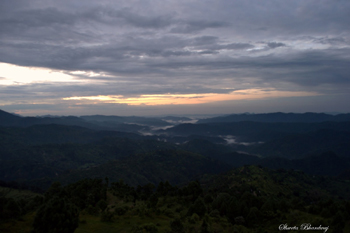 If you are a nature loving person who enjoys a trek to an unknown village down the hill, who likes the feel of being surrounded by huge mountain trees like-oak and pine, love waterfalls, zigzag mountain roads, then, this is the place for you. The magnificently changing colours in the sky during the sunrise each day that I witnessed, is still embedded in my memory. Sunrise every day seemed a different mix of colours, formation of clouds, surrounded by vibrant flower beds and mountains all around. And to describe about the view after the sunset- small individual houses scattered at a distance in the mountains and flower beds would change to ‘twinkling stars’ in darkness (lights of the houses in the valley as seen from far away gives this impression)
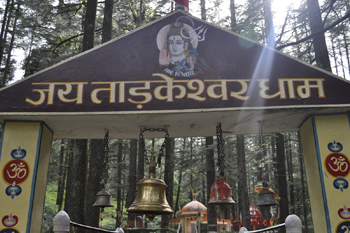 For those who are interested in sightseeing here, temples, churches, museum and a lake can easily be covered in a day. The famous Garhwal Rifles of the Indian Army has its command office here. The War Memorial at the Parade Ground of the Garhwal Rifles Center is another attraction for the visitors. Other places of interest around the city are ‘Tip-n-Top’ (one could see the mountain view of the western Himalayas from here), Santoshi Mata Temple, Bhulla Taal (a man-made lake), St. Mary’s Church, Tarkeshwar Mahadev Temple. The temple is 36 km from Lansdowne and is at a height of 1,800 m, this place is known for its temple dedicated to Lord Shiva. Surrounded by thick forests of deodar and pine, it is another aw-inspiring place because of the beauty of nature, it is believed to be one of the Siddha Pithas (ancient holy sites for Hindus). The temple place is surrounded by thick blue pine forests, oak trees and dense Deodars. The spectacular feature of this place is that even at this high altitude, there are many water pools, flowing continuously. My fascination here, were the bells surrounding the temple vicinity, both big and small. This gave a special identity to the temple.

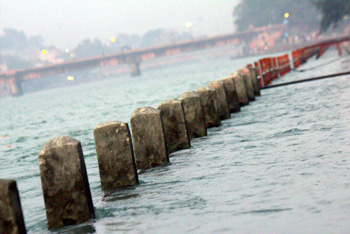
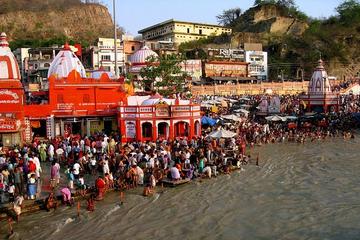
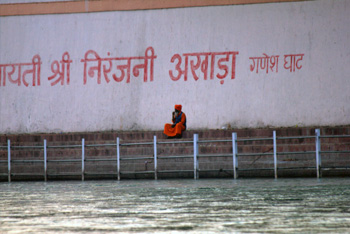 It is also the city where the strong and mighty river Ganga (after emerging from the mountains) touches the plains and runs in a calmer flow. Lots of people come here to find their inner peace. Some stay for longer period in various Ashrams (spiritual monastery) and follow Yoga and study ancient Hindu scriptures. Some like me, prefer staying for 2-3 days and soak in whatever that this place offers. Every time I visit Haridwar, I prefer to simply sit quietly at the Ghats (a series of steps leading down to the holy river water) in the mornings and evenings. Sitting there and dipping your feet in the cold river water compels you to sort of meditate and turn over in your mind. Believe me it is a feeling that forces you to yearn for calm & peace. The touch of cold river water, gentle breeze and Sadhus meditating, helps to take you to the state of tranquil & quiet. Early mornings have a serene calmness about this city with prayer chants being sung almost everywhere you look.
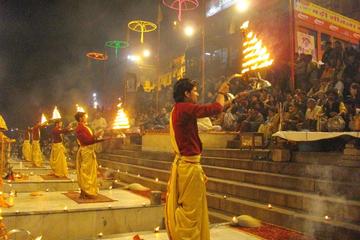
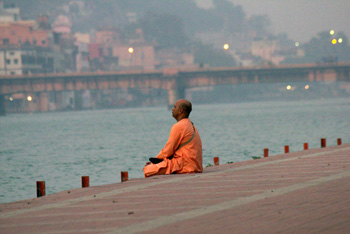 Haridwar has been a centre of attraction for learning various arts, science & rituals for many ages. Home to multiple small temples scattered all over the city, Haridwar is famous for its evening ‘Ganga Aarti’ (ritual of worshiping river Ganga) that happens daily around 6:00 pm at the main Ghat called ‘Har ki Pauri’. If you are there, then you must head towards ‘Har ki Pauri’ (footsteps of God) in the evening and attend the ‘Ganga Aarti’. It is a prayer that is sung to River Ganges every evening as per Hindu rituals.
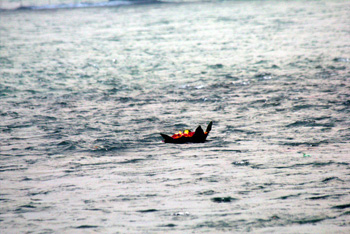 Watching Aarti here is an indescribable experience that one can understand only if one experiences the same. It is a beautiful spectacle of sound, light and prayer recitals that definitely compels you to ponder thoughts like – God and you! Supreme almighty’s impression/presence in things around you! As soon as the aarti starts, the lamps, recitals and the entire atmosphere takes you to a more spiritual level. After it finishes, people present their offerings of flowers and diyas (lamps) into the river and within minutes the Ghats lit with tiny diyas floating into to river.

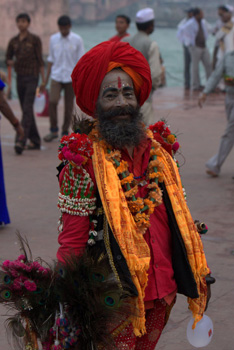 I had heard a lot about these rituals from my father earlier. So, during one such visit with the family at Haridwar, I was ready with my camera and reached the famous Ghat on time. There were lot of people around, tourists (who could be distinctly identified holding their camera), locals who come daily to attend the aarti, Sadhus and Pundits. While waiting for the Aarti to start, I noticed a funny looking man dressed in bright red and orange clothes, holding peacock feathers in his hands. He was walking aimlessly yet smiling at every person. He wore a vibrant coloured pagri (head gear) on his head, wore kajal (kohl) in his eyes and long tika (mark) on his forehead and stood out differently to the rest of the crowd. I requested him for a picture and he gave a broad smile, gestured with a stately pose for my camera and then went away.