San Ángel, Mexico City
by Ellen Johnston
It’s one of the most famous artistic residences on this continent – Frida Kahlo’s “Blue House,” in the old village of Coyoacán, now part of Mexico City. Visitors who might otherwise avoid the grime and congestion of “el Distrito Federal” (as the capital is called) flock here in droves, not only to catch a glimpse of the artist’s life, but also to enjoy the small pleasures of the neighborhood: cobblestone streets, artisan markets, painted tiles, shady public plazas, and blossoms that hang over almost every wall and doorway. It’s a Mexico that feels lost in time, like Frida herself, despite the sprawl of the metropolis that surrounds it. And yet, Coyoacán is not the only part of Mexico City where such an experience can be had. Neighboring San Ángel, less visited and yet equally charming, supplies its own version of a rustic, historic Mexico—and it’s own Frida Kahlo house to boot.
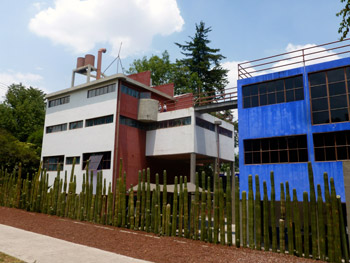
If the Blue House represents the individualism of Frida; her residence of childhood and late adult life (after her split with Diego Rivera), then the San Ángel house stands for what lay in between: her tumultuous marriage. Officially called the “Museo Casa Estudio Diego Rivera y Frida Kahlo,” the house is a testament to the couple’s amazing artistic partnership, but also to the deep fissures that drew them apart. Nothing represents this more inherently than the architecture itself, designed by Juan O’Gorman in the revolutionary functionalist style – two houses built into one, linked only by a narrow bridge that runs from rooftop to rooftop.
 In San Ángel, the two artists fed, and bled, off each other. Medical problems plagued Frida, and her third pregnancy ended in yet another abortion. Diego had affairs, including one with Frida’s own sister, Cristina, resulting in a temporary separation. But Frida’s artistic and intellectual power also grew during this time, not only thanks to her husband, but also to the circle they drew around them. There, the surrealist André Breton recognized Frida’s talent and offered to show her work in Paris. Not long after, she gave her first solo exhibition at Julien Levy’s gallery in New York City. The San Ángel house was an incubator for both Frida’s talent and her misery. The two went hand in hand, as she painted portrait after portrait of herself in the form of an invalid and scorned woman, sad and withering away just as her star began to grow. Yet, through all this, Frida was slowly, but surely, becoming recognized for something more than her marriage to Diego Rivera. She was an artist in her own right, standing on her own two, albeit crippled, feet.
Though Frida’s feet were certainly not made for walking, the path between her homes in Coyoacán and San Ángel remains, to this day, one of Mexico City’s most beautiful strolls. Avenida Francisco Sosa, which links the two former villages, is lined with colorful old colonial houses, draping gardens, crumbling stone walls and shaded churchyards. The walk takes about 40 minutes, beginning at Coyoacán’s popular Jardín Centenario, and terminating in Plaza San Jacinto, San Ángel’s central square.


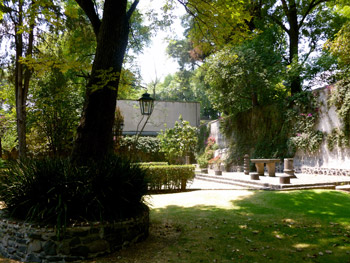 While Plaza San Jacinto is the neighborhood’s most popular outdoor space, the neighboring church (of the same name) provides a much more beautiful and calm place in which to rest. The Iglesia de San Jacinto was built in the 16th century, and feels almost lost in time. Both the building and its garden predate the Great Fire of London, with an architecture and sensibility that might be more at home in Italy, or France, than Mexico. The cloister feels Tuscan, the sanctuary Spanish. The garden is wonderfully wild, almost English in style, hidden behind large stone walls, yet easily accessible through both the church and a stone archway. It’s one of the most serene places in Mexico City, a beautiful spot to rest and contemplate, and begin to understand how truly ancient this country is, even in its colonial manifestations.
Would Frida have stopped and rested there from time to time? It’s hard to say. As an atheist, communist and advocate of indigenous culture, she had every reason not to set foot in the garden of a church, even if it was aesthetically pleasing. But Frida also recognized that like Mexico itself, she was the product of multiple heritages: European and Indigenous, Catholic and not. The faces you see in the church’s garden today tell the same story—they are inextricably linked to both sides of the ocean. The church of San Jacinto is a product of colonialism, but it’s also indigenous to the modern-day culture of the mestizo Mexican nation.
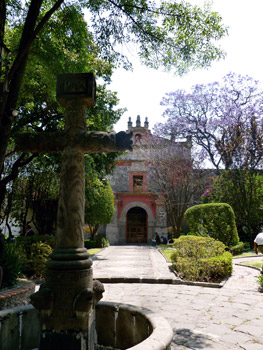 Frida’s painting, The Two Fridas, tackles that very same subject, and dates from the years in which she lived in San Ángel. In the double self-portrait, a European Frida holds the hand of an indigenous Mexican version of herself. Even more importantly, their bloodstreams are connected by an artery flowing from heart to heart, bleeding out one end. In many ways, The Two Fridas is about acceptance – of Kahlo’s ancestry, and of Mexico’s—though it’s also about struggle, both in her understanding of her own personal identity, and of her marriage. It’s no accident that Frida needs to hold her own hand in the picture. The Two Fridas was painted just as her marriage was falling apart, and she divorced Diego for the first time.
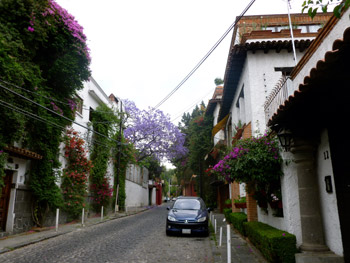
The couple’s San Ángel house is just a short walk away from plaza San Jacinto, northwest through the neighborhood’s winding cobblestone streets. The roads are narrower than those in Coyoacán, and everything is a little bit more hidden, set back behind old stone walls. The Rivera-Kahlo house is a jolt from the norm, modern and airy, with no large fence to block the view. It operates as a museum, with Diego’s side of the house preserved so that you can see what his studio actually looked like, while Frida’s has been turned into an art gallery. The logic behind that decision, besides providing a nice balance of archival, historical information with curated art, comes from the sad truth of the situation. Frida’s side of the house could not be preserved because she left it empty when she moved back to Coyoacán for good. Her things are no longer there, and so rotating exhibits have taken her place, a fitting treatment for a woman who was replaced over and over again by others in Diego’s life.
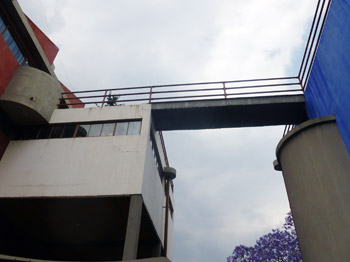 Despite the tragedy that surrounded their relationship, Frida’s San Ángel house is not an inherently sad place to visit. It’s architecturally interesting, and provides a hands-on, visceral glimpse into the two artists’ lives—a chance to see the furniture, books and giant papier maché dolls that filled Diego’s studio, and the ghosts that are left behind in Frida’s. Outside, tall cactuses grow like relics of a great pre-Columbian past, and purple Jacaranda trees frame Frida’s part of the building, which like her house in Coyoacán is painted a deep, vibrant blue. For all the pain and hardship she endured there, her resilience shines through.
San Ángel is a beautiful part of Mexico City that should not be missed by any devotee of Frida Kahlo’s. The house was the centre of her life there, but her inspiration was, and still is, all around. Little shrines can be found on many street corners, built into the walls of gardens. Flower sellers and street vendors perambulate around Plaza San Jacinto, providing colors and flavors to those who are weary of walking. Many nearby artistic institutions can be perused for free. The Soumaya Museum in Plaza Loreto is a highlight, the older (but much smaller) brother of Carlos Slim’s Polanco monolith of the same name. The Museo del Carmen, an old convent just a few blocks east, is also very worthwhile, as are the numerous commercial galleries that line the central square. It’s not the same San Ángel that Frida once knew. It’s too enmeshed with the urban fabric, and there are probably many more tourists these days than there were in her time. But the spirit of the place remains very much there: ancient, indigenous, colonial and new; a mix of them all, like Frida herself.
Frida Kahlo House, Xochimilco, and University City Tour
If You Go:
♦ San Ángel can be easily reached by public transportation. The Metrobus, Mexico City’s Rapid Bus system, makes stops along Avenida Insurgentes, just a few blocks away. The closest stop is called “La Bombilla.” If you’re heading to Coyoacán first, it’s faster to take the Metro, and get off at the Coyoacán stop.
♦ It’s also possible to stay at a hotel in Coyoacán or San Ángel, though most are located more centrally, along Avenida Reforma or in neighbourhoods such as La Condesa and La Roma, about 30 minutes north.
♦ For an extended cultural visit, it’s worth checking out the nearby campus of the National Autonomous University of Mexico, the country’s finest institution of higher learning. A UNESCO heritage site, many of its murals and mosaics were done by famous Mexican artists (including Rivera) and its Ciudad Universitaria (located next to a Metrobus stop of the same name) has many theatres, concert halls and an excellent contemporary art museum.
♦ Good food abounds in both Coyoacán and San Ángel, with fancier tourist-oriented restaurants (and some of the few vegetarian spots in the whole city) located right next to cheap, local fare. Street vendors sell delicious blue-corn Tlacoyos right outside the Coyoacán metro stop, and in the Mercado of San Angel, you can try many local specialties at a very low price.


About the author:
Ellen Johnston is a cultural nomad – a traveller, writer and musician who bounces all over the world. Originally from Vancouver, Canada, she has West Coast roots, a Mediterranean soul and a Chilanga heart, thanks to a recent stint in the Mexican capital. She just returned from her first foray to South America, and will be moving to NYC in the fall to begin an MFA at NYU’s Tisch School of the Arts. You can find links to her other writing and photography at www.ambiguoustraveller.wordpress.com
All photos by Ellen Johnston.
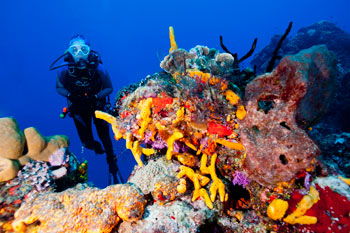 “That was one of the best dives I’ve ever done,” Kathryn proclaimed after surfacing at Cozumel’s Tormentos Reef. Comprised of coral pinnacles towering approximately 20 to 30 feet high and interspersed with wide, sandy areas. The colorful coral heads are adorned with purple and orange sponges, brain and whip corals. Tormentos is a veritable ocean garden where the reef’s maze of twisting tunnels, overhangs and barrel sponges provide shelter for marine life. Teeming with shoals of bream fish, French grunts and yellow snappers, I lost count on the number of blue tangs, pork fish, trigger fish, black durgon, file fish, big eyed jacks and parrot fish we saw. Lurking within the ledges, nooks and crannies were Caribbean king crabs, spiny lobster, giant hermit crabs, juvenile spotted drums, spotted moray eels and delicate-looking arrow crabs. Grey and French angelfish seemed unwary of the divers in their midst as were the barracuda seen hovering over the patch reef on the hunt for their next meal.
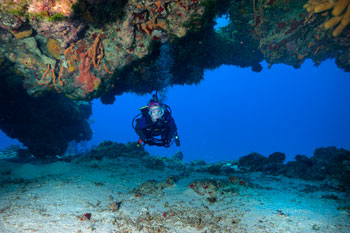 While our dive at Tormentos Reef was quite literally off the scale, we equally enjoyed our dives at other well known Cozumel dive sites. Interestingly, we seemed to be seeing more large animals on every dive than I could recall ever seeing here over two previous trips. Nurse sharks, sea turtles, Southern stingrays all seemed to be in greater abundance. Our decision to bring our family to Cozumel for Christmas and New Years felt entirely right. This year, the gifts were indeed under the sea.
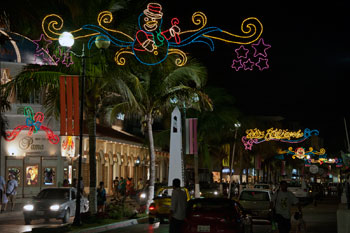
 San Miguel’s quaint downtown zócalo (Plaza del Sol) extends for about eight blocks along the waterfront and for several blocks back from the water. The tiny municipality exudes a casual relaxed ambiance with excellent shopping, superb night life, an exceptional number of fine dining restaurants, more than 200 gift shops, souvenir stalls and jewelry outlets that sell everything from T-shirts to fine silver jewelry, pottery, wood carvings, leather goods and tourist kitsch. While prices tend to be fixed when cruise ships are in port, bartering is relished by shopkeepers on the side streets located as little as ½ block in from the water. In fact, the potential for striking a great bargain increases the further you stroll back from the waterfront.
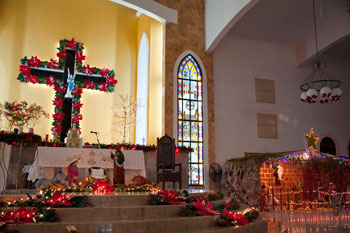
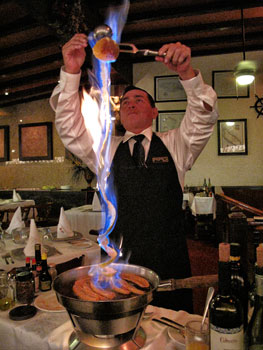 On Christmas Eve our trip got off to a festive start with a delicious dinner at Pepe’s Grill, followed by bananas flambé for desert, which is simply to die for! After some shopping at some waterfront shops we attended Midnight Mass, which the Mexicans call “la Misa Del Gallo” or “the rooster’s mass,” at the beautiful Cathedral of Corpus Christi. One does not need to be religious to appreciate familiar Christmas carols or a church service performed entirely in Spanish. Curiously, we noticed several church patrons were carrying and hugging a baby Jesus doll. We soon learned the building of the “El Nacimiento” or “Nativity scene” is a seasonal tradition here. During the holiday season, most Mexican families construct a Nativity scene in their home. At midnight on Christmas Eve, a figure of baby Jesus is placed in the nacimientos to commemorate the Lord’s birth.

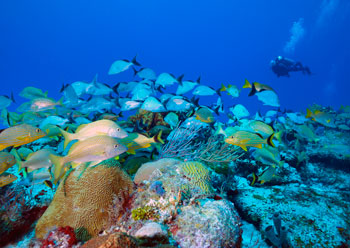 Another notable feature that sets Cozumel’s waters apart from other Caribbean dive destinations is the Yucatan current offers endless opportunities for drift diving. These continually flowing ocean currents are often less than half a knot and tend to flow in a south to north direction. Sometimes the current can be fairly strong, attaining velocities of two knots or more. Essentially, the dive plan for drift diving is simple. The dive tender drops you in the water and follows your bubble trail, standing by to pluck you from the water when you surface.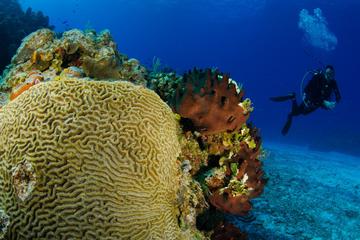

 He gestures “trouble” and stands in front of me, placing his hands on my shoulders. His dark eyes penetrate me with their intenseness. A sharp pang of grief cuts through me. He stands quietly allowing me a moment of reflection. I realize then that, although I am his captive, I am also his lover.
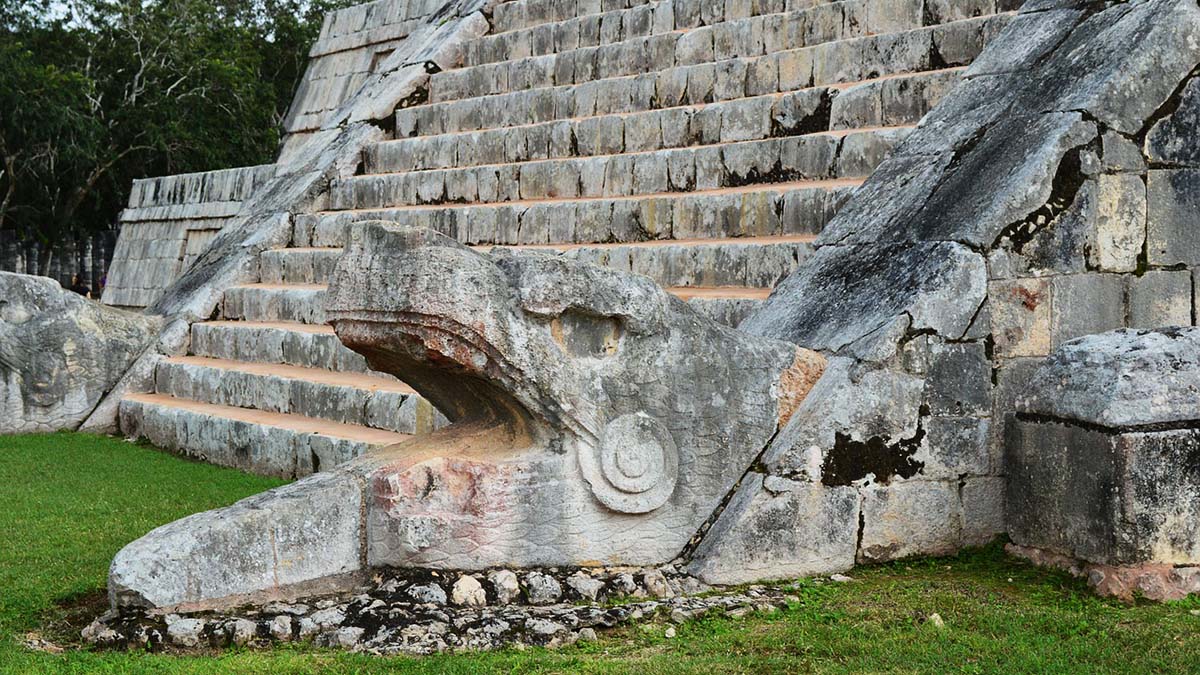
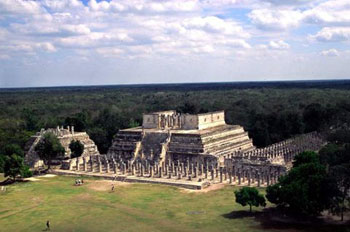
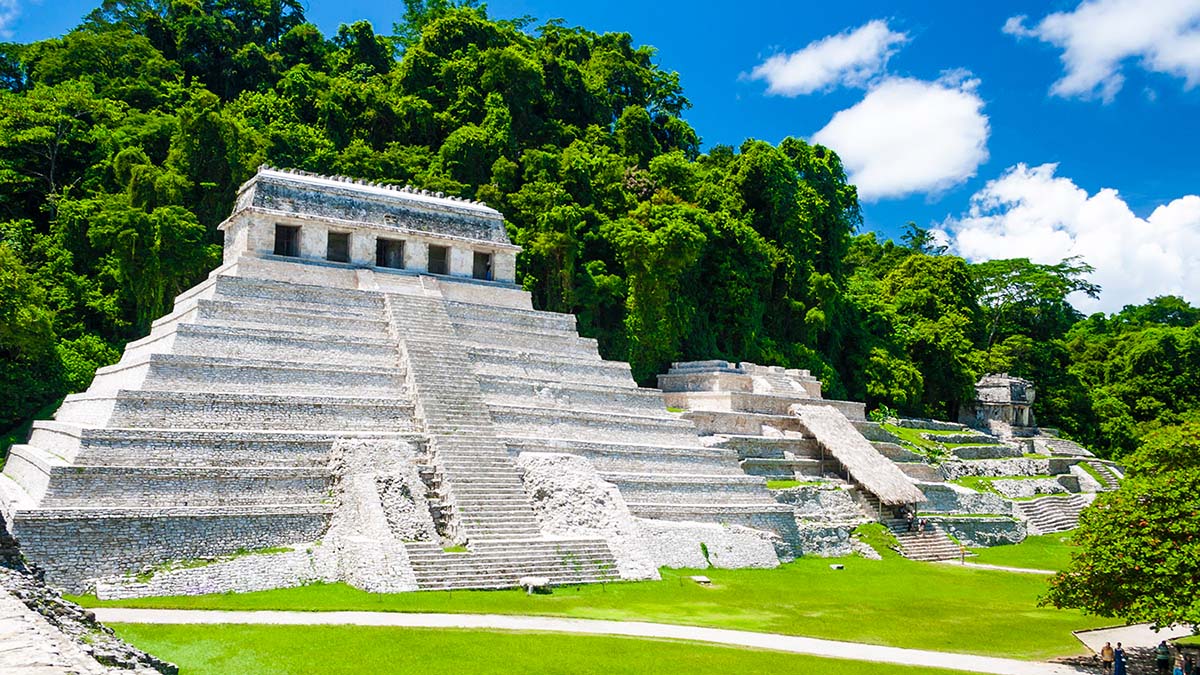
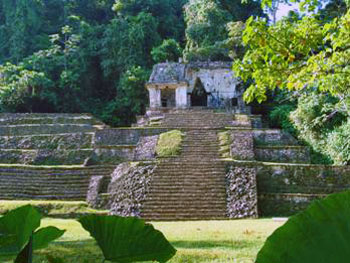
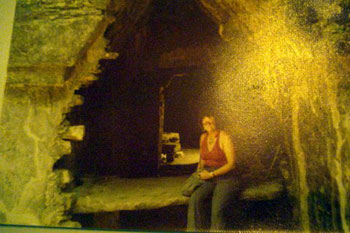 It wasn’t until nearly a year later in a place thousands of miles away in south-eastern Mexico that I would find some of the answers. I was traveling with two friends by van from the Mexican Caribbean coast of the Yucatan to the humid jungle area of the Chiapas, heading for the archaeological site of Palenque. We planned to spend the day exploring the ancient Mayan ruins. As I entered the site I was awed by what I saw. A mysterious jade-colored aura shimmers over the entire area where temples, palaces and pyramids with roof ornaments carved in stone preside magnificently over the gloomy, mysterious rain forest that surrounds it. It is easy to imagine every building in its perfection with the terraces and gardens that gave Palenque the reputation of having been one of the most beautiful of the ancient Mayan cities.
 I wandered around the site from one building to another. The stone houses are abandoned now, these buildings and temples once occupied by venerable priests and Mayan nobility. The Grand Palace stands on a platform close to the middle of the city. The pyramids and temples group around it. My footsteps echo in the empty chambers. Water drips from the ceilings of dark passageways leading to underground galleries. The perfection of the architecture in Palenque is enhanced by the profusion of stucco reliefs found on the walls, cornices and pilasters of the palace. They rank among the finest works of Mayan art. It is dominated by a four-storied square tower known as the Observatory. Sculptures, burial chambers, inner courts and sandstone stelae flank the stairways and terraces. Across from it, the Sun Temple with its pierced roof comb, faces directly into the rising sun. I recalled seeing a building like this somewhere before: a vista of lawns and foliage bordering a wide avenue connecting distant pavilions that had curved roofs decorated with elaborate combs…
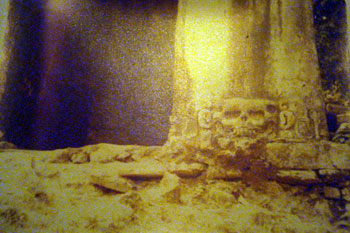 I walked from temple to temple. In each of those cool, damp sanctuaries, the spirits of former inhabitants whispered, waiting for recognition. The air was humid, carrying the fragrance of decaying and luxuriant growth and the scent of tropical flowers. Birds twittered gaily and fluttered about the roof-combs where they nested, the only inhabitants now.
 According to the guide-book, in another small temple – Temple XVIII – located behind Temple XII, excavators found a crypt containing the bodies of a young prince-priest and a girl who had been buried with him. Driven by insatiable curiosity, I decided to explore this site.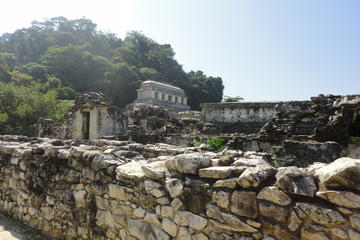

 Over sixty years ago, two members of America’s Beat Generation did just that. First William Burroughs, then Jack Kerouac, came to Mexico City, searching for freedom, beauty and surreal inspiration in its storied, hallowed streets. They were drawn to a neighbourhood called “La Roma”, an enclave with a spirit that remains decidedly bohemian to this day, despite rising prices and gentrification spilling over from the neighbouring Colonia Condesa (“colonia” is the word that denizens of Mexico City, Chilangos, use for “neighbourhood”.)
 La Roma is still the kind of place where a drag queen can live off the proceeds of her costume designs. Believe me, I met her. She lives in a small apartment off of Avenida Insurgentes and a red light shines from her window day and night, like a beacon, signalling to those who are wild and crazy and wonderfully artistic that they still can, unlike their Gringo counterparts, afford to live in a beautiful, central and historic neighbourhood.
 Today Calle Orizaba is one of the most beautiful in the neighbourhood, and the walk from 210 Orizaba north to the Insurgentes metro station is fantastic, taking you past historic homes, galleries, and the previously mentioned Plaza Luis Cabrera. It also passes the even lovelier Plaza Rio de Janeiro, where a replica of Michelangelo’s David towers above the square. Several intersecting streets are also worth exploring along the way, especially Colima and Durango, for their brightly coloured buildings, independent boutiques and art-filled watering holes. Casa Lamm, at the intersection of Orizaba and Alvaro Obregon is a cultural highlight, as is MUCA Roma on nearby Tonala street, a satellite gallery of the National Autonomous University of Mexico. Located in an old historic home, it contains several floors of modern art, as well as one of the few free public washrooms in the area. These institutions are a testament to the dichotomy between historic preservation and gentrification that is now occurring in La Roma. On one hand they have kept art thriving and alive in the neighbourhood, and on the other, they have made it easier for businesses like American Apparel (Mexico City’s only outlet) to move in. It’s a double-edged sword, and you can pick your side amongst the al fresco dining options that surround nearby Plaza Rio de Janeiro. Orígenes Orgánicos, a corner café, represents the new, serving healthy vegetarian organic options on a private patio, bucking the trends in a country known for its love of meat. The dishes are not cheap by Mexican standards, about 90-120 pesos each (8-10 dollars), though they can provide welcome relief to travellers weighed down by a lack of plant-based options. For a new take on an old favourite, try their Nopales Huichapan: grilled cactus served with organic cheese, tomato and avocado. If you’re feeling more traditionalist, however, you can load up on birria tacos, made from stewed goat meat, around the corner for 6 pesos each, and eat them in the more democratic shade of the Plaza. Both are delicious.

 For a less trendy, more downhome perspective of La Roma, head to Roma Sur, which, for those of you who are Spanish-deficient, is the southern section of the neighbourhood. Centred around the Chilpancingo Metro station, Roma Sur is less pretty than its northern neighbour, but offers many cheaper, more authentically Latin American experiences. Right outside the Chilpancingo Metro station, on Avenida Baja California, La Espiga, a Mexican bakery, serves up delicious pastries for around five pesos, and fresh out of the oven Bolillos (buns) for even less. Walk a few blocks east and you hit Calle Medellin, home to Colombian restaurants and bakeries, and the Mercado de Medellin, a huge indoor market where you can do your produce shopping, buy fresh juice, or, if you feel like it, sit down to a delicious meal of chilaquiles con longaniza or enchiladas verdes for less than four dollars.