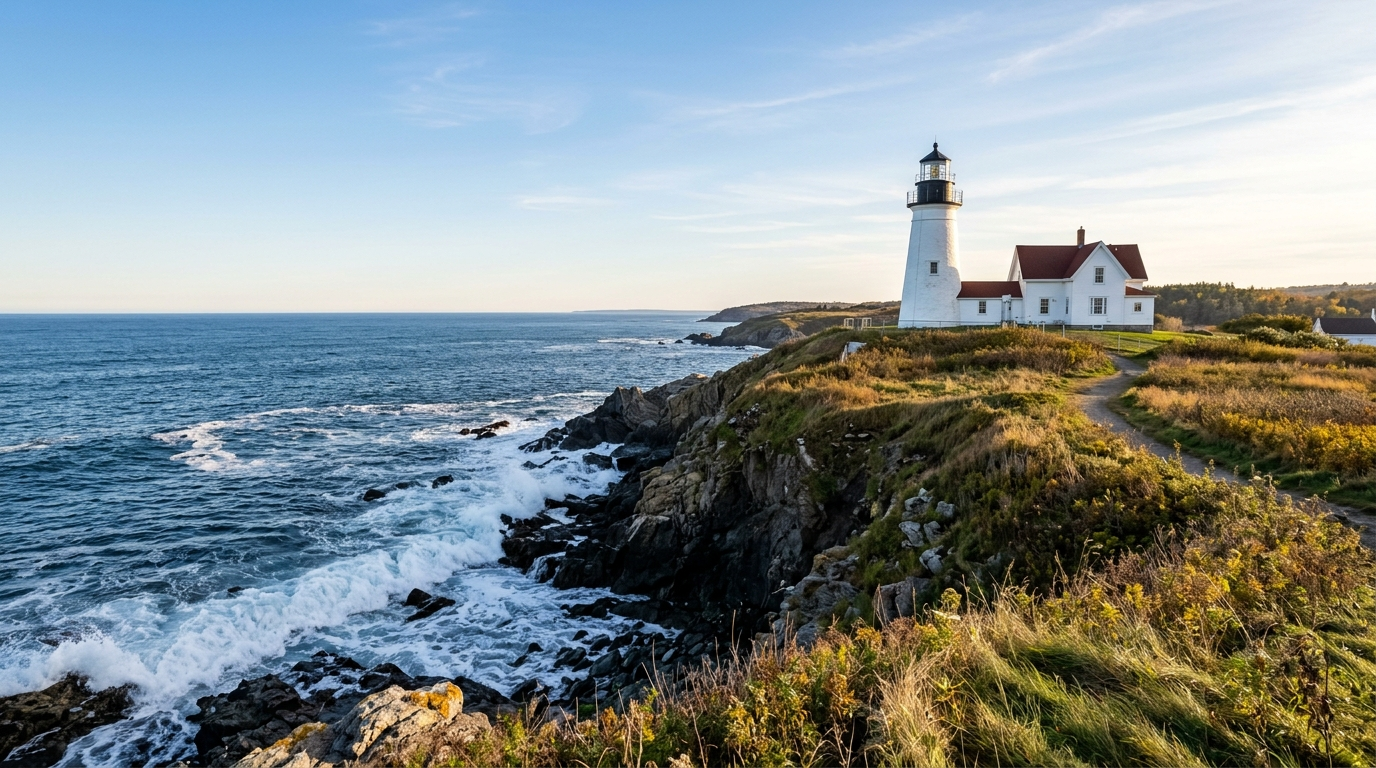
Long before the East End of Long Island became a summer escape, it was a frontier of farmers, fishermen, and sailors. Much of that history still stands in plain sight.
This tour follows three threads through the region’s past: the whaling ports that brought it wealth, the windmills that fed its villages, and the lighthouses that guided ships along its shores.
Early Settlements and First Peoples
The East End was home to Algonquian-speaking peoples for thousands of years before Europeans arrived. The Shinnecock and Montaukett names still mark the land, and the Shinnecock Indian Nation remains on its territory near Southampton today.
English settlers founded Southampton and Southold in 1640, making them among the oldest English towns in New York. East Hampton followed a few years later, and all three kept their colonial street plans and village greens.
The Age of Whaling
By the late eighteenth century, the East End was looking out to sea. Whaling turned quiet harbors into busy ports and sent local crews across the world’s oceans.
Sag Harbor
Sag Harbor became the region’s great whaling port, and in the early 1800s it was one of the busiest harbors in New York. Captains built handsome homes along its streets, many of which survive.
The Sag Harbor Whaling and Historical Museum, set in a former captain’s mansion, tells the story through logbooks, tools, and portraits. A walk down Main Street toward Long Wharf completes the picture.
Greenport
Across the water on the North Fork, Greenport built ships and sent out its own whaling vessels. Later it became a center for oystering and fishing, and the East End Seaport Museum preserves that maritime story near the harbor.
Travelers who want to explore both forks at a relaxed pace often look for a base for exploring the East End, since the ferry to Shelter Island links Greenport with the South Fork.
Shelter Island and Orient
Shelter Island, tucked between the two forks, holds Sylvester Manor, settled in the 1650s. Today it is an educational farm that interprets the island’s complex colonial past, including the lives of the enslaved people who worked the land.
At the tip of the North Fork, the hamlet of Orient keeps a cluster of preserved buildings cared for by the Oysterponds Historical Society. Its quiet lanes give a rare sense of what a nineteenth century farming and seafaring village looked like.
Windmills of the South Fork
Before electricity, wind powered the mills that ground the East End’s grain. The South Fork holds one of the largest collections of historic windmills in the country.
East Hampton’s Hook Mill, built in 1806, stands at the edge of the village and still has its original machinery. Several other mills dot the area, some moved from town to town as needs changed over the centuries.
Nearby, the Home Sweet Home Museum and the Mulford Farm offer a closer look at colonial domestic life. Together with the windmills, they show how ordinary families lived and worked here.
Lighthouses Along the Shore
With busy shipping lanes and dangerous shoals, the East End needed lights. Several historic towers still watch over the water.
Montauk Point Lighthouse
Authorized under President George Washington and completed in 1796, Montauk Point Lighthouse was the first lighthouse in New York State. It sits on a bluff at the eastern tip of the South Fork, and visitors can climb the tower for long views of the Atlantic.
Horton Point and Bug Light
On the North Fork, Horton Point Lighthouse rises from the Sound bluffs in Southold and houses a small nautical museum. Off Orient, the Long Beach Bar Lighthouse, known locally as Bug Light, stands on the water at the entrance to the bays.
Planning a History-Focused Visit
Autumn and spring suit this kind of trip. Museums keep reasonable hours, roads are quieter, and the low light flatters old shingles and stone.
Check museum calendars before setting out, since many smaller sites open seasonally or on weekends only. A slow pace, a good map, and time on the ferry will reveal how much of the East End’s past is still standing.



Leave a Reply
You must be logged in to post a comment.