Spain, Italy & Greece
by Matthew Adams
The Mediterranean has a variety of intriguing historic destinations in Spain, Italy and Greece. One way you can visit some of those fascinating historical sites is via a cruise. Cruise ships usually stop at ports in Italy, Spain, France and Greece from which you visit some of the world’s greatest museums and historical architecture. This is a Crown Princess cruise I did to see some of the finest historic destinations.
Barcelona
Barcelona, in Catalonia, was the first stopping port. This is a historically significant city in its own right that includes some astonishing architecture. Its most notable architectural landmark is the Sagrada Familia, designed by Gaudi, that includes eight spires which will increase to 18 when construction of the church is complete.
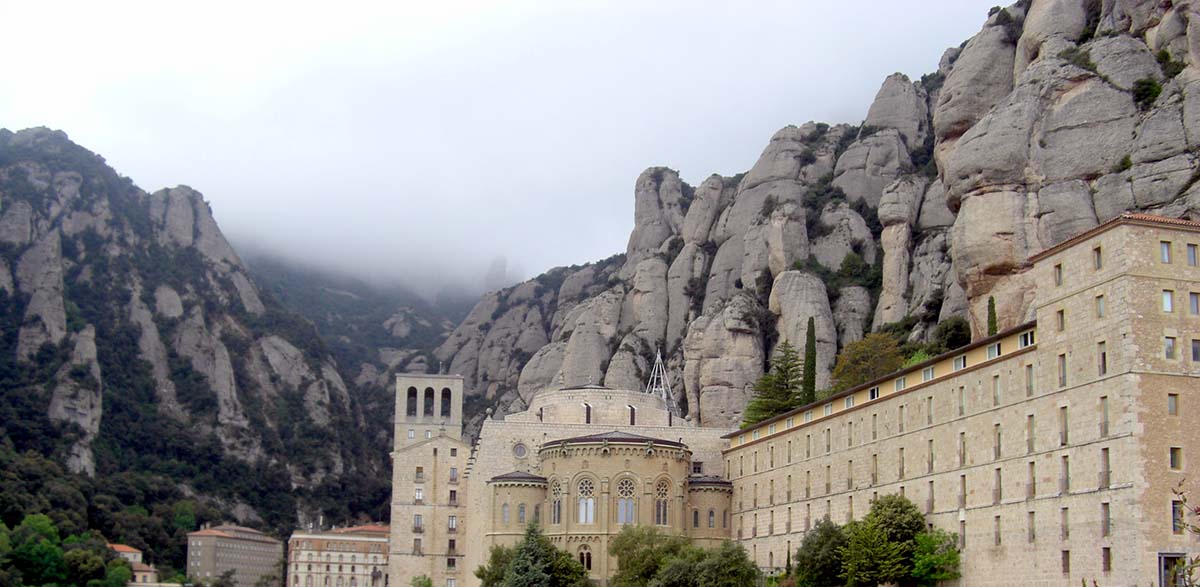
I never went in the Sagrada Familia on my trip, but instead went to the Montserrat Monastery. This is a Benedictine abbey at the summit of the Montserrat mountain. As the mountain rises about 1,200 meters, it’s worth a trip just for the magnificent views alone. There you can also hike the Montserrat nature park that includes numerous hiking trails.


Pisa and Florence
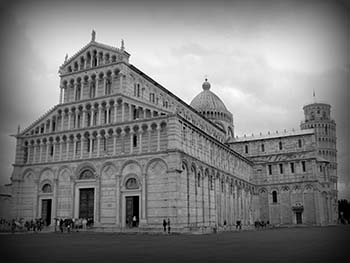 On another stop I visited Pisa with a coach excursion. There I visited the Cathedral Square, a UNESCO heritage site, that is one of the greatest architectural complexes in Europe. That is largely due to the Leaning Tower of Pisa, which is a 183 foot tower with a slight lean of about four degrees. I briefly went in the Duomo cathedral, a masterpiece of Romesque architecture, before returning to the coach. However, the tour gave me little more than 30 minutes in Pisa.
Florence was the next stop on the tour. The historical significance of Florence lies in the Renaissance era, otherwise a cultural rebirth, that inspired a new breed of art and architecture in the city. So it’s not surprising that the Historic Center of Florence is another UNESCO heritage site.
I got a little more time in Florence than Pisa. So I went inside Florence Cathedral that is an effective blend of Italian Gothic, Renaissance and Gothic Revival architecture. The most striking aspect of this cathedral is its huge dome, which is the largest masonry dome ever constructed. I also visited the Ponte Vecchio bridge across the River Arno, which is another of Florence’s landmarks. The bridge retains some of its towers originally built as defensive structures.
Rome
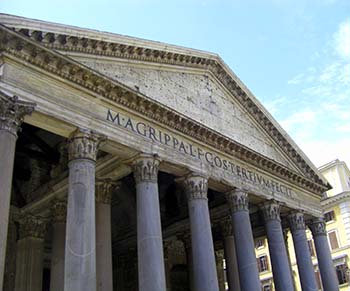 As the capital of an empire that once dominated Europe, Rome has obvious historical significance. The city has preserved some of the finest buildings from the former empire. I took some snapshots of the Colosseum on my trip. I also went to the Pantheon, a remarkably preserved temple that has intriguing architecture. The temple has a coffered concrete dome with an oculus, or central opening, at its summit through which sunlight beams through. With that the Pantheon might have effectively been one giant sundial.
The next stop for the coach was the Vatican. The Vatican has been a separate city-state since fascist Italy established the Lateran Treaty. The Vatican Museums are among the largest in the world, and they include some of the most priceless Renaissance art. The museums showcase a multitude of sculptures, paintings, stone tablets and archeological relics dug up from excavations. Furthermore, visitors can also check out the St. Peter’s Basilica church at St Peter’s Square that also has fabulous Renaissance architecture.
I had a ticket specifically for the Sistine Chapel. That is another masterpiece of Renaissance art with its finely painted ceiling and numerous frescoes that decorate the interior. Finding the Sistine Chapel in the Vatican Museums is not easy, and you can get lost within the maze of corridors. A day at the Vatican would never be enough to effectively explore the immense museum collections. Nevertheless, I eventually found the chapel that was something to behold.


Gibraltar
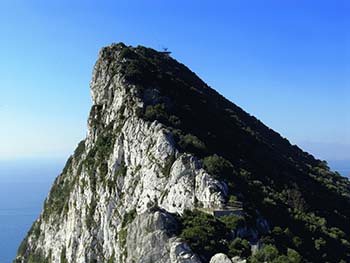 Finally, the Crown Princess stopped at Gibraltar. This U.K. overseas territory is most notable for the Rock of Gibraltar, which is a limestone rock that rises about 1,398 feet. As the gateway to the Mediterranean, Gibraltar was a strategically vital outpost of the British Empire. Consequently, the British army dug a series of tunnels through the rock where it could store armaments and munitions. The tunnels also protected troops from coastal and aerial bombardments. Britain dug the most extensive Gibraltar tunnels during the 1940s that were expansive enough to accommodate a garrison of 16,000 troops.
I made the trip up the rock for the terrific Mediterranean views. I also entered the entrance of the tunnels of Gibraltar, which are otherwise the Great Siege Tunnels. In addition, I stopped at St. Michael’s Cave, which is a network of limestone caves. There I went inside the Cathedral Cave that includes an auditorium for concerts and drama productions.
Thereafter, I returned to Blighty. What better way to ‘travel through history’ than a European cruise? You can visit many of Europe’s finest historic venues in Italy, Spain or Greece with coach excursions from cruise ports. The only disadvantage is that some coach trips might only give you a very limited time period at a destination.
If You Go:
Pantheon
Vatican Museums
Leaning Tower of Pisa
Great Siege Tunnels
St. Michael’s Cave
Montserrat
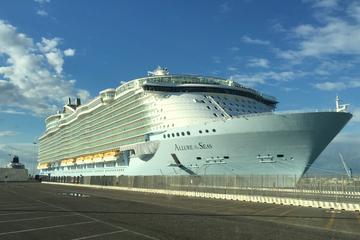
Pisa and Florence Private Day Trip from Livorno
About the author:
Matthew is a freelancer who has produced a variety of articles for various publications and websites such as Swing Golf Magazine, TripAdvisor, Naval History, Artilleryman, dotTech, Bright Hub, Coed Magazine the Washington Post and Vagabundo Travel. Matthew is also the author of Battles of the Pacific War 1941 – 1945. Check out the book’s blog at battlesofthepacificwar.blogspot.co.uk.
All photos are by Matthew Adams:
The Benedictine abbey at Montserrat
The Duomo and Leaning Tower of Pisa at Pisa
The Pantheon in Rome
A snapshot of the Rock of Gibraltar at Gibraltar
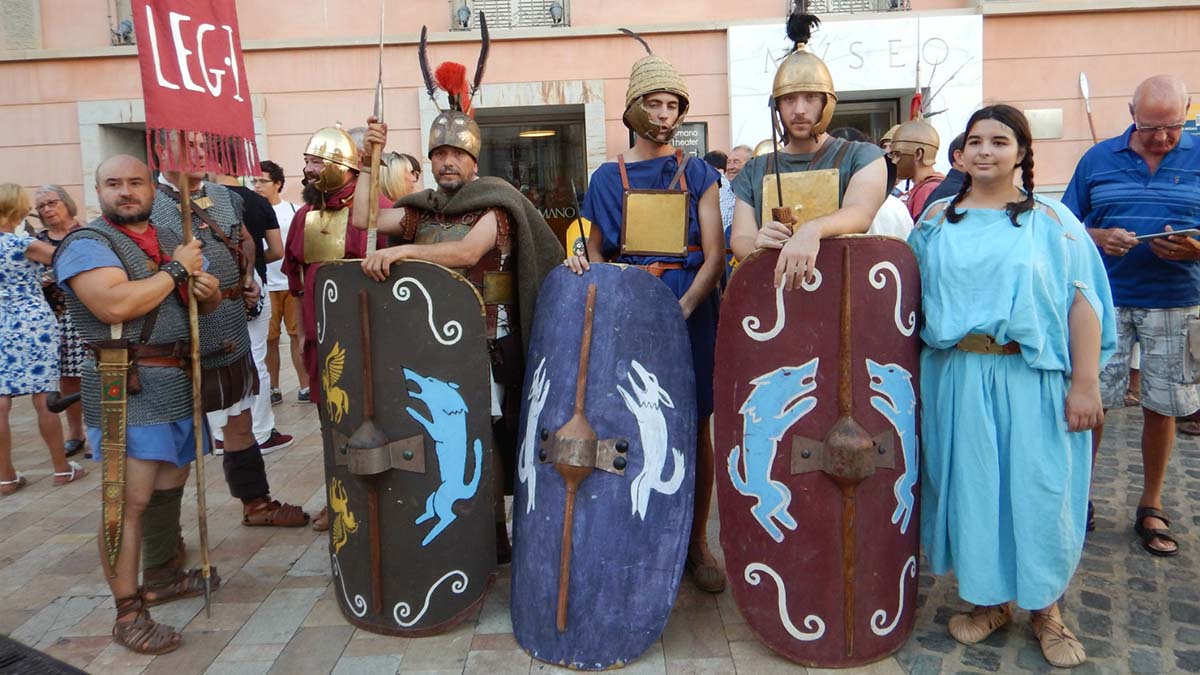
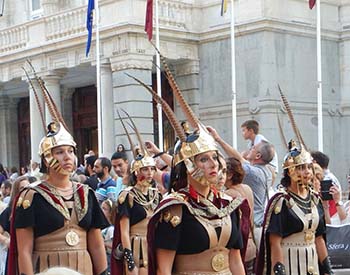

 The costumes and attention to historic detail are amazing. It is as if all the citizens of Cartagena are in costume for the event. And like everything in Spain, the entire family is involved. Men, woman and children take on roles as Roman soldiers and barbarian hordes. The tradesfolk who followed the armies serving their needs are also represented. Bakers, butchers, blacksmiths, potters and entertainers are interspersed between armies following standard bearers. Elaborate floats depicting Roman villas and amphitheatres and even an elephant from Hannibal’s army pass by while we are entertained by a snake handler, a joker, a conjurer and a soothsayer. My excitement grows when monks appear leading massive bulls through the narrow streets lined with onlookers. An ancient high priest rewards me with a huge smile after I take his picture.


 About the author:
 , England, Alberta and Eastern Europe, where she always has an exciting adventure. Darlene divides her time between the west coast of Canada and the Costa Blanca of Spain when she isn’t exploring the world. Visit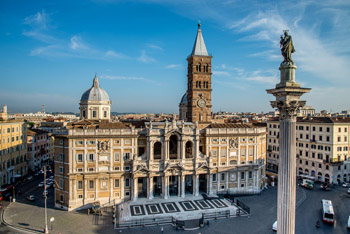
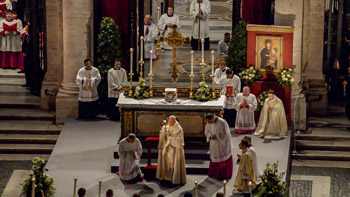 Over the years we have watched groups gather at twilight for the beginning of their pub crawls. Dividing into teams, they guzzle through drinking games in the piazza while preparing for their evening of revelry. We have observed crowds gather for marches, tours, protests and rallies. From blurry eyed, early morning senior groups touring the Basilica, to high-spirited youth groups assembling to sing and dance in the square, this church is a well celebrated gathering point.

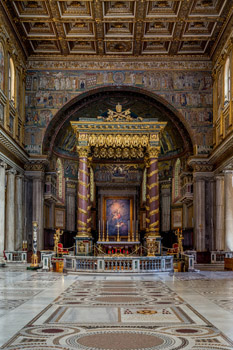
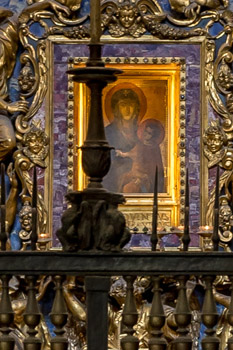 There are over 25 churches in Rome dedicated to Mary, Santa Maria Maggiore is the largest of these Marian churches. This Major Papal Basilica is prominent in the tradition and adulation of the Catholic community worldwide. Many travel blogs rate Santa Maria as one of the ten most beautiful churches in Europe. Walks of Italy tour Major Basilicas of Rome, includes it as one of “the three most important churches in Rome.” Frommer’s rates it #3 in its article; “The Best Churches.” If you are a cathedral buff, Italy is not complete until you have experienced this great lady.
 The golden mosaics adorning the triumphal arch date from the 5th century and depict scenes from the early life of Christ and the Virgin Mary. On the left at the top is a panel depicting Christ’s enthronement with a group of angels as his court. Below this is the Epiphany or Adoration of the Magi. The young Christ is seated on a throne with Mary on his right, they are attended by angels.
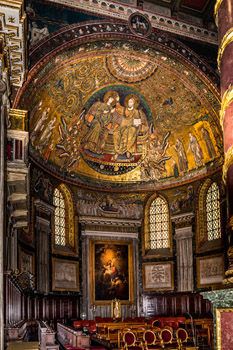 Italian painter and mosaic maker Jacopo Torriti is credited with the adornment of the apse, he crafted it in 1295. The magnificent central work shows the Coronation of the Virgin in which Jesus and Mary are seated on a throne with Jesus placing a jeweled crown on Mary’s head. The sun and moon are under their feet accompanied by a choir of adoring angels. Standing to their left are St. Peter, St. Paul, St. Francis of Assisi and Pope Nicholas IV. Standing on the right is St. John the Baptist, St. John the Evangelist, St. Anthony and Cardinal Colonna. The apse of Santa Maria Maggiore is the most important surviving example of Roman mosaic art from the late middle ages. Descend below the high altar and you enter the burial place of Saint Jerome, this 4th-century saint translated the Bible into the Latin language (the Vulgate). Upstairs, located in the Borghese Chapel, is “Salus Populi Romani,” believed to be the oldest Marian image in Rome. However, on display in this vault is arguably the most important artifact of the Basilica, The Reliquary of the Holy Crib. This crystal shrine, designed by Giuseppe Valadier, is said to contain wood from the Holy Crib of the nativity of Jesus Christ.
 Legend has it that an aristocrat named Giovanni, and his barren wife were without child. Seeking divine intervention they committed to build a church to the Virgin Mary. She appeared to them in a dream on the night of August 4, 352 A.D. and told them that a miracle would show them the location on which they were to build the church. That night, Pope Liberius was troubled by the same dream. On the following morning, he travelled to Esquiline Hill and found it miraculously covered in snow. Liberius then traced an outline for the location of the planned church. Although many feel this legend has little basis in fact, to this day the church on Esquiline Hill is often referred to as Our Lady of the Snow.
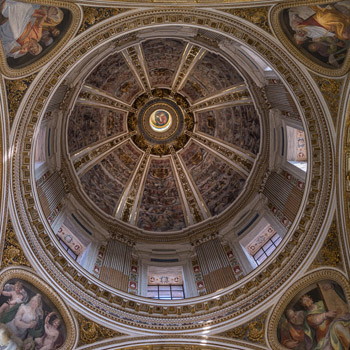 5 Reasons to visit Santa Maria Maggiore

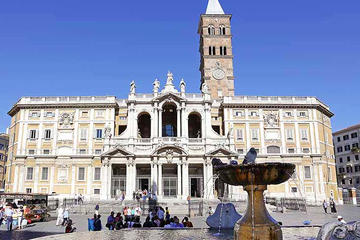
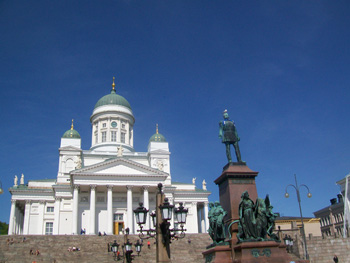
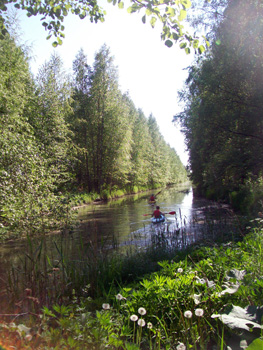 It was another delightful walk through historic buildings, on a bright sunny day similar to the one I’d enjoyed in Tallinn. Whereas the open-air museum in Tallinn felt like a circular closed community, this one in Helsinki was like a village on an old road, with most of the houses lining the path.

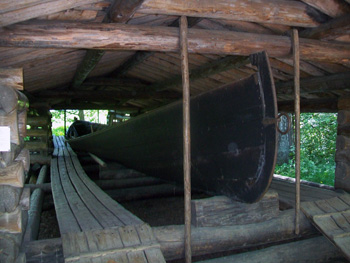
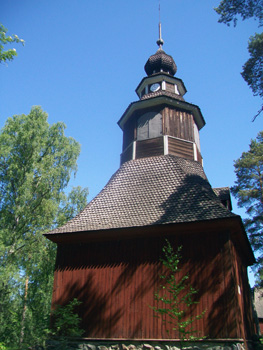
 However, it was still early, so I continued walking to the west, emerging onto a main road, that I think was the E12. There was more greenery over the other side, and water too; looking like one of Helsinki’s many fjords. After walking through a little more forest I reached a bridge, not knowing the island on the other side was Seurasaari, or that it housed the open-air museum. I walked around to the right at first, with the museum starting just to the left.
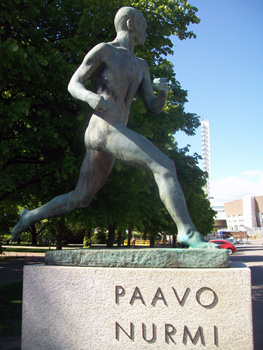
 After leaving there, the tarmac path turned to dusty earth, and I encountered four steps with an information placard to their side. It said that one of Finland’s most famous politicians, Urho Kekkonen (1900-1986), used to test himself into old age by jumping up them from a standing start when he walked around the island. Before Kekkonen became a five-time Prime-Minister and five-time President of Finland, he was the Finnish high-jump champion in 1924. He lived at the entrance to the island for thirty years during and after his presidency, and Tamminiemi villa has now been made into a museum. I tried jumping up the steps, after postponing the first time when people appeared out of the forest, and reached the second highest.
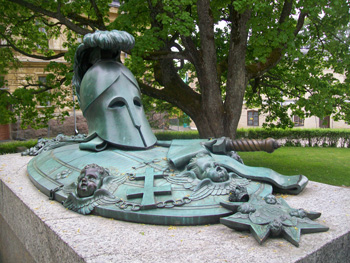
 The population of Helsinki was only 600 in 1710, after plague killed twice as many of its previous population. The city had been founded in 1550 by King Gustav Vasa of Sweden. Sweden and Russia fought over the territory several times during the 18th century, with Russia taking charge of the whole territory in 1809.
 On my first full day I walked out of the city to the north-east for a couple of hours, reaching the Viikki nature reserve without much difficulty. It’s a beautiful big wetlands area, with many bridges linking islands and the mainland. Finland is the most forested country in Europe, with seventy per-cent of land covered, and takes its environmentalism seriously. According to the Finnish Environment Institute, Finland’s forested land is actually growing, and so are the populations of large mammals, such as bears, wolves, wolverines and lynx.
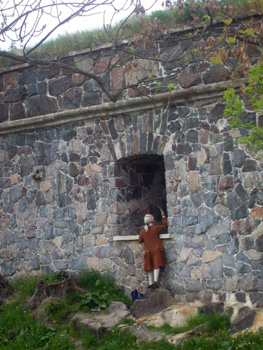
 You can reach the Unesco World Heritage Site’s main island on a municipal ferry boat, and then, like the open-air museum on Seurasaari, you just pay for individual displays and rooms. There are still many people living on the Suomenlinna islands, and it is also a popular conference centre. I walked through the village to the embattlements and cannons looking out at the Baltic Sea. It was the only cloudy day of my time in Helsinki, and quite chilly; making it easier to imagine the hardship of winter war there during the 18th century.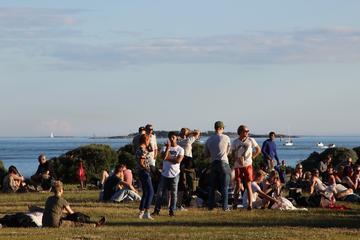
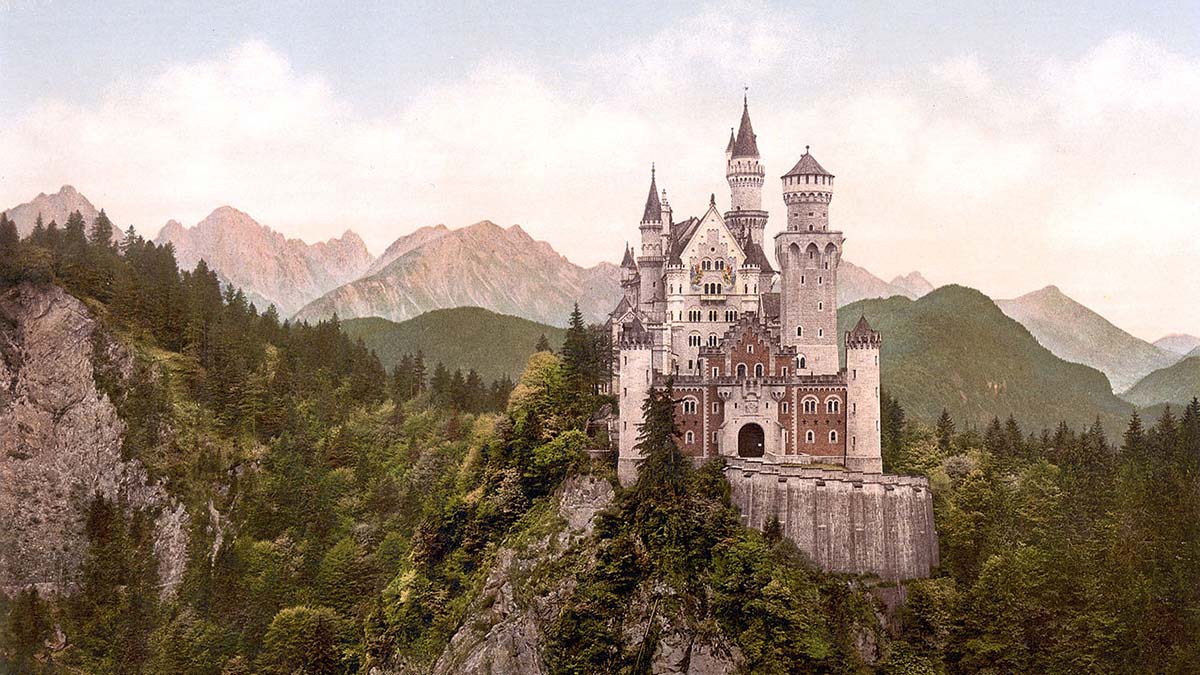
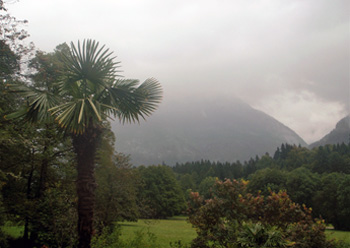 I had come to Bavaria for the Oberammergau Passion Play. On the day of my unanticipated detour I woke up planning to explore the picturesque village where I was staying. But dark grey clouds hid the peaks of the nearby mountains threatening rain, and it was obviously a day to head indoors.

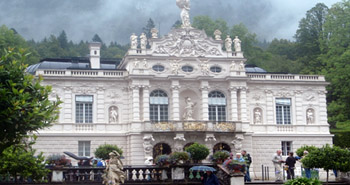 As it turned out, the tour was absolutely captivating. I had accidentally discovered Schloss Linderhof, built by Bavaria’s “mad” King Ludwig II between 1869 and 1886. I had never heard of King Ludwig but discovered that he was one of history’s great eccentrics. He was a fascinating study in contrasts. He was a shy and sensitive soul trained from birth for a very public royal role. He was a petty vassal owing allegiance to Prussia who, because he was born on the day Louis IX was canonized, felt an almost mystical connection to the great French House of Bourbon. He was also a modern constitutional monarch with very limited powers who wished he could have been one of history’s absolute rulers.
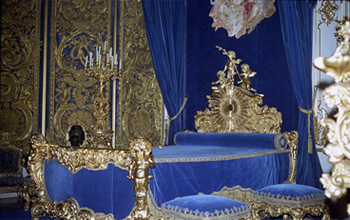 The tour started in the vestibule, an elegant space decorated with rose marble pillars which pays tribute to the Sun King. Our guide then led us through a series of rooms, each more opulent than the last, to Ludwig’s massive bedroom where he slept in an enormous four poster bed covered in royal blue, gold-trimmed velvet.
 The grand finale of the house tour was the Hall of Mirrors. Have you ever looked into a mirror that contains a reflection of a mirror behind you, and you see reflections of reflections going off into infinity? Imagine that phenomenon magnified a hundredfold in a room where every inch of wall seems to show a dizzying, mind-blowing reflection of a myriad other reflections. Now combine this vision with another tidbit of information I found on the Linderhof website. King Ludwig slept all day and stayed up all night. This room would therefore have likely been his nocturnal retreat. At night, illuminated by hundreds of flickering candles reflected over and over again in the room’s hundreds of mirrors, it would have presented a truly hypnotic vision. What dreams, I wondered, did the Moon King play out in this magical room?
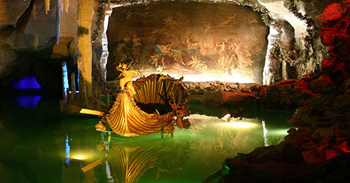 For King Ludwig, the Venus Grotto was much more than a simple escape from the rain. It was a total escape from reality. The King, it seems, was quite a patron of the arts. He commissioned private theatrical and musical performances in his very own theatre. He was also a great admirer and major sponsor of the great composer Richard Wagner, and the Venus Grotto was a man-made cave, a private retreat where Ludwig could enjoy Wagner’s music in blissful solitude.
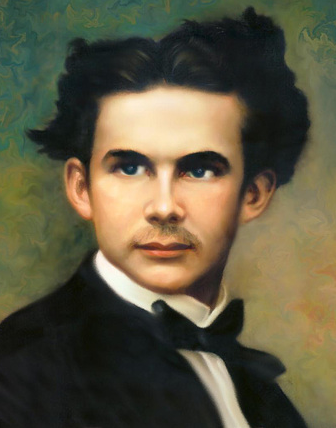 Marie-Antoinette was guillotined for the excesses of Bourbon royalty. Ludwig’s end, although more prosaic, was also a consequence of his profligate lifestyle. It also holds a tantalizing element of mystery.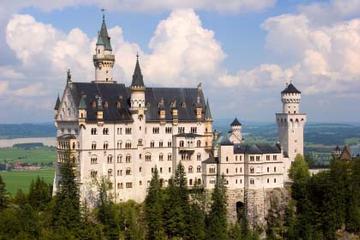

 Photo Credits:
