Fruits of Labor
by Sarah Humphreys
Traveling through Tuscany in autumn, you are bound to spot olive groves alive with activity as nets are spread out under the trees and olive pickers gather in La Raccolta (Harvest). This yearly event is an ancient tradition and methods have changed little over the centuries.
Preparation for the harvest takes place in spring when the trees are carefully pruned to maximize the number of olives a tree will produce. The pruned branches are then burnt in the fields.
 To create the highest quality olive oil, it is vital to time the harvest perfectly. Unlike in other regions, olives in Tuscany are picked before they are ready to fall from the tree. This produces a fruity and lean extra virgin olive oil, even if the yield is lower. The ideal time to harvest is when the unripe green olives begin to mature and turn black, which is when they contain the highest quality oil. However, this is easier said than done since even olives on the same tree may mature at different rates. The flavours of green and black olives vary but both are needed to make good quality oil. The initial oil is generally more bitter but olives that fall when too ripe make poorer quality oil. Plucked directly from the tree, the fruit is extremely bitter and almost inedible.
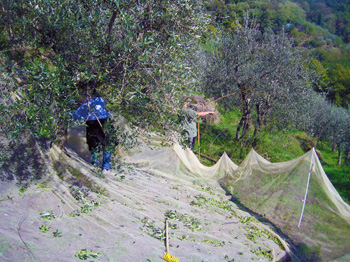
 The ideal olive picking team consists of as many family members and friends as possible to share the labour. Firstly, huge nets are spread out around the trunk of a tree. Naturally, most olive groves are far from flat so the nets often have to be propped up by sticks or branches pruned from the trees to prevent the precious harvest from rolling away.
When the nets are in place, olives are removed by hand, with metal pincers or with plastic combs. Long rakes are used to reach the fruit on the higher branches. Ladders can be used to reach the tops of the trees but it is best to leave tree climbing to experienced olive-pickers since the trees can be brittle and slippery. When picking olives from lower trees, baskets or buckets are used to collect the fruit directly and nets are not always necessary.


 Although very light, the nets are rather cumbersome to move around and harvesters often have to stand in uncomfortable positions on steep slopes. It is essential to gather the harvest before the weather becomes too cold, so work needs to take place, rain or shine. It is also essential not to crush the olives that have fallen onto the nets so you need to be careful where you put your feet.
A mechanical “tree-shaking” device called an “oliviero” is sometimes used to remove olives from the trees but most of the hard work is still done by hand. It takes around 4 or 5 kilos of olives to make a litre of oil and an average harvester can pick around seven kilos of olives per hour by hand.


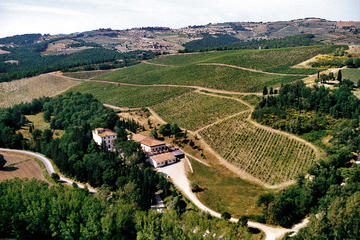
Guided Hiking Tour in Tuscany with Lunch Wine and Olive Oil Tasting
If You Go:
The main airports in Tuscany are Pisa Galileo Galilei and Florence Peretola. The main train station in Pisa is Pisa Centrale, which can be reached by bus or taxi from the airport. Florence airport has a regular bus service to Santa Maria Novella, the main train station in Florence. You may well need to hire a car if you wish to participate in olive picking.
Links to olive picking holidays:
Olive harvest experience at a Tuscan grove
Chianti olive picking
Farm Holidays La Baghera
Green Holiday Italy

Sarah Humphreys is originally from near Liverpool, UK and has lived in Canada, The USA, The Czech Republic, Greece and Italy. She currently lives in Pistoia, near Florence, where she teaches English, writes freelance and is a part-time poet. She has been writing since she could hold a pencil and her passions include Literature, poetry, music and travel. Follow her on twitter: Sarah Humphreys @frizeytriton.

All photos by Sarah Humphreys except #4 which is by Isacco Marini:
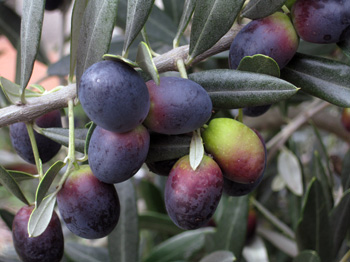
Multi-coloured olives
Setting up the nets
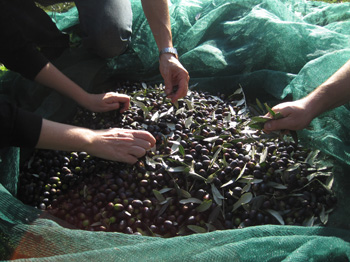
Cleaning the olives
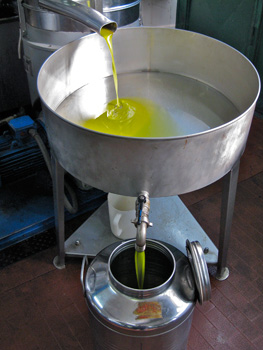
Il Frantoio – The finished product
 I had been sad to leave Latvia, especially without seeing most of its sights, but it felt good to be back on the road, travelling overland in foreign countries. There was beautiful nature the whole journey between Riga and Parnu, Estonia’s ‘summer capital’ on its south-west coast. I could see white-sand beaches through pine trees either side of the border crossing at Ikla. Inland, large birds of prey glided through the sky, while migrating storks foraged on the ground.

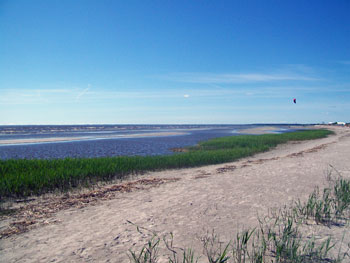 I knew it wasn’t Parnu and Estonia’s fault, it was between the sun and me; and there had been nothing at all between us. I had been lying on one edge of our world, with only space between me and our star. I’m sure there’s a moral there, like Icarus flying too close to the sun in Greek mythology; taking something that looks and feels nice for granted, and not considering the dangers you have been taught are there. If I was a sun worshipper, rather than an admirer, I could have interpreted it either as a message to find another religion, or that the sun was angry with me, and I should worship it more earnestly.
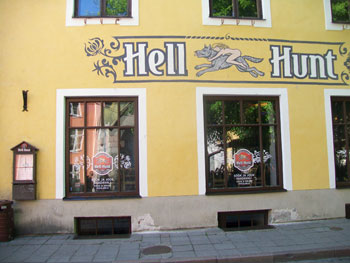 I thought a good way to remember Tallinn’s spelling is to separate it into ‘tall inn’; especially as one of its most famous inns has the very memorable name of Hell Hunt. The picture on the inn’s exterior is also distinctive: a wolf carrying a woman. I was relieved to read that the Estonian meaning is Gentle Wolf, and nothing to do with the hell and hunt of English language.
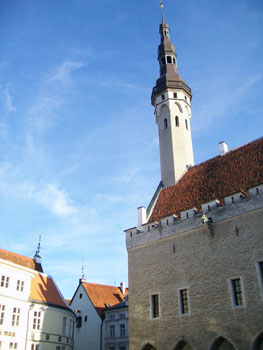 I thought the towering Freedom Monument and terracotta tower might just be isolated landmarks until I saw the colossal Aleksander Nevsky Cathedral halfway up the winding cobbled hill leading north-west. Behind that was Toompea Castle, pink-walled home of the Estonian parliament; designed by Russia’s Catherine the Great in the 18th century. On its southern side there are gardens and an impressive view over western Tallinn and the Baltic Sea. A short walk down the hill eastwards and I happened upon the Kohtu viewing platform for an even better view. That’s because the Old Town was directly below, with about 800 years of architectural history stretching out nearly as far as the busy port; to the east, moderately high skyscrapers signalled the downtown business and retail district.

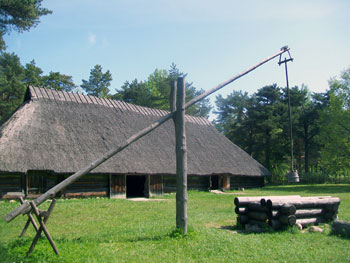 On the last day I walked an hour out to Rocca al Mare for its seaside forest park; by road most of the way, then cycle track into the wood. It was only when I reached a fence cutting me off from more thick woodland, and I looked at my map and guide book, that I realised it was the Open Air Museum. I decided to enter, even though I hadn’t seen any of the buildings inside. I made the decision only from the trees I could see, and a feeling of serenity.
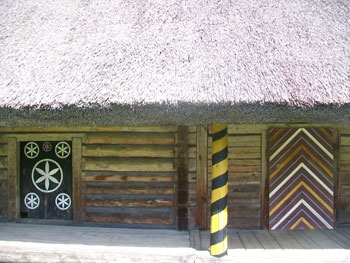 Some of the buildings from 19th century Muhu Island had distinctive painted exteriors, reminiscent of native designs from other continents. There was also a house from the south-east of Estonia, where there is still a community of Russian Orthodox immigrants. There are worked fields, gardens and livestock; churches, windmills and wells; and an art exhibition in one house. Trees lined the paths, and most of the museum grounds are still forested. As I said in the introduction, the birdsong was constant, and sounded very uplifting.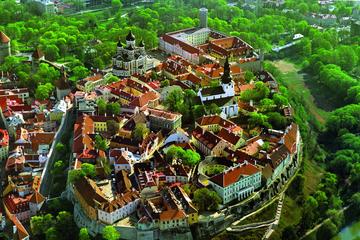
 .
.
 About the author: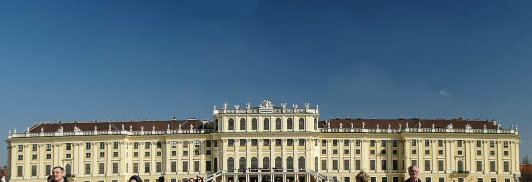
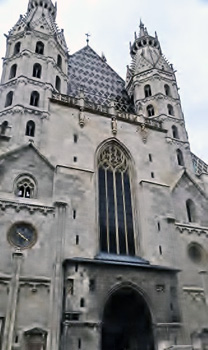
 The Ringstrasse or “The Ring Road” is a 3-mile long loop with a grand walking boulevard. The major Ringstrasse, a pedestrian-friendly historic center, has been designated a UNESCO World Heritage Site. Cafes and restaurants line the cobblestone side streets. The culinary scene cannot be overlooked. Located in the Hotel Sacher and the adjoining Cafe, a visitor cannot miss the infamous Sacher-Torte. Cafes abound throughout the avenues with bakery, meal tortes and beverages filled with visitors and Viennese people socializing. Patrons linger and enjoy an outdoor experience of a favorite pastime of people watching. Demel is the ultimate Chocolate shop filled with chocolate lover’s dreams. The Ringstrasse, is the main avenue for prestigious hotels including the Imperial Hotel. The Imperial Palace, Natural History Museum, Kunsthistorisches Museum, Vienna State Opera and the Parliament are located on the Ring. In the town square is St. Stephen’s Cathedral, a Gothic structure built in the 12th century. The Hofburg Imperial Palace, the center of the Habsburg Empire and other attractions are nearby. A morning church service mesmerizes the congregation with the famous Vienna Boys Choir, voices perfectly blended as if listening to an angelic choir.

 The Schonbrunn Palace, a 1,441-room Baroque palace is one of the most important architectural, cultural and historical monuments in the country. The history of the palace and gardens spans a period of over 300 years of successive Habsburg monarchs. This palace was the former Imperial summer residence. In 1569, the Holy Emperor Maximilian ll purchased the land. It served as a hunting ground and fishing pond. The name Schonbrunn means ‘beautiful spring’ which dates to the artesian well which provided water for the court. From 1638-1643, a palace was added and in 1642, the first mention of Schonbrunn appeared. In its present form today, the place was remodeled in 1740-50’s during the reign of empress Maria Theresa who was given the estate as a wedding gift. Franz l redecorated the palace exterior in neoclassical style which exists today. Forty rooms are opened to the public with frescoes adorning every room, gold gilding on the ceiling and walls and the exquisite décor throughout the palace.
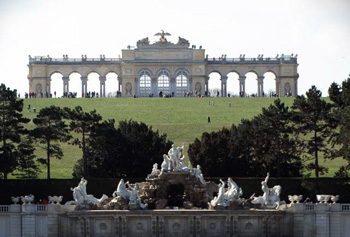
 Located behind the Palace are the Schoenbrunn Gardens. These acres contain a sculpted garden, orangery, maze, long trellised walkways and quiet seating areas. Various movies and major concerts have been filmed on location. Along the Great Parterre are 32 cultures represented by deities and virtues. At the top of the 200-foot hill, is the Gloriette structure. Destroyed in WWW ll, it was restored in 1995. Today it houses an observation deck and café. In front, is the Roman Ruin which consists of a rectangular pool enclosed by an arch with lateral walls. A figural sculpture symbolizes the rivers Vltava and the Elbe.
 Belvedere Palace is two palaces, the Upper and the Lower. Here is where the Belvedere Museum is housed. It contains art from the 19thand 20th Century Austrian artists. Located inside the Osterreichische Gallery is a replica of the famous “The Kiss” which is a self-portrait of Gustoff Klimt. Adorned in the Baroque style, the property has decorated tiered fountains, sculptures, wrought iron gates and an expansive decorative garden.
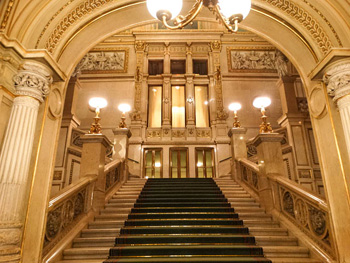 The Vienna State Opera is the World’s Greatest Opera House. Entering the front doors is a grand staircase of marble, chandeliered lobby, shimmering gold statues and lush carpeting. New Operas are presented nightly. The opera house, built in the 1860’s by Emperor Franz Joseph was inaugurated in 1869 with a performance of Mozart’s ‘Don Juan’. In 1945, the opera house was bombed. All that remained was the main façade, the grand staircase, the main lobby, attached veranda and the Tea Salon. In 1955, the opera reopened with the performance of Beethoven’s ‘Fidelio’. This opera house is the pride of Vienna. Concerts and classical music abound in the city. I was fortunate to have a private, early morning tour with a small group. The interior of the opera is opulent in size, seating 2200 attendees on the floor, selective boxes, and dignitary balcony seating. Standing by the orchestra pit one could imagine conducting the orchestra to a famous Mozart, Beethoven or Strauss performance. The stage, the size of the opera house itself was in the process of preparing for the evening performance. Although the stage is huge, costumes and scenery are stored in a nearby building until morning transfer to the stage. Work with the stage crew continues twenty-four hours a day. The luxurious intermission rooms for dignitaries were immense with gilded and architectural ceilings with frescoes. Mirrors adorned the walls for ladies to admire their luxurious gowns. Every box also had a small intermission area with beverages. Walking throughout the streets of Vienna, music can be heard from concert venues, churches, shopping areas and festivals held during the season.
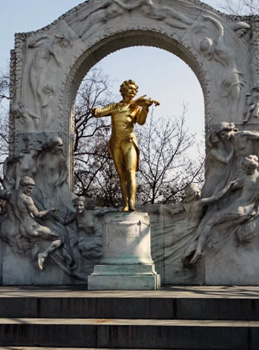 The Kursalon is an opulent Renaissance style icon concert hall. The stirring music of Johann Strauss and Wolfgang Mozart is performed in Lanner Hall for visitors to celebrate Viennese music with vocalists, ballet and concert orchestra. Outside, in Vienna’s City Park, is one of the most photographed monuments in Vienna, The gold statue of “The Waltz King”…Johann Strauss. In 1921, as the ‘Blue Danube Waltz’ played, Edmund Hellmer’s statue was unveiled. Strauss’s waltzes kept the 300 ballroom floors around Vienna spinning with Viennese Waltzes during the 19th Century. Today, Balls continue to be held in the ballrooms and palaces. Dance lessons are a requirement to properly dance the Viennese waltz. During the ‘season’, couples elegantly dress in ball gowns and tuxedos, to participate in the Grand Waltz Balls or the Debutante Balls. During the summer, evening music performances reminisce the music of Strauss, Schubert, Beethoven, Haydn, Liszt and Mozart.
 In front of the Parliament Building is the Athena Statue. Within the Parliament are committee rooms, libraries, dining rooms, bars and a gymnasium. The Town Hall in front is where the well-known Christmas Market is held yearly.
 The Hausdermisik, the Music House, located in the old city center has an interactive music keyboard stairway and other musical hands-on experiences. The five upper floors feature all the composers who lived, composed and performed in the Vienna Concert Halls and Opera House.
 The Naschmarkt, Vienna’s Old World Market of 120 stalls immerses you in the flavors and colors of Vienna. Here you will find vendors selling fruit, vegetables, meat, fish, olives, bread, oils, wine and handmade products. Small indoor and outdoor restaurants line the corridors including a beer garden. This is an International market of food and spices from throughout the world. Chefs buy produce from the market to prepare meals in upscale city restaurants. Chatting with the vendors and sampling sweet crepes and Austrian cheeses from alpine dairies makes for an enjoyable, delectable afternoon.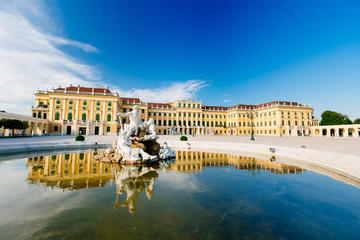

 All photos are by Mary Ann Olson:


 YAROSLAVL

 AMBROISE PARÉ (1510 – 20/12/1590)
 This era in French History was marked by both civil and religious war, including the Bartholomew Day’s Massacre of August 2nd, 1572. (The signal for the slaughter of the Heugonauts to begin was the ringing of the bells of St-Germain-l’Auxerrois matins.) As a consequence of personal experience, Paré wrote widely on the management of trauma. His 1545 Method of Treating Wounds describes how, lacking boiling oil to put on amputated limbs, he instead used a mixture containing rose oil (which contains the mild disinfectant phenol). To his surprise, this mixture gave his patients a better recovery. Paré also promoted the ligature of blood vessels during amputation to minimize haemorrhage.
 BICHAT (14/11/1771 – 22/7/1802)

 DIEULAFOY (1870s)
 HARTMANN (1860-1952)