Travel Thru History

Historical and cultural travel experiences

  • Home
  • Airfare Deals
  • Get Travel Insurance
  • Writers Guidelines

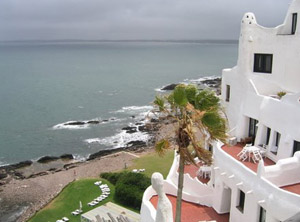
Casapueblo in Punta Ballena, Uruguay

view from casapueblo

Home of Carlos Paez Vilaró

by Paola Hanna Fornari

Today we’re going to buy a painting by a well-known Uruguayan artist. The low autumn sun is bright, and the coast road is virtually deserted. Our destination is Punta Ballena – Whale Point – seventy-five miles east of Montevideo, the Uruguayan capital where we live.

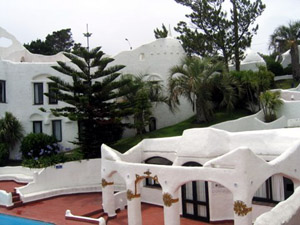
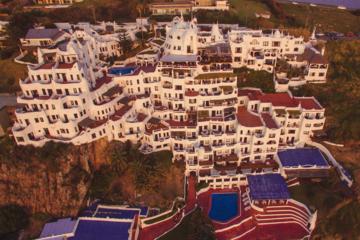
Carlos Paez VilaróCarlos Paez Vilaró, the artist, spent thirty years developing his unique home/hotel/museum/studio from a shack, into Casapueblo, the massive, rambling, white-domed creation it is today. As in his paintings, there are no straight lines in this unique cliff-hugging structure. Over the years, he added segments, stretching it along the hillside, up towards the sky, and down towards the sea. He compares it to an oven-bird’s nest. ‘I apologize to architecture for being as free as an oven-bird,’ he says.

We start our visit with an introductory video, narrated by the artist’s deep, raspy voice. We travel around the world with him to Africa, Polynesia and Europe. We see his huge murals brightening up airports in every continent. We see him with Dali, Picasso, Emperor Haile Selassie, and Brigitte Bardot. But his greatest hero is Albert Schweitzer, whose leprosarium in Gabon he visited.

We see him in 1972, when his son went missing in the Andes plane crash along with a team of rugby companions and friends. For three months Carlos Paez Vilaró kept hoping, and parked himself in Chile, helping with the search long after many had given up. When news came that survivors had been found, he was handed the list to read live on Uruguayan radio, before he knew if his son was among them. He blocked out the names with a sheet of paper, sliding it down, row by row, revealing one name at a time. His son’s was fifth, and as he read, he realized another list was forming in the minds of families and friends, of those the mountains had not spared.

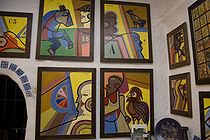
works by Carlos Paez VilaróAfter viewing the video, we wander through the museum looking at his paintings which show the influence of Picasso, Dali, his travels, African rhythms, and Uruguayan constructivism. We eventually choose a small one, painted in 2003, depicting some of his classic themes – on the left a bare-breasted woman sitting at a table, on the right, a higgledy-piggledy mass of houses, and in the background, a huge ship. The black outlines are bold, and the hues are pink and red, touched with greenish blue, like a Uruguayan sunset.

‘Would you like to meet the artist?’ the saleswoman asks.

She leads us through a honeycomb of stairs and corridors to his studio, filled with old books and antique African carvings.

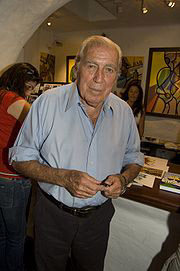
exterior of Casepueblo residenceEighty-six-year-old Carlos Paez Vilaro is like his paintings: striking. He tells us about Africa. ‘I fell madly in love in Cameroon,’ he says with a smile. ‘Don’t tell my wife.’ He continues. ‘Once I filmed an artist painting a nude woman, her hair blowing in the wind, against the backdrop of Kilimanjaro. The film was shown in Cannes.’

‘Why have you started using such bold colours?’ I ask. ‘Your earlier paintings are more restrained.’

‘I had heart surgery earlier this year. I was close to death. An artist doesn’t choose what to paint – it just happens. These colours must be my last desperate search for the vibrancy of youth. I love life. But it’s my sunset now. Every day, here at Casapueblo, we have a ceremony: we watch the sun going down over the water, and observe a few moments’ silence.’

We thanked him for the tour and went away with one of his remarkable paintings. It was an honour and a privilege to meet Carlos Paez Vilaro. And whenever I look at the subdued sunset colours of his painting I think of the artist, and all that we learned from him that day.


Casapueblo Museum Admission in Punta del Este

Watch a video tour of the Casapueblo museum:

If You Go:

Casapueblo is located about one hour’s drive east of Montevideo, Uruguay by car or bus, and just a ten minute ride west of the well-known resort of Punta del Este.

For more information about Carlos Paez Vilaró as an artist, his life, his work, and Casapueblo, see his Wikipedia page.

About the author:
Paola Fornari was born on an island in Lake Victoria. She has lived in a dozen countries over three continents, and speaks five and a half languages. Wherever she goes, she gets involved in local activities, explores, and makes each place home. She recently moved from Uruguay to Belgium.

Photo credits:
Carlos Paez Vilaró photo and works by Carlos Paez Vilaró by: Wagner T. Cassimiro “Aranha” / CC BY
All other photos are by Paola Hanna Fornari.

Tagged With: Casapueblo, Uruguay travel Filed Under: South America Travel

Chile: Walking the Santiago Barrios

Santiago Plaza de Armas

by W. Ruth Kozak

Located in one of the most spectacular settings of any city in the world, wedged between the snow-capped Andes and the coastal cordillera, Santiago, Chile is unique. From the lush Plaza de Armas in Santiago Centro with it’s colonial architectural gems, to the high-tech Las Condes financial district with it’s modern skyscrapers, Santiago has much to offer the visitor.

Map in hand, my Spanish speaking travel companion and I set off to explore the many barrios of this historic old city. Buses crammed with passengers careen down the busy avenues and one of them takes us to the Plaza de Armas, Santiago’s central square. The tree-shaded plaza is surrounded by well-preserved colonial buildings. dominated by the 18th century neoclassical Cathedral Metropolitana. A mounted figure of Pedro de Valdivia, who founded the city in 1541, stands guard near a fountain dedicated to another Chilean hero, Simon Bolivar.

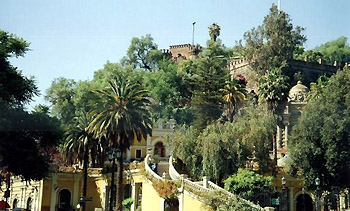
Santiago Chile architectureWe then take in the Palacio de la Moneda, literally named “the coin”, because it was once the mint, later the government palace since 1846. It was here, during the junta of 1973, the army under General Augusto Pinochet staged a coup. Salvadore Allende, the elected socialist president delivered his final speech here as the bombs rained down and killed him.

A sleek metro system makes it easy to get around the city. Some stations have archaeological displays, most have music playing and all are orderly. It’s easy to board the swift, comfortable trains. Everywhere we see people young and old embracing and kissing, a lovely sight that lends a beautiful atmosphere to this otherwise bustling metropolis. The Chilean people are gracious and friendly, often reminding us “Keep your backpacks in front” and “Watch out for your camera.” In this city of 6 million inhabitants where there is still some extreme poverty, it’s necessary to be cautious.

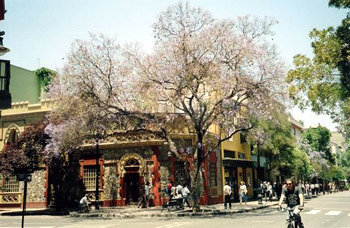
Cafe in Barrio Lastarria, SantiagoBarrio Bellavista is a pleasant, bohemian area where university students congregate at sidewalk cafes. An Artisan’s market offers hand-made craft items and souvenirs. Chile’s Nobel-prize winning poet, Pablo Neruda lived here. His house, “La Chascona’, is crammed with a whimsical collection of curios and personal items. The Poet was as fun-loving as he was a serious political and literary figure. His poetry is the soul of Chile and when he died he left everything to the Chilean people through the Neruda Foundation that manages his estate and houses.

Barrio Lastarria, on the eastern fringe of Santiago Centro with Parisian style buildings and shady plazas, has architectural, culinary and cultural delights and is the hub of Santiago’s cafe culture.

Santiago developed around the foot of Cerro Santa Lucia. The 19th century city mayor, Benjamin Mackenna, transformed the hill into a landscaped park. At the entrance is an ornate fountain, Terraza Neptuno. The vista from the top is one of the best, as commented on by Charles Darwin whose signature appears on a plaque commemorating his visit there in the 1880’s.
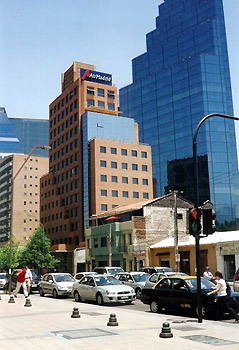
Santiago financial districtRitzy Las Condes is the city’s financial district. The worlds’ embassies are located here as well as Chile’s World Trade Centre. Ultra modern buildings, condos, fancy restaurants and upscale hotels give it a different atmosphere than other parts of the city. By extreme contrast, there are still shanty-towns at the outskirts of Santiago.

On our last day, we pay our respects at the General Cementaria in suburban Recoleta where Chilean politicians and artists are interred as well as thousands of victims of the 1973 junta. La Ciudad de los Muertos is literally a city of tombs and ornate mausoleums dating back to the early years of the city. At the entrance, the Memorial del Detenido Desparecido y del Ejecileto Politico is engraved with the names of thousands missing and presumed dead during military regime of Pinochet; beside it another contains tombs of those murdered. We viewed the impressive tomb of Salvatore Allende and the simple square red-painted 2X2 grave of the much beloved musician Victor Jarra who was killed during the junta. A group of young people, some who wouldn’t have been born in September 1973, have also come to pay homage to their national heroes, placing red roses their tombs.

And then all too soon, it is our last night in Santiago. There are tears as we say goodbye to our Chilean friends. Even the beautiful snow capped Andes make an appearance, leaving a lasting impression of our visit to this remarkable city.


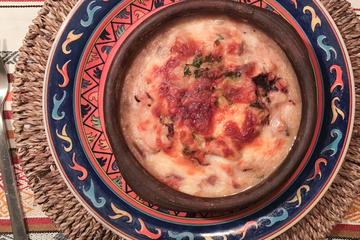
Traditional Chilean Cooking Class and Meal in a Santiago Countryside Home

If You Go:

Santiago transit busesIt’s advisable to have a rudimentary knowledge of Spanish as most people we met didn’t speak English.
Tourist offices provide city maps, but we found the Lonely Planet Chile guide was adequate and informative. Santiago is huge, but it’s easy to get around.
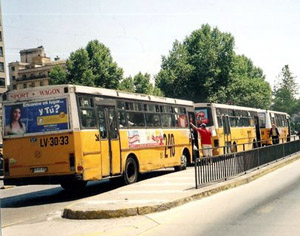
Besides the exhaust spewing yellow micros, there are new green buses operating throughout the city.
The city traffic is congested so the metro is a practical alternative. Fares are 55 cents (US), slightly more at rush hour. Taxis and taxi colectivos are abundant.
There are excellent eating options in Barrios Bellavista, Lastarria and Barrio Brazil. Santiago Centro and Plaza De Armas have many fast food cafes.
Chile Travel: Welcome to Santiago

About the author:
W. Ruth Kozak is a lover of history and travel. This was a sentimental journey Ruth took inspired by a dear Chilean friend who unfortunately died before he could return to his beloved homeland. So every step taken in his city was in memory of him.

All Photos are by W. Ruth Kozak.

Tagged With: Chile travel, Santiago attractions Filed Under: South America Travel

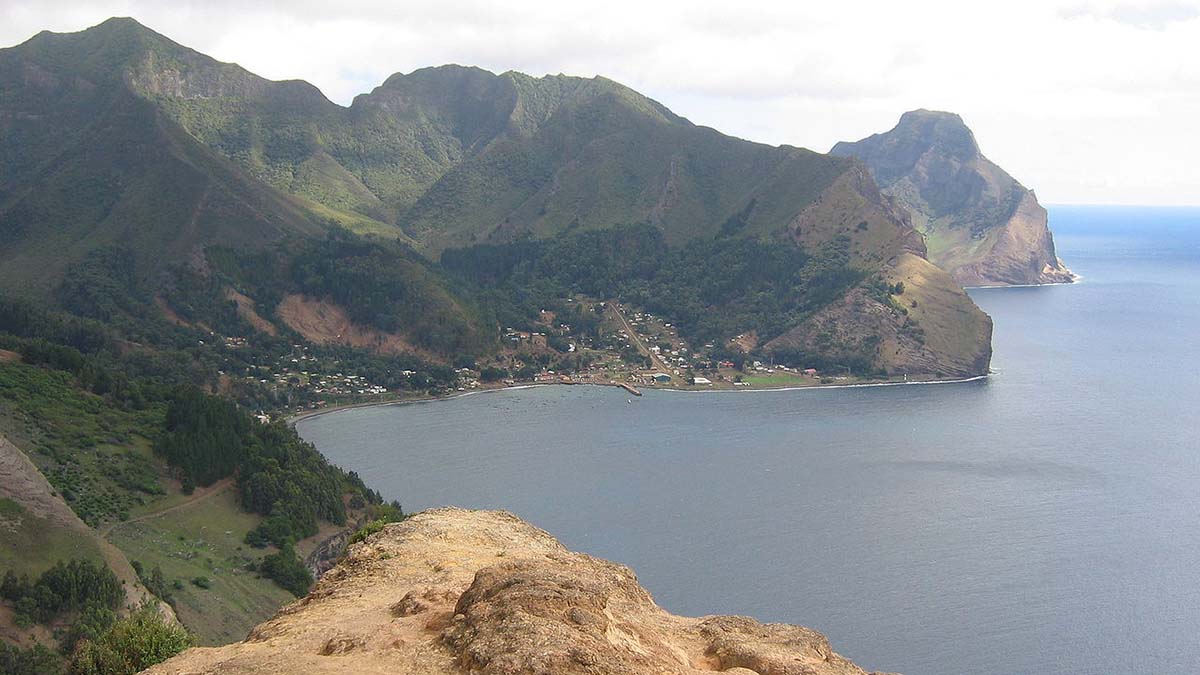
Mas a Tierra: Robinson Crusoe Island

Isla Juan Fernandez

Juan Ferandez Archipelago, Chile

by Norman A. Rubin

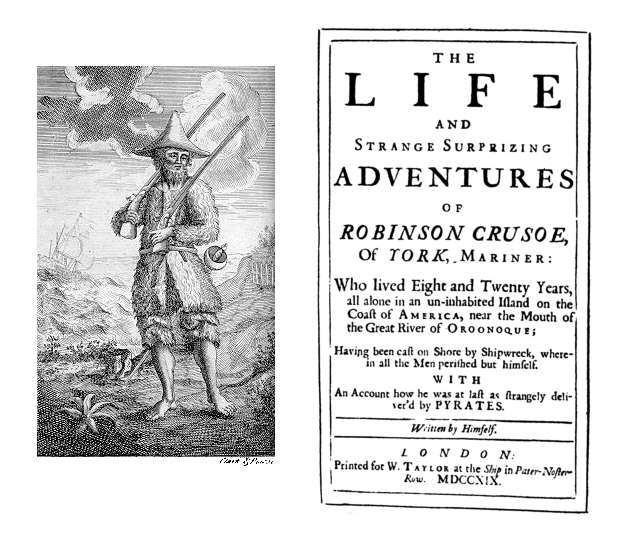
Title page of Robinson Crusoe first editionIn 1705 a Scottish sailor Alexander Selkrik was shipwrecked in the Pacific Ocean and marooned on an island for four years and four months in absolute silence and solitude. He was finally rescued in 1709 by a frigate manned by a Captain Woodes Rodgers. The story of the hardships endured by this mariner inspired the writer Daniel Defoe to write the classic novel Robinson Crusoe, which we are all familiar. To reflect the literary lore associated with the island, in 1966, the Chilean government named the location Robinson Crusoe Island.

Robinson Crusoe Island (Isla Robinson Crusoe) formerly known as ‘Mas a Tierra’ which means “closer to land”, is the largest island of the Chiliean Juan Ferandez Archipelago. The island group – Robinson Crusoe Isle, Alejandro Isle and the smaller island of Santa Clara – is situated 674 kilometers west of the continent of South America in the Pacific Ocean. It was originally named for Juan Fernandez (1536 – 1604), Spanish explorer and navigator who explored these islands off the Chilean coast in 1563.

statue of Robinson CrusoeThe island is mostly mountainous with undulating terrain that was formed by ancient lava flows. The highest point is El Yunque mountain, 916 meters above sea level. Through the years intense erosion has resulted in the formation of steep valleys and ridges.

Since 1977, the islands of the archipelago have been deemed ‘World Biosphere Reserves’. It is an international conservation designation site given by UNESCO under its program on ‘Man and Biosphere’ due to its natural beauty and unique flora. More info: en.unesco.org/biosphere

Hundreds of tourists visit the island each year. The island is popular with nature enthusiasts Because of the island’s flora (101 of the 146 native species of plants are endemic, a natural phenomenon of the island) and its bird life – the red hummingbird unique to the island is most famous for its needle-fine black beak and silken feather coverage.

Robinson Crusoe Island is unique to the other Juan Fernandez Islands due to its permanent population concentrated in the city of San Juan Bautista and its surroundings. The local economy is based on lobster fishing, species characteristic of world-wide fame. The legendary story created by Defoe has transformed the island into an exciting place, and the scenic beauty makes it an unforgettable paradise.

If You Go:

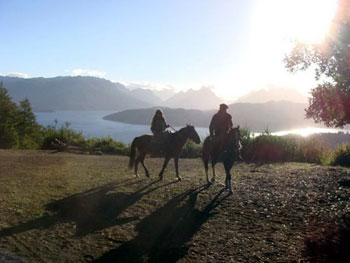
There are a variety of ways to access the natural beauty of this island: Excursions by trekking or biking, or horseback with expert guides who are knowledgeable about the history and traditions of the island.

Scuba diving, kayaking and marine exploration are ideal opportunities to explore a side more hidden than the natural magic perceived at first sight. The island has instructional services and all equipment needed for diving, for you to submerge yourself in the warm, transparent waters of the island, offering you the opportunity to see the rich underwater marine flora and fauna. And along the sea shore you can meet and photograph animals like the fur seal. Or you can go fishing for the distinct types of island fish (tuna, jurel, dogfish, rock salmon). It is also an opportunity to accompany a local fisherman during his daily tasks which include the preparation of a lobster at high tide.

Explore the Juan Fernandez national park which has one of the most individual and surprising ecosystems on the planet: it not only has unique and endemic flora, but also, the irregular geography.

Accommodation runs from beautiful rustic inns with air conditioning to camping sites with all the amenities and spring water where tourists can put up their tents. Camping is free on the island.

There are a varied range of organized tours from nature walks to trips to historical sites. Tours are usually from four to seven days. The tourist season to the Robinson Crusoe Island starts in October and ends in April. This is when you can enjoy the best climate conditions. During this period it is ideal to take sports clothes or comfortable attire. Taric Airline makes frequent flights to the island. These flights to the island are by planes which only have the capacity for 5 to 10 people with a restriction of one piece of luggage up to 10 kilograms.

In the recent past on Chile’s Robinson Crusoe Island a treasure hunter with a modified metal detector stumbled across about 600 barrels of buried gold coins and jewels, presumably looted from the Incas during the Spanish occupation. The estimate value of the treasure was valued at around $10 billion, which a part will be donated to non-profit organizations after lengthy legal procedures between the Chilean government and the treasure hunter.

Photo credits:
Isla Juan Fernandez (vista hacia Robinson Crusoe desde Montaña) by Serpentus / CC BY-SA
Robinson Crusoe 1719 1st edition: Public Domain
Robinson Crusoe Island statue of Robinson Crusoe in the town of San Juan Bautista: Richard N Horne / CC BY-SA

About the author:
Norman A. Rubin is a former correspondent for the Continental News Service (USA), now retired – busy writing stories and articles for Net sites and magazines worldwide. See www.google.com under the author’s name for a review.

Tagged With: Chile travel, Robinson Crusoe island Filed Under: South America Travel

Drinking Mate is a Tradition in Uruguay

drinking mate in Uruguay

Socializing With Your Mate Uruguayan Style

by Paola Fornari

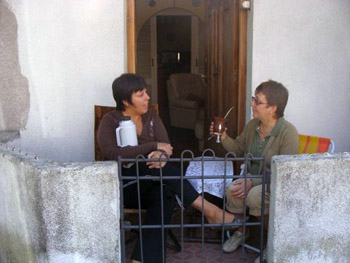
‘Let’s sit on the zaguán,’ my friend Rosa says. The zaguán is the space between her front door and the street. We squeeze out two plastic folding chairs and a table.

I’ve been invited to matear, Uruguayan style.

Mate is a national social pastime here.

The mate is a calabash: you fill it with a bitter dried leaf called yerba, add boiling water, and sip it through a bombilla – a silver straw. The whole set of mate, bombilla and yerba are also referred to as mate, and the verb, matear, means to sip it.

There are rules: you carry your mate in your hand and flask under your arm, or put everything in a leather case called a matera, but you can’t order it in a bar. It’s something personal, which you pass around your friends. Groups of young people sit in parks, chatting, enjoying the sun and sipping away. In street markets, or even in business meetings, people clutch their calabashes. Kiosks sell hot water to refill flasks. During summer months, when hoards of Uruguayans hit the beaches, first aid centres are set up to deal with burns.

‘Okay, Rosa, I want to get this right.’

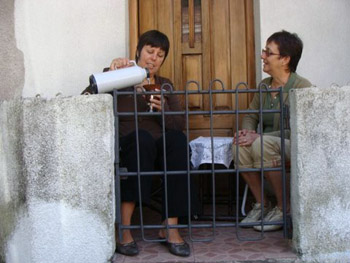
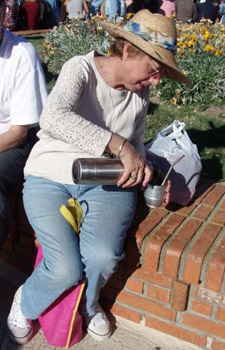
pouring water to make mateRosa pours cold water onto one side of the leaves, digs a hollow with her straw, and starts sipping.

‘The leaves have to hinchar, to swell. You use cold water at first; otherwise the straw clogs up. I’m inviting, so I sip till the temperature is right. It’s rude if I give it to you luke-warm.’

She sucks, and when a gurgle indicates she has drained her brew, she fills it with boiling water, slurps again, checking the temperature, refills, and hands it to me. I sip. We chat. I learn that is impolite to hand the mate back before the last drop of water is finished. You need that slurpy noise.

pouring mate from thermos‘Yuk! You don’t want to sip someone else’s water!’ Rosa says. I wonder about the hygiene of the operation. ‘Most people share with anyone. But I’m selective.’

I’m honoured.

‘I’m the hostess, so I fill. And we chusmear. We gossip about passers- by.’

‘Rosa, if gossiping is part of matear, I’ll go for it.’

‘Ooh, see that woman? She’s asquerosa.’ Nauseating? I wonder why. Rosa explains, ‘She moved into the area and rebuilt the house next door. Loads of money. Moans all the time: says my pipes are wrong, my bathroom is making damp seep into hers…’

A man walks by. I nod and say ‘Buenas tardes.’

‘No, don’t greet, just smile. Don’t say anything unless you know the person.’

‘But I don’t know anyone.’

‘Okay, don’t say anything unless I know them. You have to differentiate between those you know and those you don’t.

An elderly man passes with a dog. ‘Not all there’.
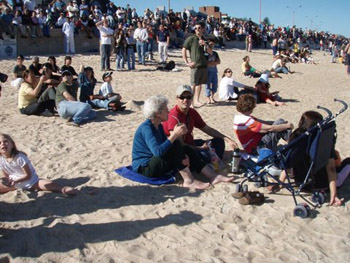
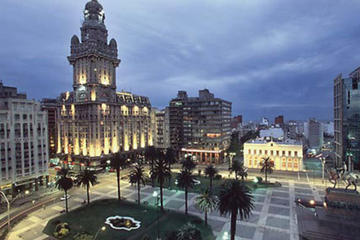
We pass the mate back and forth. Every few fills, Rosa shifts the straw around the wet leaves.

sipping mate on Uruguay beach‘How’s Carmen?’ Rosa asks. She met Carmen at my house recently.

‘Ah, poor Carmen, she’s the first of twelve siblings. When she was fifteen, and her youngest brothers, twins, were a few months old, her mother gave one of them away – can you imagine? She handed him over to a stranger, then left. With another man. Carmen didn’t see her again till last week, at a funeral. But Carmen’s kids refuse to call her grandma. Can you blame them?’

Is this me, talking about other people’s affairs, and judging?

Rosa pours the last drops from the flask, and sips the mate del estribo. The dregs.

‘Great, Paola,” she exclaims. “You’ve managed to matear and chusmear, simultaneously. You’re a real Uruguayan now.’


Montevideo Highlights Tour

If You Want to Know More:

Mate (drink) in Wikipedia
Welcome Uruguay – about mate

About the author:
Writer, EFL teacher, teacher trainer, and translator, Paola Fornari was born in Tanzania, and has lived in a dozen countries over three continents. She has recently moved from Uruguay to Belgium. She describes herself as an ‘expatriate sin patria’. Wherever she goes she make it her business to learn the language, get to know the local people and customs, and discover the country’s remotest corners. She became interested in writing in mid-2006, did a short Open University creative writing course and a Writers’ bureau course, and began getting articles published in 2007.

Photo Credits:
All photos by Paola Fornari.


Tagged With: Uruguay travel, yerba mate Filed Under: South America Travel

Salta, Argentina

Cabildo in Salta demonstrates colonial architecture

Ascent into the Clouds from the Andes

by Diane Chouinard

It’s siesta time and the stores are closed until 4pm. As I sit across the central plaza of Salta, Argentina, I sip on a cool drink of Pomelo. A jacaranda tree’s purple blooms sway in the breeze, as nonchalantly as the few locals crossing Plaza 9 de Julio in the scorching sun. The sweet aroma of candied almonds, roasting at a corner stand, wafts by.

“Muy barato”, shout vendors and shoe shine boys as they do the rounds of the side cafes. Like most tourists, I’m in Salta because it’s the meeting point for tours of the surrounding areas, but I’m impressed at what a charming town it is and can see why it’s called ‘la linda’.

pink steeples of Salta cathedralAcross the square, the two steeples of a candy pink cathedral stand out. On the opposite side, the eighteenth century Cabildo, built to house the town council, with its two story rows of arches, is characteristic of the hispanic architecture around the Plaza. At more than one thousand kilometers northwest of Buenos Aires, Salta is the best preserved colonial city in Argentina. With a half a million inhabitants, it sits at the foothills of the Andes and is the capital of the Province of Salta. Founded by the Spaniards in 1582, it became a strategic commercial and military outpost between Lima in Perú and Buenos Aires. The debilitating economic decline following the War of Independence in the nineteeth century was eventually overcome. It’s now one of Argentina’s favorite tourist destinations.

I walk one block along calle Caseros, up to Iglesia San Francisco. Rebuilt a few times over the last four centuries following wars and earthquakes, its ornate terracotta and gold colored walls and high bell tower make it a landmark. From there, I go on to Parque San Martin, where the teleférico brings me to the top of Cerro San Bernardo. The paths around the lush gardens and fountains are refreshing and offer spectacular views of Salta.

I spend the rest of the afternoon at the Mercado Artesanal, where artisans sell fine handicraft, ranging from leather and silver goods to ceramics, colorful ponchos and tapestries, carved cactus bowls, sikus, multi-reed pan flutes, charangos, small guitars and other typical Andean musical instruments.

El Solar del Convento is the perfect restaurant to enjoy a relaxing dinner after sightseeing. The smell of barbecued meat, grilling on a large parrilla, fills the air as I walk in. Classical background music suits the atmosphere of the old Spanish convent. I sample some complementary paté and bubbly wine, in anticipation of tasting the legendary Argentinian beef. I’m not disappointed and glad I’m not a vegetarian. It’s so tender, that I can cut it with my fork.

Life starts at eleven in the evening in Argentina. After dinner, I mingle with the crowd at the central plaza. It looks like all the Salteños are out having a good time as they listen to the live band.

El Tren a las Nube railwayThe next day, I go on the most popular tour, El Tren a las Nubes. Inaugurated in 1948, the railway was built to connect Salta to Antofagasta, Chile, for economic reasons. No longer used commercially, it has been open to tourism since the late seventies. I soon get into the atmosphere, with the pan flute Andean music flowing from the onboard speakers.

For the next fourteen hours, the train’s ascension through multiple bridges, tunnels and spirals brings me higher than the clouds. The yellow and orange wagons contrast with the clear blue sky, as they zigzag through the unspoiled valleys of cardones, cacti taller than men and along multicolored canyons rich in silver, iron, lead and manganese. In the middle of this serene countryside, the sound of a helicopter as the train comes to a stop, creates some havoc. We are told that the altitude caused a passenger to faint and is brought to Buenos Aires. Once the climb resumes and calm is restored, we reach the Puna, high plateaus where herds of llamas roam. At La Polvorilla, close to the Chilean border, is where the train crosses the last viaduct, a sixty-four meter high metal structure. It’s the trip’s highlight and the altitude is 4,220 meters above sea level. Despite being out of breath due to the lack of oxygen, I’m grateful to have made it this high, so that I can enjoy the breathtaking view of the desert canyon below.

railway trestle crosses high over desert canyonOn the way back, we stop at the isolated mining town, San Antonio de los Cobres, named after the surrounding copper-rich sierra. Outside the train station is a colorful market. Weather-beaten by the gusting winds and dust, prevalent in the Puna, the natives’ dark skin looks as thick as leather. Like their ancestors, the Incas, their crafts designs mirror the four star constellation Cruz del Sur, while the colors are inspired by nature. Back on the train, the sight of the Tastil pre-hispanic ruins, a deserted settlement, completes this memorable journey.

My next destination is the one hundred and fifty-five kilometer long Quebrada de Humahuaca. For ten thousand years, this canyon, a Unesco World Heritage site, has been part of a cultural and trade corridor, which stretches from the Atlantic beaches of Brazil, through the high Andes plains, all the way to the Pacific coast of Chile. The Quebrada’s sedimentary origin is about 65 million years old.

Quebrada de Humahuaca canyonInstead of driving along the highway, Federico, our private guide, takes my friend and I on a narrow road though the selva, a lush sub-tropical green forest. He explains that the region around Salta is fertile because they still use the Incas’ irrigation system. From the summits, the melting snow flows down to the valleys through stone canals.

Federico points at some red blooms, “they’re Argentina’s national flowers, from ceibo trees.” As we reach the national road, he informs us that we are in the Province of Jujuy, which borders Bolivia. The Quebrada’s unusual rock formations along the narrow valley come into view and are a prelude to the stunning Cerro de los Siete Colores. Like a gigantic fresco, the hillside’s seven colors, ranging from deep purple to orange, dwarf the picturesque hamlet of Purmamarca. “It means Town of the Virgin Land in Aymara,” Federico says. His four-by-four bounces on narrow, dusty streets, lined by adobe houses with cactus roofs, most from the pre-Hispanic era. Once at the central plaza, I buy a beautiful, modestly priced alpaca sweater and scarf, at the crafts fair.

colorful hillsides of Cerro de los Siete ColoresReluctant at first, Federico convinces me to eat llama meat at the cosy restaurant Rincon de Fuego in Tilcara. “I eat it all the time. It’s cholesterol-free,” he says. It has a delicate taste, although I find it a bit dry.

After lunch, we go to the Museo Arqueologico Dr. Eduardo Casanova. “It’s a crash course about the history of the whole Inca Empire,” Federico says. The artifacts and archeological finds are from Peru, Bolivia, northern Chile and Argentina. They vary from a well preserved mummy, to ceramic vases with geometric designs and feline figures, bronze and silver objects and jewels, many in the shape of disks. The price of admission includes a visit at El Pucara, at the top of the mountain just outside Tilcara. The pre-Columbian reconstructed fortress is the most impressive archeological site of the region. Its location must have been strategically excellent to spot enemies. As I hike along the low stone houses and walls, I get an eagle-eyed view of the valleys and mountains.

monument of independence at HuacaleraAt Huacalera, a few kilometers north, we stop to take pictures of the monolith that marks the Tropic of Capricorn. Soon after, we reach the last city on today’s itinary, Humahuaca, which used to be an important trade center of the high plateaus. At an altitude of 3,000 meters, I have to stop often to avoid getting dizzy, as I climb up the broad flight of stone steps that lead to the Monument of Independence. Looking down on the adobes and the twin towers of the seventeenth century church, I try to envision the narrow cobblestone streets, filled with colorful costumes and masks, worn by natives every year, to celebrate Pachamama, an old cult to Mother Earth.

This tour along the Quebrada de Humahuaca, where pagan and Christian beliefs coexist, has transported me into a mysterious ancient world. I can imagine our dark skinned, handsome guide’s ancestors, trekking along this grandiose valley, where the Rio Grande flows.

My excursions through the sierras of northern Argentina have shown me, that by clinging to their traditions, the people of the Andes ensure the conservation of a pristine environment. In our effort to save planet earth, we could all learn something from the Inca way.


Safari to the Clouds Tour of Northwest Argentina from Salta

If You Go:

Summer (December, January & February) can be very hot. It’s better to go in Spring or Fall. There are no direct flights from Salta to other cities of Argentina, except Buenos Aires, so if you intend to visit other regions like Mendosa, I suggest to fly one way from or to Buenos Aires and take a bus from Salta to or from Mendosa, with stop-overs in Cafayate, Cordoba and/or San Juan. You save time, money and tour costs. There are many good bus companies. I used Cata Internacional. It has excellent service. For long-distances, a royal suite is best; seats convert into births, meals & drinks are included. Bus tickets can only be bought in Argentina, so do it as early as possible.

SALTA – Check www.saltainfo.com for information about museums, excursions & hotels. I stayed at the modern 3 star Wilson Hotel, Alvarado 950. It has reasonable prices, includes full breakfast, impeccably clean, excellent service, only 3 blocks from main Plaza 9 de Julio. www.wilsonhotel.com.ar Among the many hotels, some 4-5 star ones caught my attention: Alejandro 1, elegant & modern; Hotel Solar de la Plaza, beautifully decorated colonial mansion, quiet; Portezuelo Hotel, fantastic view of Salta. Most tours last at least 12 hours, so give yourself enough time for some sightseeing in Salta. Plan to stay at least 4 full days. Tours can be booked at your hotel or from a local travel agency. Booking ahead of time is better in high season. I used Nordic Travel, Buenos Aires 45, Salta. Tel/Fax 387/421-1313 or 422-0450, www.nordic-travel.com.ar

QUEBRADA DE HUMAHUACA – You’ll want to take many pictures; hire a private guide or if you rent a car, follow Highway 9 north, from Salta. Many tours are also available.

TREN A LAS NUBES – only runs on Wednesday, Friday & Sunday, therefore you should book ahead of time at your travel agent, or online: www.trenalasnubes.com.ar Includes breakfast, lunch. Has bar & dining room. $120 USD low season, $140 USD high season. El Solar del Convento, Caseros 444, Salta. Tel. 421-5124. Best beef I’ve had, cheap, great atmosphere, excellent service. Mercado Artesanal, Av. San Martin 2555. Tel. 387/434-2808. Open daily, 9 to 21 hrs.

TILCARA – Rincon de Fuego, Pasaje Ambrosetti 445, Tilcara. Tel: 388/495-5130 – Hotel & restaurant. Quiet, charming, excellent food. www.rincondefuego.com Museo Arqueologico Dr. Eduardo Casanova, Belgrano 445. Open daily, 9 to 19 hrs.

About the author:
Born in Montreal, Canada, Diane Chouinard is a composer and world traveller. Her fascinating experiences have led to her becoming a writer. Her music, which is performed in different countries and her interest in history transcend in her travel writing. She has been living in Vancouver since 1998.

All photos are by Diane Chouinard.

Tagged With: Argentina travel, Salta attractions Filed Under: South America Travel

  • « Previous Page
  • 1
  • …
  • 6
  • 7
  • 8
  • 9
  • 10
  • Next Page »

MORE TRAVEL STORIES:

Kos, Greece: A Medical Marvel

Why Everest Base Camp Isn’t About Everest at All

A Caribbean Gem: San Juan, Puerto Rico

England: Remembering Jersey In War Time

Miami’s Indian History

Greece: An Inspiring Day at the Achilleion, Corfu

Old Wardour Castle

Oregon: Tillamook Air Museum, A Lifetime Collection Becomes Museum Exhibit


SEARCH

DESTINATIONS

  • Africa Travel
  • Antarctica travel
  • Asia Travel
  • Australia travel
  • Caribbean Travel
  • Central America Travel
  • Europe Travel
  • Middle East Travel
  • North America Travel
  • Oceania Travel
  • South America Travel
  • Travel History
  • Travel News
  • UK Travel
  • Uncategorized
  • World Travel
facebook
Best Travel Blogs - OnToplist.com

Copyright © 2026 Cedar Cottage Marketing | About Us | Contact | Privacy Policy | Terms & Conditions | Copyright Notice | Log in