Travel Thru History

Historical and cultural travel experiences

  • Home
  • Airfare Deals
  • Get Travel Insurance
  • Writers Guidelines

My Love for Chaozhou, China

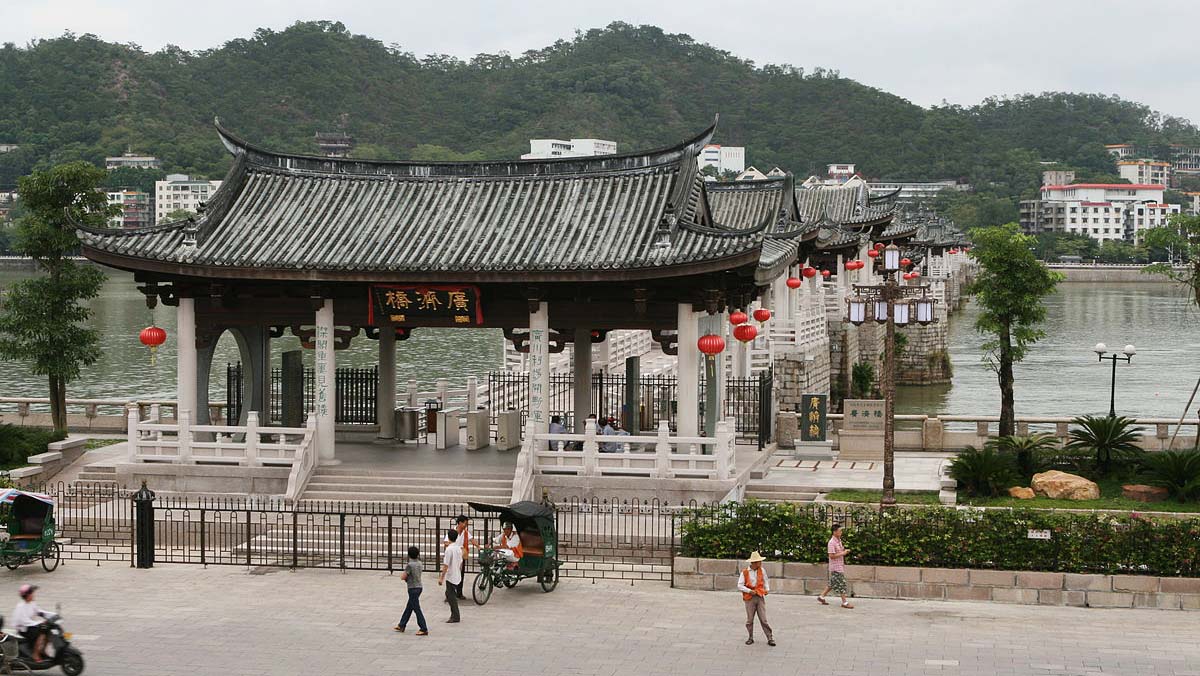
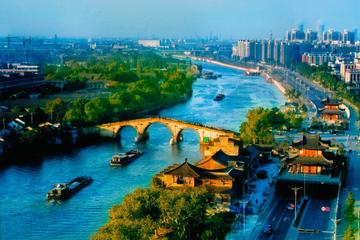
Guanji Bridge, Chaozhou, China

by Chen Yiying (Rosalind)

Hello, my name is Yiying, but my English name is Rosalind. I took up the former name because many people refer to me as a ‘rose’ or like a certain delicate flower.

But more important than that, I want to talk today with all of you about my hometown. The most beautiful place on earth, Chaozhou. A special place in Southern China that’s like heaven to me. And why is it special?

Because it’s a city all my own and moreover, I want to talk about our traditional ‘beef ball’. Friends, you can’t beat it!

The shape of it is not only circular, and most importantly, people make this recipe in a very a slow way. It’s a tiresome motion.

However, this dish cannot be prepared too fast. It needs the art of perfection.

First, you need to put the beef in a basin after marinating and making it into the shape of a big ball! Get the image, right! Then, with a rolling pin you beat it. Those experts who make it, have to do this for three-whole hours, wow!

 There’s a another specialty in my hometown, the bittern duck. Yeah baby! It’s the principal staple of the Chaozhou culture, made and eaten during Spring Festival. Locals also take a long time in making it. The steps are too many. Starting with the bittern water and making it with 20 more ingredients: from salt to pepper. However, the most important element of the duck is to keep that skin soft and tender. Yeah, nice, juicy and fatty. Importantly is the taste of the duck, that is: fresh and soft.

Finally, we can talk about the third and most important dish. Do you know? Yes, it is fruit, of course. The Chaozhou mandarin orange is too special. This particular mandarin orange is too small, but at the same time, tactile in its feel. It’s concave-convex. The skin is so thin and it’s full of natural sweetness, making it almost syrupy and with great zest.

Chaozhou is the perfect place for me and it can be for you. Just take a trip and you’ll enjoy our gorgeous environment. Then the foods, which you all can already try three different foods and delicacies, etc. But not only that, it’s the place itself. Full of love, food, the environment, ceramics/pottery and most importantly, its people. All of them are almost perfect. I’m sure that you’ll indulge in it for the first time and I guarantee, it won’t be your last!

If You Go:

Discover Chaozhou

Chaozhou Travel Guide

About the author:

Rosalind is a 15-year old young lady and native from Chaozhou, Guangdong. Her target is to study in the EHL (Switzerland), that’s the university of her dreams. About her hometown, she expresses, “I want to say, I love it! There are hundreds of foods here and the places are also beautiful and famous. Chaozhou has a great tradition for people, food and those who come here fall in love with it!”
Guanjio Bridge photo by 小杰杰 / CC BY

Tagged With: Chaozhou, China travel Filed Under: Asia Travel

The Butterfly Lovers of Hangzhou

Hangzhou China

by Lesley Hebert 

As rain splatters loudly on the foggy plexiglass windows, our tour boat putters loudly across the water. I stretch up from my low seat at the back of the boat to peer at the watery world outside. At the same time I strain to listen to our tour guide at the far end of the boat as she tries to make herself heard above the thrumming of the engine.

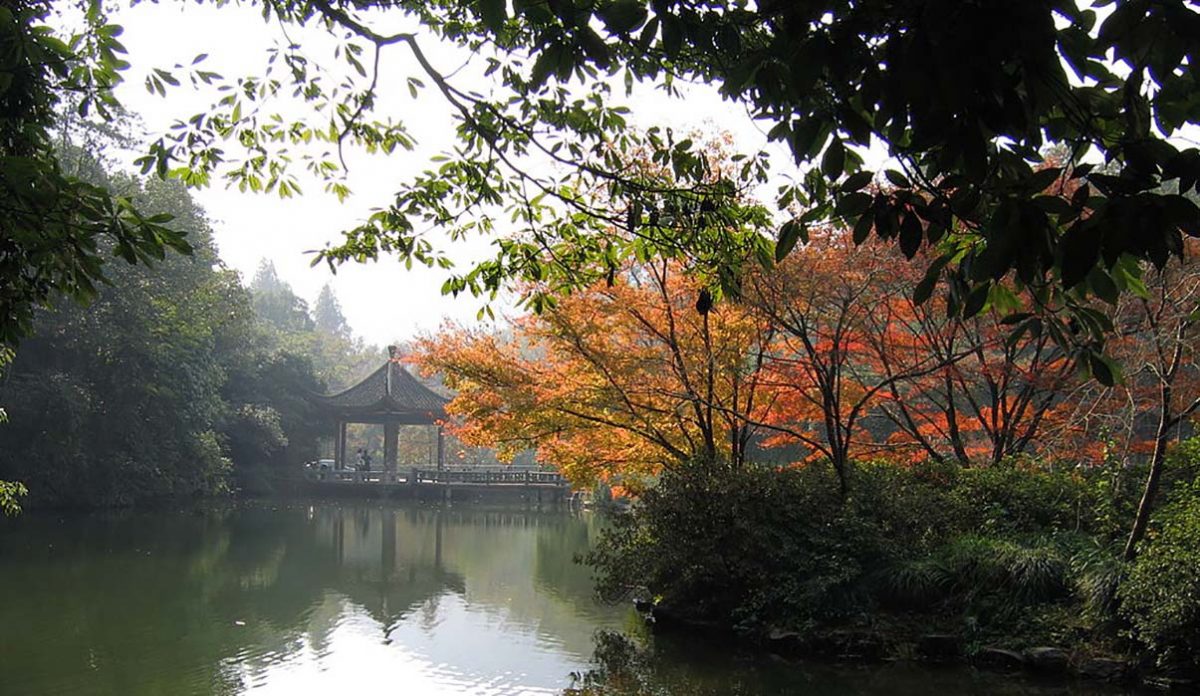
We are in the Yangtze River Delta, on Hangzou’s West Lake. Although it is difficult to appreciate on such a grey, misty day, this UNESCO World Heritage site has been famous for its picturesque beauty throughout Chinese history. Surprisingly, it maintained that reputation in spite of a natural tendency to silt up and through alternating historical cycles of neglect and restoration. During the Tenth Century era of the Ten Warring Kingdoms, for example, weeds completely covered the lake and it almost reverted to marshland. However, after it was cleaned up and dredged it became a favorite imperial vacation spot and a tourist destination for foreign visitors, including Marco Polo, who travelled to China along the legendary Silk Road.

As I strained to hear, I heard our guide promise to tell the story of the Chinese Romeo and Juliet. Always keen to hear a good historical yarn, especially if it had an element of romance, I was hooked. Eager to learn more, I tried to focus even more closely on our guide’s voice.

She began with a romantic teaser which was a delightful illustration of the Chinese fascination with numbers. Pointing to three grey stone pagodas sticking out of the rain-spattered water, she told us that we were in one of the most romantic spots in China.

“You know,” she said, “that the moon represents romance. Well, this is the home of 33 Moons.”

She explained that each of the three pagodas was pierced with five round holes. On the night of the mid-autumn Moon Festival, candlelight shining from these fifteen moonlike holes created fifteen reflections, doubling the number of moons to thirty. The full moon in the sky and its reflection on the lake increased the number to 32.

“And the full moon in your heart,” she finished with a flourish, “makes 33 moons!”

With magical visions of floating moons in my head and newly aware of the moon in my heart, my imagination floated away from the chill, misty present to a Moon Festival celebration on a warm, clear September night. Then, suitably prepared by our guide’s introduction, I listened eagerly to the tale of Liang Shanbo and Zhu Yingtai, also known as the Butterfly Lovers.

It seems that there was once a rich merchant named Zhu who was blessed with eight fine sons. When his ninth child was born, he was delighted to have a beautiful daughter. This was Zhu Yingtai, who soon became his favorite child. He preferred her over all of her brothers, and indulged her every whim.

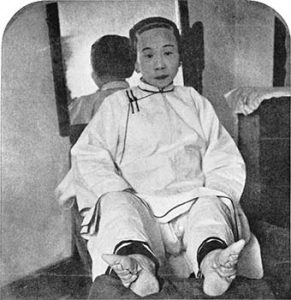
Chinese woman with bound feetBefore the modern era, young Chinese girls from wealthy families would have had their feet bound. When a girl was about four years old, a professional footbinder would break her tender foot bones, turn her four small toes under the soles of her feet, and bandage them tightly. As the child grew and developed, her instep would be virtually bent in two, and the growth of her deformed and tightly bandaged feet would remain stunted. As a fully grown woman, she would be forever destined to walk painfully on the tiny, four inch long “lotus feet” or “lily feet” which were considered the ultimate standard of feminine beauty.

Not wanting to see her suffer, however, Yingtai’s father did not force her to undergo this horrific procedure, and her feet were allowed to grow naturally.

Yingtai was also determined to get an education. However, families generally focused on educating their sons for future careers and education for girls was not a priority. But Yingtai continued to beg her father to allow her to get an education until he gave in to her pleas. Because her feet were unbound, she was able to attend school disguised as a boy. There she became close friends with Liang Shanbo, a scholarly student from a poor family who was determined to study hard and succeed in life.

Mandarin ducksYingtai fell in love with Shanbo and tried to share her feelings with him. At first, she tried subtle hints, but without success. Totally focussed on his studies and completely unaware that Yingtai was a girl, Shanbo did not pick up on any of her clues. When the two of them were walking by the lake, Yingtai pointed to a pair of mandarin ducks swimming nearby, pointing out that these lovely little ducks, who the Chinese believe mate for life, were symbols of a loving and faithful marriage. But Shanbo still did not understand what she was trying to tell him.
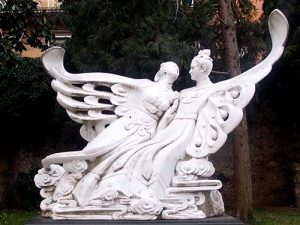
Finally, Yingtai told him directly how much she loved him and proved she was a girl by showing him her pierced ears, which were hidden under her hair. Shanbo fell deeply in love with Yingtai, but their love was doomed because Yingtai’s father had arranged for her to marry into a wealthy family. Inevitably, Yingtai had to return home to prepare for her marriage, and the lovers were forced to say farewell.

The sky darkens and the black clouds above us weep a waterfall of tears as our boat reaches the far shore. In front of us, a small stone bridge crosses a narrow stretch of water framed by weeping willows. This, our guide tells us, is China’s Bridge of Sighs. It is said that it took the lovers six hours to cross the bridge as they said their reluctant goodbyes, giving this bridge the nickname “longest short bridge” in all of China.

Shinbo died of a broken heart and was buried by the road between Yingtai’s village and that of her future husband.

Liang Shanbo and Zhu Yingtai monumentOn the day of her wedding, Yingtai dressed in her bridal gown and climbed into the litter which was to carry her to her new home. A storm forced the wedding party to stop for shelter near the spot where Shinbo was buried. Yingtai climbed out of her litter and ran over to her true love’s grave. Magically, the tomb opened up and Yingtai leaped in and disappeared. Finally, the storm ceased, the sun came out and the wedding party went to investigate. They found no sign of Yingtai. Instead, they saw a pair of butterflies flying away together. It is said that these were the souls of Liang Shanbo and Zhu Yingtai, finally united in death.
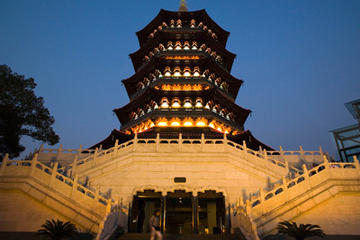
It was still raining that evening when we returned to West Lake for Memories of Hangzou, a state-of-the-art extravaganza designed for the 2016 G20 summit by the team responsible for the opening ceremonies of the 2008 Summer Olympics.

I was absolutely awed by the show, which was spectacular even in the pouring rain. On the far shore of the lake a larger-than-life full moon rose over a brilliantly-lit pavilion. As its reflection shone back from the surface of the lake, I was reminded of our guide’s description of the 33 September moons. By the light of the giant moon, at least a hundred identically costumed dancers appeared, seeming to walk on water as they swayed and spun across a stage submerged a few centimetres below the surface of the lake. While a live string orchestra played, accompanied by a piano which had been rolled out over the water, a host of dancers performed against a backdrop of multicoloured laser beams which cast ever-changing patterns onto a background of dancing fountains.

The highlight of the evening was the dance of the Butterfly Lovers. I watched two dancers skim across the water dwarfed by the shining light display behind them. A brilliant kaleidoscopic rainbow morphed into a giant multi-colored fan. Then, just as in the story, the rain ceased as the fan morphed into a myriad of iridescent butterflies

This delightful performance was followed by the grand finale, a stirring rendition of Beethoven’s Ode to Joy. Nothing could have provided a more fitting tribute to the undying love of Zhu Yingtai and Liang Shinbo, or a better ending to our time in Hangzou.

If You Go:

Sanitation

Tap water is not safe. Always drink and clean your teeth with bottled water.

Toilets are “squat” style. If this is a problem, you will have to find a handicapped toilet. These might be indicated with the international handicapped symbol although one I used was labeled with a handwritten sign that said “for maimed persons only!”

Bring your own toilet paper and hand sanitizer.


Hangzhou Cultural Day Tour with Authentic Hangzhou Lunch

Transportation

Hangzou is a popular tourist destination with direct flights from Shanghai and Beijing and a high speed train connection from Shanghai.

Documentation

You will need a Chinese visa. Consult your travel agent or local Chinese embassy or consulate before your visit.

China is primarily a cash economy, so you should obtain a supply of Chinese Yuan (also known as RMB) before your trip. Tipping is neither customary nor expected.


Hangzhou Cultural Tour Including Leifeng Pagoda, China National Silk Museum and Qinghefang Cultural Street

About the author:

Lesley Hebert is Simon Fraser University graduate. Retired from teaching English as a second language in the classroom, she now teaches ESL via Skype, and writes on-line articles which reflect a lively, inquiring mind and a love of travel, history and culture. Read more of Lesley’s articles at www.infobarrel.com/Users/HLesley

Photos credits:

Mandarin ducks © Francis C. Franklin / CC-BY-SA-3.0 / CC BY-SA

Monument to Liang Shanbo and Zhu Yingtai near the Tombe di Giulietta by Andrijko Z. / CC BY-SA 


Tagged With: China travel, Hangzhou, Liang Shinbo and Zhu Yingtai Filed Under: Asia Travel

Silken Yarns: The Fabric of China’s History

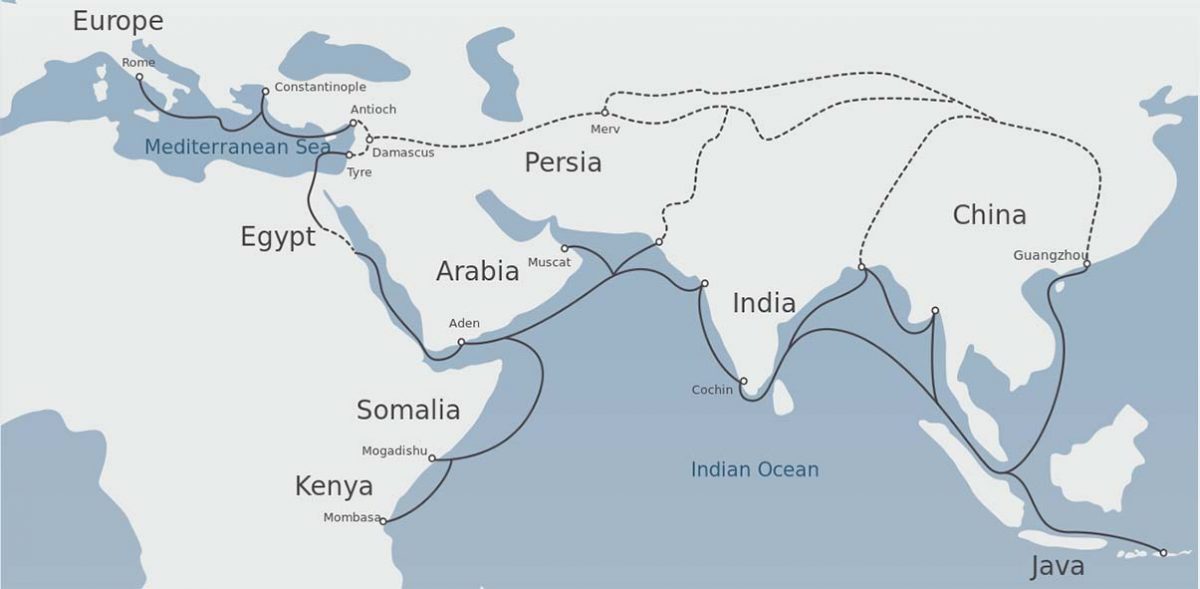
map of Silk Road route

by Leslie Hebert

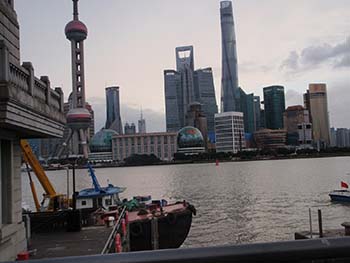
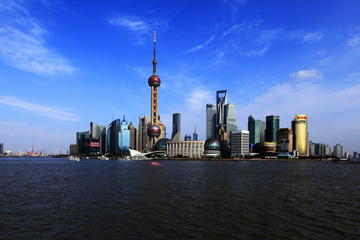
Shanghai harborI am on the Bund in the heart of Shanghai. Behind me are European-style neo-classical buildings erected at the beginning of the twentieth century to house international banks and trading companies. In front of me glistening office towers keep watch over barges that plough through the brown waters of the Huangpu River. On the far bank is a forest of giant skyscrapers. The twisted, corkscrew shape of the world’s second tallest tower, the 632 meter high Shanghai Tower, dwarfs the “bottle-opener” top of the neighboring Shanghai World Financial Center, the world’s sixth tallest building at a mere 492 meters in height.

Shanghai, a mega city of 24 million, has thrived on trade for over 2,000 years, since the origins of the ancient Silk Road. Earlier that day in the Shanghai Museum I had seen a fascinating hoard of Silk Road coins donated by a wealthy private collector. I stared at coins of shining gold and darkened silver. I gazed at coins inscribed with Chinese, Indian and Arabic script. I wondered at the stern faces of unknown rulers from long forgotten empires in central Asia and the Middle East, and noticed how bareheaded, beardless faces with long, straight noses contrasted with hook-nosed faces bearing long, intricately curled beards.

If one of those faces could talk it might tell of its travels along a vast trade route which united Asia, the Indian subcontinent, Russia and Europe to the west with Korea, Japan and Indonesia to the east. It might spin a yarn about how traveling overland from Europe and by ship across the Mediterranean to legendary ports such as Constantinople or Antioch. There, the coin bearing its image may have purchased valuable products from China or exotic spices from Indonesia which had traversed the high mountain kingdoms of Tibet and Nepal to the great Persian Empire and beyond.

The Silk Road enabled China to imported western products such as honey, grapes, wool, glassware and powerful Bactrian war horses bred by descendants of Alexander the Great’s army. In return, the Middle Kingdom exported tea, porcelain, spices, ivory, rice, paper, gunpowder and, of course, the shining fabric for which the trade route was named.

China maintained its silk monopoly for hundreds of years by jealously guarding the secrets of silk production. Revealing the source of silk was a crime punishable by death. Of course, it is now no longer a secret that silk is produced by silkworms or, more accurately, the caterpillar of the silk moth, Bombyx mori.

From Shanghai our tour took us to Souzhou, a city at the heart of the ancient Silk Road. At a local factory, I learned about the life cycle of the silk moth. When the caterpillars hatch they are as thin as a piece of thread and about a quarter of a centimeter in length, but grow rapidly, multiplying their weight 10,000 times in their short lives . Within a month, by the time they are ready to spin their cocoons, they are obese, greyish-white monsters which I estimated to be about six centimeters in length and almost as big around.

factory machine making silkIn the factory, amid the deafening metallic clatter of rusty machinery, I watched a worker with a tired, drawn face carefully unwind silk from egg-shaped cocoons which shimmered with a pearly luminescence. Each cocoon can yield up to 1800 meters of continuous fiber so thin that it is virtually invisible. The cocoons, boiled to kill the pupae inside, lay soaking in a trough of water, arranged in groups of eight because it takes the fine fibers from eight cocoons to produce one single silk thread.

To feed the spinning machine, the worker’s deft fingers moved from one group of cocoons to another, drawing thread from cottony soft bundles as needed and discarding pupae corpses into a plastic bucket at her feet. The machine drew up the white thread, winding it onto spools which continued along the production line to be dyed elsewhere and then woven into fabric, perhaps for clothing, bedding or parachutes.

Silk thread is also used for Suzhou’s famous embroidery, the ancient art of “painting” with silk thread which has been passed down from master to apprentice for over 2,000 years. After leaving the din of the factory, it was a relief to enter the quiet of a brightly lit atelier where I watched master embroiderers at work. I watched in amazement as a skilled artisan worked freehand to create a shining silver koi which looked like a living, breathing fish leaping joyously into the air. This work-in-progress, our tour guide told us, would probably take three years to complete, and when finished would have been sewn over three times.

I was not surprised to learn that a master of this painstaking craft serves a twenty year apprenticeship, and also that it is incredibly hard on the eyes. Because the ladies need to work in bright, natural daylight, they only work five hours a day. In addition, they can only work for as long as their eyesight holds out. In the days before eyeglasses, I realized, their careers must have been short indeed.

From the workshop, I threaded my way through the showroom to admire incredibly detailed creations which glowed with magical, living beauty. On the wall was a Mona Lisa with flesh tones so subtle that I could not tell it was stitched until I was a foot away. Elsewhere, forest and garden scenes portrayed leaves in multiple shades of green and brilliantly colored flowers, all intricately marbled with complex networks of veins. Silver white cranes posed in a glowing green bamboo forest spreading feathers on which virtually every barb of every feather seemed visible. No wonder the prices of these masterpieces start at $US80,000.

In the center of the showroom, crimson and white koi swam across transparent fabric stretched onto a wooden frame. When I walked around the frame I realized there were no knots or loose threads on the back. In fact, there was no right or wrong side because back and front were virtually identical. Elsewhere in the showroom I saw an even more impressive example of double-sided embroidery, a work with different images on front and back. On one side a lion roared ferociously, its glowing golden face covered with realistic-looking, individually sewn hairs. On other side an emerald-eyed tiger returned my gaze. How on earth, I wondered, was this even possible?

Lingering GardenBlessed with abundant water, Suzhou is called the Venice of China because of its many canals. The world’s oldest and longest canal is the remarkable 1780 km Grand Canal which flows northward through Suzhou to Beijing, enabling the great merchant families of Suzhou to become wealthy by shipping silk to Beijing. Much of the private wealth of Suzhou was used to create a dizzying number of beautiful classical Chinese gardens, nine of which are UNESCO World Heritage listed sites.

One of these gardens, the aptly named Lingering Garden, was the next stop on our itinerary. As soon as I entered the garden I was transported away from the hubbub of city life to an oasis of peace. Vases, lying cornucopia-like on their sides, poured cascades of gold and pink chrysanthemum blossoms onto the calm surface of a small lake.

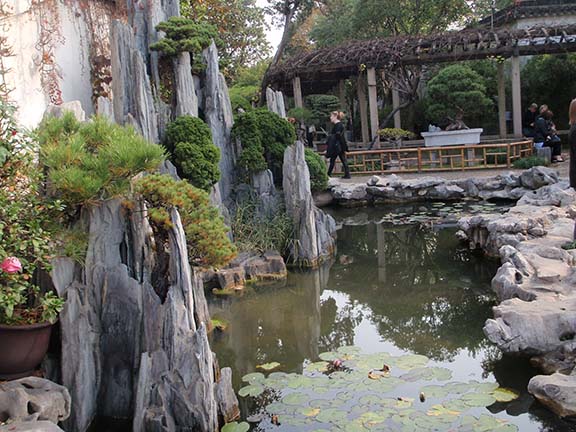
fountain in Lingering GardenAs I wandered from courtyard to courtyard, I become lost in a maze of water and stone. Sparing no expense, the merchant who owned this garden had created a mythical landscape of pavilions, lakes and mountains. Fantastically shaped and perforated limestone rocks dredged from the bed of a faraway lake had been stood on end like twisted megaliths to create miniature artificial mountains. Moss and trees grew on their slopes, and water-lily dotted moats flowed at their feet.

The merchant who created the Lingering Garden was able to run a profitable business thanks to a trade route which had linked east and west since ancient times. It is believed that trade between the Chinese and the ancient Greeks, who called China Seres meaning Land of Silk, began in 200 BC or earlier. It is therefore not surprising that this great trade route carried not only commercial goods but also culture and ideas, and helped to spread religions such as Buddhism, Christianity, and Islam throughout the known world.

I was unexpectedly reminded of this cultural legacy on my last day in China when my husband and I wandered out of our Beijing hotel looking for dinner. We chose an obviously popular restaurant that was filled with smiling customers. We found a table and pored over the pictorial menu lying there, disappointed that there was no sweet and sour pork, or any other pork dishes for that matter. Then I noticed the waiter’s white crocheted cap and realized that he was Muslim and this was a halal restaurant. So, instead of eating pork that evening, we enjoyed the incredible gastronomic experience of fragrant stir-fried lamb with cumin, a delicious and enduring testimony to cultural transmission along the great trading network known as the Silk Road.

 If You Go:


Private Day Tour: Suzhou Gardens and Silk Museum from Shanghai Including Lunch

Documentation

You will need to obtain a Visa to enter China before your visit.

Getting There

Shanghai’s main international airport is Hudong. Guided day trips to Suzhou are available from Shanghai. You can also take a domestic flight to Suzhou from Shanghai’s Hongqiao airport. Other recommended activities in Suzhou, in addition to garden tours, include water tours of the city’s historical waterside districts, especially a boat ride along the Grand Canal.

Money

China is a primarily cash economy, so you should obtain enough Chinese Yuan (also known as RMB) before your trip.

Tipping is not customary nor expected.

Sanitation

Tap water is not safe, so you should always drink and clean your teeth with the bottled water provided by your hotel.

Toilets are “squat” style. If this is a problem, you might have to search for a handicapped toilet. These are generally, but not always, indicated with the international handicapped symbol, (One I used was labeled with a handwritten sign that said “for maimed persons only”!).

Bring your own toilet paper and hand sanitizer.


Cultural Shanghai Day Tour: Shanghai Museum, Yu Garden, the Old Town Bazaars and Huangpu River Cruise

About the author:

Lesley Hebert is a graduate of Simon Fraser University. Now retired from teaching English as a second language in the classroom, she teaches ESL to international students via Skype. She also writes on-line articles which reflect a lively, inquiring mind and a love of travel, language, history and culture. Read more of Lesley’s articles at www.infobarrel.com/Users/HLesley.

Silk Road map graphic by Belsky licensed under the Creative Commons Attribution-Share Alike 3.0 Unported license.

Photographs by Lesley Hebert

Tagged With: China travel, shanghai tours, silk road Filed Under: Asia Travel

China: The Alleys of Old Beijing

rickshaw in Beijing

by Leslie Hebert 

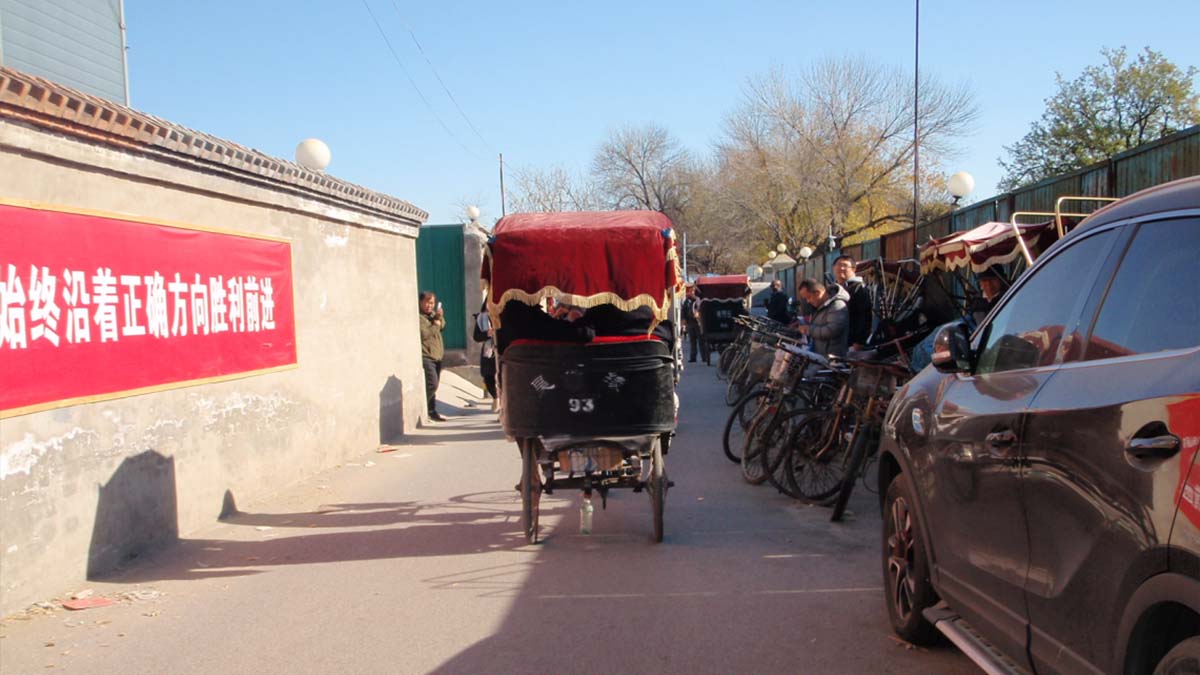
The young rickshaw driver in the bright blue jacket bore down on the pedals of his bike to get us moving. My husband and I, definitely not small people, were squeezed tightly into the seat of a small carriage behind the bike. Bundled in a threadbare black and red plaid blanket, we squirmed uncomfortably in our narrow conveyance. I calculated the burden of our combined weight, thinking that perhaps our driver was not going to be strong enough to move us, but he made one final push and we began to roll forward.

Push, groan, squeak.

The ancient bike creaked and moaned as its driver huffed and puffed, his breath making dragon-like clouds of steam in the cold November air. The icy wind whistled down the narrow street, I buried my hands in the blanket for warmth, and we followed a long line of red-canopied rickshaws through the narrow alleys of the Hutong District in old Beijing.

rickshwsLocal residents smiled in amusement and waved at the parade of foreigners passing by as the rickshaw convoy picked up a surprising amount of speed. We sped through the alleys, narrowly missing scooters and taxis coming from the opposite direction. Above my head, completely out of context, I was astonished to see a shipping container hanging in the air. Being from the port city of Vancouver, I am used to seeing containers sitting on barges, at the dockside, or behind trucks on the highway, but I had never seen one on top of a residential building. Yet here, in this overcrowded district of one of the world’s largest, most populous cities, one had been creatively converted into a second floor apartment.

Hutong noodle houseThe rickshaws brought us to our lunch destination, a noodle house in the home of a local resident. The tour group, all 30 of us, filed through a tiny kitchen, where freshly cut vegetables lay ready for stir frying, and crowded into a small living room to squat on low stools, elbow to elbow, ten to a table. There was little warmth in the house, but the combined heat of thirty crammed bodies and the heat of the green tea our hostess served were a comforting relief from the cold outside.

Plates of food arrived and we happily shared noodles, bean sprouts, summer squash, chicken legs and delicious fried peanuts. I relaxed. Warmth flowed through my body and down into my fingers, and I leaned comfortably back against the flaking, whitewashed wall behind me to savour more hot tea. Then just as I got comfortably warm the guide abruptly announced it was time to go, and I was reminded that we were on a tight tour schedule

As I headed back out into the chill November air the hostess and cook, who were standing in the kitchen to see us off, grabbed me and started laughingly swatting whitewash from the back of my black coat. Smiling and nodding, I extricated myself as politely as possible and caught up with the group making its way back to the rickshaws.

Our next stop was a traditional courtyard house, built to accommodate the many members of a traditional extended family. This was a large sprawling house, a maze which seemed to contain at least three courtyards each surrounded by long, low buildings containing various storage, sleeping and common rooms.
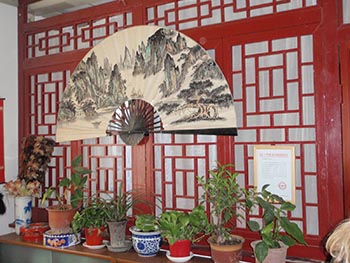
The owner of the house was a piece of living history, a genial, round-faced 99 year-old who stood in the open doorway of one of the rooms waving us in. I smiled and greeted him with a polite “ni hao” but, being completely deaf, he smiled and nodded vacantly and beckoned to the next person. I walked out across the chill of the courtyard and escaped from the freezing wind once more by squishing into the main living room with the rest of the group. I sank down into the warm embrace of a low, soft couch placed against the wall. Someone perched on the arm of the couch, people sat on rows of rickety folding chairs lined up in front of the couch, and others crowded into the doorway.

Beijing decorationsAgainst a red wooden fretwork on the far wall hung a giant fan. To my left was a floor to ceiling bookcase stuffed with musty old books, and in the centre of the room stood a dark wooden coffee table covered with piles of photo albums and a miscellany of old black and white photographs.

The guide passed some of the photos around and told us that the old man who now lived in the house with his son and grandson had made his fortune in the 1930s, midway between the fall of the Ching dynasty and the rise of Chairman Mao. With his new-found wealth he had bought the house we were sitting in for three one-kilogram bricks of gold.

One of the faded photo passed around showed two young girls and two small boys standing in front of the house. They were dressed in traditional Chinese clothing. The girls had long braids, and wore quilted jackets with pretty floral patterns. Each of the four children stood in a different pose, as if caught in an instant between bouts of energetic play. In the second photo, four older children stood sternly at attention, all sporting identical short haircuts and identically dressed in peaked caps and thin denim “Mao suits”, the uniform of the Cultural Revolution.

Chairman Mao began the Cultural Revolution in the 1960s by removing all his political opposition. In 1966 he shut down the schools and many of the now idle students joined units of the Red Guard, a paramilitary organization that persecuted the elderly and intellectuals, and battled for power with other Guard units. By the fall of 1967 anarchy loomed in many cities and the economy was failing. After lengthy power struggles between various factions, China achieved stability once more, but the economic and human cost of the Cultural Revolution had been high. Millions were imprisoned, many were tortured or had their property seized, and 1.5 million were killed.

“Look at these children,” said the guide. “They are smiling and mischievous. They are normal, happy human beings. Now look at these same children a few years later, how sad and serious they are. Before, they were individuals. They all dressed differently and wore bright colours. Now they are soldiers of Mao. They are all dressed the same. See how sad they look!”
“Life under Mao,” he added, “was 28 years of hell.”

Members of the tour group began to fire questions at him.

“So why is Mao still honoured?”

“Why is his picture displayed?”

“Why is he still portrayed on the money?”

“Isn’t China still Communist?”

He explained that the People’s Republic had evolved into a mixed economy, part socialist, part capitalist, but that Mao was still honoured as the founder of the current system and because the current administration was part of his legacy.

Yes, indeed. In the new China I had seen clear evidence of capitalist activity such as private banks, luxury hotels and fast food franchises like KFC and Starbucks. But I also sensed a tense undercurrent. I had seen security everywhere, sometimes unobtrusive videocam surveillance and sometimes more obvious groups of police officers, and there were unbelievably thorough security checks at every national monument.

According to the guide, the house we were sitting in was worth 40 million dollars in the new capitalist economy, a tidy profit on a long ago investment of 3 kilos of gold, and a nice legacy to be shared or perhaps fought over by the owner’s six sons. Sadly, the guide informed us, this old house would probably be torn down and replaced by an apartment block or office tower.

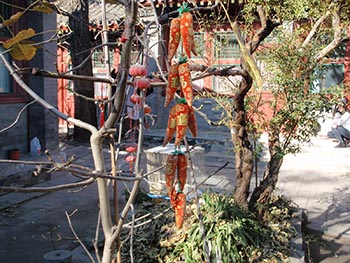
Chinese decorLeaving the cosiness of the living room for the chill air outside, I crossed the uneven surface of the courtyard past bare fruit trees and the remains of the summer vegetable garden. Two gourds clung to life on the branches of a dying vine and a string of artificial chili peppers made from shiny red and gold fabric hung from a bare branch like an enormous yet bizarre Christmas decoration.

Out in the alley the rickshaws with their gold fringed red canopies and cramped seats were lined up waiting to return us to the warm spacious luxury of the tour coach taking to the airport.

As we sped back through the Hutong District, I sat rubbing warmth back into my chilled fingers, anticipating the short flight south, and looking forward to the milder climate of Shanghai.

If You Go:

I recommend going to Beijing in the spring or early fall. It was surprisingly cold in November and can also be unbearably hot in summer.

Although the Hutong tour was part of our tour itinerary, independent travellers can book a similar tour through their hotel. Rickshaw, group and private walking tours are available. They vary in length from 4 to 8 hours and prices range from $US 49 to $US 69. You can read more information at www.tour-beijing.com/hutong/#.Wh9eODD_q1s

About the author:
Lesley Hebert is a graduate of Simon Fraser University. Now retired from teaching English as a second language in the classroom, she teaches ESL to international students via Skype. She also writes on-line articles which reflect a lively, inquiring mind and a love of travel, language, history and culture. Read more of Lesley’s articles.

Photos by Lesley Hebert

Tagged With: Beijing attractions, China travel, Hutong District Filed Under: Asia Travel

China: Chengdu, the Hotpot City

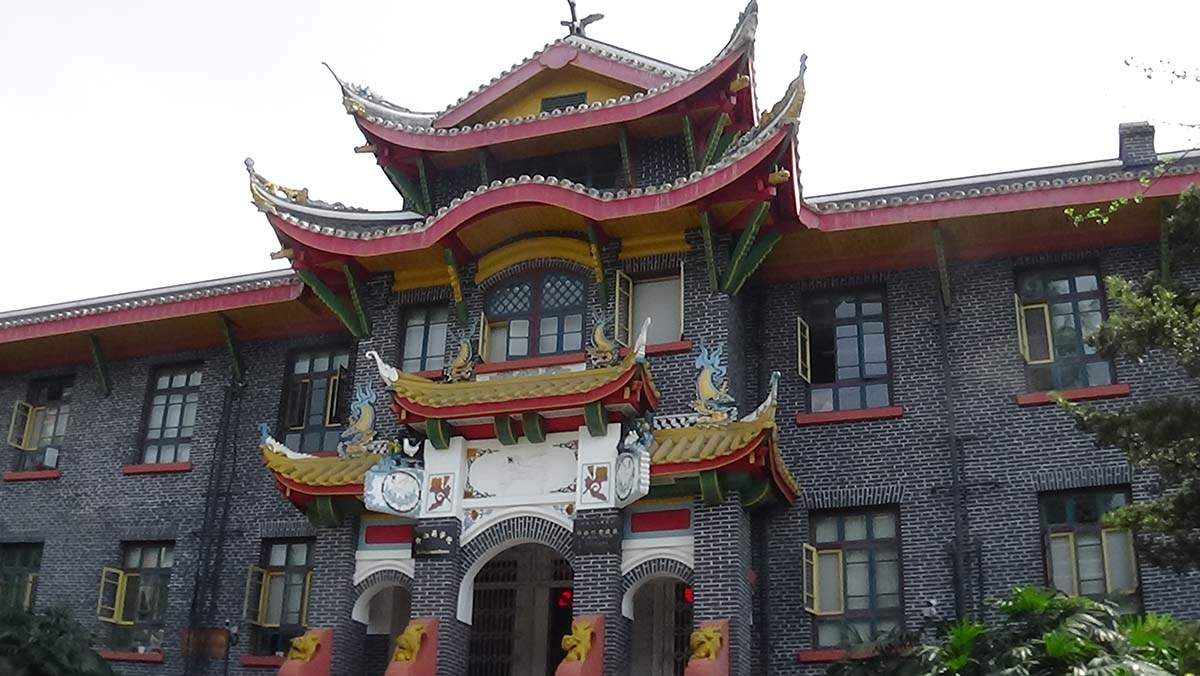
Sichuan University Administration Building
by Daniel Otero 

With a history spanning over 2,317 years. Chengdu is one of the oldest cities in the world. Second to none in China, it’s a place where thousands of foreigners reside from all over the world. It’s one of the Middle Kingdom’s most open cities in this western most portion of the country. In Chengdu everybody is from somewhere else.Chengdu is easy, people are laid back and enjoy the gorgeous cuisine.

When there’s a problem, everything is usually discussed or solved over a hotpot. People come to Chengdu to enjoy this city’s niceness. But more than that, it’s the cosmopolitan feel which this town holds.

In the historical arena, Chengdu, like the whole of Sichuan Province, has a past to be envied.

The city has three must see places: starting with Sichuan University, Dongmen Bridge and Jinli Park. These three are easily accessible for travelers and visitors who love to do walkabouts and use the metro.

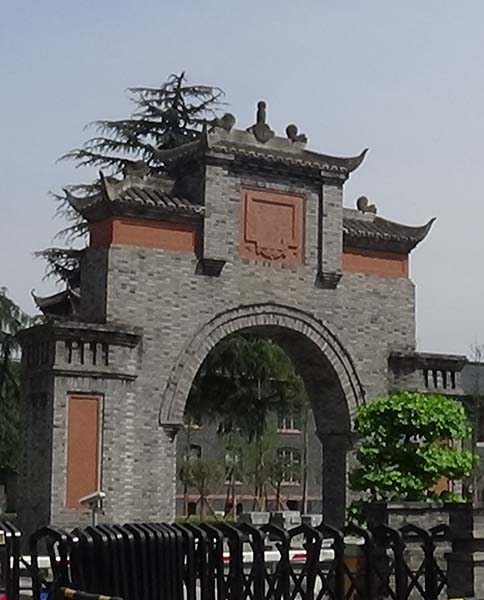
Entrance to Sichuan UniversitySichuan University is one of China’s oldest Universities. It ranks top fifteen in the nation, Coveted for its broad streets and sidewalks shaded with trees you can enjoy the University on a hot summer’s day. The buildings elegantly placed in a beautiful-multicolored style! This School really owes up to its name and reputation. You almost get the feel that you are walking into pagoda-styled temples instead of administration buildings. Sichuan University was established in 1896 and has continued to strive in the progress for excellence. A must see on the Huaxi Campus is the Bell Tower, built in a Gothic fashion in the year 1926. Its special just to sit and look at this lovely-brick layered structure covered in red and intense chalky-white gray.
Sichuan University can be reached easily on metro line 1 for an average of four RMB a single ride (about 20 Canadian cents). The subway stops at Huaxiba Station. Take exit C and walk a little less than 100 meters. The Campus has a classically-built entrance with Chinese characters on the left-hand side. Enjoy a nice 90-minute walk around the Campus.

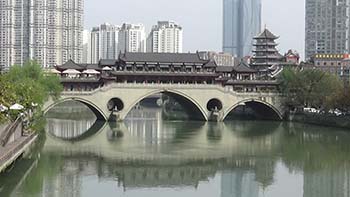
Dongmen bridgeDongmen Bridge is another iconic structure in the city. It’s estimated that the Bridge went as a far back as the 13th Century, during Marco Polo’s visit to China. It was destroyed by a flood in the 1980s and rebuilt to its current-magnificent glory in the year 2003. To learn about Dongmen Bridge’s history, there’s a little museum and pagoda where you can view the Bridge and the Jin River. Take metro line 2 to Dongmen Bridge Station, then exit A, and it’s approximately a three-block walk to the site. Be aware, the official name of the Bridge is Anshun, meaning “peaceful and fluent” however, the locals call it Dongmen.

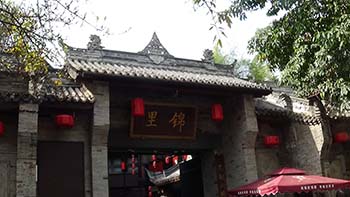
Jinli entranceJinli is another walk, built in the classical Qing Dynasty style, the architecture extends for over 550 meters of shops, bars, local places and eateries. It has beautiful rows of small streets, gardens; flowing with commercial and tourist traffic. However, be aware that Jinli in my opinion is just another tourist trap. A visitor can go just to get their curiosity out of the way and if you’re the typical ‘shopaholic’, you’ll enjoy it. It’s located on metro line 3, the stop is Gaoshenqiao (Gaoshen Bridge) Station.

Enjoy the fair city of Chengdu and if you are coming for a tour, do the above in a lazy-three days. It is well worth the experience, for its history and the memories you will take not only from the camera, but from the heart.

If You Go:

The best time to visit Chengdu is in the spring. Winters can be harsh and summers are extremely hot! Therefore, come when the weather is cooler. If you come to Chengdu, any local or foreigner living in the city will tell you, “You must have a hotpot!”

Further, if you’re Chinese is limited, carry a pocket dictionary in English and Chinese. It’ll be helpful during your visit; however, Chengdu locals are friendly and will try to help you. Also, most of the signs are in Chinese, but they have been translated to English to help you get around.
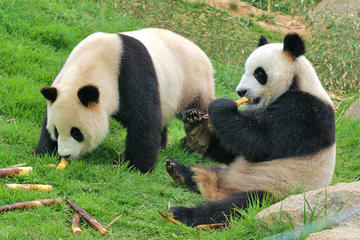

Private Chengdu Impression Day Tour including Chengdu Panda Base

About the author:
Daniel Otero has been living in China for the past eight years. He is currently employed as a full-time teacher and part-time freelance writer. After six years in Nanjing, he transferred to Chengdu to pursue another one of his dreams: to learn more about the western part of China and understand the Sichuan culture.

All photos are by Daniel Otero.

Tagged With: Chengdu attractions, China travel Filed Under: Asia Travel

  • 1
  • 2
  • 3
  • 4
  • Next Page »

MORE TRAVEL STORIES:

Dublin Mixes Guinness, Joyce and the Stone Age

Searching for the Monster of Lake Norman

A Feisty Southern Lady Finds Kinship And Inspiration From Denver Icon Molly Brown

Germany: Cold War Berlin

Real Pirates of the Caribbean

Exploring Bodrum and Fethiye, Turkey

Knocking on Wisconsin’s Door

Why Everest Base Camp Isn’t About Everest at All


SEARCH

DESTINATIONS

  • Africa Travel
  • Antarctica travel
  • Asia Travel
  • Australia travel
  • Caribbean Travel
  • Central America Travel
  • Europe Travel
  • Middle East Travel
  • North America Travel
  • Oceania Travel
  • South America Travel
  • Travel History
  • Travel News
  • UK Travel
  • Uncategorized
  • World Travel
facebook
Best Travel Blogs - OnToplist.com

Copyright © 2026 Cedar Cottage Marketing | About Us | Contact | Privacy Policy | Terms & Conditions | Copyright Notice | Log in