by Renuka Singh
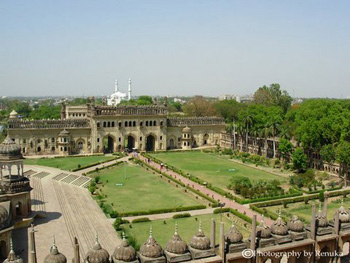
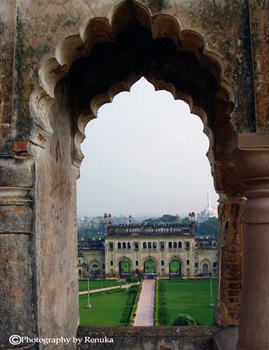 The mystery, the hidden truths and the mystic, all of it put together defines Lucknow’s Bada Imambada. Bhool Bhulayah (a part of the Imambada) is a fascinating labyrinth built by Asaf-ud-Daula (Nawab of Lucknow) in the 17th century. It’s located in the old area of Lucknow. To begin with, it’s one of the most underrated historical sites in the world!
When I visited it as a kid, it obviously intrigued me to the core! However, as I grew up and visited it again, I was awed more with the ‘uniqueness’ that seemed to be unfading. In fact, it grows to be more charming as the years pass along.
The thrill that the Imambada exudes is something to take back home. Your guide gives insights about the building – how it’s built, what material was used, why it’s built in such a fashion – each and every detail about the monument. In the meantime, you travel back in time, feel its aura and marvel at the wonder that it was, and still is!
The fear and fun of getting lost
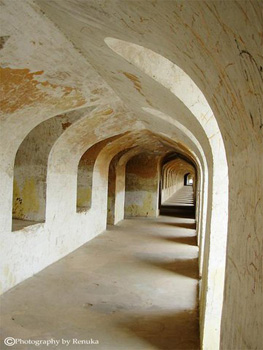 It is not a regular monument with exquisite beauty to appreciate – it is way ahead of that. From its walls, windows to the rooftop, everything has a story and purpose. Nothing is ordinary. As the name suggests, it’s a labyrinth, where you may get lost! Yes, it is true. There are four sets of identical staircases in four different directions to confuse you; however, one of them leads you to the top of the Imambada. Unless you are with a guide, you cannot figure out the right way on your own!
Dark narrow subway connected to Agra
The passages inside the labyrinth are absolutely dark, which adds to the enigmatic quality of the atmosphere. Your guide lights the way with a matchstick, while you follow him. There’s also a significant subway, which was used by the British soldiers to escape to Agra. It is blocked now and tourists are allowed to see it from a distance.
Hush…Walls can hear you!
Imambada’s walls are constructed in a way that nothing can be discussed in secrecy. The king could hear even the slightest of whispers across the palace. To make you experience that, your guide leaves you at one end and talks to you from afar – the magic is that you can converse softly and yet hear everything clearly!


Key to a treasure
Something that amazed me the most is the five-story ‘royal bath’ building, which has three stories permanently under water! Your guide instructs you not to bend too much. However, you can throw a stone and see it go down to the very depth of water.
Another interesting fact about the ‘royal bath’ is that there’s a key dropped into the water. It’s a key to a significant treasure and it still remains there, beyond anybody’s reach!
The sad part is that the state government has closed down many portions of the site, which could interest tourists. I hope the government takes steps for this distinctive historical site’s conservation.
Private City Tour Full Day in Lucknow
If You Go:
Watch this YouTube video about Bada Imambara
Weaves of Lucknow Private Tour Including Home-Cooked Lunch
Lucknow Culinary Walk with Food Tastings
About the author:
Renuka is a writer, photographer and now a blogger. She has been part of media and the publishing industry for the past four years now. Traveling is a passion for her. She looks forward to traveling across the world and writing about all her experiences. See her website at: renuka-voyagerforlife.com/
Photo credits:
All photographs are by Renuka Singh.
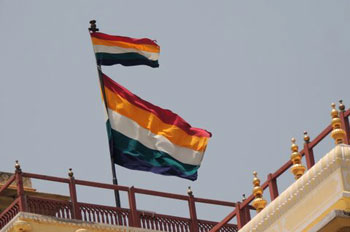
 While the flag drew attention thanks to its colourful nature, it was something else, which intrigued me – the presence of a smaller flag bearing the same colours above it.
 And so it remained for the next century and a half. In 1699, Raja Jai Singh II came to power at the death of his father. He was then just a 11 year old boy, but he came to be known as one of the most enlightened rulers of 18th century India. In addition to performing his duties as a warrior king, Raja Jai Singh also managed to find time to pursue his many interests, chief among which were mathematics and astronomy. He was regarded as a reputed astronomer, and he is most remembered for building the astronomical observatories known as ‘Jantar Mantars’. Above all, he was a farsighted ruler, who planned and built the beautiful city of Jaipur, which bears his name.
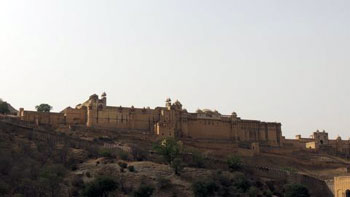 At the time Jai Singh came to power, the Mughal ruler at the helm of the Indian Empire was Aurangzeb. The young king so impressed the Emperor that he was awarded the title ‘Sawai’. The word literally means ‘one and a quarter’, and the title meant that the king was a quarter above everyone else. Raja Jai Singh was the first to be awarded this title, and his descendents were allowed to use the same. It was then that the flag of the Kachwahas gained the additional flag – a quarter the size of the original flag, showing the same pattern and colours, it flew above the flag, proclaiming that it was the flag of the Sawai Maharajas – a quarter greater!!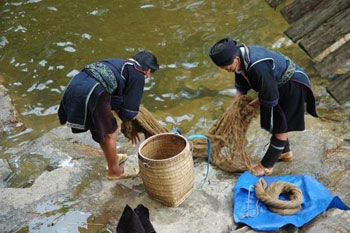
 My friends and I arrived in Sapa at 6am. We gathered our luggage, hoping to catch the morning market. Our friend, May, was waiting for us at the train station. He would be the tour guide for our trip. May is a teacher from Ha Noi, the capital of Vietnam. He had moved to Sapa to teach the children here seven years ago. He was among many other city dwellers who came to Sapa to volunteer and then fell in love with this little town. We would take a cab to Ta Phin village where we would live with a family of the locals for three days.
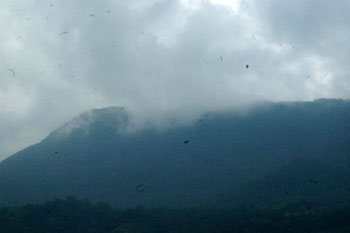 At about noon, the fog subsided. We took a walk around the village. At a playground near where we stayed, there was a swing that was at least 4 times taller that the swings I normally see. You are not supposed to sit on the swing. You have to stand on a small piece of bamboo on the swing and let it swing for at least half a circle back and forth. It must have been at least 10 metres.We had to stand on two long bamboo trees and walk as if the bamboo trees were our feet. Of course we all fell. None took more than two steps successfully. Yet all the children there could do it, they did it very well, swinging in the air every round!
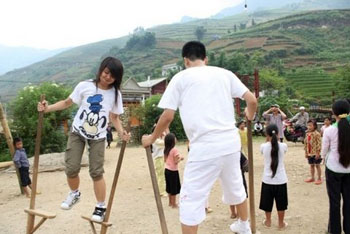 In Sapa, people have no Internet connection and no telephones at home. Their only social meetng place is at the morning market. Once a week, people come down to the valley from different mountains, bringing along their best products and hoping to exchange for something they lack. People walk instead of driving cars or riding motorcycles. They hardly travel out of the vicinity of their homes except for important occasions. The morning markets have become such precious opportunities for people to meet that it has been known more popularly as the “love market”. Local girls and guys in this central meet-up take the opportunity to express their affection for each other. Girls and guys are shy to show too much intimacy in public, so they express their love through songs. It is said that the water drank from the mountain sweetens the voice of local girls. Through their voice, you will feel the tears, the joys, the tenderness and the passion these lovers give to each other.

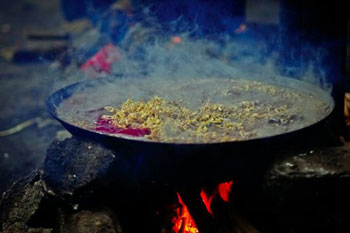 On the second day, May took us to a Sapa restaurant. In this restaurant, all customers sat on the floor and gathered around a long bamboo table. Eight of us were served a large hot pot called “Thang Co”. The pot was so large that it looked like a mini bath tub to me. It smelled like Chinese medicine and we were told that this pot was made from one whole big horse, not excluding any part at all. The recipe of this horse steam boat is said to be very good for men. It was served with a vase of wine. It looked exactly like a large vase and was as tall as me sitting up. It had holes for us to put in the straws. We were supposed to use the straws and drink right from the vase/ bottle of wine. The alcohol was very strong and had a mild taste of rice.
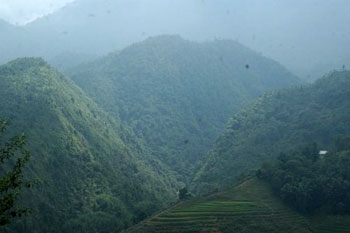
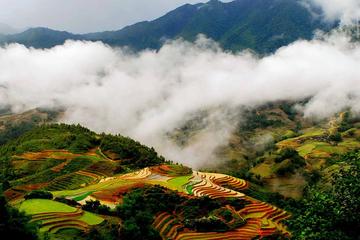
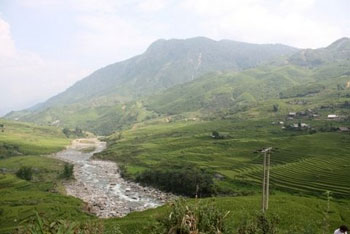 The scenery in Sapa is beautiful. Trees stand side by side with a background of mountains and hills. A river flows in the middle of the village. The water is so pure that we could see rocks of different shapes at its bottom. Once in a while, we pass by a stretchy paddy field. These green mini trees are always swinging as if they are following the dancing tune of the flow of wind in the air.
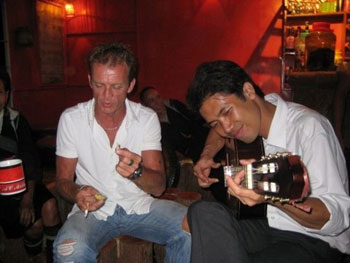 After dinner, we visited a coffee house. The house was made of wood. It was small and looked beautiful among the vastness of natural scenery. People from Sapa are exceptionally friendly. The owner of the coffee house offered to sit with us. Together we sang songs and shared stories of our life. He even asked his son to walk to his neighbour and borrow a guitar for us. After a while, a group of eight became a group of twenty, singing and having fun together. The house become so small for the friendliness that some even stood outside the window and sang along.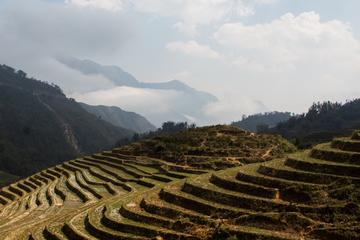


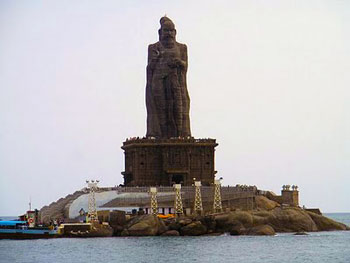
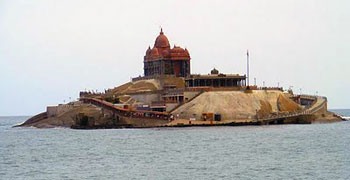
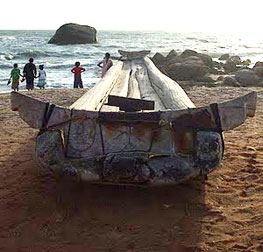 After travelling for about two hours from Thiruvananthapuram, we reached the tip of India. It is a crowded little place with shops and hawkers selling shells of various shapes and sands of different colours. A small boat ride from the mainland took us to the famous Vivekananda rock, where the great philosopher had meditated. There are a lot books about his teachings which can be purchased. Next to this, stands the massive statue of Thiruvalluvar, the Tamil philosopher and poet also known as Valluvar, which has been constructed on another rock. These two are in fact the main tourist destinations in Kanyakumari. On the way to these rocks we saw many rocks protruding out of the sea. It could possibly have been a part of the mainland many ages ago.
 Another interesting attraction at Kanyakumari is the three different colours of the three bodies of water that you can see at one particular location. Shortage of time forced us to leave the same night back to Thiruvananthapuram and miss the next day’s beautiful sunrise. I would definitely like to come back to Kanyakumari some time soon and witness both the visual treats.