The Gathering Point
by Ron Ellege
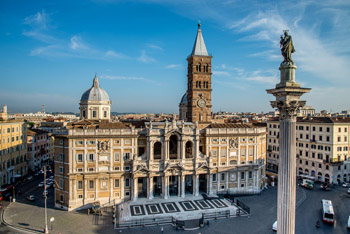
What do dancing young people, senior sojourners, and Pope Francis have in common? The Basilica of Santa Maria Maggiore in Rome, Italy.
Viewing its Activity
When in Rome, our go to hotel is the Mecenata Palace which is a worthy refuge of elegance, located atop Esquiline Hill. The hotel is directly across the street from the Basilica, and our requested room provides an unobstructed view of the church.
 Over the years we have watched groups gather at twilight for the beginning of their pub crawls. Dividing into teams, they guzzle through drinking games in the piazza while preparing for their evening of revelry. We have observed crowds gather for marches, tours, protests and rallies. From blurry eyed, early morning senior groups touring the Basilica, to high-spirited youth groups assembling to sing and dance in the square, this church is a well celebrated gathering point.
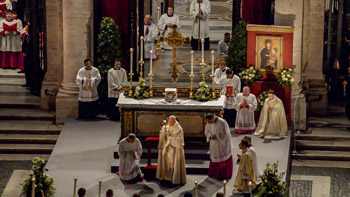
On June 4, 2015, Pope Francis visited Santa Maria Maggiore to celebrate the annual Solemnity of Corpus Christy. The hotel provides an excellent vantage point for this festival held each year on the Basilica steps. My article and pictures of this assembly can be viewed at, “Pope Francis visits Santa Maria Maggiore.”


Importance and Prestige of this Basilica
 There are over 25 churches in Rome dedicated to Mary, Santa Maria Maggiore is the largest of these Marian churches. This Major Papal Basilica is prominent in the tradition and adulation of the Catholic community worldwide. Many travel blogs rate Santa Maria as one of the ten most beautiful churches in Europe. Walks of Italy tour Major Basilicas of Rome, includes it as one of “the three most important churches in Rome.” Frommer’s rates it #3 in its article; “The Best Churches.” If you are a cathedral buff, Italy is not complete until you have experienced this great lady.
Located on Esquiline Hill, one of the ancient “Seven Hills of Rome,” the present Basilica dates back to the fifth century AD. It was constructed between 432 and 440 to celebrate the major output of the 431 Council of Ephesus. In Catholic tradition, the Basilica is an attestation of the importance of the Virgin Mary as the Mother of God.
This Basilica is Rome’s only remaining example of early Christian architecture whose core structure remains as it was 1600 years ago. Step in the door and wonder surrounds you, grand and modest – simple yet extravagant, art which captures the eye is witnessed in every direction. The mosaics found in Santa Maria Maggiore are among the oldest representations of the Virgin Mary in Christian Antiquity. Revelations of human thought, presented through combinations of differing styles of mosaic expression.
The Nave and Triumphal Arch
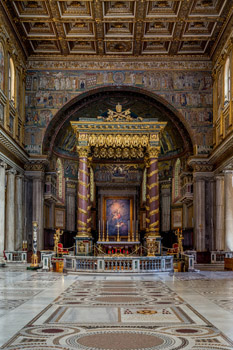 The golden mosaics adorning the triumphal arch date from the 5th century and depict scenes from the early life of Christ and the Virgin Mary. On the left at the top is a panel depicting Christ’s enthronement with a group of angels as his court. Below this is the Epiphany or Adoration of the Magi. The young Christ is seated on a throne with Mary on his right, they are attended by angels.
Panels on the Right side of the triumphal arch include the Presentation in the Temple; the Flight into Egypt; Herod visited by the Magi; the city of Bethlehem. The top center panel displays a circle containing the apocalyptic throne of Christ with the Book of the Seven Seals, flanked by St. Peter and St. Paul.
The Apse
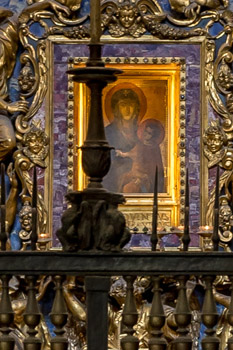
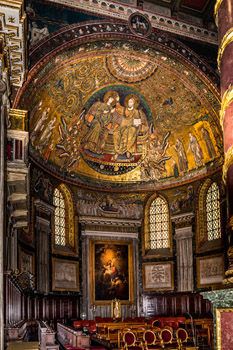 Italian painter and mosaic maker Jacopo Torriti is credited with the adornment of the apse, he crafted it in 1295. The magnificent central work shows the Coronation of the Virgin in which Jesus and Mary are seated on a throne with Jesus placing a jeweled crown on Mary’s head. The sun and moon are under their feet accompanied by a choir of adoring angels. Standing to their left are St. Peter, St. Paul, St. Francis of Assisi and Pope Nicholas IV. Standing on the right is St. John the Baptist, St. John the Evangelist, St. Anthony and Cardinal Colonna. The apse of Santa Maria Maggiore is the most important surviving example of Roman mosaic art from the late middle ages. Descend below the high altar and you enter the burial place of Saint Jerome, this 4th-century saint translated the Bible into the Latin language (the Vulgate). Upstairs, located in the Borghese Chapel, is “Salus Populi Romani,” believed to be the oldest Marian image in Rome. However, on display in this vault is arguably the most important artifact of the Basilica, The Reliquary of the Holy Crib. This crystal shrine, designed by Giuseppe Valadier, is said to contain wood from the Holy Crib of the nativity of Jesus Christ.
The Legend of the Snowfall
 Legend has it that an aristocrat named Giovanni, and his barren wife were without child. Seeking divine intervention they committed to build a church to the Virgin Mary. She appeared to them in a dream on the night of August 4, 352 A.D. and told them that a miracle would show them the location on which they were to build the church. That night, Pope Liberius was troubled by the same dream. On the following morning, he travelled to Esquiline Hill and found it miraculously covered in snow. Liberius then traced an outline for the location of the planned church. Although many feel this legend has little basis in fact, to this day the church on Esquiline Hill is often referred to as Our Lady of the Snow.
 5 Reasons to visit Santa Maria Maggiore
 5 Reasons to visit Santa Maria Maggiore
1. The opulence of its décor.
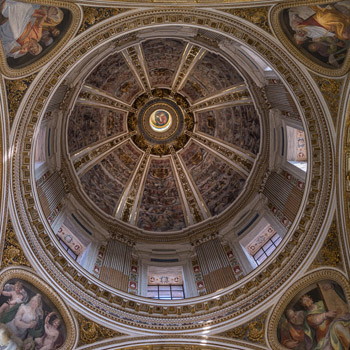
♦ This gem will keep your camera snapping and your eyes twinkling from the grandeur of its marble floors, tapestries, mosaics, statues, tombs and relics.
♦ Its spectacular ceiling is said to be decorated with gold which Columbus transported from the new world.
2. The freedom to move about with little crowding
♦ Check the schedule for special occasions and visit any other time.
♦ Only on rare occasions is this venue crowded.
3. Proximity and ease of access
♦ A four block walk from the main train station and Termini Underground.
♦ The city bus stop is on the corner of the piazza
♦ A scheduled stop for all Hop On Hop Off tours
♦ Only a ten minute walk from the Colosseum.
4. It’s FREE! There is no cost of admission
♦ Stay as long as you want, return as often as you please.
5. Its prominence and status among Rome’s churches
♦ Santa Maria Maggiore is one of the Seven Pilgrim Churches of Rome
♦ It stands among the four patriarchal basilicas
Maria Maggiore is listed as a “Top 10 Attraction” and “Must See Venue” in most major guide books, including Rick Steves’.


If You Go:


Expect to spend several hours in this grand Basilica and by all means, bring a camera. Guided tours can be arranged through many of the local or world-wide guide services such as Frommer’s or Walks of Italy. Self-guided tours, complete with audio guides are available in the vestibule. For information visit their official website.
Hours of Operation: The Santa Maria Maggiore Basilica is open Monday through Saturday from 7:00 to 19:00 (in winter until 18:00), on Sundays and holidays from 9:30 to 12:00. Free admission.
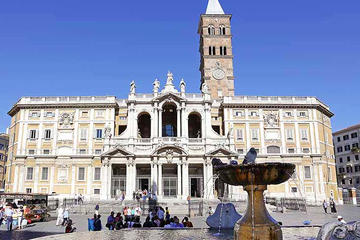
How to get there: get off at the stop termini of the underground; take via Cavour southwest 4 blocks, the Basilica is on your left. The Basilica is located on the square with the same name – Piazza di Santa Maria Maggiore also referred to as Piazza dell’Esquilino.
Address: Piazza di S. Maria Maggiore, 42, 00100 Roma RM, Italy
Phone: +39 06 6988 6800
Churches of Rome Small-Group Tour: Maria Maggiore, Santa Pudenziana, and Basilica di Santa Prassede
About the author:
Ron Elledge is a Freelance Writer/Photographer. You can see some of his work at these sites:
www.writtenfyi.com (blog)
www.ronelledgeexposed.com (photography)
ron@writtenfyi.com (email)
All photos are by Ron Elledge.
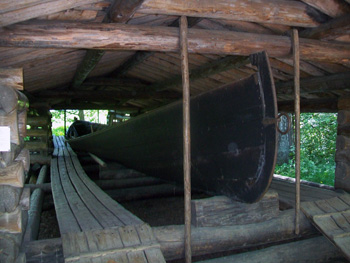
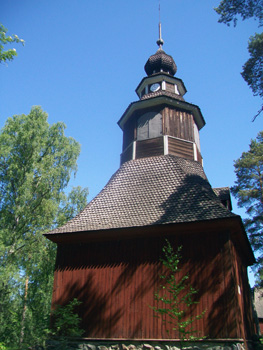
 It was another delightful walk through historic buildings, on a bright sunny day similar to the one I’d enjoyed in Tallinn. Whereas the open-air museum in Tallinn felt like a circular closed community, this one in Helsinki was like a village on an old road, with most of the houses lining the path.

 However, it was still early, so I continued walking to the west, emerging onto a main road, that I think was the E12. There was more greenery over the other side, and water too; looking like one of Helsinki’s many fjords. After walking through a little more forest I reached a bridge, not knowing the island on the other side was Seurasaari, or that it housed the open-air museum. I walked around to the right at first, with the museum starting just to the left.
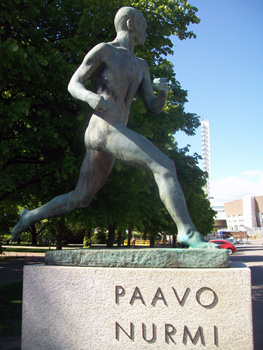
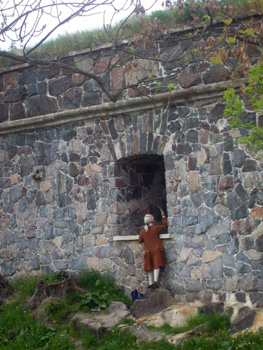 After leaving there, the tarmac path turned to dusty earth, and I encountered four steps with an information placard to their side. It said that one of Finland’s most famous politicians, Urho Kekkonen (1900-1986), used to test himself into old age by jumping up them from a standing start when he walked around the island. Before Kekkonen became a five-time Prime-Minister and five-time President of Finland, he was the Finnish high-jump champion in 1924. He lived at the entrance to the island for thirty years during and after his presidency, and Tamminiemi villa has now been made into a museum. I tried jumping up the steps, after postponing the first time when people appeared out of the forest, and reached the second highest.
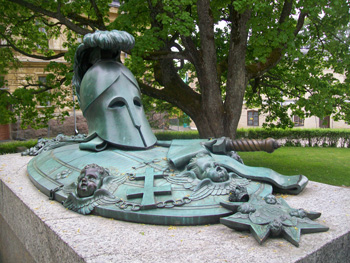
 The population of Helsinki was only 600 in 1710, after plague killed twice as many of its previous population. The city had been founded in 1550 by King Gustav Vasa of Sweden. Sweden and Russia fought over the territory several times during the 18th century, with Russia taking charge of the whole territory in 1809.
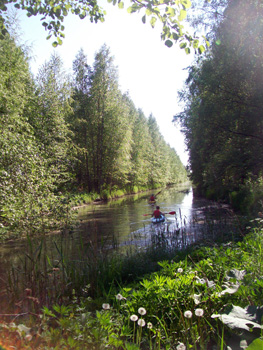
 On my first full day I walked out of the city to the north-east for a couple of hours, reaching the Viikki nature reserve without much difficulty. It’s a beautiful big wetlands area, with many bridges linking islands and the mainland. Finland is the most forested country in Europe, with seventy per-cent of land covered, and takes its environmentalism seriously. According to the Finnish Environment Institute, Finland’s forested land is actually growing, and so are the populations of large mammals, such as bears, wolves, wolverines and lynx.
 You can reach the Unesco World Heritage Site’s main island on a municipal ferry boat, and then, like the open-air museum on Seurasaari, you just pay for individual displays and rooms. There are still many people living on the Suomenlinna islands, and it is also a popular conference centre. I walked through the village to the embattlements and cannons looking out at the Baltic Sea. It was the only cloudy day of my time in Helsinki, and quite chilly; making it easier to imagine the hardship of winter war there during the 18th century.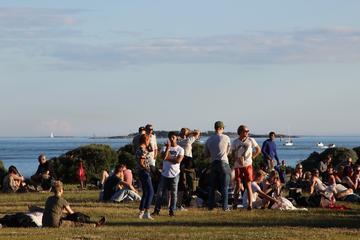
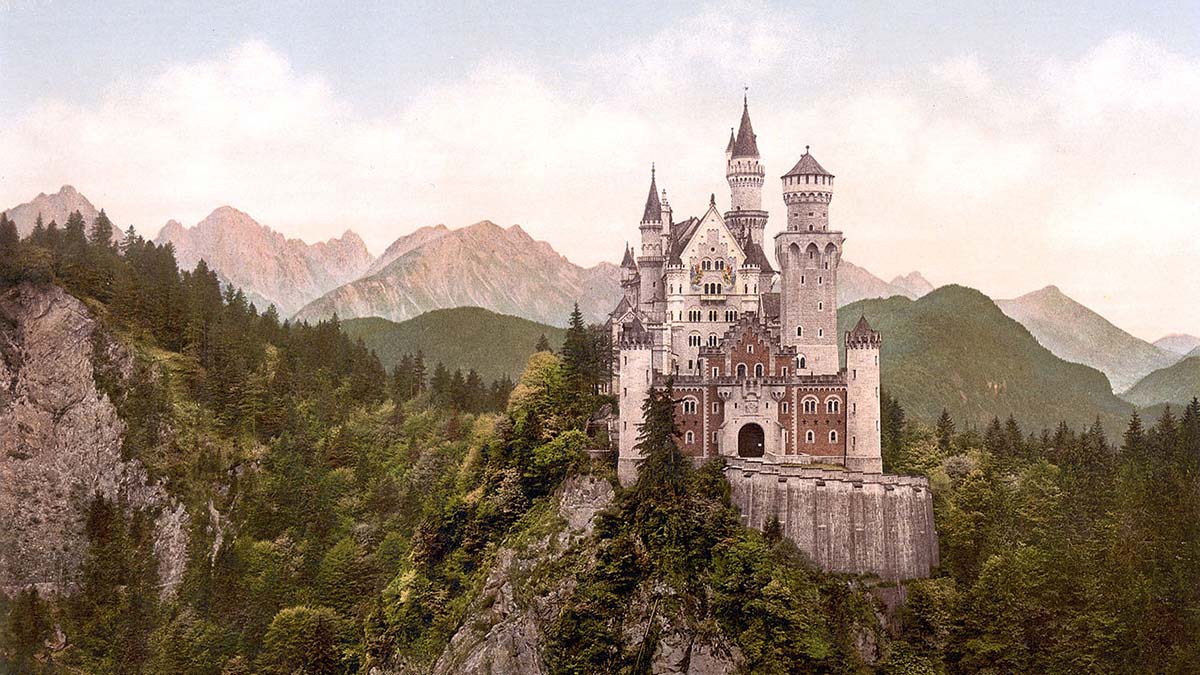
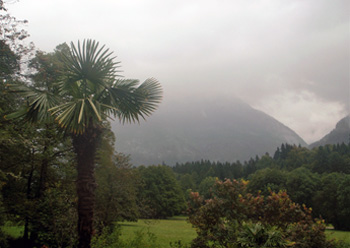 I had come to Bavaria for the Oberammergau Passion Play. On the day of my unanticipated detour I woke up planning to explore the picturesque village where I was staying. But dark grey clouds hid the peaks of the nearby mountains threatening rain, and it was obviously a day to head indoors.

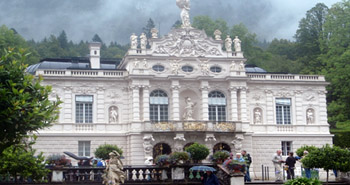 As it turned out, the tour was absolutely captivating. I had accidentally discovered Schloss Linderhof, built by Bavaria’s “mad” King Ludwig II between 1869 and 1886. I had never heard of King Ludwig but discovered that he was one of history’s great eccentrics. He was a fascinating study in contrasts. He was a shy and sensitive soul trained from birth for a very public royal role. He was a petty vassal owing allegiance to Prussia who, because he was born on the day Louis IX was canonized, felt an almost mystical connection to the great French House of Bourbon. He was also a modern constitutional monarch with very limited powers who wished he could have been one of history’s absolute rulers.
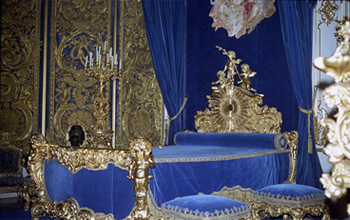 The tour started in the vestibule, an elegant space decorated with rose marble pillars which pays tribute to the Sun King. Our guide then led us through a series of rooms, each more opulent than the last, to Ludwig’s massive bedroom where he slept in an enormous four poster bed covered in royal blue, gold-trimmed velvet.
 The grand finale of the house tour was the Hall of Mirrors. Have you ever looked into a mirror that contains a reflection of a mirror behind you, and you see reflections of reflections going off into infinity? Imagine that phenomenon magnified a hundredfold in a room where every inch of wall seems to show a dizzying, mind-blowing reflection of a myriad other reflections. Now combine this vision with another tidbit of information I found on the Linderhof website. King Ludwig slept all day and stayed up all night. This room would therefore have likely been his nocturnal retreat. At night, illuminated by hundreds of flickering candles reflected over and over again in the room’s hundreds of mirrors, it would have presented a truly hypnotic vision. What dreams, I wondered, did the Moon King play out in this magical room?
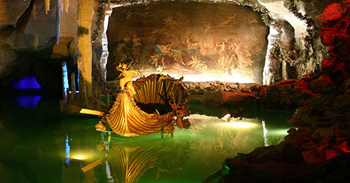 For King Ludwig, the Venus Grotto was much more than a simple escape from the rain. It was a total escape from reality. The King, it seems, was quite a patron of the arts. He commissioned private theatrical and musical performances in his very own theatre. He was also a great admirer and major sponsor of the great composer Richard Wagner, and the Venus Grotto was a man-made cave, a private retreat where Ludwig could enjoy Wagner’s music in blissful solitude.
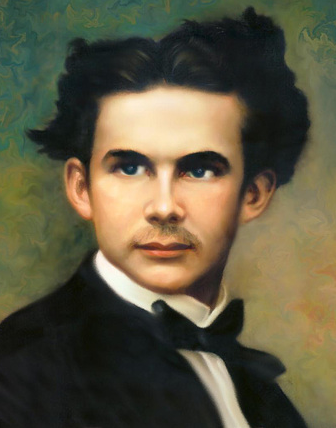 Marie-Antoinette was guillotined for the excesses of Bourbon royalty. Ludwig’s end, although more prosaic, was also a consequence of his profligate lifestyle. It also holds a tantalizing element of mystery.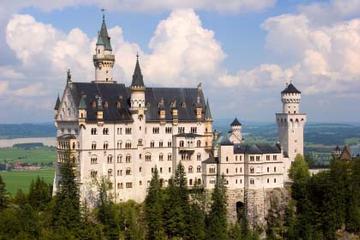

 Photo Credits: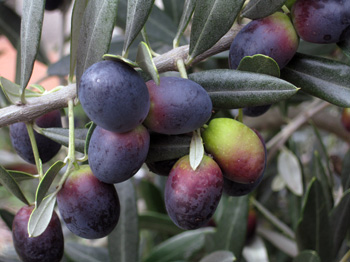
 To create the highest quality olive oil, it is vital to time the harvest perfectly. Unlike in other regions, olives in Tuscany are picked before they are ready to fall from the tree. This produces a fruity and lean extra virgin olive oil, even if the yield is lower. The ideal time to harvest is when the unripe green olives begin to mature and turn black, which is when they contain the highest quality oil. However, this is easier said than done since even olives on the same tree may mature at different rates. The flavours of green and black olives vary but both are needed to make good quality oil. The initial oil is generally more bitter but olives that fall when too ripe make poorer quality oil. Plucked directly from the tree, the fruit is extremely bitter and almost inedible.
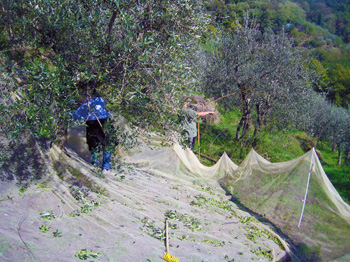
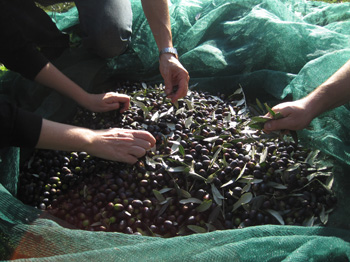 The ideal olive picking team consists of as many family members and friends as possible to share the labour. Firstly, huge nets are spread out around the trunk of a tree. Naturally, most olive groves are far from flat so the nets often have to be propped up by sticks or branches pruned from the trees to prevent the precious harvest from rolling away.
 After as many olives as possible have been plucked, they are rolled to the centre of the nets, and then “cleaned” by removing most of the leaves and any twigs or debris by hand before being transferred into sacks or crates. The equipment is then all moved to the next tree and the process is started all over again.
 Although very light, the nets are rather cumbersome to move around and harvesters often have to stand in uncomfortable positions on steep slopes. It is essential to gather the harvest before the weather becomes too cold, so work needs to take place, rain or shine. It is also essential not to crush the olives that have fallen onto the nets so you need to be careful where you put your feet.
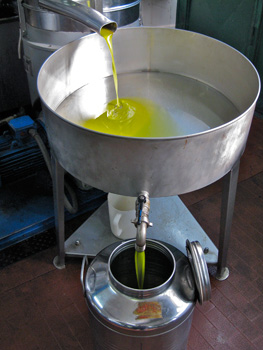
 La Raccolta is a wonderful way of bringing together people of all ages and uniting them under the olive branch. Hard work is usually sustained with a hearty picnic in the fields washed down with a little vino. The delicate process from tree to bottle is painstaking and labour intensive but well worth the effort for the first taste of delicious freshly pressed “liquid gold.”

 About the author:
 I had been sad to leave Latvia, especially without seeing most of its sights, but it felt good to be back on the road, travelling overland in foreign countries. There was beautiful nature the whole journey between Riga and Parnu, Estonia’s ‘summer capital’ on its south-west coast. I could see white-sand beaches through pine trees either side of the border crossing at Ikla. Inland, large birds of prey glided through the sky, while migrating storks foraged on the ground.

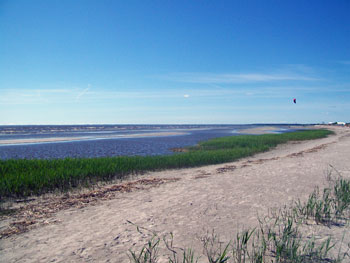 I knew it wasn’t Parnu and Estonia’s fault, it was between the sun and me; and there had been nothing at all between us. I had been lying on one edge of our world, with only space between me and our star. I’m sure there’s a moral there, like Icarus flying too close to the sun in Greek mythology; taking something that looks and feels nice for granted, and not considering the dangers you have been taught are there. If I was a sun worshipper, rather than an admirer, I could have interpreted it either as a message to find another religion, or that the sun was angry with me, and I should worship it more earnestly.
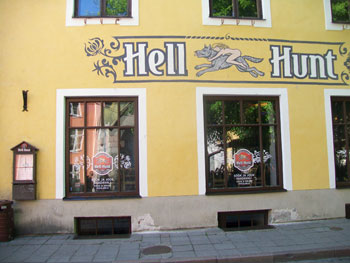 I thought a good way to remember Tallinn’s spelling is to separate it into ‘tall inn’; especially as one of its most famous inns has the very memorable name of Hell Hunt. The picture on the inn’s exterior is also distinctive: a wolf carrying a woman. I was relieved to read that the Estonian meaning is Gentle Wolf, and nothing to do with the hell and hunt of English language.
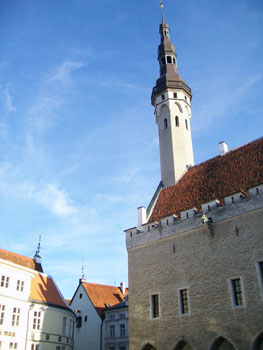 I thought the towering Freedom Monument and terracotta tower might just be isolated landmarks until I saw the colossal Aleksander Nevsky Cathedral halfway up the winding cobbled hill leading north-west. Behind that was Toompea Castle, pink-walled home of the Estonian parliament; designed by Russia’s Catherine the Great in the 18th century. On its southern side there are gardens and an impressive view over western Tallinn and the Baltic Sea. A short walk down the hill eastwards and I happened upon the Kohtu viewing platform for an even better view. That’s because the Old Town was directly below, with about 800 years of architectural history stretching out nearly as far as the busy port; to the east, moderately high skyscrapers signalled the downtown business and retail district.

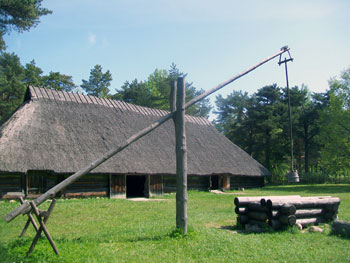 On the last day I walked an hour out to Rocca al Mare for its seaside forest park; by road most of the way, then cycle track into the wood. It was only when I reached a fence cutting me off from more thick woodland, and I looked at my map and guide book, that I realised it was the Open Air Museum. I decided to enter, even though I hadn’t seen any of the buildings inside. I made the decision only from the trees I could see, and a feeling of serenity.
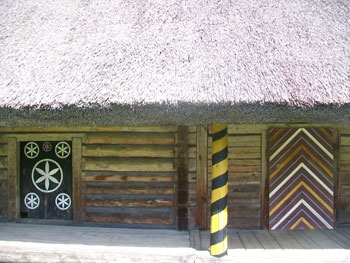 Some of the buildings from 19th century Muhu Island had distinctive painted exteriors, reminiscent of native designs from other continents. There was also a house from the south-east of Estonia, where there is still a community of Russian Orthodox immigrants. There are worked fields, gardens and livestock; churches, windmills and wells; and an art exhibition in one house. Trees lined the paths, and most of the museum grounds are still forested. As I said in the introduction, the birdsong was constant, and sounded very uplifting.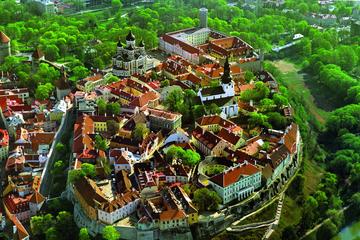
 .
.
 About the author:
