Castello d’Alaro, Spain
by Tal Donahue
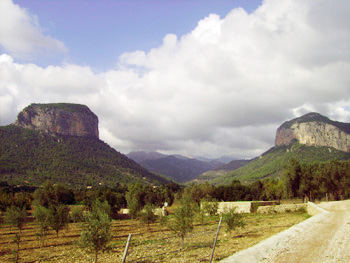
Driving north from Palma on the MA13, towards the Castello d’Alaro, the Tramantuna mountain range instantly alters any preconceptions tourists have of this island of Mallorca. The surrounding rural countryside is frequented, for the most part, only by intrepid cyclists practicing for La Tour and those who have discovered that venturing beyond the South-Western corner of tourist excess, dominated by the urban sprawl of Palma and the package holiday resorts of Magaluf and Palmanova, yields a treasure trove of history and culture. Precipitous mountains loom ahead, forming a limestone spine along the North-West axis of the island, and the craggy peaks hint at the turrets and crenellations which defended these mountaintop strongholds for centuries.
Picturesque villages, like Alaro itself with its charming placa, have early morning markets and bakeries where eager elderly ladies queue and gossip ferociously as they buy their daily bread; with a glance of interest and a hint of mistrust directed at any, presumably lost, tourist buying a a parra. Places like Alaro are, clearly, not a standard port of call for the twenty-somethings who frequent Mallorca. For those that make the journey however, from the central crossroads in the town, a pink sign, used on the island to point to cultural sites, directs to the magnificent, hidden, alluring Castello d’Alaro.
 Seeming to grow out of the craggy mountaintop, the castle has panoramic views of the Bay of Palma, the mountain range and much of the flat Mallorcan hinterland. Starting at the foot of the mountain the walk, which takes you past an agrotourismo hotel, takes around two hours. If you have faith in your driving reflexes and you have a hire car with a relatively good ground clearance you can continue to drive, shortening the walk to about forty-five minutes, and park amongst the goats at the smallholding adjacent to the Es Verger restaurant. Inside, the family are inevitably sat having one meal or another, while the wooden furniture, assorted mismatched objects around the walls (and the local matriarch) emit a faint smoky smell; a mixture of tobacco and the winter fires fuelled by the tonnes of wood piled up around the courtyard all year round. The jangling bells of the goats, which starts echoing down here and follows you all the way up to the castle, are enchanting and, were it not for the refrigerator of cola in the restaurant, you could be in a long-forgotten world of knights, serfs and Saracens.
 From this point, again, you can continue the drive but it’s not advisable. The few vehicles that do brave the stony track are usually taking supplies up to the hostel and ‘bar’ which is located within the 17th century church complex in the castle. Even these must stop at a final way-station where the last few hundred metres up the ancient steps are made with the help of donkeys, who you may see tethered in the shade along the flat ridge beneath the castle. Up here, in the still, warm air, with the craggy parapets looming down like an old eagle waiting to pounce from its precipitous eyrie, it’s easy to understand how this castle was a key defensive centre for both the pre-Islamic inhabitants of Mallorca and the subsequent Muslim and Christian rulers.
The name Alaro comes from the Arabic ‘al-Rum’ meaning Romans or, more accurately, Christians. The Romans themselves came to the island in the 2nd century BC when the naval commander Caecillus Metellus was sent against the pirates who inhabited the Balearics. He founded the two most significant towns of the classical period, Palma and Pollentia (the latter’s ruins, not to be confused with the modern Pollenca, can be visited near to Alcudia on the east coast), with three thousand of his Italian and Spanish veterans who, we can assume, were intended to keep the irascible Mallorcan pirates at bay. The actual threat of these pirates however is questionable. Some sources suggest they were perhaps merely slingers on rafts, while, according to the Roman geographer Strabo, the Greeks knew the islanders as gymnasios or, nudists, perhaps giving an insight into the longevity of Mallorca’s vulgar reputation… Either way, Metellus was rewarded with a triumph for his exploits and assumed the, not altogether modest, name Balearicus – conqueror of the Balearics. Evidence for Roman activity in the island is, though, relatively sparse and the settlements were very much the far-flung outposts of the empire.
When the barbarians laid waste to the Roman Empire, Mallorca was conquered by the Vandals in 534 AD, before the island was taken under the control of the Byzantine, Empire. It was in this period that the first significant defensive walls were built around Palma. For around three hundred years the island would remain, ostensibly, Christian until in the 8th century, a new power from even further East than Byzantium came crashing into the Mediterranean.


In 902 AD Hisham al-Hawlani launched a campaign against the islanders which was chronicled in the Geography of al-Zuhri. He stated that the fortress was inhabited by Rumi – Romans/Christians – and that it served as a refuge to some 15,000 people, holding out for nearly nine years in the face of Hisham’s onslaught. The resistance of the Christians resulted in the castle being named al-Rumi from then on.
Cracks were beginning to develop in al-Andalus, however, and the Andalusis had to contend with the combined threat of the increasingly strong Christians in the North and the aggressively fundamentalist Berbers in North Africa. In 1114 the Catalans and Pisans launched a campaign against Moorish ‘pirates’ on Mallorca while, in 1116 and 1203, the island was conquered by Berber sectarians; first the Almoravids then by the Almohads who invaded from the Maghreb.
Few Islamic period remains can be seen in Mallorca today but it is worth seeking them out as they reflect the cultural effervescence of Andalusi rule. In Palma itself, for example, there are the gardens within the Banys Arabes – Arab Bath-house – one of only examples of Islamic architecture in the city. Located down the Carrer de Serra just north of the Parc de Mar, they still offer retreat from the hustle and bustle of Palma’s markets and thronging streets. The trees and flowers suffuse with the warm sea air and create an intoxicating, semi tropical aroma and, as you walk under the carefully tamed archways of shrubs, small lizards dash overhead, seeking out the insects gorging themselves on the pungent nectar. The remains of the bath house itself are fascinating and it is easy to imagine a Sheikh or Wali taking his ease in the cool shade.
Islamic rule in the Balearics would not last long after the Almohad period and the Christian Reconquista began to gather pace in the 13th century. In 1229, the Catalonian/Aragonese ruler, Jaime I launched a campaign against Mallorca. He landed at San Telmo before routing the Moors at Santa Ponsa. He later recounted that in the aftermath of his siege of Madina Mayurqa (Palma) three thousand men and fifteen thousand women and children sought refuge in the Castello d’Alaro. Again, the castle’s dominant position and strategic importance saw the defenders hold out far longer than expected, until late on in 1231.
 The remaining walls around the castle are still an impressive sight and as you meander up the steps, cut out of the cliff to serve the pilgrims who would later trek to the church in the 17th century, you can feel the history coursing through the stones. Unlike many of the other castles in Mallorca there has been relatively little done to ‘restore’ the walls and what modern work there is tends to be associated with the church buildings which now house the hostel and bar.
Once at the top, passing under the stone gatehouse, turn right and you climb through the trees and across the rough limestone to the church site where there is a telescope looking out over the cliff, back down towards Es Verger and the Bay of Palma. If, however, you turn left, leaving the path taken by the hikers in search of refreshment, you can explore the remains of the castle in relative solitude.
 At the side of the mountaintop opposite to the gatehouse there is a completely sheer drop down to the farms in the valley below where birds swoop in out of their nests in the cliff’s crevices. Apart from them, and the deafening cicadas, it is completely still and you can almost imagine a scene from El Cid playing out on the plains far below. There are few views on the island to rival this and the ruin, unadulterated by heavy handed restorers, has maintained an allure that is unrivalled by the busier historical sites like Palma’s Almudaina and Capdepera. Just as the Banys Arabes offer a retreat from the clamour of modern Palma, Alaro transports you back in time to the age of chivalry, crusades and Andalusi enlightenment.
Thousands of years of Mediterranean history are bound up in this island which has seen empires rise to claim mastery over places like Alaro and crumble back into the sea far below, to be replaced by the strong and the modern. Their legacy is still accessible however, despite the latest conquest by the Easyjet generation. All you need is a good pair of walking sandals, a half-decent map and a pinch adventurous spirit.
Open Air Rustic Dining Experience in Palma de Mallorca
If You Go:
Mallorca is the largest island in the Balearic archipelago, located in the Mediterranean off the south east coast of Spain. It takes about two hours to fly from most UK air ports and is one hour ahead of GMT. There are many budget hotels in the south west resort towns. Native islanders speak a Spanish dialect related to Catalan.
Hotels mainly cater to the package holiday traveller but there are boutique and designer hotels in Palma. Further afield, in the interior the mountains and the north and east coast, there are agrotourismos, which are converted farm houses, self-catering apartments and traditional fincas. Hiring a car is definitely the best way to get around. The bus service is good in the south west and there are trains across the interior and north from Palma to Soller, but to seek out the hidden treasures found in the mountains a car is necessary. Rates are good if you book in advance and the smaller towns, especially in the south west, have independent rental services which often have bargains or negotiable day rates.
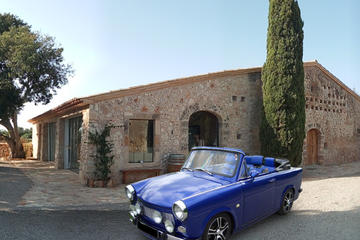
Private Trabant Cabrio Tour in Mallorca Including Wine Tasting
About the author:
Tal studied history and classical civilisation at Roehampton University, London, graduating with 1st before winning an Arts and Humanities Research Council scholarship to study for an MA in Middle Eastern History at SOAS. He graduated with a Distinction in 2014, with a focus on Islam, the history of religion and the Ottoman Empire. Tal is now a junior account executive at international communications consultancy Infinite Spada.
All photos by Tal Donahue:
Castello D’Alaro from a vantage point close to the agrotourismo
The road leading to Castello D’Alaro’s peak
The precipitous road up to Es Verger restaurant
The first gateway into Castello D’Alaro
A section of Castello D’Alaro’s remaining crenellated wall
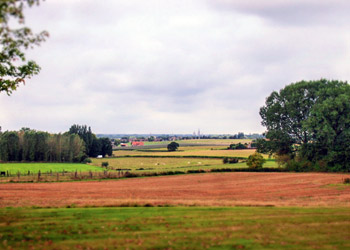
 If you’re ever thinking about visiting Belgium, there are many, many places that are worth visiting. An excellent suggestion would Flanders Fields. The historic area known as Flanders Fields is the part of the province of West Flanders that had the misfortune of being one of the front lines during the First World War.
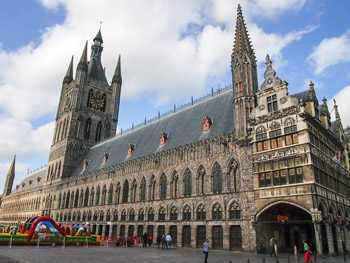
 After the war, Ypres was rebuilt from scratch and nowadays it’s a nearly perfect replica of the pre-war city. Although there is not a single building that is older than a century, the city center looks exactly like the old medieval city that was leveled by mortars. Its beautiful town square, lined with typical narrow Flemish row houses with crow-stepped gables, is dominated by the magnificent Cloth Hall, now the home of the downright fabulous Flanders Fields Museum. This is the place where you should start your visit of Flanders Fields, emerging yourself in the interesting history and unimaginable horrors of the Great War. By being aware of what happened in this region, you’ll look at the following landmarks, which are now set within a peaceful landscape of flat fields and slowly meandering rivers, from a completely different perspective.
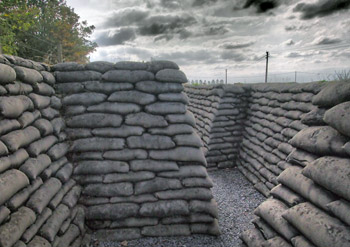
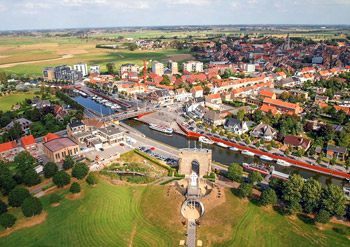 After exploring the Flanders Fields Museum in the morning, head out of the city for a tour of the surrounding area. The Trench of Death is located near the River Yser and the city of Diksmuide. This was by far the most feared part of Belgian front, a part where the Allied and German trenches were only a few dozen steps apart. The trench was feared by all front line soldiers, for being positioned there meant almost certain death. Nowadays, a section of the trench system has been beautifully preserved and is free to visit. The remains can be explored on foot and offer an impression of what life in the trenches must have been like.
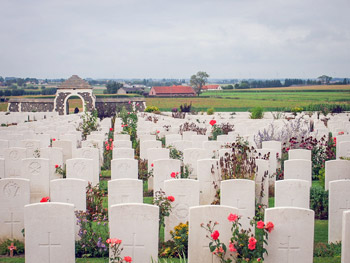 Another nearby highlight is the 84-meter-tall Yser Tower, which is the tallest peace monument in Europe. You can get to the top with an elevator, enjoy great panoramic views of Flanders Fields and head back down the stairway, leading through a museum of war, peace and the emancipation of Flanders.
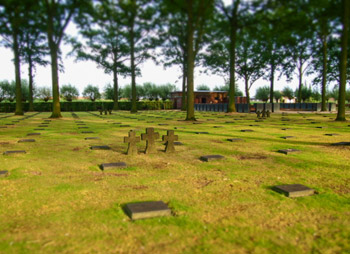 Properly visiting Flanders Fields can’t be done without a visit to a few war cemeteries. The region is home to literally hundreds of those, so you’ll have to make some choices. The most notable cemeteries are the Vladslo Soldatenfriedhof (the resting place of more than 26,000 German soldiers), the Langemark Soldatenfriedhof (the largest German war cemetery, with more than 44,000 soldiers), the iconic British Tyne Cot War Cemetery, and Polygon Wood Cemetery and Buttes New British Cemetery. All of these cemeteries were built near battlefields, making it easy to bury the dead after the battles ceased.
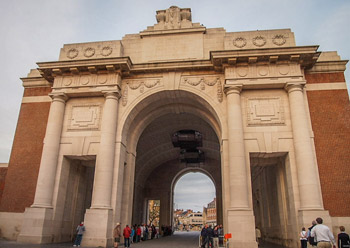 Back in Ypres, you should definitely head to the imposing Menin Gate, where the Last Post ceremony is still held every evening at 8pm sharp. The ceremony has taken place every evening since 1928 in commemoration of the British soldiers who gave their lives for the Belgian people. The huge Menin Gate in itself is a major landmark, a war memorial dedicated to fallen British and Commonwealth soldiers whose bodies were never found. The enormous Hall of Memory contains nearly 55,000 names of missing soldiers, but, as large as it may be, is still too small to contain all names. The rest of the names of missing soldiers are inscribed on the wall that surrounds the British Tyne Cot War Cemetery.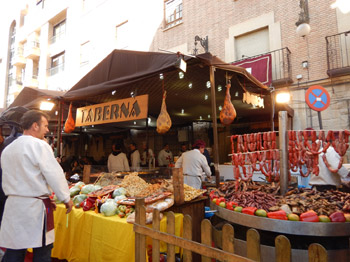
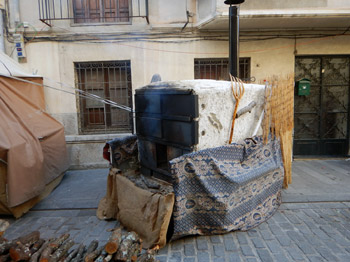
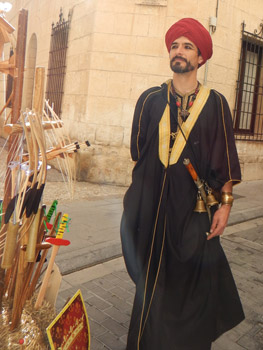 We wander aimlessly around the numerous stalls of artisans, bakers, butchers, fishmongers, drummers, acrobats, camels, ponies and much more scattered throughout the town. Every corner we round, we see new and exciting sites. A troupe of drummers march down a street and stop at the cathedral to put on a show. Knights Templar serve special cakes. Bread is baked on site in ancient wood-fired ovens. Belly dancers greet us on a side street. A camel tender gives rides to children while an ancient merry-go-round and a puppet show, including a dragon, delight the little ones. It is truly a family event with all ages taking in the festivities.

 We stroll aimlessly around the various tents and stalls, tempted by the food for offer until we stop for a relaxing tea and delicious tapas. For dessert we share a bag of warm, freshly made churros sprinkled with sugar. Nibbling on our tasty treats, we wander some more, stopping to watch a sculpture at work and a blacksmith create a sword. Along one avenue is a display of birds of prey with an authentic falconer present. He allows a young boy to put on a glove and hold a falcon on his wrist. The smile never leaves this young man´s face. I particularly like the owls as each one seems to have a personality of its own.


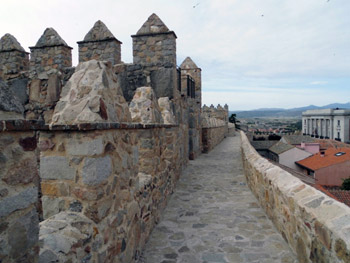
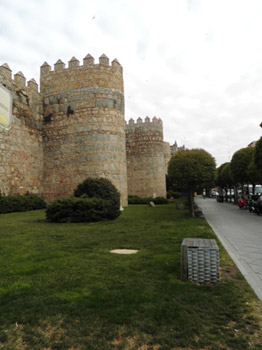
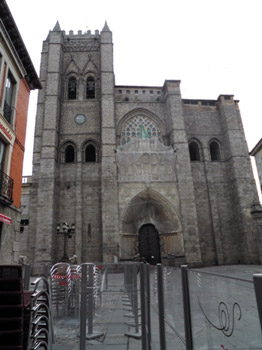 The walls and the iron grey Gothic cathedral are the ‘stones’ and Santa Teresa is the ‘saint’. My incentive to finally make the journey was the fact that this March saw her 500th anniversary. What better reason to travel than to follow in the footsteps of one of the foremost and most proliferate writers of Christian mysticism and the founder of the Discalced Carmelite nuns. An added bonus is the fact that Teresa would also have seen and been able to walk along the walls which encircle the old town of Avila with a perimeter of 2,516 kilometers.
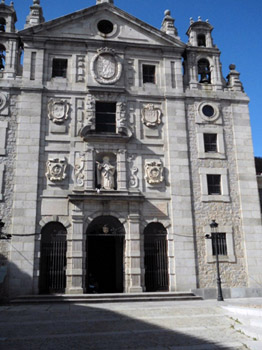 I had chosen a small hotel which was adjacent to one of the gates, so I just dropped my bags and went out to explore. Directly in front of me was Plaza de Santa Teresa with a church bearing her name and a small museum.
 She was then sent to a convent for further education and fell rather ill. During her illnesses which lasted several years, Teresa experienced periods of ecstasy which are reflected in several works of art, depicting the martyrdom of Santa Teresa although these pains and suffering were the result of her contemplation and imagination. She has written extensively about her spiritual experiences which ultimately lead to her teaching of the ascent of the soul in four stages.
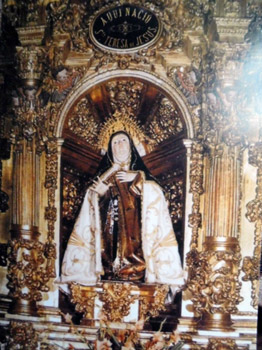 Poverty, serenity, mental prayer and meditation practices are the keystones of Teresa’s writings. She finally entered a Carmelite convent and was appalled to find that the nuns of her times adhered to none of them. Life in a convent in the 16th century was very worldly and she decided to change that and bring the order back to what it was intended to be.
 The month of October is dedicated to a festival of Santa Teresa, with processions , concerts and other festivities. As I found out when walking further into town, sweets form a part of the cult of Santa Teresa. To this day, the nuns produce Yemas de Santa Teresa, a sort of biscuit made from egg yolk and sugar and little chocolate nuns making the yemas are displayed in every patisserie. They make a nice souvenir and gift.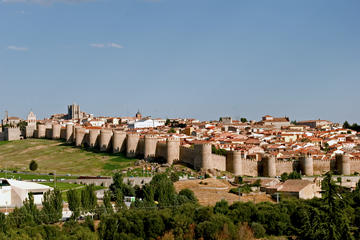
 by Ellen Johnston
 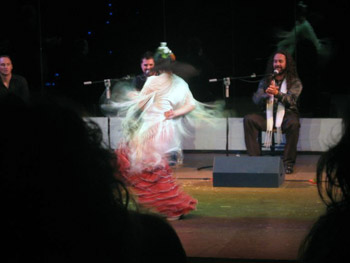 Of course, to say that Granada is the home of Flamenco is a very controversial thing. Seville also claims this title, and competition between the two cities is fierce. But whatever your opinion on the matter, it is undeniable that Flamenco inhabits every nook and cranny of this place, from the street corners where buskers play for spare change, to the smoke-filled caves of Sacromonte (the traditional Gypsy quarter), to the grand stages that draw large tourist crowds.
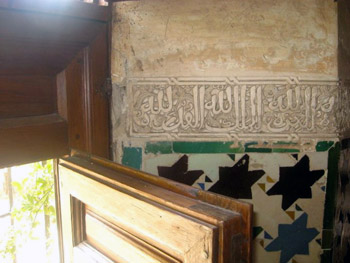
 When García Lorca wrote about his Granada, he was keenly aware of living in a forgotten, lost world, not only inhabited by Gypsies, but also by those who came before. When the Moors ruled Spain, a policy of tolerance called La Convivencia (the Coexistence) led to the creation and preservation of a very multicultural society. While Spanish tradition sees this era as a dark period before the glorious Catholic Reconquest, Lorca felt quite the opposite. For him it was a Golden Age of reason and beauty, lost. However, traces of this world still remain in Granada to this day – in the terraced gardens of the Jewish quarter, in the winding narrow streets of the Albayzín (the Muslim quarter), and in the many churches that were once mosques (and mosques that were once churches) sprinkled throughout the city.
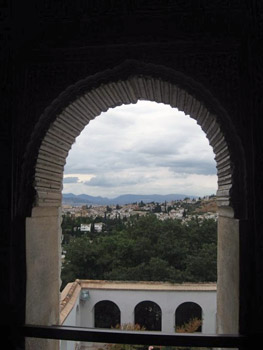
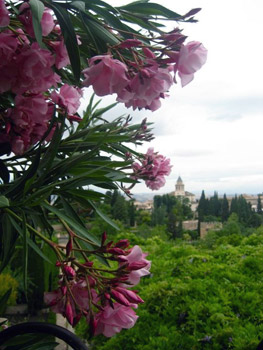 It’s not worth dwelling too much on the Alhambra, as every guide book on Granada mentions it, and it’s an absolute must-see whether you’re following in the footsteps of García Lorca or not. However, it is important to understand that it is one of the greatest examples of medieval Islamic architecture in the world, and that the soul of the city is inherent within its walls: in all that was lost, in all that was built over, and in the mysterious, magical energy that remains, nonetheless. In fact, García Lorca was so moved by the energy of this place that he chose it to be the staging ground for the Concurso de Cante Jondo, a contest of the Deep Song that he helped to organize in 1922. If you visit Granada in June, you can catch a glimpse of this contest’s modern descendant: the International Festival of Music and Dance, which features music concerts, dances and traditional Flamenco events, all on the grounds of the ancient red fortress.

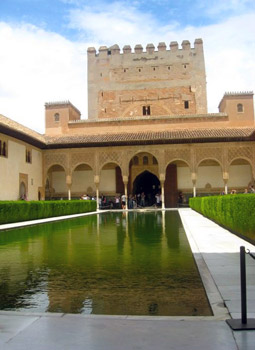 While the Alhambra is the most significant and audacious example of the ancient cultural mix that García Lorca so revered, there are many much smaller, simpler pleasures that tell the same story. Among the lovelier of the city’s customs is the tradition of convent sweets, baked good that are made and sold by cloistered nuns. The recipes are as old as the city itself, influenced by ingredients brought by foreign invaders: almonds, spices and citrus peels, among others. Because the nuns are cloistered, an unusual retail system prevails in order to actually buy these sweets. Upon arrival at a convent (of which there are many sprinkled throughout the city), you are greeted by a buzzer, a price list and a lazy Susan. When you’ve made your order, the lazy Susan spins, revealing tasty treats. An honor system prevails, and you pay the same way, via another spin.