The Bus From Cannes To Grasse
by Glen Cowley
You never know when adventure will poke its nose into everyday life.
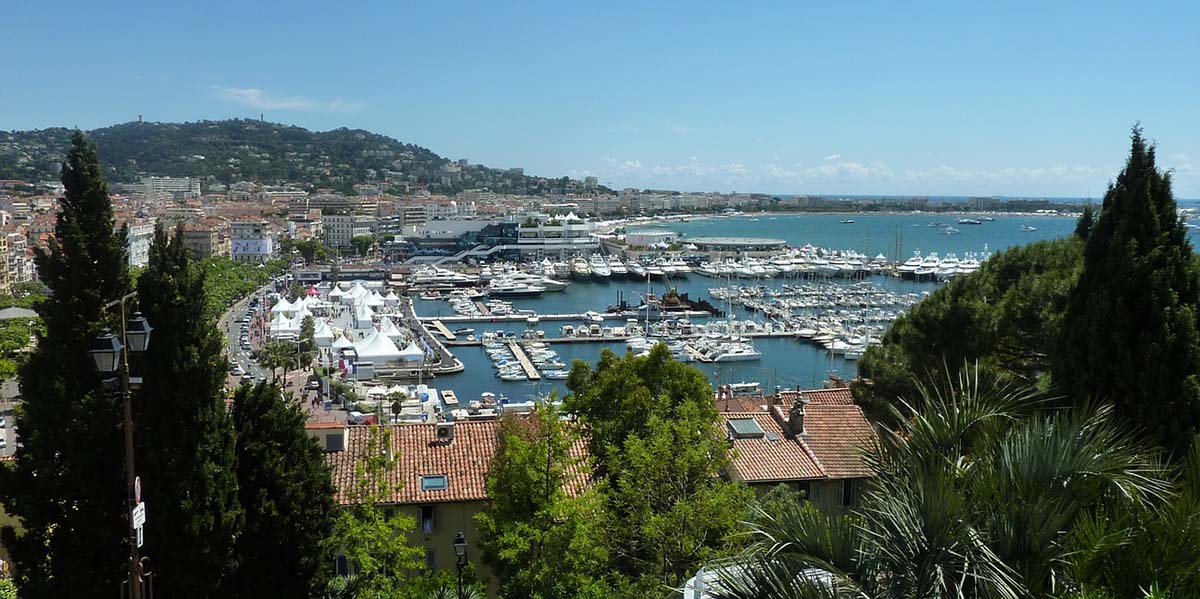
I wondered if Ferrari made buses as our sardine-packed mass of humanity rocked unsteadily within the belly of the beast that is the 600 bus. Snaking up from starry eyed Cannes to Grasse, of perfume fame, past the gourmet renowned medieval town of Mougins, the blue Mediterranean its constant backdrop, our bus was guided expertly amid hurried traffic and round curves by a driver skilled enough to dare the race roads of Monaco. For but one Euro you can fly the road and partake of the of these three unique towns, each of which have carved out its own contemporary identity while keeping one foot in the past. Or one foot on the gas for the 600.
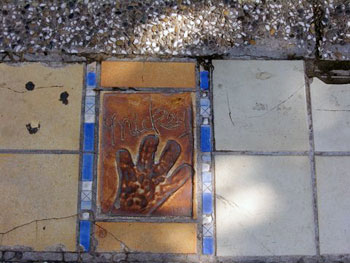 Cannes needs little introduction having achieved such film fame both Mickey Mouse and the Pink Panther themselves have left their hand prints in cement along its coastal promenade. Beach restaurants crowd the sands, taking possession of waterfront for their patrons and leaving but small tailings for the public. From the heights of its old castle can be seen the Cheshire Cat-smiling beach grinning out to sea. A sea filled with yachts to make a mariner drool and a beehive of business. Amid the watercraft run ferries to the nearby Lerin Islands, each isle staking its own claim to fame.
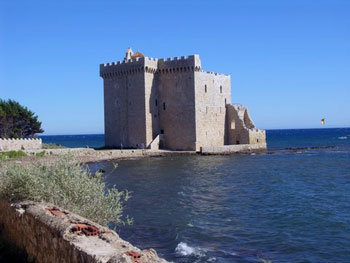 The largest, Ile Ste. Marguerite, holds the fortress, Fort Royal, and prison where the famed Man in the Iron Mask was held. Trails, museums and restaurants abound for the pleasure of tourists. We chose the smaller but no less interesting Ile St. Honorat where Cistercian monks have returned to a monastic life dating back to the 15th century. The church tower, rising high above waving palm trees, is readily visible from the coastal trail and overlooks the older remains of a fortified monastery jutting daringly into the very seas from which marauders came for plunder. The trail is dotted with chapels and legacies of war, though the contemporary peacefulness of the place makes turmoil seem so alien.
And there is the wine. These monks are into it big time. Strolling around the monastic store, of which much is dedicated to wine, I took notice of a bottle priced at only 7.60 Euros. It was a lonely bottle as I found prices climbing steadily until one going for 360 Euros emerged. And these were the ones on display!
Cannes becomes different, a regular sort of town, once you step away from its beach, promenade and hotel row. From the beach it is not far to the train station where the 600 bus begins its daunting climb into the pastoral hills.
Pulling steeply away from the station its sweeps and rolls keep any standees holding on like drunken sailors. Cannes falls away quickly.
 Mougins is, at first, unassuming until you learn the real medieval town is perched above the main road. It is a relatively short but steep climb to the jewel that draws tourists in their numbers. A less frequent bus travels the route if time and your patience permit. Most famed for its highly rated restaurants and the annual week-long Gourmet Festival it is equally appealing for its twisting narrow streets, plazas, galleries and studios. It appears as if the town has grown out of the hill itself as buildings rise and fall like protruding tree roots. The church bell chimed above us and echoed through the streets. Narrow lanes framed camera-ready shots. Life hums here.
The September festival is advertised heavily both locally and country wide. Everything from competitions to cooking classes with famed chefs and classes for everything associated with French cuisine. Talk about ambiance!
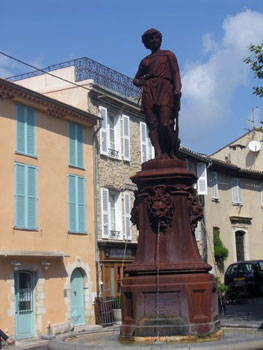
Daring the 600 bus further on its ever upward journey brings you to Grasse. Another Medieval town, atop its rise with a broad horizon wrapped about by the Mediterranean Sea, it abounds, even more than Mougins, with plazas, statues and, most impressively, fountains. If its restaurants are a bit more toned down and its galleries fewer it has its own unique claim to fame. It is perfume country.
Prestigious perfumeries are scattered about town and the surrounding fields are filled with the flora upon which the industry has relied since rising to prominence in the 18th century. Like Mougins it too has its festival, not surprisingly centred around perfume. The Fete du Jasmin at the beginning of August reflects the town’s perfume interests and reputation. It is claimed Grasse produces fully two thirds of France’s natural perfume aromas.


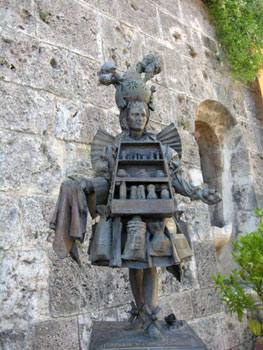 Tagging along with my wife and daughter I had little chance of avoiding perfumeries but more significantly the International Museum of Perfume. Even the limited range of my sniffer was awakened in this three level marvel which seemed to fit into the town like a piece from a jig saw. Everything you wanted to known about perfume is there. History, interactive aroma displays, a world of perfume containers from elegant to humorous and movies had us leaving more than two hours within its walls. When we emerged it was in another part of the town near a bronze statue of a parfumeur and a plaza with a spectacular view over the Mediterranean, incorporating Mougins and Cannes.
It was a good spot to reflect and rest tired feet. Within this view is enough to keep a visitor busied and interested for a weeks worth of touring. There remained grand churches with compelling histories, the waning days of the famed who walked these streets (Edith Piaf, Pablo Picasso), more museums, and simply exploring all the twists and turns of medieval towns.
A long line stretches between the these towns and their past as much as the twisting road and the rumbling 600 joins them in the present. Yet they all remain individual and dynamic; transforming over time and adapting as survival always requires.
And the 600? If you ever get there, enjoy the ride.
Full Day Private Guided Tour from Cannes
If You Go:
The 600 bus to Grasse departs half-hourly from the train station at Cannes which, itself, is only a short walk down to the beach. Medieval Mougins is a healthy, but worthwhile, 10 minute walk up from the 600 bus stop. The bus takes you right into old Grasse, a 40 minute trip from Cannes.
♦ www.bonjourlafrance.com – information on travel (train, car rental, bus and air) and accommodations.
♦ www.virtualtourist.com – gives reviews of experiences in varying locales.
♦ www.lonelyplanet.com – provides specific local information respecting travel, accommodations and meals.
About the author:
Since 1994 Glen Cowley has parlayed his interest in sports, travel and history into both books and articles. The author of two books on hockey and over fifty published article ( including sports, biographies and travel) he continues to explore perspectives in time and place wherever his travels take him. From the varied landscapes of British Columbia to Eastern Canada and the USA, the British Isles, Germany, Switzerland, the Netherlands, Greece and France he has found ample fodder for features.
Photo credits:
Cannes by Hermann Traub from Pixabay
All other photos are by Glen Cowley.
 Sintra, Portugal
 Once I pay for my ticket at the ticket office housed in a trailer, I follow the signs and go through the turnstile. I walk past some workers manning a zip line that allows them to bring up wood planks and other constructions materials from down below for restoration work at the castle. I follow the signs along the path.
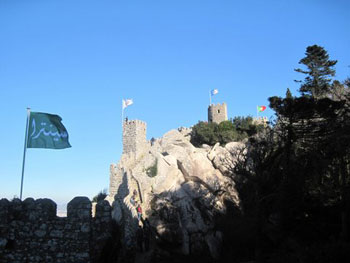
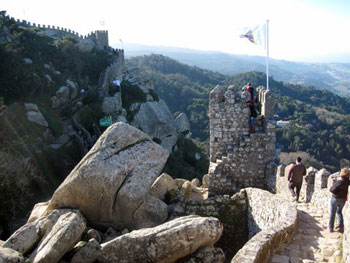 nce I reach the battlements, I can see undulating land disappearing in the distance beyond the stone walls. The Portuguese flag and the Moorish banner flutter in the cool winter breeze. It felt damp and cold in the shade but warm –too warm to wear a jacket- out in the sun. The turrets and keep glowed in the afternoon light, in sharp contrast with the darkness created by the dense vegetation below.
 The Moorish invaders began to build what is now known as the Moorish Castle (Castelo dos Mouros) in the 8th century. Its vantage point at the top of the hill is a perfect defensive position. It’s easy to imagine the sentries marching along the walls, keeping an eye out for the Christian armies. And it is equally easy to picture the hosts of King Afonso VI swarming up the hills in 1093 in a successful attempt to take Sintra from the Moors. The fortress changed hands between Moors and Christians a few times more until Lisbon was conquered by Dom Afonso Henriques (the first king of Portugal) in 1147, when the Moors surrendered the castle to him.
 The Moors were able to withstand siege with fresh water from the springs, which they channeled into the cisterns, with the grain that they stored in the silos and because the castle was impregnable. However, it was impregnable on only three sides. Its Achilles heel is the sloping woods. It’s not difficult to see how Dom Afonso was able to override their defenses and storm the fortress. The chapel of S. Pedro de Canaferrim was added to the castle after the conquest as the parish seat.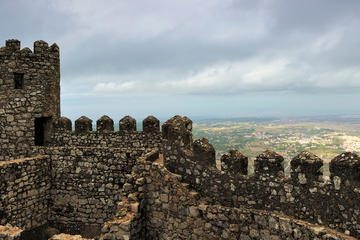
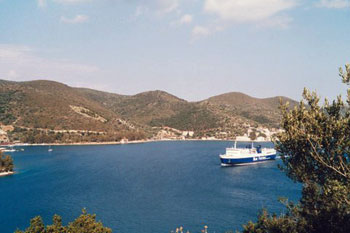
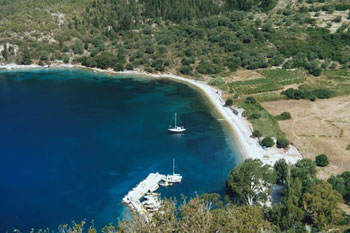 Life on Ithaka is quiet. There is no nightlife and very few buses run between the villages. Consequently, taxi drivers do a brisk business. Of the population of 2500, most are elderly and retired people. Most young people leave, preferring life in mainland cities for school and work. Those who do remain, mix agriculture with tourism, but the season is only for two months. The Ithakans want more tourism, but they hope to attract mainly a mature public who can appreciate the island’s unique history.
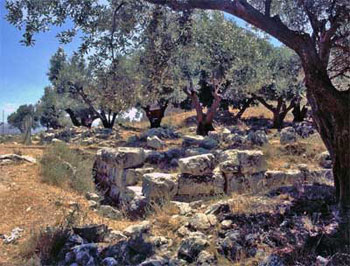
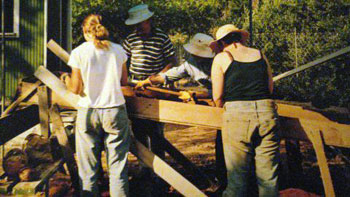 Teams of archaeologists have been digging around the island, looking for evidence of Homer’s Ithaka and Odysseus’ Bronze Age city. I visit the Cave of the Nymphs where a team of American archaeologists and students are busy sifting and sorting through rubble brought up from a ten meter pit. This cave is believed to be the one where Odysseus hid the gifts given to him by the Phaecians when he returned home after his long, arduous voyage. There were originally two caves in two levels, but they have been collapsed by an earthquake. The cave has two entrances, so it fits the description in The Odyssey. Homer says it was a cave dedicated to the Nymphs. The cave has been used as a religious site, so in this way it fits with the Odyssey. These excavations may help identify the location of Homer’s Ithaka.
 Is Ithaka the Homeric Ithaka? German archaeologists have claimed that the island of Lefkada is really the island Homer described. Why would Odysseus have his kingdom a small island such as Ithaka?

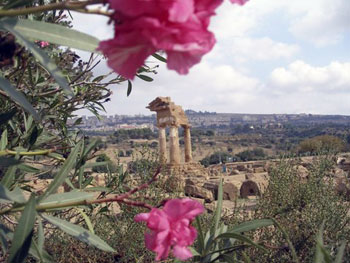
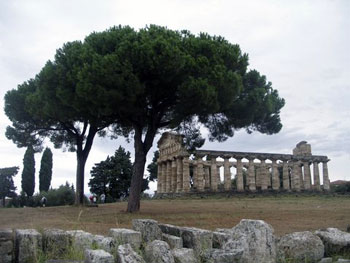
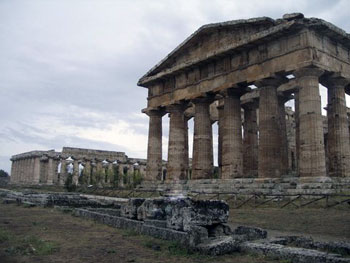 All three temples face eastward, presumably to allow the rising sun to shine on any deity statues inside. Furthermore, they are close together on flat terrain which allows for easy comparison. Having these three large structures so close to the road as you arrive is intimidating. You almost feel like their respective deities are still inside demanding your worship and sacrifices.
 The neighboring Temple of Poseidon, dating to 450 BCE, is the largest and best preserved structure on site. Thirty-six honey brown travertine columns form the peristyle. This temple reflects the transition between the Archaic and later Doric styles. Again the remains of two altars are located in front of the structure. Only the larger altar is of Greek origin; the smaller is Roman.
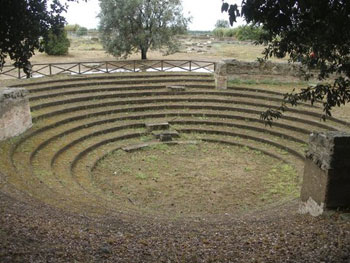 The Ekklesiasterion is located just inside the park fence, opposite the museum. The circular, limestone oratory was the site of democratic assembly for this city-state. This low-lying structure has 10 levels of seats.
 The Valley of the Temples at Agrigento is all that remains of the ancient Greek city of “Akragas”. Founded in 582 BCE, residents would construct eight temples over the next century. Of these, only five are accessible on site.
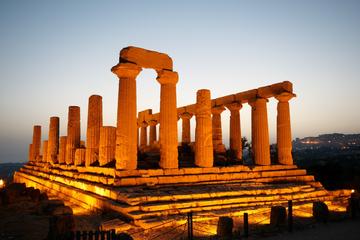
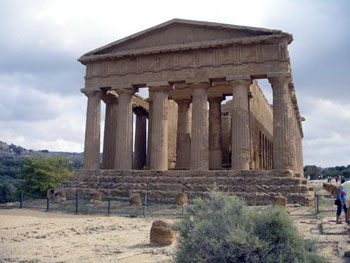 The Temple of Hera stands at the highest point of the ridge. Twenty five of its 34 honey brown calcarenite columns remain standing, making it the second best preserved temple in the park. This temple was constructed between 450 and 440 BCE.
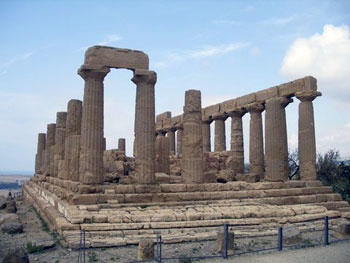 Exit this side of the park to visit the last two temples. The first is the Temple of Castor and Pollux (Dioscuri). Four of the 34 honey brown columns remain standing amidst fruit-laden olive trees. Here visitors find that Greek-style columns were not one solid cylinder. Rather they were assembled from several cylindrical drums. The end of one of these drums features a square indentation. A wooden peg may have been set in this indentation as a means of aligning and stabilizing the drums as they were stacked one upon the other. Visitors should note that some of the drums on site may have belonged to other structures at one time.
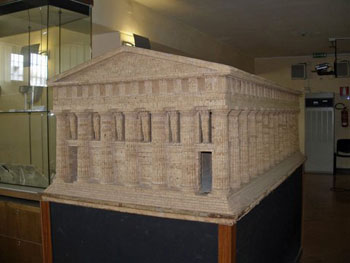 You can put the Valley of the Temples into perspective with a tour of the Archeology Museum.
 Arriving at the Neapolis Archeological Park you find little evidence of any ancient structures within. Your first impression is that of a quarry. Appearances are deceiving as the park actually includes the largest Greek theatre in Sicily. This theatre is hidden from view by trees. You only discover the structure when you arrive on site. Carved out of a limestone hill in the 6th century BCE, this theatre held 15,000 spectators in 67 rows of seats. A tunnel around the periphery may have allowed people to enter and exit the theatre quickly. The upper level of the structure features a number of arches carved out of the solid rock as small “grottos”. One of these holds a small waterfall inside. Compare this Greek theatre to the nearby 3rd century CE Roman amphitheatre. The Greek theatre is semicircular and open while the Roman structure is oval and enclosed.
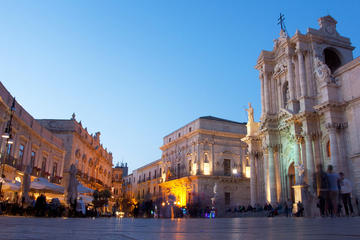
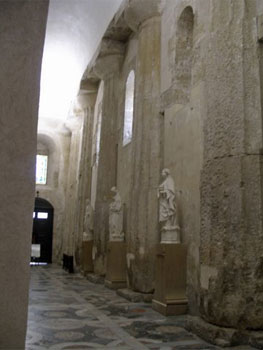 Leave the Museum and walk to Ortygia Island, the historic center of Syracuse, for more Greek history. Your first destination is the remains of the 6th century BCE Doric Temple of Apollo. Only two of its 42 grey limestone columns and a section of wall remain standing. This temple is in a serious state of disrepair after last having been used as a church during the Norman period almost one thousand years ago. The temple grounds are fenced off from the public.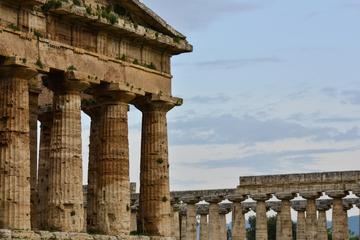
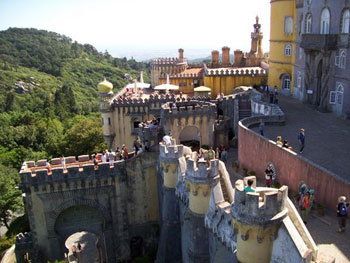
 Looking south standing under a mountain-top cross surrounded by lush vegetation in Sintra’s Romantic-period Pena Palace park I wondered if the human construction in the distance was Lisbon. Then I saw a red bridge glinting in the sun, confirming it was Portugal’s capital city twenty-five miles away on the Tagus estuary. It could have been the Golden Gate bridge signalling San Francisco, but I was a long way from California; and the previous day I’d passed the 25 April bridge and a Rio-style Christ statue on the way to Belem, where Portuguese sailors departed on their most famous voyages of discovery.
 A half-fish, half-man statue; an allegory for the creation of the world; greets visitors to the central courtyard of the Pena Palace. Entering the Manueline Cloister to view the living quarters, the sun was almost directly above a tall green plant rising out of a grey turtle-stoned pot in the centre of the unroofed inner courtyard. Upstairs, we could walk past the open bedrooms, which were surprisingly small; and through the communal rooms, which were as stylish as expected. Other highlights of the palace included the small ancient chapel, the Great Royal Hall and the kitchen; the latter now houses a cafe, with an outside terrace.
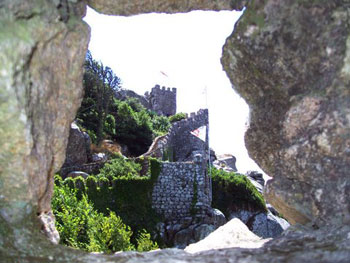
 On the way up to the palace I had visited the Moorish Castle. It is now mostly just a long wall with towers above foundations being archaeologically excavated, but it still inspires the imagination, and provides the best views on the mountain of Sintra and the northern plain. The castle was built in the eighth and ninth centuries during the Moors’ occupation of the region, before Portuguese forces regained control in the eleventh century. You can buy tickets for both the castle and Pena Palace at the castle entrance. The castle provides a good break if walking from Sintra to the palace. There are also regular buses.
 Lisbon’s train station for Sintra is the Rossio, which is conveniently also the city’s most central. Sintra was the only time I used the train service in Lisbon, as I travelled between Lisbon and the south coast by bus; the Eva service was comfortable and punctual, but there were no toilets or rest-stops on the three-hour journey.

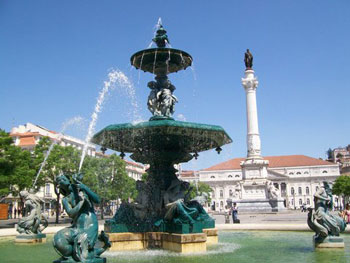
 The Chiado is a popular area of Lisbon, between the city centre; Baixa; and the Bairro Alto district. The latter’s narrow cobbled streets and balconied houses ooze age and character. Everything is in easy walking distance, with the Baixa’s plazas interconnected by picturesque streets, squares and statues. The area was rebuilt after a big earthquake in 1755. Restaurants with smartly dressed waiters and waitresses frame the plazas, continue up the eastern hill towards St. George’s Castle, and down to the Tagus a few blocks to the south.
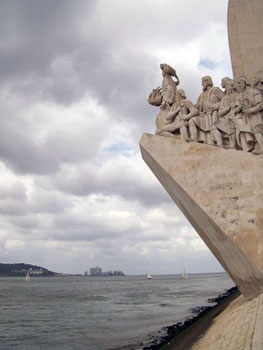 Maybe the sailors sometimes imagine they are Henry the Navigator or Vasco da Gama as they sail out to sea. Henry was a 15th century royal who is credited with being instrumental in developing Portugal’s most rewarding era of exploration and trade. His statue looks out over the Tagus at the head of the impressive Monument to the Discoveries. Behind him are thirty-two notable figures from that era, with sixteen on each side of the caravel-shaped structure; the caravel boat revolutionised Portuguese sailing after being designed with sponsorship from Henry.
