 by W. Ruth Kozak
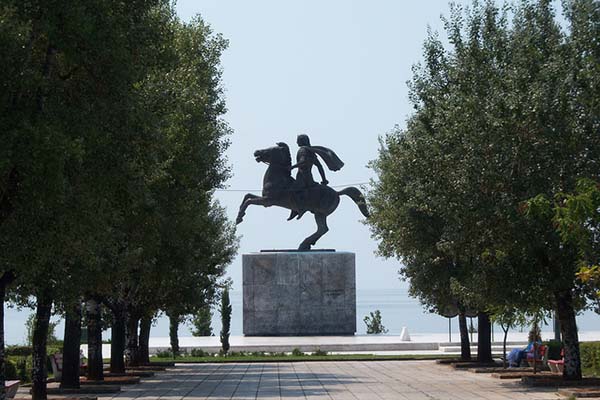
By the harbour in Thessaloniki, Greece, stands a magnificent statue of the young warrior-king, Alexander the Great, astride his fabled horse Bucephalus. At the base of the monument someone has laid two wreaths: myrtle for a hero, laurel for a god. It is June 10, the anniversary of Alexander’s death. I place a simple bouquet of red carnations beside the wreaths. Just who was this ambitious, brilliant young man? Alexander was only 20 when he became king of Macedonia and 22 when he set out to conquer the world. By the time he died suddenly and suspiciously in Babylon just 10 years later in 323 BC, he ruled an empire that included Persia and Egypt and stretched to India.
I first became acquainted with Alexander when I was in my teens and he has become part of my life. I have realized a dream, coming to northern Greece to trace his footsteps. My search for Alexander began in Athens when I boarded a bus heading north. The bus route follows the coast, skirting the teal-blue sea, past olive groves and fertile fields. As the bus nears the Thessaly/Macedonian border, Mount Olympus looms into sight. It is Greece’s highest and most awe-inspiring mountain. The ancients believed it to be the home of the twelve gods, the Olympians. Nestled under its towering northern flank lies ancient Dion, a sacred city of the Macedonians. Alexander visited here to make his oblations to the gods before setting off to conquer the world.
In Alexander’s time, northern Greece was populated by many tribes, one of which was the Makedonoi. When his father, Philip II, became king, the balance of power in the Hellenic world fell into the hands of Macedonia. Under his command, Philip formed the League of Corinth and within a few years he had conquered all the outlying tribes. To ensure their allegiance, Philip arranged marriages with daughters of clan chieftains. One of these political unions brought him to the island of Samothraki in Thrace. And this is where Alexander’s story begins.
 At Thessaloniki, named for one of Alexander’s half-sisters, I board a bus heading across Macedonia to Thrace. East of Thessaloniki, the coastline is rugged with low mountains rolling down to the rocky sea coast. Alexandroupolis, a pleasant city near the Turkish frontier, originated as a small Thracian garrison town founded by Alexander. Offshore, the island of Samothraki rises mysteriously out of the sea. It was on this island that Philip met his bridge, the bewitching Epirote princess, Olympias. They soon wed and became the parents of a remarkable son, Alexander.
From Alexandroupolis I boarded the two-hour ferry trip to Samothraki. Once there, I walked the five kilometres through the lush countryside to the sanctuary of the Great Gods. The magnificent marble pillars of the temple loom ahead of me in a grove of trees. At the time of Philip’s marriage to Olympias, this sanctuary was the centre of religious life in northern Greece.
 I place my hands on the magnetic lodestone of Samothraki, which represents the Great Mother. The russet-coloured stone burns beneath my touch. Supplicants used to hang iron votives here. Every member of the Macedonian royalty was initiated into the cult of the Great Mother. At one time, Alexander must have stood in this very place. Nearby I find the ruins of a small building erected in 318 BC, dedicated to Alexander and his father Philip by their sons, the join-kings, Philip Arridaios and Alexander IV.
From the tranquility of Samothraki, I return to Thessaloniki. From there, it’s a short bus ride to Pella, the ancient capital of Macedonia, Alexander’s birthplace. Several private villas have been excavated there and there are traces of wide streets flanked by foot-paths and a central avenue crossing the Agora.
The palace where Alexander was born in 365 BC is located on a rise behind the city. Known as the “wonder of the north” it was a significant example of Greek palatial architecture. The palace site is closed because of on-going excavations, but in the small museum across the highway from the site, there is a reconstruction of it and the villas. Exhibits include a pebble mosaic depicting Alexander and a friend hunting lions, and a bust of Alexander in his youth.
 Greek poets, tragedians, historians, philosophers, doctors, actors, painters and craftsmen were invited to the Macedonian court. One of these philosophers was Aristotle whom Philip invited to tutor his son at school he had build known as the Nymphaeion” at Mieza, near modern Naoussa. The school, called “The Peripatos” (“walk”) was a two storey L-shaped building linked by staircases, built along the face of the rock. The school’s facilities were set up to harmonize and blend in with the environment, incorporating several caves. Here, in this tranquil setting of lush vegetation, fresh water springs and caves, Aristotle taught Alexander his companions.
I wander the pathways of the ancient site under tree branches where wild figs and grapes grow. On these shady walks and stone-tiered seats around the fountain dedicated to the Nymphs, Alexander was initiated into philosophy, poetry, mathematics and natural sciences. I enter the largest cave. Carved lintels lead to damp passageways. Stalactites drip from the ceilings. I imagine the voices of boys echoing from the past.
The original capital of Macedonia was at Aigai (near modern Vergina) a short distance from the town of Veria. It’s a pleasant half-hour walk from the village to the palace site. This big palace, built on a high promontory overlooking the plan with the sombre mountains close behind it, was a favourite hunting lodge for Philip. It was here that young Alexander often spent time with his father.Just below the lower terrace of the palace is the small theatre where Philip was assassinated as he attended a celebration for the wedding of Alexander’s sister Kleopatra.
 As I stand looking out over the ruined tiers, I try to image the scene on that fateful day. The wedding was to be a big show with carts bearing statues of the twelve gods, including one with an effigy of Philip crowned as a god. As Philip entered the theatre and dismounted from his horse, he was stabbed to death by his bodyguard. The assassin dashed out of the theatre but was overtaken and killed. Family and political intrigues were behind the murder. At the time, Alexander was estranged from his father. His mother, Olympias, a ruthless, impassioned woman, was jealous of her rivals. Soon afterwards she had Phlip’s newest wife and infant daughter murdered.
Philip is interred in the royal tombs located a short walking distance below the palace on the plain. Found in a farmer’s field in 1976 and excavated, the tombs remain under the earth mound where they were discovered and entrance is through an underground passage.
Alexander would have been buried there in the tradition of the Macedonian kings, however his body was hijacked while it was being transported from Babylon and taken to Egypt where it was supposedly interred in a magnificent glass sarcophagus.
The new Tomb Museum incorporates several royal tombs and all the treasures found in them.As I climb down the stone steps to the tombs, tears fill my eyes. To me, this experience is as precious as the wealth of gold taken from the graves. All the years I have read and researched about Alexander, I have never imagined that one day I would stand before the graves of his legendary father and possibly that of his son, Alexander IV.
Philip’s tomb, a small marble temple, was hastily finished after the king’s sudden death. A young woman, identified s one of his barbarian wives, was buried with him. It is said that Alexander gave his father a Homeric funeral, fashioned after that of brave Hector in The Iliad. Items from the cremation pyre are displayed and they include pottery shards, pieces of weaponry, remnants of food offerings and harnesses from horses.


Alexander became king at the age of 20. At the time of his assassination, Philip had been about to start a campaign against the Persians. Wishing to excel over his father and rival his glory, Alexander took up the challenge and marched eastward to conquer the world. Centuries later he is still revered as one of the greatest warriors the world has ever known.
Back in Thessalonki, as I ponder the two wreaths at the base of his monument, a group of Macedonian youths skateboard around it, dodging the rows of shields and sarissas that are the emblems of Alexander’s mighty army. I’m certain Alexander is smiling an approval.
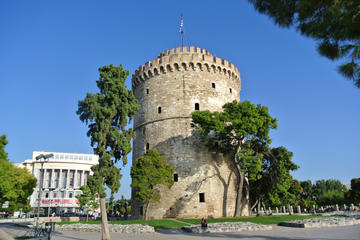
Thessaloniki Private Historic Walking Tour
If You Go:
Getting Around: There is frequent daily bus and train service from Athens and from Thessaloniki to other parts of northern Greece.
Where to Stay: Reasonably priced hotels are available near the Thessaloniki train depot. Check with the local tourist-information office for pensions and hostels. There are good hotels in Veria but limited accommodations in Vergina. Samothraki has pensions and hotels at Kamariotissa near the ferry port.
Other Sites:
♦ Chaironeia, northeast of Athens, is the site of a decisive battle in 338 BC that established Philip II as ruler of the Greek city-states.
♦ Delphi, on the slopes of Mt. Parnassus, was a shrine of Apollo, God of the sun, music, reason and wisdom. Alexander came here to consult the priestess Pythia.
♦ Dion, one of the most important Macedonian shrines, is located on the north side of Mt. Olympus on a wide plain
♦ Dodoni, in the Pinos mountains of Epiros, was the home of Olympias, and Alexander spent much of his youth here.
♦ Mieza, near Naoussa, is where Aristotle taught the boys during Alexander’s early youth.
About the author:
Ruth spent a number of years researching and writing a novel dealing with the fall of Alexander’s dynasty. “Shadow of the Lion” is currently making the round of publishers. During the time she researched the novel, she lived in Greece and spends nearly every year visiting there. She also used her research trips to write travel articles about Greece and the country’s history. www.ruthkozak.com
Photo credits:
Alexander the Great statue by Classical Languages / CC BY
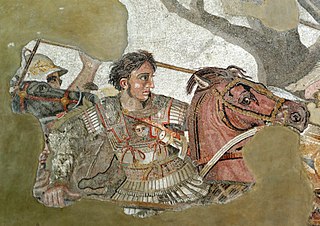
Alexander mosaic by Berthold Werner / Public domain
All other photos by Ruth Kozak
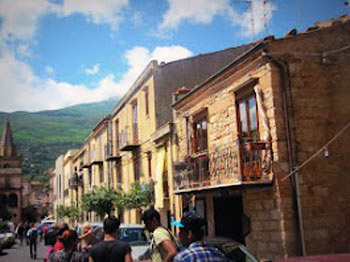
 The city was founded by the Phoenicians, but named by the Ancient Greeks as “Panormus”, which then became “Palermo”, with the basic meaning of a place “always fit for landing in.” This aspect becomes pretty clear once to see all the people coming from Tunis and Northern Africa, for whom Palermo represents a way to make some of their dreams come true and the Tyrrhenian Sea is their only escape to a better world.

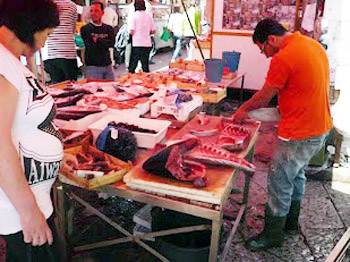 In Palermo, you can enjoy a refined trip, full of culture while walking on the magnificent streets in the city centre and visiting the most important treasures left by the ancestors. At the same time you can have an exotic trip, full of shocking discoveries. It all depends on which side or quarter of Palermo you choose to visit.
 Another place of great interest for all tourists is the Capuchin Catacombs, with many mummified corpses in varying degrees of preservation. The main attraction is a little girl, who looks as if she was really still alive.
 You might have heard of Palermo as being a dangerous place to go to, with stories of all the Mafia present around the streets. I’ve walked all alone or with just one other companion in Ballaro, one of the most dangerous quarters in Palermo and never encountered anything scary or frightening.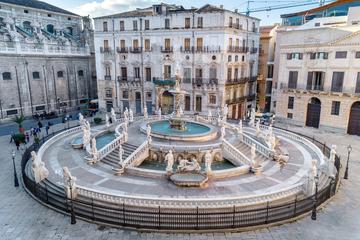
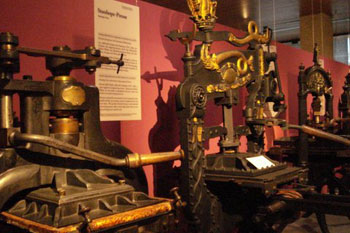
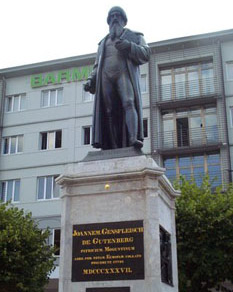 A German goldsmith, printer and publisher, Johannes Gutenberg invented the mechanical moveable type printing press and this invention started the Printing Revolution. His first major work was the Gutenberg Bible (known as the 42-line Bible). 180 of them were printed on paper and vellum, though only 21 copies survive, two of them may be seen in the museum. There is also a replica of Gutenberg’s printing press, rebuilt according to woodcuts from the 15th and 16th century.

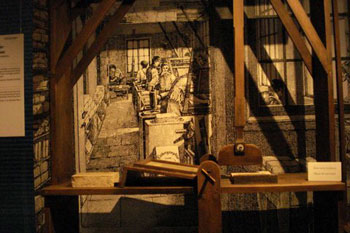 This museum is a must-see for anyone interested in books and printing. The Gutenberg Museum displays two copies of the Bible and Shuelburgh Bible as well as other publications representing the history of the printed word. Here you may see the very earliest typesetting machines and books that were published centuries after the Gutenberg Bible. There is also a small library open to the public that contains a collection of books from the 17th to the 20th centuries.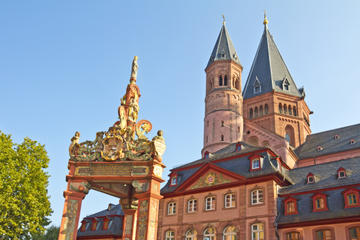
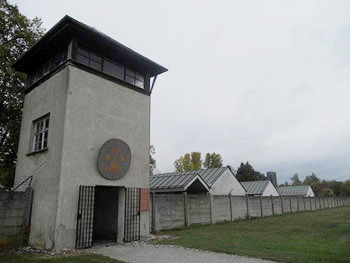
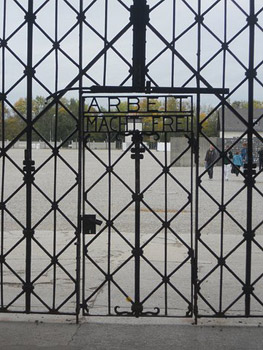 On March 20th, 1933, Heinrich Himmler and the temporary chief of police in Munich announced that a concentration camp had been built in small town of Dachau in Germany to imprison anyone who “opposed’ the Nazi political party.
 The prisoners attended roll call twice a day. During this time they were forced to line up in front of the barracks and stand motionless for an hour as the camp officers would count each prisoner. If anyone had died during the night, the corpse would then be dragged to the roll call area in front of all the other prisoners to be counted. If one of the prisoners had attempted to escape during the night, all of the other inmates were forced to stand at attention for hours on end, regardless of whether the attempt was successful or not. The officers would often torture or punish the prisoner for the others to witness. Sometimes the sick and dying inmates would collapse during roll call, and if any of the fellow inmates dared to help them, they would be punished. Punishment became an hourly occurrence inside Dachau. Prisoners were punished by food withdrawal, mail bans, or at worst, the infamous pole-hanging. Inmates were forced to work throughout the entire day and well into the evening, and were only given a limited amount of time to sleep during the night. They were also forced to put on heavy winter coats while they worked outside during the summer months, or even stand naked while they worked in the cold. If a prisoner was declared “unfit for work,” they would then be transported to the Hartheim Castle, (which was about 17 kilometers away from Linz in Germany); never to be seen or heard from again.
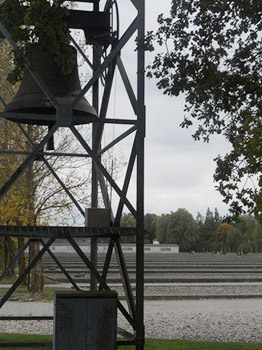 The barracks were used as day rooms and dormitories for the prisoners, and although each barrack was designed to hold 200 prisoners, by the end of World War II in 1945, up to 2,000 prisoners were packed into these small living quarters. (The Jewish prisoners slept in barrack #15 which was separated from the rest of the camp with barbed wire).
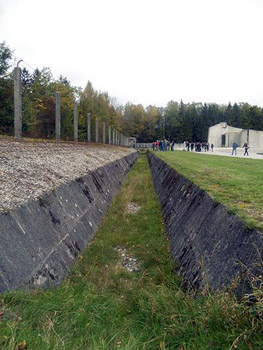 Dachau’s crematorium was built in 1940 in order to deal with the increasing number of deaths at the camp, followed by a larger crematorium as well as a gas chamber at the end of 1942. It was inside this gas chamber where the mass murders at Dachau occurred. Fake shower sprouts were installed in the ceiling in order to fool the prisoners into thinking they were going to take a shower. Within a period of 15 to 20 minutes, approximately 150 victims would have been poisoned to death inside the gas chamber. A separate room in the crematorium area known as the “death chamber” used to store the corpses that were brought in from the camp. These corpses were then cremated in one of the stoves, and it is said that each of the stoves could cremate two to three bodies at the same time.
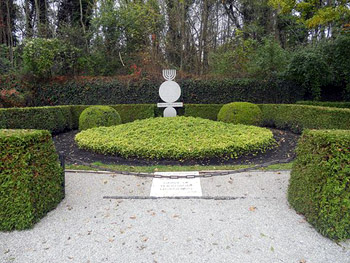 Unfortunately by the time American soldiers discovered Dachau on April 29th, 1945, it was already too late for many of the victims.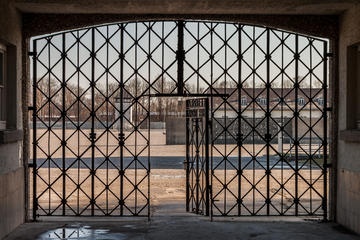


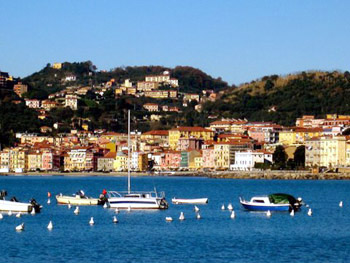
 Percy and Mary Shelley arrived in the tiny seaside village of San Terenzo in 1819 and rented a villa known as “Casa Magni”, whose whitewashed walls and arched colonnade can be found on the promenade. “A lonely house close by the soft and sublime scenes of the Bay of Lerici”, is how Shelley described the villa in his letters. These lines are inscribed on the walls of the now uninhabited villa, along with “I still inhabit this Divine Bay, reading dramas and sailing and listening to the most enchanting music.”
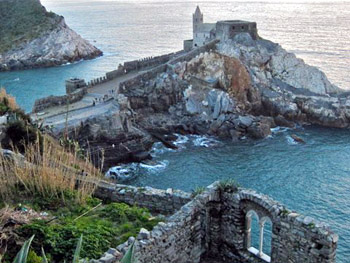
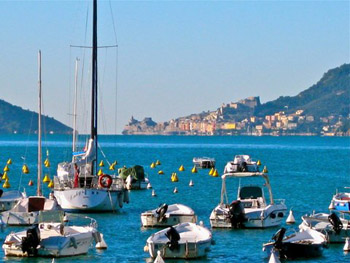
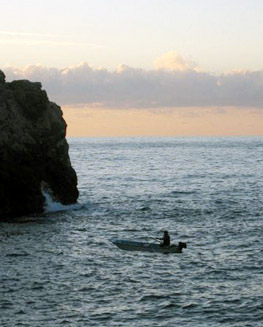 A sprinkling of brightly coloured houses line medieval streets that wind up to Lerici’s castle, which overlooks the entrance to the Gulf of Poets. The castle is thought to be the inspiration for Mary Shelley’s “Frankenstein.” Nowadays the castle contains a museum of palaeontology.
 Shelley’s’ ashes were stored in the wine cellar of The British Consul in Rome before being buried in The Protestant Cemetery in Rome, where John Keats was laid to rest just a year before. After Mary Shelley’s death, her husband’s heart was found wrapped in a page of “Adonais”, Shelley’s famous elegy to Keats. Shelley’s heart was eventually buried in St Peter’s Churchyard in Bournemouth, Dorset.