by Georges Fery
The subjugation of the Aztecs by the Spanish conquistador or conqueror, Hernan Cortez, took twenty-one years with the support of thousands of Tlaxcala and Otomi Indian allies. The unrelenting conquest of Mexico’s Yucatán peninsula, however, spanned 125 of the 374 years history of a long and strenuous coexistence. In defiance of defeat upon defeat on the battlefield, the native Maya-Yucatec fiercely resisted the foreign foe. The peninsula at that time was heavily populated, with cities of three thousand people and more, five or fewer miles from one another, interspaced with hamlets. Among numerous clashes, the fall of Aké (Ak’e’) stands out for it was the first decisive armed confrontation between the Spanish and the indigenous people of the Yucatán. Aké, however, was only the beginning of a struggle that will only wane on the doorsteps of the twentieth century.
The first entrada or incursion, by the Spanish Francisco de Montejo (the Elder), was from the east of the peninsula, between 1527 and 1529. It was followed by a second incursion from the west, headed by his son, also known as Francisco de Montejo (the Younger), from 1529 to 1535. It all started on December 8, 1526, when Spain’s Council of the Indies granted Montejo the Elder the capitulación, or patent, for the conquest of the “Islands of Cozumel and Yucatán” with the title and office of adelantado or governor and captain general. At that time, this unexplored part of Mexico was thought to be two islands. Montejo sold his properties and got into debt to obtain the royal patent to finance his expeditions, an investment he expected, like all conquistadores or conquerors, to recover from captured lands. For his first incursion, he selected as his second in command, Alonso Dávila, he knew from past battles in the Indies and wise in council. In mid-June 1527, with about four hundred men plus the ships’ crews, Montejo stepped on board the armed merchantman San Jerónimo and, accompanied by two caravels, sailed down the Guadalquivir to the Atlantic, heading to Santo Domingo on the island of Hispaniola.
There he recruited more men and bought twenty-five more horses and a large stock of supplies. Other officers were Pedro de los Rios as lieutenant governor and Gonzalo Nieto, veteran of many battles and standard bearer of the army. Well trained officers and soldiers idle after the Reconquista, the ousting of the Moors from Spain completed his forces, together with the Franciscan friar Juan Rodriguez de Caraveco, Montejo’s own chaplain, and surgeon Iñigo Lòpez of Seville. Among other officers was Roberto Alemán, a Fleming in charge of the light artillery, and his wife Talina, the only woman on the roster.
Montejo sailed west from Hispaniola leaving the brigantine La Gavarra to follow later with more reinforcement and landed with three ships and four hundred men, on the island of Cozumel off the eastern coast of the Yucatán in September of 1527. The Maya had already met the Spaniards Francisco Hernández de Córdoba in 1517, Juan de Grijalva in 1518, and Hernán Cortés in 1519. The cacique or chief, Naum Pat, greeted Montejo and his men amiably. The chief informed Montejo about the lay of the land on the continent, and the main chiefdoms he would encounter and may have to contend with. Toward the end of that month, Montejo sailed to the mainland and came ashore at or near the small village of Xel Há, which he called Salamanca de Xhelhá in honor of Salamanca, his birthplace, and made it his main base on the coast. To quell a mutiny that had been brewing since leaving Santo Domingo, Montejo set fire to two of his ships, while the caravel Nicolasa sailed back to Santo Domingo. Thirty sailors from the burned ships who had participated in the frustrated mutiny elected to return. Nicolasa captain was instructed to bring back supplies, horses, and men.
The remaining crews of the two burnt ships joined Montejo’s force. He then left a lieutenant in command of the outposts at Salamanca de Xhelhá, with forty men and Talina Alemán, and sent another twenty to set up camp at Polé, a few miles north on the Caribbean coast, to gather foodstuff from neighboring villages. The hot and humid climate was hard on the Spaniards especially during clashes with Indian warriors. They adopted indigenous body protection for close combat, for Spanish armor was too hot and cumbersome. They used long thick tunics quilted with cotton, they called escuipiles, which protected them to the knees. Footmen, crossbowmen and arquebusiers were likewise protected from head to toe, as were horses with quilted armor. The ferocious Spanish dogs of war were protected by their savagery.
 The notable characteristic of the Maya Early Classic period (250-550AD) was the emergence of independent states across much of the Yucatán’s peninsula. Sharer and Textler explain that “documentary evidence of the Early Classic era is sporadic in the north. No single major center dominated the political and economic arena of the period, but several important states developed with prominent chiefdoms such as Aké, Acanceh, Izamal and Oxtintok” (2006). The major chiefdoms on the peninsula were those of Cochuah and Ekab, while those yielding the most political power were the Tutul Xiu of Mani and the Nachi Cocom of Sotuta. Both political powerhouses played major roles during the conquest.
The Tutul Xiu promptly allied with the Spanish and kept their friendly disposition throughout the conquest, as a counterpoint no doubt, to their enduring antagonism with the hated Nachi Cocom. Most of the villages in Montejo’s report, such as Xaman Há, Mochis, and Belma no longer exist. The later may be identified with the settlement of El Meco, near Puerto Juárez today. From Belma, the little army proceeded to Cónil, in the province of Ekab where they were welcomed and rested for two months. As befits a military leader, Montejo did not let down his defiance of the locals, for he was wary of possible treachery. So, with his captains he organized his army’s stay at Cónil under a twenty-four-hour guard watch.
In the spring of 1528, the army left Cónil for the major town of Choaca or Chauac Há in the neighboring province of Chinkinchel. They traveled through an uninhabited area devoid of water for a week but were soon greeted by a crowd of Choaca people on the outskirts of their town. As Chamberlain explains the Choaca considered themselves “superior to other people in culture and intelligence, for they were great traders” (1966:51). At first, the contact was respectful but laden with mistrust, for the caciques or chiefs were warned of the Spaniards arrival. The leaders received the Europeans with gifts of food and shows of friendship. Unlike at Cónil, however, Montejo seems to have let his guard down and did not prepare for possible treachery. After a week, over a few nights, the inhabitants slowly moved their people and supplies out of the city. Montejo and Dávila eventually realized that the unusual silence around them was ominous and understood what would be coming next.
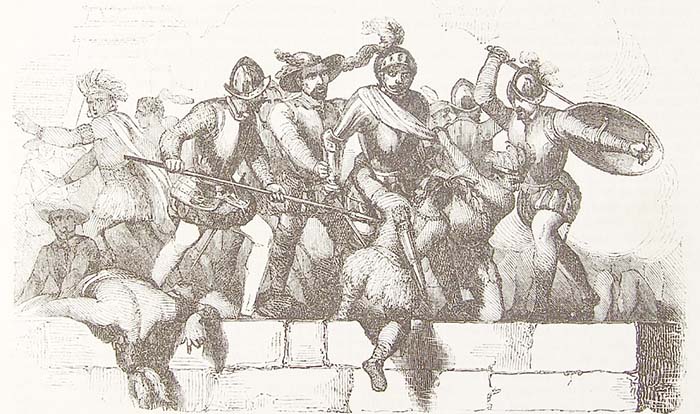
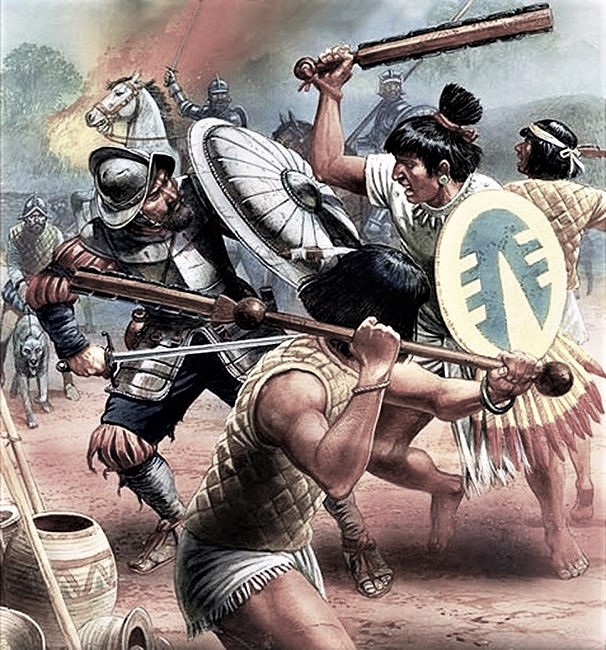
 At mid-morning of the fifth day of the second week, without warning and in complete silence, the warriors attacked shooting thick flights of arrows, using spear throwers (atlatl) to hurl javelins with fire-hardened spear tips, and hard wood clubs four to five feet in length studded with sharp obsidian flints. The Spanish officers quickly rallied their men and faced the onslaught. The Spaniards making the most of superior weapons, military discipline, and an irresistible cavalry together with their dogs of war, succeeded in checking the first onrush of the Maya. Regrouping the men quartered in other parts of town, Montejo counter attacked. After the hardest kind of fighting, in which both sides showed intrepid determination, the Spaniards broke the Maya’s resistance, and dispersed them. The Europeans won a clean-cut victory in the first pitched battle of the conquest, however, they paid dearly for it, with ten or twelve of their small army killed or wounded. For the Choacas, however, it was a disaster with hundreds of lives lost, among which were ten village chiefs and other principals. After their defeat, the lords of the Chinkinchel province decided against further resistance and, the following day, they sued for peace.
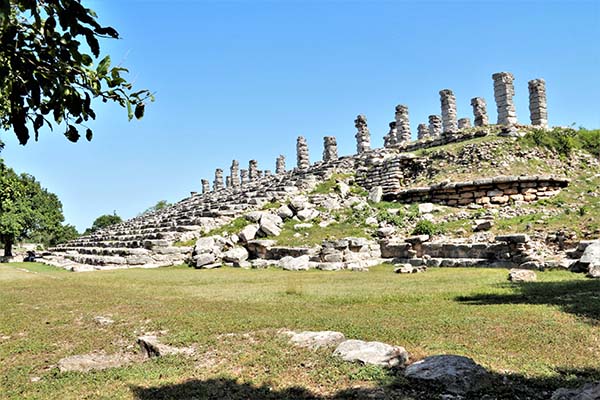 After a couple of weeks’ rests, the Spaniards left Choaca hampered by heat, a difficult terrain, and lack of water, for they had not anticipated that there were no rivers or streams in northern Yucatán. They moved toward Aké, ten miles north of today’s town of Tizimin (founded, 1544). The ancient settlement of Aké dates from the Early Classic period (250-650AD). The Choacas had warned Aké’s paramount chief that the Spaniards were coming to steal their food and their wives. Over a three-day trek, the cavalry, arquebusiers, foot soldiers and war dogs clashed with Aké’ warriors and remnants of Choaca fighters and their allies, who relentlessly fought to slow down the invaders. More than the Spanish weapons, however, the Mayas were terrified of the horses and, worse still, of the fierce dogs of war that eviscerated them.
The Spaniards entered Aké late on the fourth day. The Maya fought furiously all the way inside their city. Alonso Davila, along with a handful of veteran officers and soldiers was among the few Spaniards with experience in this type of warfare; he and Montejo led their men by example, at the head of the fight. Horsemen could not be used efficiently due to dense trees, a rocky ground, and bushes, but they did much damage. The merciless fight lasted all day with no relief until late afternoon, when the Maya retired for the night. At daylight the following day, the fight resumed with the same fierceness and rage, but military discipline, their swords and dogs of war again broke the Maya onslaught in mid-afternoon. Let us read from Montejo’s notes recorded by the chronicler Cárdenas y Valencia (1937:15-16).
“…at Aké, the Indians appeared in large numbers banging drums made from the shell of large sea turtles with deer antlers used as drum sticks; they were blowing big conch-shells to rally warriors that, together with screams of rage from hundreds of throats magnified the deafening noise; they all had weapons they use in war such as bows and quivers of arrows, stone throwers, poles with their tips hardened by fire, lances with point of sharp flints, two-handed swords of very strong wood inset with obsidian blades, large conch-shells of the sea; naked except for the shameful parts which were covered with a cloth; daubed with earth of colors, they appeared as most ferocious devils; their nose and ear plugs were adorned with bones and stones of varied colors; but all this did not cause the conquistadors to flinch.”
Even though many Mayas were killed and wounded during the fight, many more came in to fill the gaps and kept fighting not allowing the Spaniards any respite. The casualties were important for the Spaniards, with twenty-three men dead or seriously wounded, and three horses killed or maimed, as were dogs. The casualties, however, were horrendous for the Maya, with over 1,200 dead warriors on the battlefield in the northwest part of the large plaza, including local village chiefs. Aké was the turning point of this first entrada or incursion and showed the Mayas the resolve and military prowess of a dangerous foe.
 The emotional impact of the disaster was devastating to the locals. “This epic battle became by tradition one of the most renowned engagements in the long and bloody conquest of Yucatán” (Chamberlain, 1966). The overwhelming victory of Spanish arms at Aké brought immediate results over a wide territory. Montejo stayed at Aké long enough to help his wounded soldiers and reap the rewards of his victory. He then moved on to Zizha, a large town about fourteen miles away, where he and his men were well received. Montejo was looking for a broad inland stream to access the hinterland from the sea; there were none. By this time, Montejo had achieved about all he could with the men he had. He explored a large part of northeastern Yucatán and won the nominal allegiance of a large area. Montejo left Loché in mid-1528 with a depleted force and, after a three-week trek, returned to Salamanca de Xelhá on the Caribbean coast, to regroup and resupply. Cogolludo (1688) records that of the 125 men Montejo led on this first incursion, only about seventy-five returned relatively unscathed.
The number of men according to Cogolludo and Fernández de Oviedo (1535), seems to be less than was previously recorded in Spanish archives. The confusion stems from the fact that we do not know how many members of the crews from the two ships Montejo burned were forcibly enlisted in his army, were left at Xhel Há, or returned to Santo Domingo. On arrival at Salamanca de Xhel Há, Montejo found his settlement in desperate straits. Of the forty or so Spaniards he had left there, only twenty-seven were alive, including Talina, while all of those stationed at Polé had been massacred. The entire original force now numbered less than a hundred able men. Thankfully, the support ship was back from Santo Domingo with men, horses, weapons, and supplies. Within a few weeks, Montejo boarded the Nicolasa and sailed south along the coast while Alonso Dávila followed him overland to join him at the Bay of Chetumal.
This first incursion of the Yucatán was followed by the second in late 1532 under the command of Francisco Montejo “the Younger”, who took up the task from his father to conquer the interior of the peninsula, moving in from the north. From the beginning, his aim was to seize and establish a major Spanish settlement at Chichén Itzá that he will call Ciudad Real. The site was elected for important communities in its vicinity. At first, the Spaniards were welcomed, but within a few years, the Mayas’ hostility increased as the result of abuses by encomenderos, conquistadors who were granted land and people for their services to the crown, and the forced conversion to the Catholic faith. Growing antagonism between Europeans and natives came to a head with the killing of the Maya paramount chief Naabon Cupul during his failed attempt at killing Montejo the Younger. The latent antagonism turned to rage and reached the breaking point when the Mayas laid siege to Ciudad Real. The Spaniards took refuge in the more readily defensible pre-Columbian ruins nearby, a refuge that quickly became a trap. An attempt to break the encirclement cost the Spaniards dearly, with over 150 men killed or captured and sacrificed. While in the past indigenous clans often warred with each other, their failures in battling the foreign foe led to unlikely alliances and, in some cases, to de facto confederation. Unlike in central Mexico with the Aztecs, the peninsula of Yucatán was then ruled by seventeen chiefdoms. Cogolludo’s record is again the reference to understand what happened to the besieged Spaniards at Chichén Itzá in 1532.
“The situation was dire and getting worse. They had to move out or die in Ciudad Real. The Indians, however, had a flaw in their fighting order as found at Aké and other encounters, they did not fight at night. The Spaniards, aware of that precept, had to leave at night but they needed to keep the Indians believing that they still were in the compound at sunrise. So, they had a dog tied up with a rope linked to a bell, with food and water several feet away, out of reach. Through the night, the Indians heard the bell they associated with Christian rituals and the dog barking. In the dead of night, the Spaniards abandoned Ciudad Real and headed for the coast about forty miles away, their only salvation route. Early in the morning the Indians realized the ploy and small groups of warriors ran after the fugitives. Short but violent battles broke the indigenous scouts attempt at stopping the Europeans. Exhausted, Montejo with the remnants of his party, safely reached the port of Dzilam.
By 1535, but for the cities of Mérida and Campeche, the Spanish had been driven out of the Yucatán. In a twist of history, however, food became so scarce that the Yucatec warriors lifted their siege of the remaining towns held by the Spaniards because, it is said, flying ants signaled the corn planting season, so they hastened to their corn fields. Ten years later, the 1542-1545 re-conquest of the east and interior of the peninsula kept the Spanish fighting again to pacify the land, to no avail.
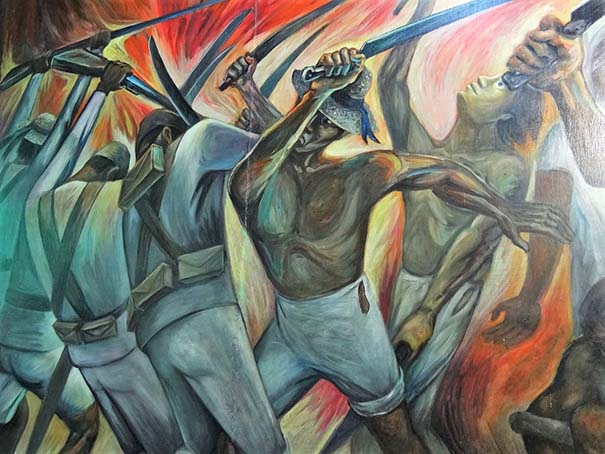
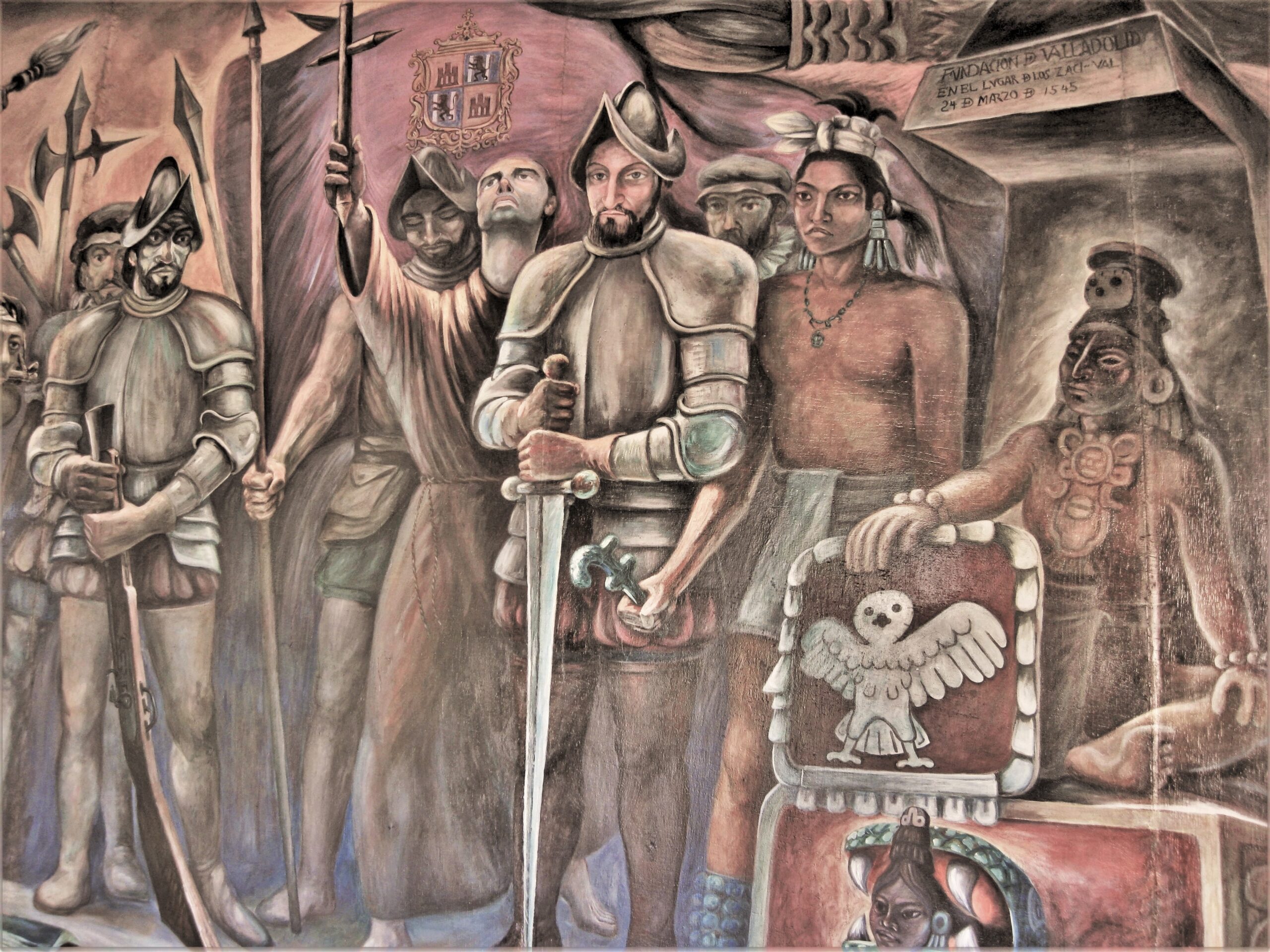 The Great Maya Revolt of 1546-1547 was started by a Cupul priest inspired by ancestral divinities led by the exalted priest Chilam Anbal. He set the date for the Great Uprising on the full moon of the night 8-9 November 1546, corresponding to 5-Cimi (death) and 19-Xul (end), in the Maya calendar. Chamberlain reports that “at the appointed time the Mayas of the eastern provinces rose in sudden and overwhelming fury. The carnage and unspeakable cruelty knew no bounds and killed Spaniards of all ages in large numbers together with over 600 naborias, Maya converts to Christianity. The heads, hands and feet of Spaniards were cut and sent throughout the land to incite others to greater fury and ruthless carnage” (1947). Few cities such as Valladolid were barely able to resist the onslaught, but most were on the brink of collapse when Montejo (the Younger), and his captains from Mérida and Campeche, regained control of the provinces that were emptied of Spaniards and mestizos, albeit through years of conflict interspaced with periods of precarious peace. The burden of occupation was far worse for the Mayas, however, since they had to endure untold hardships from their new masters, who were dedicated to bend them to a new faith and way of life. Inter-polity warfare before the arrival of the Europeans was endemic and of a brutal nature, however, the natives found common grounds in the face of a new and deadly foe.
In 1567, another Maya prophet, the Chilam Cuoh, preached the supremacy of the ancient ways and prophesied a war of religion around the Spanish settlement of Bacalar (in today’s Quintana Roo). As armed resistance intensified, the Spaniards requested the provincial in Mérida for help in quelling Cuoh’s rebellion. The Chilam was captured in 1569 and sent under armed guard to bishop Fray Francisco de Toral in Mérida, for exemplary punishment. It would take another nineteen years of brutal and bloody conflicts for the Yucatecs to be somewhat pacified. Hostility and defiance at all times simmered close to the surface. Chamberlain notes that “Maya culture, in common with that of other advanced peoples of New Spain, Colombia and Peru, was too ancient, too deeply grounded and too tenaciously conservative to be easily swept to one side” (1947).
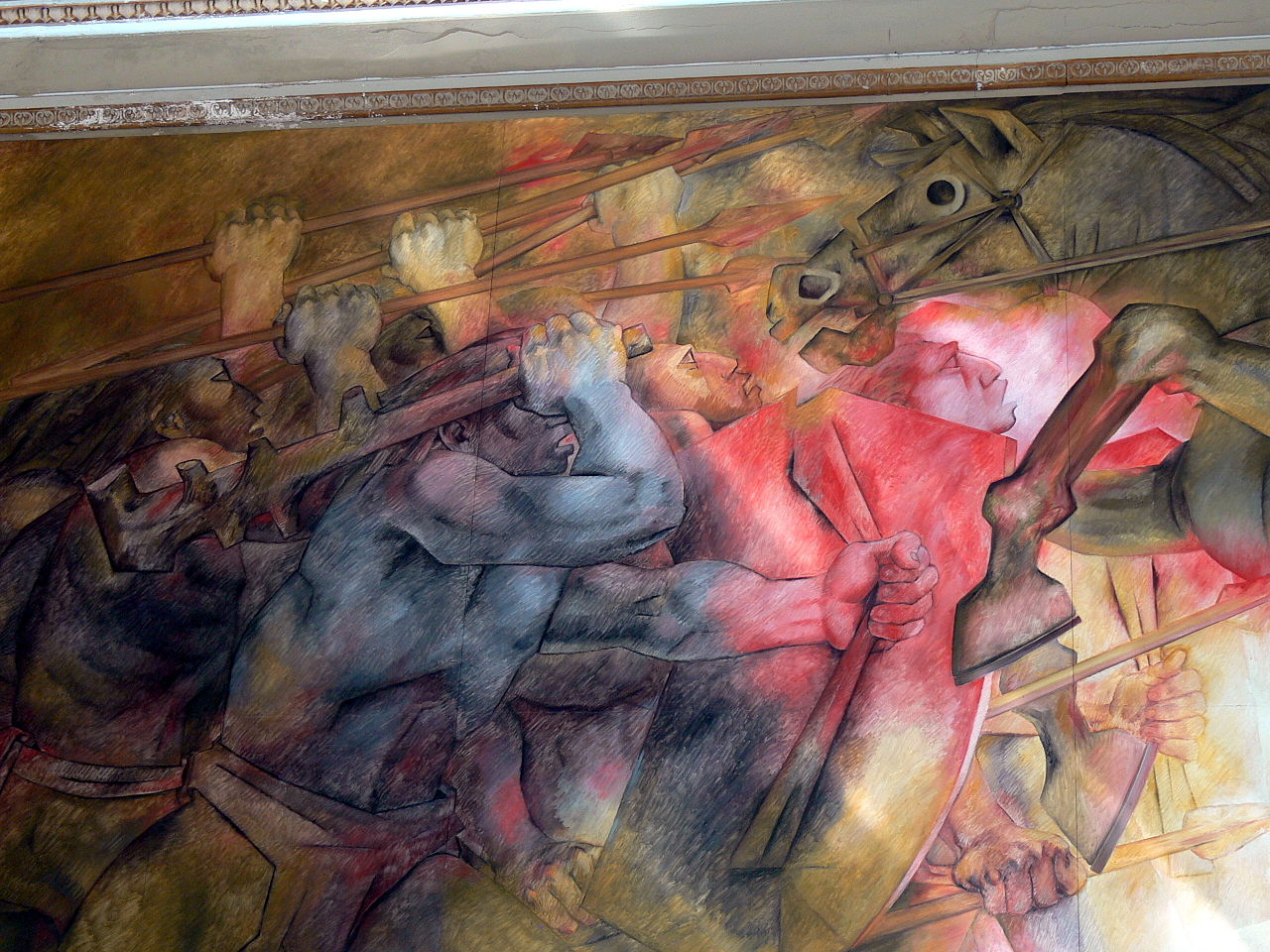 Through history, the Mayas showed tenacious resistance to Toltec and Spanish invaders. They overcame the hardships of the 1464 hurricane, the plague of 1480, and the epidemic of smallpox of 1514. The uprising of Bacalar 1639-1641, was followed by the one of 1668-1671 and the rebellion of Jacinto Canek in 1761. The Maya showed no less tenacity during the Castes War of Yucatán (1847-1901), that bloodied the peninsula for 54 years.
Central to this unremitting antagonism was the appropriation of socio-economic and political control by the Spaniards and the mestizos, and their efforts at spiritual domination through conversion. Forced evangelization was unrealistic for the Spaniards had limited resources. Fifty years after the first entrada, there were still not enough evangelists for such a large and diverse population, speaking hundreds of languages from the dry deserts and canyons of the north to the impenetrable tropical jungles of the south.
The Spaniards were helped in their quest for domination by successive epidemics of infectious diseases. The vector by which they were transmitted was not understood by European science at the time, for germ theory did not start to take hold until 1854. Local resistance flared up time and again, until it was somewhat tamed after the brutal fifty-four years Caste War of Yucatán (1847-1901). Countless lives were lost on all sides before the Cruzob movement was crushed by the Mexican General Ignacio Bravo, that ended the Caste War on May 5, 1901. General Bravo, on instructions from the government in Mexico City, did implement reforms that stamped out the root causes of Maya rebellion.
Hope for peaceful coexistence lingered among the Mayas, but their hope did not have the same meaning as those of the foreigners, for it was grounded in their ancient religion deeply rooted in their land and heart, that did not die with their warriors. Tulum is the only religious center on the Yucatán peninsula that remains to this day, a site of pilgrimage. History notwithstanding, the Mayas believe that, from Tulum, is an invisible road passing under the sea that, “when it opens, will play a special role in their world” (Sullivan, 2002). The “road” or portal is the collective memory of the Maya tragedy, for the spirit of Aké never waned within the ancient walled cliff enclave on a hill, over the blue waters of the Caribbean Sea.
Photo credits:
Spanish soldier (image #3) courtesy of elgrancapitan.org
Deadly Aké ©georgefery.com
Bibliography / References:
Bernardino de Sahagun, 1905 – Historia General de las Cosas de Nueva España.
Carballo, David, M., 2020 – Collision of Worlds
Chamberlain R. S., 1966 – The conquest and Colonization of Yucatán, 1517-155
Diego López de Cogolludo (1610), 2006 – Historia de Yucatán
Fray Diego de Landa, 1959 – Relacion de las Cosas de Yucatán
Reed, Nelson, A., 2001 – The Caste War of Yucatán
About the author:
Freelance writer, researcher, and photographer, Georges Fery (georgefery.com) addresses topics, from history, culture, and beliefs to daily living of ancient and today’s indigenous communities of the Americas. His articles are published online in the U.S. at travelthruhistory.com, popular-archaeology.com, and ancient-origins.net, as well as in the quarterly magazine Ancient American (ancientamerican.com). In the U.K. his articles are found in mexicolore.co.uk.
The author is a fellow of the Institute of Maya Studies instituteofmayastudies.org Miami, FL, and The Royal Geographical Society, London, U.K. rgs.org. As well as a member in good standing of the Maya Exploration Center, Austin, TX mayaexploration.org, the Archaeological Institute of America, Boston, MA archaeological.org, NFAA-Non Fiction Authors Association nonfictionauthrosassociation.com, and the National Museum of the American Indian, Washington, DC. americanindian.si.edu.




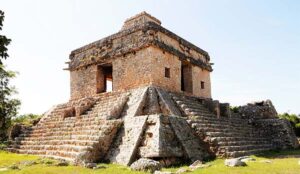 Rituals in ancient communities followed the agrarian cycles under the auspices of their respective deities. The first sanctuaries were built for these mediators between the world at large (nature) and humankind (culture), because culture could not, on its own, control nature. Priest-shamans had to ensure the accuracy of the sun (K’inich Ahau, the sun-faced lord), which never failed to reappear at the exact same place, day after day, solstice after solstice, equinox after equinox. Priest-shamans were helped in their tasks by supplication and invocation rituals during which they addressed the deities of the vegetal world and the powerful god of rain.
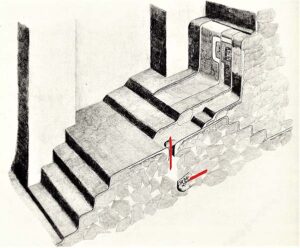 And so were the seven dolls, which were ritually “planted” by priest-shamans down a duct three feet deep, dug into the floor at the center of the temple’s altar. Bates Littlehales rendering (1959, in Andrews.1980) depicts the re-enactment of the ceremony of the seven dolls that took place during the Decadent Period’s Chechem Phase (1200-1500). The climate record for the Yucatán shows that this ceremony took place within the time frame of recurrent droughts.
 The disparity in gender, however, is puzzling and leads to the question: why six females and one male? Why not four and three, or other mix? Since there is no satisfactory answer from scholars, the next step was to ask respected local shamans (h’men) if they had any opinion on the gender disparity. One remarked, “one male and a number females in age of reproduction would secure the group’s survival, while conversely, one female among any number of males, would warrant its extinction” (2020). A stern observation that may be grounded in the survival of our species’ long lost past.
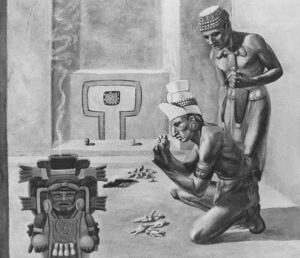 Scattering rituals were coincident with climatic stress during periods of decreased rain or drought. Is there a correlation between these age-old rituals and the figurines? Probably, because there is no other rationale for the priest-shamans to literally “plant” these deformed crudely made figurines below the floor of the temple’s altar. Their association with nature is symbolically linked with the roots of plants synonymous with the roots of life, for the figurines were made to never been seen. Furthermore, the scattering of human seeds was still practiced by farmers during the late nineteenth century in parts of the Americas. It was believed to periodically reaffirm a common law of the “right of blood” for farmstead inherited from ancestors, as opposed to the “right of land” claimed by invaders.
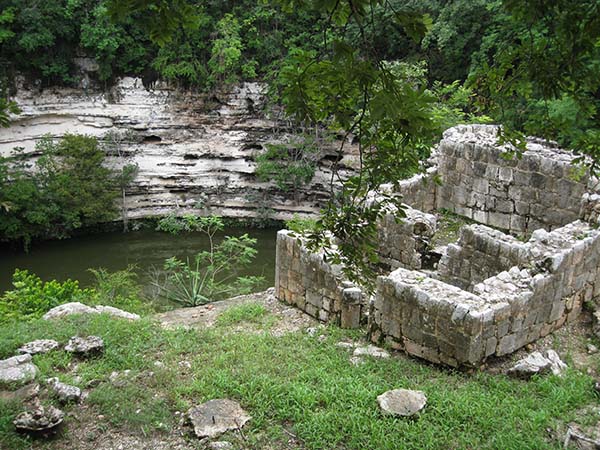
 The cenote was the focus of rituals, as attested by more than 3,000 broken ceramic and water jars found at its bottom, together with portions of at least eight human skeletons and animal bones. Its waters were used for both daily needs and rituals that did not involve human or animal sacrifice. The few human remains found, therefore, were probably due to people that drowned while collecting water. Surface and underground cenotes are mirrors of two worlds, understood as the home of Cha’ak “patron of agriculture and one of the oldest continuously worshipped god of ancient Mesoamerica” (Miller+Taube, 1993). “Xlacah represent the center of Dzibilchaltún’s agrarian universe, its pivotal axis” (Lothrop, 1952, Tozzer, 1957). The powerful god of rain, lightning, and thunder was the master of life and fear, because should rain fail, the life giving maize harvest (corn-Zea mays subsp.) would wither, and lead to hunger, conflict and death. The Mayans have a deep reverence for maize for, in their mythology, the gods created them out of maize dough. It therefore is not only their main staple and daily sustenance, it is associated with their very existence, their soul.
 Architecturally similar to Str.1-sub, Str.66 is radially symmetrical and is located at the western end of sacbe.2. However, it has not been restored, hence the limited information on both structure and remains. The similarity with the Seven Dolls complex, however, is striking and extends to Str.63 with a four-stairway/six-steps quadrangular platform and an eleven-foot limestone monolith, Stela.21, located 145 feet east of Str.66’s plaza, and built squarely on sacbe.2. Like Stela.3 to the east, Stela.21 was covered with stucco and painted with figures of the Maya pantheon, now lost to time. Andrews refers to Str.66 as “a mirror image of the Seven Dolls group” (1961), dedicated to the moon, counterpart to Str.1-sub, which was dedicated to the sun. Like the Temple of the Seven Dolls, it also had its access restricted by Str.64 and Str.65 which were built across its plaza.
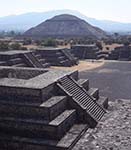





 In the archaeologist Guillermo de Anda’s opinion, Balamkú seems to be what he called the “mother” of Balamkanchè located 2.5 mile away, since as he puts it “I don’t want to say that quantity is more important than information, but when you see that there are many, many offerings in a cave that is also exceedingly difficult of access, this tells us something” (2017:15). Archaeologists now have the opportunity to answer some of the most perplexing questions that continue to stir controversy among professionals, such as the level of contacts and influence exchanged between Maya highland and lowland cultures, as well as with central Mexico, and perhaps clarify what was going on in the Maya world prior to the building of the first pyramid at Chichén Itzá.