by Helen Moat
There was a time when I lived on the edge of East Anglia. Just to the east of Peterborough, the town where I’d settled, there are flat wetlands – great empty spaces that stretch out to the horizon under big skies. It is a landscape that has a kind of bleak poetry to it. It’s a barren, harsh place – the sort of place you imagine could be inhabited by the ghosts of highwaymen, farmhands, beggars and thieves. It’s a place where houses sit marooned in the fens like becalmed ships at sea; a place where the inhabitants look out at outsiders with deep suspicion and keep their doors firmly bolted. It’s a hostile landscape, the kind of place where you have to be tough and insular to survive.
East Anglia is England’s little Holland. The land is flat and expansive like a weedy, reedy ocean. Sometimes it’s an ocean of cabbages and turnips too. You know you’ve reached the farmlands of East Anglia when the pungent stench of root vegetables hit your nostrils. There are pockets of softer, rolling countryside as well, but mainly East Anglia is flat, very flat.
 Up until the Middle Ages large tracts of East Anglia lay under water. Only the higher land was free from flooding. I could never understand why the cathedral town of Ely is referred to as an ‘isle.’ A hilly place surrounded by land and no water in sight, it certainly isn’t an island. But once you know the historical geography of East Anglia, it becomes clear. Slowly, slowly the wetlands, the lakes and water systems were drained and reclaimed from the sea. Since then, man and nature have been at war. In the main, man has won. Clever, he’s built dykes, installed pumps and constructed defences. But nature is a force to be reckoned with. Man has fought the sea, and the sea has, on occasion, won.
Over a decade ago, I moved away from East Anglia to the Peak District. Some people, particularly artists, love the light, the big skies and the big landscapes of East Anglia (such as John Constable), but for me it was a relief to get back to the hills. It felt cosy and comforting after the emptiness and bleakness of the Fens.
 Recently, I returned to East Anglia for an autumn break with my family. All the time I had lived there, I’d never visited the Norfolk Broads. The Broads are made up of rivers and lakes and wetlands. The area, rich in wildlife, is popular with visitors for boating, kayaking and canoeing as well as cycling. Between the wetlands, there are pretty villages wrapped in the folds of gently undulating countryside: thatched cottages, dwellings of flint or warm brick, traditional pubs and duck ponds.
I also wanted to explore the Norfolk and Suffolk coastline, most of it still unfamiliar to me – old-fashioned seaside towns and villages like Southwold and Aldeburgh that echoed the fenland bleakness, particularly in winter.
 And so it was when we visited Aldeburgh on a cold, bright day in November. Fishing boats had been shored up on the pebbled beach; guest houses were winding down and closing up for winter; the beach was a place for a brisk walk, head down against the icy wind, coats pulled close around the neck. Dogs were allowed on the stony beach again.
As we waded through the pebbles, tall Victorian terraces seemingly rising straight out of the shingle, we came to a long spit. Part way along, we could see a Martello tower, one of the squat circular brick buildings that had been erected along the British coast to defend the country against Napoleon. We headed out onto the narrow spit towards the tower. Other than the lookout, there was just a boatyard and boathouse. Yet once there’d been a thriving commercial centre here. A map from 1588 showed a busy quay and a long row of tiny store huts. Boats were built and repaired here and merchant boats off-loaded their cargo at this point.
Slaughden, the village on the spit, had always been vulnerable to storms. The last house in the village was aptly called ‘The Hazard’. Once it had been a thriving farm, but it lost its 30 acres to the sea – a farmhouse without its land. A non-farming family took it over in 1922. In a space of a few years, they had been flooded out four times. Then in 1926, there was a storm so severe, the inhabitants woke up to find the shingle had reached the second floor. The sea had finally defeated them and they moved along the spit to the village of Aldeburgh. In the great storm of 1953 the rest of the village succumbed to the sea and the broad slice of land was reduced to a narrow spit.
Our week on the Broads had come to an end. It was time to return to our home in the hills of the Midlands. We decided to wind our way back along the Norfolk coast. We headed along the A47 through the Broads, a route as straight as any Roman Road. The feeling of being at sea was enhanced by the roll of the road – our car travelling over a wet, shifting landscape. Nothing interrupted the ocean of scruffy wetlands but for the odd isolated windmill, sails spread out under big skies.
 We stopped off at Sea Palling, another seaside resort devastated by the storm of 1953. The sea had breached and ripped through a section of the protecting sand dunes and carried away the Longshore Café. Several other homes, a bakery and a general store were smashed up too. Villagers clung to the roofs of their homes as the ocean engulfed them, waiting to be rescued. Seven people died and thousands of acres of land were destroyed. We sat in the café-cum-amusement arcade, drinking bitter coffee and reading the faded newspaper cuttings adorning the wall. It made for sobering reading among the duke-box pop and random slot machine sounds.
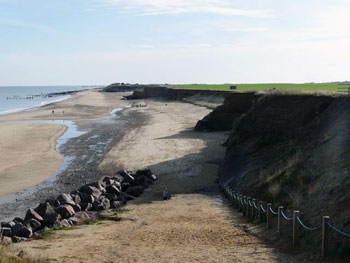
We climbed the road that rose like a wall over the dunes to the beach, a flood barrier in place to keep the sea at bay in the event of a storm. Long off-shore islands of Norwegian rock form another defence and concrete groynes provide additional protection. They are ugly manmade structures in a pretty, natural setting. Despite all efforts to control the sea, some argue that it is useless to protect the coast here: the sea will prevail, sooner or later.
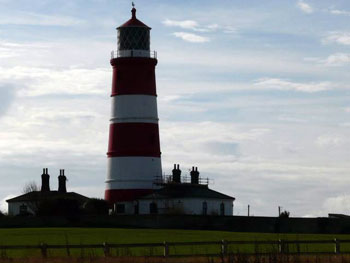
We drove further along the coast and came to Happisburgh. A lighthouse towered behind the village. We found our way to it and walked across to the coast. Signs warned of the danger of erosion. We could see how nature had taken great ‘bites’ out the land. The neighbouring medieval village of Whimpwell has long since surrendered to the sea. Only the name survives enshrined in the names of lanes and buildings.


It’s a tough place, East Anglia. The sea giveth (up) and taketh away. This bleak and lonely landscape has a fragile and sometimes terrible and terrifying beauty.
Postscript: Three days after completing this article, the sea in East Anglia had ‘taken away’ again. Just this week (December 2013) a severe storm combined with a spring tide caused devastation on the East Anglian coast. It is believed that this storm was every bit as severe as the storm of 1953. However, unlike 1953, there was no loss of life – thanks to advances in meteorology. A large evacuation operation took place, moving those at risk to shelters away from the coast. Despite improved coastal defences, on the 5th December, another slice of coast was sacrificed to the sea: three properties fell into the sea, and another four were seriously undermined.
Oxford and Cambridge Tour from London
If You Go:
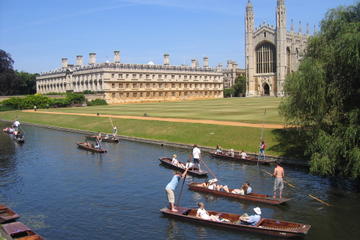
♦ Visit Cambridge, the ancient university town in Cambridgeshire.
♦ Pop in on Her Majesty at Sandringham Estate, one of the Queen’s residences near King’s Lynn.
♦ Holkham: a wide expanse of beach fringed with pine trees. Walk through the wooded dunes.
♦ Wells-next-the-sea: Not very next the sea, a long estuary winds its way through the marshes to this this charming coastal resort. Have a go at crabbing or take the little train down to the bay lined with colourful beach huts.
♦ Blakeney: A pretty flint villages. Take a boat trip to Blakeney Point to watch the seals.
♦ Lavenham: One of the finest medieval villages in England, ancient half timbered, crooked houses lean over narrow streets.
♦ The Norfolk Broads: Best explored by water. Hire a motor boat, canoe or kayak to visit this area rich in wildlife.
♦ Southwold: Visit the pretty pier, the lighthouse and handsome town.
♦ Windmills and village pubs: Hire a bike to cycle the flatlands or gently rolling countryside of Norfolk and Suffolk. Stop off at villages for a pint of the local brew. Visit one of the windmills that dot the waterways.
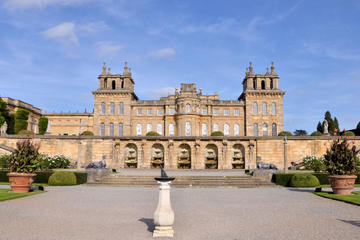
‘Downton Abbey’ TV Locations, Cotswolds and Blenheim Palace Tour from Oxford
About the author:
Helen Moat spent her childhood squished between siblings in her Dad’s Morris Minor, travelling the length and breadth of Ireland. She’s still wandering. Helen was runner-up in 2011 British Guild of Travel Writers Competition and was highly commended in the BBC Wildlife Travel Writing Competition this year. Her writing has been published in The Guardian, Telegraph and Wanderlust magazine as well as online. She blogs at: moathouse-moathouseblogspotcom.blogspot.co.uk
All photos are by Helen Moat.

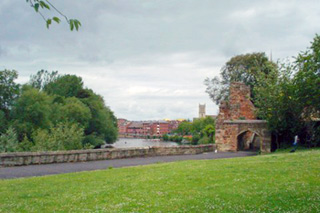
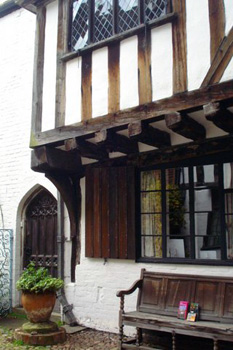 The picturesque city of Worcester in Worcestershire, the West Midlands of England, is a modern city with a fascinating past. From its early begins as a Roman fort on the River Severn in the first century, down through the ages Worcester has been noted as an important centre of British history, known as ‘the place where Liberty was fought’.
 I’ve visited Worcester on several occasions and always enjoy touring around the town. It’s a fairly easy walk to see most of the sights. The city still retains many historical buildings. The Greyfriars, a merchant’s house on Friar Street, is a beautiful timber panel house dating from 1480. The gracious Queen Anne style Guild Hall on High Street was designed by Thomas White, a student of Christopher Wren. There are some exhibits inside. And at the Commandery, which has functioned as everything from a hospital to a military headquarters for King Charles, you can take an audio tour focusing on the Civil War history. On one of my visit to Worcester I went to the Royal Worcester Porcelain museum where I purchased some samples of this fine china. Worcester is also the home of the Lea and Perrins factory where traditional Worcestershire Sauce is made. Be sure and stop at one city’s of the very old Tudor-style pubs to refresh yourself!
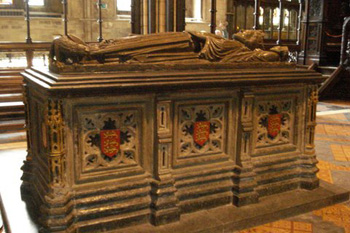 The grandest architectural landmark in Worcester is the imposing Worcester Cathedral which had its beginnings in 1084. Located on the banks of the River Severn, its spires dominate the skyline of the city. The mediaeval cloisters of the cathedral are among the most remarkable in England. The cathedral has the distinction of having the tomb of King John who is most famous for agreeing to the Magna Carta. During his reign from 1199, he controlled an empire that stretched from the south of France through regions of England, Wales and Ireland. When he died in 1216, he requested to be buried at Worcester. The cathedral also has a memorial to Prince Arthur, the young prince Arthur Tudor whose younger brother was Henry VIII. Because of his chancery in the cathedral, Worcester was spared destruction by Henry during the English Reformation.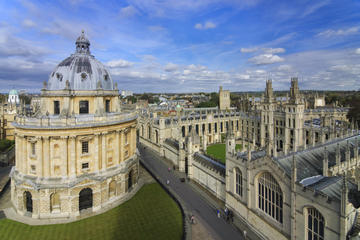


 Arkwright was born into the world in 1732. When his mother looked upon her new-born child, it’s unlikely she thought, “My son’s going to change the face of Britain forever,” but this is exactly what Richard Arkwright did. Because of him, the countless small-scale cottage industries that criss-crossed the British countryside largely disappeared to be replaced by huge factories that sprang up in villages, towns and cities across the land.
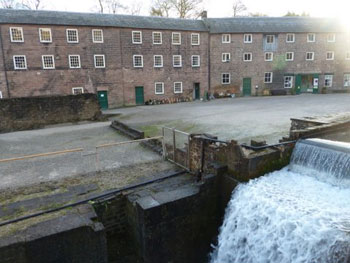
 Arkwright: opportunist, designer, engineer, entrepreneur, ruthless negotiator, business magpie and self-made man, developed among other things: the spinning frame, the water frame and carding engine. He established the great mills that still line Britain’s waterways. And although some mills existed before Arkwright came to the fore, it was Arkwright who created the modern factory – a hundred years before Henry Ford was born. He is the father of the Industrial Revolution.

 His employees were fiercely loyal to Arkwright. After all he provided them with money, homes, even a week’s holiday (as long as they didn’t leave the village). He also refused to employ children under the age of seven. But he was a strict and fearsome autocrat; a man of his times.
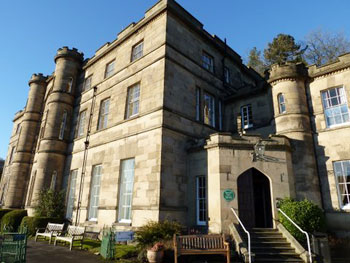
 Across the valley from Masson Mill (now a shopping outlet housing a small Arkwright museum), you can see Willersley Castle. Arkwright tiring of the gloomy Rock house situated in a narrow, shady valley, bought a large tract of land from Florence Nightingale’s family and set out to build an elegant mansion on the sunny side of the valley. However, as luck would have it, the house burnt down on completion and Arkwright had to wait a further two years before the rebuilt house was complete. But fate was to conspire against him and poor Arkwright died before he could ever move in.
 Few venture here, yet it’s a place of strange decaying beauty. The first mill was built here in the 1600s. By the height of the Industrial Revolution, there were at least seven mills crammed into this narrow dale. Arkwright, of course, was at the centre of Lumsdale’s expansion.
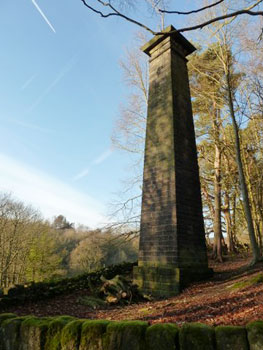 Climbing high above the dale, I look down at the waterfall that spills a hundred feet. Transparent pebbles of water bounce into the air. Below, the stream is bracken-brown. At the water’s edge, great green and russet slabs of stone sculpt the valley, like heavy, angular communist monuments.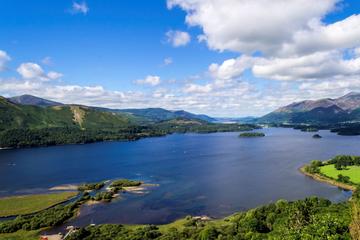
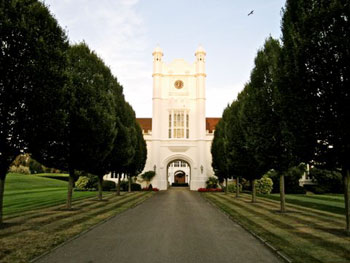
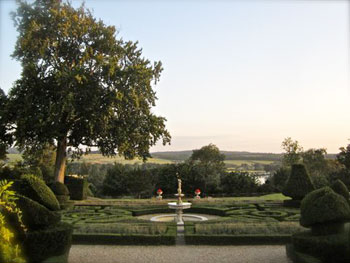
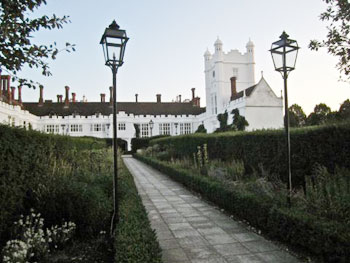 We are a bit early and have a chance to amble round the gardens. Pebble pathways weave like a labyrinth through trimmed hedges in varying shades of green. A fountain sits in the center with a cherub standing on top and the soft sound of trickling water. We watch a bride and groom looking out over the cliff, down to the River Thames. His arm wraps around her slender waist over the buttons elegantly running down the back of her lace dress. Their guests photograph them as they laugh and kiss in the late afternoon sun.
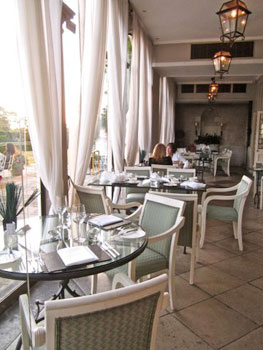
 We sit back in our sleek armchairs and people watch through the windows. Our separate teapots arrive along with sugar cubes and milk in a sterling silver pitcher. I lift my teapot and pour it into my cup. The tealeaves come pouring out with it. I look over the table at Stonie, sheepishly, and see that he has made the same mistake.
 We start on the sandwiches. They’re thinly spread with different fillings, like hummus, roast beef, and egg mayo. Frankly, I am not impressed. They’re made with commercially packaged bread, crusts are cut off and only about 1/3 of the slice is used. I wonder what they do with the rest of the sandwich. If I’m going to pay £21 for sandwiches, I would like fresh bakery-worthy bread, not the Wonder bread my mom used for bologna sandwiches in my school sack lunch. However, this is traditional afternoon tea, and that’s the way the sandwiches are made. Besides, I’m hungry.
 I cut a raisin scone in half and spread the jam first, then the cream. It’s so thick, I use my finger to scrape it off the spoon and lick my finger clean. Not the best manners, I’m aware, but we’ve already broken so many other rules of etiquette.
 I refill my teacup one last time. By now, my tea is over-brewed and bitter. I have a few sips and decide against it.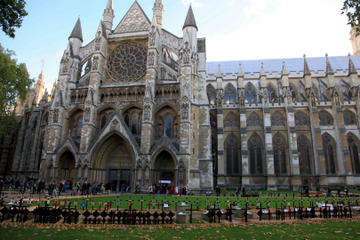
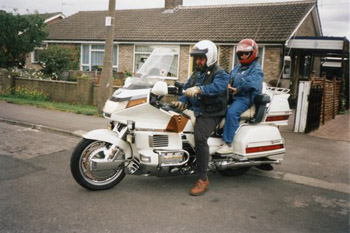
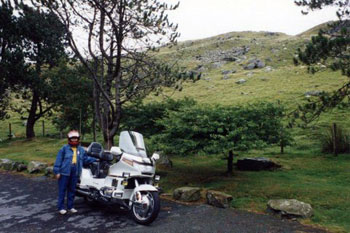
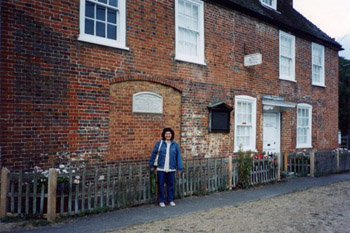 As my knight in shining armour parked the pearl white Honda Goldwing in front of Chawton Cottage, he said, “Take your time. I’m going for a tea.” He pointed at Cassandra’s Tea Shop across the road.
 There I stood in Jane’s house, a gift from her brother which she shared with her mother and her sister Cassandra; the place she wrote most of her work. I entered the parlour and gingerly touched the little round table she wrote on. Prickles ran up and down my arms. I had seen some of her original writing at the British Museum a few years earlier, but this seemed more real. I imagined Jane slipping her writing under a book whenever someone entered. Although she often shared her writing with her family, she only did so when she was ready.
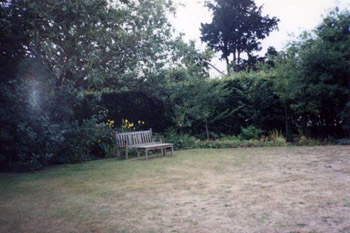 I climbed the stairs to Jane’s bedroom. The first thing I noticed was the patchwork quilt, made with her sister and mother, hanging on one wall. Each floral, diamond patch stitched meticulously into place surrounding a large basket of cheerful flowers in the centre, reminded me of the hours of labour that would have gone into this undertaking. The bed she slept on, covered in crisp white linen, sits peacefully in a corner. On another wall hangs a topaz cross, a gift from one of her beloved brothers and most probably the inspiration for the topaz cross given to Fanny Price by her brother in the novel, Mansfield Park. A window overlooks the garden. Jane spent many happy hours in this room. When she grew ill, she entertained her visitors here.
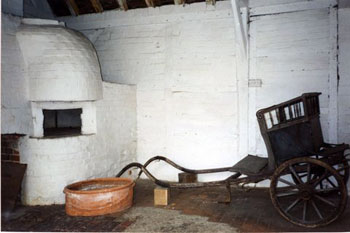 Other rooms upstairs house Regency period costumes, carefully preserved and displayed. I enjoyed viewing the muslin, floor length dresses with Empire waists and soft loose skirts in pale pinks, periwinkle blues and lilacs, such as Jane would have worn. At least she did not have to deal with the constraints of a tightly laced corset. Memorabilia of her two Royal Navy brothers, Frank and Charles, can be found in adjoining rooms.
 Back in the cottage I chatted with the host and perused the comprehensive selection of Jane Austen books. Of course I could not resist purchasing a few (not that I needed to read anything else about J.A.) I also chose a few souvenirs and postcards before I bid Jane, the house and her memories goodbye. I walked across the street to Cassandra’s Tea Shop to meet my husband, who had downed three cups of tea, ate two pieces of lemon loaf and washed the bike while waiting for me. He asked how my visit was.