by Melissa Gardiner
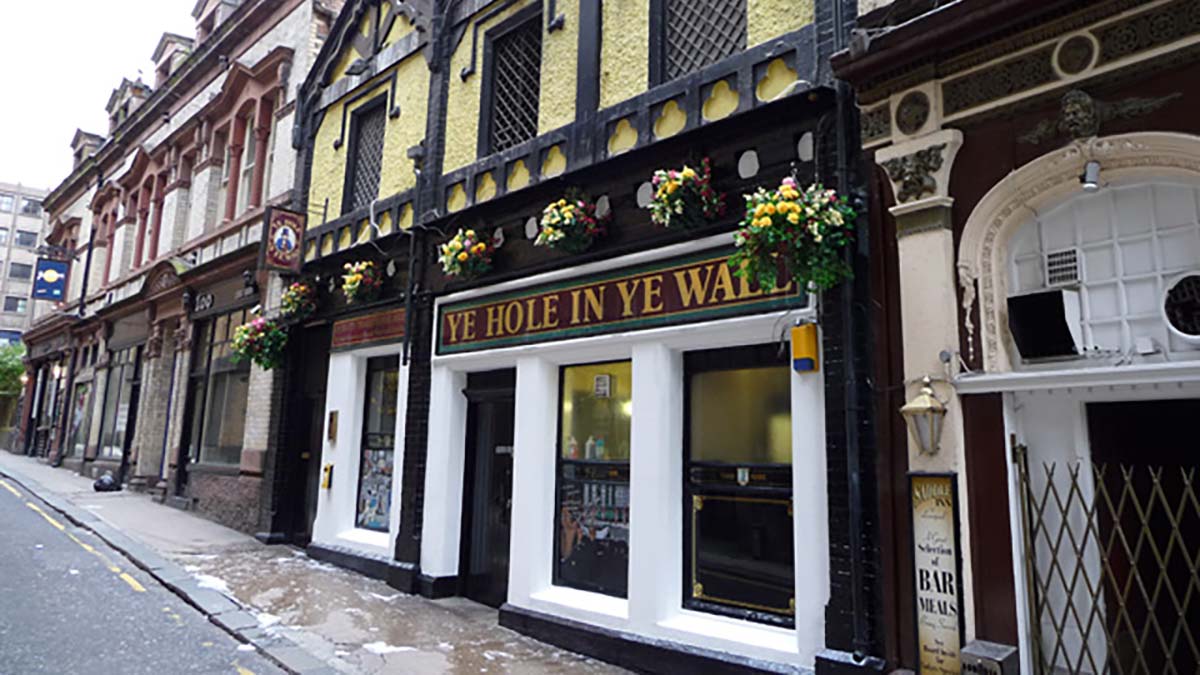
I must admit to having my doubts about Liverpool’s World Heritage Status and its European Capital of Culture award back in 2008. It might have been an outdated view but as somebody who had never visited, I imagined it as a fairly run-down northern city, famous for the Beatles, football and little else. The reality is that my visit to Liverpool was a wonderful surprise, from the moment I walked out of Lime Street Station to see the magnificent St. George’s Hall across the road, to my farewell drink in Ye Hole in the Wall pub which has been tucked away in a city center back street since 1726.
Architecture
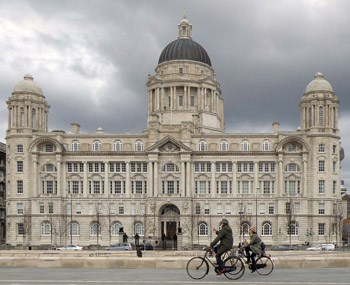 It’s Liverpool’s architecture that grabs you first of all, even before you begin to explore the history behind it. Liverpool’s history is tied up in its past as a great Atlantic port and the buildings on the waterfront, known locally as the Three Graces, symbolize the wealth that international trade once brought to Liverpool. The most iconic building of all, the Liver Building, sits proudly looking over the River Mersey and local legend has it that if the Liver Bird sat on top of the building ever flies away, the city will crumble. The Waterfront is a part of Liverpool’s World Heritage Site which winds through the docklands and across the Ropewalks area up to the St. George’s Quarter which also includes the Walker Art Gallery and the recently re-furbished Central Library.
Museums
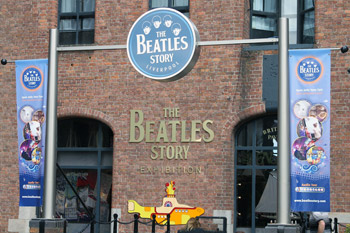 There are a number of fascinating museums down at the Pier Head and in the Albert Dock area. The Merseyside Maritime Museum is located near to historical sites such as the Piermaster’s House and the Canning Docks. It also houses exhibitions highlighting Liverpool’s involvement with the Titanic and the Battle of the Atlantic. The International Slavery Museum helps visitors and locals understand how Liverpool’s past is rooted in the slave trade. Over 5000 slave ships left Liverpool docks between 1695 and 1807, undoubtedly contributing to the growth and success of the city during this period. The museum includes exhibitions about life in West Africa and the Legacies of Slavery. Liverpool’s Chinatown is also well worth a visit. It was the first established Chinatown in Europe and you can wander into the area through a huge ceremonial Chinese arch. The area is mainly a home to restaurant and grocery shops these days but there is a range of cultural events held throughout the year with Chinese New Year seen as a major event in the city.


Eating Out
 I grabbed lunch at Bluecoat Chambers on my first day. It’s a 300-year old Grade I listed building in the heart of Liverpool’s shopping district. It has a lovely café and restaurant; with gardens outside if the weather is nice. The Liverpool Arabic Arts Festival was due to be held there the week after I was in town and it’s a place where there’s an all year-round calendar of cultural events. Later that evening I ate at The Clove Hitch in the Georgian Quarter. It was located on a Hope Street, a fabulous thoroughfare close to Liverpool University and the Philharmonic Hall. Liverpool has some great old pubs, prefect for real ale drinkers and visitors who love to drink somewhere with a bit of character and history. I was tempted to join up on a ghost walk around parts of old Liverpool, but a few hours exploring the pubs in my own time seemed a better option. Another little place that I loved however was The Brink, a little café bar that is alcohol free and puts on regular cultural and educational events to support those in the city who have suffered through alcoholism and addiction. It’s easy to forget in the rejuvenated city center that Liverpool is a city that has gone through tough times and there are still areas where there are high levels of deprivation, crime and drug use. The recently built Museum of Liverpool is a great place to explore the less glamorous side of the city, with exhibition about life working at the docks and Liverpool’s social history, including the Toxteth riots in 1981.


Cathedrals
Hope Street also links the city’s two cathedrals. Liverpool is proud of its two places or worship. The Anglican Cathedral which offers spectacular views over the city is the largest in the UK whilst the Metropolitan Cathedral which serves Liverpool’s Catholic population is known locally as Paddy’s Wigwam and has a more modern look.
A weekend probably wasn’t enough time to really explore Liverpool. It has a rich musical and sporting heritage that the local tourist industry has a real focus on, and there are plenty of places outside of the center such as Speke Hall and Croxteth Country Park that would also be of interest to those with an interest in history. I found time for a ferry trip on the River Mersey before I headed home. I sat on the top deck and as the Three Graces came into view on the return leg I realized that that Liverpool is really one of the UK’s cultural and historical gems.
Private Beatles Tour of Liverpool by Taxi
If You Go:
Alongside the other places you may want to branch out and visit:
♦ The Tate Gallery – a must for any serious art buffs
♦ The Albert Docks – a pleasure to walk around with many sights to see, whether during the day or in the early evening
♦ Knowsley Safari Park – a haven for those people who like wildlife of a different kind and a must for those travelling with small children

Private Half-Day Peaky Blinders Tour of Liverpool
Photo credits:
Ye Hole In Ye Wall Pub by John Allan / Ye Hole in Ye Wall
Port of Liverpool Building by KGGucwa / CC BY-SA
Beatles Exhibit by David Poblador i Garcia from Barcelona / CC BY-SA
Bluecoat Chambers restaurant by Charles Hutchins / CC BY
About the author:
Melissa Gardiner is now a freelance writer, but prior to this she worked within the travel industry as a tour guide, specializing in sites of historical interest throughout the UK. She has a keen interest in ancient history and loves seeking out places of interest to write about that she feels will interest others as much as herself.
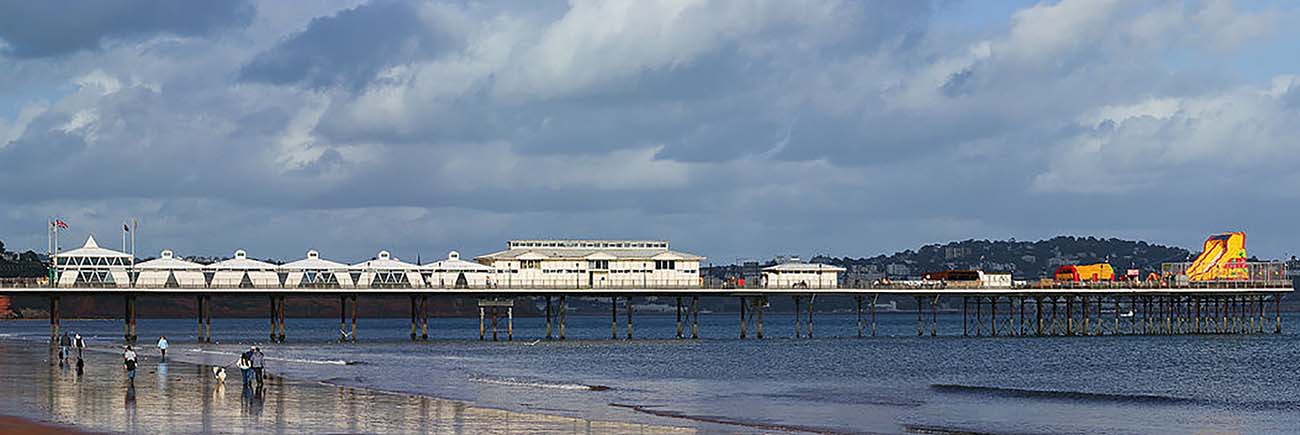
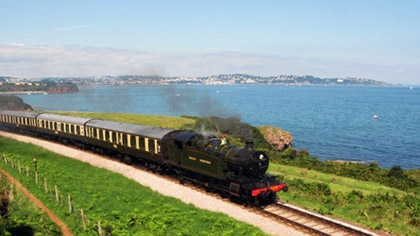 The Dartmouth Steam Railway is a preserved steam railway line that runs from Paignton through to Dartmouth. This is one of the few remaining U.K. steam railway lines which has a variety of rolling stock locomotives. Locomotives such as the 4277 Hercules, 7827 Lydham Manor and 75014 Braveheart run the 6.7 mile railway from Paignton to Kingswear.
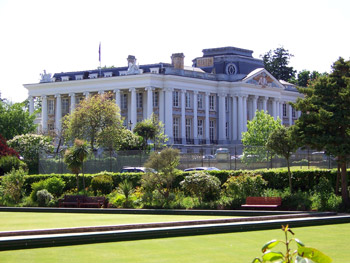 Among the more notable buildings in a Paignton is Oldway Mansion. This is a large 19th century building built in the same style of the Palace of Versailles. I visited the intriguing building in Paignton, which is something of an architectural landmark.
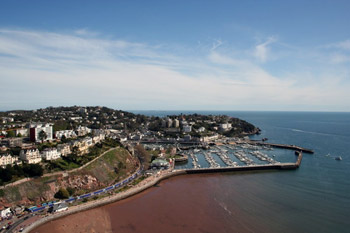 On the final couple days of my holiday the weather was a little better, and I went into two of the neighbouring towns. The first I visited was Torquay. Torquay is a town that includes exotic gardens along its seafront, Living Coasts, Kents Cavern, Babbacombe Model Village and Cockington Court which is about a mile away.


 We walked on to the waterside. I had no idea it was so close to the city centre. During the troubles it was a forgotten wasteland. By the Lagan, we gazed up at the Ring of Thanksgiving, a monument to peace and reconciliation. The locals prefer to call it ‘The Thing with the Ring,’ ‘Nuala with the Hula’ or ‘The Doll on the Ball’. They have a way with words here. Just a stone’s throw away is the handsome Customs House and the Albert Tower, Belfast’s very own Leaning Tower of Pisa. Once again, that infamous Belfast humour kicks in, with the locals describing it as having the time and the inclination.
 The bus took us along familiar streets: Donegal Square with its handsome Baroque-styled City Hall and Donegal place, the main shopping drag, now lined with 16 metre high sculptural masts, homage to 8 ambitious ships (including the Titanic) built by Harland and Wolff in its heyday. We skirted the Lagan again and the newly regenerated waterside and along city streets that were so familiar and yet so different. Gone were the grey police jeeps, the wary soldiers, the turnpikes and terrapins, and the beefy security guards on each and every shop door. Gone was the smell of subdued fear. And in its place there was art and sculpture and new innovative architecture. There was vitality and a joie de vivre in Belfast.
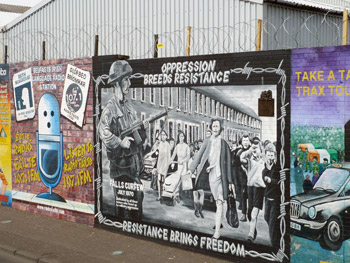
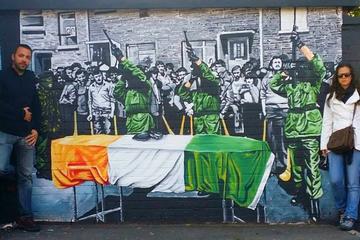
 We reached the political murals. ‘Oppression breeds resistance, resistance brings freedom’. The mural commemorated the Falls curfew of 1970. There was a painting of Che Guevara and murals supporting Cuba and the Basque Separatists. There were condemnations of Israel and the US. Most of the murals focused on the wider politics of the world and Marxist communism. There was also a mural of Bobby Sands.
 We continued on past the remaining infamous Divis Flat, once an IRA stronghold. During the Troubles, the army had occupied the top two floors and could only access the building from the air. The flat occupants were subjected to searches night and day, their homes torn apart. Most, if not all of them, were involved in terrorist activity- or at least supported it. The residents hated the army occupation. The animosity was mutual. A nine year old child was killed by the RUC (the police) who claimed they had been under sniper attack at the time.
 The bus continued on to the Titanic Quarter past the Samson and Goliath cranes that are monuments to a once wealthy and successful Belfast. The old ship-building and linen industries had faded away and unemployment and poverty had taken its place – and with it the seeds of discontent started to sprout.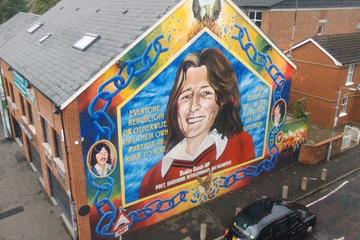



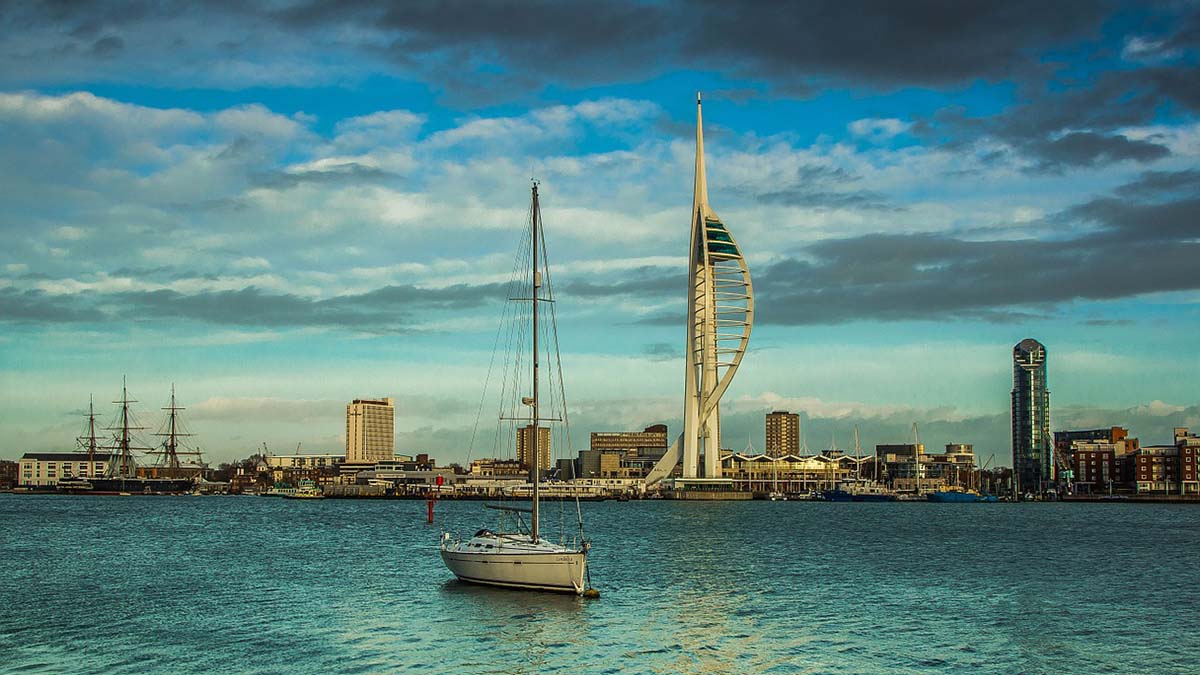
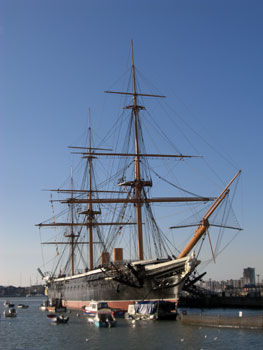 However, first I just had to drop in at the Historic Dockyard. It is here that a variety of naval museums are located such as the Royal Naval Museum and Mary Rose Museum. As mentioned the Historic Dockyard includes the HMS Warrior, which can also be considered a museum. Whilst you’ll need tickets for the ships, you can still enter the dockyard without tickets.
 After exiting the Historic Dockyard, the Millennium Promenade will take you to Gunwharf Quay right next to the train station. The Gunwharf shopping precinct is a more recent addition to Portsmouth that opened in 2001. It includes a bowlplex, cinema, Grosvenor Casino and a Holiday Inn Express hotel at the Gunwharf Quays Plaza which is ideal for any longer stay in Portsmouth.
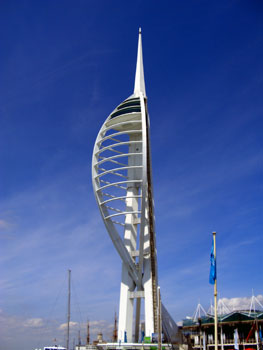 Modern Portsmouth soon gives way to Old Portsmouth along the Millennium Promenade which links Gunwharf with Portsmouth Old Town. This is where the trail gets interesting! After leaving Gunwharf, I reached the Renaissance Trail section of the Millennium Promenade. The Renaissance Trail passes through Portsmouth Old Town and ends at Clarence Pier.
 Southsea Seafront begins at Clarence Esplanade, and the Victorian seafront continues for about four miles. At the esplanade I reached Clarence Pier and its fair that includes the small Skyward roller coaster, dodgems as well as miniature golf. However, the fair remains closed until March. Although the adjacent arcades are open, and they also include the Coffee Cup café and Wimpy Bar. The Premier Inn and Holiday Inn are two nearby hotels next to Clarence Pier which could be suitable accommodation for visitors.

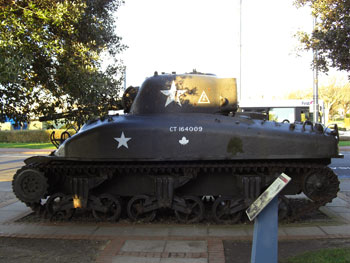 One of the highlights of the Southsea Seafront is perhaps the D-Day Museum at Castle Field. This is a museum that documents the 1944 D-Day landings in France. It includes the Operation Overlord embroidery which is an 83 meters long D-Day textile. Outside the museum an American Sherman tank and a British Churchill tank are also displayed.