By Leslie Jones
The rugged Santa Lucia Mountains gracefully tumble down to the mighty Pacific Ocean along California’s scenic Pacific Coast Highway. Towering high overhead, their majestic size safely guards many secrets of this intriguing area’s cultural and historic past. Driving into this magical backdrop simply takes your breath away with its unparalleled beauty, whimsical charm, and creative forces at play.
The colossal castle high upon the hill is just one of many reminders of the history that abounds along this remarkable, scenic corridor on the journey north to Big Sur. Hearst Castle, a dream brought to life by publishing tycoon William Randolph Hearst, is now a California State Park Museum as well as a National Historic Landmark and California Historical Landmark. He and his famed architect, Julia Morgan, designed this elaborate castle housing ornate tapestries and artistic relics and artifacts from around the world.

Directly across Highway 1 lies San Simeon State Park, showcasing the area’s charming, historic schoolhouse (1881), general store (1852) and many warehouses once used to store Hearst’s world-renowned treasures. San Simeon Point, a local Chumash sacred site, gracefully frames this enchanting beach cove area.
Just up the road lies the majestic Piedras Blancas Light Station perched above dramatic ocean rock formations. This lighthouse was first illuminated in February 1875 and was originally 100 feet tall complete with a first order Fresnel lens. It became a California Coastal National Monument addition in 2017.
In 1994, scientists from the National Marine Fisheries Service (NMFS) began taking an annual count of gray whale mothers and calves as they passed Piedras Blancas in April and May on their way to their annual feeding grounds in the Arctic seas. It is also utilized as a United States Geological Survey (USGS) California Sea Otter counting and nearby elephant seal rookery census data collecting location.

Heading higher into the Santa Lucias, dramatic views of the expansive Big Sur coastline are visible around each turn. At times, with an almost translucent teal color, there’s a plethora of activity to witness far down below in and around the ocean’s edge. Sea otters frolic in the coves, untouched beaches beckon and on occasion, you’ll see someone fishing or collecting mussels on the rocks.
California Sea Otters, also known as the “teddy bears of the sea”, were once close to extinction. Under the Endangered Species Act, they continue to expand in range and population. By the 1930s it was believed that they had vanished due to fur traders. Fortunately, a small group survived and continued to thrive in the area. They are a true joy to watch with their playful antics and adorable appeal.

Gorda is one of several small, colorful towns you pass through while continuing north. The fresh springs in Gorda were used by local Native American tribes (Esselen) and the first Europeans arrived in 1878, when a stagecoach stop was built. Today it is a small, whimsical enclave offering the Gorda Springs Resort, Whale Watcher’s Café and a gas station.
The area’s population expanded with the nearby Gold Rush during the 1880s. Gold and silver were discovered in Big Sur in the late 19th century. In response, miners began searching along this southern flank of Pico Blanco. Today, the entire area is still littered with the rusting remnants of mining operations.
Lime was also formed nearby (limestone converted into calcium oxide/lime) at the historic limekilns at Limestone State Park. The walk through this enchanted coastal redwood forest alone is worth the climb up to the limekilns to admire their ominous skeletal remains. The area also hosts one of many gorgeous beaches you’ll want to enjoy for days on end. Big Sur naturally brings the kid out in you as well as the artist’s creative soul.
Rare and valuable forms of jade have also been found around a nearby area known as Jade Cove. Starting in Gorda in 1990, the ongoing Big Sur Jade Festival now showcases hundreds of amazing jade, wood, and rock artist creations. On my last trip north, I met a husband-and-wife team in Gorda who dive for and sell jade at festivals and in Gorda. It was a true pleasure to hear adventurous stories of these sometimes-precarious dives.

Esalen Institute is a holistic retreat and educational institute first established in 1962. Joan Baez and friends once played there at Big Sur Folk Festivals while the colorful author and artist Henry Miller and his local friends populated the area for many years. It has become a wonderful place for a self-soothing, yoga and writing retreat since it is merely a few hours away.
Offering farm-to-table fresh meals (including amazing curries, salads, soups and much more) straight from their expansive garden, Esalen offers a fascinating mix of workshops and a large 120-acre ocean view property in which to roam. It is also well known for its hot springs.
The location was first homesteaded by Thomas Slate in 1882, when he filed a land patent under the Homestead Act of 1862. This made it possible for citizens to claim 160 acres of surveyed government land. Homesteaders were required to build a dwelling and cultivate the land. After five years, they owned their land free and clear.
The settlement became known as Slates Hot Springs. It was the first tourist-oriented business in Big Sur, frequented by people seeking relief from numerous physical ailments. Soaking in the soothing tubs while listening to the nearby crashing waves is a uniquely, peaceful experience.
A Little Further North
Continuing to navigate the twists and turns of one of the most highly photographed drives in the world, you’ll soon come across names including Post and Pfeiffer. Early pioneers Michael and Barbara Pfeiffer came to Big Sur in 1869 and were among the first European settlers in the area. The homestead of their son, John Pfeiffer, has been reconstructed in Pfeiffer Big Sur State Park, and his Pfeiffer Ranch Resort, established in 1908, was replaced by the Big Sur Lodge. Another nearby state park is named in honor of their daughter Julia Pfeiffer Burns.
Nearby, (Grandpa) Deetjen’s Big Sur Inn, was designed and built from the 1930s to 1960s. With each room hosting a unique personality, much of what was designed architecturally was recreated from his native Norway. Deetjen’s Inn was bequeathed for others to enjoy in 1972 and The US Department of the Interior placed Deetjen’s Big Sur Inn on the National Register of Historic Places in 1990. Its rustic, hand-crafted charm transports you back to Big Sur’s early years.
The Henry Miller Memorial Library is a non-profit organization celebrating the artistic contributions of Henry Miller, while serving as a cultural resource center for artists, writers, and musicians. It is also a wonderful outdoor venue for warm summer afternoon concerts.
While known best for novels including Tropic of Cancer, Tropic of Capricorn, The Colossus of Maroussi, Henry spoke of his intriguing years in this area (1944-1962) in Big Sur and the Oranges of Hieronymus Bosch. He was often viewed as a master storyteller and rather colorful character. Many of his paintings are also available to view at the area’s Coast Gallery.
Nepenthe Restaurant has a colorful history all its own dating back to 1949 when it opened by the Fassett Family who still owns it today. It was previously owned by Orson Welles and Rita Hayworth when it was merely a cabin in 1944. It was also used to film movies including The Sandpiper featuring Elizabeth Taylor and Richard Burton (1963).
Continue north and you’ll eventually reach the Monterey Peninsula with plenty of additional exploring to do along the way. Pfeiffer Big Sur State Park and Pfeiffer Beach, Point Sur Lighthouse and State Historical Park, and the famed Bixby Bridge are found along this northern portion.
The best piece of advice while traversing this historic sector is to slow down and enjoy the views. The ocean vistas are unparalleled, the small towns and stops are intriguing, and the entire area speaks volumes of the vast history it encompasses. Enjoy the famous Ambrosia Burger at Nepenthe for lunch, visit one of the taverns where the local stories are shared, walk barefoot on one of the expansive beaches and stay a bit longer and enjoy one of those amazing Big Sur sunsets.
IF YOU GO
Southern Big Sur Area
Esalen
Esalen Institute | A Leading Center for Exploring Human Potential
Hearst Castle
Hearst Castle – A Museum Like No Other
Gorda
Gorda Springs Resort – Lodging, Restaurant, Gas, Groceries
Piedras Blancas Light Station
Piedras Blancas Light Station – HOME
Big Sur Area
Big Sur
Big Sur California, Lodging, Camping Tourism Information
Deetjen’s Big Sur
Deetjen’s Big Sur Inn (deetjens.com)
Henry Miller Library
The Henry Miller Library – Where Nothing Happens
Nepenthe Restaurant
PHOTO CREDITS
Esalen – Esalen Cove featuring hot springs tubs
John Hofschroer – Lighthouse, Schoolhouse, Sea Otters
Lighthouse – Piedras Blancas Lighthouse
Schoolhouse – Charming schoolhouse in San Simeon State Park
Leslie Jones – Jade, Esalen Cove
Jade – Jade found in Jade Cove
Browse Available Tours of San Francisco Area: Big Sur, Carmel and Monterey
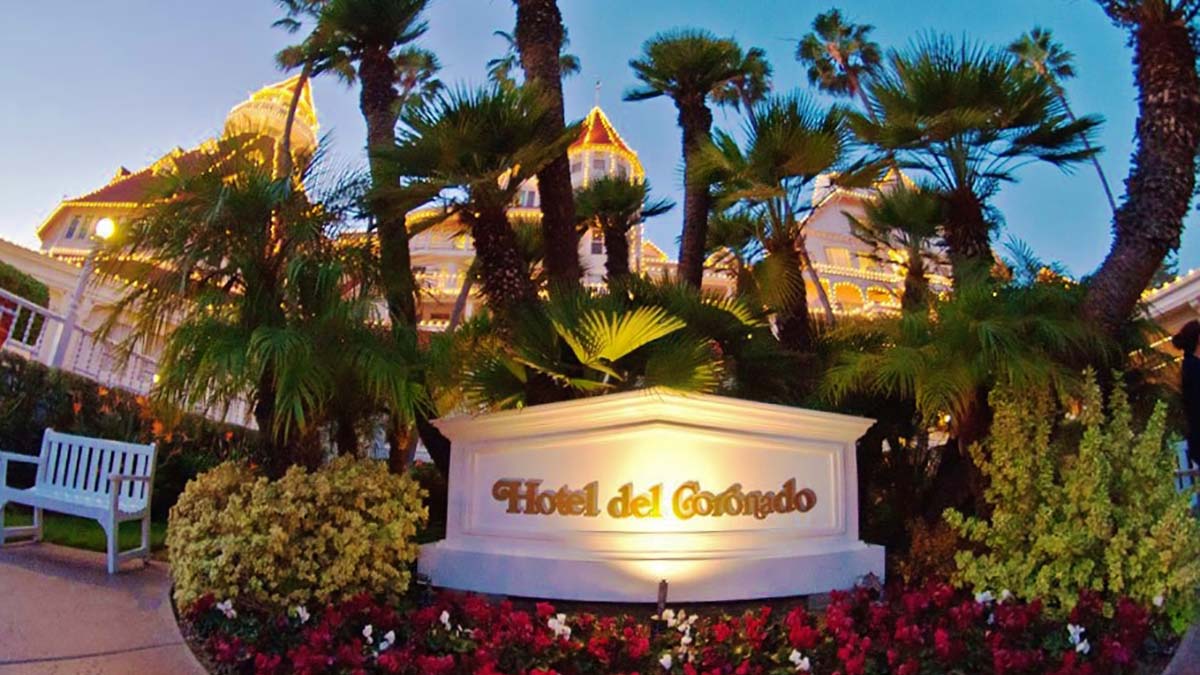

 L. Frank Baum, the writer and creator of the famous Wizard of Oz referred to Coronado Island as his “personal Oz.” He did much of his writing here and many believe The Del was the inspiration for the Emerald City.
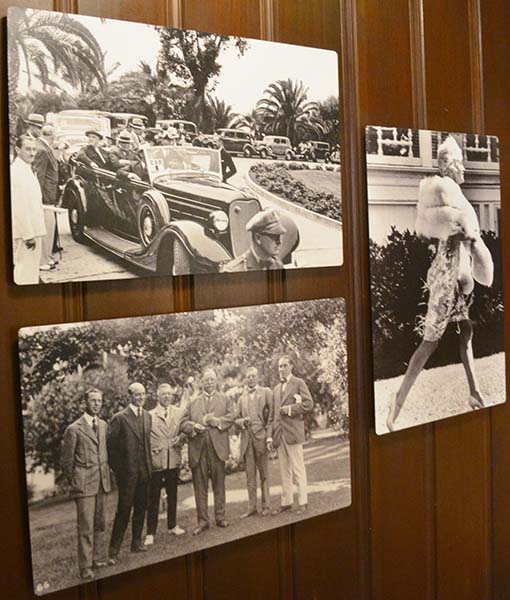 This “Grand Lady of the Sea” is also reputed to be the setting of one of the most famous love stories of our time. It’s widely reported that Wallis Simpson, married to a U.S. naval officer at the time and living in Coronado, met her future husband at a grand banquet at the hotel in 1920, thereby changing the course of history.



 About the author:


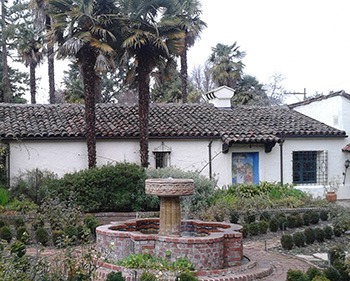


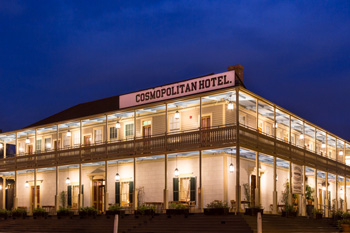
 Usually in such a place, you may only view rooms from a doorway and snap a photo, so imagine my delight to find that for the same price as the Best Western a few blocks away, you can spend the night in this piece of living history.
 Mr. Bandini was known for both his huge parties, and his political involvement. Guests travelled long distances to attend his famous 3 day fandangos involving food, drinks, music and a favorite of Mr. Bandini’s, dancing. Though known as a gracious host, it was not all fun and games for Juan Bandini. Many important political meetings that shaped the history of California were held right here in the salon. Here, along with other prominent Californios, Bandini planned revolts against more than one Mexican ruler of the day. During the Mexican-American war Juan Bandini was an American supporter and this home was the headquarters for Commodore Stockton. It was here that scout Kit Carson was sent by General Kearny to request aid in the battle of San Pasqual.
 In his later years, Juan Bandini’s fortunes dwindled and the Casa de Bandini fell into disrepair, but the purchase by Stagecoach owner, Albert Seeley and his wife in 1869 brought new life to the old Casa. The Seeley’s had a frame structure built right on top of the existing adobe, adding the second story with wrap around porch, creating a hotel to service Seeley’s growing stage coach business. This location again became the social hub of the town and one of the most important hotel-stage stops in Southern California. It is to these glory days that the current rooms have been restored.
 Heading upstairs and walking along the expansive 2nd story veranda overlooking San Diego’s old town, it’s easy to daydream about what life might have been like in the hotels’ heyday. Close your eyes as the dry dust rises in small clouds from the dirt streets below. Listen for the clatter of the horses pulling the stagecoach up in front of the hotel to unload passengers, weary from the 35 hour passage from Los Angeles. Imagine the laughter of the saloon crowd, the bustle of the town, and the rustle of crinolines as women pass on their way to the haberdashery.
 Opening the faux finished door from the veranda reveals a room filled with period furnishings. A globe shaped lamp, fashioned after the old kerosene style, sits on the table beside the dark, ornately carved bed. Wallpaper, in vintage patterns of leaves and vines form a backdrop for the thick red velvet curtains trimmed with large gold tassels. Double hung, wood framed windows on either side of the door look out onto the veranda and the town below. Each room has its own characters and features, like fireplaces or sitting rooms, though you will not find a TV in the room to distract from the authenticity of the place. The comfy cotton quilt seems like a perfect place to curl up with a book.
 When Seeley built his grand stagecoach hotel with 20 guestrooms in 1869, it may surprise you to learn that it did not include indoor plumbing. Chamber pots and outhouses were the facilities of the day. Indoor plumbing was not added until 1930. Don’t worry though, although the 2010 restoration, overseen by teams of experts and historians, included the use of as much of the original materials as possible, the bathrooms are not original. The 20 rooms were converted into 10 unique guestrooms, accommodating guest bathrooms that include pull chain toilets, pedestal sinks, modern rain head showers and in some cases antique copper or wooden soaker tubs. It still has that 1880s feeling but with all the modern conveniences.
 Leaving the hotel to explore, you are just steps from museums, interpretative displays artisans, shops, restaurants, and a theater. When night falls and the park closes, you are left with unique access to Old Town, to quietly contemplate what it was like for those early settlers of the Wild West.


 All photos by Amy Muschik: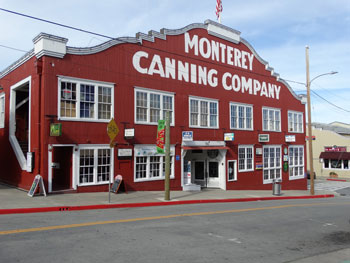
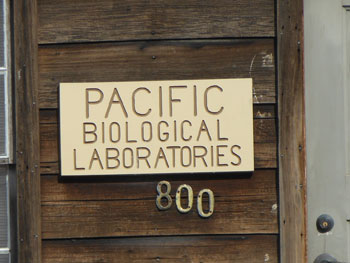 Yes, it too has changed like any popular coastal community which draws large crowds due to its unique history, natural beauty and tourist-pleasing highlights including the Monterey Bay Aquarium. But if you stare out at sea and at the nearby cannery buildings in the early morning, there are still signs of those historic sardine canning days Steinbeck spoke of so eloquently.
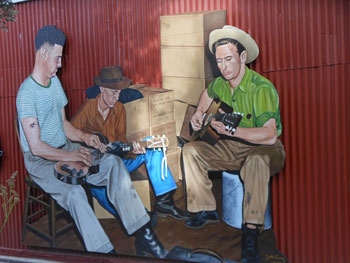 Two larger-than-life size murals based on photographs of the original “Mack and the boys” in his novel Cannery Row (who lived on the fringes of the canning district), are also nearby. Accompanied by quotations from the novel, they were created by local muralist John Cerney and lend a colorful charm to the entire area.
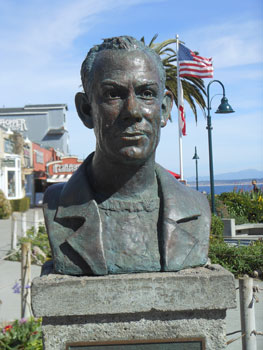 While Steinbeck Plaza has been around for awhile, a new Cannery Row Monument pays tribute to notorious, famous and colorful characters where were vital to the area’s evolution. Author Steinbeck sits atop the rock and Ed Ricketts, at the bottom, are surrounded by others who are reminiscent of what Cannery Row was like as a bustling sardine canning district. Four other men huddled together represent entrepreneurs who revived Cannery Row after it had fallen into decline. This is a poignant reminder of the vast history this area represents.
 all over again.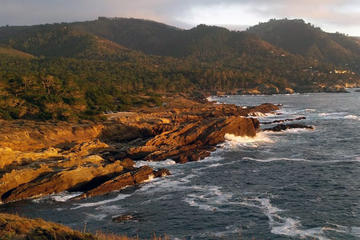

 About the author: