San Francisco is a favorite destination for US history buffs because, despite being young by global standards, it’s packed with a wealth of culture, conflict, and world-changing influences into its few centuries. From its early history as a Spanish colony to the fast and turbulent changes brought by the Gold Rush, the city’s time as a maritime trade epicenter, the wealth of cultural influences brought in by immigration, and the counterculture movements of the 20th century, it has a huge amount of historic sites to visit, despite the earthquakes and fires that have periodically ripped through it. So much so that it can be hard to know where to start. So, to help you out, here’s a quick guide to visiting the best historical sites in San Francisco:
First, pick the right base
San Francisco doesn’t have a particular ‘historic center’ – although some argue that the Mission District is a close contender for the title. Instead, the majority of historic attractions are spread between the waterfront, Downtown, Mission, Presidio, and the surrounding hills (where you can find various fortifications dating back to the Mexican-American War). So, when looking for places to stay in San Francisco, don’t simply opt for somewhere in the middle and hope for the best. Instead, think about the kinds of sites you want to visit, and pick your location accordingly.
Here’s a very quick primer to help you out:
- Back Bay is great if you’re interested in classic nineteenth-century San Francisco architecture. It also gives you easy access to the Painted Ladies, the cable cars, and Alamo Square.
- North Beach is a good spot for anyone interested in immigrant history, Beat Generation culture, and the old waterfront.
- Fisherman’s Wharf is a practical base for anyone who wants easy access to Alcatraz ferries and maritime sites.
- The Mission District is perfect if you’re interested in colonial Californian and Latino history and culture.
- The Presidio area is a goldmine for people interested in military history, coastal fortifications, and the Golden Gate area.
- Haight Ashbury is an iconic location for anyone interested in countercultural history, particularly the ‘Flower Power’ movement of the 60s.
- Pacific Heights is perfect for people interested in Gilded Age mansions and elite post-Gold Rush residential architecture.
- Telegraph Hill is ideal if you’re interested in Depression-era public art and the history of the early port.
This is far from an exhaustive list, so if you’ve not found what you’re looking for here, do a bit of research – it won’t take you long to find the perfect spot for your own brand of history!
Now, let’s get into some of the best historical sites to visit around San Francisco:
Alcatraz Island
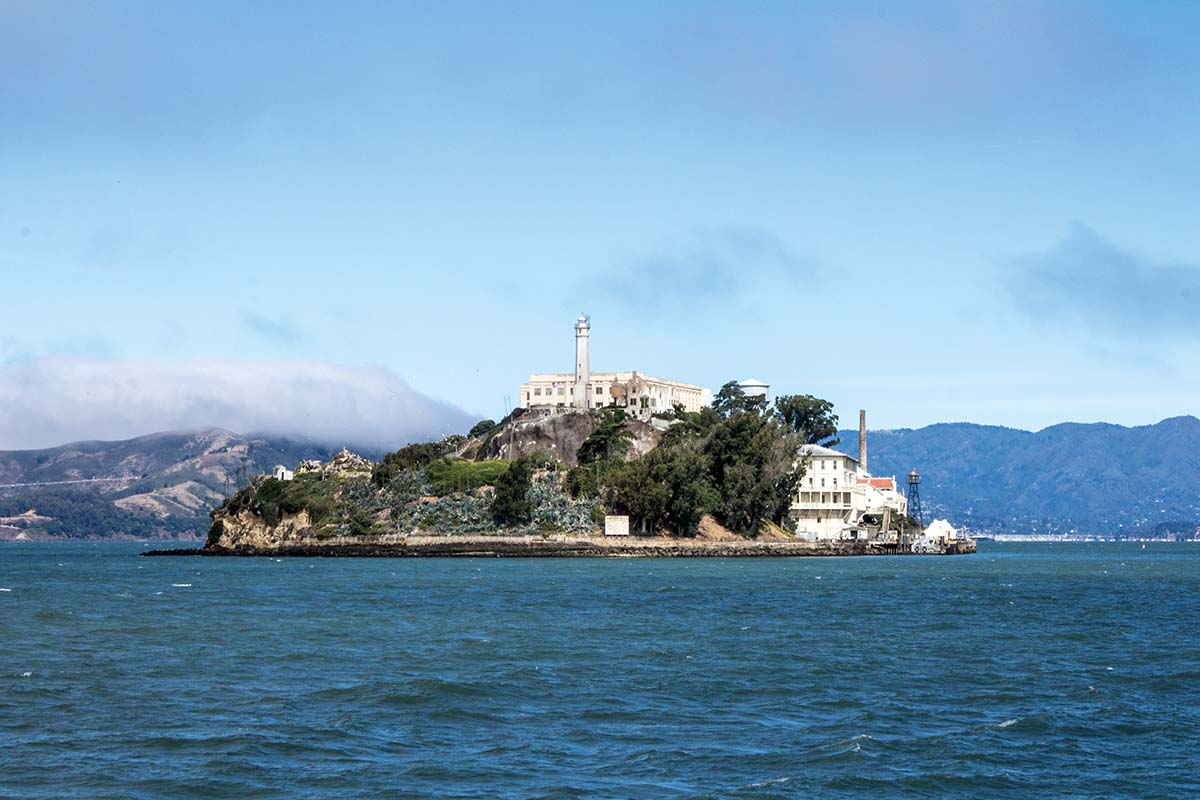
You can’t talk about San Francisco history without mentioning Alcatraz. The island and its famous prison have become notorious worldwide for the reputation of inescapability and the notorious inmates the prison once held. For example, Al Capone and George ‘Machine Gun’ Kelly were held here.
Alcatraz was first developed as a military fortification, but its military tenure didn’t last long when the authorities realized its potential as an ‘inescapable’ prison. Some of the first people to be held here were Native Americans who got in the way of incoming Gold Rush miners and prospectors – including Hopi people who resisted the removal of their children to residential schools.
In later years, the prison would house notorious gangsters and serial killers until it was declared unfit for purpose in 1963. Following this, Native American activists occupied the island for a few years, citing the Treaty of Laramie, which stated that all ‘retired, abandoned, or otherwise unutilized federal land should be returned to the Native people who once occupied it’. This occupation was ended by the US military, but it was a pivotal moment in US/indigenous relations.
Today, you can get ferry rides out to the island, and tours around the infamous prison – but you’re highly advised to book in advance. As you might expect, touring Alcatraz is very popular!
The Presidio
The Presidio was initially a Spanish colonial military outpost overlooking the Bay, set up in 1776. When Spain ceded the Californias to Mexico, the ‘San Francisco’ Mission area gradually became ‘Yerba Buena’. Mexico developed the Yerba Buena area, protected by the Presidio fortifications, and it began to attract the attention of international traders. When the USA conquered California (and renamed the burgeoning settlement ‘San Francisco’), the Presidio became a key American military site until it was transferred to the National Park Service in 1994. That’s a lot of history for just over two centuries!
Today, the Presidio is one of the most popular recreation areas in the San Francisco area. For a start, it’s a fantastic spot to get pictures of the Golden Gate Bridge. It’s also good for strolls along the coast and simply enjoying the scenery. But if you’re here for the history, be sure to look in on the Presidio Officers’ Club, which now serves as a museum of West Coast history, with free exhibitions on the Presidio itself. Fort Point, the Main Parade Ground, and the coastal batteries you’ll find as you walk the trails are also well worth a visit.
Mission San Francisco de Asís
This Mission – which you might also hear referred to as ‘Mission Dolores’ – was founded in 1776, and is the oldest surviving structure in San Francisco. The Mission originally formed part of Spain’s wider Californian mission system – a network of 21 connected Franciscan ‘Missions’ along the Pacific Coast. In theory, the Missions were for religious education, conversion, and improvement, but many argue that their real purpose was to forcibly subdue indigenous peoples and deepen Spanish colonial control of the area. If you’re interested in this element of Californian history, rent a car and head out to some of the other ‘Alta California’ missions – you’ll find them all the way from San Diego to Sonoma.
The San Francisco Mission has survived, with the original chapel intact – its adobe walls were flexible enough to withstand the devastating 1906 earthquake. If you step into its cemetery, you’ll find graves dating back to the colonial period.
The surrounding Mission District is also worth a visit in and of itself. It’s a vibrant, artistic area with a strong sense of community and cultural identity. If you like Latino culture and influence, you’ll love Mission. There are lots of murals and street art to enjoy, and the taquerias make food to die for!
Chinatown
San Francisco has the oldest Chinatown in North America. It was developed during the heavy waves of Asian immigration during the nineteenth century. While much of the original nineteenth-century architecture was lost during the 1906 earthquake, it was rebuilt in a unique ‘Sino Western’ style that you won’t find anywhere else in the world.
Today, Chinatown is an important cultural center for the Asian communities of the Bay Area. But it’s not just ‘Sino-Western’ buildings and Asian culture you’ll find here. Another survivor of the earthquake was Old St Mary’s Cathedral – a gothic landmark built in 1854, and well worth a visit if you’re exploring Chinatown.
Angel Island Immigration Station
Angel Island is one of the most poignant historical landmarks in San Francisco. It was an immigration processing center between 1910 and 1940, and during that time, it processed thousands of immigrants from China, Japan, Korea, the Philippines, and South Asia. Many immigrants were treated like criminals, with lengthy detentions and regular interrogations before being allowed to start their new lives. You can still find poetry carved into barracks walls by these detainees.
The Painted Ladies and Victorian San Francisco
San Francisco is well known for its classic Victorian and Edwardian houses. The colorful examples of these near Alamo Square are often referred to as the ‘Painted Ladies’, and they are truly eye-catching. If you’re a fan of Italianate and Queen Anne architecture, or just enjoy wandering around some Gilded Age buildings, you’ll love the Painted Ladies. You’re likely to recognize them, too – they’ve featured in a lot of television shows and movies over the years!
Explore to get the best of San Francisco’s history
We’ve barely scratched the surface of the historical sites to explore in San Francisco. To get the most out of your history-focused trip to the Bay, we recommend taking a day to simply explore. Often, you’ll find the most interesting gems simply by wandering the old streets, talking to the locals, and following your nose. Enjoy!


 San Francisco never ceases to entertain. The city is diverse, exciting and cosmopolitan. No matter how many times you visit, there is always something new to see. But the city hasn’t always been this refined. Between 1849 and 1917, the city enjoyed a raucous reputation known as “the Barbary Coast” period. The Barbary Coast, the original red light district, acquired its name around 1860 from the coast of North Africa where Arab pirates attacked Mediterranean ships.
 Labor was scarce as passengers and crew jumped ship to seek their fortune. This problem was alleviated with the practice of shanghaiing – signing up sailors by coercion. Prospective sailors, no experience required, were slipped a “Mickey Finn” (opium) in their drink then dropped down a trap door in the saloon floor. This may be where the expression “down the hatch” originated. Upon awakening, they would find themselves unwilling crew members on an outbound ship destined for a two year tour.
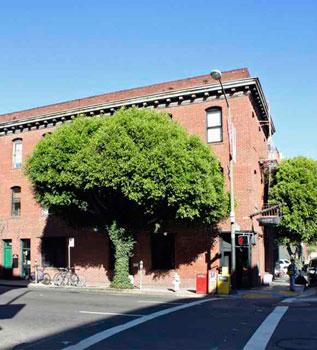 Those who were not shanghaied often frequented the local dance halls. Exit the Old Ship Saloon and walk approximately three blocks to the Hippodrome. Now an art supply store, the sidewalls of the entrance are still graced with the original white bas-reliefs of dancing nude nymphs. Superficially this establishment catered to lonely men but it also housed a secret tunnel used for smuggling goods and people. Descend the stairs into the basement and face the wall at the front of building. In the far right corner you find the entrance to a now walled-off tunnel approximately 15 feet long with 10 foot high arched ceiling.
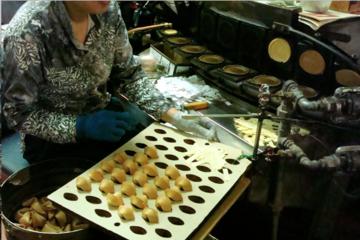
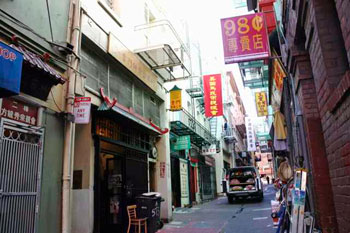
 A history of more vice follows in Chinatown’s Ross Alley (“the Street of the Gamblers”). Walking along, you find many of the doors in the alleyway covered by metal gates. Any one of these doorways potentially leads to a former gambling or opium den. While nothing from this time is clearly visible, it is not difficult to imagine men and women sprawled out in a drowsy or completely overcome condition. While you proceed through the alley, stop by the Golden Gate Fortune Cookies factory for a free sample and see how that product is made.