Soweto, South Africa
by Ray Mwareya
This is one of South Africa’s most famous streets – the only one in the world to have housed two Nobel Prize winners (Nelson Mandela and Desmond Tutu) – and it has long been a must-see tourist attraction.
Every tour to Soweto – Africa’s biggest township – stops at Vilakazi Street. There is a famous reason why.
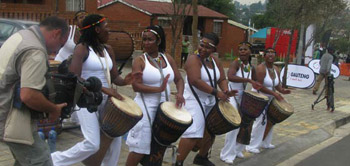
First Vilakazi Street and it is not your typical ordinary street. The Vilakazi Street precinct is now a fully visitor-friendly location, with public art, museums, daily carnivals memorials and benches all picking out its historical sites. Following a major makeover in 2014, visitors to South Africa’s most famous street can now experience it as a place to stroll, to sit on one of numerous concrete benches or seats, to enjoy the newly planted trees, and to admire the new artworks. “The development vision for the future of Vilakazi Street is to make it a thriving destination based on its anti-apartheid struggle history, township heritage, vibrant spirit and distinctive ‘sense of place,'” Trinity Session, the agency that worked with the local community to help create the artworks, said in a recent statement.
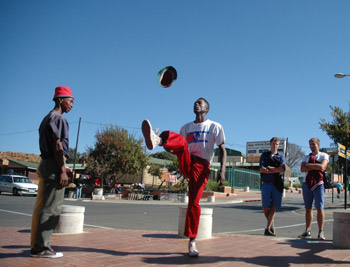 The project was overseen by the South Africa Development Agency. “The community is very happy with the result,” says Thanduxolo Ntoyi, an assistant development manager at the agency. The community was “very involved” with the street and its transformation from the beginning.
The heart of Vilakazi street is its precinct. The Vilakazi Street precinct is about one kilometre long, and built in the shape of a triangle. In its boundaries are the original, unimaginative apartheid-era rectangular houses, next to homes that have been renovated, with the uniform tall walls characteristic of South Africa’s posh suburbs.
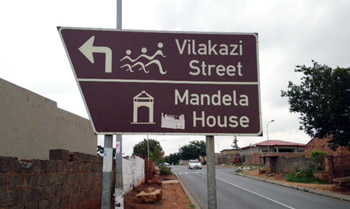
At number 8115 is the street’s main attraction – Mandela House, now a museum. The simple three-bedroom home has been restored to what it looked like in 1946, when Nelson Mandela – Nobel Prize winner and anti apartheid hero – moved in with his first wife, Evelyn Mase. In 1958, he brought his second wife, Winnie, to live in the house with him. He returned briefly to live in the house on his release from prison in February 1990.
Two Nobel laureates:
 Outside the house stands a large metal outline of two bull heads, entitled The Nobel Laureates. The title refers to the fact that on the corner of Vilakazi and Ngakane Streets, a short distance away, is the Soweto home of the Anglican Archbishop Emeritus Desmond Tutu, who, like Mandela, was the recipient of a Nobel Peace Prize. The bulls look down the road, decisive and eye-catching, leaving no doubt as to the strength of the two personalities they represent. Around the corner in Moema Street is another metal depiction, this time of schoolchildren facing a policeman with a growling dog. It’s a reference to the confrontation on 16 June 1976 when hundreds of black school children were protesting the imposition of European Afrikaans in schools, when they were met by the brutality of the colonial police.
At this point the police opened fire, and the student leader Hector Pieterson was shot and killed. Iconic photographs of the dying Pieterson being carried to the nearby Phefeni Clinic by Mbuyisa Makhubo went around the world. This jolted the United Nations and many countries around the world to impose trade and financial embargoes on the apartheid against the South African government. That day is remembered for its brutality against schoolchildren, and the start of the meltdown of apartheid. Pieterson, the other children and the subsequent riots are remembered in the Hector Pieterson Memorial and Museum two blocks down Moema Street, on the corner with Khumalo Street. Today this museum is a work full of energy and defiance; the silhouetted figures in metal piping showing raised fists and wide mouths shouting at the policeman restraining his dog. On the corner of Moema and Vilakazi streets is a memorial wall in slate, now a quiet place to sit and contemplate the events of all those years ago, when the country exploded in anger and revolt.


Vilakazi’ in sign language:
 At the start of Vilakazi Street, where it intersects with Khumalo Street, is another magnificent artwork. Eight huge, grey hands spell “Vilakazi” in sign language. The hands are big and bold, but accessible to residents – they have become play objects, with children taking time out to climb on them. Other art includes two murals – one depicts the scene of June 1976, with police and their vans, and placard-carrying schoolchildren. And then there are the mosaics, livening up several concrete benches on the corner of Moema Street; down Vilakazi Street are mosaic strips of paving. On the corner of Vilakazi and Ngakane streets is a row of bollards with decorative wooden heads. Vilakazi Street is indeed a different place.
Hastings Ndlovu’s bridge:
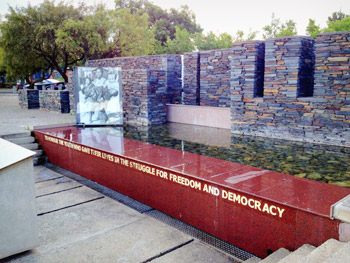 This is another landmark that enriches Vilakazi Street. This memorial has been completed, and it remembers the 15-year-old boy who was the first to be shot on 16 June 1976 riots against the white apartheid government. On the corner of Klipspruit Valley and Khumalo roads is a bridge where Hastings Ndlovu was shot by the police. He was rushed to Chris Hani Baragwanath Hospital – one of the world’s biggest hospitals- where he died of the head wound.
On the bridge there is a statue of the young Hastings, dressed in school uniform and standing on a plinth, smiling and holding his arm up. Storyboards line each side of the bridge, on the sides of a new steel and concrete structure, with seating, inviting visitors to walk down and take in the quiet memorial next to the busy intersection.
Vilakazi for all its glamour is a tourist magnet today. “15,200 foreign visitors came to see this street in 2014 alone. 45% of them came from North America. Most were interested in seeing Nelson Mandela’s original house” says Bat Moloi – the chief marketing officer for Johannesburg Town Municipality.
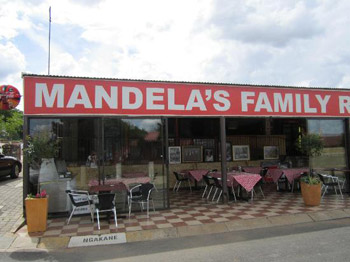
So, take a drive out to Soweto township, park your car opposite the hands, and stroll up Vilakazi Street, reading the storyboards along the way. And when you’re done, grab something to drink or a meal at Sakumzi, opposite Mandela House, or at the top of the hill at Nambitha. And then drive your car to another parking area on the corner of Moema and Khumalo streets, and cross the road. Take in the messages of the Hector Pieterson Memorial; then walk around the museum next door. Feel the anger, the hatred for the apartheid government, the alienation of young people. Dodge the bullets with them, through the graphic images on display; empathise with the parents who lost their children on 16 June 1976. It’s all part of the Vilakazi Street.
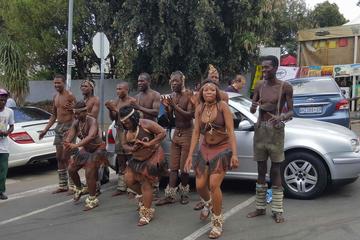
PRIVATE Tour of Soweto & Apartheid Museum & Lunch
If You Go:
How to Get There:
All major world airlines fly to Johannesburg every day. From there you can take a taxi to Soweto township – Africa’s biggest township. There Vilakazi Street looms in the middle of the township. (www.sa-venues.com/attractionsga/vilakazi-street.htm)
What to do there:
Street barbecue, rock in roll festivals, street race courses and a famous wine taste festival awaits you in Soweto township. It’s advisable to tour Vilakazi street during the daylight as pick pockets can take advantage of the darkness.(www.tripadvisor.co.za/Attractions-g312587-Activities-Soweto_Greater_Johannesburg_Gauteng.html)


About the author:
Ray Mwareya is a news correspondent for the Global South Development Magazine.
All photos are by Ray Mwareya.
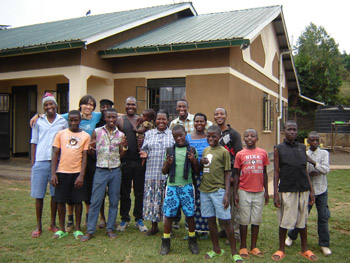
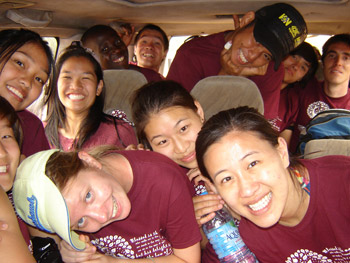 During the two years since Darren’s first trip to Uganda, he has pulled together this disparate team to partner with local youth and run three-day camps for young children. We are a typical Vancouver mix: five Chinese, three Phillipino and three Caucasian. The youngest are fifteen and I am the oldest at 71.
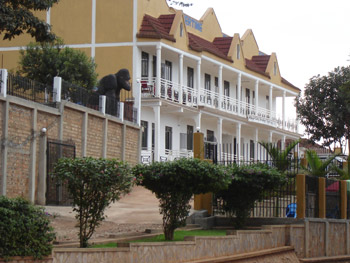 “Here we are,” Darren shouts, as the Ipsum swerves hard right and climbs the short distance to the Albertine Graben Tourist Resort Hotel, where Tyler and Michelle have booked rooms for us. It’s colonial style with white pillared colonnades along both floors. The roof is peaked with ochre dormers.
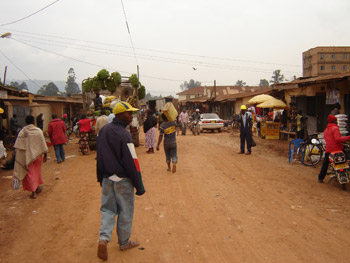
 Fields of cabbage, plantain and potatoes blanket the valley. We leave the road at Bubaale, a small village with just a few tin-roofed mud-brick houses and turn onto a narrow, dirt road that winds upward through the terraced hillside. During daylight, people live outdoors. Women in patterned dresses and head wraps walk to the creek or the village spigot for water. Even small children carry a yellow jerry can.
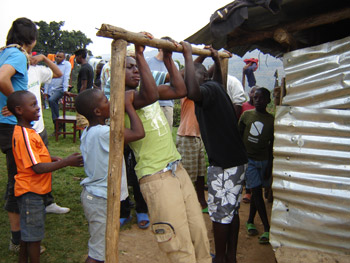 The boys entertain us with African dance, songs and feats of strength: chins, pushups and backflips. They tell me that their tribe, the Bukiga, are strong men and if you hire them, they work hard.
 Tyler parks in front of the restaurant beside a hitching post. The server takes us through a room containing four tables and a bar. Behind that, we step down to a sunken floor and crowd around a table with bench seats. A steamy, pasty smell emanates from the courtyard behind the restaurant where a woman stirs a large pot of something sticky and grey-white. The shed behind her is cluttered with cooking implements and sacks of corn meal and potatoes. Another woman washes clothes in a deep metal basin.
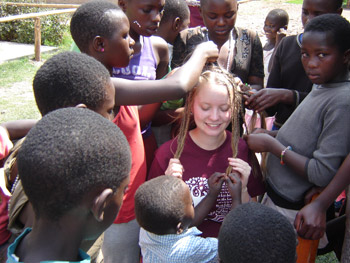
 The first session feels dry and clinical, but while we wait for lunch the girls skip with double ropes, boys ride piggy-back and they all compete in a limbo dance. Frances, the Humura goat-herder, climbs a tree and ventures out so far on a branch that it breaks and he falls to the ground. The laughter and open-spirited play dissolves inhibitions and produces powerful bonding within the team.
 The full-service, island resort accommodates tourists in view bungalows or hotel suites. The open air restaurant and bar provide quality meals and drinks, including local specialties such as Louisiana red swamp crayfish, cooked with organic herbs and spices. They are not imported, but fresh from the lake which was stocked in the Seventies.
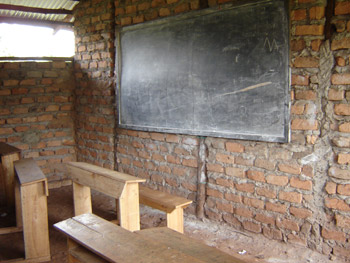 We had invited the village of Bubaale to come to Akanyijuka Primary School for a carnival on the last Saturday. A large, white gazebo is raised and a loud speaker system prepared for speeches. Hundreds line up for poshoe and beans, but just as the last few are served, a torrential storm drives everyone into the buildings or away to their homes, ending the carnival. We crowd into one of the old wood-plank, school classrooms and bid a tearful goodbye to our strong, Buchiga trainees.
 After dinner, I wander the grounds and breathe in the cool fresh air. Lights from homes across the valley dot the hillside and fuse into a soft glow from Kabale. It’s one of those magical moments that give the impression that all is right with the world and the future is bright for this small city in the hinterland of Uganda, the jewel of Africa.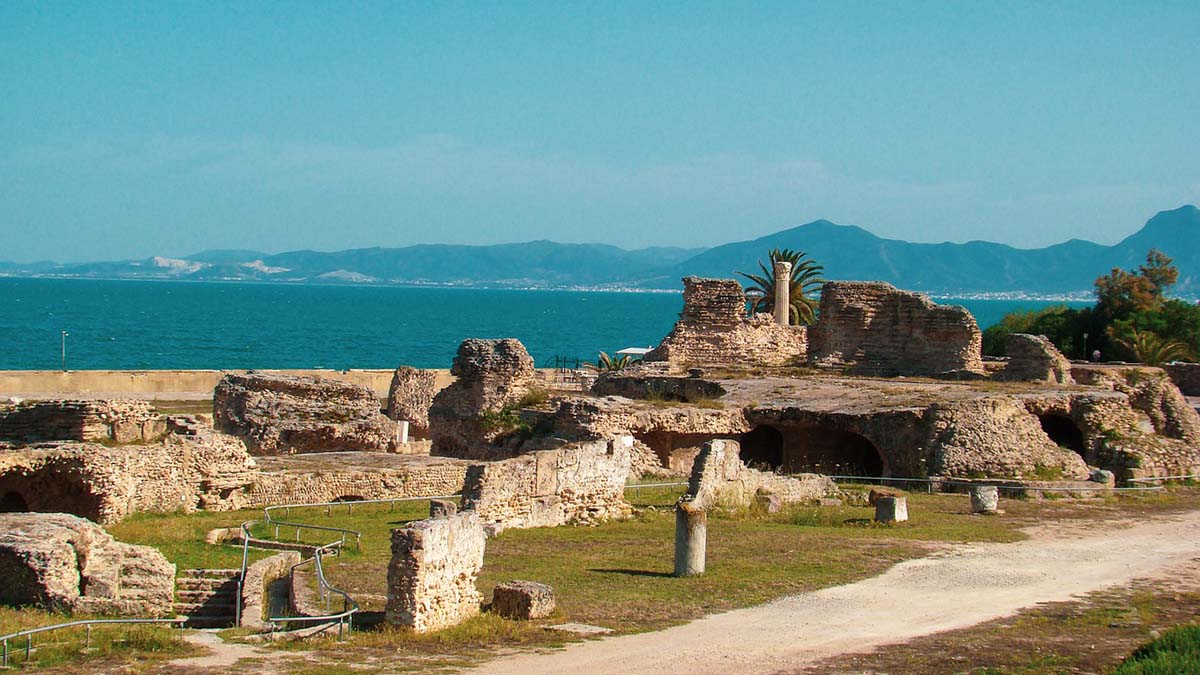
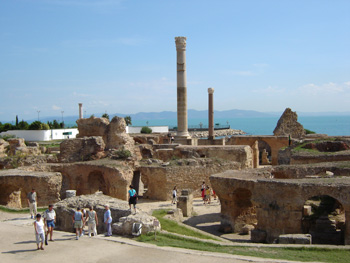 The grip of Roman imperialism was nowhere so dominant in Tunisia as in the city of Carthage – Tunisia’s most famous site of ancient Roman ruins. Although the Romans initially ravaged and destroyed much of the city upon invasion, they subsequently rebuilt it in the style of Rome. Its favourable position and two harbours made it a grand hubbub of expensive, imported goods.
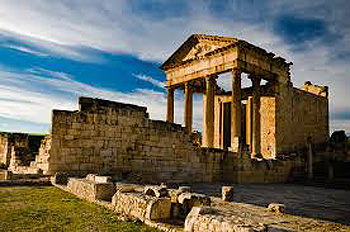 In the North West of Tunisia, the small town of Dougga stands as an impressively intact testimony to the Roman rulers that once dominated here (though the remaining monuments are by no means solely Roman in origin). The town is thought to have been founded during the reign of Julius Caesar, and became a small, prosperous town complete with theatres, baths and roman villas in the style for which they have becomes so famous. For those visiting the country today, this is a must-see area.
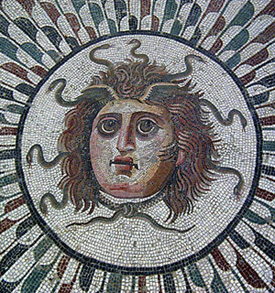 Though not a hotbed of archaeological sites in itself, the coastal town of Sousse hosts an incredible array of Roman mosaics, rescued from the various excavated sites around the country. Displayed in its Archaeological museum, the collection isn’t overwhelmingly large, but is one of the bigger collections of authentic mosaics in Tunisia.

 Emperor Hadrian granted Roman citizenship to the inhabitants of this town, perhaps because of the wealth of grandeur there. The archaeology unearthed is testament to the many wealthy homes and residential areas.
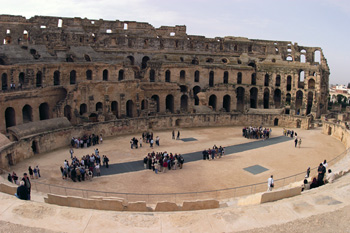 In El Jem sat the centrepiece of the reputable area once known as Thysdrus, the second most important Roman municipality in Africa after Carthage. The magnificent amphitheatre, though now slightly dilapidated, once seated an enormous 43,000 spectators (the 02 arena in London holds under half of that, with 20,000 seats). This makes it the third largest amphitheatre to have existed during Roman rule.
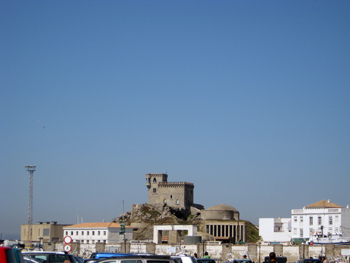
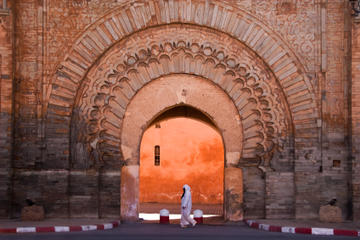
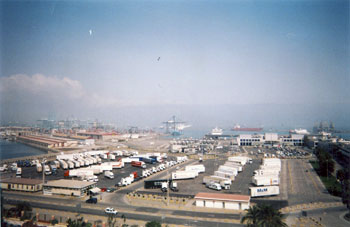 I was delighted to wake up the next morning to a clear view of the Rock of Gibraltar from my window and knowing that I would be spending the day in Morocco. Arriving at the Port of Algeciras just 100 feet across the hotel, I was instructed to wait for my guide as soon as I off-boarded the ferry in Ceuta. Ceuta is one of the two Spanish autonomous communities in North Africa along with Melilla located about 390 further east. Ferries also depart to Melilla on the northern coast of Africa from the ports of Malaga or Almeria that can take over 9 hours across the Alborán Sea.

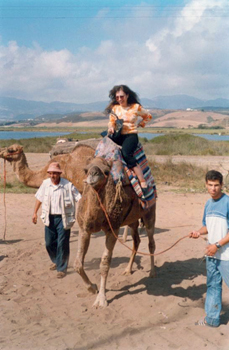 I looked at one of the passengers with a puzzled look that was immediately reciprocated. Moments later the mini bus suddenly pulled off to the side of the road where locals were offering camel rides for one Euro. At first I hesitated, but it took just six words from one of the couples to get me on top of that camel, “You’ll regret it if you don’t!”
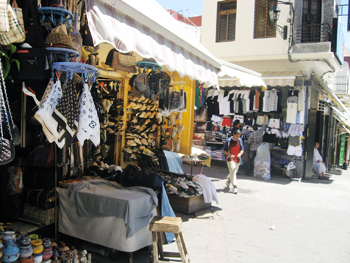
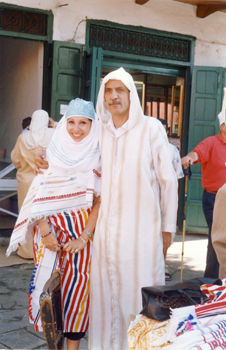 After passing through the chaos of the open air food market, we arrived at the fabric and textile market. On display were hundreds of thick fabrics of the most vivid colors for sale hand woven by local Berber women. Lost in my world I was when suddenly one such woman stopped me and grabbed me by my shoulders.
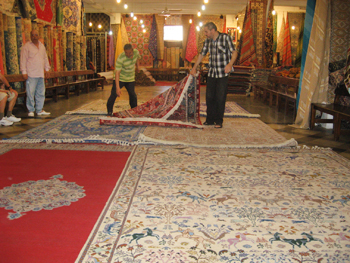 The next stop was the carpet demonstration. Here, we were led into a showroom where traditional mint tea was offered while we waited for the ‘show’ to begin. One by one, they rolled out these works of art, each more exquisite and intricate than the last. By the time the demonstration was over, the prices were greatly reduced. No-one in our group had any intention of purchasing a rug yet the vendor instructed us to individually say ‘yes’ or ‘no’ to every single carpet that they had rolled out. After these very uncomfortable minutes were over, we quickly departed leaving the disgruntled vendors mumbling to themselves while they hastily rolled back the carpets.
 We were now on our way to the spice and pharmacy market; a welcomed relief as the ‘pharmacist’ dressed in a white lab coat was quite the comedian. The small room resembled a medieval apothecary with all sorts of jars and containers of all colors, shapes, and sizes filled with oils, fragrances, creams, herbal remedies, spices, and teas that cured everything from anxiety to hangovers. The pharmacist/comedian demonstrated the wonders of the selected products that we smelled, rubbed on our skin, or whatever we were instructed to do. Each of us bought a few cosmetic and medicinal items as we did not want to offend this vendor as well.
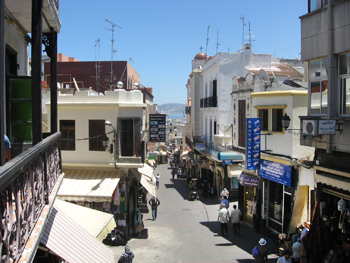 Next on our busy itinerary was a one hour bus ride to Tangier, the “Gateway to Africa” founded in the 5th century BCE. I was especially excited as it was here where my grandparents worked, met and married nearly a century ago. Upon arrival, Mohammed took us through another quick walk through the zigzag alleys and corners of the medina to the Mamounia Palace Restaurant. The restaurant, filled to capacity with other tour groups, was lavishly decorated with crimson and golden tapestries, deep red tablecloths, and plush sofas. I immediately took a photo of the lovely view from the balcony window.
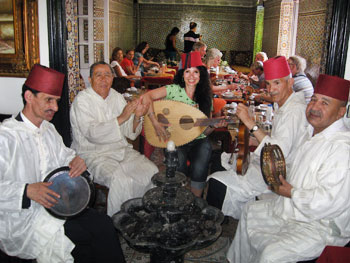 We each took turns posing with the musicians for a small fee and the quartet began to play traditional Moroccan music with such instruments as the hand drum (darbuka), lute (oud), tambourine (riq), and violin (rababa). Moments later, our lunch was served consisting of lentil soup, a briouat or meat-filled pastry, hummus and bread, chicken with couscous and vegetables, followed by a slice of melon with mint tea for dessert. Halfway through the meal, a blonde belly dancer in a purple and gold costume whirled her way into the center of the room and entertained us to the lively music of the band.
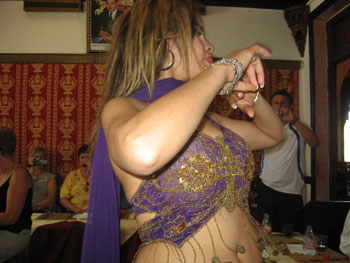 Shortly after our lunch, were once again whisked to the bus and into a department-sized store in the center of Tangier selling the finest Moroccan handicrafts, gifts, furnishings, rugs, leather goods, pottery, clothing, jewelry, and quality souvenirs available. We were told that we had a half hour to shop and encouraged to purchase as much as we could. This would be the last stop on our itinerary and right on schedule, after 30 minutes, we made our way back to the bus.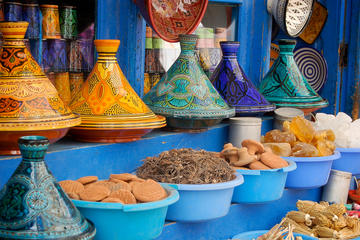
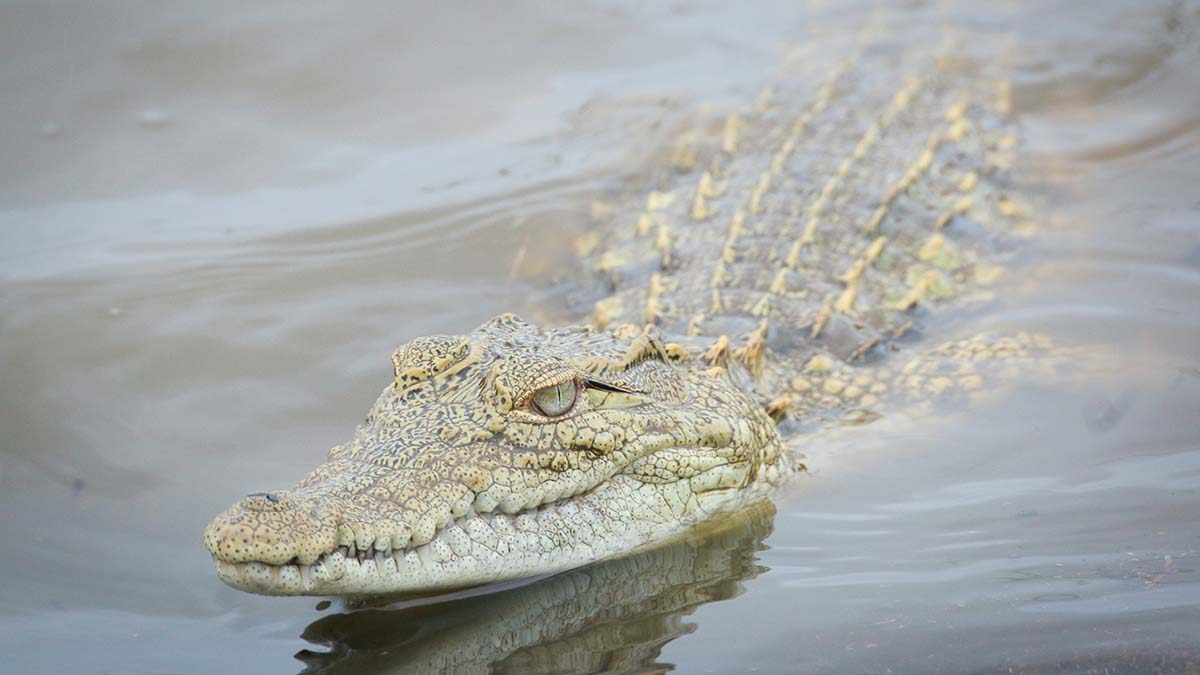
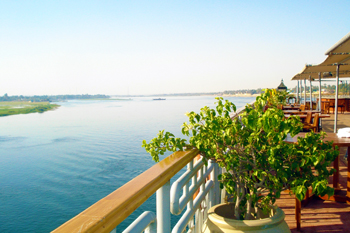 I wonder if there are crocodiles lurking in the river. I peer into the dark green water hoping to spot one. The Nile crocodile is the second largest reptile in the world, after the salt-water crocodile. They grow to up to 5 meters (16 ft) in length and weigh up to 410 kg (900 lbs). The largest on record was 61 meters (20 ft) and weighed 900 Kg (2,000 lbs). Their powerful bite and sharp conical teeth grip so firmly it is almost impossible to loosen. They are aggressive predators and will lay in wait for days waiting for the suitable moment to attack. It isn’t easy to escape. Crocodiles have been known to gallop at speeds of about 50 kilmetres (30 miles) an hour!
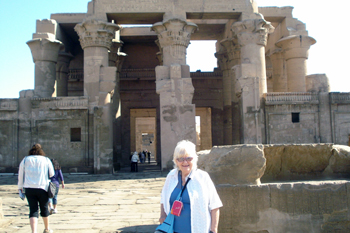 Kom Ombo is a small city once situated at the crossroads between the caravan route from Nubia and the routes from the gold mines in the eastern Sahara. During the reign of Ptolemy VI (180-145 BC) it was a training depot for African war elephants. Today Kom Ombo is the home of many Nubians who were displaced after the Aswan Dam flooded their lands.

 Finally, we enter a large room that, to my surprise, is full of crocodiles! Mummified crocodiles! It is evident from the large number displayed here that the crocodile was held in honor by the people of Kom Ombo. The museum contains crocodile eggs as well as mummified baby and adult crocodiles. Some of the mummies were found with babies in their mouths or on their backs. These ferocious beasts are known to care diligently for their young, often carrying them on their backs. By preserving them by mummification it emphasized the protective and nurturing aspects of Sobek as he protected the Egyptian people just as the crocodile protects its young.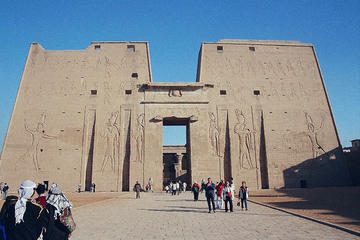
 . Her first novel SHADOW OF THE LION: BLOOD ON THE MOON (volume one of two, a story of the fall of Alexander the Great’s dynasty) was published this summer by www.mediaaria-cdm.com at exactly the same time the fabled tomb at Amphipolis was uncovered. It is available on